Mind and Body Studies as Crew Finalizes Cygnus Packing

Mind and Body Studies as Crew Finalizes Cygnus Packing
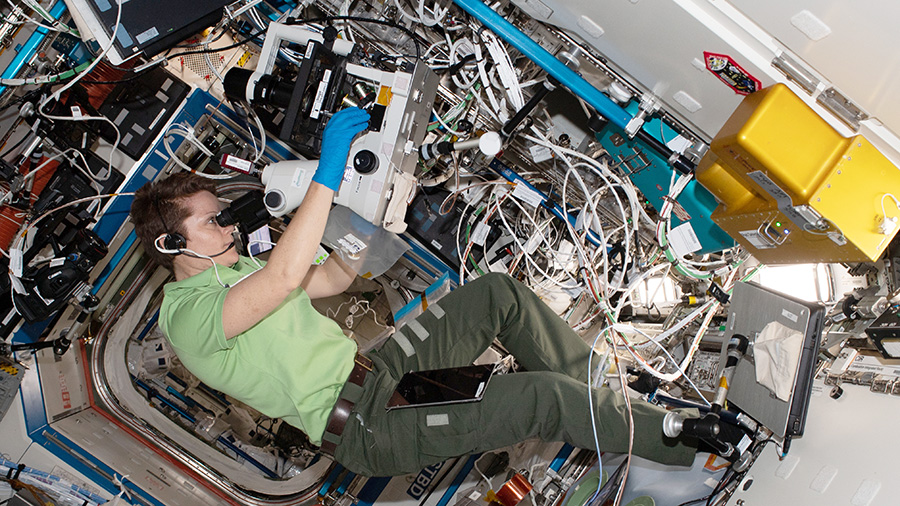
Astronaut Anne McClain of NASA
Astronaut Anne McClain of NASA peers into a microscope and takes photographs for the Protein Crystal Growth-16 experiment that is exploring therapies for Parkinson’s disease.

The astronauts onboard the International Space Station continued exploring today how living in space affects their minds and bodies. The Expedition 58 crew also researched fluid physics and prepared a resupply ship for its departure.

Anne McClain of NASA collected blood and urine samples this morning for the Repository physiology study. She spun the samples in a centrifuge then stowed them in a science freezer. She later took a cognition test in support of the Lighting Effects experiment that seeks to improve health and wellness.

Canadian Space Agency astronaut David Saint-Jacques along with McClain answered a pair of questionnaires in support of the Standard Measures and Behavioral Core Measures psychology studies. He also wrapped up a physics study observing the mechanics of fluids in hardware that represents a spacecraft fuel tank.

McClain will be in the cupola Friday at 11:10 a.m. EST and release the U.S. Cygnus resupply ship from the Canadarm2 robotic arm. Saint-Jacques will back her up Friday and monitor the cargo vessel’s departure. The duo is finalizing packing, will install a small satellite deployer in Cygnus then close the hatches on Thursday.

Over in the station’s Russian segment, Commander Oleg Kononenko of Roscosmos worked on power supply and battery maintenance in the Zarya module. The long-serving cosmonaut also researched crew psychology and studied radiation exposure.

Get The Details…

Mark Garcia

Human, Physics Research as U.S. Spaceship Preps for Departure

Human, Physics Research as U.S. Spaceship Preps for Departure

Anne McClain of NASA
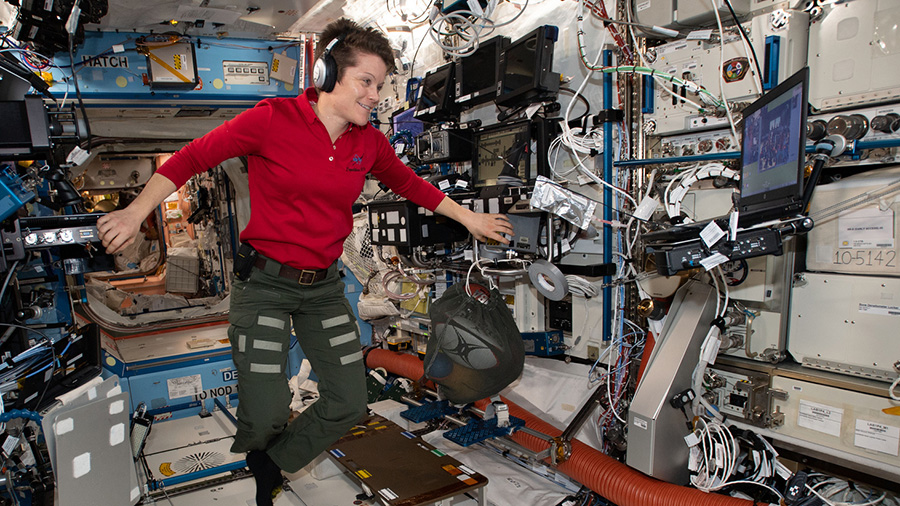
Anne McClain of NASA looks at a laptop computer screen inside the U.S. Destiny laboratory module during ground conference operations.

The Expedition 58 crew participated in a suite of psychological, biomedical and physics experiments today. The orbital residents are also getting ready to send off a U.S. cargo craft on Friday.

Astronauts Anne McClain and David Saint-Jacques collaborated today on an experiment that observes how living in a spacecraft for long periods impacts crew behavior. The duo typed personal impressions about working in space in a private journal then took a robotics test to measure cognition. The astronauts also answered a questionnaire to gather more cognitive data before going to sleep.

McClain also collected and stored biological samples for a pair of human research studies looking at physiological changes and negative effects on bone marrow and blood cells. Saint-Jacques looked at how fluid mechanics affects fuel tanks in spaceships and ocean systems on Earth.

Commander Oleg Kononenko focused his day inside the station’s Russian segment. The veteran cosmonaut worked on computers, maintained life support systems and photographed Earth landmarks today.

Friday at 11:10 a.m. EST, Northrop Grumman’s Cygnus space freighter will depart the station after 81 days attached to the Unity module. Robotics controllers will remotely guide the Canadarm2 robotic arm to grapple Cygnus overnight. McClain will then command the Canadarm2 on Friday to release Cygnus back into Earth orbit as Saint-Jacques backs her up and monitors the activities.

Cygnus has more to do after its release. It will begin to deploy several sets of CubeSats after it reaches a safe distance from the space station. The U.S. resupply ship will then reenter Earth’s atmosphere in late February over a remote portion of the Pacific Ocean for a fiery but safe destruction.

Get The Details…

Mark Garcia

Crew Wraps Up Biomedical Studies; Films Station in Virtual Reality

Crew Wraps Up Biomedical Studies; Films Station in Virtual Reality

Astronaut Anne McClain is pictured wearing a sensor on her forehead
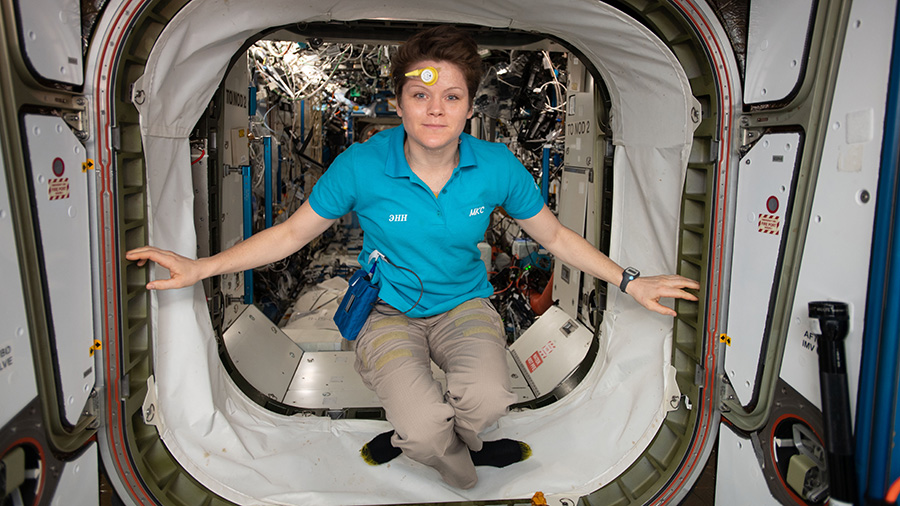
Astronaut Anne McClain is pictured wearing a sensor on her forehead that is collecting data to determine how an astronaut’s “biological clock” changes during long-duration spaceflight. Image Credit: NASA

A pair of biomedical experiments are wrapping up today aboard the International Space Station as the Expedition 58 crew began its weekend. The orbital residents are also filming a virtual reality (VR) experience and working on plumbing and life support hardware.

Anne McClain of NASA removed sensors from her head and chest this morning that collected data about her circadian rhythm, or “biological clock,” and how it is adapting off Earth. Canadian Space Agency astronaut David Saint-Jacques stowed the wearable Bio-Monitor hardware that monitors an astronaut’s vital signs during normal activities with minimum interference.

McClain then set up a VR camera to film a first-person’s view aboard the orbital lab in an immersive, cinematic experience. She finished the workday with Saint-Jacques on orbital plumbing work in the Tranquility module.

The Combustion Integrated Rack received more attention today as Saint-Jacques replaced hardware in the fuel and flame research platform. He also assisted McClain with the VR camera installation, set up audio equipment and filmed an introduction.

Commander Oleg Kononenko also up video gear today in Japan’s Kibo lab module and held a conference with Russian students and educators. The veteran cosmonaut then spent part of the afternoon conducting maintenance on life support equipment in the station’s Russian segment.

Get The Details…

Catherine Williams

Fiery Research Work and CubeSats Deployed Today

Fiery Research Work and CubeSats Deployed Today

Expedition 58 crew members gather inside the Zvezda service module
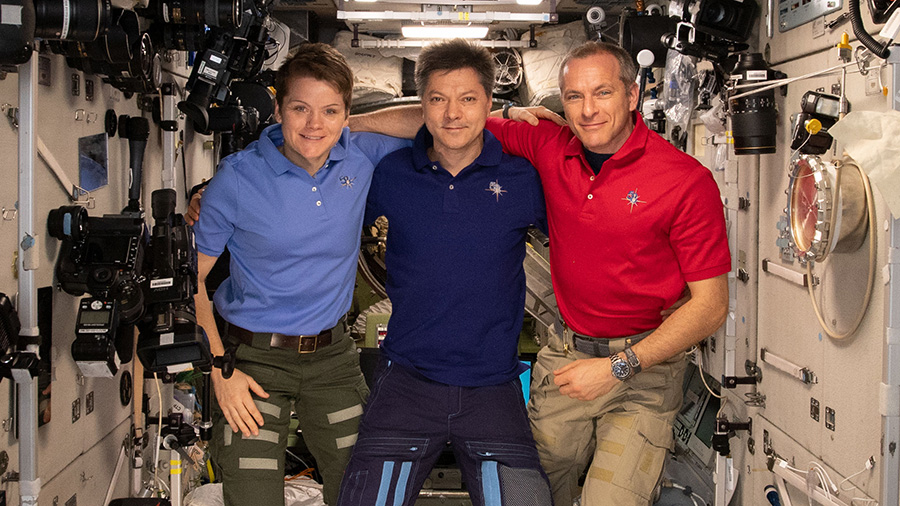
The Expedition 58 crew gathers inside the Zvezda service module for a portrait. From left are, NASA astronaut Anne McClain, Roscosmos cosmonaut Oleg Kononenko and Canadian Space Agency astronaut David Saint-Jacques.

The Expedition 58 crew set up a variety of combustion research hardware today to look at what happens to high temperatures, fuels and flames in space. The International Space Station also deployed the first set of CubeSats this year.

The Two-Phase Flow Experiment, sponsored by the Japan Aerospace Exploration Agency, investigates the heat transfer caused by boiling liquids in space. Flight Engineer Anne McClain set up a specialized microscope to study the phenomena inside Japan’s Kibo lab module today. Results may inform future designs of high-performance thermal management and cooling systems on Earth and in space.

Flight Engineer David Saint-Jacques opened the Combustion Integrated Rack inside the U.S. Destiny lab module again today for more maintenance work. The Canadian astronaut replaced a control unit and a radiometer inside the fuel and flame research device.

The duo also monitored and photographed several CubeSats deployed into Earth orbit outside Kibo’s airlock today. The CubeSats are inexpensive tiny research satellites that will explore Earth’s ionosphere and study space communication techniques.

Commander Oleg Kononenko, the four-time space station resident from Roscosmos, started Thursday photographing the interior portion of the orbital lab’s Russian segment. The veteran cosmonaut then moved onto life support maintenance and explored ways students and educators can collaborate with space crews.

Get The Details…

Mark Garcia

Crew Works CubeSats, Life Science and Configures Physics Hardware

Crew Works CubeSats, Life Science and Configures Physics Hardware

Cuba, The Bahamas and the Turks and Caicos Islands
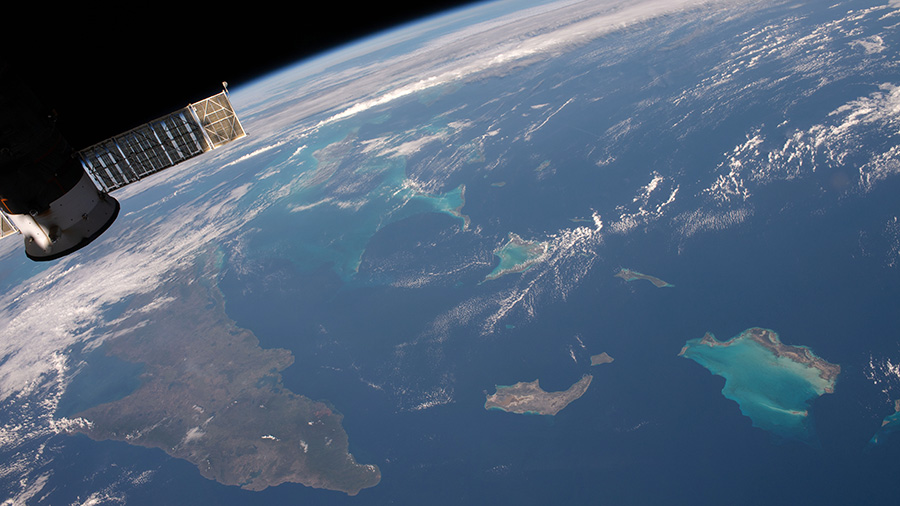
Portions of Cuba, The Bahamas and the Turks and Caicos Islands are viewed from the International Space Station as the orbital complex flew 252 miles above the Atlantic Ocean. At left, is the aft end of the Progress 70 resupply ship from Russia attached to the Pirs docking compartment.

The International Space Station is set to deploy a new series of CubeSats as the Expedition 58 crew configures research hardware to enable a variety of space experiments.

Japan’s Kibo laboratory module airlock has been set up with a small satellite deployer loaded with several CubeSats. Astronaut Anne McClain finished the installation work Wednesday, depressurized the airlock and maneuvered the deployer outside Kibo.

She and fellow astronaut David Saint-Jacques will monitor and photograph the CubeSat deployments planned for Thursday around noon EST. The CubeSats will study Earth’s ionosphere and satellite communication techniques.

McClain next inventoried Rodent Research gear trashing some hardware to make extra space aboard the lab. She later swapped a hard drive on a laptop computer dedicated to meteor observations then attached sensors to her head and chest for the Circadian Rhythms study.

Saint-Jacques installed new electronics on the Kubik incubator upgrading the device that houses biology experiments on seeds, cells and small animals. He later swapped parts in the Combustion Integrated Rack that permits safe research into fuel and flames aboard the orbital lab.

Commander Oleg Kononenko started Wednesday researching microgravity’s effect on heart rate and breathing. He later explored advanced photography tools and techniques to better detect targets of interest on Earth.

Get The Details…

Mark Garcia