Second Docking Attempt for Russian Spacecraft Planned for Monday Night

Second Docking Attempt for Russian Spacecraft Planned for Monday Night
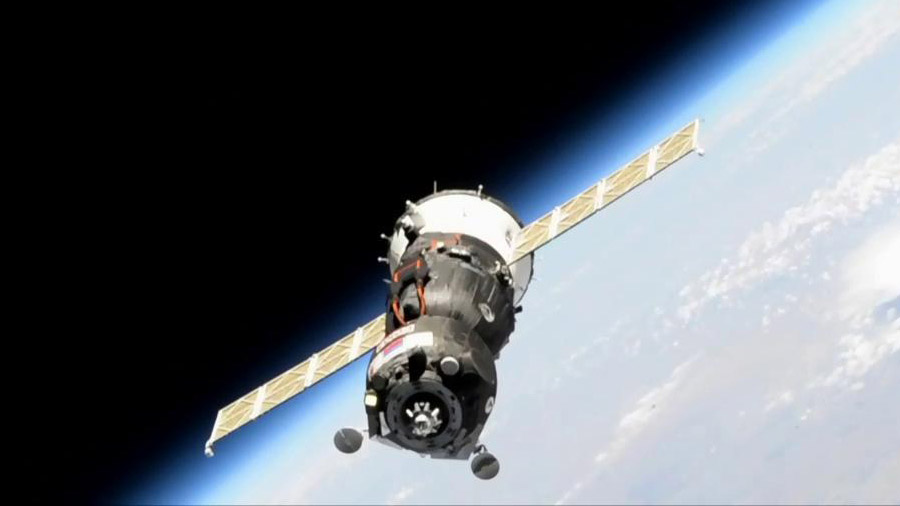
The Soyuz MS-14 Spacecraft
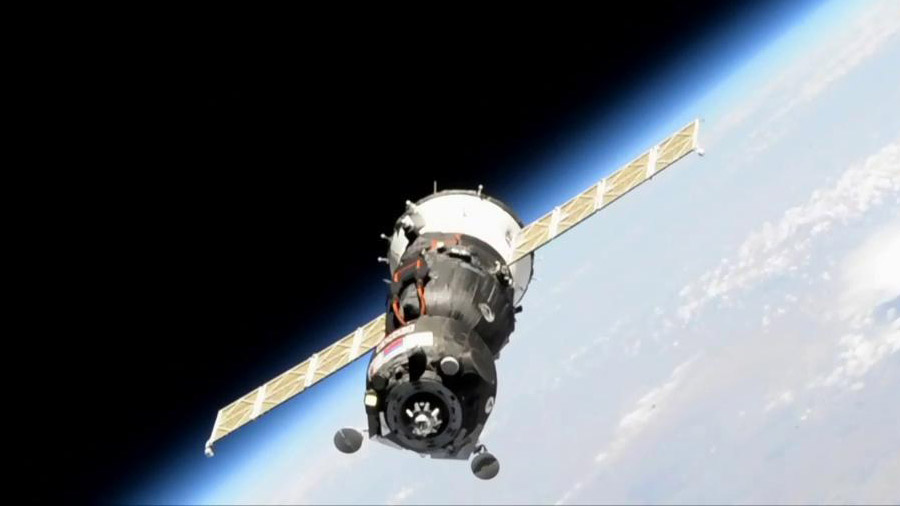
The Soyuz MS-14 spacecraft is pictured during its first docking attempt early Saturday.

International Space Station managers and the international partners met on Saturday and approved a plan to allow a second rendezvous and docking attempt for the unpiloted Soyuz MS-14 spacecraft to occur on Monday night. The Soyuz’ initial docking attempt early Saturday was aborted after what Russian officials said was a suspected problem with a component associated with the Kurs automated rendezvous system for the Poisk module docking port.

The Soyuz was commanded to back away from the station after approaching to within 100 meters of Poisk when the vehicle could not achieve a solid telemetry lock to that docking port through the automated rendezvous system. The unpiloted Soyuz is currently orbiting a safe distance from the ISS with all of its systems functioning normally. The six crewmembers on board the station were never in any danger during the initial rendezvous attempt.

Plans now call for the unpiloted Soyuz to execute a second docking attempt Monday night at 10:12 p.m. Central time, 11:12 p.m. Eastern time, but this time to the aft port of the Zvezda Service Module. The Kurs system on Zvezda has been checked out and is in perfect working order. NASA TV coverage of the docking Monday night will begin at 9:30 p.m. Central time, 10:30 p.m. Eastern time.

To accommodate the new plan, Expedition 60 crewmembers Alexander Skvortsov of Roscosmos, Luca Parmitano of the European Space Agency and Drew Morgan of NASA will don their Russian Sokol launch and entry suits Sunday night, climb aboard their Soyuz MS-13 spacecraft which docked to Zvezda on July 20 and undock for a 25-minute Soyuz relocation maneuver and a manual docking by Soyuz commander Skvortsov to the Poisk module. The suspect Kurs rendezvous unit component for Poisk is not a factor for the relocation maneuver by Skvortsov and his Soyuz crewmates.

NASA TV coverage of the relocation will begin Sunday night at 10 p.m. Central time, 11 p.m. Eastern time. Undocking of the Soyuz MS-13 spacecraft from Zvezda is scheduled at 10:34 p.m. Central time, 11:34 p.m. Eastern time with redocking to Poisk scheduled at 10:59 p.m. Central time, 11:59 p.m. Eastern time.

It would be the first Soyuz relocation since August 2015 when Gennady Padalka and Mikhail Kornienko of Roscosmos and NASA’s Scott Kelly conducted a similar operation, but in reverse, flying their Soyuz TMA-16M spacecraft from Poisk to Zvezda.

The docking of the unpiloted Soyuz Monday night will preserve the robotic release of the SpaceX Dragon cargo craft Tuesday morning after a four-week stay at the station. Dragon will be deorbited for a parachute-assisted splashdown several hours later in the Pacific Ocean, bringing home cargo and valuable scientific experiments from the orbital laboratory.

Get The Details…

Mark Garcia

Powered by WPeMatico

Russian Spacecraft Docking Attempt No Earlier Than Monday

Russian Spacecraft Docking Attempt No Earlier Than Monday

International Space Station Configuration
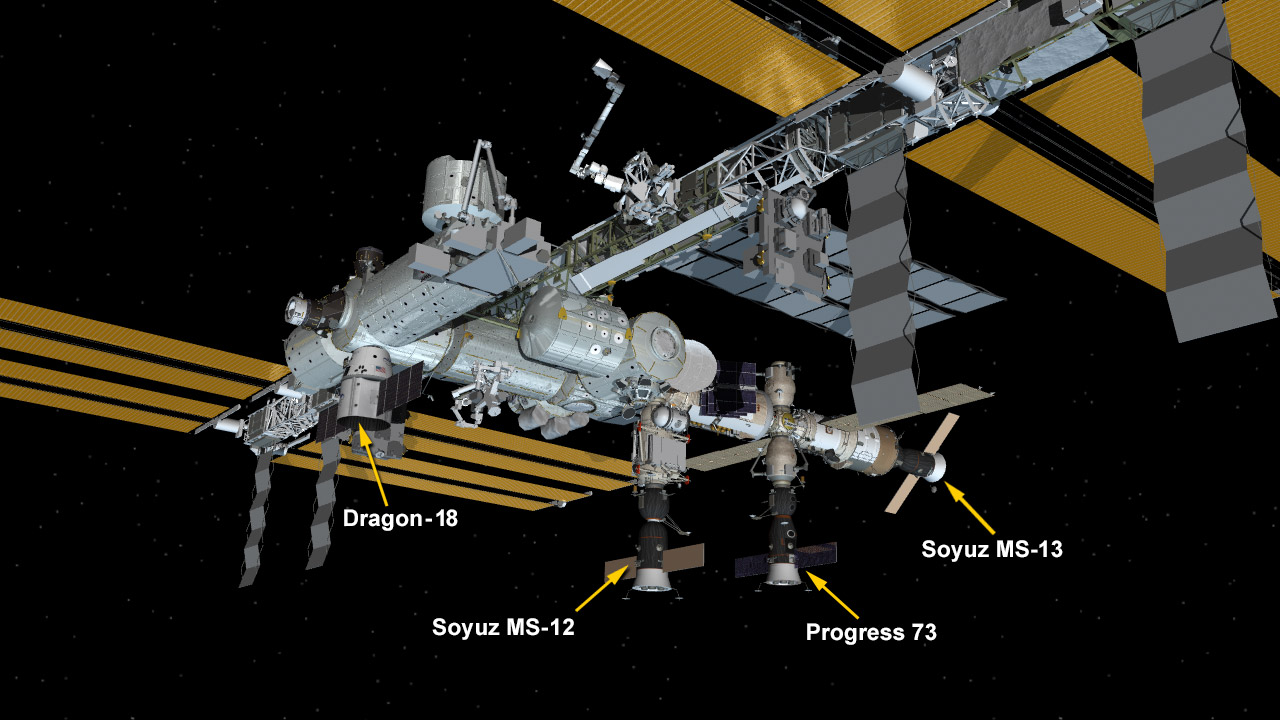
International Space Station Configuration. Four spaceships are parked at the space station including the SpaceX Dragon cargo craft and Russia’s Progress 73 resupply ship and Soyuz MS-12 and MS-13 crew ships.

An uncrewed Russian Soyuz MS-14 spacecraft is now a safe distance away from the International Space Station following an abort during its final approach for a docking to the Poisk module.

After the cosmonauts on the station aborted an automated docking attempt early Saturday, Russian flight controllers told the crew on the station that early data indicates the issue that prevented its automated docking resides on the station’s side of the so-called KURS automated rendezvous system, not on the Soyuz itself.

The Soyuz is on a safe trajectory above and behind the space station that will bring it in the vicinity of the orbital complex again in 24 hours and 48 hours. Russian flight controllers have indicated the next earliest docking attempt could be Monday morning.

In the meantime, Russian controllers informed Expedition 60 commander Alexey Ovchinin and flight engineer Alexander Skvortsov of the Russian federal space agency Roscosmos they will send instructions to swap the signal amplifier of the station’s KURS docking system and test it before proceeding with another docking attempt.

The Soyuz launched from the Baikonur Cosmodrome in Kazakhstan on Wednesday, Aug. 21, at 11:38 p.m. EDT (8:38 a.m. Aug. 22 Baikonur time) on a test flight to validate the spacecraft’s compatibility with a revamped Soyuz booster rocket.

Learn more about station activities by following the space station blog, @space_station and @ISS_Research on Twitter as well as the ISS Facebook and ISS Instagram accounts.

Get The Details…

Mark Garcia

Powered by WPeMatico

Uncrewed Russian Spacecraft Aborts Station Approach

Uncrewed Russian Spacecraft Aborts Station Approach

The unpiloted Soyuz MS-14 spacecraft
The unpiloted Soyuz MS-14 spacecraft is pictured near the International Space Station.

At 1:36 a.m. EDT, Russian cosmonauts issued a command to abort the automated approach of an uncrewed Russian Soyuz spacecraft to the International Space Station after the craft was unable to lock onto its target at the station’s space-facing Poisk module.

The Soyuz MS-14 spacecraft launched from the Baikonur Cosmodrome in Kazakhstan on Wednesday, Aug. 21, at 11:38 p.m. EDT (8:38 a.m. Aug. 22 Baikonur time) on a test flight. It made 34 orbits of Earth en route to its anticipated docking to the station.

Following the abort, the spacecraft backed a safe distance away from the orbital complex while the Russian flight controllers assess the next steps.

Learn more about station activities by following the space station blog, @space_station and @ISS_Research on Twitter as well as the ISS Facebook and ISS Instagram accounts.

Get The Details…

Mark Garcia

Powered by WPeMatico

Life Science Today as Crew Readies for Spacecraft Arrivals and Departures

Life Science Today as Crew Readies for Spacecraft Arrivals and Departures

Expedition 60 crewmembers Alexey Ovchinin, Luca Parmitano and Andrew Morgan
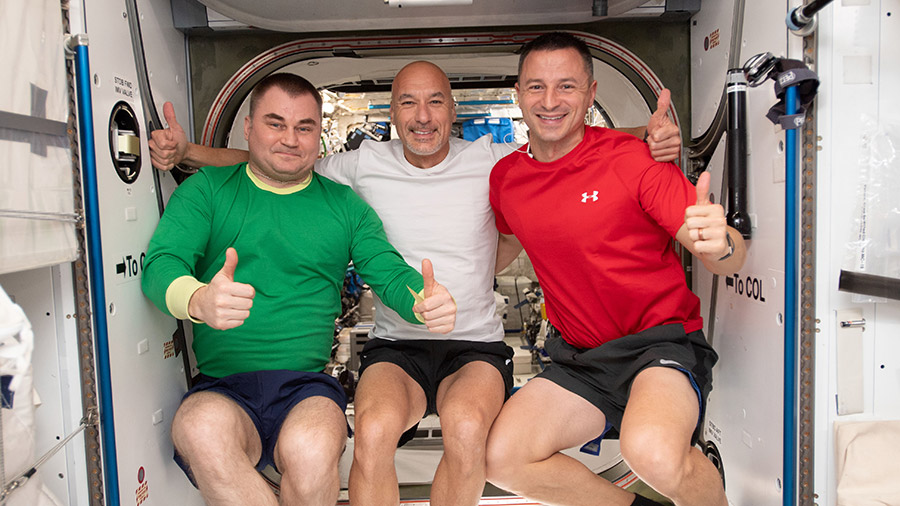
Expedition 60 crewmembers (from left) Alexey Ovchinin, Luca Parmitano and Andrew Morgan pose for a portrait inside the vestibule between the Columbus laboratory module and the Harmony module.

The Expedition 60 crew is continuing ongoing space science today and packing a U.S. resupply ship for departure next week. Russia’s first unpiloted Soyuz spacecraft is also on its way to the International Space Station where it will dock early Saturday morning.

Four astronauts, Luca Parmitano of ESA (European Space Agency) with Christina Koch, Andrew Morgan and Nick Hague, all from NASA, are readying the SpaceX Dragon for its return to Earth. They will be packing Dragon with cargo and completed space experiments all weekend and into Monday.

Ground controllers will remotely command the Canadarm2 robotic arm to detach Dragon from the Harmony module before releasing it into orbit on Tuesday at 10:42 a.m. EDT. SpaceX personnel will retrieve Dragon from the Pacific Ocean after its splashdown off the coast of southern California a few hours later. NASA TV begins its live broadcast of Dragon’s departure on Tuesday at 10:15 a.m.

A multitude of space experiments is continuing aboard the orbiting lab today. Hague explored how moss grows in microgravity to inform self-sustaining human missions to the Moon and Mars. Koch serviced 3D printed tissue samples for a study investigating printing human organs in space. Parmitano researched cell differentiation to help doctors design medical therapies for humans on Earth and in space. Finally, Morgan collected and spun his blood samples in a centrifuge before stowing them in a science freezer for analysis.

The two cosmonauts, Alexey Ovchinin and Alexander Skvortsov, will be up early Saturday several hours before the rest of their crewmates. They will be monitoring the automated arrival of the Soyuz MS-14 spacecraft set to dock to the Poisk module at 1:31 a.m. EDT Saturday. It will stay there for two weeks before undocking and parachuting to a landing in Kazakhstan with no crew onboard Sept. 6.

Get The Details…

Mark Garcia

Powered by WPeMatico

Full Science Schedule Today After Spacewalk and Rocket Launch

Full Science Schedule Today After Spacewalk and Rocket Launch

NASA astronaut Andrew Morgan
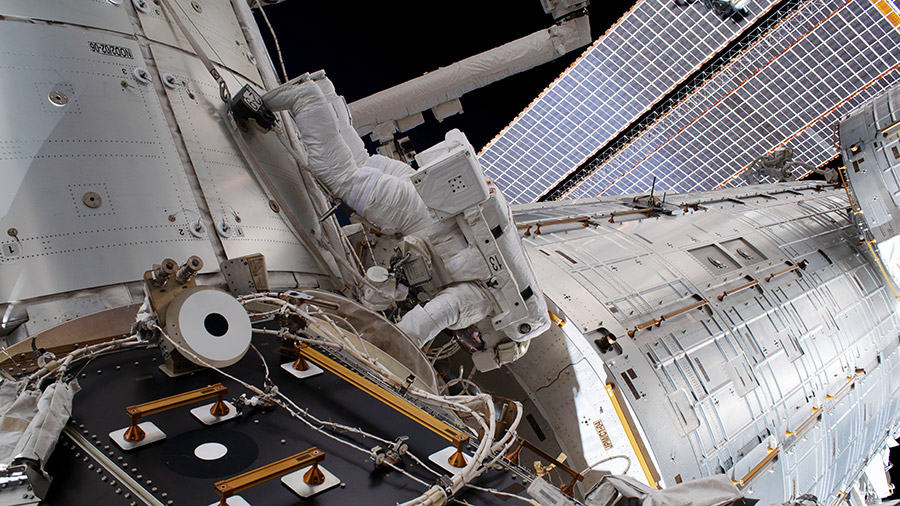
NASA astronaut Andrew Morgan is pictured working outside the International Space Station during a six-hour and 32-minute spacewalk to install the orbiting lab’s second commercial crew vehicle docking port, the International Docking Adapter-3

Russia’s uncrewed Soyuz MS-14 spacecraft is on its way to the International Space Station following its launch just a few hours after Wednesday’s spacewalk. The Expedition 60 crew is back on a full science schedule today and preparing to send a U.S. cargo craft back to Earth.

NASA astronauts Nick Hague and Andrew Morgan called down to Mission Control today to discuss yesterday’s spacewalk when they installed the station’s second commercial crew vehicle docking port, the International Docking Adapter-3. The duo, including NASA Flight Engineer Christina Koch, talked about normal technical issues and task challenges they faced before, during and after the spacewalking job.

Koch spent most of Thursday tending to lab mice living aboard the station. Scientists seek therapeutic insights not possible on Earth by observing the rodents due to their genetic similarity to humans.

Hague spent a portion of his day contributing to experiments designed by middle and high school students researching a variety of space phenomena. Luca Parmitano of ESA (European Space Agency) continued exploring ways to manufacture safer, more fuel-efficient tires before moving on to more cell differentiation research.

Morgan is preparing the SpaceX Dragon cargo craft for its return to Earth next week. The crew will be packing Dragon over the weekend and into Monday with the results of numerous space experiments for analysis. Robotics controllers will command the Canadarm2 to release Dragon from its grips on Tuesday at 10:42 a.m. EDT. It will splashdown in the Pacific Ocean off the coast of southern California a few hours later for retrieval by SpaceX personnel.

The first unpiloted Soyuz spacecraft launched yesterday from Kazakhstan about nine hours after Hague and Morgan completed their spacewalk. The Soyuz MS-14 is orbiting Earth today headed toward the station following a successful 2.1a booster test during its ascent. Commander Alexey Ovchinin and Flight Engineer Alexander Skvortsov will monitor its automated approach and rendezvous when it docks Saturday to the Poisk module at 1:31 a.m. EDT.

Get The Details…

Mark Garcia

Powered by WPeMatico