Cargo Ship Takes out Trash; Crew Works on Cygnus Preps and Science Hardware

Cargo Ship Takes out Trash; Crew Works on Cygnus Preps and Science Hardware

Jan. 25, 2019: International Space Station Configuration
Jan. 25, 2019: International Space Station Configuration. Three spaceships are parked at the space station including the Northrop Grumman Cygnus resupply ship and Russia’s Progress 71 resupply ship and Soyuz MS-11 crew ship.

A Russian cargo ship left the International Space Station this morning and was deorbited for a destructive demise over the Pacific Ocean. The Expedition 58 crew now turns its attention to the departure of a U.S. space freighter next month.

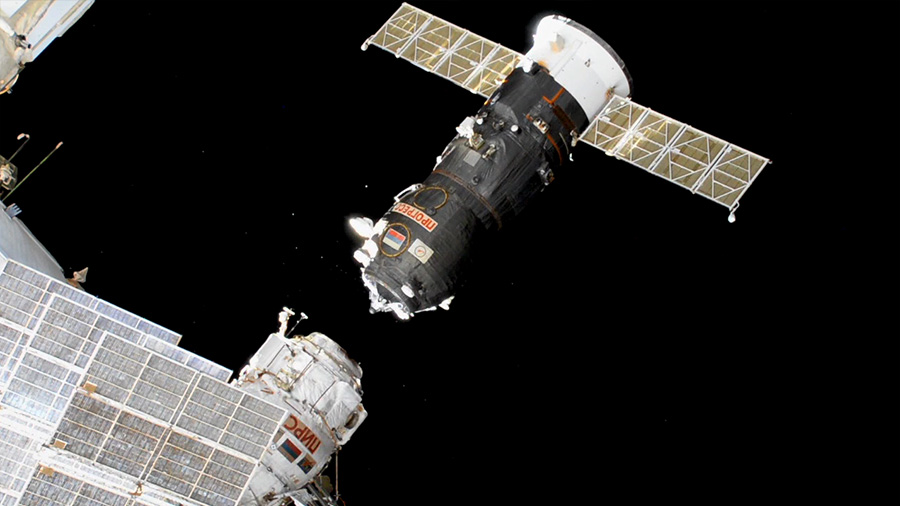
The Progress 70 (70P) resupply ship ended its six-and-a-half month stay at the station when it undocked from Pirs docking compartment today at 7:55 a.m. EST. It descended into Earth’s atmosphere less than four hours later loaded with trash and discarded gear and burned up safely over the southern Pacific.

Northrop Grumman’s Cygnus commercial cargo vessel is next up, scheduled to depart the Unity module in early February. Astronauts Anne McClain and David Saint-Jacques have been reviewing Cygnus departure procedures and carefully packing the spaceship throughout the week.

McClain and Saint-Jacques spent Friday working on a variety of science hardware and life support gear aboard the orbital lab. The duo first set up gear to measure airflow inside Japan’s Kibo laboratory module. Next, they serviced a pair of science freezers nicknamed MELFI and GLACIER that store research samples at ultra-cold temperatures.

NASA’s McClain also replaced hardware in the Actiwatch Spectrum, a wearable device that analyzes an astronaut’s sleep quality, sleep onset, hyperactivity and other daily routines. Saint-Jacques from the Canadian Space Agency activated a new 3D printer known as the Refabricator that uses recycled plastics.

Commander Oleg Kononenko from Roscosmos monitored this morning’s 70P undocking and photographed the departing spacecraft. The station veteran also checked on Russian laptop computers and participated in a study that explores how cosmonauts adapt to complex space tasks.

Get The Details…

Mark Garcia

Russian Cargo Ship Undocks; U.S. Cygnus Leaves in February

Russian Cargo Ship Undocks; U.S. Cygnus Leaves in February

Russian ISS Progress 70 cargo craft
Russia’s Progress 70 cargo craft undocks on time today from the Pirs Docking Compartment .

A Russian Progress 70 (70P) cargo craft undocked from the International Space Station today at 7:55 a.m. EST loaded with trash and discarded gear. It will orbit Earth a few more hours before reentering the Earth’s atmosphere over the Pacific Ocean for a fiery but safe destruction.

The Progress deliver three tons of food, fuel and supplies to the station crew members on July 9. It was after the first two-orbit rendezvous in International Space Station history.

Today’s departure leaves three spaceships attached to the orbital lab including Northrop Grumman’s Cygnus space freighter and Russia’s Progress 71 resupply ship and Soyuz MS-11 crew ship. Cygnus is due to complete its mission when it departs from the station’s Unity module on Feb. 8.

Get The Details…

Mark Garcia

BEAM Stowage, Medical Procedures Review and Commercial Crew Update

BEAM Stowage, Medical Procedures Review and Commercial Crew Update

Nighttime view of the Earth's limb with an aurora
A portion of the International Space Station’s solar arrays caps this nighttime view of the Earth’s limb with an aurora as the orbital complex orbited 258 miles above Ukraine and Russia.

The Expedition 58 crew opened up the International Space Station’s “closet” today stowing hardware inside the experimental module. The three orbital residents also reviewed medical emergency procedures and NASA’s Commercial Crew Program announced a crew update Tuesday.

The Bigelow Experimental Activity Module (BEAM) had its stay extended at the orbital lab in November of 2017. BEAM now serves as a cargo hold and continues to undergo tests of its ability to withstand the rigors of microgravity. Crews periodically check BEAM’s sensors to determine its ongoing suitability for spaceflight.

Astronauts Anne McClain and David Saint-Jacques entered BEAM today stowing a variety of station hardware inside the near three-year-old module. The added volume at the station enables more room for advanced space research at the orbital complex.

They later joined Commander Oleg Kononenko in the afternoon and reviewed procedures in the event a crew member experiences a medical emergency in space. Actions a crew can take if necessary include cardiopulmonary resuscitation, surgical procedures aboard the orbital lab or quickly returning an affected astronaut to Earth aboard the Soyuz spacecraft.

The Commercial Crew Program announced a crew change Tuesday afternoon with NASA astronaut Michael Fincke replacing NASA astronaut Eric Boe. Fincke now begins his training as a crew member for Boeing’s CST-100 Starliner Crew Flight Test. Boe will now become assistant chief of the commercial crew office at Johnson Space Center in Houston.

Get The Details…

Mark Garcia

Astronaut Health Study and Spacesuit Work Onboard Station

Astronaut Health Study and Spacesuit Work Onboard Station

NASA Astronaut Anne McClain
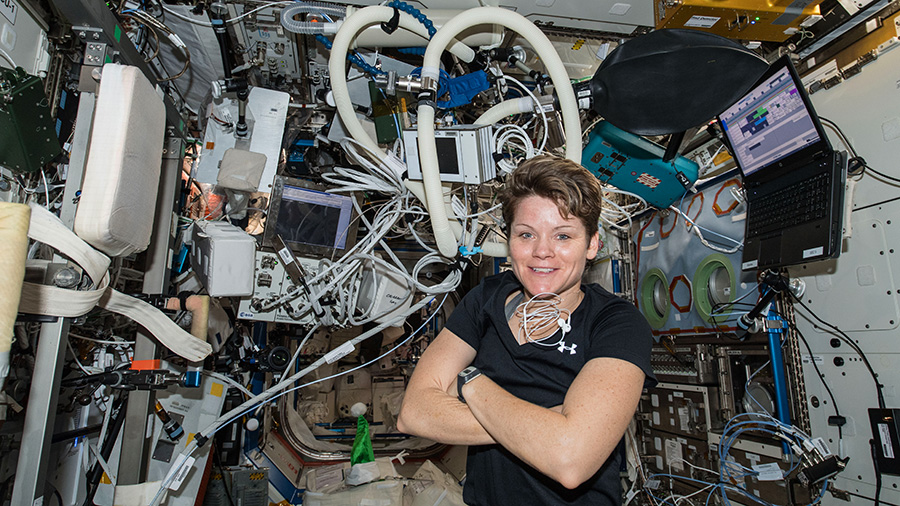
Astronaut Anne McClain is inside the Destiny laboratory module surrounded by exercise gear, including laptop computers and sensors that measure physical exertion and aerobic capacity.

The three Expedition 58 crew members continued studying today the upward flow of fluids inside astronauts’ bodies caused by living in space. The crew also worked on packing a U.S. cargo craft and servicing U.S. spacesuits at the International Space Station.

One easily recognizable symptom of living in space is the “puffy face” astronauts get due to the upward flow of fluids in the body. Underlying impacts of this phenomenon include head and eye pressure changes that occur off Earth which the Fluid Shifts experiment is seeking to better understand.

All three crew members gathered in the Zvezda service module throughout the day using a special suit to temporarily reverse these upward fluid shifts. NASA astronaut Anne McClain wore the Lower Body Negative Pressure suit, which pull fluids downward, while Flight Engineer David Saint-Jacques checked her head and eye pressure using a variety of biomedical devices. Commander Oleg Kononenko assisted the duo with guidance from specialists on the ground.

McClain and Saint-Jacques also partnered up before lunchtime to get the Cygnus resupply ship ready for its departure on Feb. 12. The duo reviewed packing procedures and stowed inventory aboard the U.S. space freighter from Northrop Grumman.

McClain started the day installing the new Facet Cell crystal growth experiment in the Kibo laboratory module. She spent the rest of the afternoon cleaning cooling loops on U.S. spacesuits in the Quest airlock as NASA prepares for spacewalks at the orbital lab later this year.

Get The Details…

Mark Garcia

Tech Work and Life Science Ahead of Orbital Boost Today

Tech Work and Life Science Ahead of Orbital Boost Today

Expedition 58 crew members
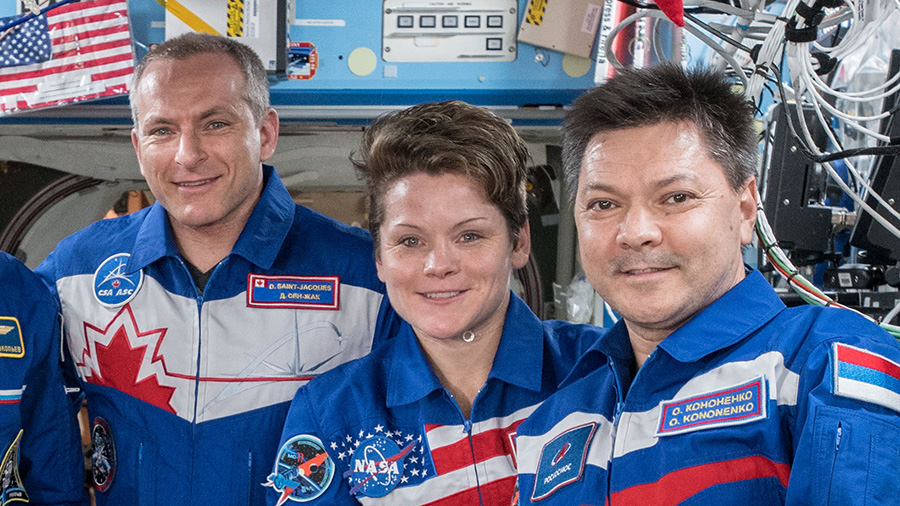
Expedition 58 crew members David Saint-Jacques of the Canadian Space Agency, Anne McClain of NASA and Oleg Kononenko from Roscosmos.

Satellite and combustion technology are being worked on today aboard the International Space Station. The Expedition 58 crew also studied botany and psychology while the station raised its orbit in a planned reboost maneuver.

Anne McClain of NASA installed new SlingShot small satellite deployer gear inside the Cygnus space freighter. SlingShot will deploy small research satellites from Cygnus after it departs the space station’s Unity module in February and reaches a safe distance.

McClain also transferred biomedical hardware for the Fluid Shifts head and eye pressure study into the Zvezda service module for continuing research. She later worked in the Columbus lab module installing a light meter to measure the amount of light nourishing plants inside the Veggie botany facility.

Canadian Space Agency astronaut David Saint-Jacques opened up the Combustion Integrated Rack and configured hardware inside the flame and soot research device. The work is being done ahead of operations for the Advanced Combustion in Microgravity Experiments that encompass a set of five independent gaseous flames studies.

He later typed his mood, thoughts and emotions into an electronic journal for the Behavioral Core Measures experiment. The psychological study seeks to understand how the spacecraft environment, long-term separation from family and friends, loss of day-night cycle and other factors impact crew behavior.

In the Russian segment of the station, Commander Oleg Kononenko transferred fluids and packed trash into the docked Progress 70 (70P) cargo craft. The Progress resupply ship is due to undock from the Pirs docking compartment on Jan. 25.

A second docked Progress cargo craft, the 71P, fired its engines shortly after 1:01 p.m. EST to raise the station’s orbit.  The reboost comes in advance of upcoming cargo missions and the next crew launch in February.

Get The Details…

Mark Garcia