Crew Dragon Splashes Down in Atlantic Ending First Commercial Crew Mission

Crew Dragon Splashes Down in Atlantic Ending First Commercial Crew Mission

Crew Dragon splashes down in the Atlantic Ocean
SpaceX’s Crew Dragon splashes down in the Atlantic Ocean after successful Demo-1 flight on March 8, 2019.

SpaceX’s Crew Dragon returned to Earth with a splash in the Atlantic Ocean off Florida’s eastern shore at 8:45 a.m. EST, completing an end-to-end flight test to demonstrate most of the capabilities of its crew transportation system to the International Space Station as part of NASA’s Commercial Crew Program.

The mission, known as Demo-1, is a critical step for NASA and SpaceX to demonstrate the ability to safely fly missions with NASA astronauts to the orbital laboratory.

The Crew Dragon launched March 2 from NASA’s Kennedy Space Center in Florida. It was the first commercially-built and operated American crew spacecraft and rocket to launch from American soil on a mission to the space station and autonomously dock to the station. To complete the docking, both the station and Crew Dragon’s adapters used the new international docking standard.

Crew Dragon is returning to Earth some critical research samples from science investigations conducted to enable human exploration farther into space and develop and demonstrate in the U.S. ISS National Laboratory new technologies, treatments, and products for improving life on Earth.

Also traveling aboard the spacecraft is an anthropomorphic test device named Ripley outfitted with sensors to provide data about potential effects on humans traveling in Crew Dragon.

SpaceX’s recovery ship, Go Searcher, is equipped with a crane to lift Crew Dragon out of the water and onto the main deck of the ship within an hour after splashdown.

NASA and SpaceX still have work to do to review the systems and flight data to validate the spacecraft’s performance and prepare it to fly astronauts. Already planned upgrades, additional qualification testing, and an in-flight abort test will occur before NASA astronauts Bob Behnken and Doug Hurley will climb aboard for Demo-2, the crewed flight test to the International Space Station that is necessary to certify Crew Dragon for routine operational missions.

Crew Dragon’s splashdown in the Atlantic was almost 50 years after the return of Apollo 9 on March 13, 1969, the last human spacecraft to return to the waters off the East Coast.

More details about the mission and NASA’s commercial crew program can be found in the press kit online and by following the commercial crew blog, @commercial_crew and commercial crew on Facebook.

Learn more about station activities by following @space_station and @ISS_Research on Twitter as well as the ISS Facebook and ISS Instagram accounts.

Get The Details…

Norah Moran

Watch NASA TV to See Crew Dragon’s Return to Earth

Watch NASA TV to See Crew Dragon’s Return to Earth

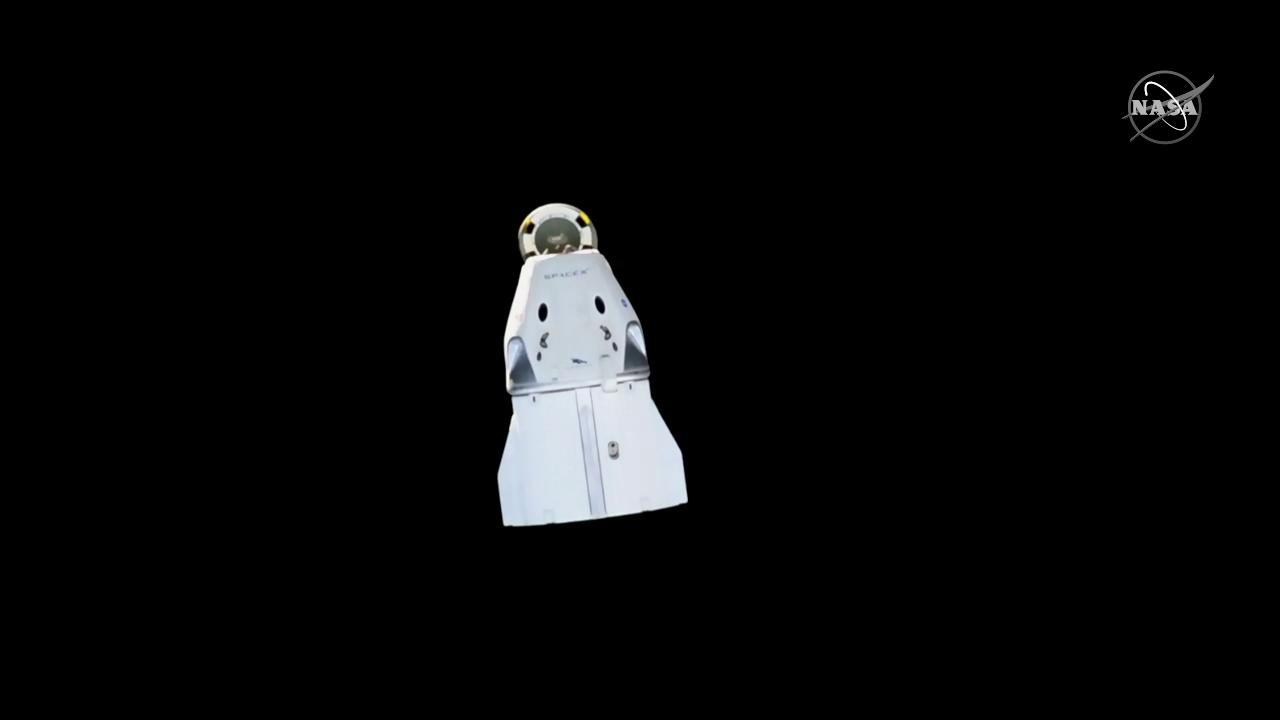
Crew Dragon spacecraft on it's way back to Earth
Crew Dragon spacecraft on it’s way back to Earth after undocking from the International Space Station at 2:32 am EST on March 8, 2019

NASA is providing live coverage of the return to Earth of SpaceX’s Crew Dragon after five days docked to the International Space Station.

Known as Demo-1, SpaceX’s inaugural mission with NASA’s Commercial Crew Program is an important uncrewed end-to-end flight test of the new system’s capabilities.

The spacecraft departed the space station at 2:32 a.m. EST and is on track for a splashdown in the Atlantic Ocean about 200 nautical miles off the eastern shore of Florida.

At approximately 7:48 a.m., Crew Dragon will separate from its trunk containing its solar array and radiator. Four minutes later, the spacecraft’s thrusters will initiate the deorbit burn at 7:52 a.m. The 15-minute, 25-second burn will place the Crew Dragon on its final re-entry path into Earth’s atmosphere. The nosecone will be closed before the spacecraft enters the atmosphere.

At about 8:41 a.m., drogue parachutes will deploy, and the four main chutes will begin to open less than a minute later to slow the Crew Dragon during its final descent prior to its water landing at about 8:45 a.m.

SpaceX’s two recovery ships are positioned nearby to recover Crew Dragon and return it to Cape Canaveral Air Force Station, Florida, to conclude its mission.

More details about the mission and NASA’s commercial crew program can be found in the press kit online and by following the commercial crew blog@commercial_crew and commercial crew on Facebook.

Learn more about station activities by following @space_station and @ISS_Research on Twitter as well as the ISS Facebook and ISS Instagram accounts.

Get The Details…

Norah Moran

Crew Dragon Undocks from the International Space Station

Crew Dragon Undocks from the International Space Station

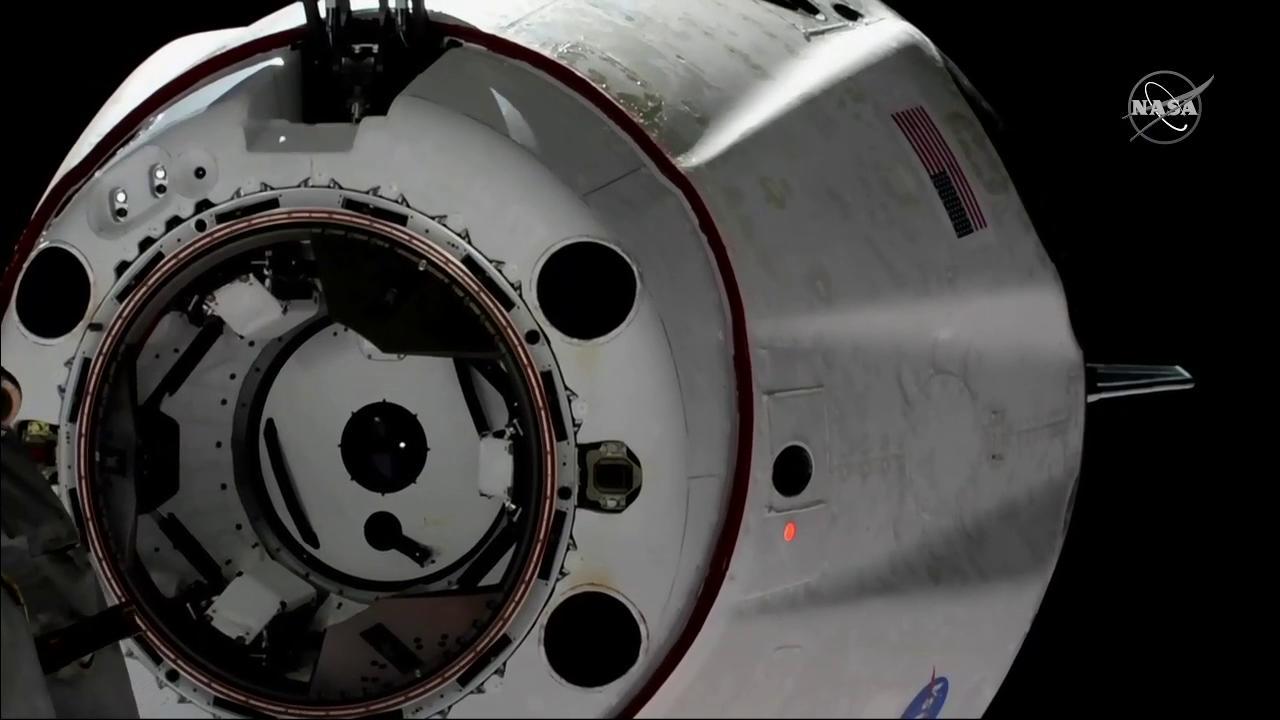
The uncrewed SpaceX Crew Dragon spacecraft
The uncrewed SpaceX Crew Dragon spacecraft just moments after undocking from the International Space Station

At 2:32 a.m. EST, Crew Dragon undocked from the International Space Station to begin the final phase of its uncrewed Demo-1 flight test. The spacecraft is slowly maneuvering away from the orbital laboratory into an orbital track that will return it and its cargo safely to Earth.

NASA will continue to provide live coverage until Crew Dragon is out of the immediate area of the station and will resume at 7:30 a.m. for the reentry, splashdown, and recovery.

In about five hours, the Crew Dragon will separate from its trunk whose exterior contains a solar array that provided power to Dragon and a radiator to reject heat.

Following separation, Crew Dragon’s thrusters will initiate the spacecraft’s deorbit burn at about 7:52 a.m. The 15-minute, 25-second burn will place the Crew Dragon on its final re-entry path into Earth’s atmosphere. The spacecraft is expected to splashdown in the Atlantic Ocean at about 8:45 a.m., its speed slowed by an enhanced parachute system in which drogue parachutes will deploy about four minutes before landing to unfurl four main chutes less than a minute later.

After Crew Dragon lands in the Atlantic Ocean, SpaceX’s recovery ship will recover it and return it to Port Canaveral, Florida to conclude its mission.

SpaceX’s inaugural mission with NASA’s Commercial Crew Program is an important end-to-end to test of the new system’s capabilities.

More details about the mission and NASA’s commercial crew program can be found in the press kit online and by following the commercial crew blog, @commercial_crew and commercial crew on Facebook.

Learn more about station activities by following @space_station and @ISS_Research on Twitter as well as the ISS Facebook and ISS Instagram accounts.

Get The Details…

Norah Moran

Crew Dragon Set for Friday Splashdown Amid Space Physics Research

Crew Dragon Set for Friday Splashdown Amid Space Physics Research

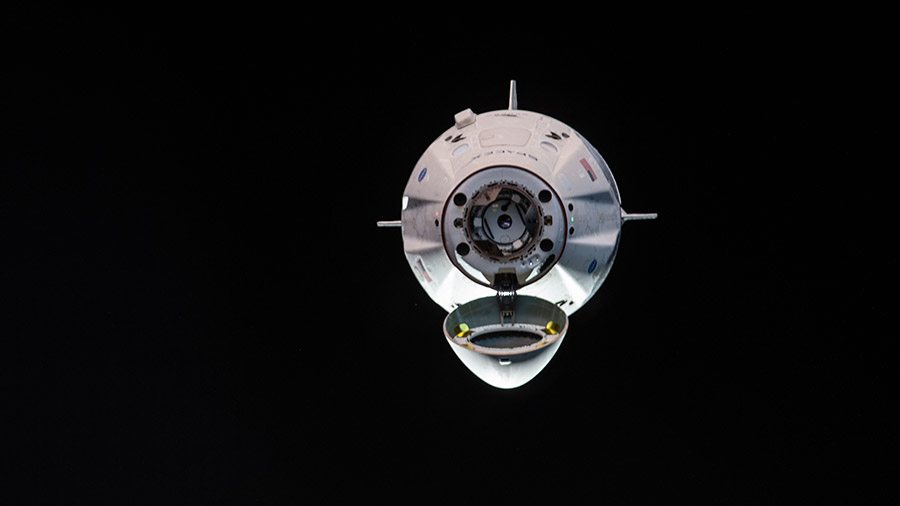
The uncrewed SpaceX Crew Dragon spacecraft
The uncrewed SpaceX Crew Dragon spacecraft is the first Commercial Crew vehicle to visit the International Space Station. Here it is pictured with its nose cone open revealing its docking mechanism while approaching the station’s Harmony module on March 3, 2019.

The SpaceX Crew Dragon’s hatch is closed and the stage is set for the Commercial Crew Program’s first undocking and return to Earth Friday. As NASA and SpaceX get ready for Friday’s splashdown, the Expedition 58 crew continued exploring a variety of space physics phenomena aboard the International Space Station.

The uncrewed SpaceX DM-1 mission has one final milestone and that is the safe return to Earth with a splashdown in the Atlantic Ocean around 8:45 a.m. EST Friday. The Crew Dragon will undock Friday at 2:31 a.m. from the Harmony module’s international docking adapter. NASA TV will broadcast the departure and return activities live.

The first commercial crew vehicle from SpaceX will be bringing back over 330 pounds of science gear, crew supplies and station hardware. It delivered almost 450 pounds of materials to resupply the station crew on March 3.

Science took precedence as usual aboard the orbital lab today as SpaceX prepares to welcome its Crew Dragon back on Earth.

NASA astronaut Anne McClain spent Thursday morning setting up hardware to explore ways to improve the production of higher-quality semiconductor crystals. Afterward, she relocated the Alpha Magnetic Spectrometer laptop computer that researches cosmic rays and antimatter from the Columbus lab module to the Destiny lab module.

Commander Oleg Kononenko worked throughout the day on a Russian-European experiment researching plasma physics. The Plasma Krystal-4 study observes plasma crystal formation that could inform future research and spacecraft designs.

Get The Details…

Norah Moran

Vice President Calls Station, Crew Dragon Packed for Friday Return

Vice President Calls Station, Crew Dragon Packed for Friday Return

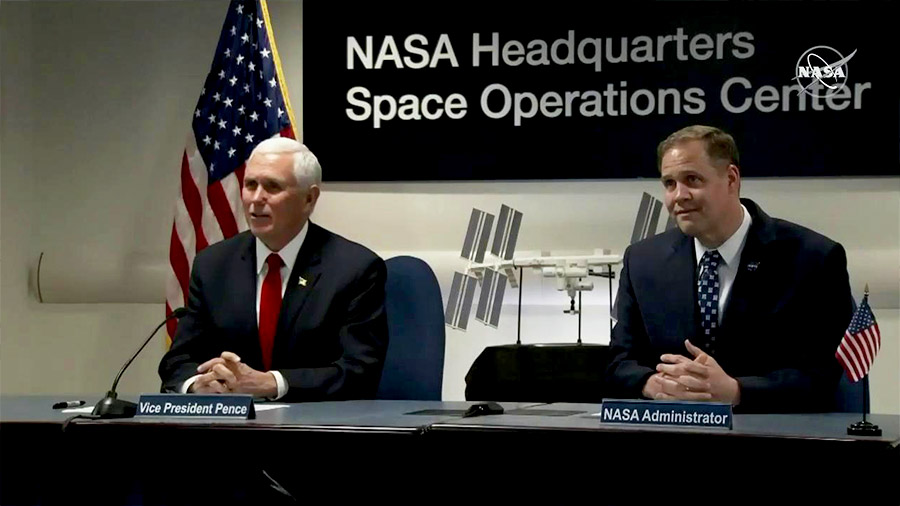
Vice President Mike Pence and NASA Administrator Jim Bridenstine
Vice President Mike Pence and NASA Administrator Jim Bridenstine called up to the Expedition 58 crew today from NASA Headquarters Space Operations Center in Washington, D.C..

Vice President Mike Pence and NASA Administrator Jim Bridenstine called up to the Expedition 58 crew today. Astronauts Anne McClain and David Saint-Jacques were on hand to talk about their mission success and the arrival of the first Commercial Crew vehicle, the SpaceX Crew Dragon.

The Crew Dragon is being packed and readied for its return to Earth on Friday. In the midst of NASA’s first Commercial Crew mission, the crew members continued more space research and practiced an emergency drill today.

Saint-Jacques of the Canadian Space Agency transferred cargo in and out of the Crew Dragon today. Over 300 pounds of science gear, crew supplies and station hardware will be retrieved from Dragon after it returns to Earth.

The Crew Dragon will undock Friday at 2:31 a.m. EST from the Harmony module’s international docking adapter. It will parachute to a splashdown in the Atlantic Ocean around 8:45 a.m. EST. NASA TV will cover all the activities live.

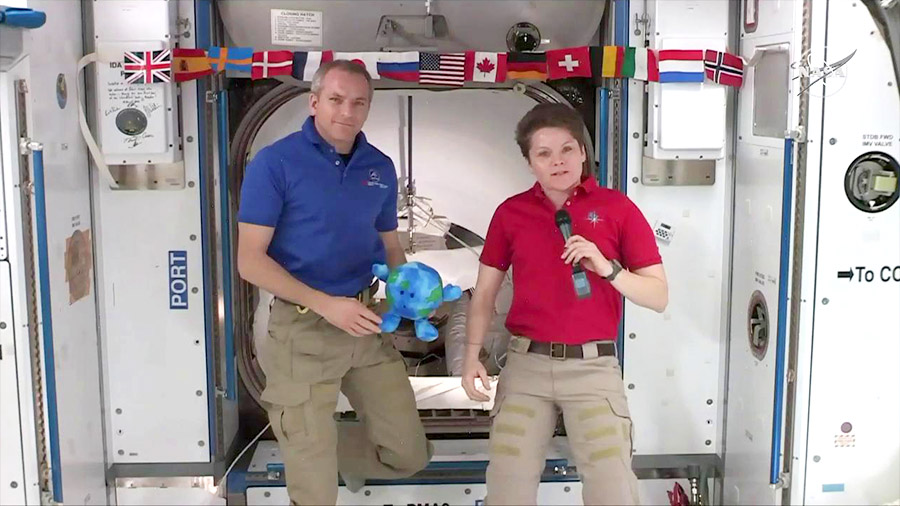
Astronauts Anne McClain and David Saint-Jacques
Astronauts David Saint-Jacques (left) and Anne McClain talk to the Vice President and NASA Administrator about their mission success and the arrival of the SpaceX Crew Dragon.

McClain from NASA worked in the Destiny laboratory module today stowing science hardware after working on the Microgravity Sciences Glovebox. She then began collecting and readying more experiment hardware that will test ways to improve the production of higher-quality semiconductor crystals.

Both astronauts then joined Commander Oleg Kononenko from Roscosmos to practice an emergency evacuation of the International Space Station. The trio wore breathing masks, entered the docked Soyuz spacecraft and prepared for a return to Earth in the unlikely event of a critical emergency aboard the orbital complex.

Get The Details…

Mark Garcia