Day Before HTV-8 Launch, Crew Studies Effects of Microgravity on Space-faring Humans

Day Before HTV-8 Launch, Crew Studies Effects of Microgravity on Space-faring Humans
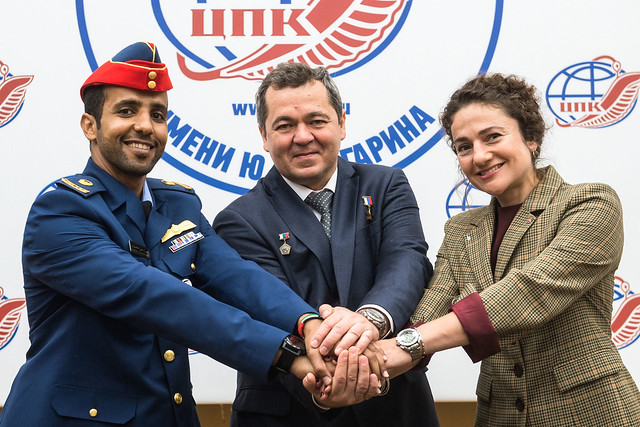
At the Gagarin Cosmonaut Training Center in Star City, Russia, spaceflight participant Hazzaa Ali Almansoori of the United Arab Emirates (left), Oleg Skripochka of Roscosmos (center) and Jessica Meir of NASA (right) pose for pictures Sept. 5 as part of a pre-flight news conference. They will launch Sept. 25 from the Baikonur Cosmodrome in Kazakhstan on the Soyuz MS-15 spacecraft for a mission on the International Space Station. Credit: Gagarin Cosmonaut Training Center

The International Space Station is abuzz as preparations heat up for the launch of the Japan Aerospace Exploration Agency HTV-8 “Kounotori” cargo craft from the Tanegashima Space Center tomorrow, Sept. 10. Launch is slated for 5:33 p.m. EDT, and can be seen live on NASA Television.  

NASA astronauts Christina Koch and Andrew Morgan spent more time practicing 30-meter approach and capture runs, followed by their own evaluations, in preparation for HTV-8’s arrival days later on Saturday, Sept. 14. The vehicle will be loaded with more than four tons of supplies, spare parts and experiment hardware for the space station residents.  

In the Kibo module, Morgan spoke to media out of Morgantown, West Virginia, referencing not only of NASA’s future with the Artemis program, but also the work currently underway that will benefit life on Earth and expand humanity’s reach into the solar system. Morgan referenced his early morning tasks with Fluid Shifts and his first spacewalk just weeks before, when he and NASA astronaut Nick Hague installed International Docking Adapter to usher in a new era of commercial visiting vehicles that will launch from American soil.  

Science investigations that will help develop countermeasures for humans exploring deep space, and for longer durations, rounded out the busy Monday. Commander Alexey Ovchinin of Roscosmos and crewmates Koch and Hague conducted eye exams aboard the orbiting laboratory. Since it is known that living and working in microgravity can induce vascular changes, as well as head and eye pressure, these measurements will help medical experts and scientists on the ground track crew health as Expedition 60 continues. Furthering research for Fluid Shifts, all other crewmates, with the exception of Koch and ESA (European Space Agency) astronaut Luca Parmitano, conducted venous ultrasounds in support of ongoing studies into vascular and fluid movement within space-faring human bodies. 

Parmitano, meanwhile, worked to close out Space Moss, an experiment that helps decode how microgravity affects the growth, development, gene expression and photosynthetic activity of tiny, rootless moss plants growing within the Cell Biology Experiment Facility incubator on the orbiting laboratory.  

Back on Earth, cosmonaut Oleg Skripochka, NASA astronaut Jessica Meir and spaceflight participant Hazzaa Ali Almansoori are set to depart for the Baikonur Cosmodrome in Kazakhstan tomorrow after spending the week prior taking part in ceremonial activities and mission briefings leading up to their mission start on Sept. 25, when they launch into space aboard a Soyuz MS-15 spacecraft. 

Learn more about station activities by following the space station blog@space_station and @ISS_Research on Twitter, as well as the ISS Facebook and ISS Instagram accounts.

Get The Details…

Catherine Williams

Powered by WPeMatico
Soyuz MS-14 Bearing Russian Cargo Safely Back on Earth

Soyuz MS-14 Bearing Russian Cargo Safely Back on Earth

Soyuz MS-14 Spacecraft
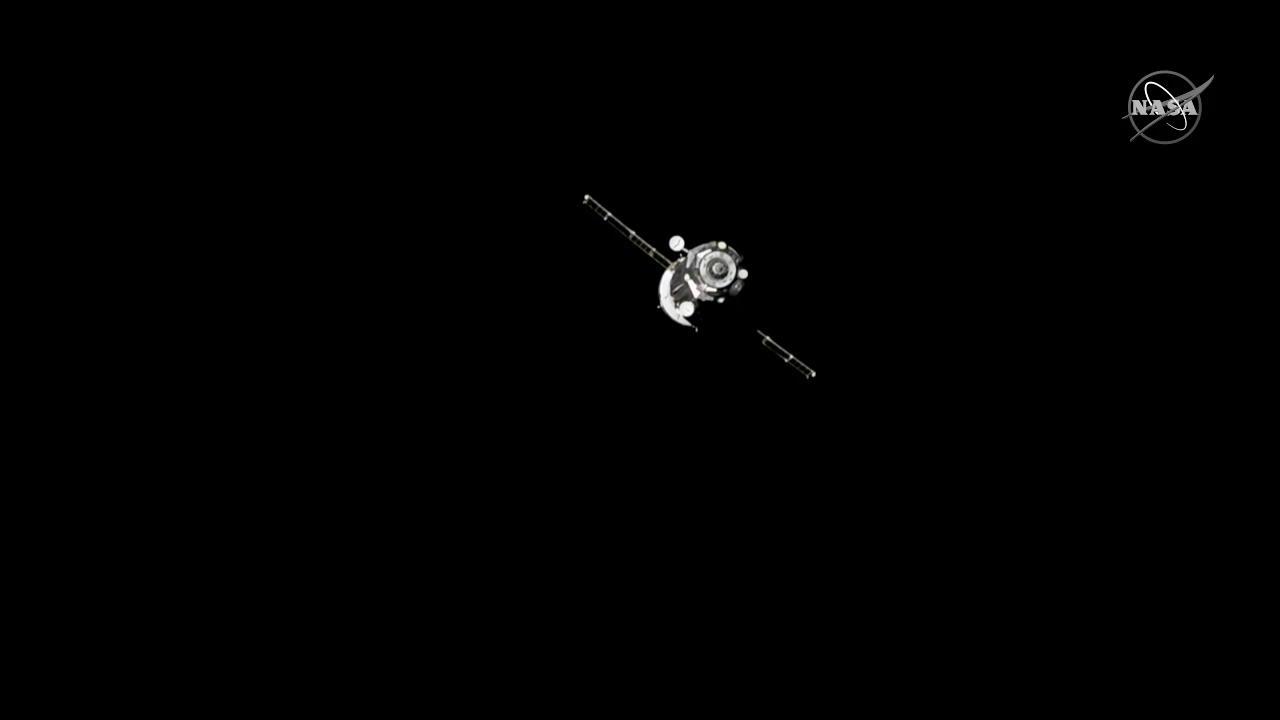
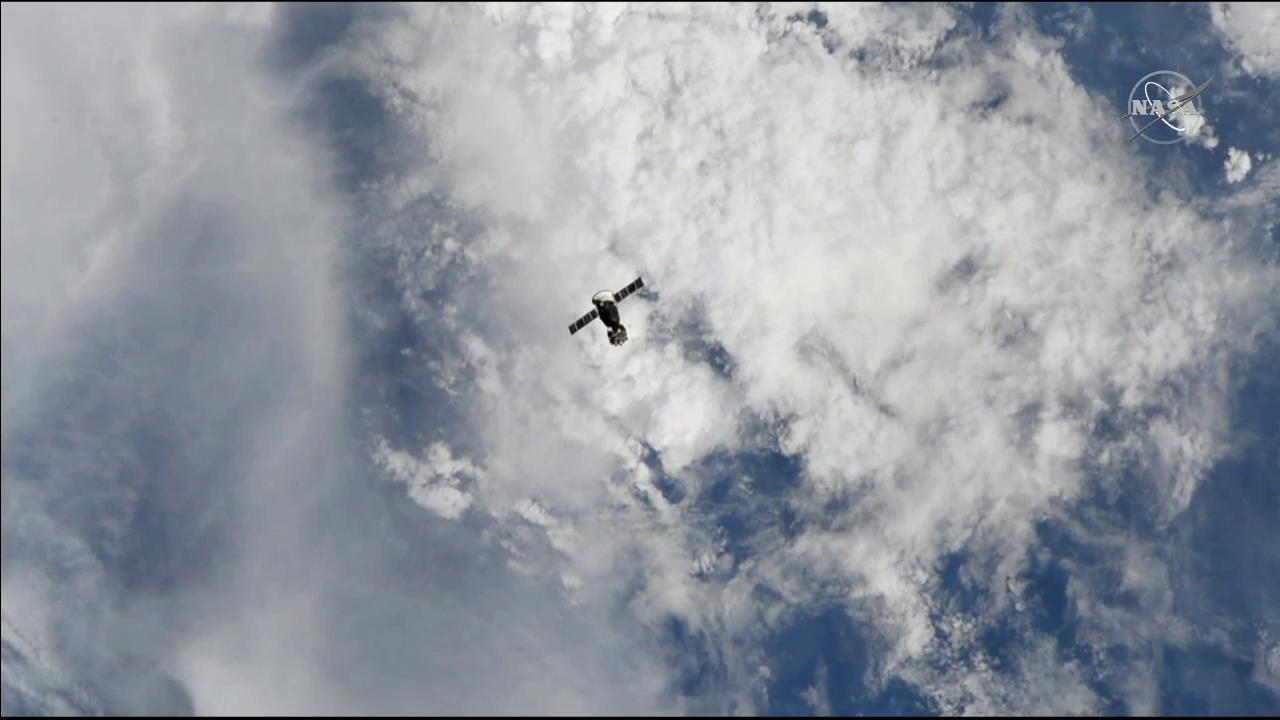
The Soyuz MS-14 spacecraft on it’s way back to Earth after departing from the International Space Station on Friday, September 6, 2019.

The Soyuz MS-14 spacecraft bearing Russian gear and supplies is safely back on Earth after parachuting to a landing in south-central Kazakhstan at 5:32 p.m. EDT (3:32am Kazakhstan time on Saturday, Sept. 7).  Landing occurred about 87 miles southeast of the town of Dzhezkazgan. Roscosmos personnel are on-site and have recovered the vehicle for postflight analysis.

Earlier, at 2:14 p.m., while flying about 260 miles above the border between northeastern China and southeastern Russia, the unpiloted vehicle undocked and departed from the International Space Station’s aft-facing port of the Zvezda service module for the short voyage home.

The uncrewed Russian Soyuz spacecraft launched from the Baikonur Cosmodrome in Kazakhstan on Aug. 21, carrying 1,450 pounds of cargo to replenish the Expedition 60 crew residing at the orbital outpost. Part of its payload included a humanoid robot that was tested aboard the space station before being loaded back for its return trip. The MS-14’s flight also helped to validate the spacecraft’s compatibility for a revamped Soyuz booster rocket, which will be used to transport crews beginning spring 2020.

Learn more about station activities by following the space station blog@space_station and @ISS_Research on Twitter as well as the ISS Facebook and ISS Instagram accounts.

Get The Details…

Norah Moran

Powered by WPeMatico

Uncrewed Soyuz Undocked from Space Station

Uncrewed Soyuz Undocked from Space Station

Soyuz MS-14 Spacecraft
The Soyuz MS-14 spacecraft is pictured departing from the International Space Station on Friday, September 6, 2019.

While flying about 260 miles above the border between northeastern China and southeastern Russia, an uncrewed Russian Soyuz spacecraft undocked and departed from the International Space Station at 2:14 p.m. EDT.

The Soyuz MS-14 spacecraft was attached to the station’s aft-facing port of the Zvezda service module for a two-week stay as part of its test flight. The Soyuz delivered 1,450 pounds of cargo to the Expedition 60 crew currently residing on the orbital outpost. Part of the cargo was a humanoid robot that was used for tests before being loaded back inside the Soyuz for its return to Earth.

The Soyuz will land back on Earth in south-central Kazakhstan at 5:34 p.m. (3:34 a.m. Kazakhstan time on Sept. 7), where Russian personnel will be standing by to recover the spacecraft for postflight analysis. NASA TV will not provide live coverage of landing. The mission’s completion will be reported on social media and the agency’s website.

Learn more about station activities by following the space station blog, @space_station and @ISS_Research on Twitter as well as the ISS Facebook and ISS Instagram accounts.

Get The Details…

Norah Moran

Powered by WPeMatico

NASA TV to Air Undocking of Uncrewed Soyuz

NASA TV to Air Undocking of Uncrewed Soyuz

The unpiloted Soyuz MS-14 spacecraft
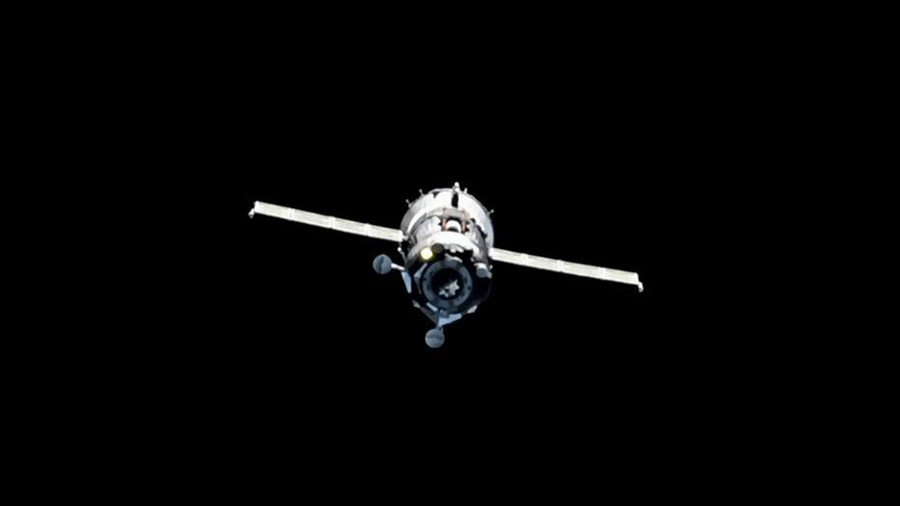
The unpiloted Soyuz MS-14 spacecraft approaches the International Space Station for an automated docking.

Beginning at 1:45 p.m. EDT Friday, NASA Television and the agency’s website will air the undocking and departure from the International Space Station of an uncrewed Russian Soyuz spacecraft. The Soyuz MS-14  is scheduled to undock from the station’s aft-facing Zvezda module at 2:14 p.m.

The uncrewed Soyuz launched from the Baikonur Cosmodrome in Kazakhstan on Wednesday, Aug. 21 on a test flight to validate the spacecraft’s compatibility with a Soyuz 2.1a booster rocket. The spacecraft arrived and docked to the station on Monday Aug. 26. The upgraded Soyuz spacecraft and the Soyuz booster will be used to transport crews to the International Space Station beginning in spring 2020.

Learn more about station activities by following the space station blog@space_station and @ISS_Research on Twitter as well as the ISS Facebook and ISS Instagram accounts.

Get The Details…

Norah Moran

Powered by WPeMatico

NASA Television to Air Launch, Capture of Cargo Ship to Space Station

NASA Television to Air Launch, Capture of Cargo Ship to Space Station


A Japanese cargo spacecraft loaded with more than four tons of supplies, spare parts and experiment hardware is scheduled to launch from the Tanegashima Space Center in southern Japan to the International Space Station at 5:33 p.m. EDT Tuesday, Sept. 10 (6:33 a.m. Sept. 11 in Japan).

Get The Details…

NASA Breaking News

Powered by WPeMatico