Biological, Materials Sciences and Inspiration Reign Supreme at End of Workweek

Biological, Materials Sciences and Inspiration Reign Supreme at End of Workweek
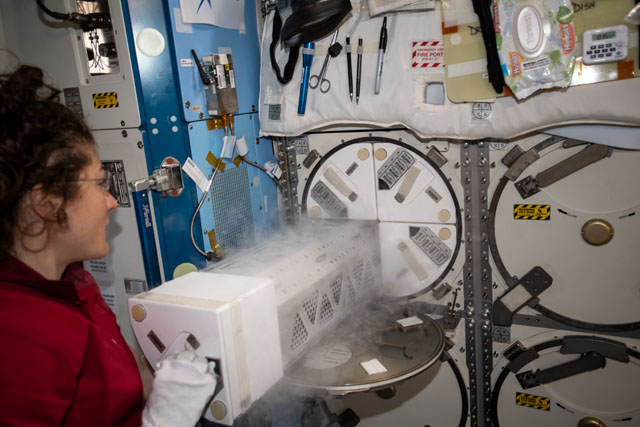
Expedition 60 Flight Engineer Christina Koch of NASA conducts research for a protein crystal growth experiment in the Kibo Japanese Experiment Module (JEM). The research investigates the production of antibody therapies with a longer shelf-life to benefit humans on Earth and in space. Credit: NASA

The crew of Expedition 60 devoted their Friday to working on groundbreaking scientific research aboard the International Space Station, as well as inspiring the Artemis generation during a downlink hosted by the National STEM Cell Foundation. 

Flight Engineers Nick Hague and Andrew Morgan of NASA took the mantle of fielding selected questions from 39 middle school classrooms nationwide during the space-to-Earth call at 10:55 a.m. EDT. The downlink, hosted by the National STEM Cell Foundation at the Kentucky Science Center, allowed classes that are part of the National STEM Scholar Program to get a firsthand look at what it’s like to live and work in microgravity, with the crewmates providing anecdotes from their time in space. 

Hague and Morgan, along with NASA astronaut Christina Koch and Luca Parmitano of (European Space Agency), further investigated the effects of spaceflight on rodent residents with Rodent Research-17, evaluating the changes caused by microgravity to their immunity, cells, bones and musculature. These findings will bolster discoveries for new therapies — both in space and back on Earth. 

Koch also performed experiment maintenance, installing a sample cartridge into the Cryo Chiller within an Expedite the Processing of Experiments to Space Station (EXPRESS) locker. This unique chiller provides rapid freezing capability in support of biological sciences, as well as temperature-controlled transfer to and from the space station on visiting vehicles. 

Hague and Koch captured cinematic recordings of Morgan working on the Microgravity Crystals experiment for ISS Experience, a virtual reality series will educate to Earth audiences on what Expedition crew members do each day in support of operations and research. The experiment will illustrate how microgravity can be helpful in learning about diseases on Earth through the crystallization of a membrane protein integral to tumor growth and cancer survival. While the crystallization of this protein has yielded unsatisfactory results in gravity, Microgravity Crystals leverages the absence of gravity for extensive protein crystallization work onboard, significantly increasing the likelihood of successful crystal growth. Forthcoming results may support the development of cancer treatments that target the protein more effectively, and with fewer side effects. 

Commander Alexey Ovchinin of Roscosmos joined his American teammates in conducting routine eye ultrasounds. Since long-duration space missions have been shown to cause severe and lasting physical damage to some astronauts’ eyes, continued monitoring of eye health is necessary to mitigate any noticeable effects for the crew. 

Get The Details…

Catherine Williams

Powered by WPeMatico
New Station Crew Continues Preparations for Launch as Expedition 60 Enjoys Off Day

New Station Crew Continues Preparations for Launch as Expedition 60 Enjoys Off Day

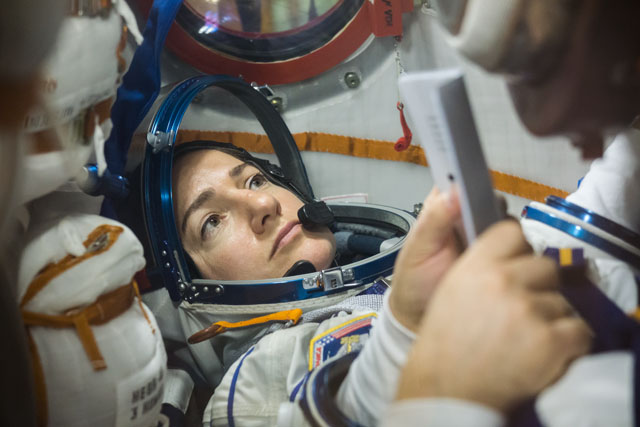
In the Integration Building at the Baikonur Cosmodrome in Kazakhstan, Expedition 61 crew member Jessica Meir of NASA runs through procedures Sept. 11 aboard the Soyuz MS-15 spacecraft during an initial Soyuz vehicle fit check. Credit: NASA/Victor Zelentsov

The crew of Expedition 60, consisting of Commander Alexey Ovchinin of Roscosmos; NASA astronauts Christina Koch, Andrew Morgan and Nick Hague; ESA (European Space Agency) astronaut Luca Parmitano; and cosmonaut Alexander Skvortsov, took much-needed respite during an off-duty day aboard the International Space Station. Tomorrow, investigations furthering scientific research in support of crew health and extended travels to destinations deeper in the solar system will resume.

On Earth, the Expedition 61 prime crew of cosmonaut Oleg Skripochka and NASA astronaut Jessica Meir, along with spaceflight participant Hazzaa Ali Almansoori, are at the Gagarin Cosmonaut Training Center in Star City, Russia, finalizing pre-launch training and preparations for their launch on Sept. 25 aboard a Soyuz MS-15 spacecraft. Yesterday, they ran through procedures and completed the necessary fit check, spacesuits donned, within the Soyuz vehicle. Today, they took part in ceremonial activities, such as raising the flags of Russia, the United States, and the United Arab Emirates, along with backup crew members Tom Marshburn of NASA, Sergey Ryzhikov of Roscosmos and spaceflight participant Sultan Al-Neyadi of the United Arab Emirates.

Get The Details…

Catherine Williams

Powered by WPeMatico
Decoding Human Biology at Top of Task List for Station Residents

Decoding Human Biology at Top of Task List for Station Residents

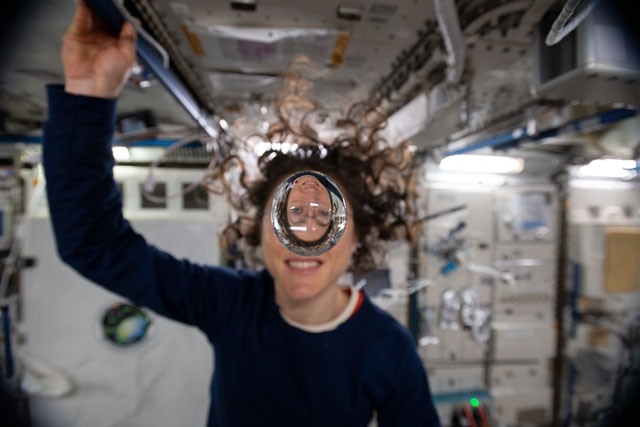
Expedition 60 Flight Engineer Christina Koch of NASA playfully demonstrates how fluids behave in the weightless environment of microgravity aboard the International Space Station. Credit: NASA

Expedition 60 is the midst of a busy week aboard the International Space Station, even with yesterday’s launch scrub of the Japan Aerospace Exploration Agency (JAXA) HTV-8 “Kounotori” cargo vehicle. While JAXA teams are meeting to discuss a forward plan and assess launch opportunities, mission operations and scientific investigations are moving forward in orbit.   

Half the crew —NASA astronauts Christina Koch and Andrew Morgan ESA (European Space Agency) crewmate Luca Parmitano— spent part of their day reviewing spacewalk procedures and training for an upcoming series of spacewalks to upgrade batteries during a maintenance activity for the outpost. 

Morgan also assisted NASA astronaut Nick Hague and cosmonaut Alexander Skvortsov of Roscosmos with additional work in support of Fluid Shifts, again evaluating a Chibis Lower Body Negative Pressure suit as a potential countermeasure for explorers having trouble maintaining adequate blood pressure during phases of egress and landing. 

Koch, meanwhile, performed necessary maintenance for the Rodent Research-17 experiment, temporarily relocating the rodent occupants to clean out the habitats and restock them with new food bars. This investigation evaluates the physiological, cellular and molecular effects of microgravity, testing the theory that the cosmic environment can accelerate aging. As researchers gain a better understanding of immune, bone and muscle disease processes, new therapies in space and on Earth can beneficially result. 

Parmitano rounded out the busy day by performing a self-guided ultrasound for the ground team in support of the Vascular Echo study, which examines changes in blood vessels and the heart in astronauts. It’s been observed that Expedition crew members return to Earth with stiffer arteries than they had before going into space. This experiment will provide insight into potential countermeasures to maintain crew health and improve quality of life for everyone … including those of us on Earth.

Get The Details…

Catherine Williams

Powered by WPeMatico
HTV-8 Launch Scrubbed for Tonight

HTV-8 Launch Scrubbed for Tonight

The Japanese HTV-6 cargo vehicle
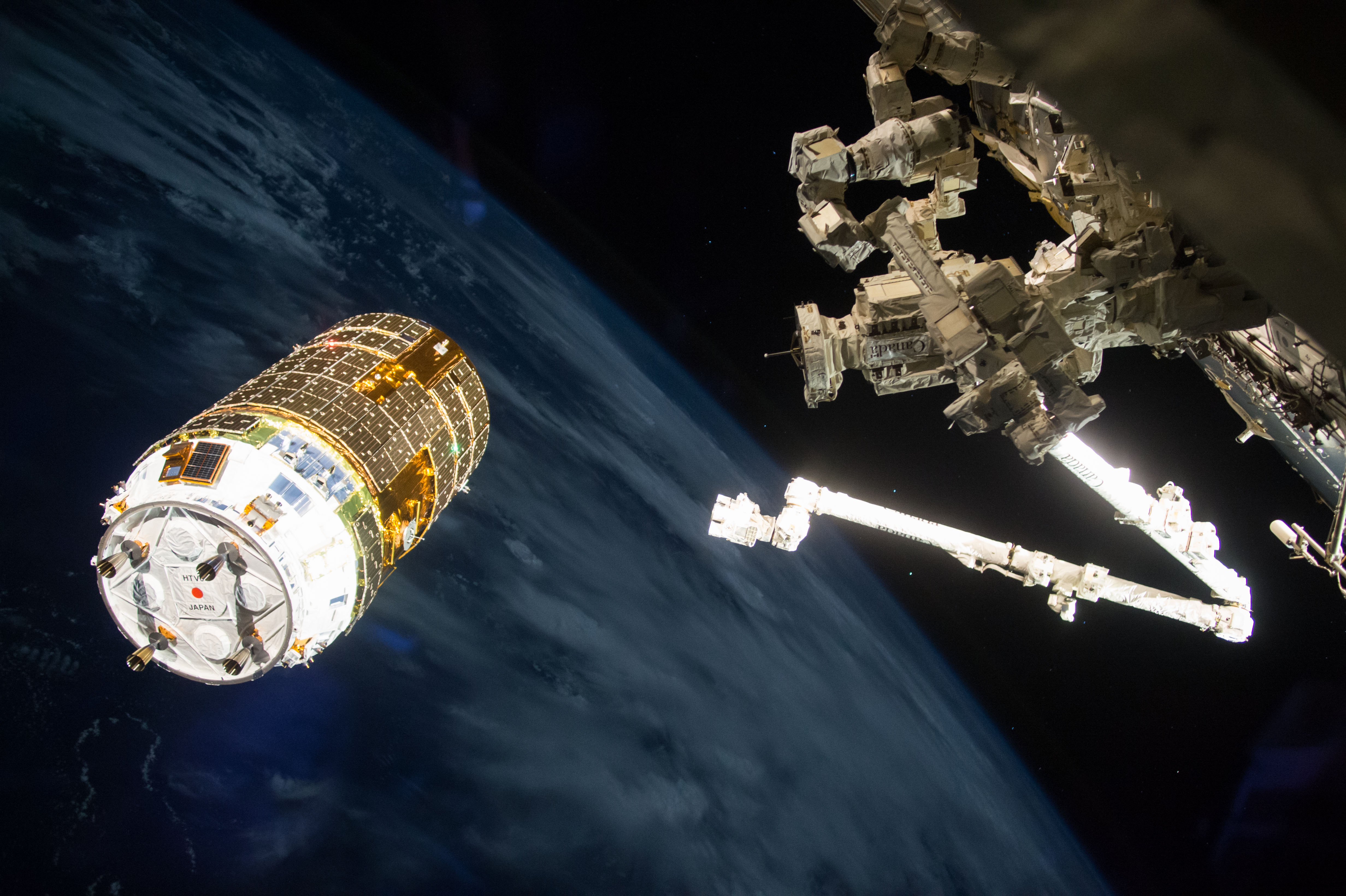
The Japanese HTV-6 cargo vehicle is seen during final approach to the International Space Station. Like HTV-8, HTV-6 was loaded with more than 4 tons of supplies, water, spare parts and experiment hardware. Credit: NASA

Mission Control in Houston informed the crew aboard the International Space Station that tonight’s launch of the Japan Aerospace Exploration Agency (JAXA) unpiloted H-II Transfer Vehicle-8 (HTV-8) cargo spacecraft was scrubbed due to a fire on or near the launch pad at Tanegashima Space Center. The astronauts are safe aboard the station and well supplied.


More information will be provided as it becomes available.

Get The Details…

Norah Moran

Powered by WPeMatico

Spacewalk Prep and Science Punctuate Launch Day for HTV-8

Spacewalk Prep and Science Punctuate Launch Day for HTV-8

The Japan Aerospace Exploration Agency’s uncrewed cargo transfer craft, called HTV, will deliver supplies and new investigations to the International Space Station.
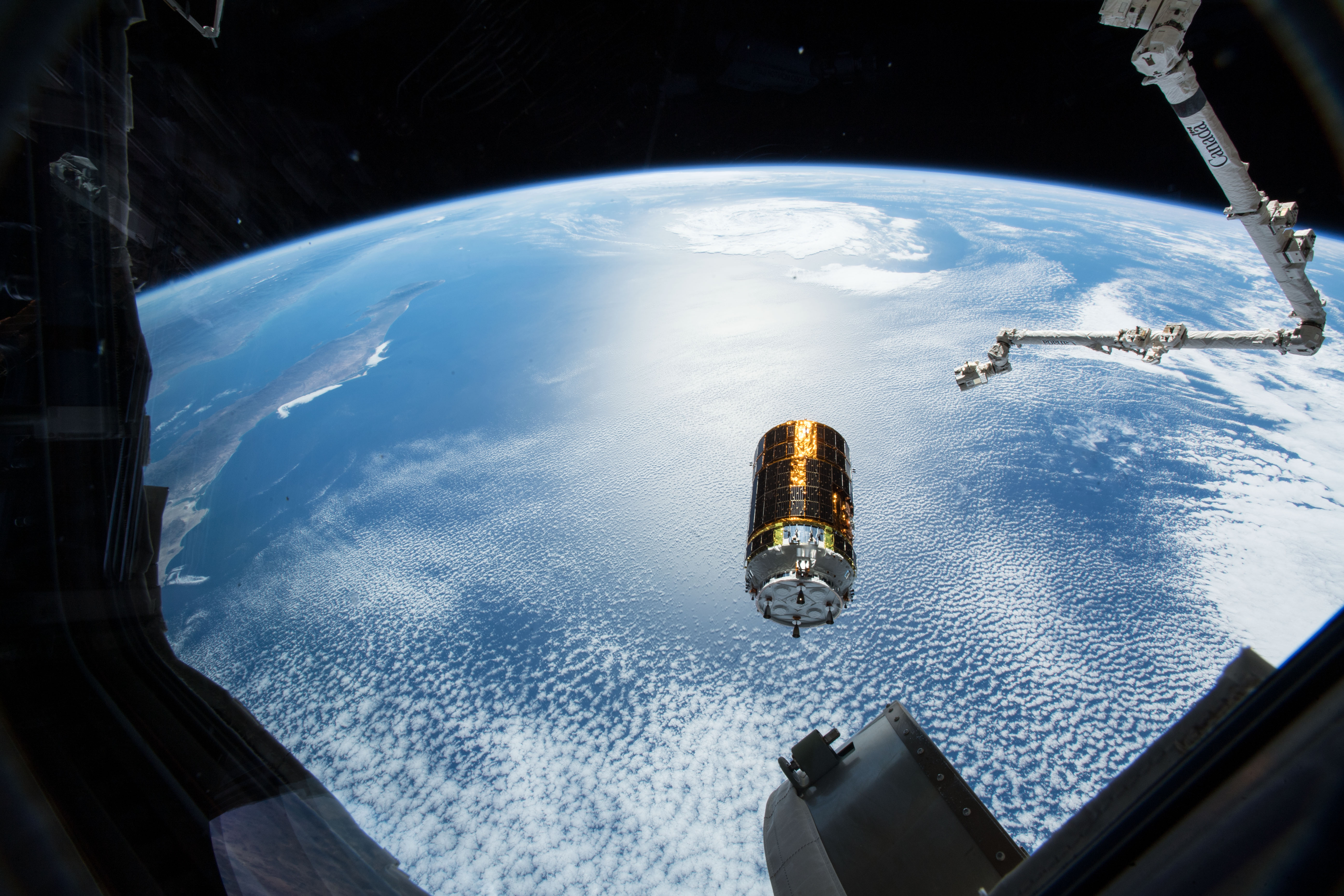
The Japan Aerospace Exploration Agency’s uncrewed cargo transfer craft, called HTV, will deliver supplies and new investigations to the International Space Station. Here, the HTV-7 resupply ship is pictured after its release from the Canadarm2 robotic arm as the space station orbited above the Pacific Ocean some 311 miles west of Baja California. Credit: NASA

Ten years after the Japan Aerospace Exploration Agency launched its first H-II Transfer Vehicle (HTV) mission, today the HTV-8 “Kounotori” cargo craft will launch from the Tanegashima Space Center to the International Space Station. While launch is scheduled for 5:33 p.m. EDT, NASA Television will start its coverage at 5 p.m.  

Days after, on Saturday, Sept. 14, Expedition 60 Flight Engineer Christina Koch of NASA, backed up by her NASA crewmate Andrew Morgan, will operate the station’s Canadarm2 robotic arm from the station’s cupola to capture the 12-ton spacecraft as it approaches from below. Robotics flight controllers will then take over the operation of the arm to install HTV-8 to the Earth-facing port of the Harmony module, where it will spend a month attached. Flight Engineer Luca Parmitano of ESA (European Space Agency) will monitor HTV-8 systems during its approach to the station. 

Aboard the orbiting laboratory, preparations to receive the craft continue, with Koch and Morgan completing training to grapple the vehicle. They also performed several approaches with the Canadarm2 to simulate HTV capture. 

Expedition 60 crew members worked on experiments that will give researchers on the ground insight into plant germination in a microgravity environment, supporting the possibility of plant growth on the Moon or Mars for human consumption or other purposes. NASA astronaut Nick Hague took additional photo documentation of the United Arab Emirates (UAE) Palm Tree Growth Experiment, which observes and documents the root development of the Date Palm in space — and plant vital to the UAE ecosystem. 

Hague also assisted Commander Alexey Ovchinin of Roscosmos with the Fluid Shifts investigation, using a Chibis Lower Body Negative Pressure suit to evaluate its feasibility as a countermeasure for postflight orthostatic intolerance, or the inability to maintain blood pressure while in an upright position. Though fluid loading and compression garments show promise in preventing this phenomenon, neither has proven completely effective for all phases of landing and egress; thus, research continues. 

Parmitano spent time recording an introduction for ISS Experience, previewing upcoming activities for the station crew. Filmed over many months, this cinematic virtual reality series will showcase living and working aboard the space station for viewers on the ground. He also worked with Rodent Research, powering down and stowing the habitat in a storage locker for later use. 

The crew also ramped up extravehicular activity, or spacewalk, preparations, gathering and configuring tools for an upcoming spacewalk that will upgrade batteries on the outside of the orbiting laboratory. 

Meanwhile, approximately 250 miles below, the Expedition 61 prime crew of cosmonaut Oleg Skripochka, NASA astronaut Jessica Meir and spaceflight participant Hazzaa Ali Almansoori flew from the Gagarin Cosmonaut Training Center in Star City, Russia, to their launch site at the Baikonur Cosmodrome in Kazakhstan to finalize pre-launch training for a Sept. 25 launch on the Soyuz MS-15 spacecraft to the space station. 

Learn more about station activities by following the space station blog@space_station and @ISS_Research on Twitter, as well as the ISS Facebook and ISS Instagram accounts.

Get The Details…

Catherine Williams

Powered by WPeMatico