The Marshall Star for February 14, 2024

The Marshall Star for February 14, 2024

21 Min Read

The Marshall Star for February 14, 2024

This artist's illustration shows a cross-section of the supermassive black hole and surrounding material in the center of our galaxy.

Marshall Chief Scientist Provides Valuable Insight into NASA Moonquake Study

By Jonathan Deal

The Moon holds clues to the evolution of Earth, the planets, and the Sun, and a new NASA-funded study is helping scientists better understand some of the mysteries beneath the surface of our nearest cosmic neighbor. The co-author of that study is chief scientist of NASA’s Marshall Space Flight Center, Renee Weber, who is also a member of NASA’s Artemis Science Team – a broad group of scientists from around the agency working to commence a new era of deep space science and exploration.

As a lunar seismologist and lunar geophysicist, Weber provides expertise to the Artemis Science Team, including knowledge of the types of seismic events that can occur on the Moon, to better understand its internal geology and surface environment.

Map of possible moonquakes at lunar south pole.
The epicenter of one of the strongest moonquakes recorded by the Apollo Passive Seismic Experiment was in the lunar south polar region. However, the exact location of the epicenter could not be accurately determined. A cloud of possible locations (magenta dots and light blue polygon) of the strong shallow moonquake using a relocation algorithm specifically adapted for very sparse seismic networks are distributed near the pole. Blue boxes show locations of proposed Artemis III landing regions. Lobate thrust fault scarps are shown by small red lines. The cloud of epicenter locations encompasses a number of lobate scarps and many of the Artemis III landing regions.
NASA/LROC/ASU/Smithsonian Institution

The latest study revealed that the Moon is still geologically active and presents evidence that tectonic faults, generated as the Moon’s interior gradually cools and shrinks, are found near some of the areas NASA identified as candidate landing regions for Artemis III – the first Artemis mission planned to have a crewed lunar landing.

“This study looked at tectonic faults and steep slopes in the lunar South polar region and found that some areas are susceptible to seismic shaking and regolith landslides,” Weber said. “Once the faults were mapped, we calculated the sizes of potential moonquakes that could be generated to create a map of seismic hazard in the vicinity of tectonic faults and steep slopes.”

The study discovered that relatively small, young thrust faults, called lobate scarps, are widely distributed in the lunar crust. The scarps form where contractional forces break the crust and push, or thrust, rock on one side of the fault up and over rock on the other side. The contraction is caused by cooling of the Moon’s still-hot interior and tidal forces exerted by Earth, resulting in global shrinking. The scarps were identified in images taken by the Lunar Reconnaissance Orbiter Camera onboard NASA’s LRO (Lunar Reconnaissance Orbiter).

The formation of the faults is accompanied by seismic activity in the form of shallow-depth moonquakes. Such shallow moonquakes were recorded by the Apollo Passive Seismic Network, a series of seismometers deployed by the Apollo astronauts, and could potentially also be recorded by a new seismic instrument scheduled to launch next year aboard an upcoming CLPS (Commercial Lunar Payload Services) flight. That instrument – the Farside Seismic Suite – will return the agency’s first seismic data from the far side of the Moon, helping scientists to understand the region’s tectonic activity. The data may also reveal how often the lunar far side is impacted by small meteorites and determine if the seismicity is different on the far side of the Moon from what was measured during Apollo on the lunar near side.

“To better understand the seismic hazard posed to future human activities on the Moon, we need new seismic data, not just at the South Pole, but globally,” Weber said. “Missions like the upcoming Farside Seismic Suite, as well as future potential missions like the Lunar Geophysical Network concept, will expand upon measurements made during Apollo and add to our knowledge of global seismicity.”

Official Portrait: Renee Weber
Renee Weber is chief scientist at NASA’s Marshall Space Flight Center.
NASA

As NASA develops long-term infrastructure on the lunar surface, Weber’s research will provide invaluable insight for the Artemis Science Team that will be refining mission architectures that preserve flexibility for science and operations at a variety of landing sites and will apply new scientific knowledge, such as continued research on seismic measurements, gathered along the way.

“Being able to go back to the Moon, gather more data, and pick up more samples will help us improve our understanding of the Moon and answer our fundamental questions – how did it form? How did it evolve? Where are the resources? More seismic measurements like the ones conducted during Apollo could help us better characterize seismicity in the lunar South Pole region,” Weber said.

The study does not impact the Artemis III landing region selection process, according to Weber, because estimating how often a specific region experiences a moonquake is difficult to do accurately, and like earthquakes, scientists can’t predict moonquakes. Additionally, for a shorter duration mission like Artemis III, the likelihood of experiencing hazards due to seismic shaking is much lower.

As NASA develops long-term infrastructure, the agency will identify potential regions for where different elements can be established closer to the dates of future Artemis missions. In this site selection process, some of the factors for consideration could be geographic characteristics such as proximity to tectonic features and terrain, making Weber’s research all the more valuable.

Deal is a public affairs officer with Marshall’s Office of Communications.

› Back to Top

Solar Sail Technology Passes Crucial Deployment Test

By Wayne Smith

In his youth, NASA technologist Les Johnson was riveted by the 1974 novel “The Mote in God’s Eye,” by Jerry Pournelle and Larry Niven, in which an alien spacecraft propelled by solar sails visits humanity. Today, Johnson and a NASA team are preparing to test a similar technology.

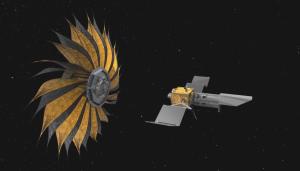
NASA continues to unfurl plans for solar sail technology as a promising method of deep space transportation. The agency cleared a key technology milestone in January with the successful deployment of one of four identical solar sail quadrants. The deployment was showcased Jan. 30 at Redwire Corp.’s new facility in Longmont, Colorado. NASA’s Marshall Space Flight Center leads the solar sail team, comprised of prime contractor Redwire, which developed the deployment mechanisms and the nearly 100-foot-long booms, and subcontractor NeXolve, of Huntsville, which provided the sail membrane. In addition to leading the project, Marshall developed the algorithms needed to control and navigate with the sail when it flies in space.

NASA and industry partners used two 100-foot lightweight composite booms to unfurl the 4,300-square-foot sail quadrant for the first time Oct. 13, 2022, at Marshall Space Flight Center, making it the largest solar sail quadrant ever deployed at the time. On Jan. 30, 2024, NASA cleared a key technology milestone at Redwire’s new facility in Longmont, Colorado, with the successful deployment of one of four identical solar sail quadrants.
NASA

The sail is a propulsion system powered by sunlight reflecting from the sail, much like a sailboat reflects the wind. While just one quarter of the sail was unfurled in the deployment at Redwire, the complete sail will measure 17,780 square feet when fully deployed, with the thickness less than a human hair at 2 and a half microns. The sail is made of a polymer material coated with aluminum.

NASA’s Science Mission Directorate recently funded the solar sail technology to reach a new technology readiness level, or TRL 6, which means it’s ready for proposals to be flown on science missions.

“This was a major last step on the ground before it’s ready to be proposed for space missions,” Johnson, who has been involved with sail technology at Marshall for about 25 years, said. “What’s next is for scientists to propose the use of solar sails in their missions. We’ve met our goal and demonstrated that we’re ready to be flown.”

A solar sail traveling through deep space provides many potential benefits to missions using the technology because it doesn’t require any fuel, allowing very high propulsive performance with very little mass. This in-space propulsion system is well suited for low-mass missions in novel orbits.

“Once you get away from Earth’s gravity and into space, what is important is efficiency and enough thrust to travel from one position to another,” Johnson said.

Some of the missions of interest using solar sail technology include studying space weather and its effects on the Earth, or for advanced studies of the north and south poles of the Sun. The latter has been limited because the propulsion needed to get a spacecraft into a polar orbit around the Sun is very high and simply not feasible using most of the propulsion systems available today. Solar sail propulsion is also possible for enhancing future missions to Venus or Mercury, given their closeness to the Sun and the enhanced thrust a solar sail would achieve in the more intense sunlight there.

Moreover, it’s the ultimate green propulsion system, Johnson said – as long as the Sun is shining, the sail will have propulsion. Where the sunlight is less, he envisions a future where lasers could be used to accelerate the solar sails to high speeds, pushing them outside the solar system and beyond, perhaps even to another star. “In the future, we might place big lasers in space that shine their beams on the sails as they depart the solar system, accelerating them to higher and higher speeds, until eventually they are going fast enough to reach another star in a reasonable amount of time.”

Learn more about solar sails and other NASA advanced space technology.

Smith, a Media Fusion employee and the Marshall Star editor, supports the Marshall Office of Communications.

› Back to Top

NASA Sets Coverage for SpaceX, Intuitive Machines First Moon Mission

As part of NASA’s CLPS (Commercial Lunar Payload Services) initiative and Artemis campaign, SpaceX is targeting no earlier than 12:05 a.m. CST on Feb. 15 for a Falcon 9 launch of Intuitive Machines’ first lunar lander to the Moon’s surface. Liftoff will be from Launch Complex 39A at the agency’s Kennedy Space Center.

The launch of the mission was postponed Feb. 13 due to off-nominal methane temperatures prior to stepping into methane load.

The Nova-C lunar lander is encapsulated within the fairing of a SpaceX Falcon 9 rocket in preparation for launch as part of NASA’s CLPS (Commercial Lunar Payload Services) initiative and Artemis campaign.
SpaceX

Live launch coverage will air on NASA+, NASA Television, the NASA app, and the agency’s website. NASA TV launch coverage begins at 11:20 p.m. Coverage is subject to change based on real-time operational activities. Follow the Artemis blog for updates.

Intuitive Machines’ Nova-C lander is expected to land on the Moon on Feb. 22. Among the items on its lander, the IM-1 mission will carry NASA science and technology instruments focusing on plume-surface interactions, space weather/lunar surface interactions, radio astronomy, precision landing technologies, and a communication and navigation node for future autonomous navigation technologies. 

Demonstrating autonomous navigation, the Lunar Node-1 experiment, or LN-1, is a radio beacon designed to support precise geolocation and navigation observations for landers, surface infrastructure, and astronauts, digitally confirming their positions on the Moon relative to other craft, ground stations, or rovers on the move. LN-1 was developed, built, and tested at NASA’s Marshall Space Flight Center.

› Back to Top

Telescopes Show the Milky Way’s Black Hole is Ready for a Kick

An artist’s illustration depicts the findings of a new study about the supermassive black hole at the center of our galaxy called Sagittarius A* (abbreviated as Sgr A*). As reported in a press release, this result found that Sgr A* is spinning so quickly that it is warping spacetime – that is, time and the three dimensions of space – so that it can look more like a football.

These results were made with NASA’s Chandra X-ray Observatory and the National Science Foundation’s Karl G. Jansky Very Large Array, or VLA. A team of researchers applied a new method that uses X-ray and radio data to determine how quickly Sgr A* is spinning based on how material is flowing towards and away from the black hole. They found Sgr A* is spinning with an angular velocity that is about 60% of the maximum possible value, and with an angular momentum of about 90% of the maximum possible value.

This artist's illustration shows a cross-section of the supermassive black hole and surrounding material in the center of our galaxy.
This artist’s illustration depicts the findings of a new study about the supermassive black hole at the center of our galaxy called Sagittarius A* (abbreviated as Sgr A*). This result found that Sgr A* is spinning so quickly that it is warping spacetime – that is, time and the three dimensions of space – so that it can look more like a football.
NASA/CXC/M.Weiss

Black holes have two fundamental properties: their mass (how much they weigh) and their spin (how quickly they rotate). Determining either of these two values tells scientists a great deal about any black hole and how it behaves. In the past, astronomers made several other estimates of Sgr A*’s rotation speed using different techniques, with results ranging from Sgr A* not spinning at all to it spinning at almost the maximum rate.

The new study suggests that Sgr A* is, in fact, spinning very rapidly, which causes the spacetime around it to be squashed down. The illustration shows a cross-section of Sgr A* and material swirling around it in a disk. The black sphere in the center represents the so-called event horizon of the black hole, the point of no return from which nothing, not even light, can escape.

Looking at the spinning black hole from the side, as depicted in this illustration, the surrounding spacetime is shaped like a football. The faster the spin the flatter the football.

The yellow-orange material to either side represents gas swirling around Sgr A*. This material inevitably plunges towards the black hole and crosses the event horizon once it falls inside the football shape. The area inside the football shape but outside the event horizon is therefore depicted as a cavity. The blue blobs show jets firing away from the poles of the spinning black hole. Looking down on the black hole from the top, along the barrel of the jet, spacetime is a circular shape.

The supermassive black hole at the center of the Milky Way may be producing tiny particles, called neutrinos, that have virtually no mass and carry no electric charge. This Chandra image shows the region around the black hole, known as Sagittarius A*, in low, medium, and high-energy X-rays (red, green, and blue respectively.) Scientists have found a connection to outbursts generated by the black hole and seen by Chandra and other X-ray telescopes with the detection of high-energy neutrinos in an observatory under the South Pole.
Chandra X-ray image of Sagittarius A* and the surrounding region.
NASA/CXC/Univ. of Wisconsin/Y.Bai, et al.

A black hole’s spin can act as an important source of energy. Spinning supermassive black holes produce collimated outflows such as jets when their spin energy is extracted, which requires that there is at least some matter in the vicinity of the black hole. Because of limited fuel around Sgr A*, this black hole has been relatively quiet in recent millennia with relatively weak jets. This work, however, shows that this could change if the amount of material in the vicinity of Sgr A* increases.

To determine the spin of Sgr A*, the authors used an empirically based technique referred to as the “outflow method” that details the relationship between the spin of the black hole and its mass, the properties of the matter near the black hole, and the outflow properties. The collimated outflow produces the radio waves, while the disk of gas surrounding the black hole is responsible for the X-ray emission. Using this method, the researchers combined data from Chandra and the VLA with an independent estimate of the black hole’s mass from other telescopes to constrain the black hole’s spin.

The paper describing these results led by Ruth Daly (Penn State University) is published in the January 2024 issue of the Monthly Notices of the Royal Astronomical Society and appears online. The other authors are Biny Sebastian (University of Manitoba, Canada), Megan Donahue (Michigan State University), Christopher O’Dea (University of Manitoba), Daryl Haggard (McGill University) and Anan Lu (McGill University).

NASA’s Marshall Space Flight Center manages the Chandra program. The Smithsonian Astrophysical Observatory’s Chandra X-ray Center controls science operations from Cambridge, Massachusetts, and flight operations from Burlington, Massachusetts.

› Back to Top

NASA Expedition 71 Astronauts to Conduct Research Aboard Space Station

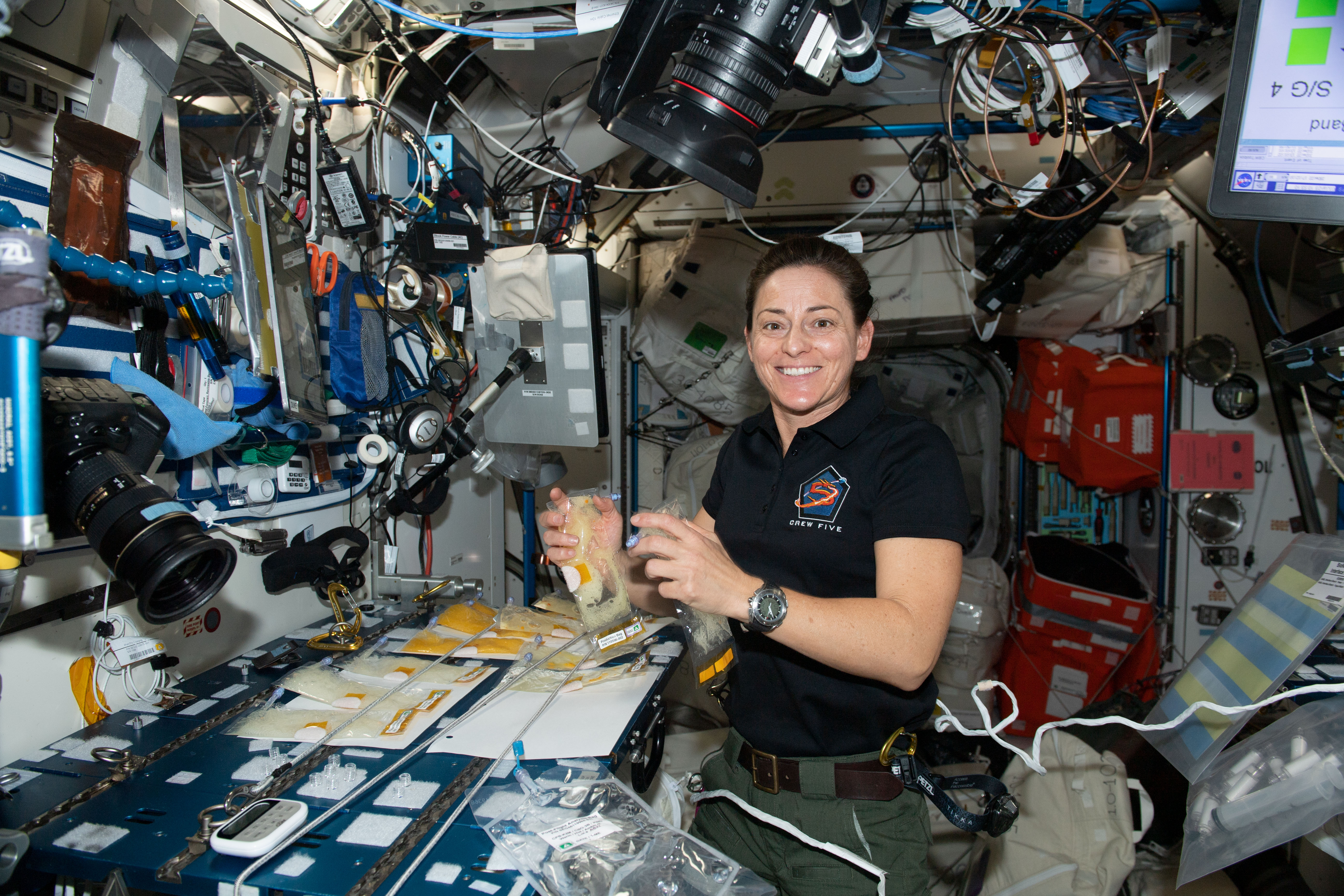
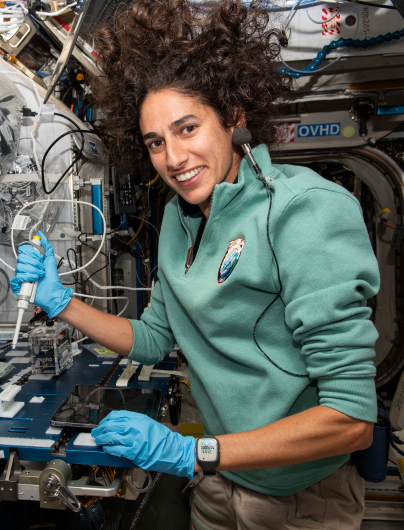
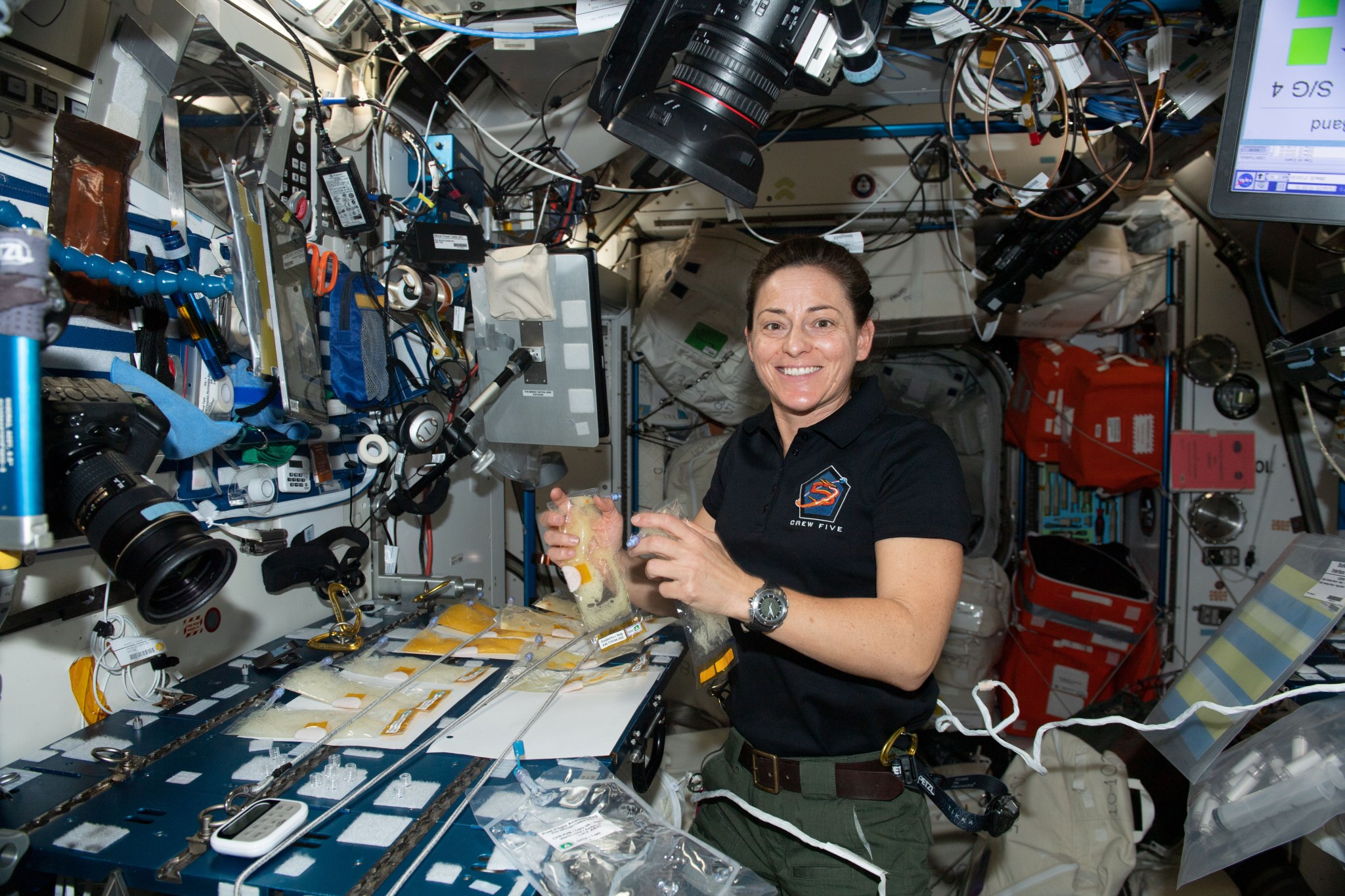
Studies of neurological organoids, plant growth, and shifts in body fluids are among the scientific investigations that NASA astronauts Matthew Dominick, Michael Barratt, Jeanette Epps, and Tracy C. Dyson will help support aboard the International Space Station as part of Expedition 71. NASA’s SpaceX Crew-8 mission is targeting launch to the space station later this month.

A flag for Crew-8 will be raised Feb. 26 outside the HOSC (Huntsville Operation Support Center) at NASA’s Marshall Space Flight Center. The HOSC is a multi-mission facility that provides engineering and mission operations support for NASA’s Commercial Crew Program, Space Launch System rocket, Artemis lunar science missions, and science conducted on the space station.

The image is covered by flower-like clusters of pale white and blue cells connected by reddish nerves.
Brain organoid cells from the previous investigation Cosmic Brain Organoids are made of cells from people with Parkinson’s Disease and primary progressive multiple sclerosis. The sixth space station organoid investigation funded by the National Stem Cell Foundation, HBOND, includes for the first time Alzheimer’s iPSCs and testing of the effects of drugs in development to treat neuroinflammation.
New York Stem Cell Research Institute

The Payload Operations Integration Center within HOSC operates, plans, and coordinates the science experiments onboard the space station 365 days a year, 24 hours a day.

Here are details on some of the work scheduled during this upcoming expedition aboard the microgravity laboratory:

Modeling Neuroinflammation

HBOND (Human Brain Organoid Models for Neurodegenerative Disease & Drug Discovery) studies the mechanisms behind neuroinflammation, a common feature of neurodegenerative disorders. Researchers create organoids using patient-derived iPSCs (induced pluripotent stem cells) from patients who have Parkinson’s disease and primary progressive multiple sclerosis. The sixth space station organoid investigation funded by the National Stem Cell Foundation, HBOND includes for the first time Alzheimer’s iPSCs and testing of the effects of drugs in development to treat neuroinflammation. Results could help improve diagnostics, provide insights into the effects of aging, accelerate drug discovery, and identify therapeutic targets for patients suffering from neurodegenerative diseases. The organoid models also could provide a way to anticipate how extended spaceflight affects the brain and support development of countermeasures.

Protecting Plants from Spaceflight Stressors

Plants can serve as a source of food and provide other life-support services on long-term missions to the Moon and Mars. The Study on Plant Responses Against the Stresses of Microgravity and High Ultraviolet Radiation in Space (Plant UV-B) examines how stress from microgravity, UV radiation, and the combination of the two affect plants at the molecular, cellular, and whole organism levels. Results could increase understanding of plant growth in space and support improvements in plant cultivation technologies for future missions.

This image shows the Plant Experiment Unit (PEU) hardware for the Plant UV-B investigation.
NASA

Reversing Fluid Shifts

Weightlessness causes fluids in the body to move toward the head, which can cause changes in eye structure and vision known as Spaceflight Associated Neuro-ocular Syndrome (SANS) along with other health problems. Mitigating Headward Fluid Shifts with Veno-constrictive Thigh Cuffs During Spaceflight (Thigh Cuff) examines whether thigh pressure cuffs could provide a simple way to counter this shift in body fluids and help protect astronauts from SANS and other issues on future missions to the Moon and Mars. Thigh cuffs also could help treat or prevent problems for patients on Earth who have conditions that cause fluid accumulation in the head, such as long-term bedrest and diseases.

Incredible Edible Algae

Arthrospira-C (Art-C), an investigation from ESA (European Space Agency) analyzes how the cyanobacterium Limnospira responds to spaceflight conditions and whether it produces the same quantity and quality of oxygen and biomass in space as on Earth. These microalgae, also known as Spirulina, could be used to remove carbon dioxide exhaled by astronauts, which can become toxic in an enclosed spacecraft, and to produce oxygen and fresh food as part of life support systems on future missions. Correct predictions of oxygen and biomass yields are crucial for design of life support systems using bioprocesses. Spirulina also has been shown to have radioprotective properties and eating it could help protect space travelers from cosmic radiation, as well as conserve healthy tissue in patients undergoing radiation treatment on Earth.

Search this database of scientific experiments to learn more about those mentioned above.

› Back to Top

NASA Awards Inaugural Grants to Support Emerging Research Institutions

NASA has awarded $3.7 million to 11 teams to support new collaborations between the agency and United States institutions not historically part of the agency’s research enterprise. These are the first awards given through a new program from the agency’s SMD (Science Mission Directorate) to improve diversity, equity, inclusion, and accessibility in the science and engineering communities, as well as NASA’s workforce.

“As the agency continues to build relationships with under-resourced institutions through initiatives like the bridge program, we are intentionally increasing equitable access to NASA for the best and brightest talents in our nation,” said Shahra Lambert, NASA senior advisor for engagement. “These partnerships will help NASA develop a diverse and capable workforce to further our understanding of the cosmos.”

NASA meatball logo

NASA’s SMD Bridge Program provides seed funding for research projects that will build strong foundations for long-lasting relationships with the agency. The projects offer hands-on training and mentorship for students, as well as new research opportunities for faculty, to help science and engineering students transition into graduate schools, employment by NASA, or science, technology, engineering, and math careers generally.

The teams are led by faculty at institutions that represent new collaborations for NASA. These include Hispanic-serving institutions, Historically Black Colleges and Universities, Asian American and Native American Pacific Islander-serving institutions, and primarily undergraduate institutions. The research projects connect these institutions to seven NASA centers, including the agency’s Marshall Space Flight Center, and could benefit more than 100 students.

“We applaud this inaugural cohort of grant recipients for their innovative research projects, which will make important connections between students, faculty, and NASA,” said Michael New, Science Mission Directorate deputy associate administrator for research at NASA Headquarters. “These awards are a first and important step for the SMD Bridge Program in supporting long-term relationships toward creating a more diverse and robust STEM workforce.”

There is an additional opportunity to apply for seed funding through the SMD Bridge Program. Applications are open until March 29.

The following projects were selected as the first cohort to receive seed funding:

Additive Manufacturing of Electronics for NASA Applications

This project, a collaboration between Florida A&M University and Marshall and NASA’s Goddard Space Flight Center, will explore technology solutions through additive manufacturing approaches to manufacture strain and gas sensors.

Diversifying Student Pipelines in STEM: Environmental Pollution Reduction Inspired by Planetary Science

This project, a collaboration that brings California State University, Los Angeles, together with NASA’s Jet Propulsion Laboratory, and California State Polytechnic University, Pomona, draws from the field of planetary science to address environmental pollution.

FireSage: SJSU-NASA ARC Bridge Seed Program

FireSage is a collaboration between San Jose State University’s Wildfire Interdisciplinary Research Center and the Earth Science Division at NASA’s Ames Research Center. It engages students in a computing, artificial intelligence, and machine learning research project and training activities in wildfire science.

Hampton University STEM Experience with NASA Langley Research Center Doppler Aerosol Wind Lidar

This collaboration between Hampton University and NASA’s Langley Research Center offers a foundation in the advancement of planetary boundary layer studies with Lidar remote sensing.

Development of Antireflection Coatings for Future NASA Missions

This project is a collaboration between Delaware State University and Goddard, working with transparent, electrically conductive films to design and produce an environmentally durable anti-reflection coating for guidance, navigation, and control Lidar.

CUBES: Capacity Building Using CubeSats for Earth Science

This collaboration between Tuskegee University, the Laboratory for Atmospheric Science and Physics at University of Colorado, and Ames uses CubeSats to provide faculty and students with experience designing and executing science mission flight projects.

Space Materials and Microbiome Research: A Bridge to Future JSC Workforce

In this project, the University of Houston-Clear Lake collaborates with NASA’s Johnson Space Center. The project’s Composite Materials track will develop a protective nanocomposite shield for spacecraft materials, while the Microbiome track will create a comprehensive library of draft bacterial genomes.

The HALOQUEST: Halobacterium Astrobiological Laboratory for Observing and Questioning Extraterrestrial Signatures and Traits Project

This collaboration between California State University, Northridge, and JPL will study Halobacterium salinarum NRC-1 grown under simulated stressful environmental conditions, which could help understand possibilities for life on other planets.

Observations of Ice-Water and Isotopes Using Mid-Infrared Laser Heterodyne Radiometer LIDAR

In collaboration with Goddard, Delaware State University will develop Earth science, planetary exploration, and sensing technologies, including a lunar rover payload with instruments to simultaneously detect and correlate water isotopes with other trace gas species.

Application of Remote Sensing for Predicting Mosquito-Borne Disease Outbreaks

This project is a collaboration between Southern Nazarene University and JPL to identify areas at risk for mosquito-borne disease outbreaks using remote sensing data.

Building a Diverse, Sustainable, and Robust Undergraduate-to-Graduate STEM Network through Inter-Institutional, Interdisciplinary Research Collaborations in Complex Fluids/Soft Matter

This project is a collaboration between Colorado Mesa University and NASA’s Glenn Research Center to strengthen and grow a research, education, and training network centered around problems in complex fluids and soft matter, with initial emphasis on heat transfer and multiphase flows.

› Back to Top

Juno, Lucy Missions Highlighted on ‘This Week at NASA’

Two missions that are part of programs managed by NASA’s Marshall Space Flight Center for the agency’s Science Mission Directorate are featured in “This Week @ NASA,” a weekly video program broadcast on NASA-TV and posted online.

NASA’s Lucy spacecraft recently completed the second and largest planned main engine burn of its 12-year mission. These burns, combined with the mission’s second Earth gravity assist maneuver targeted for December 2024, will help Lucy transition from its current orbit around the Sun to a new orbit that will carry it beyond the orbit of Jupiter and into the realm of the never-before-explored Jupiter Trojan asteroids.

NASA’s Goddard Space Flight Center provides overall mission management, systems engineering, and safety and mission assurance. Lockheed Martin Space in Littleton, Colorado, built the spacecraft. Lucy is the 13th mission in NASA’s Discovery Program. Marshall manages the Discovery Program for the Science Mission Directorate at NASA Headquarters.

On Feb. 3, NASA’s Juno spacecraft made a second close flyby of Jupiter’s moon Io. Like Juno’s previous flyby of Io in late December 2023, this second pass took Juno about 930 miles above Io’s surface. The twin flybys were designed to gain new insight into how the moon’s volcanic engine works and investigate whether a global magma ocean exists under the moon’s rocky, mountainous surface.

NASA’s Jet Propulsion Laboratory, a division of Caltech, manages the Juno mission for the principal investigator, Scott J. Bolton, of the Southwest Research Institute in San Antonio. Juno is part of NASA’s New Frontiers Program, which is managed at Marshall for the Science Mission Directorate. Lockheed Martin Space in Denver built and operates the spacecraft.

View this and previous episodes at “This Week @NASA” on NASA’s YouTube page.

› Back to Top

Powered by WPeMatico

Get The Details…
Lee Mohon

Flame Burns Out on NASA’s Long-Running Spacecraft Fire Experiment

Flame Burns Out on NASA’s Long-Running Spacecraft Fire Experiment

3 min read

Preparations for Next Moonwalk Simulations Underway (and Underwater)

green fabric burns from left to right with particles of ash on the left and a flame line in the center
A sample of fabric burns inside an uncrewed Cygnus cargo craft during a previous Spacecraft Fire Safety Experiment investigation, Saffire-IV.
Credit: NASA

NASA recently concluded the final mission of its Spacecraft Fire Safety Experiment, or Saffire, putting a blazing end to an eight-year series of investigations that provided insights into fire’s behavior in space.

The final experiment, Saffire-VI, launched to the International Space Station in August 2023 and concluded its mission on Jan. 9, when the Northrop Grumman Cygnus spacecraft it was flying on safely burned up during planned re-entry into Earth’s atmosphere.

Dr. David Urban, principal investigator, and Dr. Gary Ruff, project manager at NASA’s Glenn Research Center in Cleveland, have led the Saffire project from Northeast Ohio since its initial spark in 2016. Throughout the experiment series, researchers gathered data NASA will use to enhance mission safety and inform future spacecraft and spacesuit designs.

“How big a fire does it take for things to get bad for a crew?” Urban said. “This kind of work is done for every other inhabited structure here on Earth – buildings, planes, trains, automobiles, mines, submarines, ships – but we hadn’t done this research for spacecraft until Saffire.”

Like previous Saffire experiments, Saffire-VI took place inside a unit on an uninhabited Cygnus spacecraft that had already departed from the space station, ensuring the safety of the orbiting laboratory and a more representative flight environment. However, this final iteration of the experiment was unique because of the higher oxygen concentration and lower pressure generated in the test unit to simulate the conditions within crewed spacecraft.

NASA ignited the final set of space fire experiments for Saffire-VI inside Northrop Grumman’s Cygnus cargo spacecraft at the end of the NG-19 resupply mission to the International Space Station. Saffire, or Spacecraft Fire Safety Experiment, was a series of six investigations that provided insights into how fires grow and spread in space. This research is especially important as it will inform future spacecraft designs bound for the Moon and Mars.
Video credit: NASA

During the 19 Saffire-VI experiment runs, the NASA team and counterparts at Northrop Grumman made various adjustments to air conditions. They then ignited a flame on materials such as plexiglass, cotton, Nomex, and Solid Inflammability Boundary at Low-Speed fabrics. A bead-lined wire inside the unit ignited the materials.

“The Saffire flow unit is a wind tunnel. We’re pushing air through it,” Ruff said. “Once test conditions are set, we run electrical current through a thin wire, and the materials ignite.”

Cameras inside allowed the team to observe the flame while remote sensors outside the Saffire flow unit collected data about what was happening in the Cygnus vehicle. The images and information were gathered in real-time before being sent to Earth for scientists to analyze.

“You’ve got a heat release rate and a rate of release of combustion products,” Ruff said. “You can take those as model input and predict what will happen in a vehicle.” 

The next decade of exploration and science missions will see astronauts flying deeper into space and to locations that have yet to be explored. Though the Saffire experiments have been extinguished, NASA has learned valuable lessons and gathered mountains of data on fire behavior that will help the agency design safer spacecraft and accomplish its ambitious future missions.

Powered by WPeMatico

Get The Details…
Kelly M. Matter

A Floridian Sunset

A Floridian Sunset

Slightly left of center, the Sun sets behind some vegetation. The sky is a dusty pale blue with a few clouds in it. Trees and plants arc around a body of water, and the Vehicle Assembly Building (VAB) stands at the right edge of the image. The VAB is a very tall, white and gray linear building with a United States flag and NASA meatball logo painted on the front.
NASA/Ben Smegelsky

A NASA photographer captured the sunset on Tuesday, Jan. 30, 2024, near the Vehicle Assembly Building (VAB) at the agency’s Kennedy Space Center in Florida. The iconic building, completed in 1966 and currently used for assembly of NASA’s Space Launch System rocket for Artemis missions, is still the only building in which rockets were assembled that carried humans to the surface of another world.

The VAB stands 525 feet tall and contains 130 million cubic feet of interior space. It sports a large American flag – a 209-foot-tall, 110-foot-wide stars and stripes painted on the exterior of its south side. Each star measures six feet across, and the blue field is the size of a basketball court. The flag originally was painted onto the VAB in 1976 for the Bicentennial Exposition on Space and Technology. A 12,300-square-foot NASA logo also adorns the south side of the facility.

The VAB has received a number of distinctions. It was listed in the National Register of Historic Places on Jan. 21, 2000. In January 2020, the American Society of Civil Engineers designated the VAB as a National Historic Civil Engineering Landmark. The Florida Association of The American Institute of Architects honored the facility and its adjacent Launch Control Center with a “Test of Time” design award, recognizing the contributions of the architects and engineers of these unique buildings.

Learn more about this distinctive building.

Image Credit: NASA/Ben Smegelsky

Powered by WPeMatico

Get The Details…
Monika Luabeya

NASA Telescopes Find New Clues About Mysterious Deep Space Signals

NASA Telescopes Find New Clues About Mysterious Deep Space Signals

6 min read

Preparations for Next Moonwalk Simulations Underway (and Underwater)

Artist's concept of magnetar is depicted losing material into space
In an ejection that would have caused its rotation to slow, a magnetar is depicted losing material into space in this artist’s concept. The magnetar’s strong, twisted magnetic field lines (shown in green) can influence the flow of electrically charged material from the object, which is a type of neutron star.
NASA/JPL-Caltech

Using two of the agency’s X-ray telescopes, researchers were able to zoom in on a dead star’s erratic behavior as it released a bright, brief burst of radio waves.

What’s causing mysterious bursts of radio waves from deep space? Astronomers may be a step closer to providing one answer to that question. Two NASA X-ray telescopes recently observed one such event – known as a fast radio burst – mere minutes before and after it occurred. This unprecedented view sets scientists on a path to better understand these extreme radio events.

While they only last for a fraction of a second, fast radio bursts can release about as much energy as the Sun does in a year. Their light also forms a laserlike beam, setting them apart from more chaotic cosmic explosions.

Because the bursts are so brief, it’s often hard to pinpoint where they come from. Prior to 2020, those that were traced to their source originated outside our own galaxy – too far away for astronomers to see what created them. Then a fast radio burst erupted in Earth’s home galaxy, originating from an extremely dense object called a magnetar – the collapsed remains of an exploded star.

In October 2022, the same magnetar – called SGR 1935+2154 – produced another fast radio burst, this one studied in detail by NASA’s NICER (Neutron Star Interior Composition Explorer) on the International Space Station and NuSTAR (Nuclear Spectroscopic Telescope Array) in low Earth orbit. The telescopes observed the magnetar for hours, catching a glimpse of what happened on the surface of the source object and in its immediate surroundings, before and after the fast radio burst. The results, described in a new study published Feb. 14 in the journal Nature, are an example of how NASA telescopes can work together to observe and follow up on short-lived events in the cosmos.

The burst occurred between two “glitches,” when the magnetar suddenly started spinning faster. SGR 1935+2154 is estimated to be about 12 miles (20 kilometers) across and spinning about 3.2 times per second, meaning its surface was moving at about 7,000 mph (11,000 kph). Slowing it down or speeding it up would require a significant amount of energy. That’s why study authors were surprised to see that in between glitches, the magnetar slowed down to less than its pre-glitch speed in just nine hours, or about 100 times more rapidly than has ever been observed in a magnetar.

“Typically, when glitches happen, it takes the magnetar weeks or months to get back to its normal speed,” said Chin-Ping Hu, an astrophysicist at National Changhua University of Education in Taiwan and the lead author of the new study. “So clearly things are happening with these objects on much shorter time scales than we previously thought, and that might be related to how fast radio bursts are generated.”

Spin Cycle

When trying to piece together exactly how magnetars produce fast radio bursts, scientists have a lot of variables to consider.

For example, magnetars (which are a type of neutron star) are so dense that a teaspoon of their material would weigh about a billion tons on Earth. Such a high density also means a strong gravitational pull: A marshmallow falling onto a typical neutron star would impact with the force of an early atomic bomb.

The strong gravity means the surface of a magnetar is a volatile place, regularly releasing bursts of X-rays and higher-energy light. Before the fast radio burst that occurred in 2022, the magnetar started releasing eruptions of X-rays and gamma rays (even more energetic wavelengths of light) that were observed in the peripheral vision of high-energy space telescopes. This increase in activity prompted mission operators to point NICER and NuSTAR directly at the magnetar.

“All those X-ray bursts that happened before this glitch would have had, in principle, enough energy to create a fast radio burst, but they didn’t,” said study co-author Zorawar Wadiasingh, a research scientist at the University of Maryland, College Park and NASA’s Goddard Space Flight Center. “So it seems like something changed during the slowdown period, creating the right set of conditions.”

What else might have happened with SGR 1935+2154 to produce a fast radio burst? One factor might be that the exterior of a magnetar is solid, and the high density crushes the interior into a state called a superfluid. Occasionally, the two can get out of sync, like water sloshing around inside a spinning fishbowl. When this happens, the fluid can deliver energy to the crust. The paper authors think this is likely what caused both glitches that bookended the fast radio burst.

If the initial glitch caused a crack in the magnetar’s surface, it might have released material from the star’s interior into space like a volcanic eruption. Losing mass causes spinning objects to slow down, so the researchers think this could explain the magnetar’s rapid deceleration.

But having observed only one of these events in real time, the team still can’t say for sure which of these factors (or others, such as the magnetar’s powerful magnetic field) might lead to the production of a fast radio burst. Some might not be connected to the burst at all.

“We’ve unquestionably observed something important for our understanding of fast radio bursts,” said George Younes, a researcher at Goddard and a member of the NICER science team specializing in magnetars. “But I think we still need a lot more data to complete the mystery.”

More About the Mission

A Small Explorer mission led by Caltech and managed by NASA’s Jet Propulsion Laboratory in Southern California for the agency’s Science Mission Directorate in Washington, NuSTAR was developed in partnership with the Danish Technical University and the Italian Space Agency (ASI). The spacecraft was built by Orbital Sciences Corp. in Dulles, Virginia. NuSTAR’s mission operations center is at the University of California, Berkeley, and the official data archive is at NASA’s High Energy Astrophysics Science Archive Research Center at NASA’s Goddard Space Flight Center. ASI provides the mission’s ground station and a mirror data archive. Caltech manages JPL for NASA.

For more information about the NuSTAR mission, visit:

https://www.nustar.caltech.edu/

NICER, an Astrophysics Explorer Mission of Opportunity, is an external payload on the International Space Station. NICER is managed by and operated at NASA’s Goddard Space Flight Center; its data is archived at NASA’s HEASARC. NASA’s Explorers program provides frequent flight opportunities for world-class scientific investigations from space utilizing innovative, streamlined, and efficient management approaches within the heliophysics and astrophysics science areas.

For more information about the NICER mission, visit:

https://www.nasa.gov/nicer

News Media Contact

Calla Cofield
Jet Propulsion Laboratory, Pasadena, Calif.
626-808-2469
calla.e.cofield@jpl.nasa.gov

2024-016

Powered by WPeMatico

Get The Details…
Anthony Greicius

Plan de acción para la equidad 2023 de la NASA se centrará en educación STEM/CTIM

Plan de acción para la equidad 2023 de la NASA se centrará en educación STEM/CTIM

La portada del Plan de acción para la equidad 2023.
Credits: NASA

Read this release in English here.

La NASA publicó su Plan de acción para la equidad 2023 el miércoles, en el cual describe los logros clave en el aumento de la diversidad, la equidad, la inclusión y la accesibilidad en toda la agencia, y sus nuevos compromisos para continuar eliminando los obstáculos y retos injustos a los que se enfrentan las comunidades desatendidas.

“En la NASA, estamos comprometidos con el avance de la equidad para garantizar que nuestro trabajo beneficie a toda la humanidad”, dijo el administrador de la NASA, Bill Nelson. “El Plan de acción para la equidad profundiza nuestro compromiso a largo plazo para identificar y eliminar las barreras sistémicas que limitan las oportunidades para las comunidades desatendidas y subrepresentadas”. Este año, la NASA ha identificado la educación en las áreas de ciencia, tecnología, ingeniería y matemáticas (CTIM, o STEM, como se le conoce en Estados Unidos por sus siglas en inglés) como un área en la cual incentivar la participación e inspirar el talento diverso de nuestros futuros líderes. Estamos invitando a la próxima generación, la generación Artemis, a asumir las audaces misiones del futuro en el cosmos, y aquí en la Tierra”.

El Plan de acción para la equidad es parte del enfoque integral del gobierno de la administración Biden-Harris para el fomento de la equidad. Este plan respalda la Orden Ejecutiva 14091 del presidente de “Mayor fomento de la equidad racial y apoyo a las comunidades desatendidas por medio del gobierno federal”.

A medida que continúa el trabajo de la NASA para el fomento de la equidad para el beneficio de la humanidad, el Plan de acción para la equidad 2023 ofrece las siguientes estrategias para garantizar que más gente pueda trabajar y aprender con esta agencia:

  • Aumentar la utilización e integración de contratistas y empresas de comunidades desatendidas para ampliar la equidad en el proceso de contrataciones públicas de la NASA.
  • Mejorar las subvenciones y los acuerdos de cooperación para fomentar las oportunidades, el acceso y la representación de las comunidades desatendidas.
  • Aumentar la accesibilidad y el uso de los datos de las ciencias de la Tierra.
  • Mejorar las políticas de acceso lingüístico para ampliar el acceso de las poblaciones con dominio limitado del inglés a los programas y actividades de la NASA.
  • Fomentar la participación de los estudiantes para desarrollar una futura fuerza laboral diversa en el área de la ciencia, tecnología, ingeniería y matemáticas.

El Plan de acción para la equidad 2023 también se basa en el éxito del plan de 2022. Estos son algunos de los logros de la NASA desde esa publicación:

  • La Oficina de Programas para Pequeñas Empresas aumentó sus eventos de divulgación en un 80% con respecto al año fiscal 2021, superando la meta del 50% para 2029. Además, desde el año fiscal 2021 hasta el año fiscal 2022, la NASA comprometió 1.900 millones de dólares en contratos de la línea de bienes y servicios reservados para las categorías de pequeñas empresas y programas AbilityOne, los cuales son la mayor fuente de empleo para personas con discapacidades.
  • Desarrolló recursos para crear conciencia sobre los programas de subvenciones e incluyó el Aviso de Oportunidades de Financiamiento en el boletín de Intercambio con Instituciones al Servicio a las Minorías de la agencia. La agencia también aumentó en un 39,9% el monto de las subvenciones otorgadas a las escuelas profesionales y universidades de población históricamente negra entre el año fiscal 2021 y 2022.
  • Otorgó financiamiento a 39 propuestas sobre temas como la calidad del aire, los peligros climáticos, y el calor extremo.
  • Inauguró su primer Centro de Información de la Tierra en la sede de la agencia en Washington, proporcionando recursos accesibles, información fácil de utilizar y datos tanto en línea como en el sitio para uso del público y de los responsables de la toma de decisiones.
  • Desarrolló y actualizó sus Planes de acceso lingüístico en todos sus 10 centros con el fin de establecer una estrategia de comunicaciones más equitativa para llegar a las poblaciones con dominio limitado del inglés.

Para más información sobre el Plan de acción para la Equidad 2023 y para seguir nuestros avances a medida que la NASA continúa con su viaje hacia la Misión Equidad, visita el sitio web:

https://nasa.gov/mission-equity

-fin-

Gerelle Dodson
Sede, Washington
202-358-4637
gerelle.q.dodson@nasa.gov

María José Viñas
Sede, Washington
240-458-0248
maria-jose.vinasgarcia@nasa.gov

Share

Details

Last Updated

Feb 14, 2024

Related Terms

Powered by WPeMatico

Get The Details…
Roxana Bardan