NASA-Funded Science Projects Tuning In to ‘Eclipse Radio’

NASA-Funded Science Projects Tuning In to ‘Eclipse Radio’

5 min read

NASA-Funded Science Projects Tuning In to ‘Eclipse Radio’

On April 8, 2024, a total solar eclipse will cross parts of the United States. For millions of people along the path of totality, where the Moon will completely cover the Sun, it may feel like an eerie daytime darkness has descended as temperatures drop and wind patterns change. But these changes are mild compared to what happens some 100 to 400 miles above our heads in an electrically conductive layer of our atmosphere known as the ionosphere, where the “false night” of an eclipse is amplified a hundredfold. Three NASA-funded experiments will investigate the eclipse’s effects on the ionosphere through the power of radio, a technology well suited to studying this enigmatic layer of our atmosphere. 
Solar eclipse over silhouetted trees
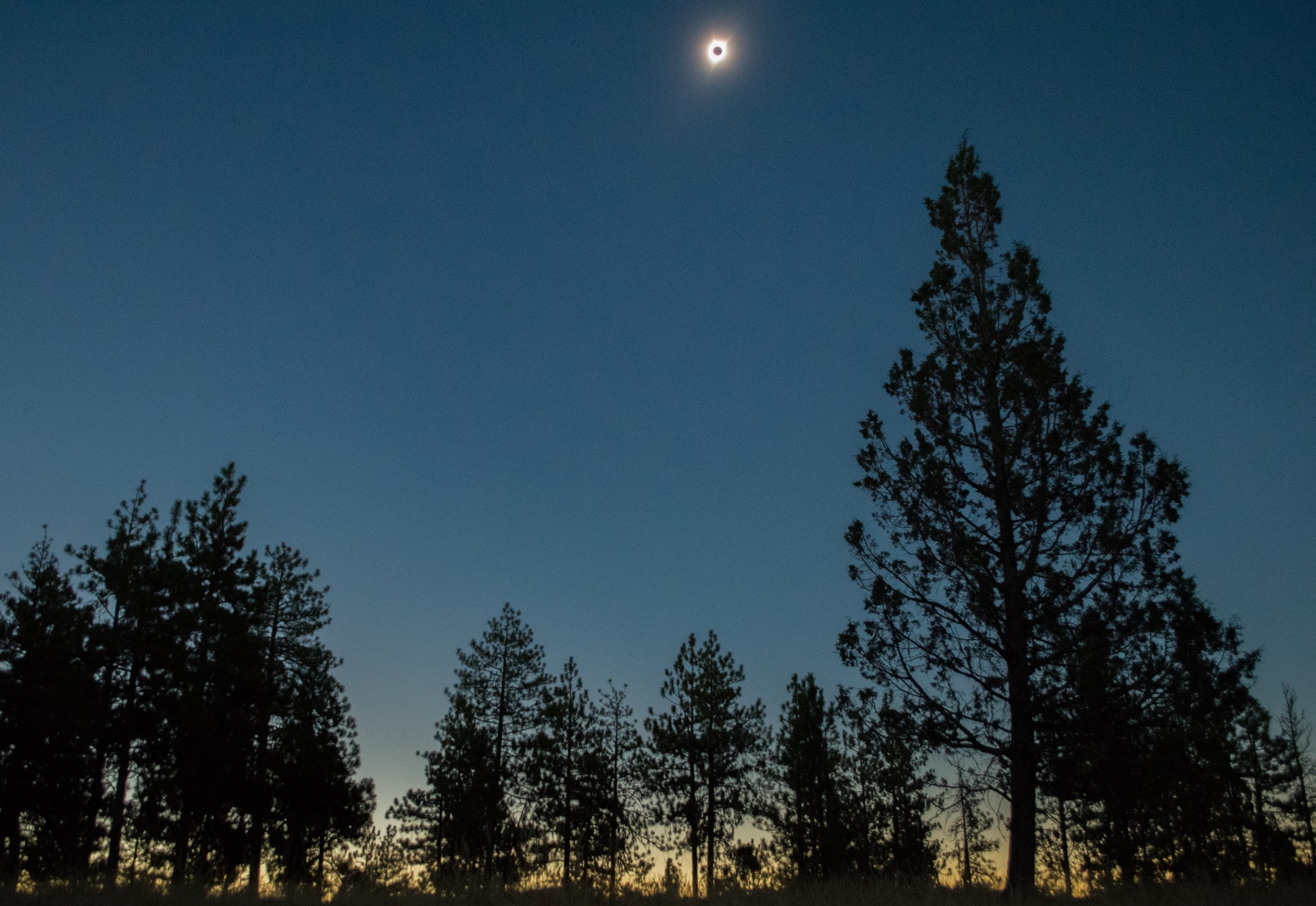
The Aug. 21, 2017, total solar eclipse douses Umatilla National Forest in shadow, darkening the sky and rimming the horizon with a 360 degree sunset.
NASA/Mara Johnson-Groh

Whether you’ve heard of the ionosphere or not, you’ve likely taken advantage of its existence. This electric blanket of particles is critical for long-distance AM and shortwave radio. Radio operators aim their transmitters into the sky, “bouncing” signals off this layer and around the curvature of Earth to extend their broadcast by hundreds or even thousands of miles.

The ionosphere is sustained by our Sun. The Sun’s rays separate negatively charged electrons from atoms, creating the positively charged ions that the ionosphere is named for. When night falls, over 60 miles of the ionosphere disappears as ions and electrons recombine into neutral atoms. Come dawn, the electrons are freed again and the ionosphere swells in the Sun’s illumination – a daily cycle of “breathing” in and out at a global scale.

A total solar eclipse is a scientific goldmine – a rare chance to observe a natural experiment in action. On April 8 the three NASA-funded projects listed below are among those “tuning in” to the changes wrought by a blotted-out Sun.

SuperDARN

The Super Dual Auroral Radar Network, or SuperDARN, is a collection of radars located at sites around the world. They bounce radio waves off of the ionosphere and analyze the returning signal. Their data reveals changes in the ionosphere’s density, temperature, and location (i.e. movement).

The 2024 eclipse will pass over three U.S.-based SuperDARN radars. A team of scientists led by Bharat Kunduri, a professor at the Virginia Polytechnic Institute and State University, have been busy preparing for it.
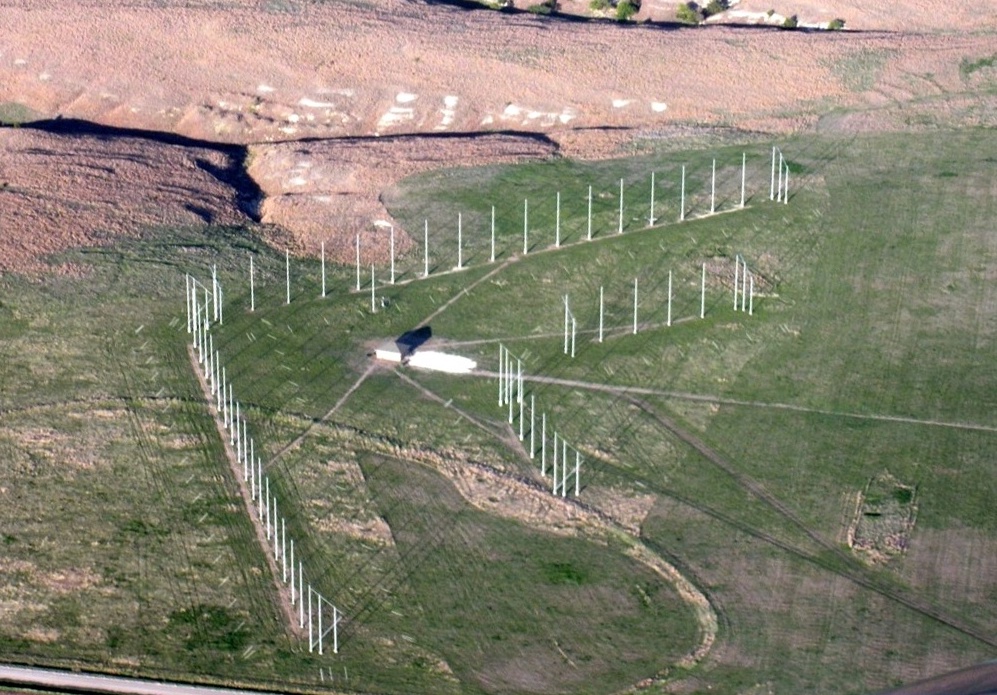
An aerial view of a SuperDARN radar site outside Hays, Kansas.
Credit: Fort Hays State University

“The changes in solar radiation that occur during a total solar eclipse can result in a ’thinning’ of the ionosphere,” Kunduri said. “During the eclipse, SuperDARN will operate in special modes designed to monitor the changes in the ionosphere at finer spatiotemporal scales.”

Kunduri’s team will compare SuperDARN’s measurements to predictions from computer models to answer questions about how the ionosphere responds to a solar eclipse.

HamSCI

While some experiments rely on massive radio telescopes, others depend more on people power. The Ham Radio Science Citizen Investigation, or HamSCI, is a NASA citizen science project that involves amateur or “ham” radio operators. On April 8, ham radio operators across the country will attempt to send and receive signals to one another before, during, and after the eclipse. Led by Nathaniel Frissell, a professor of Physics and Engineering at the University of Scranton in Pennsylvania, HamSCI participants will share their radio data to catalog how the sudden loss of sunlight during totality affects their radio signals.
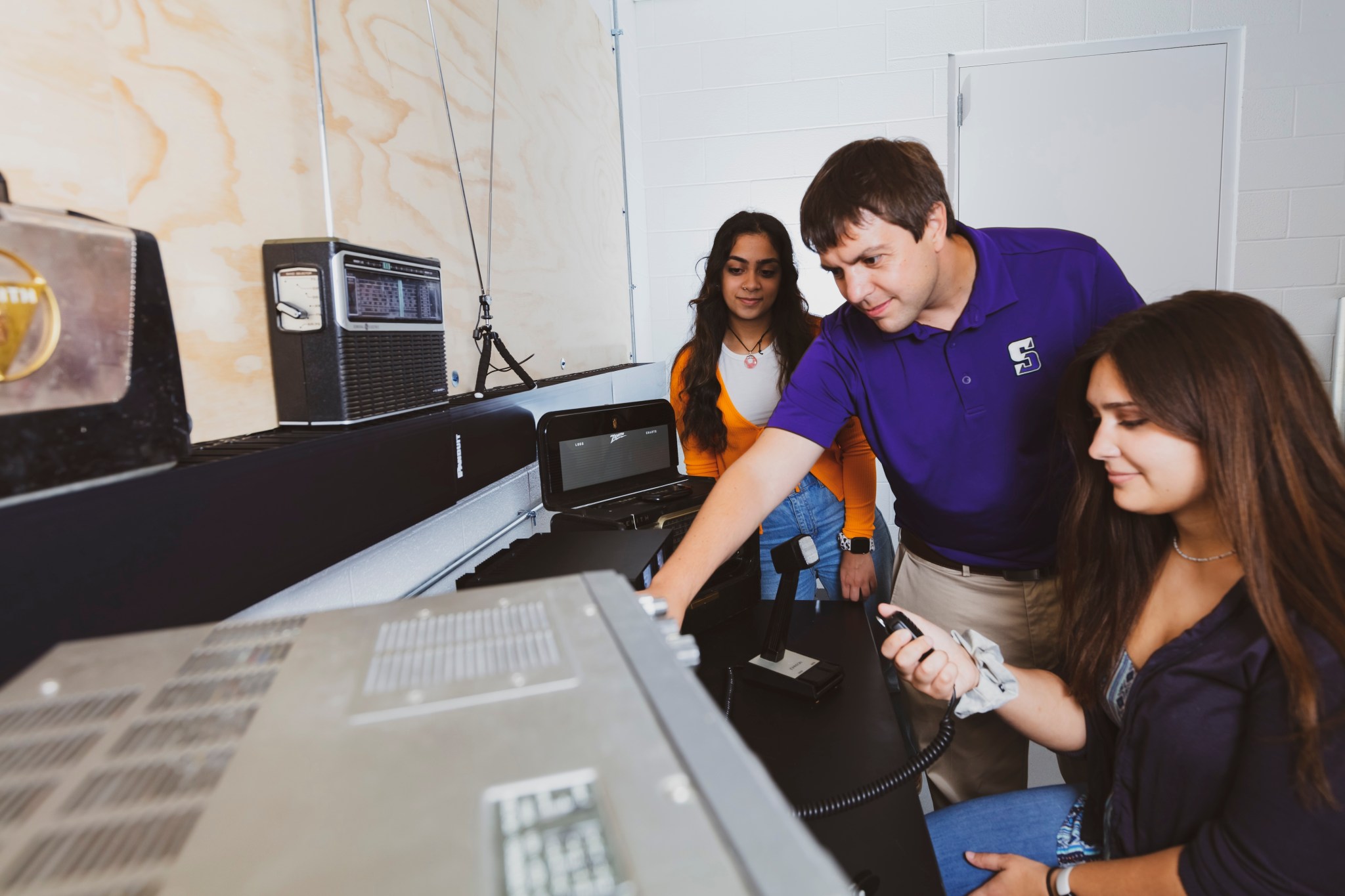
Students work with Dr. Frissell in the ham radio lab on campus. Simal Sami ’24 (in orange), who is part of Scranton’s Magis Honors Program in STEM; Dr. Frissell; and Veronica Romanek ’23, a physics major.
Photo by Byron Maldonado courtesy of The University of Scranton

This experiment follows similar efforts completed during the 2017 total solar eclipse and the 2023 annular eclipse.

“During the 2017 eclipse, we found that the ionosphere behaved very similar to nighttime,” Frissell said. Radio signals traveled farther, and frequencies that typically work best at night became usable. Frissell hopes to continue the comparison between eclipses and the day/night cycle, assessing how widespread the changes in the ionosphere are and comparing the results to computer models.

RadioJOVE

Some radio signals don’t bounce off of the ionosphere – instead, they pass right through it. Our Sun is constantly roiling with magnetic eruptions, some of which create radio bursts. These long-wavelength bursts of energy can be detected by radio receivers on Earth. But first they must pass through the ionosphere, whose ever-changing characteristics affect whether and how these signals make it to the receiver.
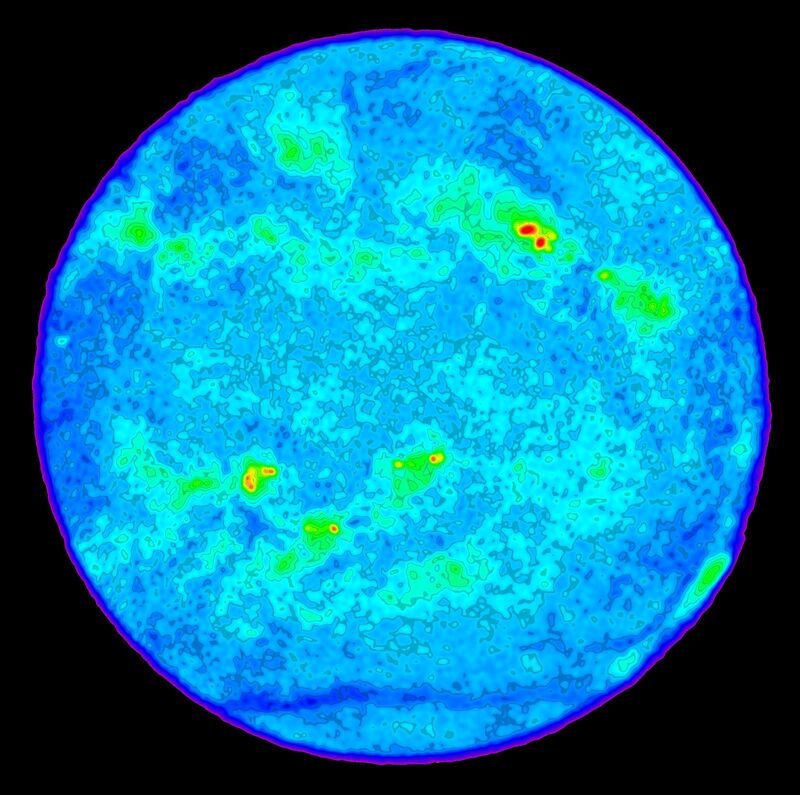
This radio image of the Sun was made with a radio telescope by astronomer Stephen White (University of Maryland). The radio emission was detected with the Very Large Array radio telescope at a wavelength of 4.6 GHz. The image shows bright regions (red and yellow) of million-degree gas above sunspots.
Credit: Courtesy NRAO / AUI / NSF

The RadioJOVE project is a team of citizen scientists dedicated to documenting radio signals from space, especially Jupiter. During the total solar eclipse, RadioJOVE participants will focus on the Sun. Using radio antenna kits they set up themselves, they’ll record solar radio bursts before, during, and after the eclipse.

During the 2017 eclipse, some participants recorded a reduced intensity of solar radio bursts. But more observations are needed to draw firm conclusions. “With better training and more observers, we’ll get better coverage to further study radio propagation through the ionosphere,” said Chuck Higgins, a professor at Middle Tennessee State University and founding member of RadioJOVE. “We hope to continue longer-term observations, through the Heliophysics Big Year and beyond.”

Find out more about the April 8, 2024, solar eclipse on NASA’s eclipse page.

By Miles Hatfield
NASA’s Goddard Space Flight Center, Greenbelt, Md.

Powered by WPeMatico
Get The Details…

NASA-Funded Science Projects Tuning In to ‘Eclipse Radio’

NASA-Funded Science Projects Tuning In to ‘Eclipse Radio’

5 min read

NASA-Funded Science Projects Tuning In to ‘Eclipse Radio’

On April 8, 2024, a total solar eclipse will cross parts of the United States. For millions of people along the path of totality, where the Moon will completely cover the Sun, it may feel like an eerie daytime darkness has descended as temperatures drop and wind patterns change. But these changes are mild compared to what happens some 100 to 400 miles above our heads in an electrically conductive layer of our atmosphere known as the ionosphere, where the “false night” of an eclipse is amplified a hundredfold. Three NASA-funded experiments will investigate the eclipse’s effects on the ionosphere through the power of radio, a technology well suited to studying this enigmatic layer of our atmosphere. 

Solar eclipse over silhouetted trees
The Aug. 21, 2017, total solar eclipse douses Umatilla National Forest in shadow, darkening the sky and rimming the horizon with a 360 degree sunset.
NASA/Mara Johnson-Groh

Whether you’ve heard of the ionosphere or not, you’ve likely taken advantage of its existence. This electric blanket of particles is critical for long-distance AM and shortwave radio. Radio operators aim their transmitters into the sky, “bouncing” signals off this layer and around the curvature of Earth to extend their broadcast by hundreds or even thousands of miles.

The ionosphere is sustained by our Sun. The Sun’s rays separate negatively charged electrons from atoms, creating the positively charged ions that the ionosphere is named for. When night falls, over 60 miles of the ionosphere disappears as ions and electrons recombine into neutral atoms. Come dawn, the electrons are freed again and the ionosphere swells in the Sun’s illumination – a daily cycle of “breathing” in and out at a global scale.

A total solar eclipse is a scientific goldmine – a rare chance to observe a natural experiment in action. On April 8 the three NASA-funded projects listed below are among those “tuning in” to the changes wrought by a blotted-out Sun.

SuperDARN

The Super Dual Auroral Radar Network, or SuperDARN, is a collection of radars located at sites around the world. They bounce radio waves off of the ionosphere and analyze the returning signal. Their data reveals changes in the ionosphere’s density, temperature, and location (i.e. movement).

The 2024 eclipse will pass over three U.S.-based SuperDARN radars. A team of scientists led by Bharat Kunduri, a professor at the Virginia Polytechnic Institute and State University, have been busy preparing for it.

An aerial view of a SuperDARN radar site outside Hays, Kansas.
Credit: Fort Hays State University

“The changes in solar radiation that occur during a total solar eclipse can result in a ’thinning’ of the ionosphere,” Kunduri said. “During the eclipse, SuperDARN will operate in special modes designed to monitor the changes in the ionosphere at finer spatiotemporal scales.”

Kunduri’s team will compare SuperDARN’s measurements to predictions from computer models to answer questions about how the ionosphere responds to a solar eclipse.

HamSCI

While some experiments rely on massive radio telescopes, others depend more on people power. The Ham Radio Science Citizen Investigation, or HamSCI, is a NASA citizen science project that involves amateur or “ham” radio operators. On April 8, ham radio operators across the country will attempt to send and receive signals to one another before, during, and after the eclipse. Led by Nathaniel Frissell, a professor of Physics and Engineering at the University of Scranton in Pennsylvania, HamSCI participants will share their radio data to catalog how the sudden loss of sunlight during totality affects their radio signals.

Students work with Dr. Frissell in the ham radio lab on campus. Simal Sami ’24 (in orange), who is part of Scranton’s Magis Honors Program in STEM; Dr. Frissell; and Veronica Romanek ’23, a physics major.
Photo by Byron Maldonado courtesy of The University of Scranton

This experiment follows similar efforts completed during the 2017 total solar eclipse and the 2023 annular eclipse.

“During the 2017 eclipse, we found that the ionosphere behaved very similar to nighttime,” Frissell said. Radio signals traveled farther, and frequencies that typically work best at night became usable. Frissell hopes to continue the comparison between eclipses and the day/night cycle, assessing how widespread the changes in the ionosphere are and comparing the results to computer models.

RadioJOVE

Some radio signals don’t bounce off of the ionosphere – instead, they pass right through it. Our Sun is constantly roiling with magnetic eruptions, some of which create radio bursts. These long-wavelength bursts of energy can be detected by radio receivers on Earth. But first they must pass through the ionosphere, whose ever-changing characteristics affect whether and how these signals make it to the receiver.

This radio image of the Sun was made with a radio telescope by astronomer Stephen White (University of Maryland). The radio emission was detected with the Very Large Array radio telescope at a wavelength of 4.6 GHz. The image shows bright regions (red and yellow) of million-degree gas above sunspots.
Credit: Courtesy NRAO / AUI / NSF

The RadioJOVE project is a team of citizen scientists dedicated to documenting radio signals from space, especially Jupiter. During the total solar eclipse, RadioJOVE participants will focus on the Sun. Using radio antenna kits they set up themselves, they’ll record solar radio bursts before, during, and after the eclipse.

During the 2017 eclipse, some participants recorded a reduced intensity of solar radio bursts. But more observations are needed to draw firm conclusions. “With better training and more observers, we’ll get better coverage to further study radio propagation through the ionosphere,” said Chuck Higgins, a professor at Middle Tennessee State University and founding member of RadioJOVE. “We hope to continue longer-term observations, through the Heliophysics Big Year and beyond.”

Find out more about the April 8, 2024, solar eclipse on NASA’s eclipse page.

By Miles Hatfield
NASA’s Goddard Space Flight Center, Greenbelt, Md.

Powered by WPeMatico
Get The Details…

NASA Astronaut Available for Interviews Prior to Space Station Mission

NASA Astronaut Available for Interviews Prior to Space Station Mission

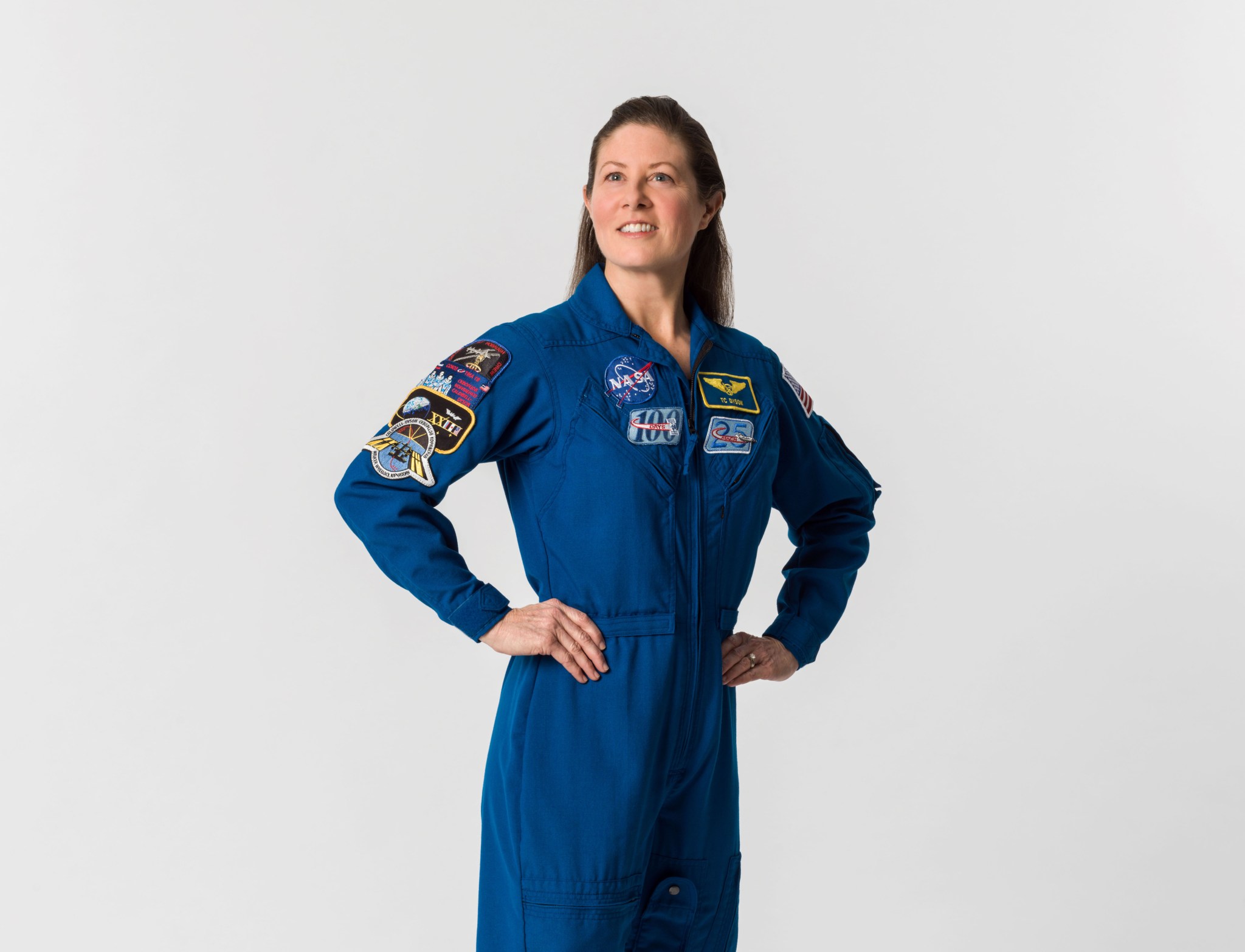
NASA astronaut Tracy Dyson poses for a portrait at NASA’s Johnson Space Center in Houston.
Credits: NASA

NASA astronaut Tracy C. Dyson is available in limited opportunities to discuss her mission beginning at 8 a.m. EST on Monday, Feb. 26. The interviews will take place ahead of Dyson launching to the International Space Station in March.

The virtual interviews will stream live on NASA+, NASA Television, and the agency’s website. Learn how to stream NASA TV through a variety of platforms including social media.

Interested media must submit a request to speak with Dyson no later than 12 p.m. Friday, Feb. 23, to the NASA Johnson Space Center in Houston newsroom at 281-483-5111 or jsccommu@mail.nasa.gov.

Dyson is scheduled to launch aboard the Soyuz MS-25 spacecraft Thursday, March 21, and will spend approximately six months aboard the space station. She will travel to the station with Roscosmos cosmonaut Oleg Novitskiy and spaceflight participant Marina Vasilevskaya of Belarus, both of whom will spend approximately 12 days aboard the orbital complex.

During her expedition, Dyson will conduct scientific investigations and technology demonstrations that help prepare humans for future space missions and benefit people on Earth. Among some of the hundreds of experiments ongoing during her mission, Dyson will continue to study how fire spreads and behaves in space with the Combustion Integrated Rack, as well as contribute to the long-running Crew Earth Observations study by photographing Earth to better understand how our planet is changing over time.

After completing her expedition, Dyson will return to Earth this fall with Roscosmos cosmonauts Oleg Kononenko and Nikolai Chub on the Soyuz MS-25 spacecraft.

Learn more about International Space Station research and operations at:

https://www.nasa.gov/station

-end-

Joshua Finch / Claire O’Shea
Headquarters, Washington
202-358-1100
joshua.a.finch@nasa.gov / claire.a.o’shea@nasa.gov

Courtney Beasley
Johnson Space Center, Houston
281-483-5111
courtney.m.beasley@nasa.gov

Powered by WPeMatico

Get The Details…
Roxana Bardan

NASA Leader Casey Swails Learns About Wildfire Work at NASA Ames

NASA Leader Casey Swails Learns About Wildfire Work at NASA Ames

NASA/Brandon Torres

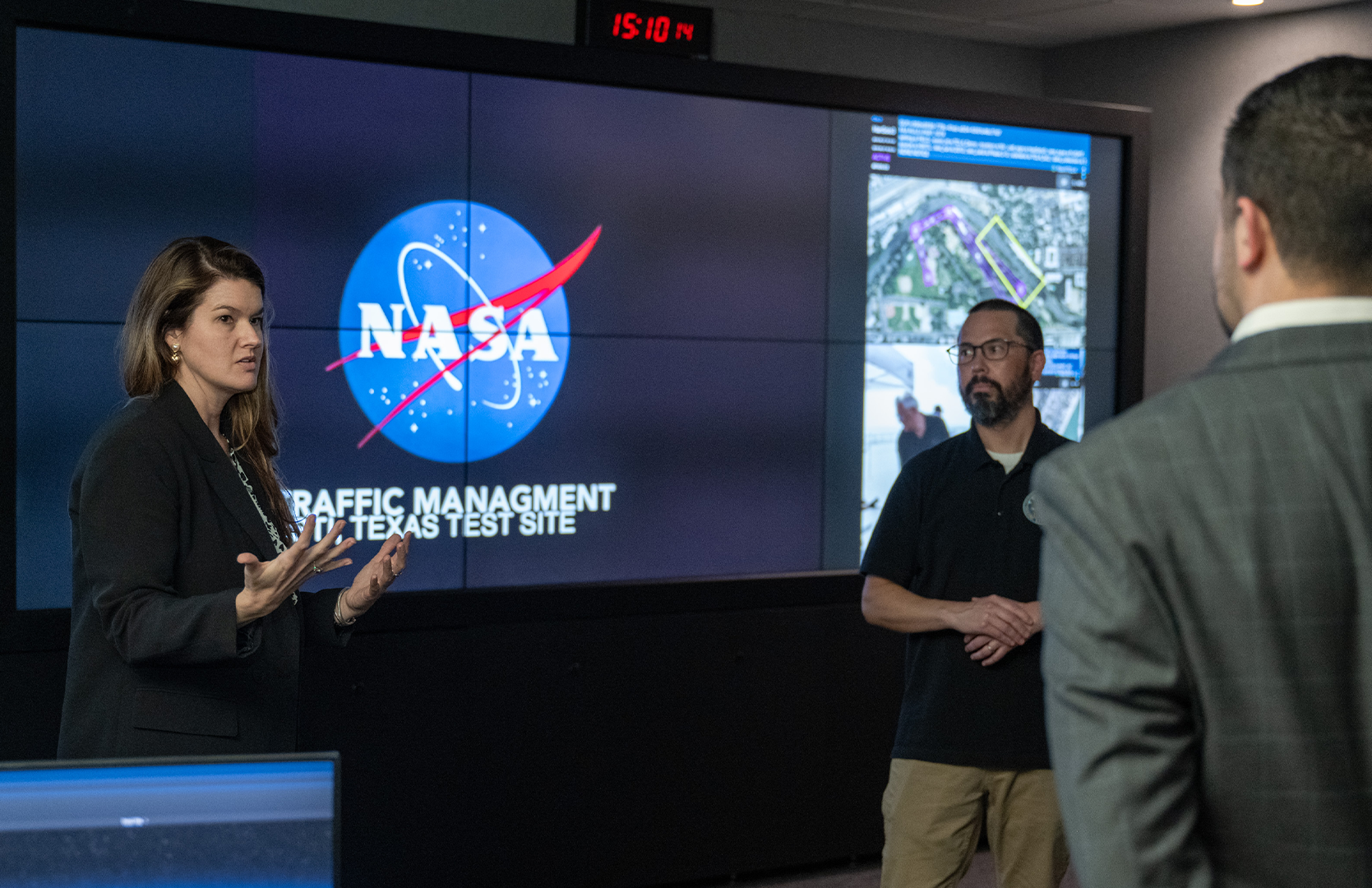
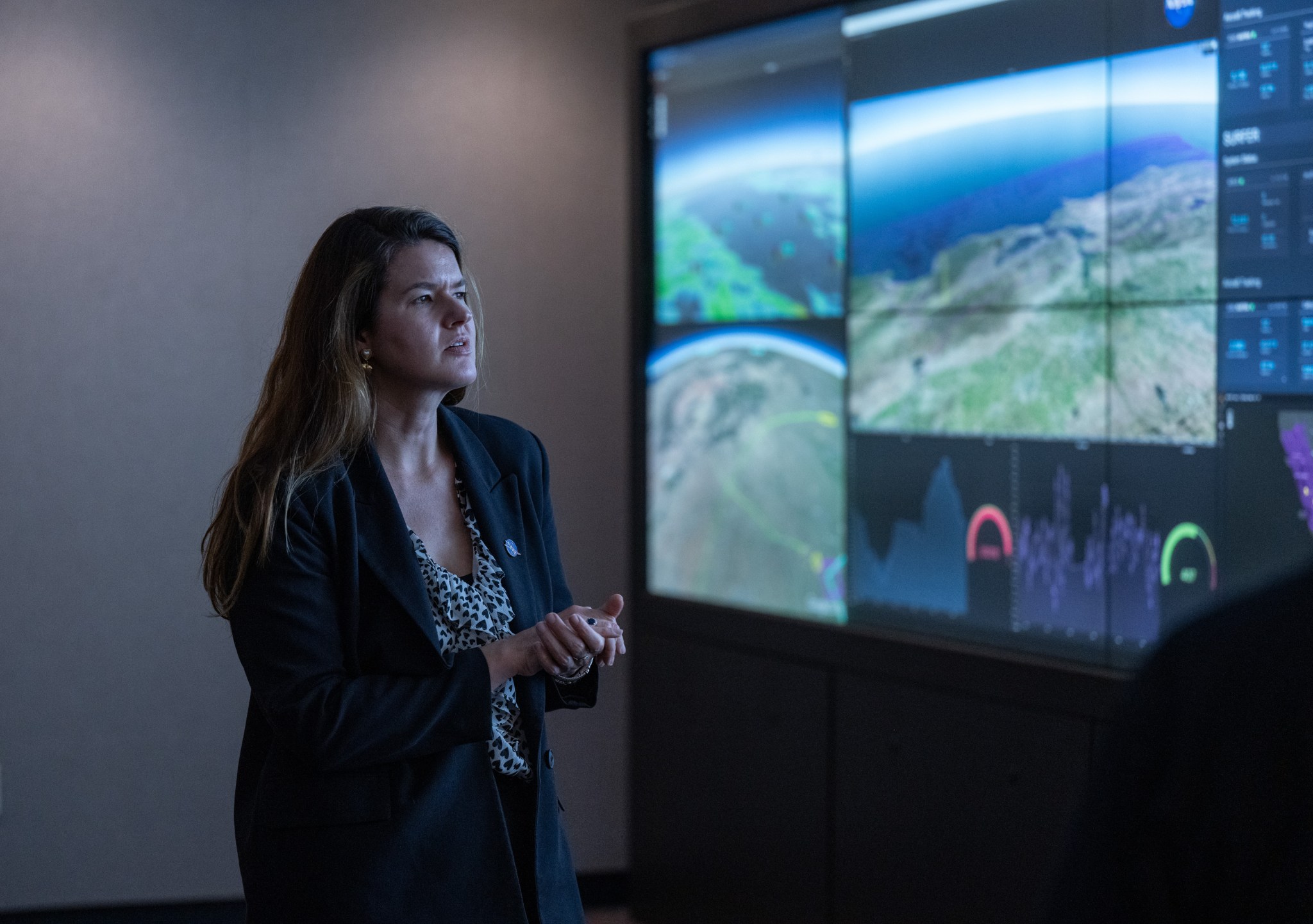
NASA Deputy Associate Administrator Casey Swails views a demonstration on screen in the Airspace Operations Laboratory at NASA’s Ames Research Center in California’s Silicon Valley. Researchers presented the diverse, long-running efforts in aeronautics at Ames that have helped lay the foundation for agency work related to wildfire response.

These include a project to help integrate drones into the airspace with Unmanned Aircraft Systems Traffic Management, their application to disaster response with the Scalable Traffic Management for Emergency Response Operations project, and how those informed NASA’s newest effort to make wildfire response more targeted and adaptable, the Advanced Capabilities for Emergency Response Operations project.

Michael Falkowski, program manager for the Applied Sciences Wildland Fire program at NASA Headquarters presented wildfire efforts happening under NASA’s Science Mission Directorate, such as the FireSense project, led out of Ames.

The importance of collaborations within NASA and with partner agencies was also highlighted. Wildfires are complex phenomena and tackling their challenges will require the work of many, for the benefit of all.

NASA Deputy Associate Administrator Casey Swails, left, and Jeff Homola, NASA research engineer, discuss aeronautics projects at Ames that support the agency’s work to optimize wildfire response efforts in collaboration with its partners.
NASA/Brandon Torres

Powered by WPeMatico

Get The Details…
Abby Tabor

Artemis II Mission Manager Matthew Ramsey

Artemis II Mission Manager Matthew Ramsey

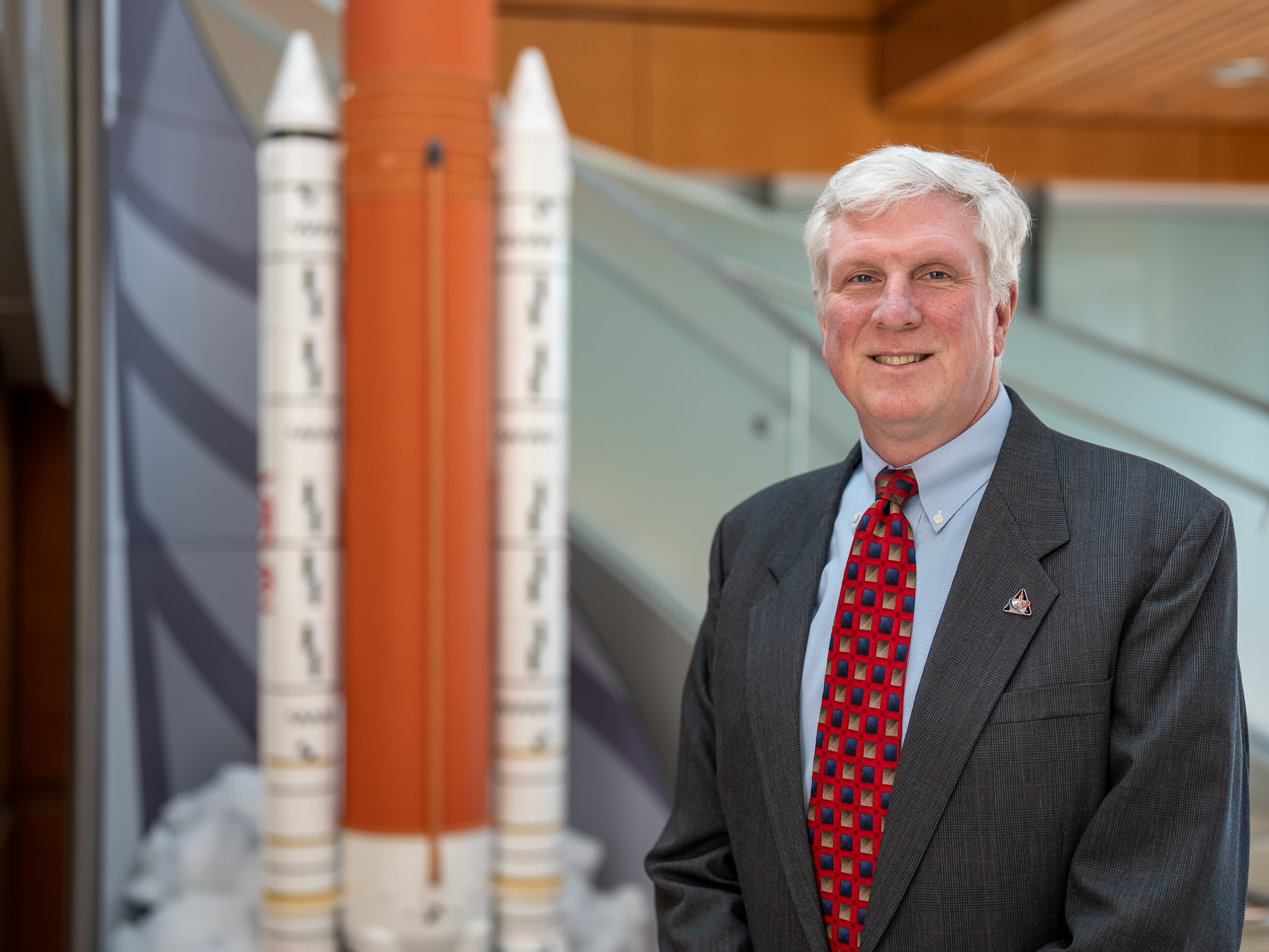
Matthew Ramsey poses for a photo in front of a model of the SLS rocket. He is wearing a grey suit, light blue shift and a red and black patterned tie.
Credit: NASA/Brandon Hancock

Matthew Ramsey is keenly aware of the responsibility he shoulders to ensure the agency’s missions to the Moon are safe and successful. As the mission manager for Artemis II, NASA’s first crewed mission under Artemis, Ramsey is charged with helping to define the requirements and priorities for the missions and certifying that the hardware and operations needed to support flight are ready.

“For me, it’s all about the crew and ensuring their safety as they venture to the Moon and come home,” said Ramsey. “Sending people thousands of miles from home and doing it in a way that sets the stage for long-term exploration and scientific discovery is an incredibly complex task.”

During the leadup to Artemis II, Ramsey is responsible for oversight of the daily preparations as NASA prepares to launch and fly the agency’s SLS (Space Launch System) rocket with a crew of four inside the Orion spacecraft. He will adjudicate issues that arise in the weeks and months ahead of the flight test and serve as deputy of the Mission Management Team — a tiger team that forms two days before launch to accept the risks associated with the mission and make decisions during the flight to address any changes or concerns.

A native of Hernando, Mississippi, Ramsey pitched for the Mississippi State University baseball team before earning bachelor’s and master’s degrees in aerospace engineering from the school.

“There are a lot of similarities between mission management and pitching,” he said. “You control many aspects of the tempo, and there’s a lot of weight on your shoulders.”

Ramsey began his career in the intelligence and defense sectors before joining the space agency in 2002 to work on guidance, navigation, and control for the X-37 Approach and Landing Test Vehicle. Later, he worked on the design of the Ares I and V rockets as part of NASA’s Constellation Program before transitioning in 2010 to the SLS Program in support of the chief engineer at the agency’s Marshall Space Flight Center in Huntsville, Alabama.

During the Artemis I launch, Ramsey was the SLS Engineering Support Center manager at Marshall, coordinating across engineering teams to provide data and solutions to issues encountered during the multiple launch attempts. He then supported the Mission Management Team during Artemis I in an observational role, preparing for his position as Artemis II mission manager.

While NASA and its partners are preparing for Artemis II, work toward other Artemis missions is also underway. Ramsey also will serve as the mission manager for Artemis IV, the first Gateway assembly mission that also will include a lunar landing.

“With Artemis II on the horizon, most of my time is focused on making sure we’re ready to fly Reid, Victor, Christina, and Jeremy around the Moon and bring them safely home,” Ramsey said. “For Artemis IV, we’re in the mission concept-planning phase, establishing mission priorities and objectives and defining how we’ll transfer crew between all the hardware elements involved.”

As Artemis II nears, Ramsey is blending his operational experience and expertise in design, development, testing, and evaluation so that NASA is primed for what lies ahead: sending humans back to the Moon for the first time in more than 50 years and laying the foundation for future missions that will ultimately enable human exploration of Mars.

Powered by WPeMatico

Get The Details…
Rachel H. Kraft