NASA Challenge Gives Space Thruster Commercial Boost

NASA Challenge Gives Space Thruster Commercial Boost

3 min read

Preparations for Next Moonwalk Simulations Underway (and Underwater)

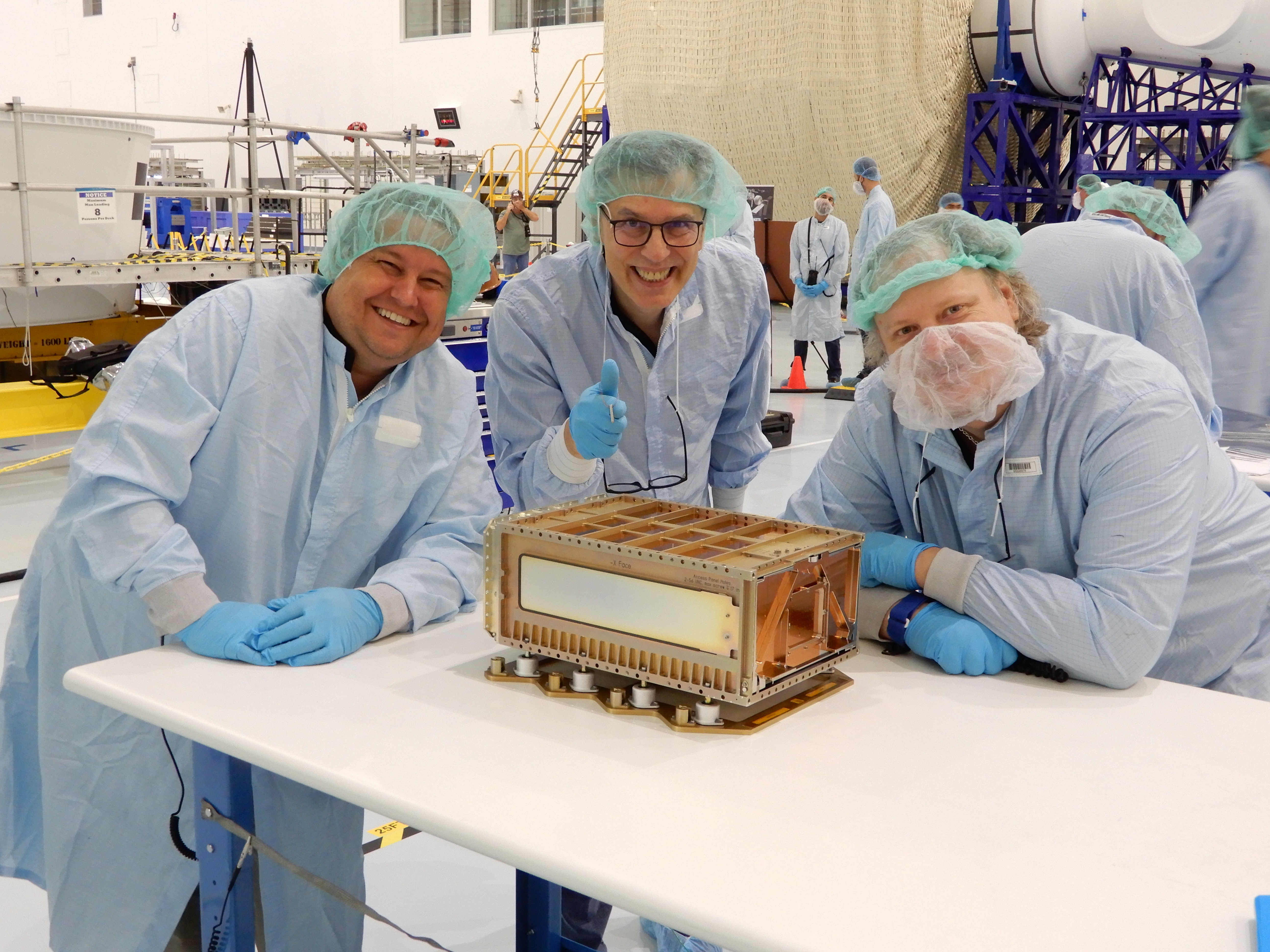
Members of Team Miles with the CubeSat developed during the NASA Cube Quest Challenge. From left to right: Alex Wingeier, Don Smith, Wes Faler. Image Credit: Team Miles
Members of Team Miles with the CubeSat developed during the NASA Cube Quest Challenge. From left to right: Alex Wingeier, Don Smith, Wes Faler.
Image credit: Team Miles

In its pursuit to develop groundbreaking technologies to explore space and benefit life on Earth, NASA invites the public to contribute ideas to the agency through participatory opportunities, including challenges. The Cube Quest competition – NASA’s first in-space challenge – kicked off in 2015, offering a total prize purse of $5 million.

This challenge asked university and private developer teams to complete objectives in designing, building, and delivering small satellites capable of advanced deep space operations. Throughout two challenge phases, several teams developed and tested technologies to launch small satellites, also known as CubeSats, into orbit. 

Team Miles of Tampa, Florida, was the sole team to send its CubeSat aboard 2022’s Artemis I flight test around the Moon. Team Miles was under the leadership of Wesley Faler and found members through Tampa Hackerspace, a community nonprofit workshop. From there, it grew to include software engineering, information technology, radio-frequency engineering, radiation, aerospace engineering, graphic design, and blacksmithing experts. 

“I was prototyping a plasma thruster design in my second bedroom workshop,” says Faler. “NASA’s challenge was specifically looking for wild ideas from citizen scientists – not your traditional degree or institution scientists – and that appealed to me.”

Team Miles KSC
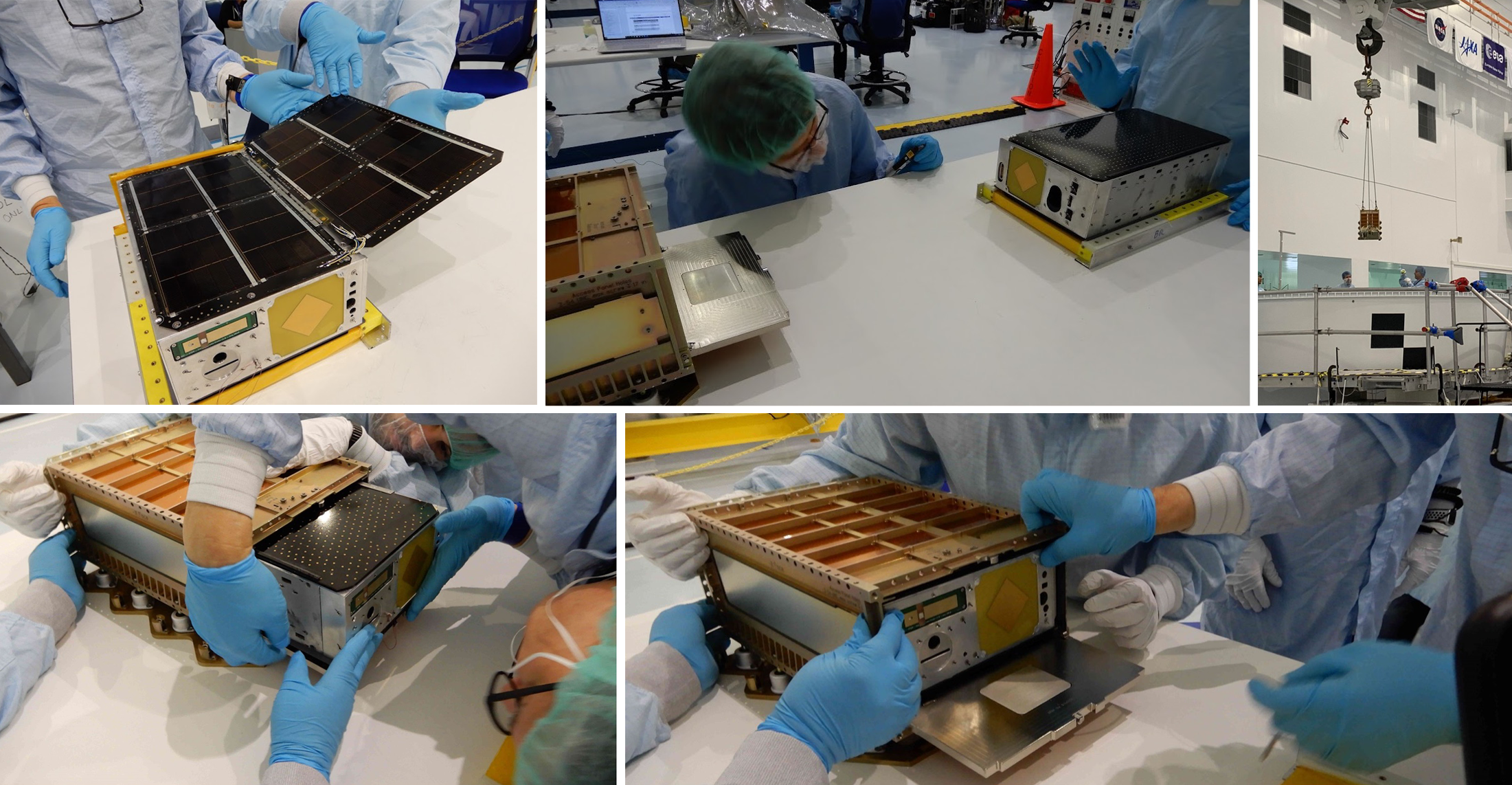
Photo collage: Team Miles integrates their CubeSat into a dispenser for the Orion stage adapter. The Orion stage adapter connects the SLS rocket to Orion and had slots built into it for the payloads.
Credits: NASA/KSC

During the challenge’s ground test phases, Team Miles developed its Miles CubeSat, a breadbox-sized satellite propelled with a novel water-fueled plasma thruster. The team also created and radiation-tested its Resilient Affordable CubeSat Processor flight computer to communicate in deep space.

In total, NASA awarded $100,000 to Team Miles in the ground phase of the Cube Quest challenge. Despite not winning the in-space phase of the challenge due to a communications failure after launch, Faler emphasizes the value of participation extending beyond monetary awards, showcasing the team’s resilience and determination.

“The challenge generated publicity and public awareness for a wild idea. The fact that NASA looked at the idea and helped us advance it gave us a platform to talk to people. That is huge for these challenges – the opportunity to be heard,” says Faler.

Since the challenge ended, Faler has cofounded and become the CEO of Miles Space, Inc., a company that was born out of the innovative spirit of Team Miles. In January 2024, Miles Space was acquired by RocketStar, Inc., where Faler now serves as chief technology officer. Stemming from iterations of Faler’s original thruster, the company has developed a nuclear fusion propulsion system, a testament to the profound impact of the Cube Quest competition on commercial space technology.

As for words of wisdom for future challenge participants, Faler said, “Whether you place in the challenge or not, you haven’t lost time by participating. Being part of that process forces you to grow.”

Powered by WPeMatico

Get The Details…
Bailey G. Light

Gateway: Forward Progress on Artemis IV

Gateway: Forward Progress on Artemis IV

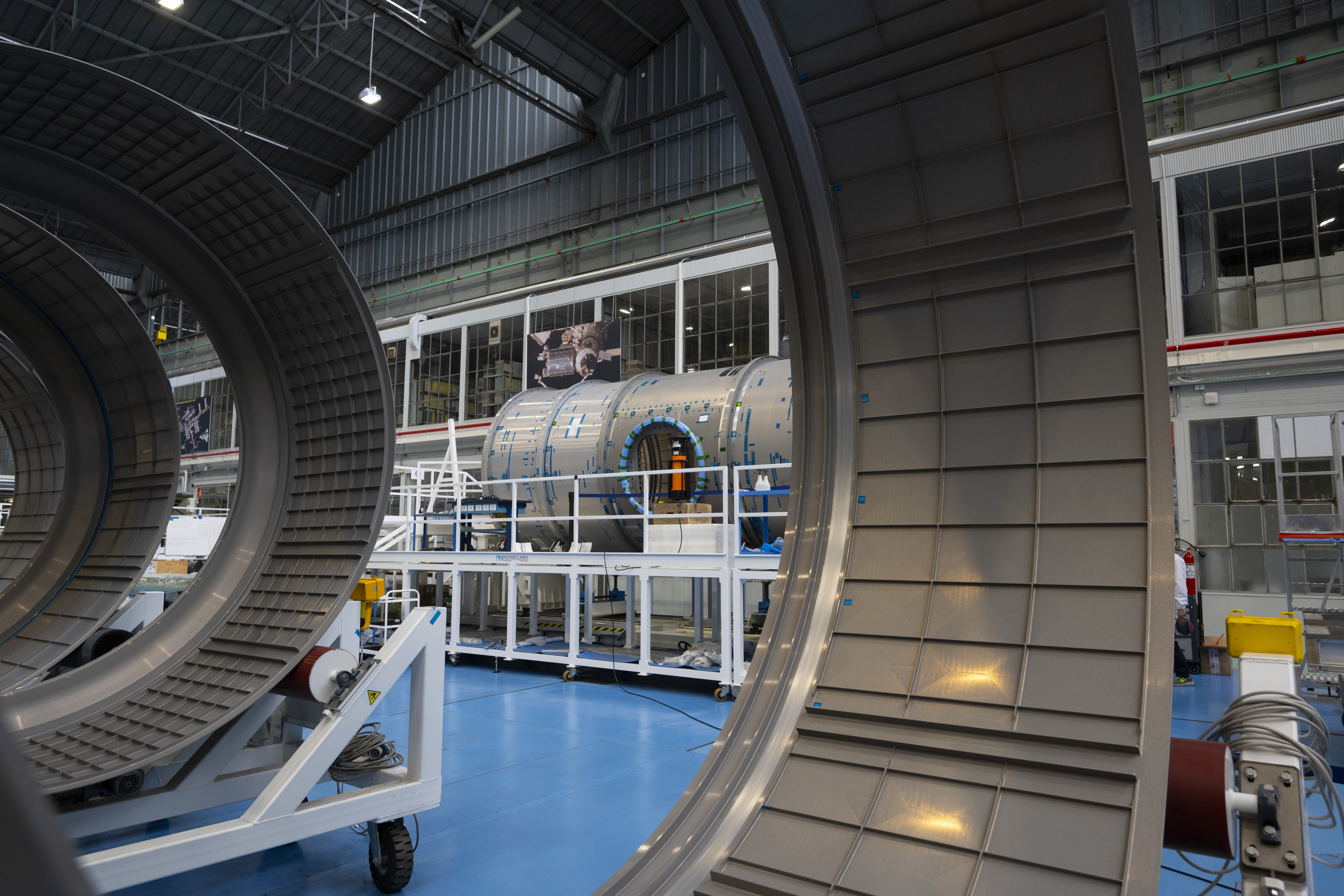
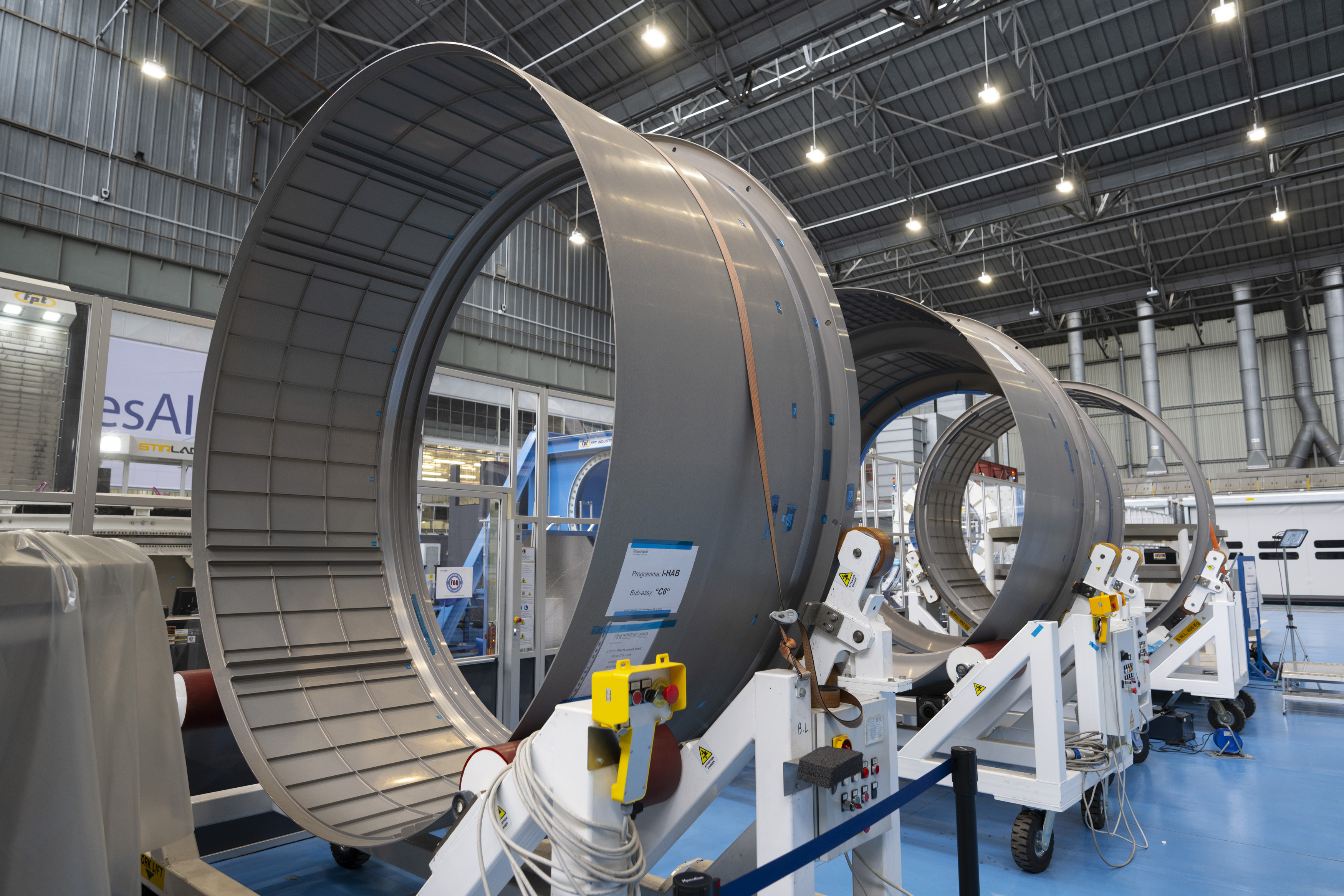
In the background, a large space station module in a facility ringed by inspection scaffolding. In the foreground, large gray rings.
Gateway’s Lunar I-Hab and HALO modules under construction at a Thales Alenia Space industrial plant in Turin, Italy.
ESA/Stephane Corvaja

The Artemis IV mission is taking shape with major hardware for Gateway, humanity’s first space station to orbit the Moon, progressing in Turin, Italy.

NASA will launch HALO (Habitation and Logistics Outpost), center of image in background, along with the Power and Propulsion Element (not pictured) to lunar orbit ahead of the Artemis IV mission as the first elements of Gateway, the first space station to be assembled around the Moon. During that mission, astronauts will launch in the Orion spacecraft with the Lunar I-Hab, pieces of which are shown here in the foreground, and deliver it to Gateway. Lunar I-Hab is provided by ESA (European Space Agency) with significant hardware contributions from JAXA (Japan Aerospace Exploration Agency), and is one of four Gateway modules that astronauts will live and work inside as they orbit the Moon.

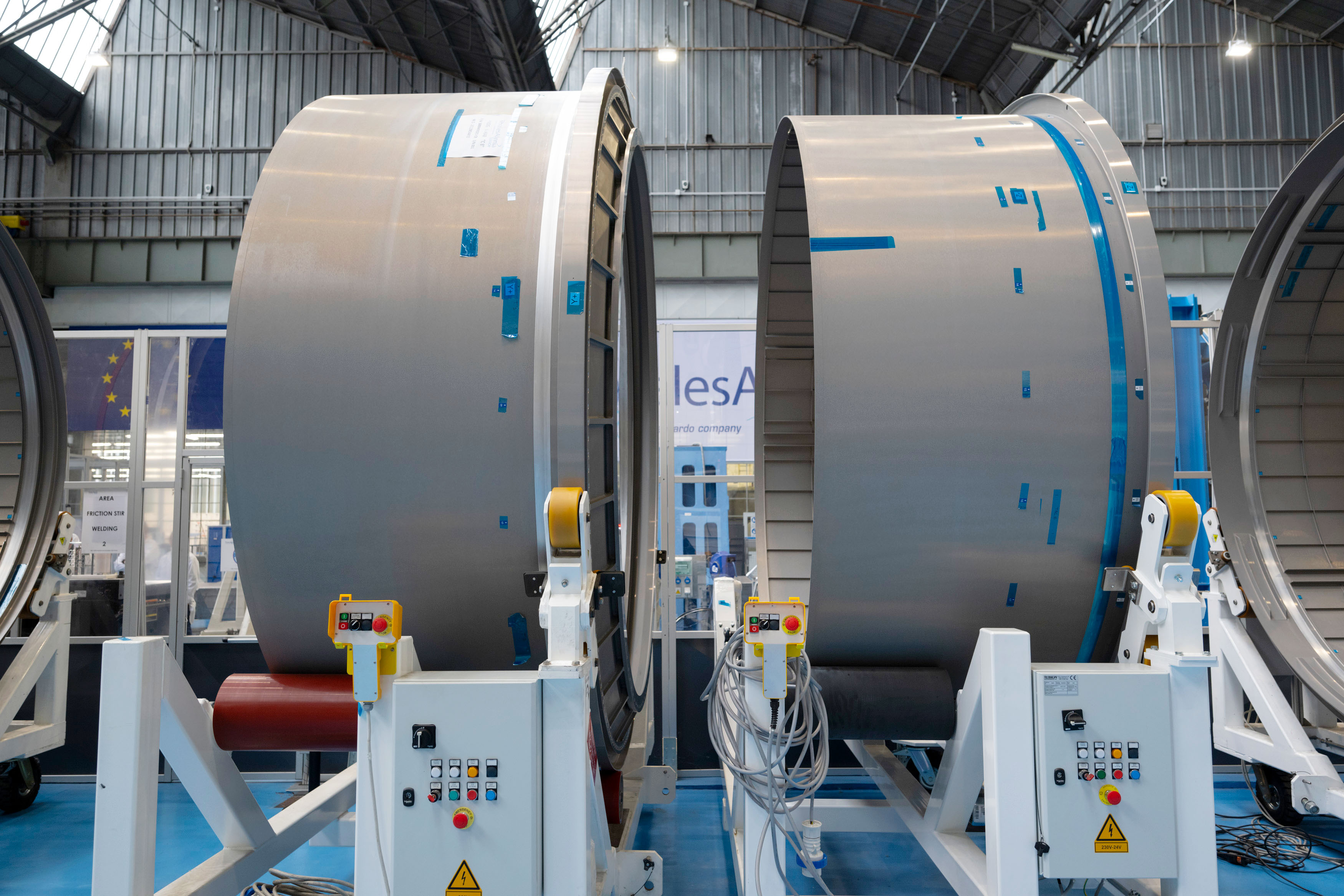
Thales Alenia Space completed major welding on HALO and began initial fabrication of Lunar I-Hab last year. The company is a subcontractor to Northrop Grumman for HALO, and prime contractor to ESA for Lunar I-Hab.

Along with HALO, I-Hab, and the Power and Propulsion Element, two additional Gateway modules provided by ESA and the Mohammad Bin Rashid Space Centre make up the core components of the space station. CSA (Canadian Space Agency) is providing the Canadarm3 advanced external robotic system and fixtures for science instruments.  

The international teams of astronauts living, conducting science, and preparing for missions to the lunar South Pole region from Gateway will be the first humans to make their home in deep space. 

Powered by WPeMatico

Get The Details…
Dylan Connell

NASA Marshall Prepares for Strategic Facilities Updates 

NASA Marshall Prepares for Strategic Facilities Updates 

4 min read

Preparations for Next Moonwalk Simulations Underway (and Underwater)

NASA’s Marshall Space Flight Center is getting ready for the next big step in the evolution of its main campus in Huntsville, Alabama. Through a series of multi-year infrastructure projects, Marshall is optimizing its footprint to assure its place as a vibrant and vital hub for the aerospace community in the next era. 

Near-term plans call for the carefully orchestrated take-down of 19 obsolete and idle structures – among them the 363-foot-tall Dynamic Test Stand, the Propulsion and Structural Test Facility, and Neutral Buoyancy Simulator. These facilities are not required for current or future missions, and the demolitions will help the center transition to a more modern, sustainable, and affordable infrastructure.

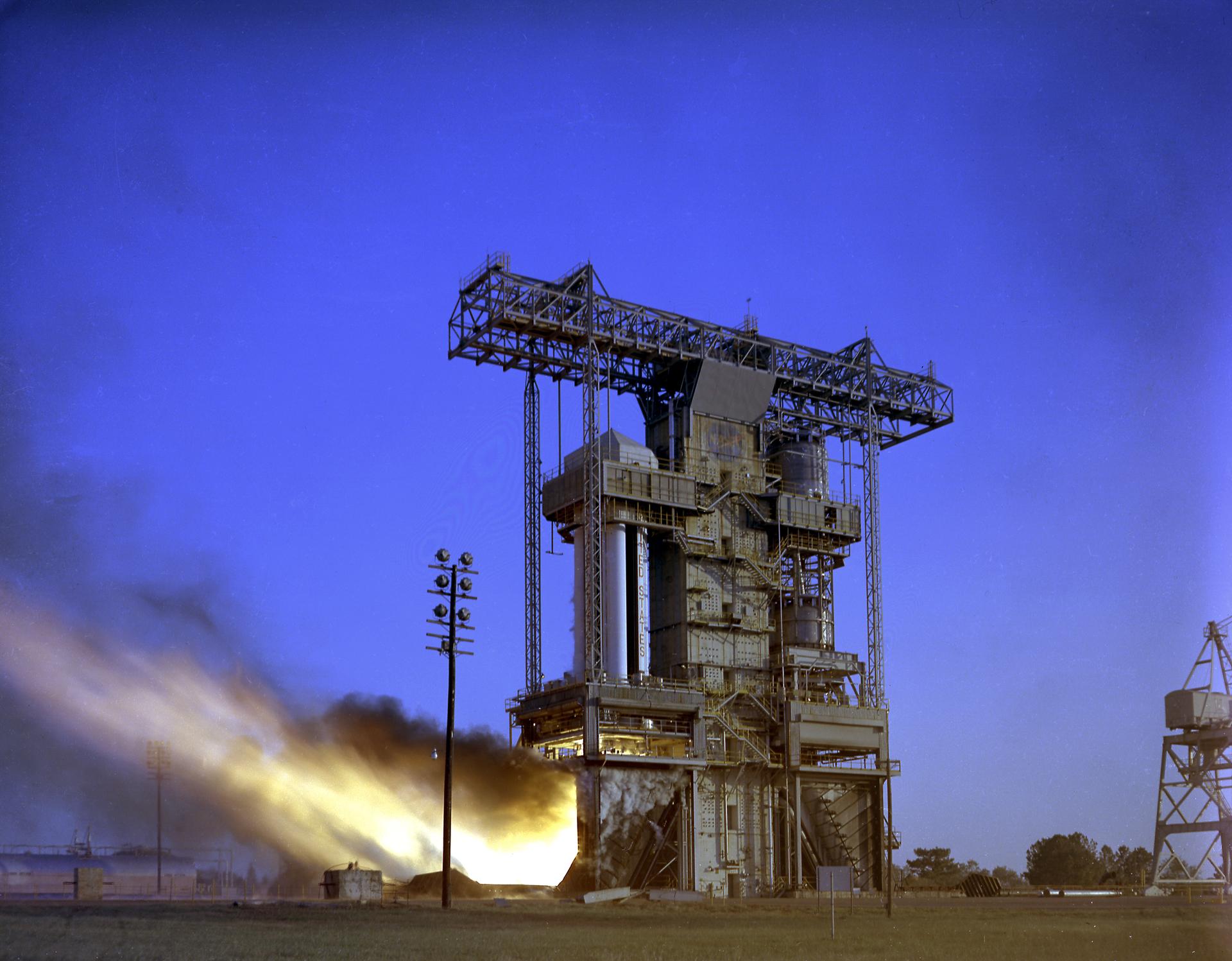
Test engineers fire up the Saturn I rocket’s first stage (S-1-10) at the Propulsion and Structural Test Facility, or “T-tower,” at NASA’s Marshall Space Flight Center in 1964.
NASA

“These facilities helped NASA make history – the Dynamic Test Stand was the tallest manmade structure in North Alabama and helped us test both the Saturn V rocket and the space shuttle,” said Joseph Pelfrey, Marshall’s Center Director. “Without these structures, we wouldn’t have the space program we have today. While it is hard to let them go, the most important legacy remaining are the people that built and stewarded these facilities and the missions they enabled. That same bold spirit fuels us, today. We are committed to carrying it forward to inspire the workforce of tomorrow.” 

Built in 1964, the Dynamic Test Stand initially was used to test fully assembled Saturn V rockets. In 1978, engineers there also integrated all space shuttle elements for the first time, including the orbiter, external fuel tank, and solid rocket boosters.

The Propulsion and Structural Test Facility – better known at Marshall as the “T-tower” due to its unique shape – was built in 1957 by the U.S. Army Ballistic Missile Agency and transferred to NASA when Marshall was founded in 1960. There, engineers tested components of the Saturn launch vehicles, the Army’s Redstone Rocket, and shuttle solid rocket boosters.

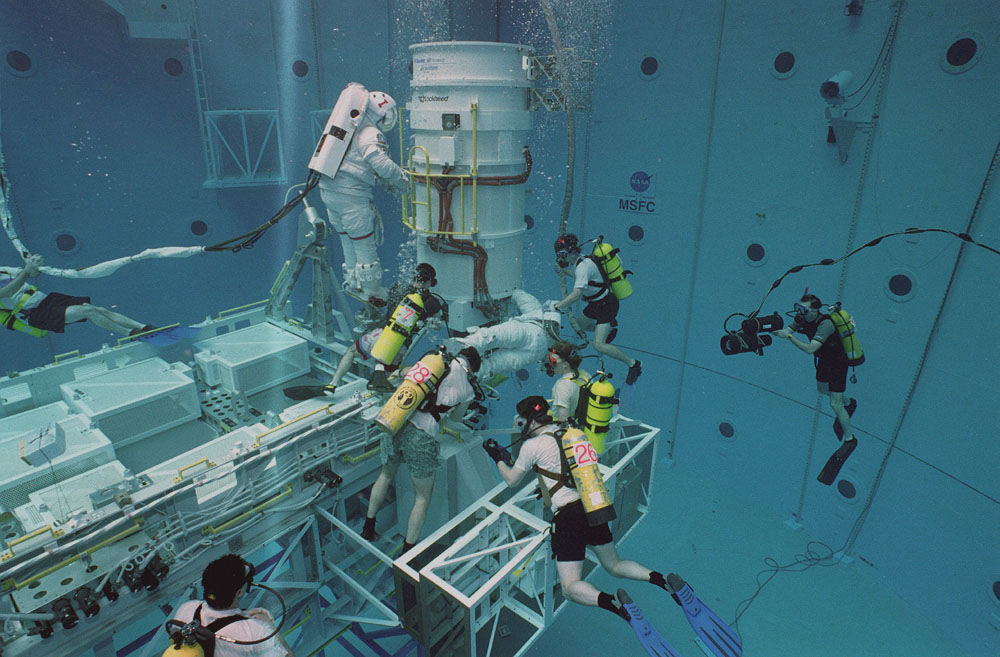
The Neutral Buoyancy Simulator, including its 1.3-million-gallon tank and control room, was built in the late 1960s. From 1969 until its closing in 1997, the facility enabled NASA astronauts and researchers to experience near-weightlessness, conducting underwater testing of space hardware and practice runs for servicing the Hubble Space Telescope. It was replaced in 1997 by a new facility at NASA’s Johnson Space Center in Houston.

Astronauts conduct underwater testing on the International Space Station’s power module in the Neutral Buoyancy Simulator at NASA’s Marshall Space Flight Center in 1995.
NASA

Honoring the Past, Building the Future

Marshall master planner Justin Taylor said the facilities team looked at every possibility for refurbishing the old sites.

“The upkeep of aging facilities is costly, and we have to put our funding where it does the most good for NASA’s mission,” he said. “These are tough choices, but we have to prioritize function and cost over nostalgia. We’re making way for what’s next.”

To preserve NASA history, the agency has worked with architectural historians over the years on detailed drawings, written histories, and large-format photographs of the sites. Those documents are part of the Library of Congress’s permanent Historic American Engineering Record collection, making their history and accomplishments available to the public for generations to come.

Marshall facilities engineers are still finalizing the details and timeline for the demolitions. Work is expected to begin in late 2024 and end in late 2025. Additionally, to support the center’s employees and all the mission work they are doing, Marshall has a few infrastructure projects in design stages that will include the construction of two state-of-the-art buildings within the decade ahead.

A new Marshall Exploration Facility will offer a two to three story facility at approximately 55,000 square feet located within the 4200 complex. The facility will include an auditorium, along with conferencing, training, retail, and administrative spaces. The new Engineering Science Lab – at approximately 140,000 square feet – will provide a modern, flexible laboratory environment to accommodate a new focus for research and testing capabilities.

Ultimately, NASA’s vision for Marshall is a dynamic, interconnected campus. The center’s master plan features a central greenway connecting its two most densely populated zones – its administrative complex and engineering complex.

“As we look towards the aspirational goals we have as an agency, Marshall’s contributions may look different than our past but be no less important,” said Pelfrey. “And we want our partners, employees, and the community to be part of the evolution with us, bringing complementary skills and capabilities, innovative ideas, and a passion for exploration and discovery.”

To learn more about NASA’s Marshall Space Flight Center, visit:

https://www.nasa.gov/marshall

Molly Porter

Marshall Space Flight Center, Huntsville, Ala.
256-544-0034
molly.a.porter@nasa.gov 

Share

Details

Last Updated

Apr 29, 2024

Powered by WPeMatico

Get The Details…
Beth Ridgeway

NASA Sets Coverage for Boeing Starliner’s First Crewed Launch, Docking

NASA Sets Coverage for Boeing Starliner’s First Crewed Launch, Docking

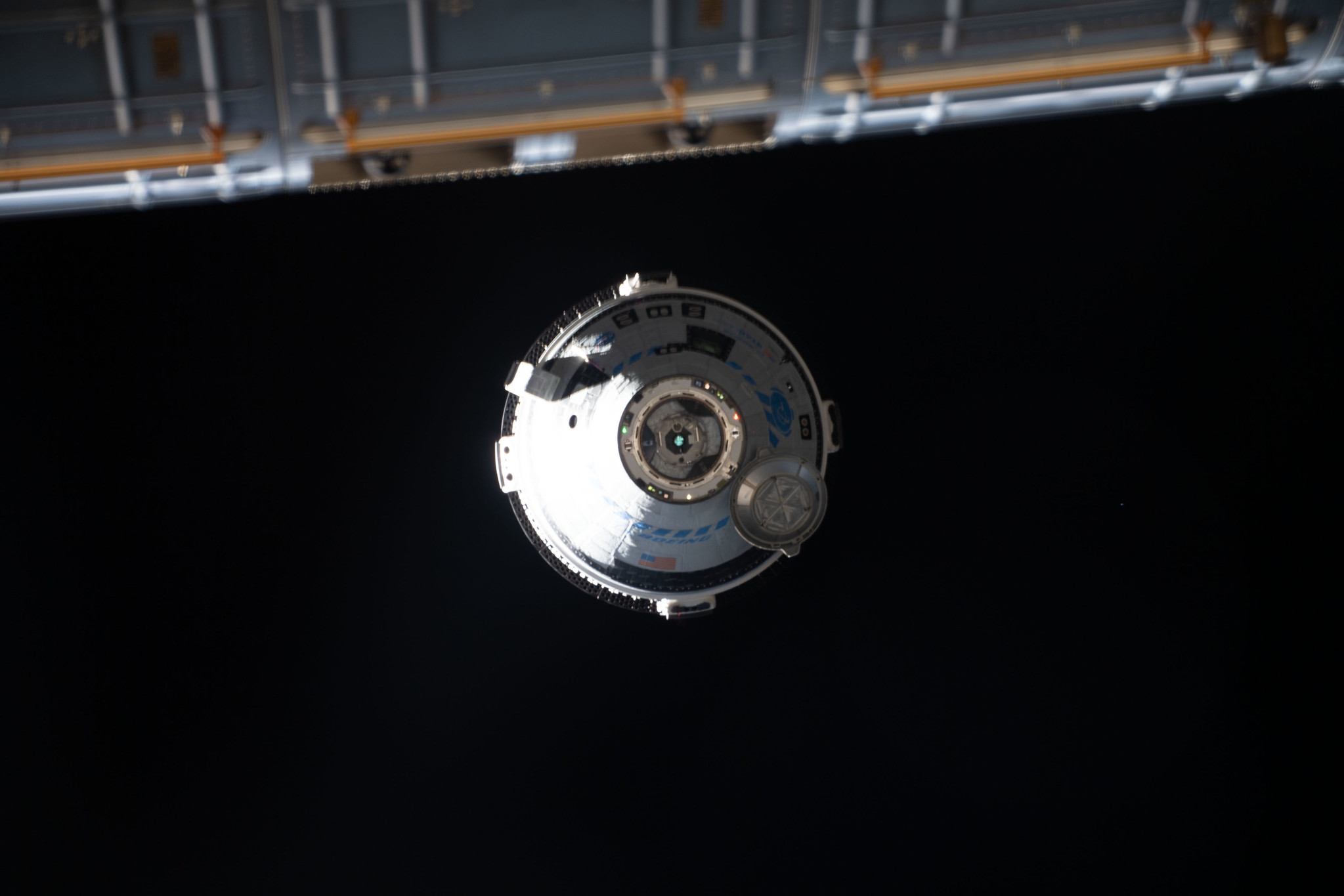
Boeing’s Starliner spacecraft approaches the International Space Station. NASA astronauts Butch Wilmore and Suni Williams will launch aboard Starliner on a United Launch Alliance Atlas V rocket for NASA’s Boeing Crew Flight Test.
Credits: NASA

NASA will provide live coverage of prelaunch and launch activities for the agency’s Boeing Crew Flight Test, which will carry NASA astronauts Butch Wilmore and Suni Williams to and from the International Space Station.

Launch of the ULA (United Launch Alliance) Atlas V rocket and Boeing Starliner spacecraft is targeted for 10:34 p.m. EDT Monday, May 6, from Space Launch Complex-41 at Cape Canaveral Space Force Station in Florida.

The flight test will carry Wilmore and Williams to the space station for about a week to test the Starliner spacecraft and its subsystems before NASA certifies the transportation system for rotational missions to the orbiting laboratory for the agency’s Commercial Crew Program.

Starliner will dock to the forward-facing port of the station’s Harmony module at 12:48 a.m., Wednesday, May 8.

The deadline for media accreditation for in-person coverage of this launch has passed. The agency’s media credentialing policy is available online. For questions about media accreditation, please email: ksc-media-accreditat@mail.nasa.gov.

NASA’s mission coverage is as follows (all times Eastern and subject to change based on real-time operations):

Wednesday, May 1

1:30 p.m. – Virtual news conference at Kennedy with the flight test astronauts:

  • NASA astronaut Butch Wilmore
  • NASA astronaut Suni Williams

Coverage of the virtual news conference will stream live on NASA+, NASA Television, the NASA app, YouTube, and the agency’s website.

Media may ask questions via phone only. For the dial-in number and passcode, please contact the Kennedy newsroom no later than 12:30 p.m., Wednesday, May 1, at: ksc-newsroom@mail.nasa.gov.

Friday, May 3
12:30 p.m. – Prelaunch news conference at Kennedy (no earlier than one hour after completion of the Launch Readiness Review) with the following participants:

  • NASA Administrator Bill Nelson
  • Steve Stich, manager, NASA’s Commercial Crew Program
  • Dana Weigel, manager, NASA’s International Space Station Program
  • Emily Nelson, chief flight director, NASA
  • Jennifer Buchli, chief scientist, NASA’s International Space Station Program
  • Mark Nappi, vice president and program manager, Commercial Crew Program, Boeing
  • Gary Wentz, vice president, Government and Commercial Programs, ULA
  • Brian Cizek, launch weather officer, 45th Weather Squadron, Cape Canaveral Space Force Station

Coverage of the prelaunch news conference will stream live on NASA+, NASA Television, the NASA app, YouTube, and the agency’s website.

Media may ask questions in person and via phone. Limited auditorium space will be available for in-person participation. For the dial-in number and passcode, media should contact the Kennedy newsroom no later than 11:30 a.m., Friday, May 3, at ksc-newsroom@mail.nasa.gov.

3:30 p.m. – NASA Social panel live stream event at Kennedy with the following participants:

  • Ian Kappes, deputy launch vehicle office manager, NASA’s Commercial Crew Program
  • Amy Comeau Denker, Starliner associate chief engineer, Boeing
  • Caleb Weiss, system engineering and test leader, ULA
  • Jennifer Buchli, chief scientist, NASA’s International Space Station Program

Coverage of the panel live stream event will stream live at @NASAKennedy on YouTube, @NASAKennedy on X, and @NASAKennedy on Facebook. Members of the public may ask questions online by posting questions to the YouTube, X, and Facebook livestreams using #AskNASA.

Monday, May 6

6:30 p.m. – Launch coverage begins on NASA+, NASA Television, the NASA app, YouTube, and the agency’s website.

10:34 p.m. – Launch

Launch coverage on NASA+ will end shortly after Starliner orbital insertion. NASA Television will provide continuous coverage leading up to docking and through hatch opening and welcome remarks.

Tuesday, May 7

12 a.m. – Postlaunch news conference with the following participants:

  • NASA Deputy Administrator Pam Melroy
  • Ken Bowersox, associate administrator, NASA’s Space Operations Mission Directorate
  • Steve Stich, manager, NASA’s Commercial Crew Program
  • Dana Weigel, manager, NASA’s International Space Station Program
  • Mark Nappi, vice president and program manager, Commercial Crew Program, Boeing
  • Gary Wentz, vice president, Government and Commercial Programs, ULA

Coverage of the postlaunch news conference will air live on NASA+, NASA Television, the NASA app, YouTube, and the agency’s website.

NASA+ will resume coverage and NASA Television’s media channel will break from in-orbit coverage to carry the postlaunch news conference. Mission operational coverage will continue on NASA Television’s public channel and the agency’s website. Once the postlaunch news conference is complete, NASA+ coverage will end, and mission coverage will continue on both NASA channels.

Media may ask questions in person and via phone. Limited auditorium space will be available for in-person participation. For the dial-in number and passcode, media should contact the Kennedy newsroom no later than 10:30 p.m., Monday, May 6, at ksc-newsroom@mail.nasa.gov.

10:15 p.m. – Arrival coverage resumes on NASA+, the NASA app, and YouTube, and continues on NASA Television and the agency’s website.

Wednesday, May 8
12:48 a.m. – Targeted docking to the forward-facing port of the station’s Harmony module

2:35 a.m. – Hatch opening

3:15 a.m. – Welcome remarks

4:15 a.m. – Post-docking news conference at Johnson with the following participants:

  • NASA Associate Administrator Jim Free
  • Steve Stich, manager, NASA’s Commercial Crew Program
  • Dana Weigel, manager, NASA’s International Space Station Program
  • Mark Nappi, vice president and program manager, Commercial Crew Program, Boeing

Coverage of the post-docking news conference will air live on NASA+, NASA Television, the NASA app, YouTube, and the agency’s website.

All times are estimates and could be adjusted based on operations after launch. Follow the space station blog for the most up-to-date operations information.

Audio Only Coverage

Audio only of the news conferences and launch coverage will be carried on the NASA “V” circuits, which may be accessed by dialing 321-867-1220, -1240 or -7135. On launch day, “mission audio,” countdown activities without NASA Television launch commentary, will be carried on 321-867-7135.

Launch audio also will be available on Launch Information Service and Amateur Television System’s VHF radio frequency 146.940 MHz and KSC Amateur Radio Club’s UHF radio frequency 444.925 MHz, FM mode, heard within Brevard County on the Space Coast.

Live Video Coverage Prior to Launch

NASA will provide a live video feed of Space Launch Complex-41 approximately 48 hours prior to the planned liftoff of the mission. Pending unlikely technical issues, the feed will be uninterrupted until the prelaunch broadcast begins on NASA Television, approximately four hours prior to launch. Once the feed is live, find it here: http://youtube.com/kscnewsroom.

NASA Website Launch Coverage

Launch day coverage of the mission will be available on the agency’s website. Coverage will include live streaming and blog updates beginning no earlier than 6:30 p.m., May 6 as the countdown milestones occur. On-demand streaming video and photos of the launch will be available shortly after liftoff.

For questions about countdown coverage, contact the Kennedy newsroom at 321-867-2468. Follow countdown coverage on the commercial crew or the Crew Flight Test blog.

Attend the Launch Virtually

Members of the public can register to attend this launch virtually. NASA’s virtual guest program for this mission also includes curated launch resources, notifications about related opportunities or changes, and a stamp for the NASA virtual guest passport following launch.

Watch and Engage on Social Media

Let people know you’re following the mission on X, Facebook, and Instagram by using the hashtags #Starliner and #NASASocial. You can also stay connected by following and tagging these accounts:

X: @NASA, @NASAKennedy, @NASASocial, @Space_Station, @ISS_Research, @ISS National Lab, @BoeingSpace, @Commercial_Crew

Facebook: NASA, NASAKennedy, ISS, ISS National Lab

Instagram: @NASA, @NASAKennedy, @ISS, @ISSNationalLab

Coverage en Espanol

Did you know NASA has a Spanish section called NASA en Espanol? Check out NASA en Espanol on X, Instagram, Facebook, and YouTube for additional mission coverage.

Para obtener información sobre cobertura en español en el Centro Espacial Kennedy o si desea solicitar entrevistas en español, comuníquese con Antonia Jaramillo: 321-501-8425; antonia.jaramillobotero@nasa.gov; o Messod Bendayan: 256-930-1371; messod.c.bendayan@nasa.gov.

NASA’s Commercial Crew Program has delivered on its goal of safe, reliable, and cost-effective transportation to and from the International Space Station from the United States through a partnership with American private industry. This partnership is changing the arc of human spaceflight history by opening access to low-Earth orbit and the International Space Station to more people, science, and commercial opportunities. The space station remains the springboard to NASA’s next great leap in space exploration, including future missions to the Moon and, eventually, to Mars.

For NASA’s launch blog and more information about the mission, visit:

https://www.nasa.gov/commercialcrew

-end-

Joshua Finch / Claire O’Shea
Headquarters, Washington
202-358-1100
joshua.a.finch@nasa.gov / claire.a.o’shea@nasa.gov

Steven Siceloff / Danielle Sempsrott / Stephanie Plucinsky
Kennedy Space Center, Florida
321-867-2468
steven.p.siceloff@nasa.gov / danielle.c.sempsrott@nasa.gov / stephanie.n.plucinsky@nasa.gov

Leah Cheshier
Johnson Space Center, Houston
281-483-5111
leah.d.cheshier@nasa.gov

Powered by WPeMatico

Get The Details…
Tiernan P. Doyle

The Horse’s Mane

The Horse’s Mane

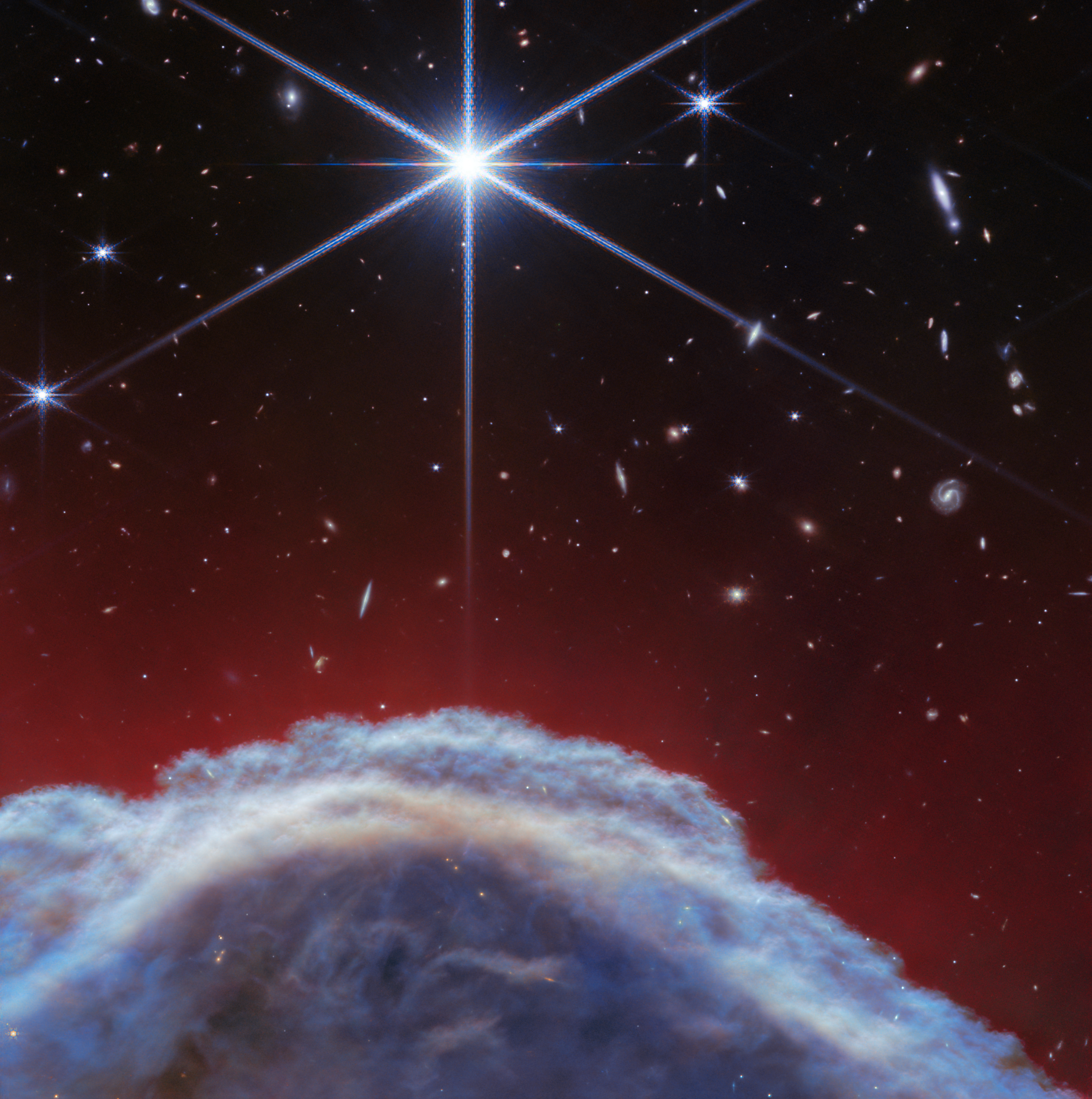
A clumpy dome of blueish-gray clouds rises about a third of the way from the bottom. Above it, streaky, translucent red wisps brush upward to about halfway up the image. The top half of the image is the black background of space with one prominent, bright white star with Webb’s 8-point diffraction spikes. Additional stars and galaxies are scattered throughout the image, although very few are seen through the thick clouds at bottom, and all are significantly smaller than the largest star.
Rising from turbulent waves of dust and gas is the Horsehead Nebula, otherwise known as Barnard 33, which resides roughly 1300 light-years away. The NASA/ESA/CSA James Webb Space Telescope has captured the sharpest infrared images to date of one of the most distinctive objects in our skies, the Horsehead Nebula. Webb’s new view focuses on the illuminated edge of the top of the nebula’s distinctive dust and gas structure.

This image of part of the Horsehead Nebula, captured by NASA’s James Webb Space Telescope and released on April 29, 2024, shows the nebula in a whole new light, capturing the region’s complexity with unprecedented spatial resolution. Located roughly 1,300 light-years away, the nebula formed from a collapsing interstellar cloud of material, and glows because it is illuminated by a nearby hot star. The gas clouds surrounding the Horsehead have already dissipated, but the jutting pillar is made of thick clumps of material and therefore is harder to erode. Astronomers estimate that the Horsehead has about 5 million years left before it too disintegrates.

Image Credit: NASA, ESA, CSA, K. Misselt (University of Arizona) and A. Abergel (IAS/University Paris-Saclay, CNRS)

Powered by WPeMatico

Get The Details…
Monika Luabeya