8 Must-Have NASA Resources for Science Teachers in 2024

8 Must-Have NASA Resources for Science Teachers in 2024

3 min read

8 Must-Have NASA Resources for Science Teachers in 2024

No one can bring the excitement of Earth and space science to the classroom like NASA! 

Launch your lessons to the next level with these eight essential resources for K-12 teachers:
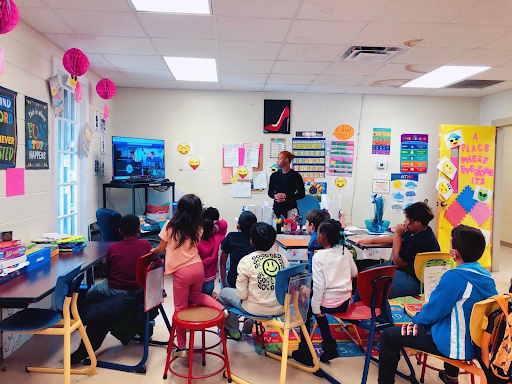
A classroom photo with seated children focused on their teacher standing at the front of the room. The walls are filled with colorful projects, artwork and decorations.

Experience the Total Solar Eclipse 

Whether you’re on or off the path of totality (find out here!), we’ve put together this guide to help you explore live and virtual opportunities from NASA’s Science Activation Program for safely enjoying the eclipse and even contributing as a volunteer to do NASA Eclipse science.

An Out-of-this-world Biology Project

Growing Beyond Earth® (GBE) is a classroom-based citizen science project for middle and high school students about growing plants in space. Curricular materials and resources help you introduce your students to space plant biology and prepare them to participate in the program, through which students have the opportunity to present their findings to NASA Researchers. Materials in English and Spanish.

Interact with Real Cosmic Data and Imagery

Data Stories are interactives for high school students that showcase new science imagery and data for a variety of out of this world topics. Ideas for exploration and scientific highlights are included with every story through accompanying video and text.

Adaptive Learning and Creative Tools from Infiniscope

Empowering educators to develop next-generation, digital, adaptive learning experiences, Infiniscope provides free content and creative tools to educators who want to personalize learning for their middle and high school students. Join their network and get started here.  

STEM Literacy through the Lens of NASA 

NASA eClips provides educators with standards-based videos, educator guides, engineering design packets, and student opportunities for students in grades 3 to 12. Offerings cover a wide variety of topics that include energy, the Moon, clouds, sound, and more!

All Learners can be Scientists and Engineers

NASA missions are a perfect way to bring together science and engineering. In PLANETS units, learners in grades 3-8 engineer technologies like optical filters and use them to answer scientific questions like “Where was water on Mars?” Activities emphasize NASA planetary science and engineering and are designed to empower all learners and show that they can be scientists and engineers. 

Standards-Aligned Digital Resources for Grades K-12

Engage K–12 students with phenomena and science practices with this collection of supplementary digital media resources from GBH aligned with key NGSS Earth, space, and physical science disciplinary core ideas. To ensure that science content is accessible for all students, supports are included for students with disabilities or who are English learners.

Kids Explore Earth and Space with NASA!

NASA’s Space Place helps upper-elementary-aged kids learn space and Earth science through fun games, hands-on activities, art challenges, informative articles, and engaging short videos. With material in both English and Spanish and resources for teachers and parents, NASA Space Place has something for everyone. 

Didn’t find what you were looking for? Want to explore even more resources? NASA’s Science Activation (SciAct) program offers Learning and Educational Activities and Resources from NASA Science that invite learners of all ages to participate!

Powered by WPeMatico

Get The Details…

NASA-Supported Team Discovers Aurora-Like Radio Bursts Above Sunspot

NASA-Supported Team Discovers Aurora-Like Radio Bursts Above Sunspot

3 min read

NASA-Supported Team Discovers Aurora-Like Radio Bursts Above Sunspot

A NASA-funded team of scientists has discovered long-lasting radio signals emanating from the Sun that are similar to those associated with auroras – northern and southern lights – on Earth.

Detected about 25,000 miles (40,000 km) above a sunspot – a relatively cool, dark, and magnetically active region on the Sun – such radio bursts had previously been observed only on planets and other stars.

“This sunspot radio emission represents the first detection of its kind,” said Sijie Yu of the New Jersey Institute of Technology, Newark, who is the lead author of a paper reporting the discovery in the January 2024 issue of Nature Astronomy. The research was first published online in November 2023.

In this illustration, a small portion of the Sun appears in yellow at the bottom with a dark sunspot in the center. Above the sunspot, against a black background, appear several vertical, curved streaks of light that are light pink at the bottom, closest to the sunspot and darken to dark pink in the middle then purple at the top. The streaks also appear thinner at the top than at the bottom.
Scientists have discovered radio bursts above a sunspot that resemble radio emissions from auroras on Earth. The pink-purple streaks in this illustration represent the radio emissions, with higher-frequency radio signals in pink, closer to the sunspot, and lower frequencies in purple. The thin lines represent magnetic field lines above the sunspot. The sunspot is the dark region on the Sun at the bottom.
Sijie Yu, New Jersey Institute of Technology

The discovery could help us better understand our own star as well as the behavior of distant stars that produce similar radio emissions.

The Sun often emits short radio bursts that last for minutes or hours. But the radio bursts Yu’s team detected, using the Karl G. Jansky Very Large Array in New Mexico, persisted for over a week.

These sunspot radio bursts also have other characteristics – such as their spectra (or intensity at different wavelengths) and their polarization (the angle or direction of the radio waves) – that are much more like radio emissions produced in the polar regions of Earth and other planets with auroras.

On Earth (and other planets such as Jupiter and Saturn), auroras shimmer in the night sky when solar particles are caught up in the planet’s magnetic field and get pulled toward the poles, where magnetic field lines converge. As they accelerate poleward, the particles generate intense radio emissions at frequencies around a few hundred kilohertz and then smash into atoms in the atmosphere, causing them to emit light as auroras.

The analysis by Yu’s team suggests the radio bursts above the sunspot are likely produced in a comparable way – when energetic electrons get trapped and accelerated by converging magnetic fields above a sunspot. Unlike Earth’s auroras, though, the radio bursts from sunspots occur at much higher frequencies – hundreds of thousands of kilohertz to roughly 1 million kilohertz. “That’s a direct result of the sunspot’s magnetic field being thousands of times stronger than Earth’s,” Yu said.

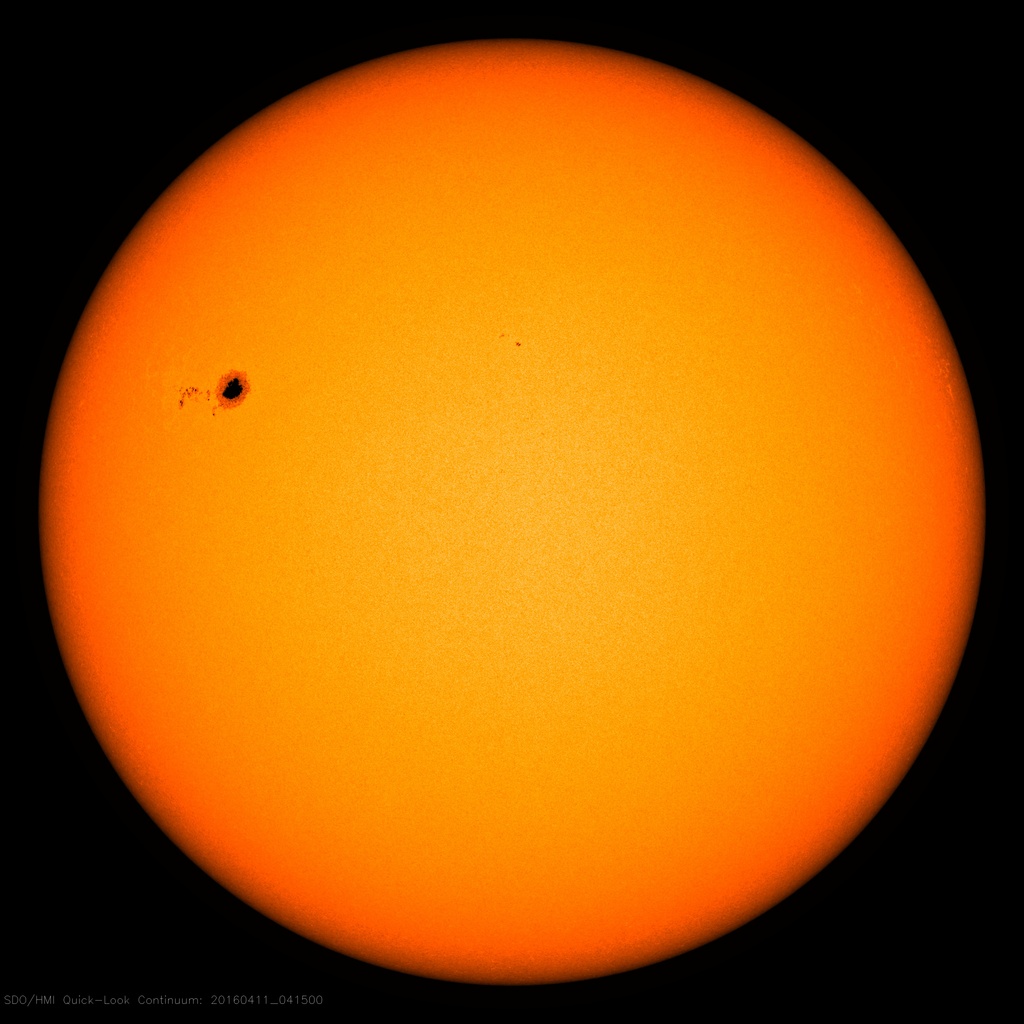
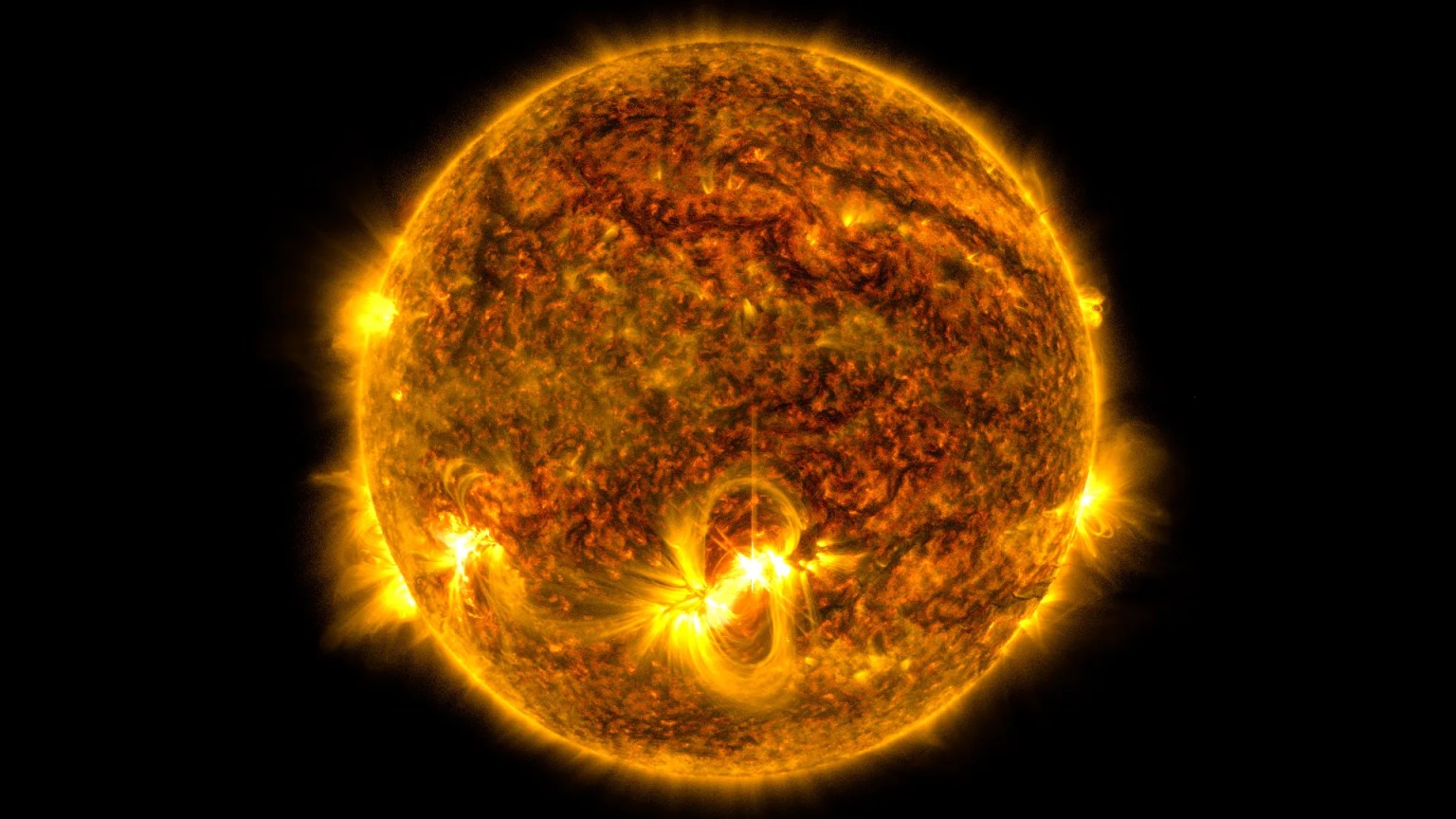
An image shows the Sun as an orange disk. In the upper left is a large sunspot with a few smaller sunspots to the left and right of it.
Scientists detected aurora-like radio bursts above the large, dark sunspot seen in the upper left in this image of the Sun taken on April 11, 2016, by NASA’s Solar Dynamics Observatory.
NASA/Solar Dynamics Observatory

Similar radio emissions have previously been observed from some types of low-mass stars as well. This discovery introduces the possibility that aurora-like radio emissions may originate from large spots on those stars (called “starspots”) in addition to the previously proposed auroras in their polar regions.

“The discovery excites us as it challenges existing notions of solar radio phenomena and opens new avenues for exploring magnetic activities both in our Sun and in distant stellar systems,” Yu said.

“NASA’s growing heliophysics fleet is well suited to continue to investigate the source regions of these radio bursts,” said Natchimuthuk Gopalswamy, a heliophysicist and solar radio researcher at NASA’s Goddard Space Flight Center. “For example, the Solar Dynamics Observatory continually monitors the Sun’s active regions, which likely give rise to this phenomenon.”

In the meantime, Yu’s team plans to reexamine other solar radio bursts to see whether any appear to be similar to the aurora-like radio bursts they found. “We aim to determine if some of the previously recorded solar bursts could be instances of this newly identified emission,” Yu said.

The research by Yu’s team has been supported in part by a NASA Early Career Investigator Program (ECIP) grant awarded to the New Jersey Institute of Technology.

By Vanessa Thomas
NASA’s Goddard Space Flight Center, Greenbelt, Md.

Powered by WPeMatico
Get The Details…

Cheers! NASA’s Webb Finds Ethanol, Other Icy Ingredients for Worlds

Cheers! NASA’s Webb Finds Ethanol, Other Icy Ingredients for Worlds

4 Min Read

Cheers! NASA’s Webb Finds Ethanol, Other Icy Ingredients for Worlds

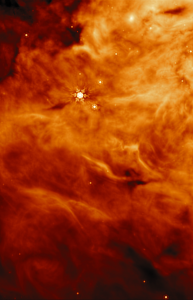
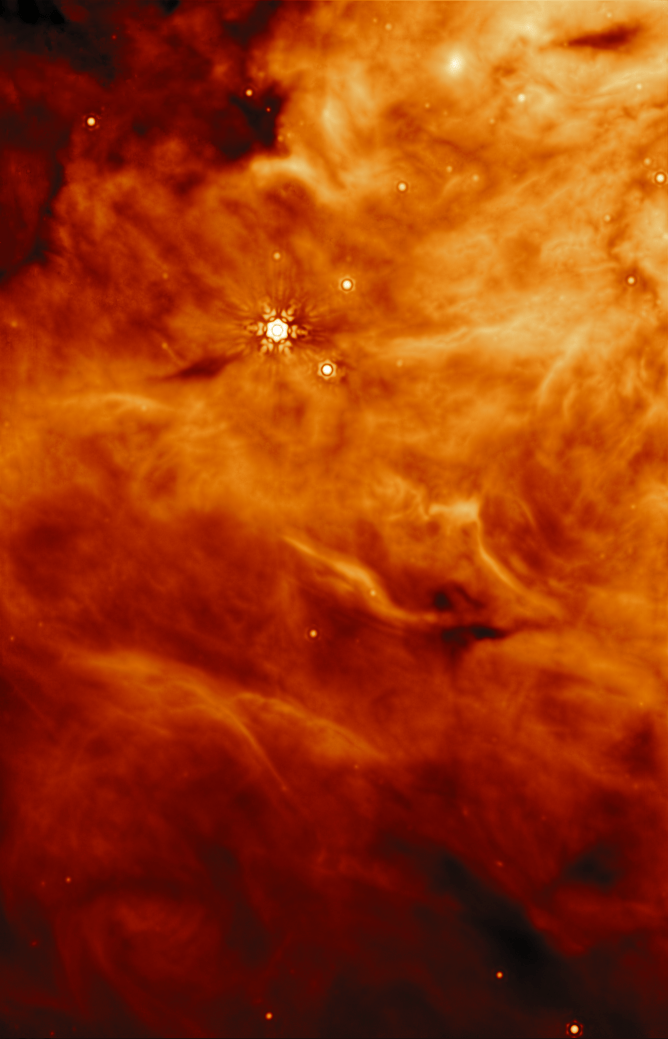
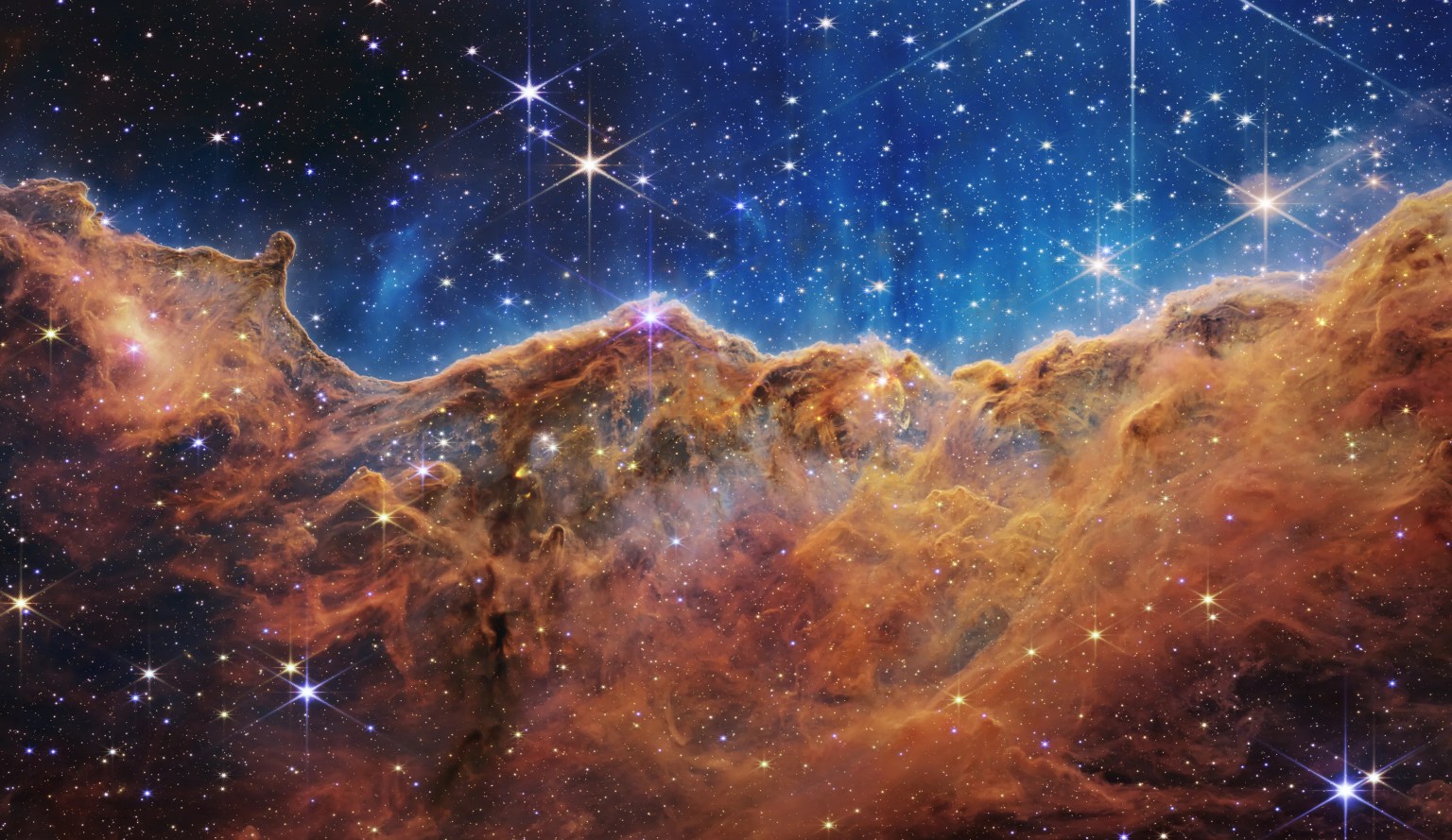
An image of a region of a molecular cloud. The orange cloud is dense and bright close to the top of the image, like rolling clouds, and grows darker and more wispy toward the bottom and in the top corner. One bright star with six short diffraction spikes and several dimmer stars are visible as light spots among the clouds.
Webb MIRI image of a region near the protostar known as IRAS 23385. IRAS 23385 and IRAS 2a.
Credits:
NASA, ESA, CSA, W. Rocha (Leiden University)

What do margaritas, vinegar, and ant stings have in common? They contain chemical ingredients that NASA’s James Webb Space Telescope has identified surrounding two young protostars known as IRAS 2A and IRAS 23385. Although planets are not yet forming around those stars, these and other molecules detected there by Webb represent key ingredients for making potentially habitable worlds.

An international team of astronomers used Webb’s MIRI (Mid-Infrared Instrument) to identify a variety of icy compounds made up of complex organic molecules like ethanol (alcohol) and likely acetic acid (an ingredient in vinegar). This work builds on previous Webb detections of diverse ices in a cold, dark molecular cloud.

Image A: Parallel Field to Protostar IRAS 23385 (MIRI Image)

An image of a region of a molecular cloud. The orange cloud is dense and bright close to the top of the image, like rolling clouds, and grows darker and more wispy toward the bottom and in the top corner. One bright star with six short diffraction spikes and several dimmer stars are visible as light spots among the clouds.
This image at a wavelength of 15 microns was taken by MIRI (the Mid-Infrared Instrument) on NASA’s James Webb Space Telescope, of a region near the protostar known as IRAS 23385. IRAS 23385 and IRAS 2A (not visible in this image) were targets for a recent research effort by an international team of astronomers that used Webb to discover that the key ingredients for making potentially habitable worlds are present in early-stage protostars, where planets have not yet formed.
NASA, ESA, CSA, W. Rocha (Leiden University)

What is the origin of complex organic molecules (COMs) ?

“This finding contributes to one of the long-standing questions in astrochemistry,” said team leader Will Rocha of Leiden University in the Netherlands. “What is the origin of complex organic molecules, or COMs, in space? Are they made in the gas phase or in ices? The detection of COMs in ices suggests that solid-phase chemical reactions on the surfaces of cold dust grains can build complex kinds of molecules.”

As several COMs, including those detected in the solid phase in this research, were previously detected in the warm gas phase, it is now believed that they originate from the sublimation of ices. Sublimation is to change directly from a solid to a gas without becoming a liquid. Therefore, detecting COMs in ices makes astronomers hopeful about improved understanding of the origins of other, even larger molecules in space.

Scientists are also keen to explore to what extent these COMs are transported to planets at much later stages of protostellar evolution. COMs in cold ices are thought to be easier to transport from molecular clouds to planet-forming disks than warm, gaseous molecules. These icy COMs can therefore be incorporated into comets and asteroids, which in turn may collide with forming planets, delivering the ingredients for life to possibly flourish.

The science team also detected simpler molecules, including formic acid (which causes the burning sensation of an ant sting), methane, formaldehyde, and sulfur dioxide. Research suggests that sulfur-containing compounds like sulfur dioxide played an important role in driving metabolic reactions on the primitive Earth.

Image B: Complex Organic Molecules in IRAS 2A

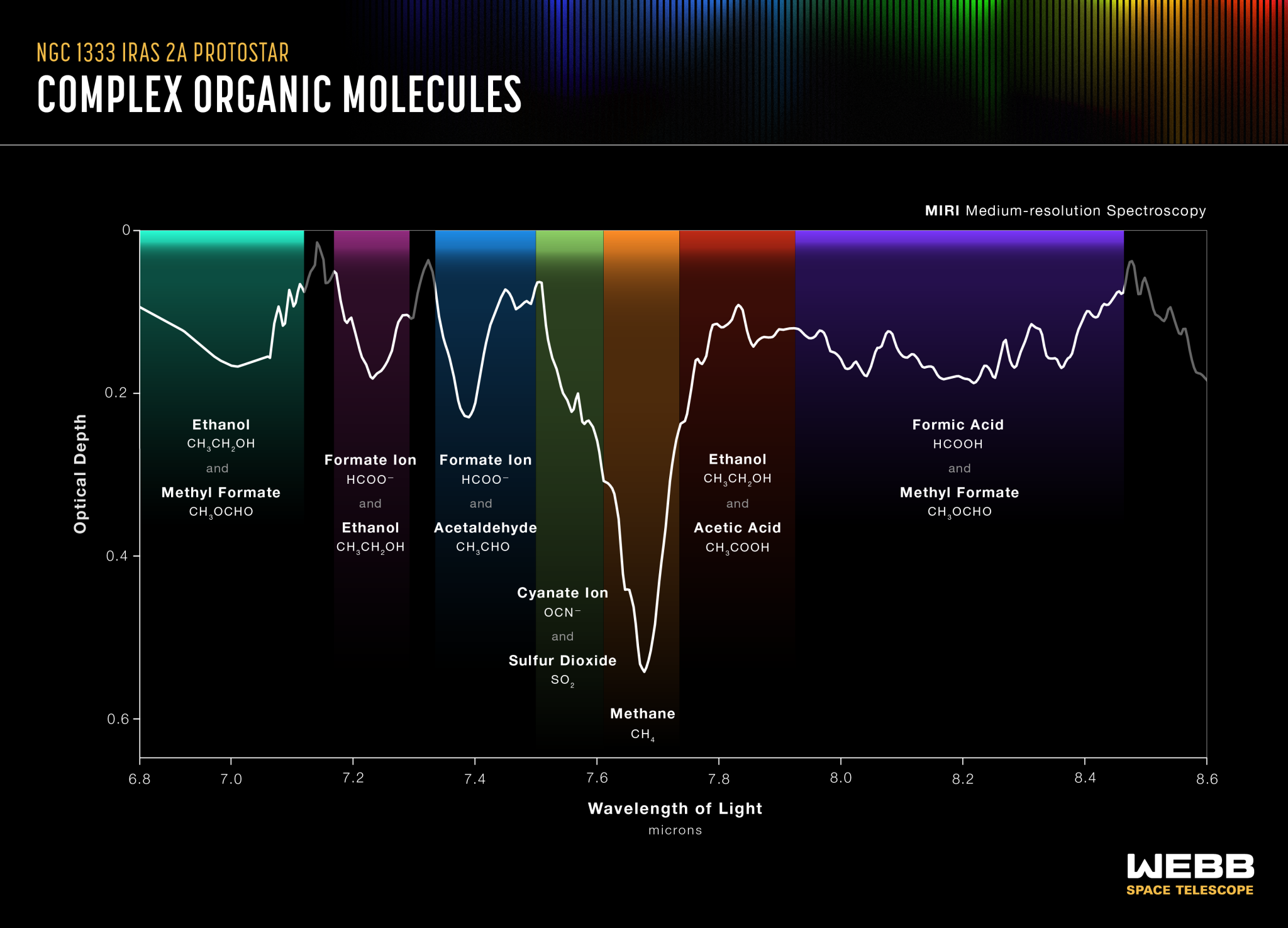
Graphic titled “NGC 1333 IRAS 2A Protostar, MIRI Medium -Resolution Spectroscopy” shows a graph of optical depth on the y-axis versus wavelength of light in microns on the x-axis. The x-axis ranges from 6.8 microns on the left to 8.6 microns on the right, labeled in even increments of 0.2 microns. The y-axis ranges from 0 on the top to about 0.65 on the bottom, with labeled tick marks at 0.2, 0.4, and 0.6. A jagged white line with several prominent valleys extends horizontally. Vertical bands in different colors mark different wavelength regions and are labeled with molecular names and formulas.
NASA’s James Webb Space Telescope’s MIRI (Mid-Infrared Instrument) has identified a variety of complex organic molecules that are present in interstellar ices surrounding two protostars. These molecules, which are key ingredients for making potentially habitable worlds, include ethanol, formic acid, methane, and likely acetic acid, in the solid phase. The finding came from the study of two protostars, IRAS 2A and IRAS 23385, both of which are so young that they are not yet forming planets.
Illustration: NASA, ESA, CSA, L. Hustak (STScI). Science: W. Rocha (Leiden University).

Similar to the early stages of our own solar system?

Of particular interest is that one of the sources investigated, IRAS 2A, is characterized as a low-mass protostar. IRAS 2A may therefore be similar to the early stages of our own solar system. As such, the chemicals identified around this protostar were likely present in the first stages of development of our solar system and later delivered to the primitive Earth.

“All of these molecules can become part of comets and asteroids and eventually new planetary systems when the icy material is transported inward to the planet-forming disk as the protostellar system evolves,” said Ewine van Dishoeck of Leiden University, one of the coordinators of the science program. “We look forward to following this astrochemical trail step-by-step with more Webb data in the coming years.”

These observations were made for the JOYS+ (James Webb Observations of Young ProtoStars) program. The team dedicated these results to team member Harold Linnartz, who unexpectedly passed away in December 2023, shortly after the acceptance of this paper.

This research has been accepted for publication in the journal Astronomy & Astrophysics.

The James Webb Space Telescope is the world’s premier space science observatory. Webb is solving mysteries in our solar system, looking beyond to distant worlds around other stars, and probing the mysterious structures and origins of our universe and our place in it. Webb is an international program led by NASA with its partners, ESA (European Space Agency) and the Canadian Space Agency.

Downloads

Right click the images in this article to open a larger version in a new tab/window.
Download full resolution images for this article from the Space Telescope Science Institute.
This research has been accepted for publication in the journal Astronomy & Astrophysics.

Media Contacts

Laura Betzlaura.e.betz@nasa.gov, Rob Gutrorob.gutro@nasa.gov
NASA’s Goddard Space Flight Center, Greenbelt, Md.

Christine Pulliamcpulliam@stsci.edu
Space Telescope Science Institute, Baltimore, Md.

Related Information

Molecular Clouds

Protostars

Star Lifecycle

More Webb News – https://science.nasa.gov/mission/webb/latestnews/

More Webb Images – https://science.nasa.gov/mission/webb/multimedia/images/

Webb Mission Page – https://science.nasa.gov/mission/webb/

Related For Kids

What is the Webb Telescope?

SpacePlace for Kids

En Español

Ciencia de la NASA

NASA en español 

Space Place para niños

Share

Details

Last Updated
Mar 13, 2024
Editor
Stephen Sabia
Contact

Powered by WPeMatico

Get The Details…

NASA Glenn Prepares Media for Solar Eclipse Event 

NASA Glenn Prepares Media for Solar Eclipse Event 

1 min read

Preparations for Next Moonwalk Simulations Underway (and Underwater)

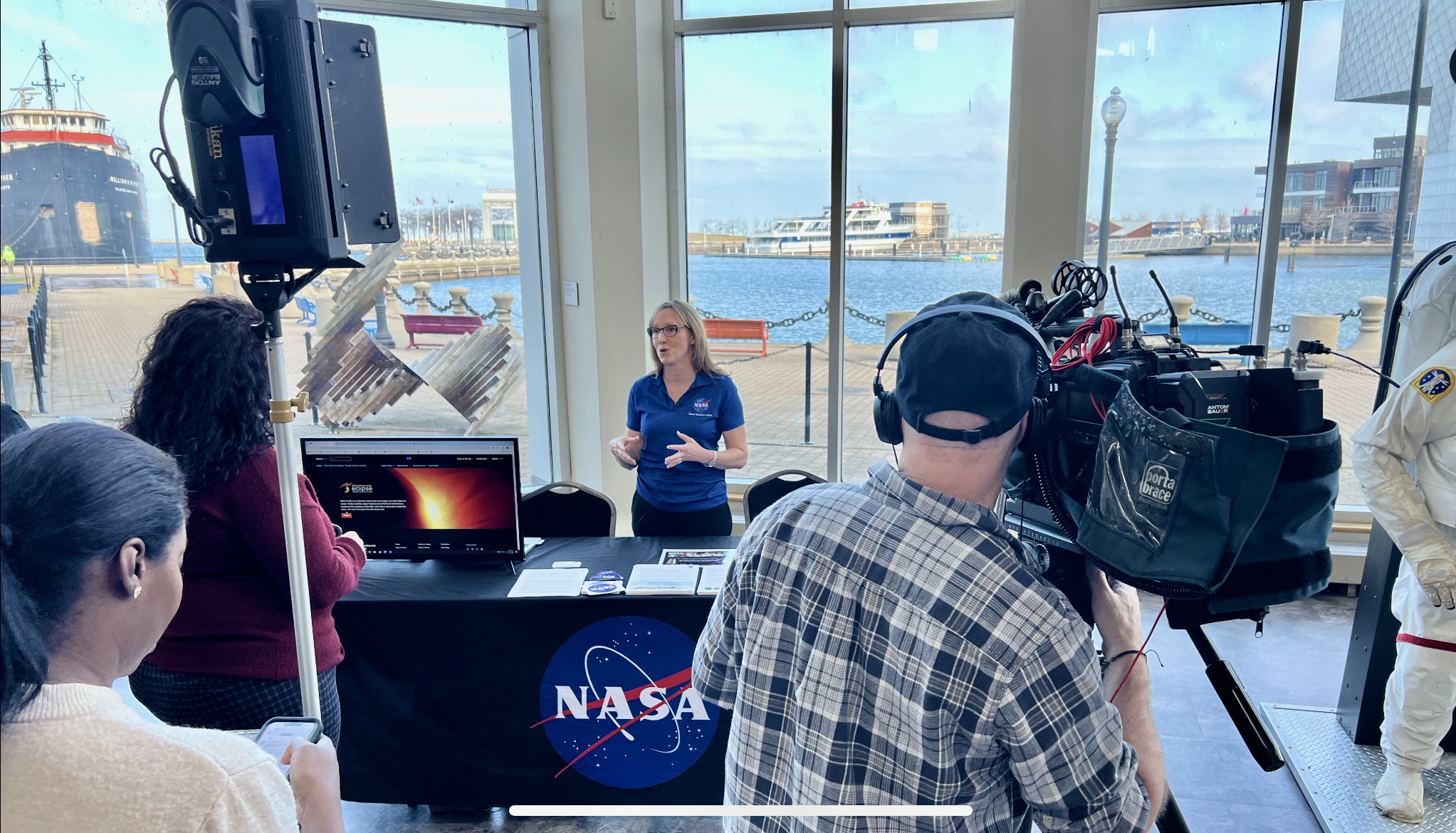
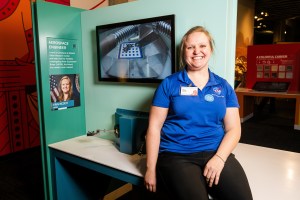
NASA Glenn Research Center’s Public Affairs Specialist Nikki Welch discusses use and safety factors of NASA-branded safety glasses for viewing solar eclipses with media representatives. 
Credit: NASA/John Oldham 

NASA Glenn Research Center’s Office of Communications invited media to an Eclipse Preview at Great Lakes Science Center (GLSC), home of the NASA Glenn Visitor Center, on Feb. 13. During the event, news outlets previewed the Science Center’s Total Eclipse Fest 2024, which is scheduled to take place April 6-8, and learned everything they need to know to cover the event and the total solar eclipse.

NASA Glenn Research Center’s News Chief Jan Wittry talks with media about the upcoming total solar eclipse during the media day at Great Lakes Science Center.
Credit: NASA/John Oldham 

Representatives from NASA Glenn in Cleveland, GLSC, and The Cleveland Orchestra shared information on what to expect during the three-day festival. NASA Glenn experts explained the science behind the solar eclipse, eclipse viewing safely, and how NASA studies eclipses to make new discoveries about the Sun, Earth, and our space environment. 

Powered by WPeMatico
Get The Details…
Kelly M. Matter

Tri-C Students Shadow NASA Professionals  

Tri-C Students Shadow NASA Professionals  

1 min read

Preparations for Next Moonwalk Simulations Underway (and Underwater)

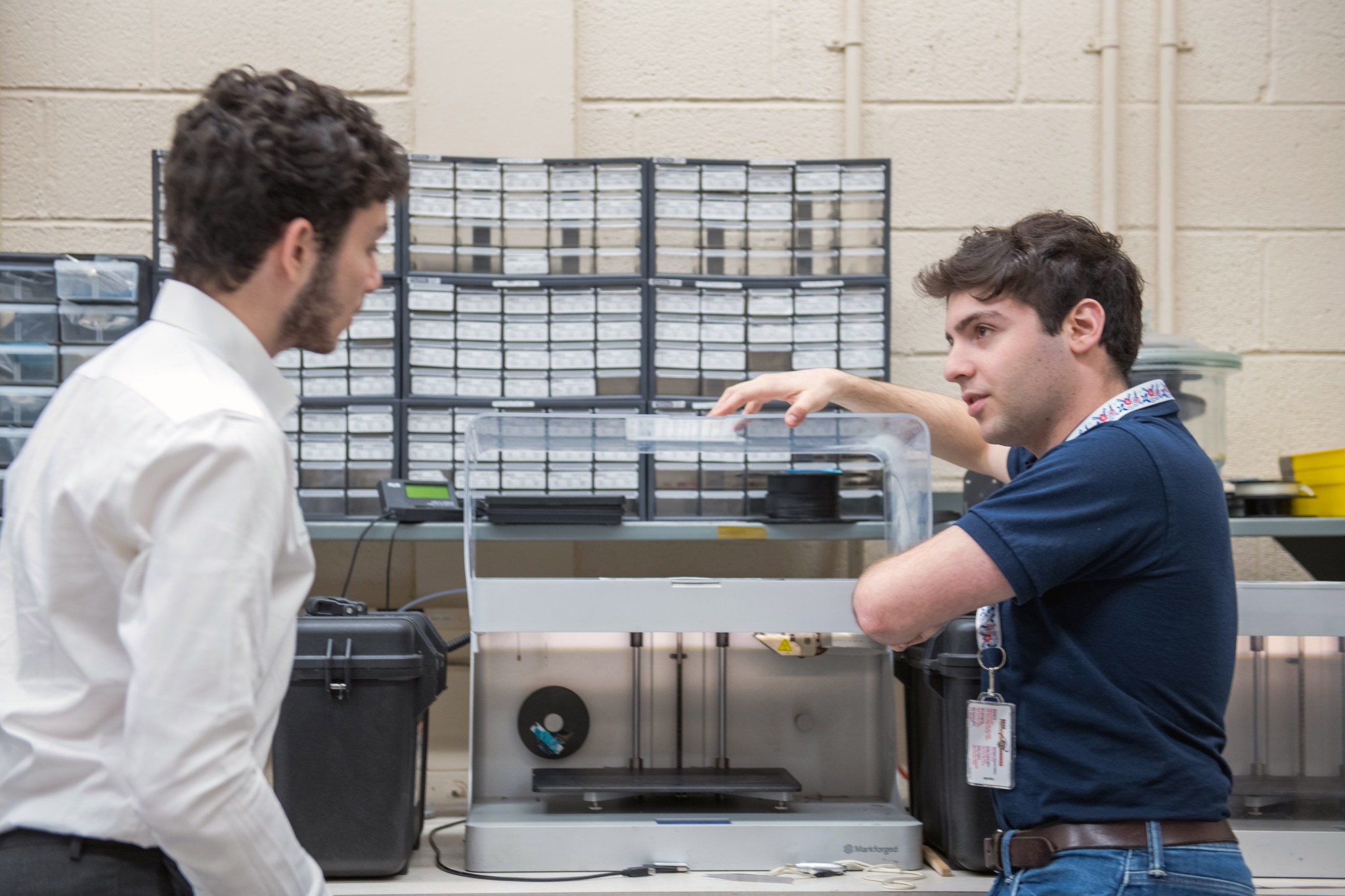
A student, left, looks at a 3D printer on a table as a NASA employee, right, explains how it works and why it is important to research.
NASA Glenn aerospace engineer Jonah Sachs-Wetstone, right, explains to Cuyahoga Community College student Rayan Jami how 3D printers in the Innovation Lab produce rapid prototyping.
Credit: NASA/Jef Janis

Students from Cuyahoga Community College (Tri-C) visited NASA’s Glenn Research Center in Cleveland on Feb. 15 to shadow NASA professionals in a variety of career areas – from offices to laboratories. During the event, students and their advisor acquired knowledge about the NASA Internship Program, Pathways Internship Program, and NASA Community College Aerospace Scholars program.

A well-dressed college student, left, and a subject matter expert sit across from each other at a large desk. A large screen with faces of online meeting attendees shows on a large screen in the background.
NASA Safety Center’s Kevin Rainbolt, right, reviews Safety & Mission Assurance agency enterprise solutions with Cuyahoga Community College student Evan Sims.
Credit: NASA/Jef Janis

In addition to the presentations, students moved through various exhibit stations, which included the Graphics and Visualization Lab, Space Communications and Navigation, and Can You Drive My Rover (Arduino) demonstration.              

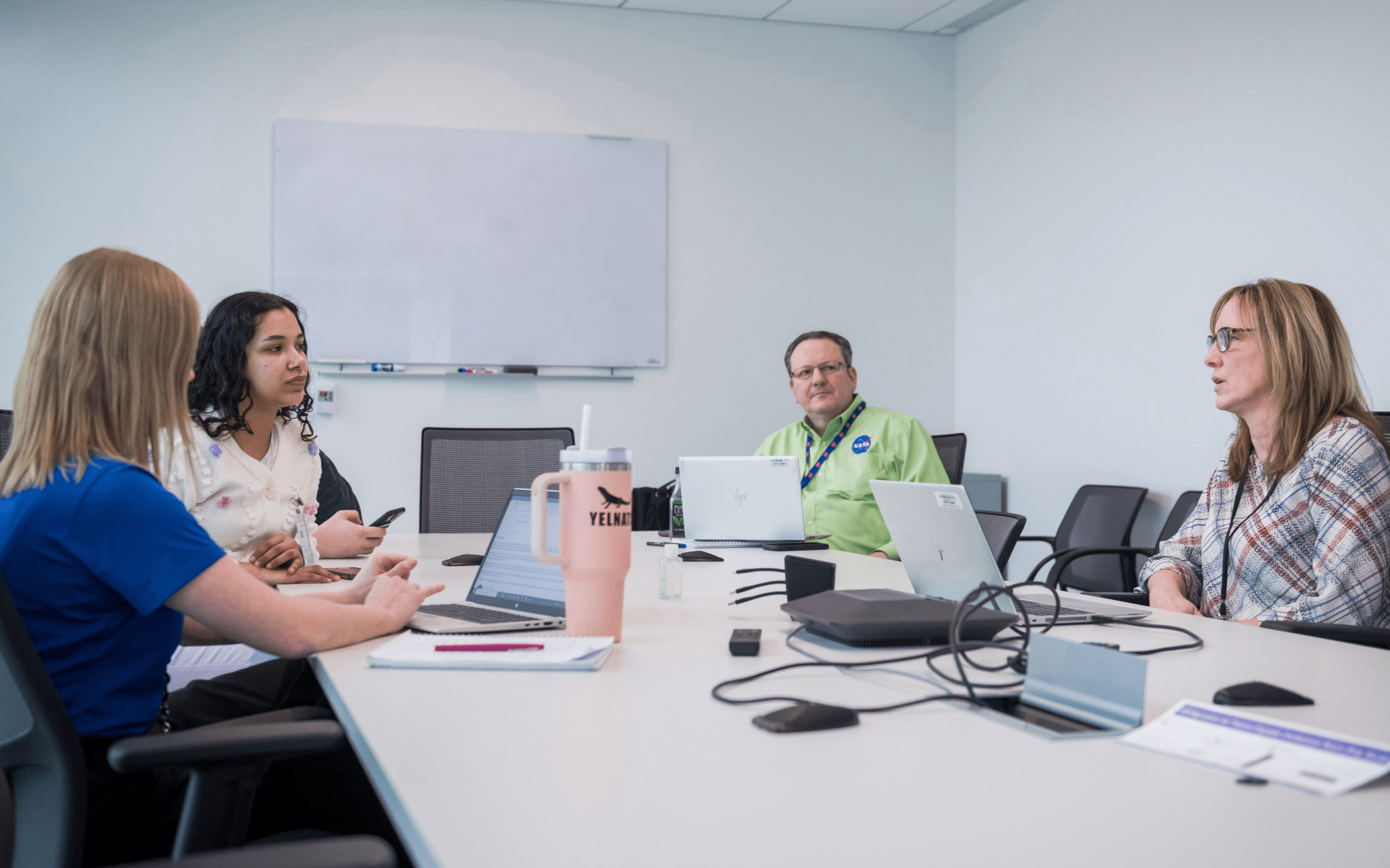
Four people sit around a large table in a well-lit meeting room in a discussion. A blank dry erase board hangs in the background.
Members of NASA Glenn’s Office of Communications talk with a Cuyahoga Community College student about career areas in communications. Left to right: Jacqueline Minerd, Rosemilley Agosto Ruiz (student), Brian Newbacher, and Jan Wittry.
Credit: NASA/Jef Janis

Powered by WPeMatico

Get The Details…
Kelly M. Matter