Media Get Close-Up of NASA’s Jupiter-Bound Europa Clipper

Media Get Close-Up of NASA’s Jupiter-Bound Europa Clipper

4 min read

Preparations for Next Moonwalk Simulations Underway (and Underwater)
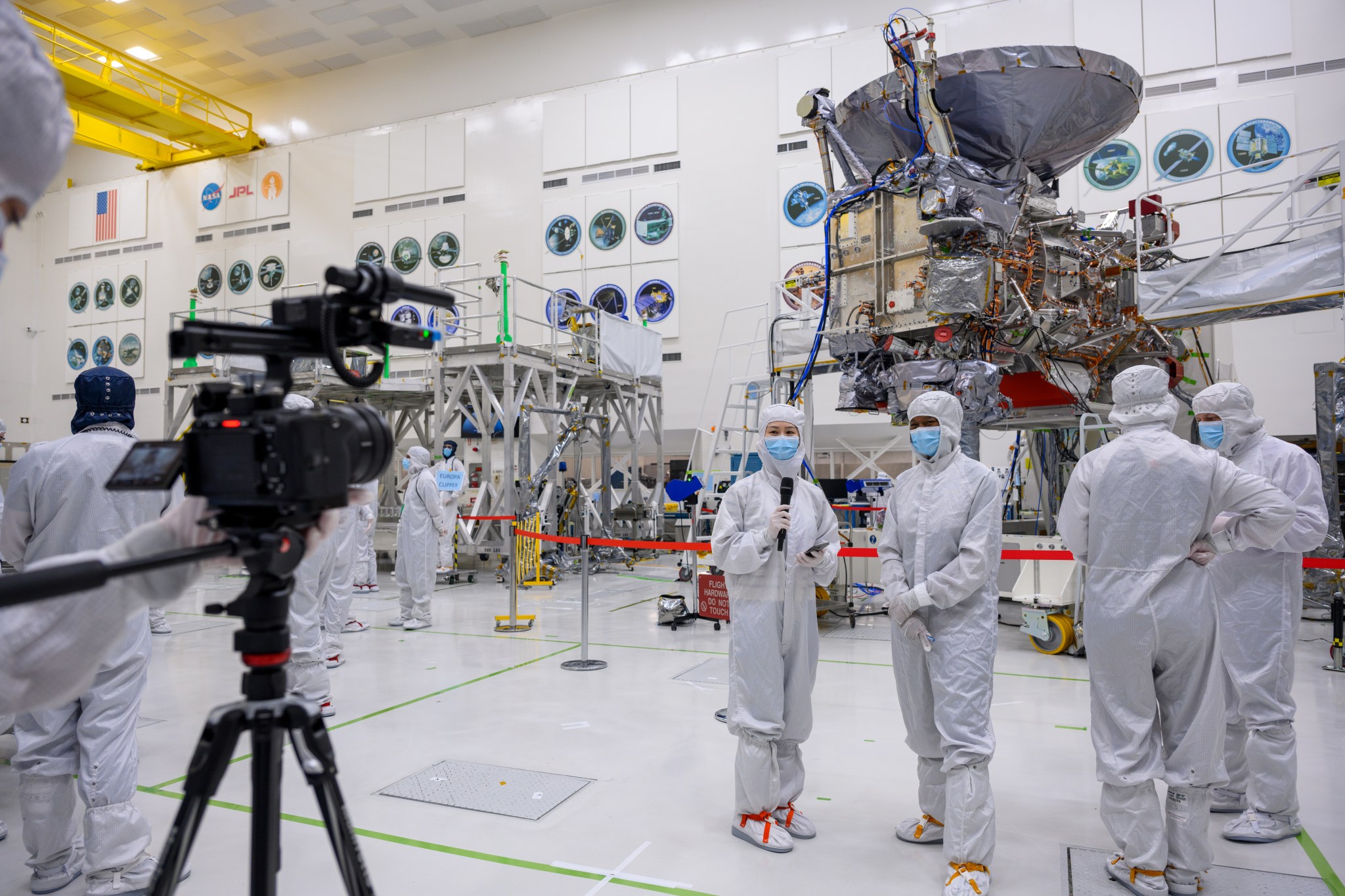
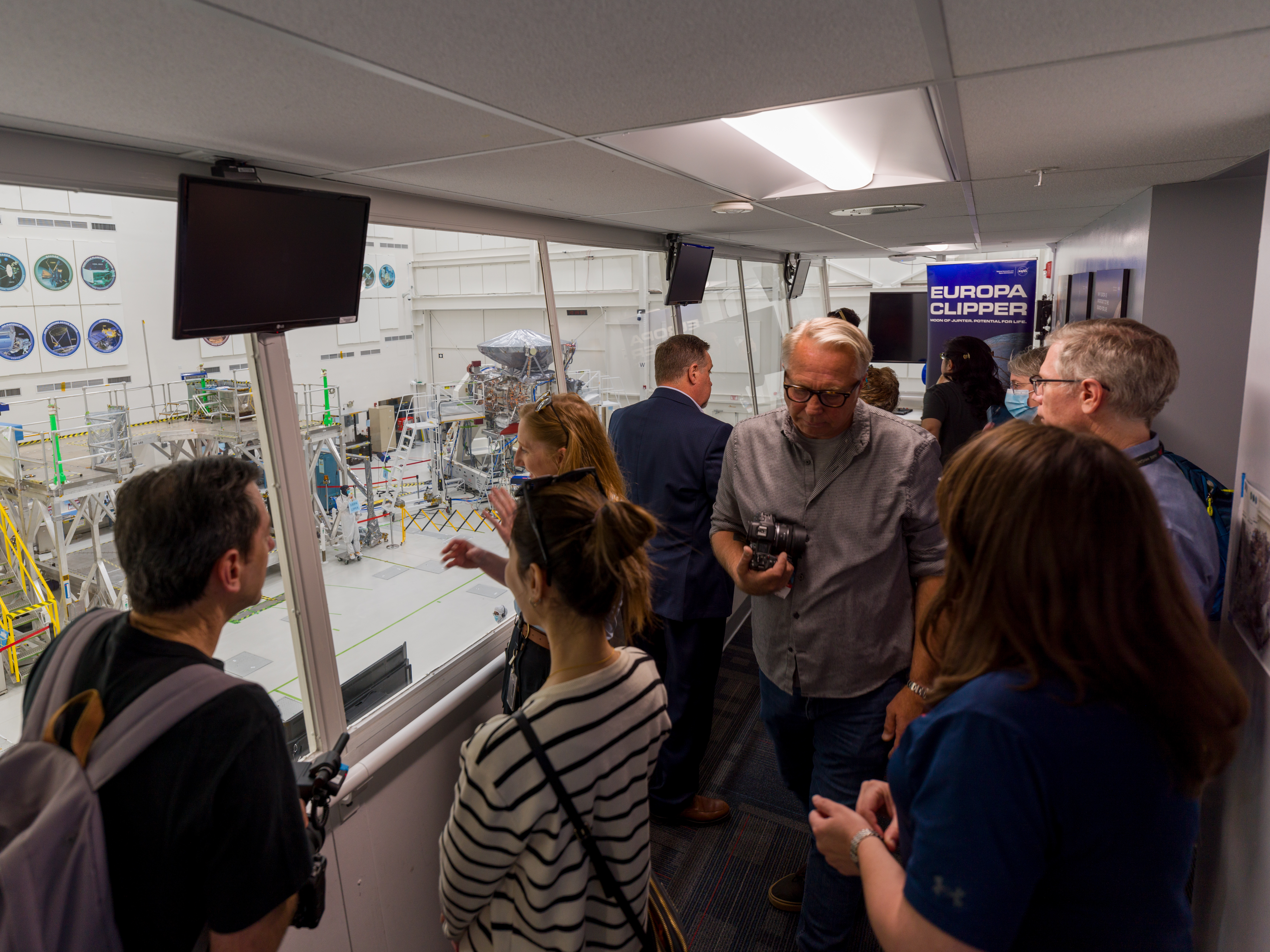
Members of the media visited a clean room at JPL April 11 to get a close-up look at NASA’s Europa Clipper spacecraft
Members of the media visited a clean room at JPL April 11 to get a close-up look at NASA’s Europa Clipper spacecraft and interview members of the mission team. The spacecraft is expected to launch in October 2024 on a six-year journey to the Jupiter system, where it will study the ice-encased moon Europa.
NASA/JPL-Caltech

Excitement is mounting as the largest spacecraft NASA has ever built for a planetary mission gets readied for an October launch.

Engineers at NASA’s Jet Propulsion Laboratory in Southern California are running final tests and preparing the agency’s Europa Clipper spacecraft for the next leg of its journey: launching from NASA’s Kennedy Space Center in Florida. Europa Clipper, which will orbit Jupiter and focus on the planet’s ice-encased moon Europa, is expected to leave JPL later this spring. Its launch period opens on Oct. 10.

Members of the media put on “bunny suits” — outfits to protect the massive spacecraft from contamination — to see Europa Clipper up close in JPL’s historic Spacecraft Assembly Facility on Thursday, April 11. Project Manager Jordan Evans, Launch-to-Mars Mission Manager Tracy Drain, Project Staff Scientist Samuel Howell, and Assembly, Test, and Launch Operations Cable Harness Engineer Luis Aguila were on the clean room floor, while Deputy Project Manager Tim Larson, and Mission Designer Ricardo Restrepo were in the gallery above to explain the mission and its goals.
Planning of the mission began in 2013, and Europa Clipper was officially confirmed by NASA as a mission in 2019. The trip to Jupiter is expected to take about six years, with flybys of Mars and Earth. Reaching the gas giant in 2030, the spacecraft will orbit Jupiter while flying by Europa dozens of times, dipping as close as 16 miles (25 kilometers) from the moon’s surface to gather data with its powerful suite of science instruments. The information will help scientists learn about the ocean beneath the moon’s icy shell, map Europa’s surface composition and geology, and hunt for any potential plumes of water vapor that may be venting from the crust.

“After over a decade of hard work and problem-solving, we’re so proud to show the nearly complete Europa Clipper spacecraft to the world,” said Evans. “As critical components came in from institutions across the globe, it’s been exciting to see parts become a greater whole. We can’t wait to get this spacecraft to the Jupiter system.”

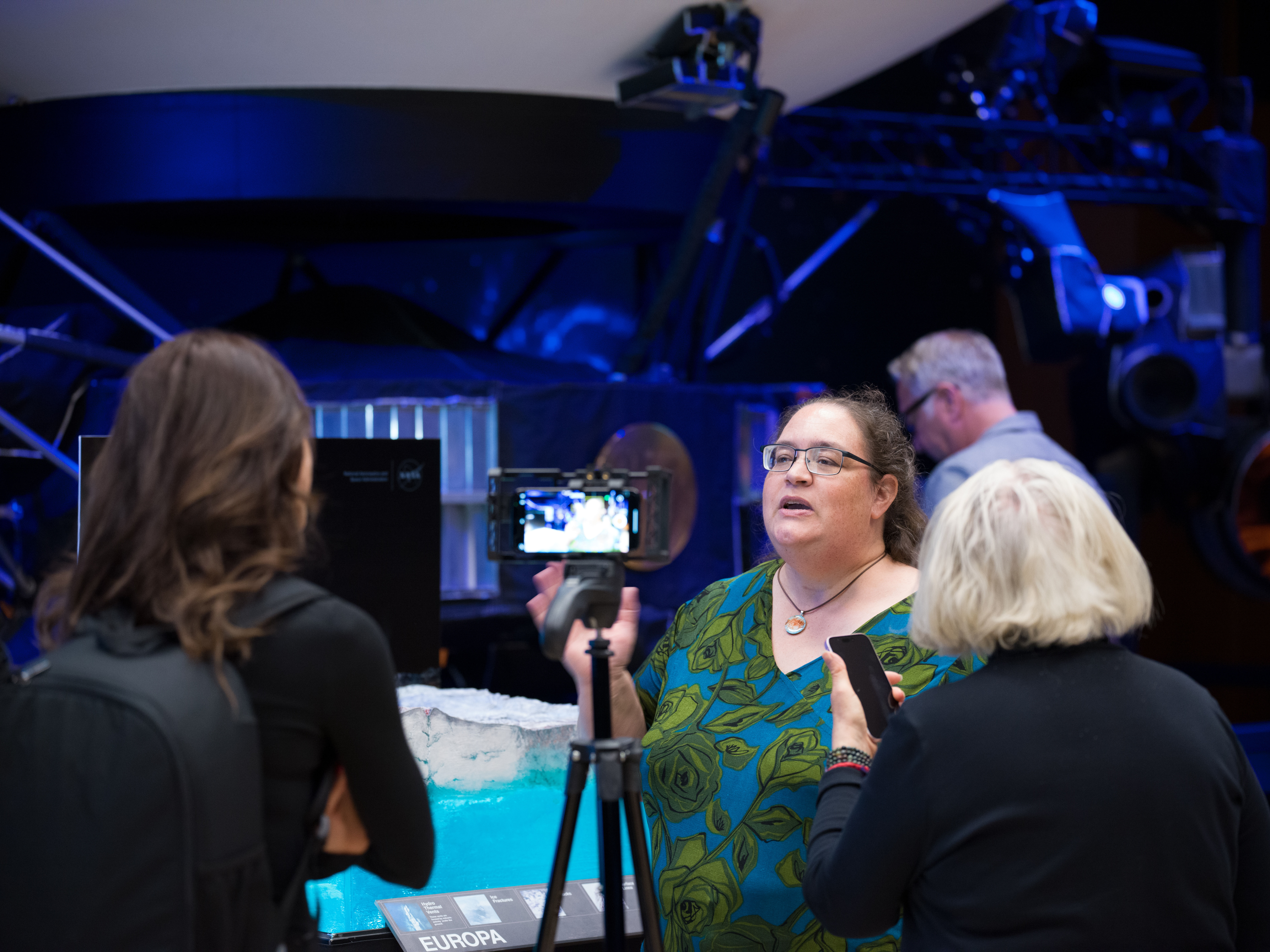
At the event, a cutaway model showing the moon’s layers and a globe of the moon helped journalists learn why Europa is such an interesting object of study. On hand with the details were Project Staff Scientist and Assistant Science Systems Engineer Kate Craft from the Johns Hopkins Applied Physics Laboratory in Laurel, Maryland, and, from JPL, Project Scientist Robert Pappalardo, Deputy Project Scientist Bonnie Buratti, and Science Communications Lead Cynthia Phillips.

Beyond Earth, Europa is considered one of the most promising potentially habitable environments in our solar system. While Europa Clipper is not a life-detection mission, its primary science goal is to determine whether there are places below the moon’s icy surface that could support life.

When the main part of the spacecraft arrives at Kennedy Space Center in a few months, engineers will finish preparing Europa Clipper for launch on a SpaceX Falcon Heavy rocket, attaching its giant solar arrays and carefully tucking the spacecraft inside the capsule that rides on top of the rocket. Then Europa Clipper will be ready to begin its space odyssey.

More About the Mission

Europa Clipper’s three main science objectives are to determine the thickness of the moon’s icy shell and its surface interactions with the ocean below, to investigate its composition, and to characterize its geology. The mission’s detailed exploration of Europa will help scientists better understand the astrobiological potential for habitable worlds beyond our planet.

Managed by Caltech in Pasadena, California, JPL leads the development of the Europa Clipper mission in partnership with the Johns Hopkins Applied Physics Laboratory (APL) for NASA’s Science Mission Directorate in Washington. APL designed the main spacecraft body in collaboration with JPL and NASA’s Goddard Space Flight Center in Greenbelt, Maryland. The Planetary Missions Program Office at NASA’s Marshall Space Flight Center in Huntsville, Alabama, executes program management of the Europa Clipper mission.

Find more information about Europa here:

europa.nasa.gov

News Media Contacts

Jia-Rui Cook / Gretchen McCartney / Val Gratias
Jet Propulsion Laboratory, Pasadena, Calif.
818-354-0724 / 818-393-6215 / 626-318-2141
jia-rui.c.cook@jpl.nasa.gov / gretchen.p.mccartney@jpl.nasa.gov / valerie.m.gratias@jpl.nasa.gov

Karen Fox / Charles Blue
NASA Headquarters
301-286-6284 / 202-802-5345
karen.c.fox@nasa.gov / charles.e.blue@nasa.gov

2024-040

Share

Details

Last Updated

Apr 11, 2024

Powered by WPeMatico

Get The Details…
Anthony Greicius
NASA’s PACE Data on Ocean, Atmosphere, Climate Now Available

NASA’s PACE Data on Ocean, Atmosphere, Climate Now Available

4 min read

Preparations for Next Moonwalk Simulations Underway (and Underwater)

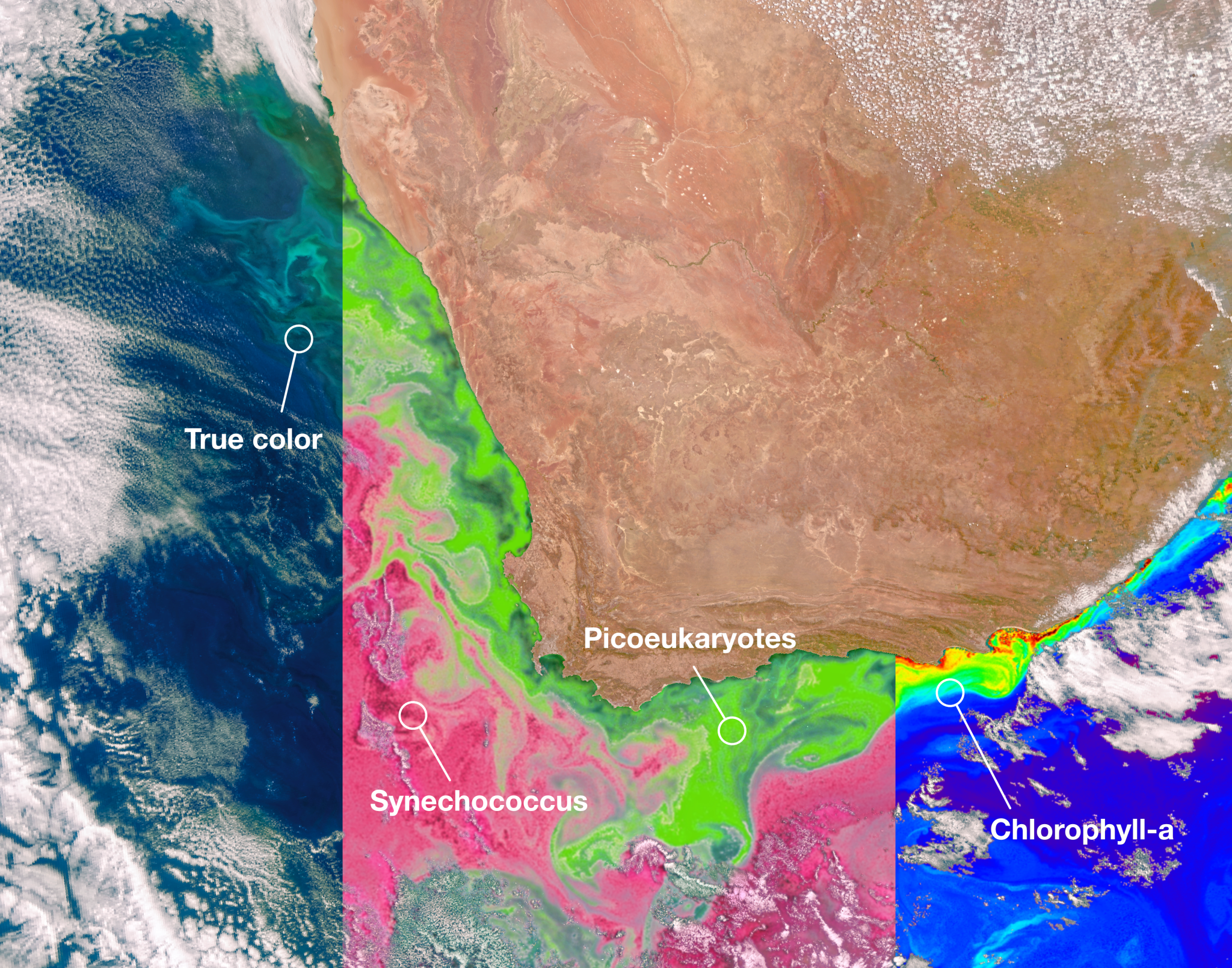
NASA’s PACE satellite’s Ocean Color Instrument (OCI) detects light across a hyperspectral range, which gives scientists new information to differentiate communities of phytoplankton – a unique ability of NASA’s newest Earth-observing satellite. This first image released from OCI identifies two different communities of these microscopic marine organisms in the ocean off the coast of South Africa on Feb. 28, 2024. The central panel of this image shows Synechococcus in pink and picoeukaryotes in green. The left panel of this image shows a natural color view of the ocean, and the right panel displays the concentration of chlorophyll-a, a photosynthetic pigment used to identify the presence of phytoplankton.
Credit: NASA

NASA is now publicly distributing science-quality data from its newest Earth-observing satellite, providing first-of-their-kind measurements of ocean health, air quality, and the effects of a changing climate.

The Plankton, Aerosol, Cloud, ocean Ecosystem (PACE) satellite was launched on Feb. 8, and has been put through several weeks of in-orbit testing of the spacecraft and instruments to ensure proper functioning and data quality. The mission is gathering data that the public now can access at https://pace.oceansciences.org/access_pace_data.htm.

PACE data will allow researchers to study microscopic life in the ocean and particles in the air, advancing the understanding of issues including fisheries health, harmful algal blooms, air pollution, and wildfire smoke. With PACE, scientists also can investigate how the ocean and atmosphere interact with each other and are affected by a changing climate.  

“These stunning images are furthering NASA’s commitment to protect our home planet,” said NASA Administrator Bill Nelson. “PACE’s observations will give us a better understanding of how our oceans and waterways, and the tiny organisms that call them home, impact Earth. From coastal communities to fisheries, NASA is gathering critical climate data for all people.”

“First light from the PACE mission is a major milestone in our ongoing efforts to better understand our changing planet. Earth is a water planet, and yet we know more about the surface of the moon than we do our own oceans. PACE is one of several key missions – including SWOT and our upcoming NISAR mission – that are opening a new age of Earth science,” said Karen St. Germain, NASA Earth Science Division director.  

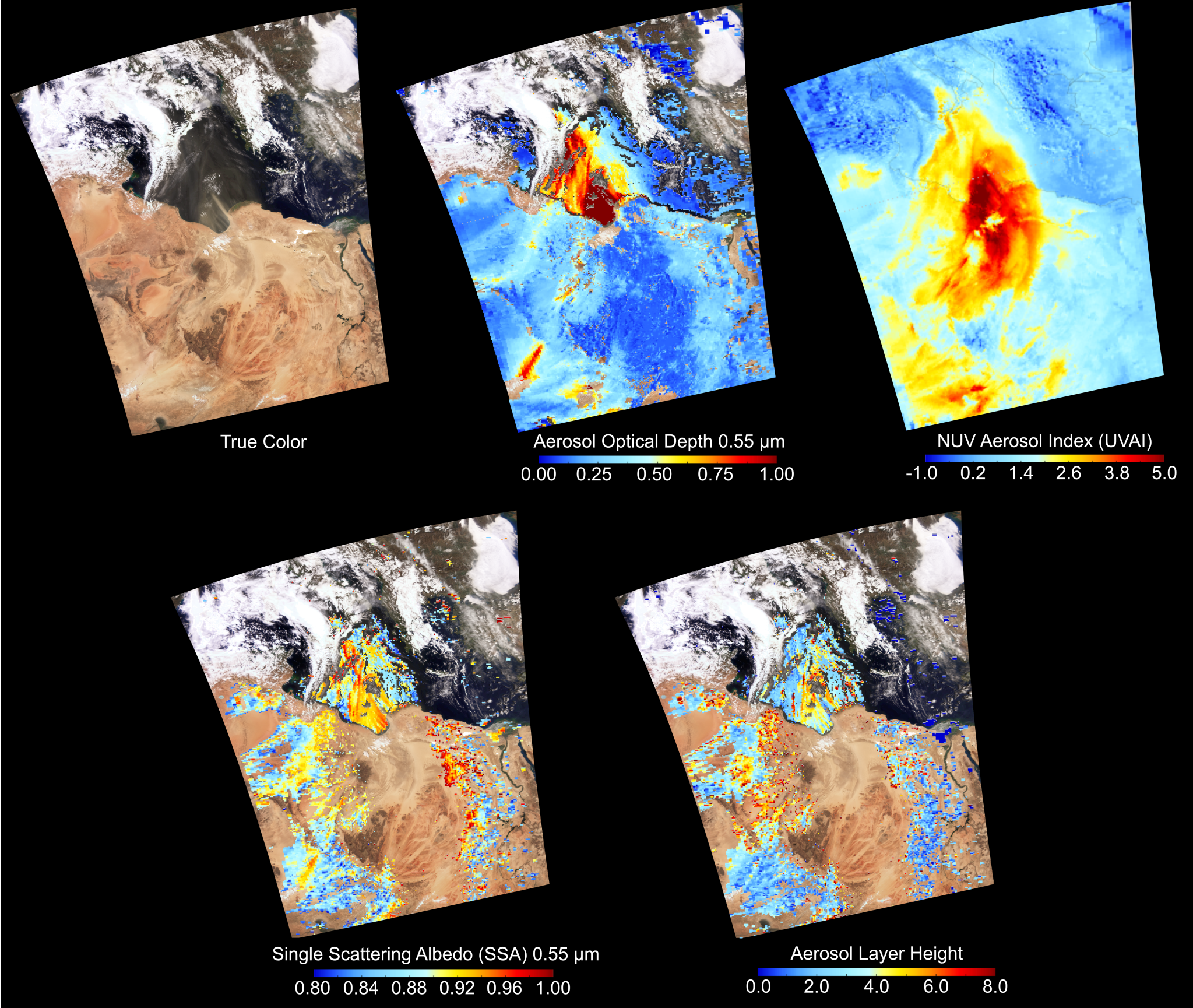
PACE’s OCI instrument also collects data that can be used to study atmospheric conditions. The top three panels of this OCI image depicting dust from Northern Africa carried into the Mediterranean Sea, show data that scientists have been able to collect in the past using satellite instruments – true color images, aerosol optical depth, and the UV aerosol index. The bottom two images visualize novel pieces of data that will help scientists create more accurate climate models. Single-Scattering Albedo (SSA) tells the fraction of light scattered or absorbed, which will be used to improve climate models. Aerosol Layer Height tells how low to the ground or high in the atmosphere aerosols are, which aids in understanding air quality.
Credit: NASA/UMBC

The satellite’s Ocean Color Instrument, which was built and managed by NASA’s Goddard Space Flight Center in Greenbelt, Maryland, observes the ocean, land, and atmosphere across a spectrum of ultraviolet, visible, and near infrared light. While previous ocean color satellites could only detect a handful of wavelengths, PACE is detecting more than 200 wavelengths. With this extensive spectral range, scientists can identify specific communities of phytoplankton. Different species play different roles in the ecosystem and carbon cycle — most are benign, but some are harmful to human health — so distinguishing phytoplankton communities is a key mission of the satellite.

PACE’s two multi-angle polarimeters, HARP2 and SPEXone, measure polarized light that has reflected off clouds and tiny particles in the atmosphere. These particles, known as aerosols, can range from dust to smoke to sea spray and more. The two polarimeters are complementary in their capabilities. SPEXone, built at the Netherlands Institute for Space Research (SRON) and Airbus Netherlands B.V., will view Earth in hyperspectral resolution – detecting all the colors of the rainbow – at five different viewing angles. HARP2, built at the University of Maryland, Baltimore County (UMBC), will observe four wavelengths of light, with 60 different viewing angles.

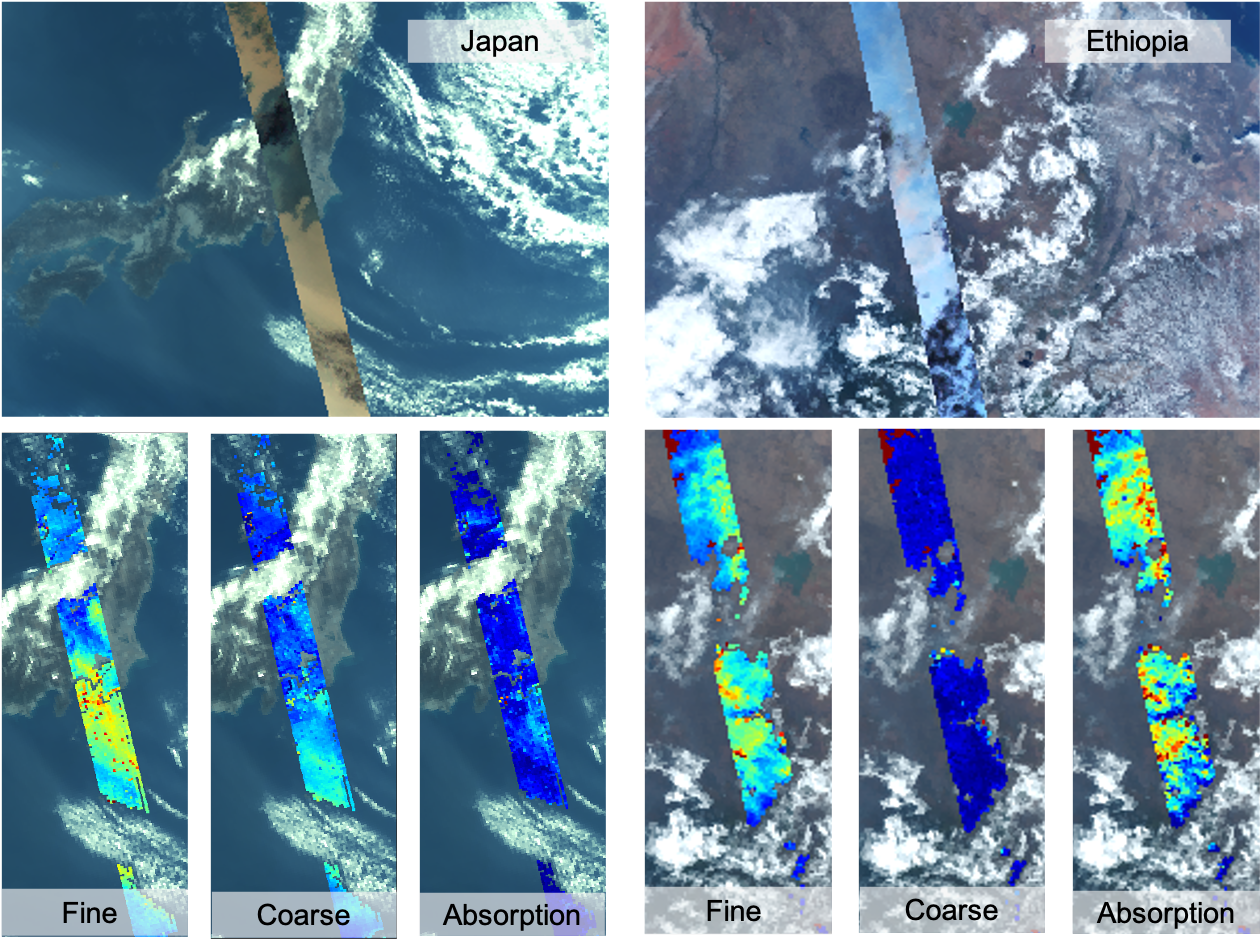
Early data from the SPEXone polarimeter instrument aboard PACE show aerosols in a diagonal swath over Japan on Mar. 16, 2024, and Ethiopia on Mar. 6, 2024. In the top two panels, lighter colors represent a higher fraction of polarized light. In the bottom panels, SPEXone data has been used to differentiate between fine aerosols, like smoke, and coarse aerosols, like dust and sea spray. SPEXone data can also measure how much aerosols are absorbing light from the Sun. Above Ethiopia, the data show mostly fine particles absorbing sunlight, which is typical for smoke from biomass burning. In Japan, there are also fine aerosols, but without the same absorption. This indicates urban pollution from Tokyo, blown toward the ocean and mixed with sea salt. The SPEXone polarization observations are displayed on a background true color image from another of PACE’s instruments, OCI.
Credit: SRON

With these data, scientists will be able to measure cloud properties — which are important for understanding climate — and monitor, analyze, and identify atmospheric aerosols to better inform the public about air quality. Scientists will also be able to learn how aerosols interact with clouds and influence cloud formation, which is essential to creating accurate climate models.

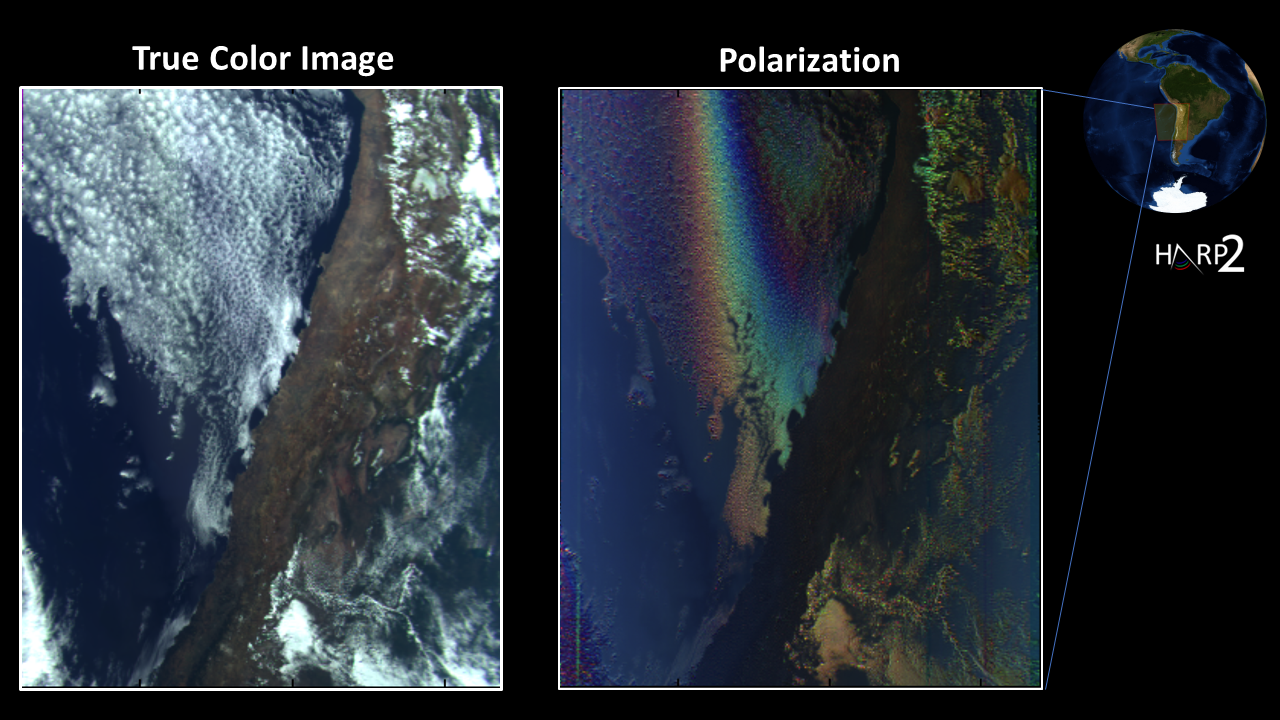
Early images from PACE’s HARP2 polarimeter captured data on clouds over the west coast of South America on Mar. 11, 2024. The polarimetry data can be used to determine information about the cloud droplets that make up the cloudbow – a rainbow produced by sunlight reflected by cloud droplets instead of rain droplets. Scientists can learn how the clouds respond to man-made pollution and other aerosols and can measure the size of the cloud droplets with this polarimetry data.
Credit: UMBC

“We’ve been dreaming of PACE-like imagery for over two decades. It’s surreal to finally see the real thing,” said Jeremy Werdell, PACE project scientist at NASA Goddard. “The data from all three instruments are of such high quality that we can start distributing it publicly two months from launch, and I’m proud of our team for making that happen. These data will not only positively impact our everyday lives by informing on air quality and the health of aquatic ecosystems, but also change how we view our home planet over time.”

The PACE mission is managed by NASA Goddard, which also built and tested the spacecraft and the ocean color instrument. The Hyper-Angular Rainbow Polarimeter #2 (HARP2) was designed and built by the University of Maryland, Baltimore County, and the Spectro-polarimeter for Planetary Exploration (SPEXone) was developed and built by a Dutch consortium led by Netherlands Institute for Space Research, Airbus Defence, and Space Netherlands.

By Erica McNamee
NASA’s Goddard Space Flight Center, Greenbelt, Md.

News Media Contact
Jacob Richmond
NASA’s Goddard Space Flight Center, Greenbelt, Md.

Share

Details

Last Updated

Apr 11, 2024

Location
Goddard Space Flight Center

Powered by WPeMatico

Get The Details…
Erica McNamee

NASA Invites Media to Switzerland Artemis Accords Signing Ceremony

NASA Invites Media to Switzerland Artemis Accords Signing Ceremony

NASA circular logo
Credit: NASA

NASA will welcome Switzerland as the 37th country to sign the Artemis Accords during a ceremony at 11:30 a.m. EDT on Monday, April 15 at the agency’s headquarters in Washington. NASA Administrator Bill Nelson will host Swiss Federal Councillor Guy Parmelin, Minister for Economic Affairs, Education & Research, along with other officials from Switzerland and the U.S. Department of State.

This event is in-person only. Media interested in attending must RSVP no later than 9 a.m. April 15, to hq-media@mail.nasa.gov. NASA’s media accreditation policy is online.

The Artemis Accords establish a practical set of principles to guide space exploration cooperation among nations, including those participating in NASA’s Artemis program.

NASA, in coordination with the U.S. Department of State, announced the establishment of the Artemis Accords in 2020. The Artemis Accords reinforce the 1967 Outer Space Treaty as well as the commitment by the United States and partner nations to the Registration Convention, the Rescue and Return Agreement, as well as best practices and norms of responsible behavior that NASA and its partners have supported, including the public release of scientific data.

Learn more about the Artemis Accords at:

https://www.nasa.gov/artemis-accords/

-end-

Faith McKie / Lauren Low
Headquarters, Washington
202-358-1600
faith.mckie@nasa.gov / lauren.e.low@nasa.gov

Powered by WPeMatico

Get The Details…
Lauren E. Low

NASA’s Jet Propulsion Laboratory Announces 3 Personnel Appointments

NASA’s Jet Propulsion Laboratory Announces 3 Personnel Appointments

4 min read

Preparations for Next Moonwalk Simulations Underway (and Underwater)

Left to right: JPL’s Keyur Patel, Howard Eisen, and Todd Gaier
NASA/JPL-Caltech

The staff changes tap into a deep well of talent and experience across JPL as the laboratory looks to the future.

NASA’s Jet Propulsion Laboratory is pleased to announce three key staff appointments, naming Keyur Patel the associate director for Flight Projects and Mission Success, Howard Eisen chief engineer, and Todd Gaier director for Astronomy and Physics.

Associate Director for Flight Projects and Mission Success

As associate director for Flight Projects and Mission Success, Keyur Patel oversees the implementation and operations of all JPL flight missions. (JPL currently manages more than three dozen flying missions and science instruments to study Earth, our solar system, and beyond.) He succeeds Leslie Livesay, who became JPL’s deputy director in March.

Since beginning at JPL in 1985, Patel has served as director for Astronomy and Physics, deputy director for Planetary Science, director for the Interplanetary Network Directorate, deputy director for Solar System Exploration, and deputy director for the Office of Safety and Mission Success. He has led flight projects as project manager for the Dawn mission, deputy project manager and chief engineer for Deep Impact, and flight engineering office manager for the Spitzer Space Telescope. Patel holds master’s and bachelor’s degrees in aerospace engineering from California State Polytechnic University, Pomona.

JPL Chief Engineer

Howard Eisen, who for the past year has served as the deputy associate director for Flight Projects and Mission Success, has assumed the role of chief engineer while continuing with his deputy associate director duties. He takes over the role from Rob Manning, who will remain in the Office of the Chief Engineer, applying his decades of experience and institutional knowledge in service of missions and projects across the laboratory. Manning will work with Eisen as he transitions into his new role.

A JPL Fellow, Eisen has over 36 years of experience at JPL in technical and leadership roles. He previously served as chief engineer for the Planetary Science Directorate, deputy project manager for the Asteroid Redirect Robotic Mission, flight system manager for the Mars 2020/Perseverance Mars rover and Mars Reconnaissance Orbiter, project manager for the International Space Station Rapid Scatterometer mission, and deputy flight system manager for the Mars Science Laboratory/Curiosity Mars rover. He holds a master’s degree in aerospace systems and bachelor’s degrees in astronautics/avionics and physics from Massachusetts Institute of Technology, as well as a master’s in business administration from the University of Redlands.

Director for Astronomy and Physics

Todd Gaier becomes director of Astronomy and Physics after previously serving as its deputy director and chief technologist. He was also co-investigator and project manager for the Temporal Experiment for Storms and Tropical Systems Demonstration (TEMPEST-D). He joined JPL in 1996, leading a group that developed technologies and instruments using monolithic microwave integrated circuit components. His group supported projects that include the Planck Low Frequency Instrument, the advanced microwave radiometers for the Jason-2 and -3 missions, the integrated receivers for the Juno microwave radiometers, and the Compact Ocean Wind Vector Radiometer (COWVR). He holds a doctorate in physics from the University of California, Santa Barbara and a bachelor’s in physics from Tufts University.

Gaier is a JPL Fellow and a senior research scientist. He is the recipient of NASA’s Exceptional Public Achievement and Outstanding Public Leadership medals.

About JPL

A division of Caltech in Pasadena, California, JPL began in 1936 and ultimately built and helped launch America’s first satellite, Explorer 1, in 1958. By the end of that year, Congress established NASA, and JPL became a part of the agency. Since then, JPL has managed such historic deep space missions as Voyager, Galileo, Cassini, and a continuous fleet of landers, orbiters, and rovers at Mars since 1997. JPL managed the Spitzer Space Telescope and built the Wide Field and Planetary Camera 2 for Hubble as well as the Mid-Infrared instrument (MIRI) on the James Webb Space Telescope. Around our home planet, JPL has over two dozen spacecraft and instruments studying our atmosphere, climate change, sea level, and more.

News Media Contacts

Veronica McGregor / Matthew Segal
Jet Propulsion Laboratory, Pasadena, Calif.
veronica.c.mcgregor@jpl.nasa.gov / matthew.j.segal@jpl.nasa.gov
818-354-9452 / 818-354-8307

2024-039

Share

Details

Last Updated

Apr 11, 2024

Powered by WPeMatico

Get The Details…
Anthony Greicius
NASA’s TESS Temporarily Pauses Science Observations

NASA’s TESS Temporarily Pauses Science Observations

1 min read

NASA’s TESS Temporarily Pauses Science Observations

NASA’s TESS (Transiting Exoplanet Survey Satellite) entered into safe mode April 8, temporarily interrupting science observations. The team is investigating the root cause of the safe mode, which occurred during scheduled engineering activities. The satellite itself remains in good health.

The team will continue investigating the issue and is in the process of returning TESS to science observations in the coming days.

The TESS mission is a NASA Astrophysics Explorer operated by MIT in Cambridge, Massachusetts. Launched in 2018, TESS has been scanning almost the entire sky looking for planets beyond our solar system, known as exoplanets. The TESS mission has also uncovered other cosmic phenomena, including star-shredding black holes and stellar oscillations. Read more about TESS discoveries at nasa.gov/tess.

Media Contact:
Claire Andreoli
(301) 286-1940
claire.andreoli@nasa.gov
NASA’s Goddard Space Flight Center, Greenbelt, Md.

Powered by WPeMatico

Get The Details…