NASA, Sierra Space Deliver Dream Chaser to Florida for Launch Preparation

NASA, Sierra Space Deliver Dream Chaser to Florida for Launch Preparation

Dream Chaser Tenacity, Sierra Space’s uncrewed cargo spaceplane, is processed inside the Space Systems Processing Facility (SSPF) at NASA’s Kennedy Space Center in Florida on Monday, May 20, 2024. The spaceplane arrived inside a climate-controlled transportation container from the agency’s Neil Armstrong Test Facility in Ohio. Final testing and prelaunch processing will be completed inside the high bay of the SSPF ahead of Dream Chaser’s inaugural launch atop a ULA (United Launch Alliance) Vulcan rocket from nearby Cape Canaveral Space Force Station.  
Photo credit: NASA/Kim Shiflett

As part of NASA’s efforts to expand commercial resupply in low Earth orbit, Sierra Space’s uncrewed spaceplane arrived at NASA’s Kennedy Space Center in Florida ahead of its first flight to the International Space Station. 
 
The Dream Chaser spaceplane, named Tenacity, arrived at Kennedy on May 18 inside a climate-controlled transportation container from NASA’s Neil Armstrong Test Facility in Sandusky, Ohio, and joined its companion Shooting Star cargo module, which arrived on May 11. 
 
Before arriving at Kennedy, the spaceplane and its cargo module underwent vibration testing atop the world’s highest capacity and most powerful spacecraft shaker system inside the agency’s Space Environments Complex, exposing the stack to vibrations like those it will experience during launch and re-entry to the Earth’s atmosphere. Following vibration testing, the duo moved to NASA’s In-Space Propulsion Facility and was exposed to low ambient pressures and temperatures ranging from -150 to 300 degrees Fahrenheit. 

A recap of the NASA testing procedures that Sierra Space’s Dream Chaser Tenacity spaceplane underwent at NASA’s Neil Armstrong Test Facility in Sandusky, Ohio. This included vibration testing and exposure to low ambient pressures and temperatures.
Credits: NASA/Steve Logan

Upon arrival at Kennedy, teams moved Dream Chaser Tenacity to the high bay inside the Space Systems Processing Facility, where it will undergo final testing and prelaunch processing ahead of its launch scheduled for later this year. 

The spaceplane will lift off aboard a ULA (United Launch Alliance) Vulcan rocket from Space Launch Complex-41 at Cape Canaveral Space Force Station and is set to deliver 7,800 pounds of cargo to the orbiting laboratory. 
 
The remaining pre-flight activities at Kennedy include acoustic and electromagnetic interference and compatibility testing, completion of work on the spaceplane’s thermal protection system, and final payload integration. 
 
Dream Chaser is a lifting body design spaceplane that measures 30 feet long by 15 feet wide. The unique winged design allows it to transport cargo to and from low Earth orbit and maintain the ability to land on a runway in the style of NASA’s space shuttle. The 15-foot Shooting Star module can carry up to 7,000 pounds of cargo internally and features three unpressurized external payload mounts. 
 
The partially reusable transportation system will perform at least seven cargo missions to the space station as part of the agency’s efforts to expand commercial resupply services in low Earth orbit. Future missions may last as long as 75 days and deliver as much as 11,500 pounds of cargo. 
 
While the Dream Chaser spacecraft is reusable and can return up to 3,500 pounds of cargo to Earth, the Shooting Star module is designed to be jettisoned and burn up during reentry, creating the opportunity to dispose of up to 8,500 pounds of trash with each mission. 
 
Dream Chaser Tenacity is the first in a planned fleet of Sierra Space spaceplanes to help carry out these missions. 
 
As part of the process to certify the vehicle system for future agency resupply missions, NASA and Sierra Space will put the spaceplane through its paces once in-orbit. As Dream Chaser Tenacity approaches the space station, it will conduct a series of demonstrations to prove attitude control, translational maneuvers, and abort capabilities. After completing the maneuverability demonstration, space station astronauts will use the Canadarm2 robotic arm to grapple the spacecraft and dock it to an Earth-facing port. 
 
After remaining at the orbiting laboratory for about 45 days, the spaceplane will be released from the station and return for a landing at Kennedy’s Launch and Landing Facility. After landing, Dream Chaser is powered down, and the Sierra Space team will transfer it back to the processing facility to perform necessary inspections, offload remaining NASA cargo, and begin the process of preparing it for its next mission. 
 
For updates on NASA’s commercial resupply services, visit: 

https://www.nasa.gov/international-space-station/commercial-resupply/

Powered by WPeMatico

Get The Details…
Jamie Groh

Astronaut Exercise

Astronaut Exercise

Science in Space: May 2024

Future missions to the Moon and Mars must address many challenges, including preventing loss of bone and muscle tissue in astronauts. Research on the International Space Station is helping to address this challenge.

Without Earth’s gravity, both bone and muscle atrophy, or become smaller and weaker. Early on, scientists realized that exercise is a critical part of maintaining healthy bones and muscles in space, just as it is on Earth. From simple elastic bands on early missions, exercise hardware has become increasingly advanced. Current equipment includes the Advanced Resistive Exercise Device (ARED) weight-lifting system, a second generation-treadmill called T2, and the Cycle Ergometer with Vibration Isolation and Stabilization System (CEVIS) cycling machine. Studies continue to refine this equipment as well as the intensity and duration of how astronauts use it, with crew members now averaging two hours of exercise per day.

NASA astronauts Bob Hines and Kjell Lindgren work out on the Advanced Resistive Exercise Device (ARED).
NASA

Installed in 2008, ARED uses a piston and flywheel system to provide loading that essentially mimics weightlifting in weightlessness. A current investigation from ESA (European Space Agency), ARED Kinematics analyzes the effect of this type of exercise on the body in microgravity to help determine optimal workout programs before, during, and after spaceflight. Results have shown that preflight exercise training improves an individual’s performance while on the space station just as pre-season training helps athletes in later competition.1

From 2001 to 2011, crew members used the Interim Resistive Exercise Device (IRED), which could be configured for at least 18 different exercises using both upper and lower body muscles with up to 300 pounds of resistive force. A retrospective evaluation showed some correlation between preflight strength and postflight changes, and analysis suggested that a resistance device that provides higher loads and improved exercise prescriptions could provide greater benefits.2

Furukawa wears a black shirt, shorts, and shoes. He holds on to a bar behind him and has his feet on the pedals on CEVIS, a teal boxy device about the size of a sofa cushion. Three pairs of shoes hang from bars to his right and the walls around him are covered in equipment, laptops, cords, hoses, and storage bags.
JAXA (Japan Aerospace Exploration Agency) astronaut Satoshi Furukawa pedals on the upgraded CEVIS system.
NASA

CEVIS, installed in 2001 and upgraded in 2023, uses friction and resistance and is computer-controlled to maintain an accurate workload. The system displays parameters such as cycling speed, heart rate, elapsed time, and exercise prescription details. A study using the data collected by CEVIS concluded that up to 17% of astronauts could experience loss of muscle performance, bone health, and cardiorespiratory fitness if future missions continue to use current exercise countermeasures. The researchers note that this highlights the need to further refine current regimens, add other interventions, or enhance conditioning preflight.3

Fisher is wearing a gray shirt, black shorts, and white socks, with his feet tucked into straps, and is holding on to a bar with his left hand. Whitson, wearing a red sweatshirt and green pants, applies strips of red tape to Fisher’s leg that are used to guide an ultrasound of his muscles. There is a multi-colored control panel in front of Fisher and an inflatable Earth ball behind it, and the wall behind them has multiple laptops, equipment, and coiled cords.
NASA astronauts Jack Fischer and Peggy Whitson prepare for a session of the Sprint study.
NASA

Appropriate equipment is important, but so is the way it is used. Early exercise regimens included running on a treadmill at low velocity and conducting resistance exercise at low loads for long periods of time. Despite spending up to 10 hours per week exercising, astronauts continued to lose muscle mass and bone density. Growing evidence showed that high-intensity, low-volume exercise was more effective at maintaining fitness on Earth. The Integrated Resistance and Aerobic Training Study (Sprint) compared results of low-intensity, high-volume with high-intensity, low-volume workouts in microgravity. The outcomes were similar, but shorter workouts save crew time – a valuable resource on missions – and reduce wear and tear on exercise equipment.4 Future missions may be limited to a single device for both aerobic and resistance exercise, necessitating shorter workouts so each crew member gets a turn. Higher intensity exercise could compensate for these limits.

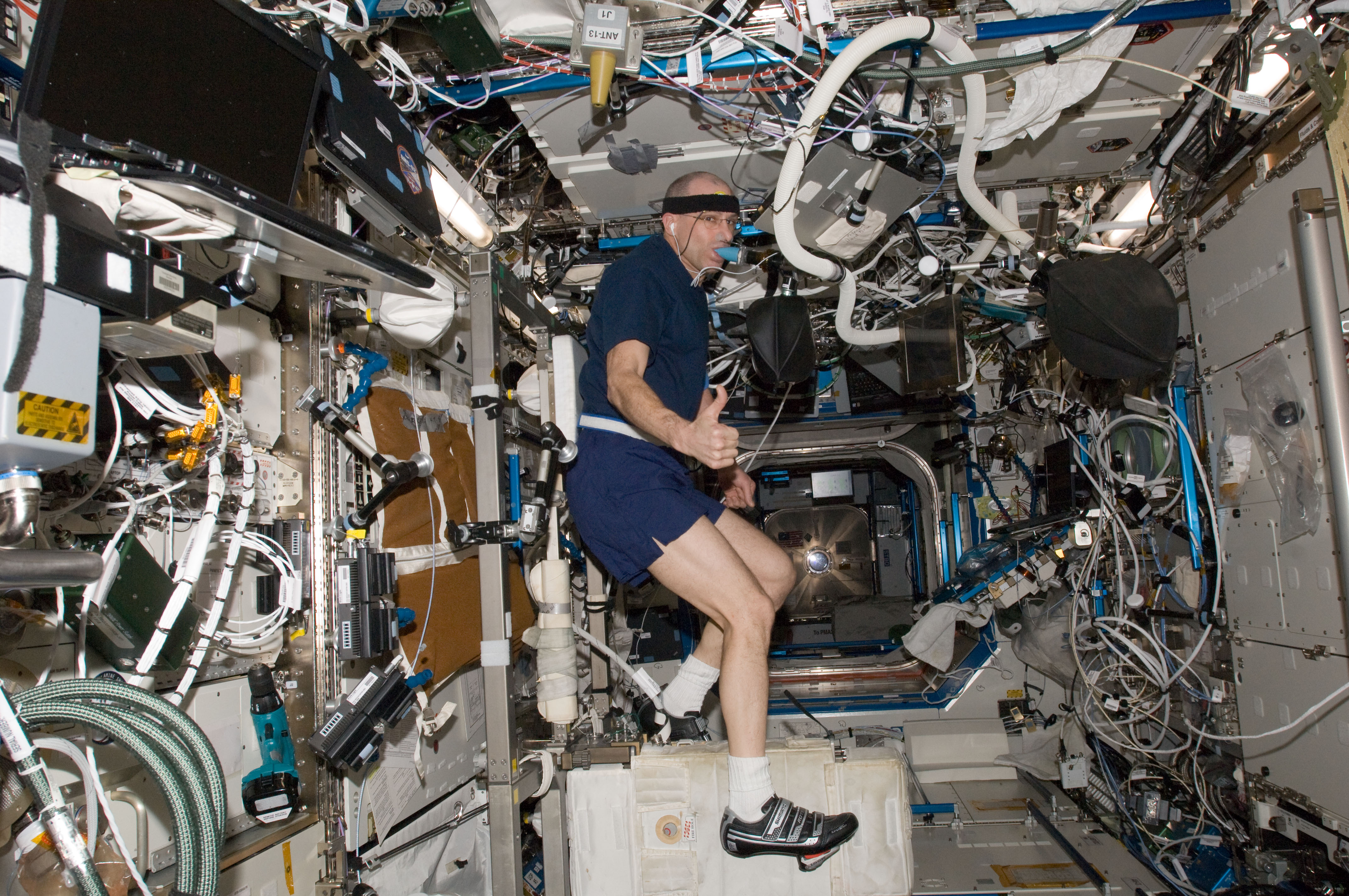
Pettit is wearing a blue t-shirt and shorts, earbuds, a head band, and black running shoes, giving a thumbs up from the station’s cycling machine, a white suitcase-sized box with bicycle pedals. Pettit holds a blue mouthpiece in his mouth attached to a tube that measures his oxygen uptake. The walls of the station around him are covered with equipment, laptops, hoses, and cords.
NASA astronaut Don Pettit conducts the VO2max experiment using the CEVIS.
NASA

An investigation called VO2max documented changes in maximum oxygen uptake, which is considered a standard measure of a person’s aerobic and physical working capacity. Long-duration spaceflight caused a significant decrease in maximal oxygen uptake and aerobic exercise capacity.5 These results have important implications for future long-duration space missions, adding to the evidence that current countermeasures may not be adequate.

Cristoforetti wears a hot pink shirt, black pants with white stripes on the side, and blue running shoes and is watching a laptop in front of her. A white harness on her torso connects her to the sides of the green treadmill. Her legs are slightly blurred from the motion of her running and the entire image is tilted to the left so that she seems to be running down a steep hill.
ESA (European Space Agency) astronaut Samantha Cristoforetti runs on the station’s T2 treadmill.
ESA/NASA

Muscle Biopsy, an investigation from ESA (European Space Agency), analyzed molecular changes in skeletal muscle before and after spaceflight and identified an enzyme product that could be used as a possible indicator of muscle health. The findings suggest that current exercise protocols are effective in preventing muscle deconditioning and support improvements in countermeasures to protect crew health and performance on future deep space exploration missions.6

While current exercise programs appear to moderate changes in musculoskeletal systems, individual results vary. In addition, current regimens likely cannot directly transfer to longer exploration missions due to space constraints, environmental issues such as removal of heat and moisture, device maintenance and repair needs, and the challenges of finding time for exercise and avoiding interference with the work of other crew members.7

Planned missions to explore the Moon and deep space may last up to three years. Research continues to zero in on the combination of diet, exercise, and medication that could keep astronauts healthy during spaceflight, when they set foot on the Moon or Mars, and when they return to Earth. Because aging, sedentary lifestyles, and illnesses cause bone and muscle loss on Earth, this research also can benefit people on the ground.

Melissa Gaskill
International Space Station Research Communications Team
NASA’s Johnson Space Center

Search this database of scientific experiments to learn more about those mentioned above.

Citations:

1 Lambrecht G, Petersen N, Weerts G, Pruett CJ, Evetts SN, et al. The role of physiotherapy in the European Space Agency strategy for preparation and reconditioning of astronauts before and after long duration space flight. Musculoskeletal Science & Practice. 2017 January; 27 Suppl 1S15-S22. DOI: 10.1016/j.math.2016.10.009

2 English KL, Lee SM, Loehr JA, Ploutz-Snyder RJ, Ploutz-Snyder LL. Isokinetic strength changes following long-duration spaceflight on the ISS. Aerospace Medicine and Human Performance. 2015 December 1; 86(12): 68-77. DOI: 10.3357/AMHP.EC09.2015.

3 Scott JM, Feiveson AH, English KL, Spector ER, Sibonga JD, et al. Effects of exercise countermeasures on multisystem function in long duration spaceflight astronauts. npj Microgravity. 2023 February 3; 9(1): 11. DOI: 10.1038/s41526-023-00256-5.

4 English KL, Downs ME, Goetchius EL, Buxton RE, Ryder JW, et al. High intensity training during spaceflight: results from the NASA Sprint Study. npj Microgravity. 2020 August 18; 6(1): 21. DOI: 10.1038/s41526-020-00111-x.

5 Ade CJ, Broxterman RM, Moore Jr. AD, Barstow TJ. Decreases in maximal oxygen uptake following long-duration spaceflight: Role of convective and diffusive O2 transport mechanisms. Journal of Applied Physiology. 2017 April; 122(4): 968-975. DOI: 10.1152/japplphysiol.00280.2016.

6 Blottner D, Moriggi M, Trautmann G, Furlan S, Block K, et al. Nitrosative Stress in Astronaut Skeletal Muscle in Spaceflight. Antioxidants. 2024 April; 13(4): 432. DOI: 10.3390/antiox13040432

7 Scott JP, Weber T, Green DA. Introduction to the Frontiers Research Topic: Optimisation of Exercise Countermeasures for Human Space Flight – Lessons from Terrestrial Physiology and Operational Considerations. Frontiers in Physiology. 2019 10173. DOI: 10.3389/fphys.2019.00173.

Powered by WPeMatico

Get The Details…
Ana Guzman

Johnson Celebrates AA and NHPI Heritage Month: Anima Patil-Sabale

Johnson Celebrates AA and NHPI Heritage Month: Anima Patil-Sabale

Anima Patil-Sabale has been shooting for the stars since she was a little girl growing up in India. Inspired by books about the Apollo-era space program, Patil-Sabale decided she would be an astronaut one day.

For the first step on her journey to space, Patil-Sabale hoped to become a fighter pilot, but India did not allow women to serve in these combat roles at the time. (The Indian Air Force began accepting female candidates in 2015.) Instead, Patil-Sabale pursued degrees in physics and computer applications and worked as a software engineer in Mumbai before getting a job as a software consultant in San Jose, California. Her proximity to NASA’s Ames Research Center inspired her to pursue another master’s degree, in aerospace engineering, and to apply for opportunities with the agency. Her first job with NASA was working as a software and operations engineer supporting the Kepler space telescope at Ames. She has held a variety of positions at Ames and Johnson since then.

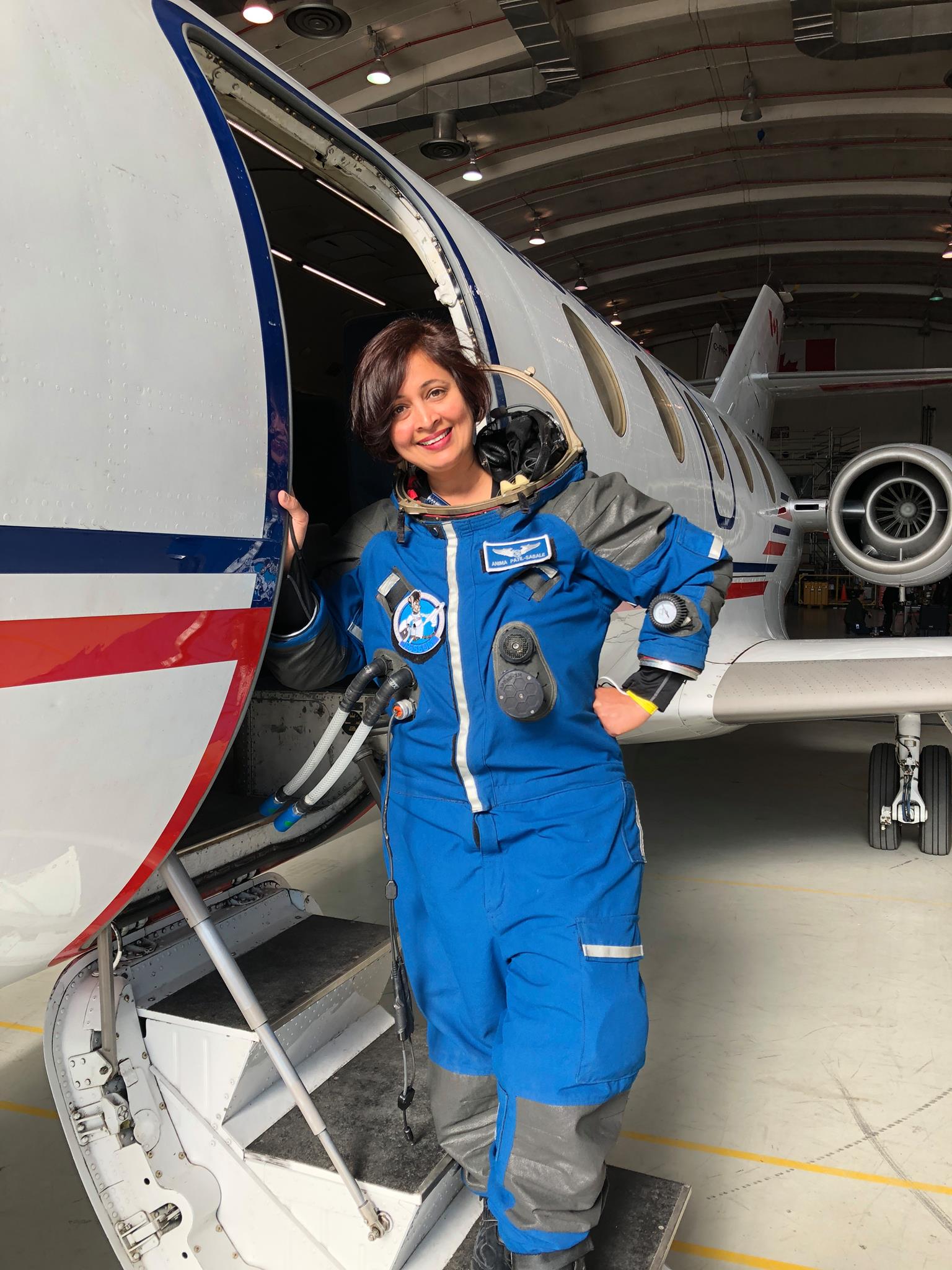
An Indian woman wearing a blue flight suit stands on the steps of a small jet.
Anima Patil-Sabale’s passion for astronautics is fulfilled through her work at NASA and her participation in a variety of external research projects. Here she is pictured boarding a Falcon 20 aircraft to conduct spacesuit performance tests while flying more than 50 parabolas.
Image courtesy of Anima Patil-Sabale

Patil-Sabale currently serves as a private astronaut mission (PAM) integrator for the International Space Station Program’s Avionics and Software Office. In that role, she works closely with Axiom Space team members to understand and integrate requirements for their PAMs into the space station’s onboard computers, laptops, and networking systems. It is a relatively new position, meaning Patil-Sabale is often charting new territory in her day-to-day work. “The challenges of working on something new that has not been done before on the International Space Station and the possibilities it creates for future commercialization – being a part of that all makes the job rewarding and fun,” she said.

Patil-Sabale’s time at NASA has also provided opportunities to sample the dreamed-of astronaut experience. In 2015, she was selected to serve as commander for the Human Exploration Research Analog (HERA) Campaign 2 Mission 3. The mission marked her first trip to Johnson. “Coming to the home of astronauts was exciting and emotional for me,” she said, adding that she has participated in several research projects and missions since HERA.  “I love the fact that in addition to the amazing work I do at NASA, I get to contribute to the human spaceflight program as a human test subject. Time will tell if I get to fly to space, but meanwhile I am happy to contribute – even if a tiny bit – to an active area of research that will help us live and thrive on Mars and eventually become a space-faring species.”

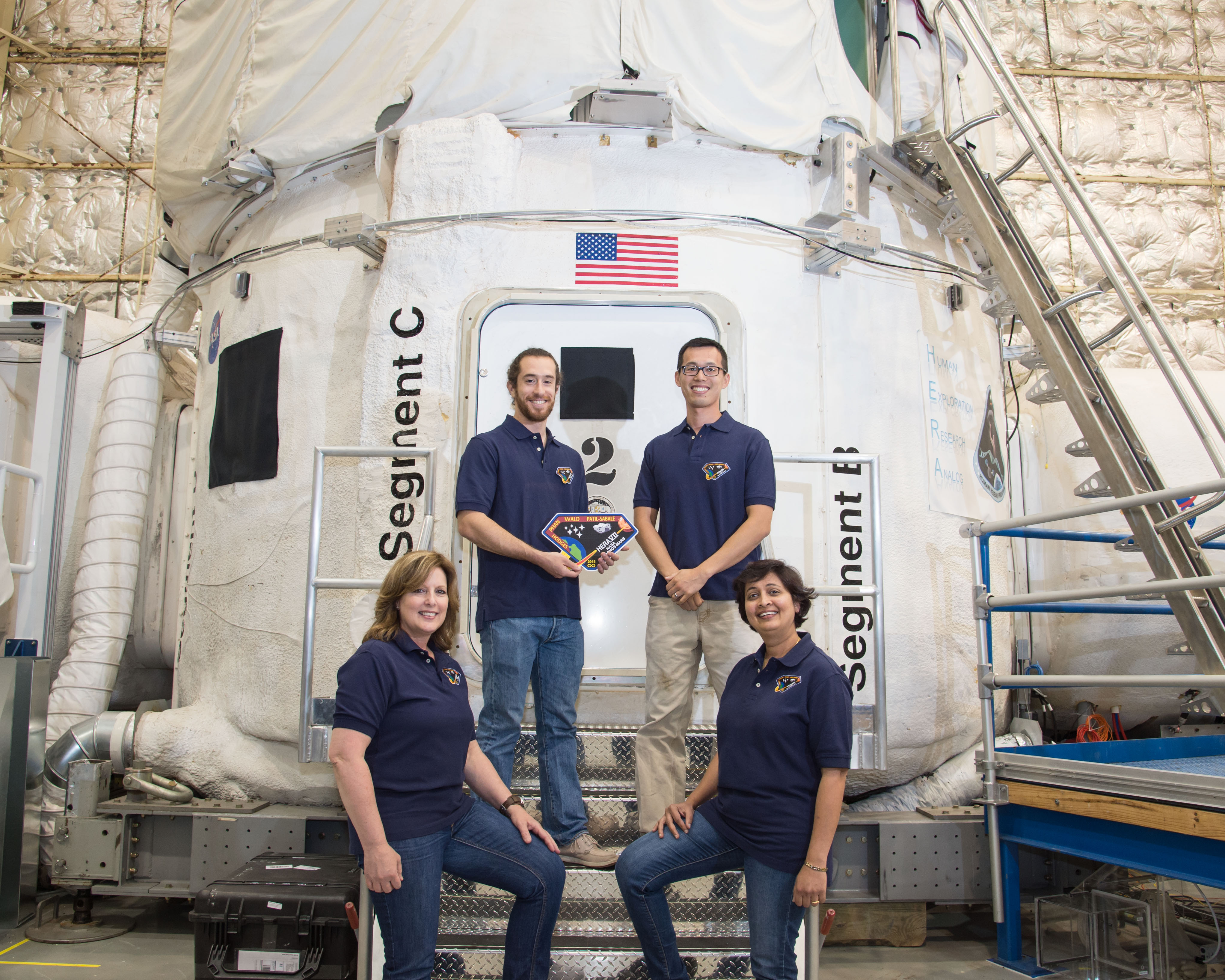
Two men and two women wearing matching blue polo shirts stand on the steps of a habitat designed to simulate a spacecraft flying to Mars.
The Human Exploration Research Analog Campaign 2 Mission 3 crew, from left: Mission Specialist II Debra Hodges, Flight Engineer Samuel Wald, Mission Specialist I Samson Phan, and Commander Anima Patil-Sabale.
NASA/Bill Stafford

Patil-Sabale first engaged with Johnson’s ASIA ERG in 2019, when the group invited her to give a presentation about her personal and professional journey. She currently serves as the group’s Social/Culture Committee lead. “I love bringing people together,” she said. “I believe people enjoy not just talking about each other’s cultures and traditions, but also  being a part of them.”

That belief inspired her to spearhead a Johnson-based Diwali celebration in 2023, in addition to participating in the agencywide event organized by NASA Headquarters. Johnson’s celebration included several dance and musical performances, a fashion show, and delicious food.

“These cultural events give us an opportunity to bond in a very different way,” she said. “We get to know many sides of each other that we wouldn’t discover as strictly work colleagues.” ERG events also help people from different teams connect. “For my Diwali dance performance, I had seven people from seven different teams who did not know each other or about their work, and they got to connect during our practice sessions.”

A group of seven diverse women wearing orange and pink saris prepare to perform a traditional dance during a Diwali celebration.
Anima Patil-Sabale (foreground) with her dance performance team members during Johnson Space Center’s 2023 Diwali celebration.
Image courtesy of Anima Patil-Sabale

Patil-Sabale hopes to see more cultural celebrations hosted at Johnson in the future and encouraged others to take the initiative to organize events and involve as many colleagues as possible. She also believes it is important for ERGs to continue offering these social and cultural opportunities, in addition to professional development programs. “Giving us these opportunities means so much to people like me,” she said.

Patil-Sabale appreciates any event that promotes diversity, equity, and inclusion, as well. She regularly meets with high school girls to encourage their interest in STEM careers and often speaks at International Women’s Day celebrations, where she urges women of all ages to pursue their dreams. “It’s never too late to pursue your interests, your passions,” she said.

Powered by WPeMatico

Get The Details…
Linda E. Grimm

Readying Apollo 10 for Launch

Readying Apollo 10 for Launch

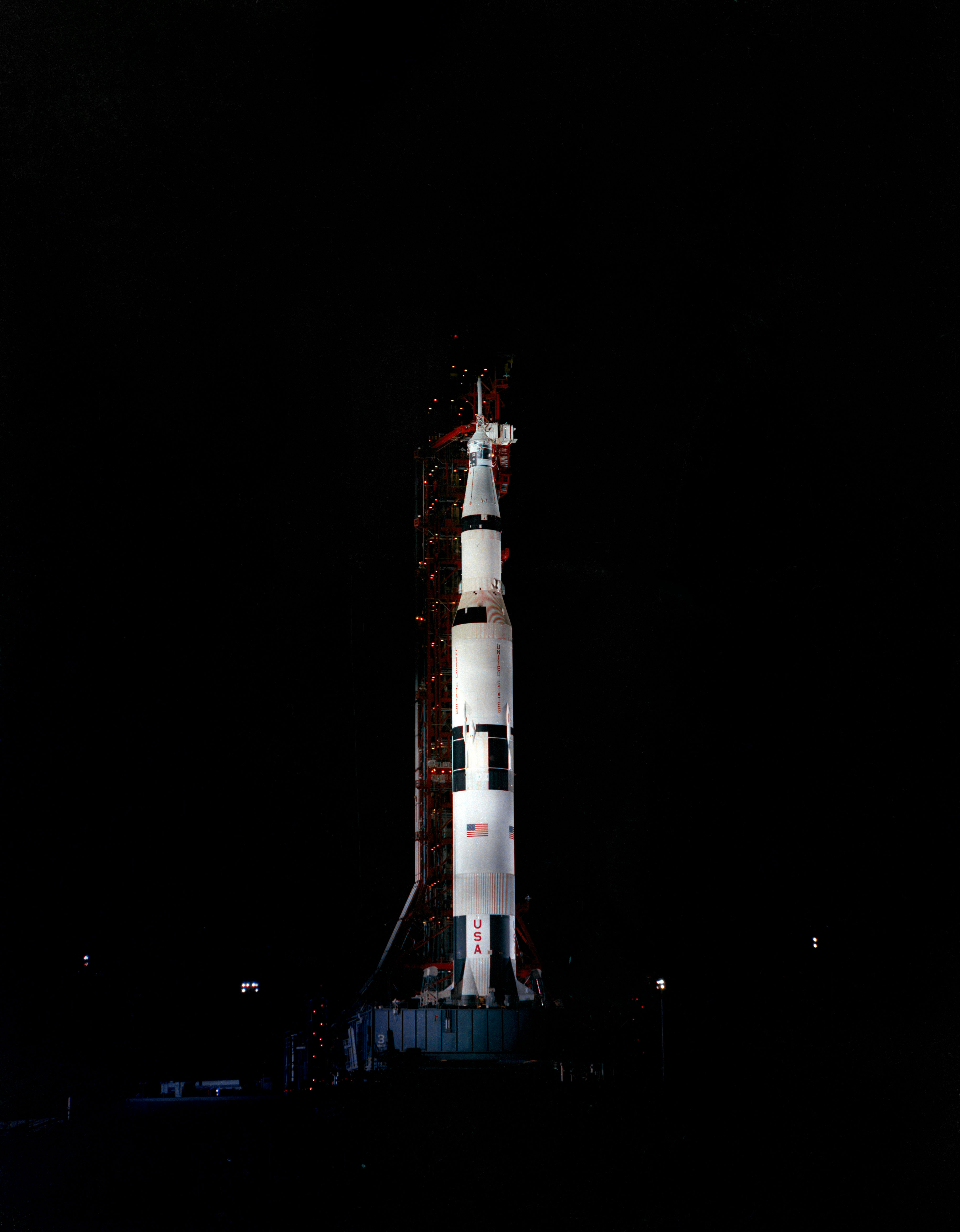
The Apollo 10 spacecraft towers over the launch pad spotlights that light it. It is white, with an American flag and "USA" on the lower portion. It is nighttime.
Nighttime, ground-level view of the Apollo 10 space vehicle on Pad B, Launch Complex 39, Kennedy Space Center. This photograph of the 363-feet tall Apollo/Saturn V stack was taken during pull back of the mobile service structure.
NASA

The Apollo 10 spacecraft stands, illuminated by launch pad spotlights, at Kennedy Space Center in Florida in this photo from May 4, 1969. It launched on May 18, 1969, with astronauts Thomas P. Stafford, Eugene A. Cernan, and John W. Young aboard.

The Apollo 10 mission encompassed all aspects of an actual crewed lunar landing, except the landing. It was the first flight of a complete, crewed Apollo spacecraft to operate around the Moon. Pertinent data to be gathered in this landing rehearsal dealt with the lunar potential, or gravitational effect, to refine the Earth-based crewed spaceflight network tracking techniques, and to check out lunar module programmed trajectories and radar, and lunar flight control systems. Twelve television transmissions to Earth were planned. All mission objectives were achieved.

See more photos from the Apollo 10 mission.

Powered by WPeMatico

Get The Details…
Monika Luabeya

Tech Today: From Spacesuits to Racing Suits

Tech Today: From Spacesuits to Racing Suits

2 min read

Preparations for Next Moonwalk Simulations Underway (and Underwater)

Race car driver wearing Walero suit
Due to extreme temperatures in the cockpit, drivers in almost every major racing championship wear Walero for its cooling properties. Cristiana Oprea (pictured) wears it while driving for the European Rally Championship.

For spacewalks to even be possible, spacesuits need insulation and temperature controls to withstand temperature swings between 250 and minus 250 degrees Fahrenheit. This extreme environment made NASA innovators look beyond everyday materials to find something unique to keep explorers comfortable and safe. 

In the 1980s, NASA’s Johnson Space Center in Houston entered into a Small Business Innovation Research (SBIR) contract with the Triangle Research and Development Corporation. The objective was to develop spacesuit glove material that could maintain a consistent, comfortable temperature. The thermal secret was found in phase-change materials, which absorb and release heat through basic characteristics of matter. 

As surrounding temperatures rise, the heat the material absorbs melts it from solid to liquid. This also works in the opposite direction, releasing heat as the material solidifies. No matter what phase it’s in, the temperature stays around the melting point in either hot or cold environments. Triangle’s work for NASA successfully incorporated phase-change materials into insulation for a spacesuit glove insert. 

Astronaut Ann McClain displays a spacesuit glove
Spacesuit gloves have to be both dexterous enough to use tools and insulating enough to protect against the temperature extremes of working in space. Working with industry, NASA explored the use of phase-change materials for these purposes, which was later commercialized under the name Outlast.
Credit: NASA

While the spacesuit glove inserts developed by Triangle didn’t make it to space, their pioneering work paved the way for a new application of phase-change materials. In the 1990s, Gateway Technologies, now known as Outlast Technologies, acquired exclusive patent rights to incorporate phase-change microcapsules into fabrics. This innovative technology has been embraced by various industries. 

For instance, the United Kingdom-based Walero Motorsports utilizes Outlast material in the specialized undergarments worn by race car drivers – like those driving in this weekend’s Indianapolis 500 – providing a comfortable and safe experience, even in the extreme heat of the race. The interiors of race cars can reach 120º F, so ways to keep drivers cool are critical. By bonding the Outlast to a layer of a fire-retardant material, Walero was able to conform to all the necessary race wear regulations set by the International Automobile Federation (FIA), the sanctioning body of international motorsport, as well as the safety standards laid out by the U.S.-based SFI Foundation.

Share

Details

Last Updated

May 20, 2024

Powered by WPeMatico

Get The Details…
Andrew Wagner