NASA Awards $1.25 Million to Three Teams at Deep Space Food Finale

NASA Awards $1.25 Million to Three Teams at Deep Space Food Finale

Interstellar Lab, a small business comprised of team members from France, Texas, and Florida, took home the $750,000 grand prize for their food system, NUCLEUS, which uses a multi-pronged approach to growing and harvesting food outputs for astronauts on long-duration human space exploration missions.
Credit: OSU/CFAES/Kenneth Chamberlain

NASA has awarded a total of $1.25 million to three U.S. teams in the third and final round of the agency’s Deep Space Food Challenge. The teams delivered novel food production technologies that could provide long-duration human space exploration missions with safe, nutritious, and tasty food.

The competitors’ technologies address NASA’s need for sustainable food systems for long-duration habitation in space, including future Artemis missions and eventual journeys to Mars. Advanced food systems also could benefit life on Earth and inspire food production in parts of the world that are prone to natural disasters, food insecurity, and extreme environments.

“The Deep Space Food Challenge could serve as the framework for providing astronauts with healthy and delicious food using sustainable mechanisms,” said Angela Herblet, challenge manager for the Deep Space Food Challenge at NASA’s Marshall Space Flight Center in Huntsville, Alabama. “The challenge has brought together innovative and driven individuals from around the world who are passionate about creating new solutions that support our agency’s future Moon to Mars missions.”

Since the challenge’s launch in 2021, more than 300 teams from 32 countries have participated by submitting innovative food system designs. The competition, conceived and managed by NASA Centennial Challenges at NASA Marshall, is a first-of-its-kind coordinated effort between NASA and CSA (Canadian Space Agency), which ran its own challenge in parallel.

Four American teams competed in Phase 3, which began in September 2023. The Methuselah Foundation partnered with Ohio State University to facilitate the final phase of the challenge, which included a two-month testing and demonstration period held on the university’s campus in Columbus, Ohio. Each U.S. team in Phase 3 was awarded $50,000 and took their technology to Columbus for testing.

Throughout this phase, the teams constructed full-scale food production systems that were required to pass developmental milestones like safety, sensory testing, palatability, and harvesting volumes. Each team worked with four “Simunauts,” a crew of Ohio State students who managed the testing and demonstrations for Phase 3 over the eight-week period. The data gathered from testing was delivered to a judging panel to determine the winner.

The challenge concluded at the Deep Space Food Symposium, a two-day networking and learning summit at the Nationwide and Ohio Farm Bureau 4-H Center on Aug. 15 and 16. Throughout the event, attendees met the Phase 3 finalists, witnessed demonstrations of the food production technologies, and attended panels featuring experts from NASA, government, industry, and academia. The winners of the challenge were announced at an awards ceremony at the end of the symposium.

The U.S. winner and recipient of the $750,000 grand prize is Interstellar Lab of Merritt Island, Florida. Led by Barbara Belvisi, the small business combines several autonomous phytotrons and environment-controlled greenhouses to support a growth system involving a self-sustaining food production mechanism that generates fresh vegetables, microgreens, and insects necessary for micronutrients.

Two runners-up each earned $250,000 for their food systems’ successes: Nolux of Riverside, California, and SATED of Boulder, Colorado.

Nolux, a university team led by Robert Jinkerson, constructed an artificial photosynthetic system that can create plant and fungal-based foods without the operation of biological photosynthesis.

Standing for Safe Appliance, Tidy, Efficient & Delicious, SATED is a one-man team of Jim Sears, who developed a variety of customizable food, from pizza to peach cobbler. The product is fire-safe and was developed by long-shelf-life and in-situ grown ingredients.

NASA also selected and recognized one international team as a Phase 3 winner: Solar Foods of Lappeenranta, Finland, developed a food production system through gas fermentation that relies on single-cell protein production.

In April 2024, CSA and Impact Canada awarded the grand prize winner of its parallel challenge to Ecoation, a Vancouver-based small business specializing in greenhouses. 

“Congratulations to the winners and all the finalist teams for their many years dedicated to innovating solutions for the Deep Space Food Challenge,” said Amy Kaminski, program executive for NASA’s Prizes, Challenges, and Crowdsourcing at NASA Headquarters in Washington. “These food production technologies could change the future of food accessibility on other worlds and our home planet.”

Also present at the symposium was celebrity chef and cookbook author Tyler Florence. After spending time with each finalist team and getting acquainted with their food systems, Florence selected one team to receive the “Tyler Florence Award for Culinary Innovation.” Team SATED of Boulder, Colorado, received the honor for their system that impressed Florence due to its innovative approach to the challenge.

The Deep Space Food Challenge, a NASA Centennial Challenge, is a coordinated effort between NASA and CSA. Subject matter experts at Johnson Space Center in Houston and Kennedy Space Center in Florida, supported the competition. NASA’s Centennial Challenges are part of the Prizes, Challenges, and Crowdsourcing program within NASA’s Space Technology Mission Directorate and managed at Marshall Space Flight Center in Huntsville, Alabama. The Methuselah Foundation, in partnership with NASA, oversees the United States and international competitors.

To learn more about the Deep Space Food Challenge, visit: 

nasa.gov/spacefoodchallenge

-end-

Jasmine Hopkins
Headquarters, Washington
321-432-4624
jasmine.s.hopkins@nasa.gov

Lane Figueroa
Marshall Space Flight Center, Huntsville, Ala.
256-932-1940
lane.e.figueroa@nasa.gov

Powered by WPeMatico

Get The Details…
Jessica Taveau
NASA Celebrates Ames’s Legacy of Research on National Aviation Day

NASA Celebrates Ames’s Legacy of Research on National Aviation Day

2 min read

Preparations for Next Moonwalk Simulations Underway (and Underwater)

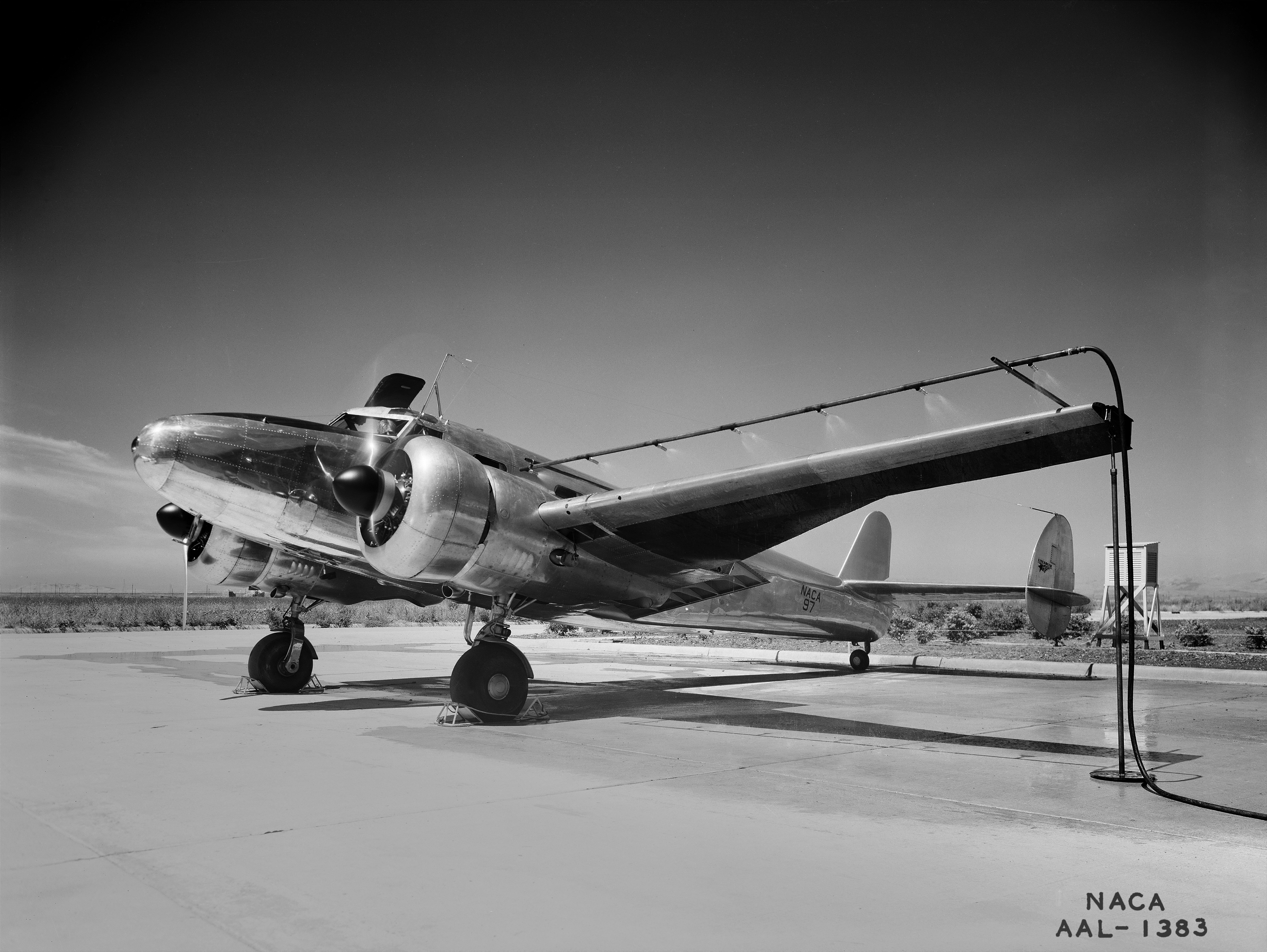
A black and white photo of a Lockheed 12A airplane sitting on a tarmac, with pipes installed along its wings that are blasting warm air on the leading edge of the wing, studying aviation de-icing.
Early research at NASA’s Ames Research Center in California’s Silicon Valley — then known as NACA Ames Aeronautical Laboratory – included ground tests of “hot wing” anti-icing systems on a Lockheed 12A aircraft.

NASA works every day to improve air travel – and has been doing so since its creation decades ago. On National Aviation Day, NASA and all fans of aviation get the chance to celebrate the innovative research and development the agency has produced to improve capability and safety in flight.

NASA’s Ames Research Center in California’s Silicon Valley has a historic legacy in aeronautics research. When the center was founded in 1939 by the National Advisory Committee for Aeronautics (NACA), its early research included working to reduce icing on aircraft wings.

When ice coats the wings of an airplane, it reduces lift and increases drag, which can cause the aircraft to lose altitude and control. Ames researchers developed different approaches to solve the icing challenge, including a “hot wing” thermal anti-icing system. The system worked by running hot engine exhaust along the leading edges of aircraft wings, warming them and preventing ice buildup. Ames researchers modified aircraft and tested them before traveling to Minnesota, where they were flown in icy conditions.

Today, many turbine-powered aircraft, like passenger jets, use “bleed air” anti-icing systems, which warm the leading edges of aircraft wings using compressed air from their engines. These systems are built upon the early research and testing done at Ames.

The legacy of aviation innovation continues at Ames, through aeroscience research like wind tunnel testing, air traffic management, and advanced aircraft systems. 

Share

Details

Last Updated

Aug 19, 2024

Location
Aeronautics at Ames

Powered by WPeMatico

Get The Details…
Tara Friesen

Revisiting OSIRIS-REx

Revisiting OSIRIS-REx

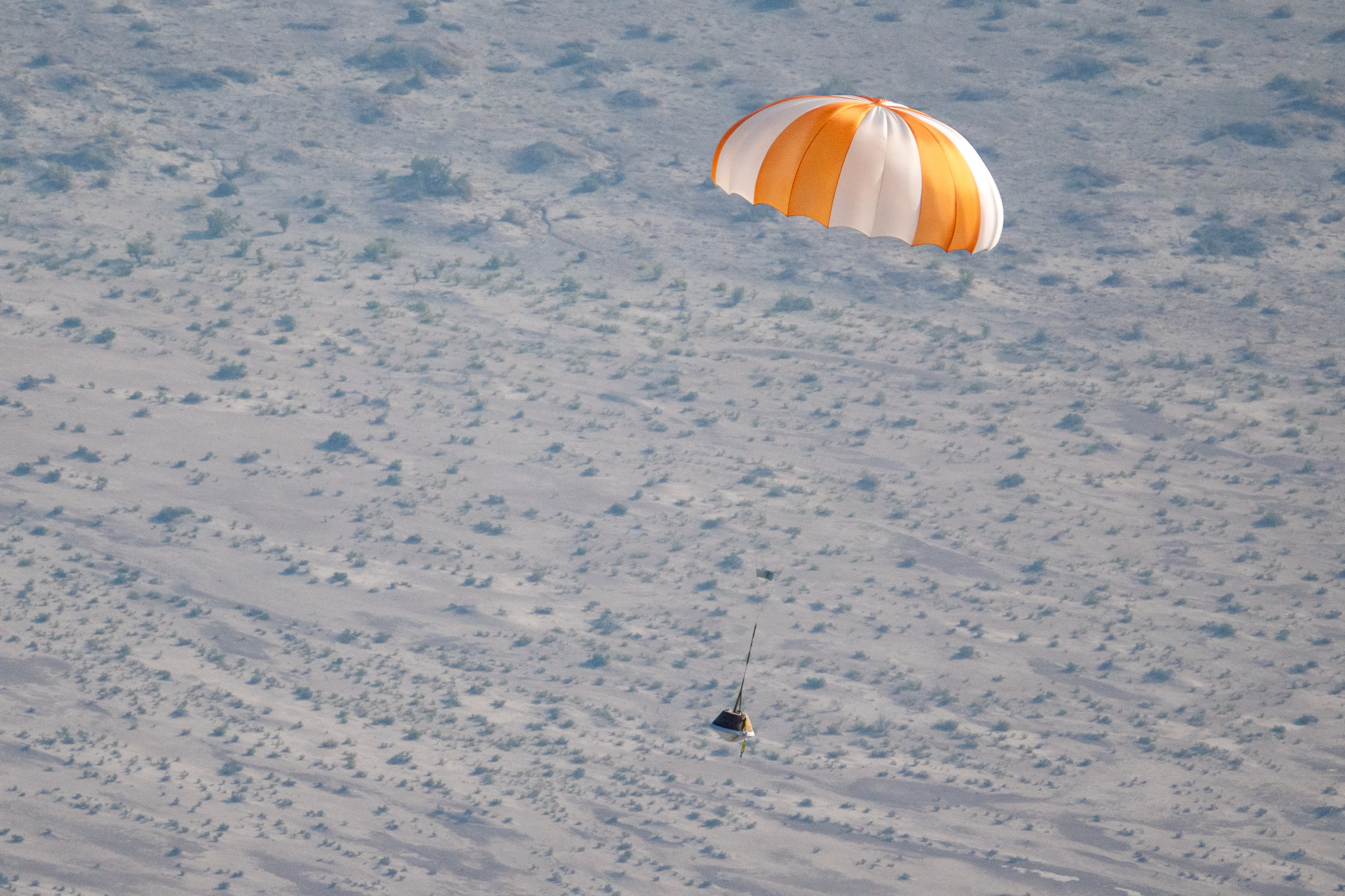
An orange and white parachute is visible at top right. It is attached to a training model of a capsule. The black and white cone-like capsule is quite small in this image. The pale ground below makes up the background of the image.
NASA/Keegan Barber

An OSIRIS-REx sample return capsule training model parachutes down in this image from Aug. 30, 2023. This drop test was part of NASA’s preparations for the return of samples from the asteroid Bennu on Sept. 24, 2023. OSIRIS-REx was the first U.S. mission to collect a sample from an asteroid.

This photo was chosen by the NASA HQ photo team as one of the 100 best photos of 2023. Celebrate World Photography Day by browsing the gallery on Flickr.

Image Credit: NASA/Keegan Barber

Powered by WPeMatico

Get The Details…
Monika Luabeya

Station Science Top News: August 16, 2024

Station Science Top News: August 16, 2024

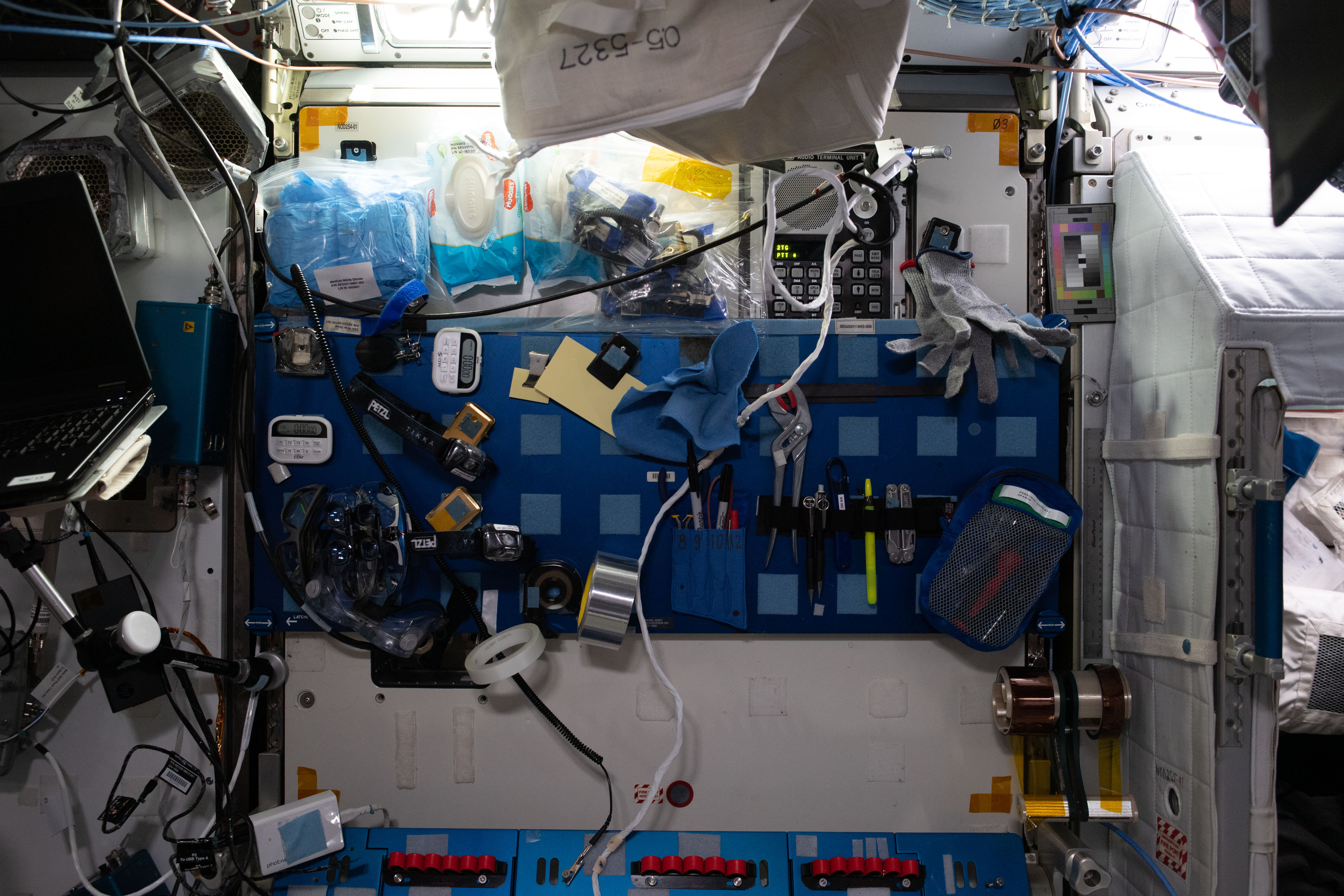
Locations designed as a maintenance work area and an exercise area on the International Space Station are commonly used by crew members for stowage and body maintenance activities, respectively. These differences between intended and actual use demonstrate that systematic observation of material culture can help researchers identify how astronauts adapt to life in microgravity and support better design of future spacecraft and habitats.

The first archaeological fieldwork in space, SQuARE examined the space station’s material culture – objects and built spaces and their symbolic and social meanings – and how these objects and spaces are used over time. Results suggest that more flexible definitions of use of spaces could improve crew autonomy and enable broader use of all areas by the entire crew. The researchers also found a significant number of adhesives and ties are used to keep objects from floating away, suggesting this is a critical adaptation crews must make in microgravity and that these gravity surrogates could be optimized for future space habitats.

A cluttered workstation in the International Space Station, featuring a variety of tools and equipment secured to a blue panel with Velcro strips.
A sample site is designated for the SQuARE archaeological investigation as part of the International Space Station Archaeological Project, which studies how astronauts use objects over an extended period in space.

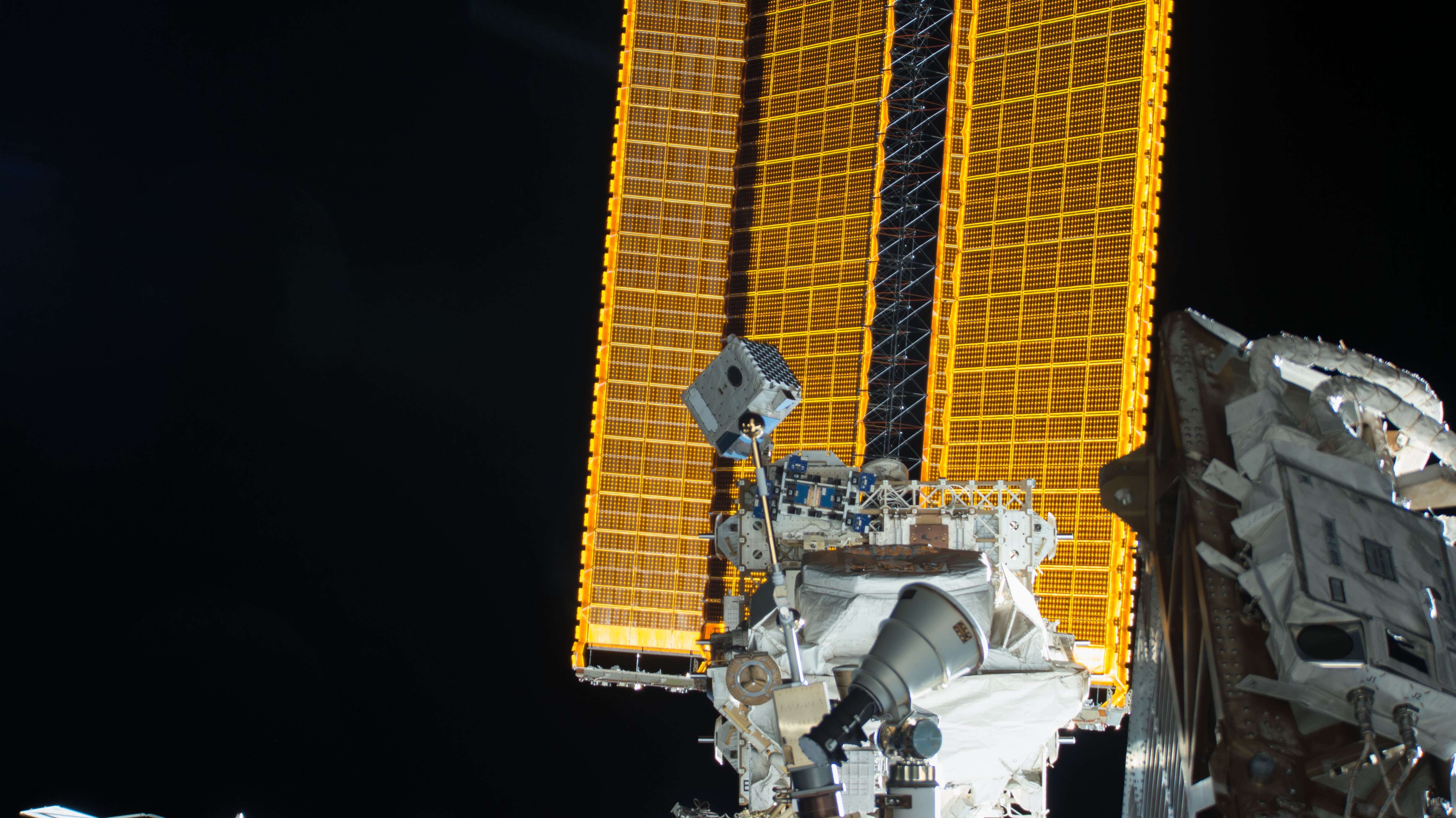
Analysis of XMM-Newton, Chandra, and NICER (Neutron star Interior Composition Explorer) observations of seven thermally emitting isolated neutron stars (XINS) in the constellation Canis Major showed erratic spin behavior in one of them (RX J0720.4−3125).  This behavior hints at complex surface heat distribution, a feature usually associated with a strongly magnetized atmospheric layer. The finding could lead to an improved understanding of the neutron star population in our galaxy and of neutron star evolution.

NICER makes high-precision measurements of X-ray astrophysics phenomena such as neutron stars, the ultra-dense matter created when massive stars explode as supernovas. XINSs likely represent a significant fraction of all neutron stars, but their origin and evolutionary history are uncertain. Researchers plan to use detailed modeling of the extensive NICER dataset to fully map temperature distribution on the surface of these stars, which could reveal the underlying physical processes responsible for their peculiar properties.

A view of the International Space Station's exterior, featuring a large solar panel array illuminated against the darkness of space.
View of the NICER (Neutron star Interior Composition ExploreR) payload, attached to ExPRESS (Expedite the Processing of Experiments to Space Station) Logistics Carrier-2 on the S3 truss on the International Space Station.

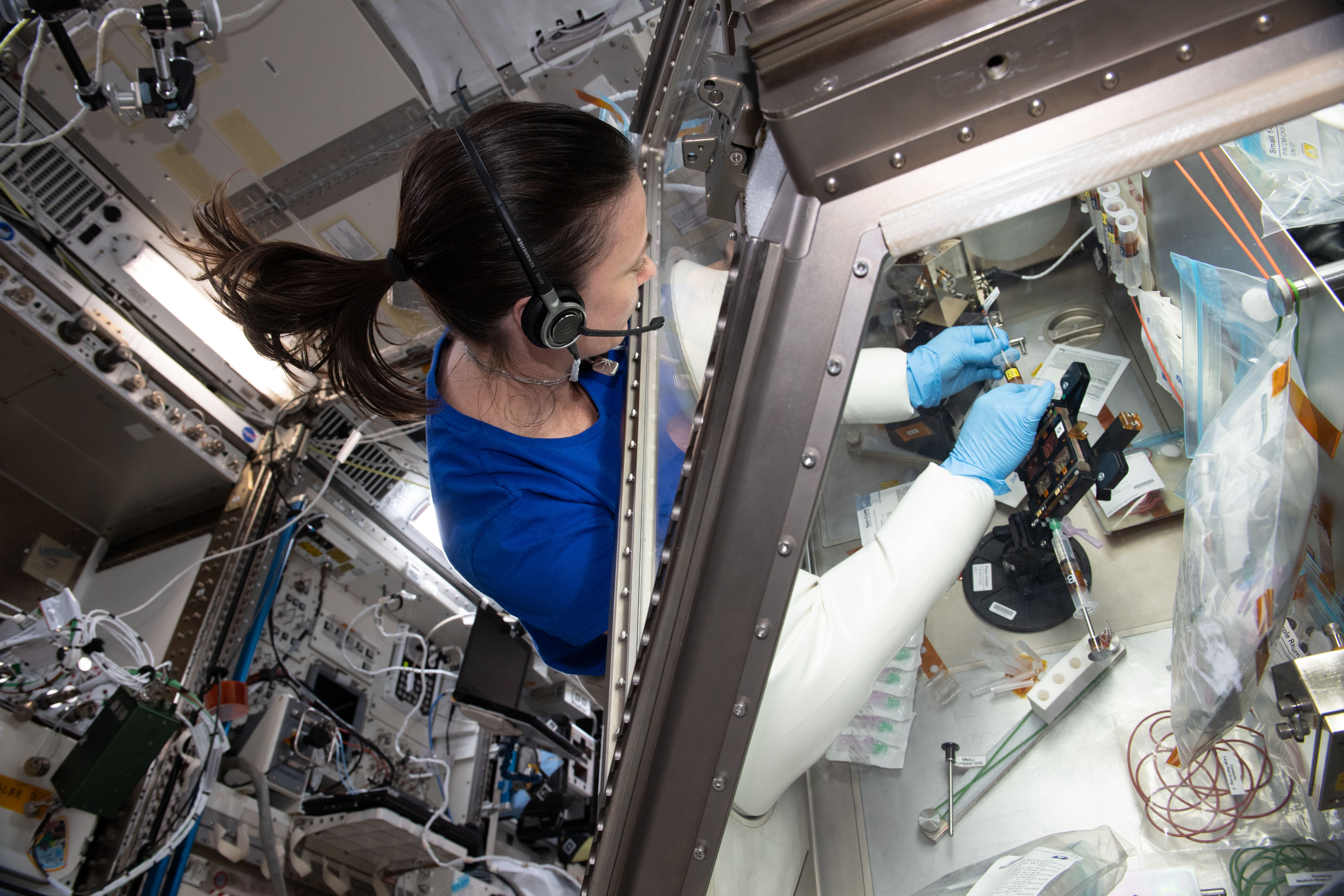
Researchers demonstrated the feasibility of using an engineered human tissue model to screen drugs for treating impaired muscle regeneration in astronauts and patients on Earth.

Muscle mass diminishes with age on Earth and astronauts experience similar but accelerated loss of muscle mass during spaceflight. Cardinal Muscle evaluated engineered human muscle cells cultured in microgravity as a model for studying muscle loss and treatment.

Researchers found that the model mimicked impaired muscle regeneration after just seven days in microgravity and that two drugs, insulin-like growth factor-1 (IGF-1) and a 15-hydroxyprostaglandin dehydrogenase inhibitor (15-PGDH-i), partially inhibited microgravity’s effects on the engineered tissue.

A female astronaut with a headset works inside the International Space Station, focusing on an experiment within a controlled environment. She is wearing a blue shirt and blue gloves while handling equipment inside a glovebox.
Expedition 65 Flight Engineer Megan McArthur uses the Life Sciences Glovebox to perform Cardinal Muscle sample and media change operations in the Japanese Experiment Module aboard the orbital outpost.
NASA/Megan McArthur

Powered by WPeMatico

Get The Details…
Sumer Loggins

Sols 4277-4279: Getting Ready To Say Goodbye to the King!

Sols 4277-4279: Getting Ready To Say Goodbye to the King!

4 min read

Sols 4277-4279: Getting Ready To Say Goodbye to the King!

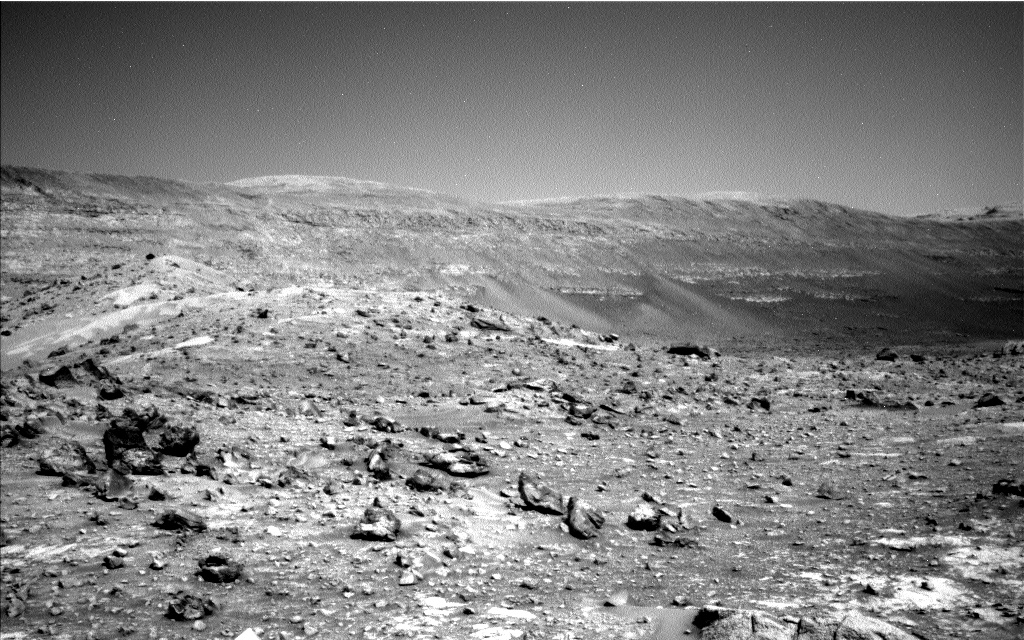
Left navigation camera image from Sol 4255, showing “Milestone Peak” on the left, the subject of an RMI in this plan
NASA/JPL-Caltech

Earth planning date: Friday, Aug. 16, 2024

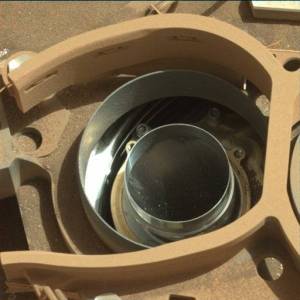
It’s time to move on from our “Kings Canyon” drill site, so today’s plan focused on our usual tidy up routine after a drill campaign. First we need to dump out any material in the drill chambers, in an action called “RAGE” – this sounds aggressive but stands for “Rotation to Agitate Granules for Expulsion,” so it’s more of a gentle turning than an angry shaking. This ensures that the drill chambers won’t spill later and we are ready for the next drill campaign – whenever we find a worthy target! Mastcam will document the entire process, and then image the drill bit that was used, making sure it is still in good condition.

At that point, we are free to use the arm instruments again (no turret movements allowed while there is sample in the drill chamber). So our contact science focuses today on the drill tailings, the pile of ground up rock generated by the drill action. That pile has been sitting there for over two weeks, but luckily it’s not too windy right now and the pile remained more or less intact. MAHLI will image the drill hole and the tailings pile on the first afternoon, APXS will integrate on the tailings on the first night and then MAHLI will image the tailings again on the second day. This post-retract image is just to confirm that APXS did not hit the pile of loose drill fines. As APXS Science Planner today, I worked with RPs to pick out the spot we will focus on and to make sure that we are using the correct sequences to ensure safety of the instrument – but it’s always nice to confirm that we didn’t hit the pile!

ChemCam has a suite of activities, from LIBS activities close to the rover, to “passive” (non destructive) activities and RMI images (which can be relatively near field or long distance). LIBS on the bedrock target “Marck Lake” will be used to compared with the nearby Kings Canyon target and assess homogeneity across the drill block, while the passive observation of “Red Slate Mountain” will examine a large light toned block about 10 metres away from the rover. ChemCam will also acquire a long distance RMI of loose blocks and boulders about 85 metres away, looking towards “Milestone Peak” (shown in the accompanying image).

APXS will acquire an overnight “atmospheric” measurement, looking at levels of argon as part of an ongoing campaign. This is paired with ChemCam’s second passive measurement, this time of the sky. We also have monitoring of dust levels, with Mastcam taus of the atmosphere (which atmospheric scientist Alex Innanen talked about here), and a whole host of Navcam dust devil movies, and suprahorizon and zenith movies (which target different parts of the horizon). All of these … and DAN and REMS activities too – our environmental monitoring team is working hard as usual!

ChemCam has spent the last two weeks or so getting LIBS and passive measurements on “Sam Mack Meadow” – an area of darker toned, sometimes broken up rocks just outside of the current workspace. In fact, ChemCam is getting LIBS on two further targets there in this plan: “Horse Creek Spire” and the somewhat nodular “Kearsarge Pinnacles.” Mastcam will image all of the LIBS targets too. There are some interesting textures here that APXS and MAHLI are keen to sample too, so our next drive is more of a bump to get close enough to allow contact science here too. We will still be able to gaze on the King (Canyon) for another while, so I guess it’s not really goodbye just yet!

Written by Catherine O’Connell-Cooper, Planetary Geologist at University of New Brunswick

Share

Details

Last Updated
Aug 19, 2024

Related Terms

Powered by WPeMatico

Get The Details…