NSTGRO 2024

NSTGRO 2024

3 min read

Preparations for Next Moonwalk Simulations Underway (and Underwater)

NSTGRO Homepage

Claire Lessler
University of Chicago
Precision Spectroscopic Calibration and Next-Generation Millimeter-Wave Spectrometers

Miron Liu
University of Michigan
Development of a Magnetically Shielded Hall Thruster without Pole Erosion

Ashley Maldonado
Otero University of Southern California
Optimizing heterogeneous nanostructured materials for space applications

Camille McDonnell
University of Maryland, College Park
Low-SWaP Nanophotonic Quantum Enhanced Sensors with Highly Squeezed Light

Daniel Miliate
University of California, Merced
Dry Film Lubricants for Heaterless Actuators

Andrew Morell
University of Colorado, Boulder
Rapid Modular Simulation Methods for Capture and Post-Capture Spacecraft Dynamics

Daniel Morton
Stanford University
Combining Optimal and Learning-Based Control Methods for the Manipulation of Spaceborne Objects

Abhay Negi
University of Southern California
Autonomous Fault Detection, Recovery, and Avoidance during Robotic In-Space Assembly

Devin Nielsen
Utah State University
Multi-scale Analysis of Pyrolytic Graphite Sheet Laminates for Space Radiator Applications Using NASMAT

Jennifer Nolan
Georgia Institute of Technology
Application of Neural Radiance Fields for Autonomous Spacecraft Navigation and Planetary Characterization

Henry Noyes
Northeastern University
Autonomous Navigation and Multi-Modal Path Planning in Lunar Craters Using a Modular Snake-like Robot

Lorin Nugent
Purdue University
Spacecraft Rendezvous Techniques for Multi-Body Gravitational Environments

Jake Olkin
Massachusetts Institute of Technology
Long-Duration, Risk-Aware, Goal-Directed Adaptive Sampling for Autonomous Vehicle Exploration

Nathaniel Osikowicz
Penn State University
Tendon-actuated Structural Modules for Enhanced Segmented Aperture Reflectors

Rebecca Palmer
Georgia Institute of Technology
Debris to Infrastructure: Salvage Characterization and Recovered Metals Processing in Lunar Gravity

Austin Patridge
University of Texas at San Antonio
Apollo Regolith Thermally Constrained Landing Pad Bricks (ARTC Bricks)

Cutler Phillippe
University of Illinois at Urbana-Champaign
Imaging and Analysis Framework for Parachute Micro-structural Basis

Minyoung Ra
Purdue University
Robust Optimal Control of Spacecraft Translational-Rotational Coupled Motion under Uncertainty

Clayton Ramsey
William Marsh Rice University
Low-Power Real-Time Planning for Robots in Uncertain Environments

Tomaz Remec
University of Colorado, Boulder
Experimental Characterization of Magnetohydrodynamic Effects in Planetary Entry Plasmas

Kate Rhoads
University of Kentucky
Investigation of Spallation in Low Permeability TPS Materials

Anton Samoylov
University of Arizona
Multifunctional Nanofiber Reinforcement of Perovskite Solar Cells for Resilience in Space

Tressa Smalley
University of California, Davis
Technology Development of Lemna japonica (Duckweed) for Human Therapeutic Production in Space

Amanda Smith
Worcester Polytechnic Institute
Development of a Novel Process for Refractory Metal Powder Production

Nicholas Stegmeier
University of Texas at San Antonio
Experimental Characterization of Jet Interaction Effects for EDL Vehicle Configurations

Austin Stover
University of Chicago
A Densely Sampled Integral Field Spectrometer to Enable Space-Based Millimeter-Wave Line Intensity Mapping Surveys

Ashley Tirado
Embry-Riddle Aeronautical University
Designing Passive Doped-YSZ Ceramic Coatings For Impact and Wear Resistance Against Lunar Dust

Lydia Ellen Tonani-Penha
Worcester Polytechnic Institute
Project Tethys: Extracting Water from the Martian Environment

Margaret Wang
Stanford University
Adaptive World Models for Space Robotics: Implicit Representations Grounded in Semantics and Physics

Ian Wells
Washington State University
Understanding Liquid Hydrogen Critical Heat Flux via Optical Imaging

Ray Westenberg
Georgia Institute of Technology
Engineering Cyanobacteria for Chemical Bioproduction on Mars

Karol Woloszyn
New York University
Functionalization of 3D DNA Nanomaterials and Nanoarchitectures for Space-Based Technology

Amber Young
University of California, Berkeley
Increasing scientific access and technology reliability through multi-modal surface and subsurface legged mobility

Grace Zoppi
University of Michigan
Development of an Electrodeless Magnetoplasmadynamic Thruster
Share

Details

Last Updated

Jun 13, 2024

Editor
Loura Hall

Powered by WPeMatico

Get The Details…
Loura Hall

NASA’s Webb Reveals Long-Studied Star Is Actually Twins

NASA’s Webb Reveals Long-Studied Star Is Actually Twins

5 min read

Preparations for Next Moonwalk Simulations Underway (and Underwater)

Managed by NASA’s Jet Propulsion Laboratory through launch, Webb’s Mid-Infrared Instrument also revealed jets of gas flowing into space from the twin stars.

Scientists recently got a big surprise from NASA’s James Webb Space Telescope when they turned the observatory toward a group of young stars called WL 20. The region has been studied since the 1970s with at least five telescopes, but it took Webb’s unprecedented resolution and specialized instruments to reveal that what researchers long thought was one of the stars, WL 20S, is actually a pair that formed about 2 million to 4 million years ago.

The discovery was made using Webb’s Mid-Infrared Instrument (MIRI) and was presented at the 244th meeting of the American Astronomical Society on June 12. MIRI also found that the twins have matching jets of gas streaming into space from their north and south poles.

“Our jaws dropped,” said astronomer Mary Barsony, lead author of a new paper describing the results. “After studying this source for decades, we thought we knew it pretty well. But without MIRI we would not have known this was two stars or that these jets existed. That’s really astonishing. It’s like having brand new eyes.”

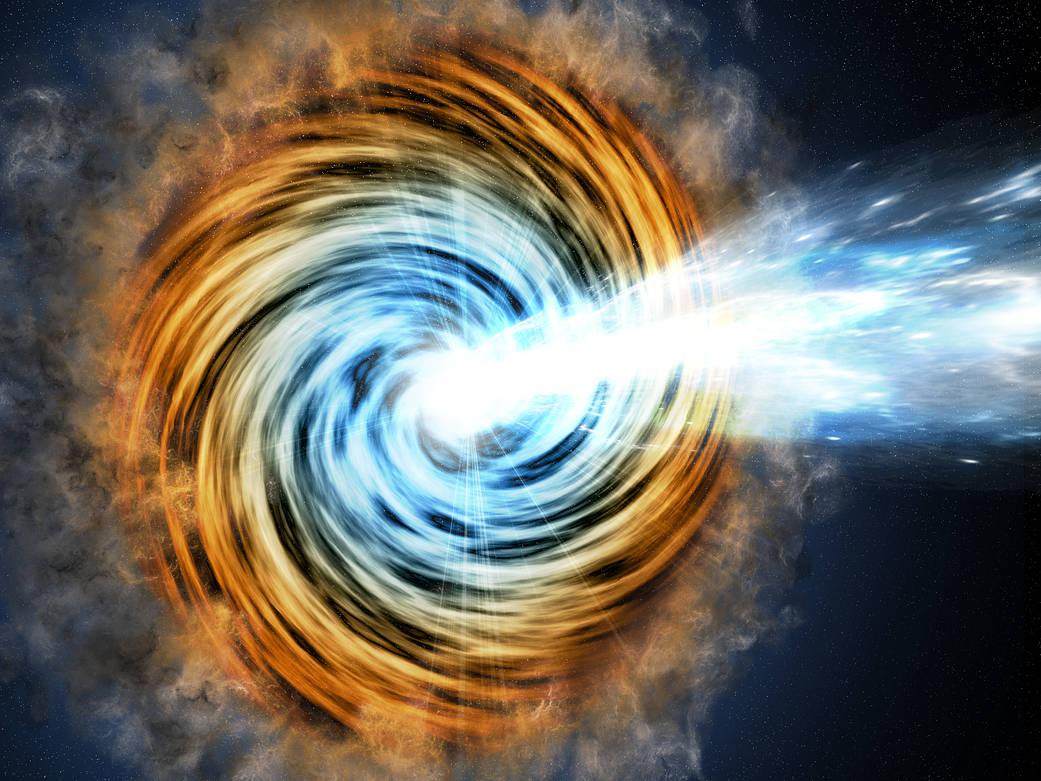
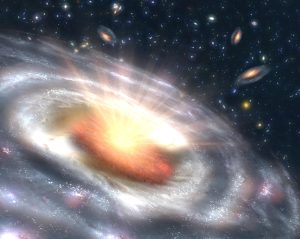
This artist’s concept shows two young stars nearing the end of their formation
This artist’s concept shows two young stars nearing the end of their formation. Encircling the stars are disks of leftover gas and dust from which planets may form. Jets of gas shoot away from the stars’ north and south poles.

The team got another surprise when additional observations by the Atacama Large Millimeter/submillimeter Array (ALMA), a group of more than 60 radio antennas in Chile, revealed that disks of dust and gas encircle both stars. Based on the stars’ age, it’s possible that planets are forming in those disks.

The combined results indicate that the twin stars are nearing the end of this early period of their lives, which means scientists will have the opportunity to learn more about how the stars transition from youth into adulthood.

“The power of these two telescopes together is really incredible,” said Mike Ressler, project scientist for MIRI at NASA’s Jet Propulsion Laboratory and co-author of the new study. “If we hadn’t seen that these were two stars, the ALMA results might have just looked like a single disk with a gap in the middle. Instead, we have new data about two stars that are clearly at a critical point in their lives, when the processes that formed them are petering out.”

WL20 star group
This image of the WL 20 star group combines data from the Atacama Large Millimeter/submillimeter Array and the Mid-Infrared Instrument on NASA’s Webb telescope. Gas jets emanating from the poles of twin stars appear blue and green; disks of dust and gas surrounding the stars are pink.
U.S. NSF; NSF NRAO; ALMA; NASA/JPL-Caltech; B. Saxton

Stellar Jets

WL 20 resides in a much larger, well-studied star-forming region of the Milky Way galaxy called Rho Ophiuchi, a massive cloud of gas and dust about 400 light-years from Earth. In fact, WL 20 is hidden behind thick clouds of gas and dust that block most of the visible light (wavelengths that the human eye can detect) from the stars there. Webb detects slightly longer wavelengths, called infrared, that can pass through those layers. MIRI detects the longest infrared wavelengths of any instrument on Webb and is thus well equipped for peering into obscured star-forming regions like WL 20.

Radio waves can often penetrate dust as well, though they may not reveal the same features as infrared light. The disks of gas and dust surrounding the two stars in WL 20S emit light in a range that astronomers call submillimeter; these, too, penetrate the surrounding gas clouds and were observed by ALMA.

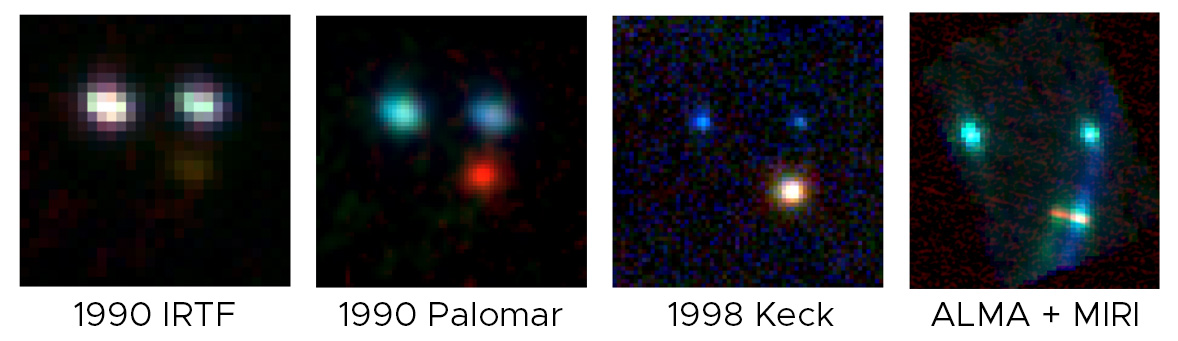
These four images show the WL 20 star system
These four images show the WL 20 star system as seen by (from left) NASA’s Infrared Telescope Facility at the Mauna Kea Observatory, the Hale 5.0-meter telescope the Palomar Observatory, the Keck II telescope, and the NASA’s Webb telescope and the Atacama Large Millimeter/submillimeter Array.

But scientists could easily have interpreted those observations as evidence of a single disk with a gap in it had MIRI not also observed the two stellar jets. The jets of gas are composed of ions, or individual atoms with some electrons stripped away that radiate in mid-infrared wavelengths but not at submillimeter wavelengths. Only an infrared instrument with spatial and spectral resolution like MIRI’s could see them.

ALMA can also observe clouds of leftover formation material around young stars. Composed of whole molecules, like carbon monoxide, these clouds of gas and dust radiate light at these longer wavelengths. The absence of those clouds in the ALMA observations shows that the stars are beyond their initial formation phase.

“It’s amazing that this region still has so much to teach us about the life cycle of stars,” said Ressler. “I’m thrilled to see what else Webb will reveal.”

More About the Mission

The James Webb Space Telescope is the world’s premier space science observatory. Webb is solving mysteries in our solar system, looking beyond to distant worlds around other stars, and probing the mysterious structures and origins of our universe and our place in it. Webb is an international program led by NASA with its partners, ESA (European Space Agency) and CSA (Canadian Space Agency).

MIRI was developed through a 50-50 partnership between NASA and ESA. A division of Caltech in Pasadena, California, JPL led the U.S. efforts for MIRI, and a multinational consortium of European astronomical institutes contributes for ESA. George Rieke with the University of Arizona is the MIRI science team lead. Gillian Wright is the MIRI European principal investigator.

The MIRI cryocooler development was led and managed by JPL, in collaboration with Northrop Grumman in Redondo Beach, California, and NASA’s Goddard Space Flight Center in Greenbelt, Maryland.

News Media Contact

Calla Cofield
Jet Propulsion Laboratory, Pasadena, Calif.
626-808-2469
calla.e.cofield@jpl.nasa.gov

2024-085

Powered by WPeMatico

Get The Details…
Anthony Greicius

NASA’s RASC-AL Competition Selects 2024 Winners  

NASA’s RASC-AL Competition Selects 2024 Winners  

3 min read

Preparations for Next Moonwalk Simulations Underway (and Underwater)

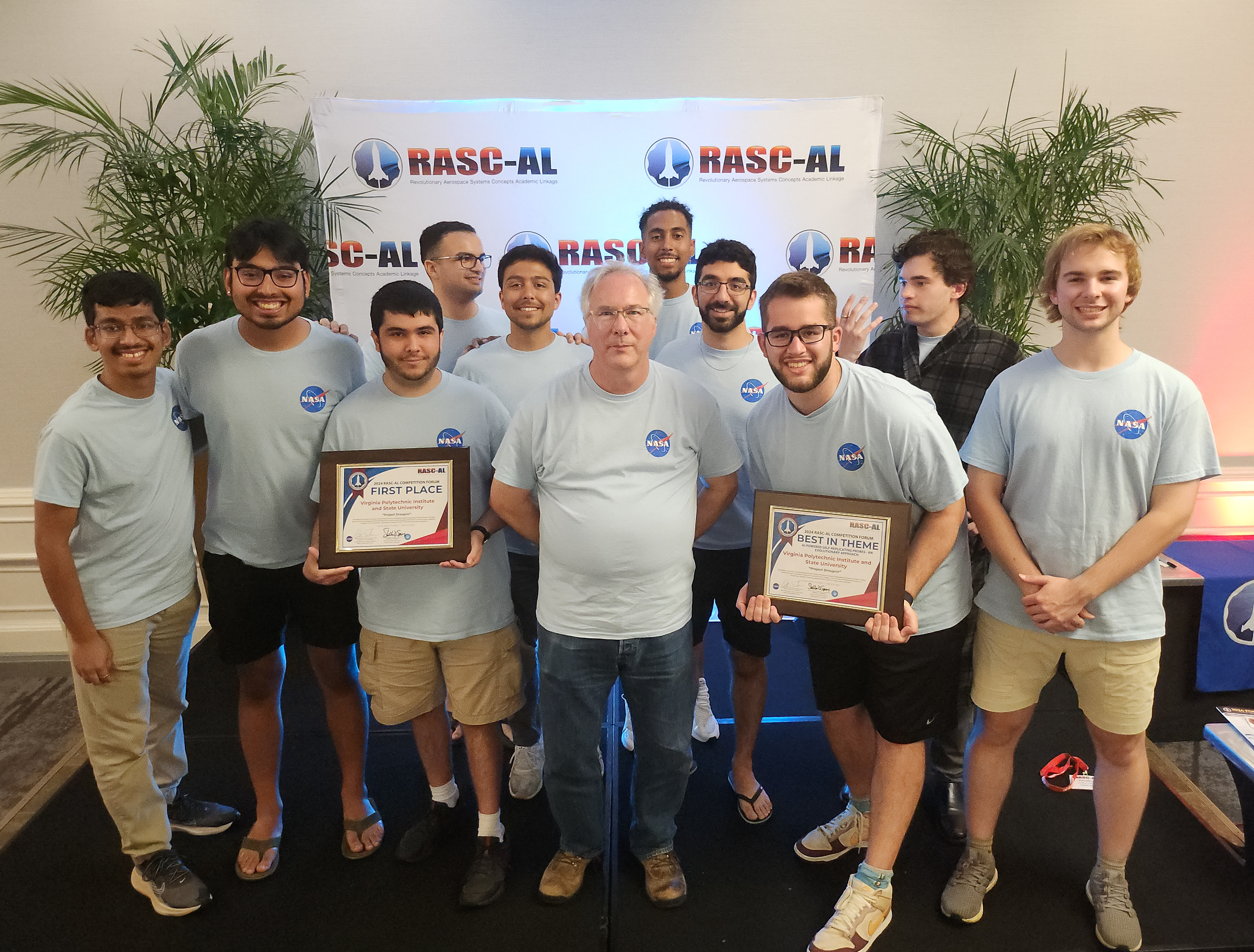
The Virginia Tech team, winners of first place overall in the RASC-AL 2024 competition.
NASA

Out of 14 finalist teams that encompassed collegiate and university representation from across the globe, the Virginia Polytechnic Institute and State University team with their concept, “Project Draupnir,” in the AI-Powered Self-Replicating Probe theme, took home top prize in NASA’s Revolutionary Aerospace Systems Concepts – Academic Linkage (RASC-AL) competition.  

The University of Maryland took second place overall for their concept, “SITIS: Subsurface Ice and Terrain In-situ Surveyor,” while South Dakota State University took third place overall with “POSEID-N: Prospecting Observation System for Exploration, Investigation, Discovery, and Navigation,” both in the Large-Scale Lunar Crater Prospector theme.  

The first and second place overall winning teams will receive a travel stipend to present their work at the 2024 AIAA Accelerating Space Commerce, Exploration, and New Discovery (ASCEND) Conference in Las Vegas, Nevada in July. 

The University of Maryland team, winners of second place overall in the RASC-AL 2024 competition pose for a photo.
The University of Maryland team, winners of second place overall in the RASC-AL 2024 competition.
NASA

In its 23rd year, RASC-AL is one of NASA’s longest running higher education competitions.  

“It’s an engaging engineering design challenge that fosters collaboration, innovation, and hard work. Finalist teams also enjoy the comradery and networking opportunities at our annual forum in Cocoa Beach, Florida,” said Pat Troutman, program assistant, technical for NASA’s Strategy and Architecture Office. “Each year, the competition grows as more and more students want to contribute to NASA’s mission of improving humanity’s ability to operate on the Moon, Mars and beyond.”  

The forum is attended by NASA and industry subject matter experts who judge the presentations and offer valuable feedback. New this year, RASC-AL teams based in the United States were encouraged to work with universities from countries that have signed The Artemis Accords – a set of principles designed to guide civil space exploration and use in the 21st century. 

Finalist teams responded to one of four themes, ranging from developing large-scale lunar surface architectures enabling long-term off-world habitation, to designing new systems that leverage in-situ resources for in-space travel and exploration. 

The South Dakota State team, winners of third place overall in the RASC-AL 2024 competition pose for a photo.
The South Dakota State team, winners of third place overall in the RASC-AL 2024 competition.
NASA

Additional 2024 Forum awards include: 

Best in Theme: 

  • AI-Powered Self-Replicating Probes – an Evolutionary Approach: Virginia Polytechnic Institute and State University, “Project Draupnir” 
  • Large-Scale Lunar Crater Prospector: University of Maryland, “SITIS: Subsurface Ice and Terrain In-situ Surveyor” 
  • Sustained Lunar Evolution: University of Puerto Rico, Mayaguez, “Permanent Outpost Lunar Architecture for Research and Innovative Services (POLARIS)” 
  • Long Duration Mars Simulation at the Moon: Massachusetts Institute of Technology (MIT) with École Polytechnique Fédérale de Lausanne (EPFL) and the National Higher French Institute of Aeronautics and Space (ISAE-SUPAERO), “MARTEMIS: Mars Architecture Research using Taguchi Experiments on the Moon with International Solidarity” 

Other Awards: 

  • Best Prototype: South Dakota State University, “POSEID-N: Prospecting Observation System for Exploration, Investigation, Discovery, and Navigation” 

RASC-AL is open to undergraduate and graduate students studying disciplines related to human exploration, including aerospace, bio-medical, electrical, and mechanical engineering, and life, physical, and computer sciences. RASC-AL projects allow students to incorporate their coursework into space exploration objectives in a team environment and help bridge strategic knowledge gaps associated with NASA’s vision. Students have the opportunity to interact with NASA officials and industry experts and develop relationships that could lead to participation in other NASA student research programs.  

RASC-AL is sponsored by the Strategies and Architectures Office within the Exploration Systems Development Mission Directorate at NASA Headquarters, and by the Space Mission Analysis Branch within the Systems Analysis and Concepts Directorate at NASA Langley. It is administered by the National Institute of Aerospace.  

For more information about the RASC-AL competition, including complete theme and submission guidelines, visit: http://rascal.nianet.org

Share

Details

Last Updated

Jun 13, 2024

Powered by WPeMatico

Get The Details…
Angelique Herring

‘NASA in the Park’ Returns to Rocket City June 22

‘NASA in the Park’ Returns to Rocket City June 22

2 min read

Preparations for Next Moonwalk Simulations Underway (and Underwater)

Credits: Downtown Huntsville Inc.

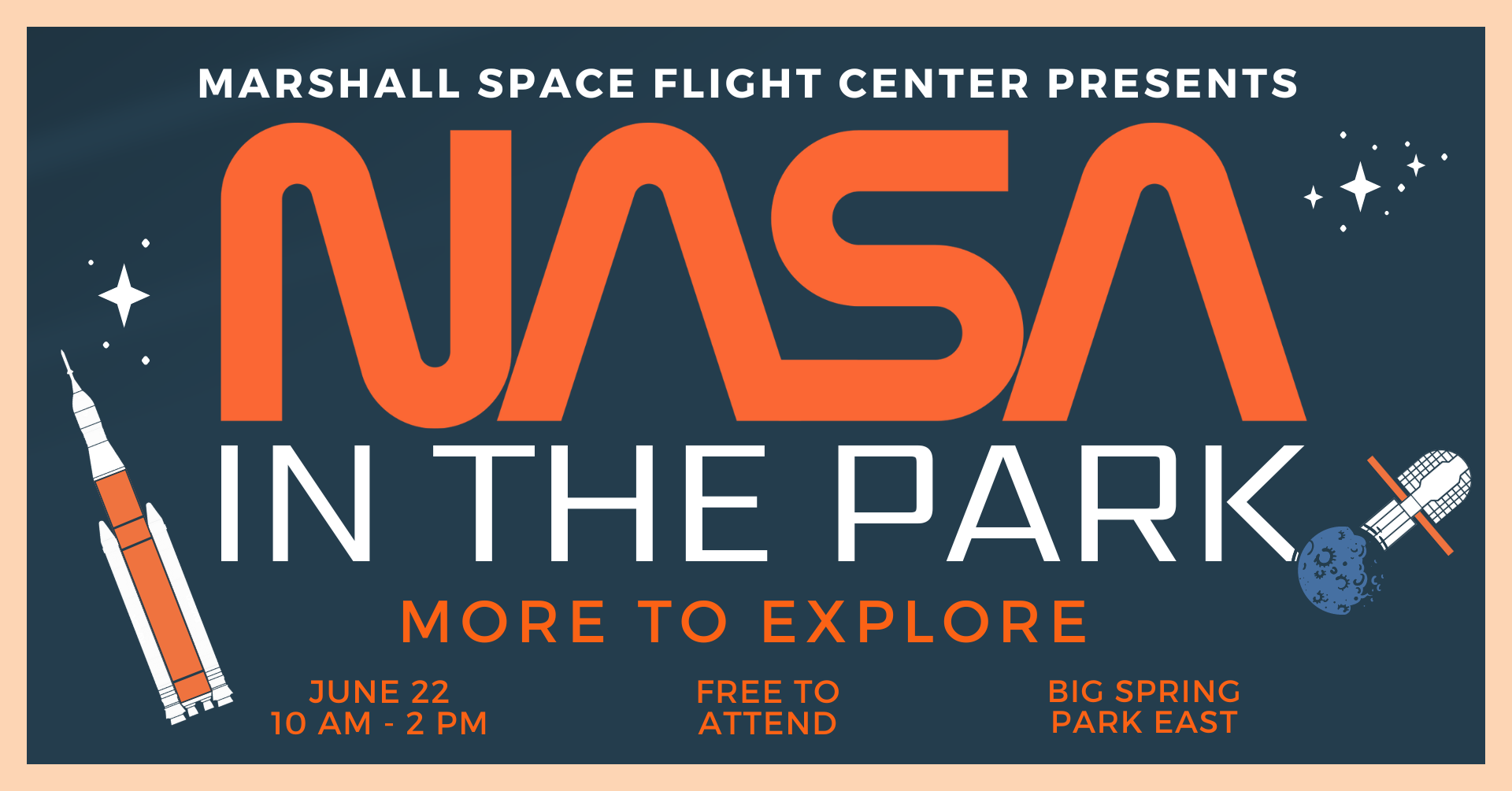
NASA in the Park is coming back to Big Spring Park East in Huntsville, Alabama, on Saturday, June 22, from 10 a.m. to 2 p.m. CDT. The event is free and open to the public.

NASA’s Marshall Space Flight Center, its partners, and collaborators will fill the park with space exhibits, music, food vendors, and hands-on activities for all ages. Marshall is teaming up with Downtown Huntsville Inc. for this unique celebration of space and the Rocket City.

“NASA in the Park gives us the opportunity to bring our work outside the gates of Redstone Arsenal and thank the community for their continuing support,” Marshall Director Joseph Pelfrey said. “It’s the first time we’ve held the event since 2018, and we look forward to sharing this experience with everyone.”

Pelfrey will kick the event off with local leaders on the main stage. NASA speakers will spotlight topics ranging from space habitats to solar sails, and local rock band Five by Five will perform throughout the day.

“NASA Marshall is leading the way in this new era of space exploration, for the benefit of all humankind,” Pelfrey said. “We are proud members of the Rocket City community, which has helped us push the boundaries of science, technology, and engineering for nearly 65 years.”

To learn more about Marshall, visit:

www.nasa.gov/marshall

Molly Porter
Marshall Space Flight Center
256-424-5158
molly.a.porter@nasa.gov

Share

Details

Last Updated

Jun 13, 2024

Powered by WPeMatico

Get The Details…
Beth Ridgeway

Sea Ice Swirls

Sea Ice Swirls

A satellite view of sea ice. The ice is white and solid at top left, while the edges swirl and swoop through the dark blue water.
NASA/Wanmei Liang, using MODIS data from NASA EOSDIS LANCE and GIBS/Worldview

NASA’s Terra satellite captured floating fragments of sea ice as ocean currents carried them south along Greenland’s east coast on June 4, 2024.

This ice traveled from the Fram Strait, a 450-kilometer (280-mile)-wide passage between Greenland and Svalbard, to the Arctic Ocean. Along the journey, it breaks into smaller pieces and starts to melt in warmer ocean waters, creating the wispy patterns seen here.

Learn more about Arctic sea ice.

Image Credit: NASA/Wanmei Liang, using MODIS data from NASA EOSDIS LANCE and GIBS/Worldview

Powered by WPeMatico

Get The Details…
Monika Luabeya