NASA Awards Intuitive Machines Lunar South Pole Research Delivery

NASA Awards Intuitive Machines Lunar South Pole Research Delivery

An artist’s concept of Intuitive Machines’ Nova-C lunar lander on the Moon’s South Pole.
Credit: Intuitive Machines

A new set of NASA science experiments and technology demonstrations will arrive at the lunar South Pole in 2027 following the agency’s latest CLPS (Commercial Lunar Payload Services) initiative delivery award. Intuitive Machines of Houston will receive $116.9 million to deliver six NASA payloads to a part of the Moon where nighttime temperatures are frigid, the terrain is rugged, and the permanently shadowed regions could help reveal the origin of water throughout our solar system.

Part of the agency’s broader Artemis campaign, CLPS aims to conduct science on the Moon for the benefit of all, including experiments and demos that support missions with crew on the lunar surface.

“This marks the 10th CLPS delivery NASA has awarded, and the fourth planned for delivery to the South Pole of the Moon,” said Joel Kearns, deputy associate administrator for exploration, Science Mission Directorate, NASA Headquarters in Washington. “By supporting a robust cadence of CLPS flights to a variety of locations on the lunar surface, including two flights currently planned by companies for later this year, NASA will explore more of the Moon than ever before.”

NASA has awarded Intuitive Machine’s four task orders. The company delivered six NASA payloads to Malapert A in the South Pole region of the Moon in early 2024. With this lunar South Pole delivery, Intuitive Machines will be responsible for payload integration, launch from Earth, safe landing on the Moon, and mission operations.

“The instruments on this newly awarded flight will help us achieve multiple scientific objectives and strengthen our understanding of the Moon’s environment,” said Chris Culbert, manager of the CLPS initiative at NASA’s Johnson Space Center in Houston. “For example, they’ll help answer key questions about where volatiles – such as water, ice, or gas – are found on the lunar surface and measure radiation in the South Pole region, which could advance our exploration efforts on the Moon and help us with continued exploration of Mars.”

The instruments, collectively expected to be about 174 pounds (79 kilograms) in mass, include:

  • The Lunar Explorer Instrument for Space Biology Applications will deliver yeast to the lunar surface and study its response to radiation and lunar gravity. The payload is managed by NASA’s Ames Research Center in Silicon Valley, California.
  • Package for Resource Observation and In-Situ Prospecting for Exploration, Characterization and Testing is a suite of instruments that will drill down to 3.3 feet (1 meter) beneath the lunar surface, extract samples, and process them in-situ in a miniaturized laboratory, to identify possible volatiles (water, ice, or gas) trapped at extremely cold temperatures under the surface. This suite is led by ESA (European Space Agency). 
  • The Laser Retroreflector Array is a collection of eight retroreflectors that will enable lasers to precisely measure the distance between a spacecraft and the reflector on the lander. The array is a passive optical instrument and will function as a permanent location marker on the Moon for decades to come. The retroflector array is managed by NASA’s Goddard Space Flight Center in Greenbelt, Maryland. 
  • The Surface Exosphere Alterations by Landers will investigate the chemical response of lunar regolith to the thermal, physical, and chemical disturbances generated during a landing, and evaluate contaminants injected into the regolith by the lander. It will give insight into how a spacecraft landing might affect the composition of samples collected nearby. This payload is managed by NASA Goddard.
  • The Fluxgate Magnetometer will characterize certain magnetic fields to improve the understanding of energy and particle pathways at the lunar surface and is managed by NASA Goddard.
  • The Lunar Compact Infrared Imaging System will deploy a radiometer – a device that measures infrared wavelengths of light – to explore the Moon’s surface composition, map its surface temperature distribution, and demonstrate the instrument’s feasibility for future lunar resource utilization activities. The imaging system is managed by the Laboratory for Atmospheric and Space Physics at the University of Colorado at Boulder.

Under CLPS, multiple commercial deliveries to different geographic regions will help NASA conduct science and continue working toward a long-term human presence on the Moon. Future deliveries will include sophisticated science experiments, and technology demonstrations as part of the agency’s Artemis campaign. Two upcoming CLPS flights slated to launch near the end of 2024 will deliver NASA payloads to the Moon’s nearside and South Pole, including the Intuitive Machines-2 delivery of NASA’s first on-site demonstration of searching for water and other chemical compounds 3.3 feet below the surface of the Moon, using a drill and mass spectrometer.

Learn more about CLPS and Artemis at:

https://www.nasa.gov/clps

-end-

Karen Fox
Headquarters, Washington
202-358-1275
karen.c.fox@nasa.gov

Laura Sorto / Natalia Riusech      
Johnson Space Center, Houston
281-483-5111
laura.g.sorto@nasa.gov / natalia.s.riusech@nasa.gov

Powered by WPeMatico

Get The Details…
Tiernan P. Doyle

NASA Leaders Tour Ames Campus, Meet with Employees

NASA Leaders Tour Ames Campus, Meet with Employees

1 min read

Preparations for Next Moonwalk Simulations Underway (and Underwater)

NASA Deputy Associate Administrator Casey Swails examines a sample of algae through a microscope in the Space Biosciences Research Lab. Swails, alongside Director of Cross Agency Strategy Integration John Keefe and Associate Administrator Jim Free, toured the NASA Ames campus on Aug. 28.
NASA/Donald Richey

NASA Associate Administrator Jim Free, Deputy Associate Administrator Casey Swails, and Director of Cross-Agency Strategy John Keefe visited NASA’s Ames Research Center in California’s Silicon Valley on Aug. 28. The visit was an opportunity for the leaders to meet with center leadership and tour multiple Ames facilities. Free, Swails, and Keefe also met with employees to discuss NASA 2040, a strategic agency initiative aimed at driving meaningful changes that will allow the agency to realize its long-term vision for what leaders and employees want the agency to be in 2040 and beyond.

During their tour, researchers at the Space Biosciences Research Lab presented on innovative projects like the Lunar Explorer Instrument for space biology Applications, an instrument that will study how yeast reacts to the lunar environment. The three leaders also learned about innovative wildfire research and other projects that seek to advance space exploration through scientific discoveries and technical developments.

The group ended their tour by visiting NASA Research Park tenants like the USGS National Innovation Center, and viewing the proposed future site of the UC Berkeley Space Center, a 36-acre campus and innovation hub for research and advancements in aeronautics, quantum computing, climate studies, social sciences, and more.

Share

Details

Last Updated

Aug 29, 2024

Related Terms

Powered by WPeMatico

Get The Details…
Tara Friesen

NASA Celebrates 25 Years of High School Aerospace Scholars

NASA Celebrates 25 Years of High School Aerospace Scholars

For 25 years, the Office of STEM Engagement (OSTEM) at NASA’s Johnson Space Center has inspired and provided high school students across the state of Texas with NASA-focused learning experiences through the High School Aerospace Scholars (HAS) program. The OSTEM team celebrated the milestone on Monday, July 29 at Johnson’s Gilruth Center with poster sessions, special presentations, and a networking reception.

The 2024 High School Aerospace Scholars at Johnson Space Center.
Fifty-one students who participated in the 2024 High School Aerospace Scholars program were invited to NASA’s Johnson Space Center in Houston to participate in an on-site experience.
NASA/James Blair

An authentic STEM learning experience for Texas high school juniors, HAS provides opportunities for students to engage with NASA’s missions and become the next generation of explorers. The year-long program begins in the fall with an online, state-aligned STEM learning experience focused on Earth science, technology, aeronautics, the solar system, the International Space Station, and NASA’s Moon to Mars exploration approach. Students engage in approximately four months of virtual learning through curriculum including interactive lessons, rubric-based activities, and quizzes.

Students who complete the online courses with an overall average of 70% or greater receive an invitation to a five-day virtual summer experience called Moonshot. While actively mentored by NASA scientists and engineers, students work with a team to complete an Artemis-themed Moon to Mars mission and design challenge. The summer session also includes numerous gamified activities and guidance towards pathways to STEM careers.

2024 High School Aerospace Scholars complete an engineering challenge.
High School Aerospace Scholars collaborated on an engineering design challenge during their on-site experience at Johnson Space Center.
NASA/Bill Stafford

The top performing Moonshot teams are then invited to a four-day residential experience at Johnson, with lodging, meals, and transportation provided at no cost to the students. During the on-site session, students participate in NASA facility tours, complete engineering design challenges, and meet with NASA scientists and engineers who offer guidance on STEM careers. At the completion of the program, students can earn up to one full science elective credit for school.

The HAS 25th anniversary celebration coincided with this year’s on-site experience. During the 2023-2024 school year, 798 students participated in the HAS online course, with 359 advancing to the summer Moonshot experience. The top six Moonshot teams (51 students) were invited to Johnson.

A High School Aerospace Scholar presents a project during a poster session.
High School Aerospace Scholars presented their Moonshot projects to Johnson Space Center team members during a poster session.
NASA/James Blair

The 51 selected students kicked off the anniversary celebration with a poster session to present their Moonshot projects. Following the session, students heard from Johnson Center Director Vanessa Wyche and Deputy Director Steve Koerner during a fireside chat. Speakers included Pam Melroy, NASA Deputy Administrator; Arturo Sanchez, Johnson External Relations Office Director; Mike Kincaid, NASA OSTEM Associate Administrator; Greg Bonnen, member of the Texas House of Representatives; Brian Freedman, Bay Area Houston Economic Partnership President; and Shelly Tornquist, director of Texas A&M University College of Engineering’s education outreach program, Spark!

A NASA astronaut speaks to a group of high school students.
NASA astronaut Mike Fincke meets with 2024 High School Aerospace Scholars.
NASA/Helen Arase Vargas

Other notable attendees included NASA astronaut Mike Fincke, HAS activity managers from the past 25 years, and current HAS activity manager, Jakarda Varnado.

Continuing the celebration, HAS hosted the second annual Alumni Social on Wednesday, July 31 encouraging current and former HAS students and mentors to connect over lunch. The annual student rocket launch was also held onsite on Thursday, August 1.

High school students prepare model rockets for launch.
2024 High School Aerospace Scholars prepare their model rockets for launch during the program’s on-site activities at Johnson Space Center.
NASA/Josh Valcarcel

Additionally, the HAS team activated a mobile exhibit at two different on-site locations throughout the week. Over 150 guests stopped by the exhibit, which featured a HAS video montage and the opportunity to touch a lunar sample. Several of the visitors communicated their appreciation for HAS, noting the program has made significant impact on their children’s motivation, school performance, and career paths. Many alumni have gone on to pursue careers within STEM, including nearly 30 HAS participants who have been employed by NASA within the past five years.

High school students meet and network with NASA employees in a Johnson Space Center cafeteria.
2024 High School Aerospace Scholars connected with program alumni and HAS mentors during the Alumni Social held onsite at Johnson Space Center.
NASA/Helen Arase Vargas

For alumni who wish to continue their experience beyond the year-long program, HAS recently launched a mentorship course, for high school seniors. The course contains modules about leadership and STEM career opportunities and was designed to continue to engage the students as they prepare for the next step in their education or to launch their careers. Alumni also act as an additional layer of support for the junior scholars as they navigate their HAS experience.

HAS is made possible through collaborations among NASA, the State of Texas, Bay Area Houston Economic Partnership, Texas A&M Engineering Experiment Station, Houston Livestock Show and Rodeo, and Rotary National Award for Space Achievement.

Applications will reopen in September for students interested in participating in the 2025 HAS experience.

Powered by WPeMatico

Get The Details…
Linda E. Grimm

NASA G-IV Plane Will Carry Next-Generation Science Instrument

NASA G-IV Plane Will Carry Next-Generation Science Instrument

2 min read

Preparations for Next Moonwalk Simulations Underway (and Underwater)

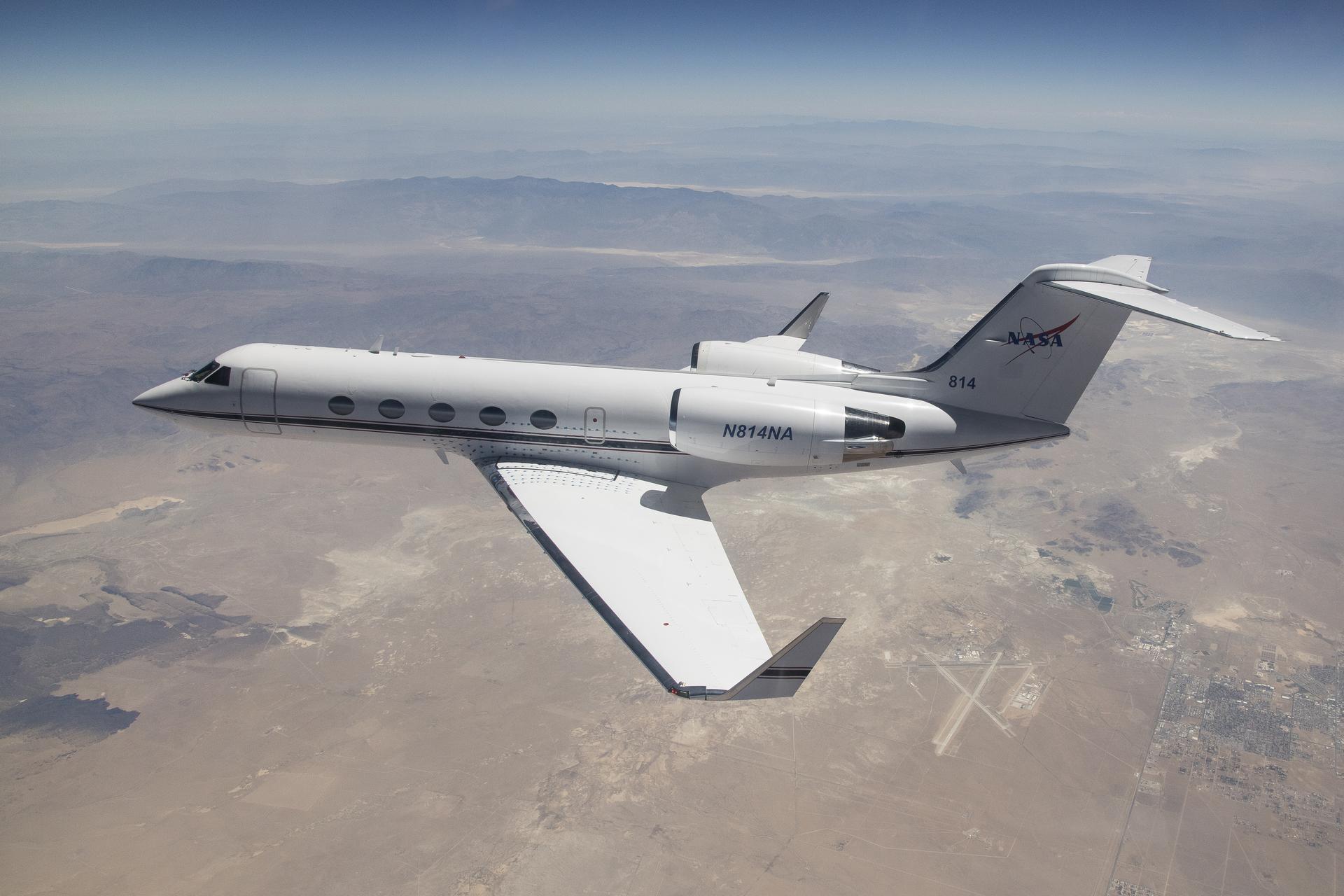
A white Gulfstream IV airplane flies to the left of the frame over a tan desert landscape below and blue mountain ranges in the back of the image. The plane’s tail features the NASA logo, and its wings have winglets. Visible in the lower right third of the image, directly behind the airplane’s wingtip is the Mojave Air and Space Port in Mojave, California. 
In a series of baseline flights beginning on June 24, 2024, the G-IV aircraft flew over the Antelope Valley to analyze aircraft performance. To accommodate a new radar instrument developed by JPL, NASA’s Airborne Science Program has selected the Gulfstream-IV aircraft to be modified and operated by Armstrong Flight Research Center in Edwards, California and will accommodate new instrumentation on board in support of the agency’s science mission directorate. Baseline flights began at NASA Armstrong in June 2024
NASA/Carla Thomas

In June 2024, a new tail number swept the sky above NASA’s Armstrong Flight Research Center in Edwards, California. Pilots conducted flights of a Gulfstream IV (G-IV) to evaluate its handling characteristics and to familiarize pilots with it before it begins structural modifications. The research plane is joining the center’s fleet serving NASA’s Airborne Science program. 

The G-IV will carry the Next Generation Airborne Synthetic Aperture Radar (AIRSAR-NG), which sends and receives microwave signals to collect information about Earth’s topographic features and how they change over time. The goal for the team at NASA Armstrong is to modify the G-IV to accommodate three radars simultaneously.

“The AIRSAR-NG will be composed of three different Synthetic Aperture Radar antennas in one instrument to provide new insight into Earth’s surface more efficiently,” said Yunling Lou, principal investigator for the instrument at NASA’s Jet Propulsion Laboratory in Southern California. “The capabilities of this new instrument will facilitate new techniques, such as three-dimensional imaging, that will be useful for future space-borne missions.”

With those and other modifications being made, the G-IV will also be able to accommodate an increased load of science instruments, which could enable NASA to support more dynamic airborne science missions. 

“This aircraft will aid Armstrong in continuing our long history of supporting airborne science for the agency and maintain the expertise in conducting successful science missions for years to come,” said Franzeska Becker, the G-IV project manager at NASA Armstrong.

Transferred in February from NASA’s Langley Research Center in Hampton, Virginia, the G-IV will undergo additional modifications overseen by NASA Armstrong’s team. Their goal is to enrich the agency’s airborne science program by outfitting the aircraft to function as a more capable and versatile research platform.

The knowledge and expertise of professionals at NASA centers like Armstrong (G-IV, ER-2, C-20) and Langley (777, G-III) will help enable the agency to produce a well-defined and airworthy platform for science instruments and airborne science missions.

Share

Details

Last Updated

Aug 29, 2024

Editor
Dede Dinius
Contact
Erica Heim

Powered by WPeMatico

Get The Details…
Dede Dinius

Saharan Dust in the Wind

Saharan Dust in the Wind

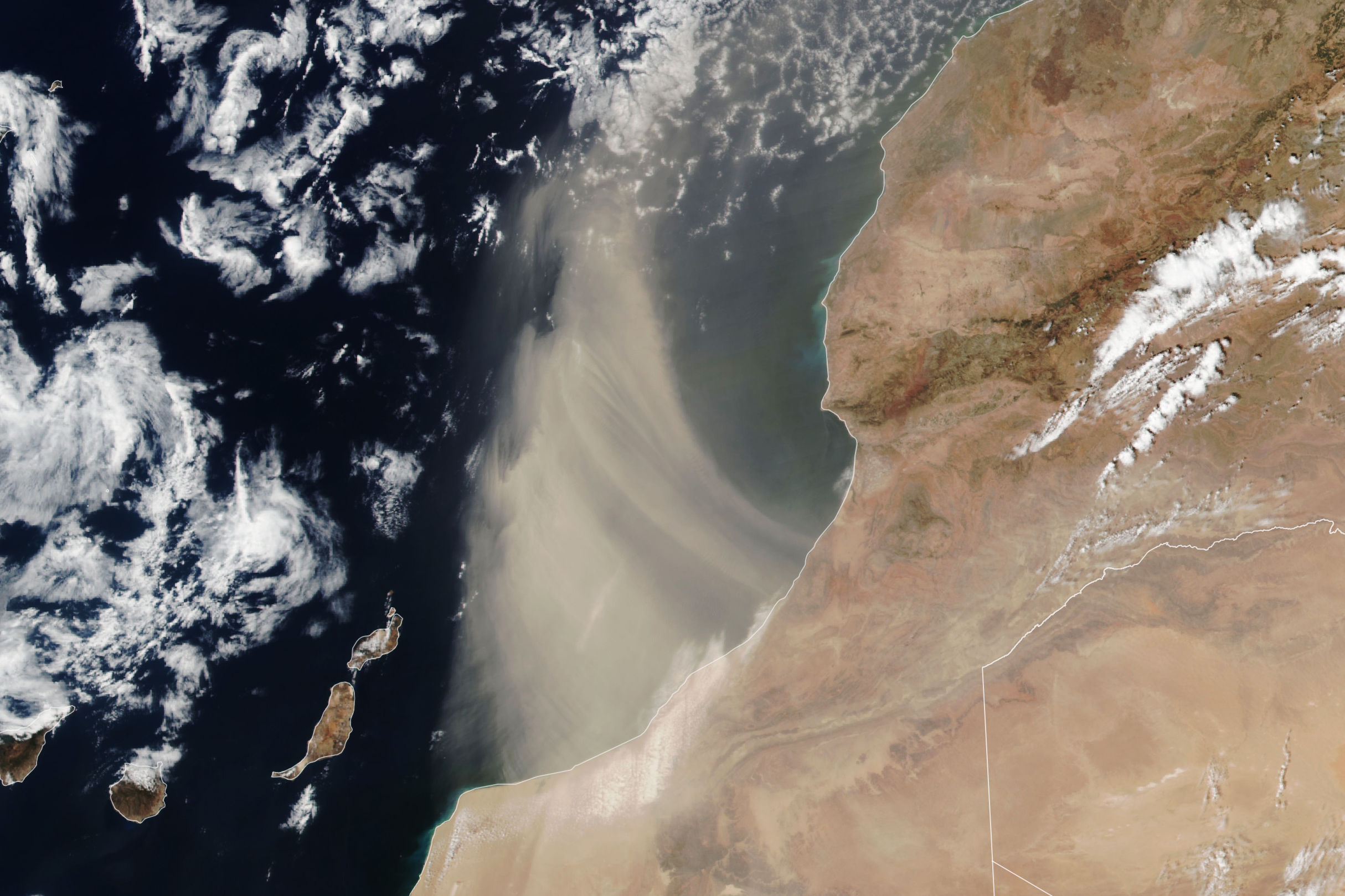
At center, light brown sand wafts over the dark blue ocean. Some white clouds are over the ocean at left and a brown land mass is on the right.
NASA Earth Observatory image by Lauren Dauphin, using VIIRS data from NASA EOSDIS LANCE, GIBS/Worldview, and the Suomi National Polar-orbiting Partnership

The Suomi NPP satellite acquired this image of a plume of Saharan dust as winds lofted it over the Atlantic Ocean on Aug. 24, 2024.

The Sahara Desert is Earth’s largest source of airborne dust, and the particles can travel for thousands of miles. From late spring to early fall, it is common for the dry, dusty Saharan Air Layer to carry the particles westward across the Atlantic Ocean high in the atmosphere. Saharan Air Layer activity subsides after mid-August, according to NOAA, making it less likely that the plume shown here is bound for a transoceanic journey. Instead, it arcs to the north after blowing out over the ocean. Earlier in the summer, however, several clouds of fine dust from the Sahara reached the United States, creating hazy skies over Texas.

Read more about Saharan dust and why it’s interesting to scientists.

Text Credit: Lindsey Doermann

Image Credit: NASA/Lauren Dauphin, using VIIRS data from NASA EOSDIS LANCE, GIBS/Worldview, and the Suomi National Polar-orbiting Partnership

Powered by WPeMatico

Get The Details…
Monika Luabeya