Robotic Assembly and Outfitting for NASA Space Missions

Robotic Assembly and Outfitting for NASA Space Missions

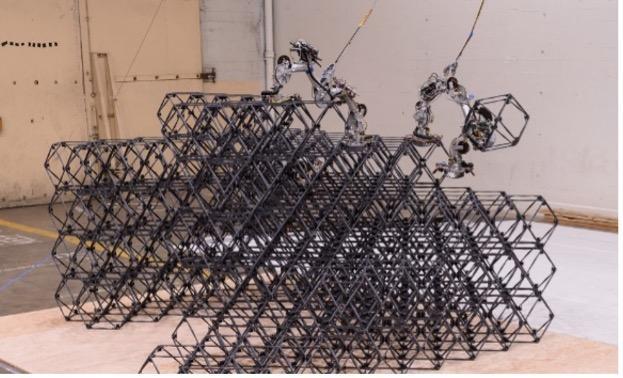
NASA is turning to the 3D modeling experts in the community for ideas and designs to use or enhance the current state of modular robotic construction techniques. Robotic building of structures in space is an active area of research for NASA and might prove to be a path towards sustainable and scalable space exploration. This technology is essential for establishing critical long-term orbital and Lunar surface infrastructure including power/communication towers, research stations, radiation shielding for habitats, and more.

Award: $2,000 in total prizes

Open Date: July 15, 2024

Close Date: September 9, 2024

For more information, visit: https://grabcad.com/challenges/robotic-assembly-and-outfitting-for-nasa-space-missions

Powered by WPeMatico

Get The Details…
Sarah Douglas

Sols 4243-4245: Exploring Stubblefield Canyon

Sols 4243-4245: Exploring Stubblefield Canyon

3 min read

Sols 4243-4245: Exploring Stubblefield Canyon

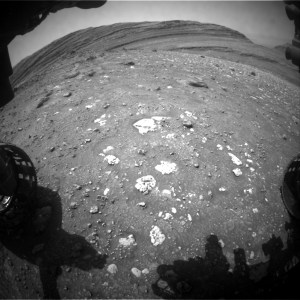
This image was taken by Left Navigation Camera onboard NASA’s Mars rover Curiosity on Sol 4241 (2024-07-11 20:34:05 UTC).

Earth planning date: Friday, July 12, 2024

Curiosity, now heading uphill from the Mammoth Lakes drill site, has focused on a very interesting exposure of conglomerate rocks, consisting of pebbles cemented together by a fine-grained matrix material. On Earth, conglomerate rock is associated with downhill flows of rock and soil mixtures, often in a water-rich environment, so our science team is excited to find similar rocks on Mars. 

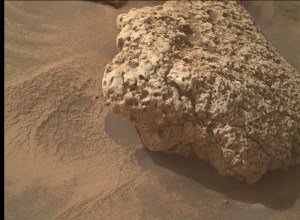
The local exposure of this unusual Martian deposit has been named “Stubblefield Canyon,” honoring the headwaters of the stream forming Rancheria Falls, which tumbles into Yosemite National Park’s Hetch Hetchy reservoir. All targets in this area of Mount Sharp are named after geological features near the town of Bishop, California, which sits at the foot of the Sierra Nevada mountains in the Owens Valley of California. Curiosity’s last drive ended at a detached, rubbly conglomerate slab, dubbed “Wishbone Lake” after a Y-shaped lake in upper Lamarck Lake Canyon near Mono Lake. The image above shows the Wishbone Lake slab of conglomerate rock in the rover workspace. Over the weekend, the team will investigate this target and image the surrounding terrain, collecting evidence about the formation of conglomerate rocks on Mars.

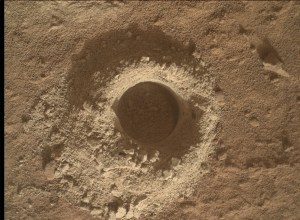
On Wednesday, Curiosity successfully completed its MAHLI imaging of “Donohue Pass” and ChemCam laser spectroscopy of “Negit Island,” followed by a 3-meter drive (about 10 feet) to Wishbone Lake. During the current plan, APXS will analyze two pebbles within the Wishbone Lake slab, “Arrowhead Spire” and “Cattle Creek.” Arrowhead Spire honors a 100-foot vertical spike of granite near Yosemite Point, above Yosemite Valley. Cattle Creek is named for a stream that flows from a hanging valley into the Twin Lakes canyon near Bridgeport, California. MAHLI will image Cattle Creek, then do a 4×1 mosaic from a distance of 25 centimeters (about 10 inches) along the edges of Wishbone Lake, centered on the Arrowhead Spire pebble. ChemCam will take laser spectra of Arrowhead Spire, as well as the “Eocene Peak” matrix material target, named for an 11,500-foot peak in the Sawtooth Ridge along the northeastern boundary of Yosemite National Park.

Using its telescopic RMI camera, ChemCam will image upper Gediz Vallis Ridge and a distant ridgeline along our future drive path. Mastcam will photograph the ChemCam laser targets, as well as interesting portions of the Stubblefield Canyon conglomerate exposure, the Mammoth Lakes drill site as seen from our new location, and an interesting linear ridge. On sol 4244, Curiosity will drive 20 meters (about 66 feet) along our path toward “Fairview Dome,” followed by post-drive imaging and AEGIS observations. Atmospheric studies during the current plan include a Navcam dust devil movie and large dust devil survey, early morning Navcam zenith and suprahorizon cloud movies, Navcam deck imaging, Navcam and Mastcam dust opacity measurements, and a late afternoon Mastcam sky survey. Next week, we expect to explore Fairview Dome, then resume our climb up Mount Sharp.

Written by Deborah Padgett, Curiosity Operations Product Generation Subsystem Task Lead at NASA’s Jet Propulsion Laboratory

Share

Details

Last Updated
Jul 16, 2024

Related Terms

Powered by WPeMatico

Get The Details…

Here’s How AI Is Changing NASA’s Mars Rover Science

Here’s How AI Is Changing NASA’s Mars Rover Science

6 min read

Preparations for Next Moonwalk Simulations Underway (and Underwater)

In this time-lapse video of a test conducted at JPL in June 2023, an engineering model of the Planetary Instrument for X-ray Lithochemistry (PIXL) instrument aboard NASA’s Perseverance Mars rover places itself against a rock to collect data.
NASA/JPL-Caltech

Artificial intelligence is helping scientists to identify minerals within rocks studied by the Perseverance rover.

Some scientists dream of exploring planets with “smart” spacecraft that know exactly what data to look for, where to find it, and how to analyze it. Although making that dream a reality will take time, advances made with NASA’s Perseverance Mars rover offer promising steps in that direction.

For almost three years, the rover mission has been testing a form of artificial intelligence that seeks out minerals in the Red Planet’s rocks. This marks the first time AI has been used on Mars to make autonomous decisions based on real-time analysis of rock composition.

PIXL Viewed on Mars
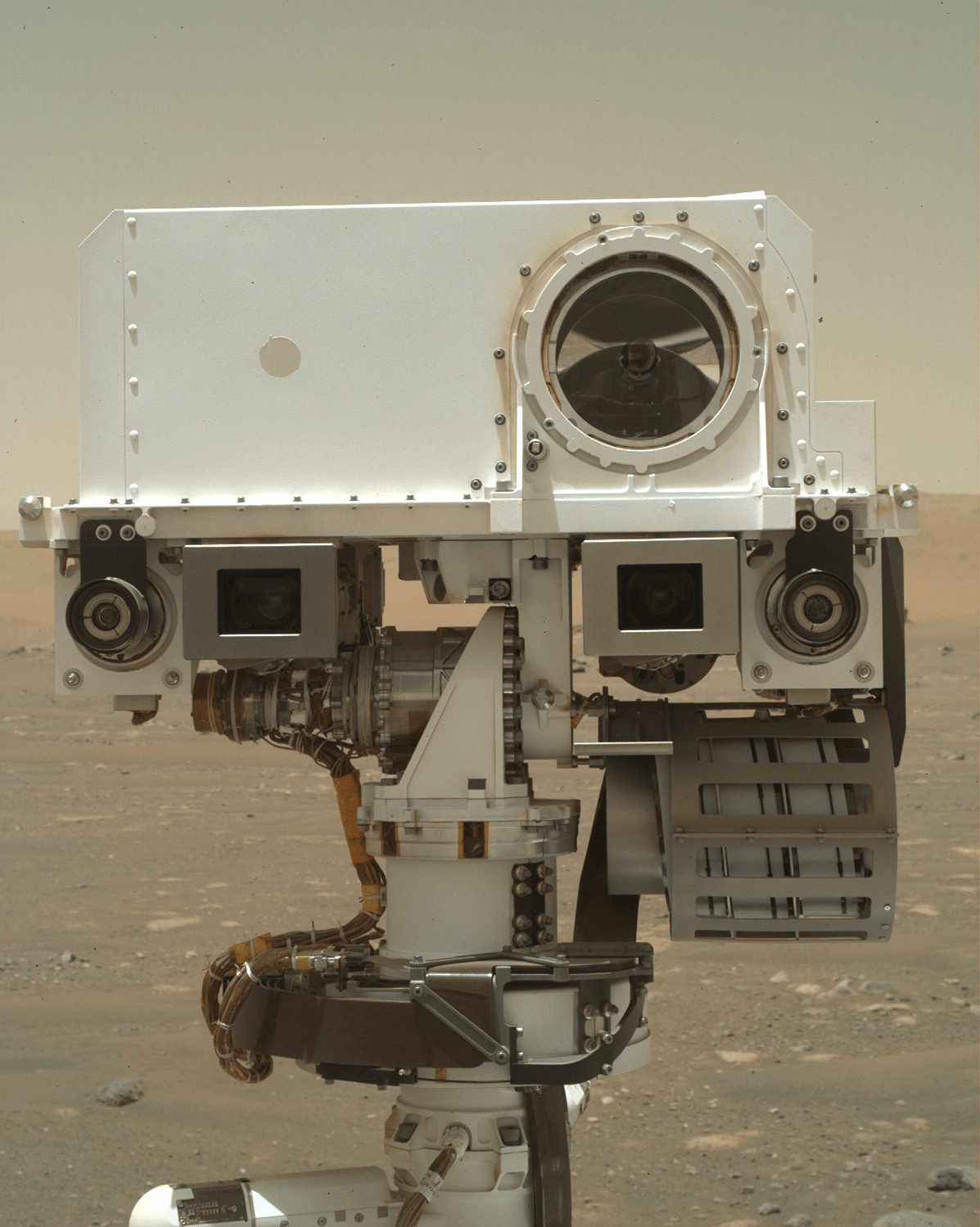
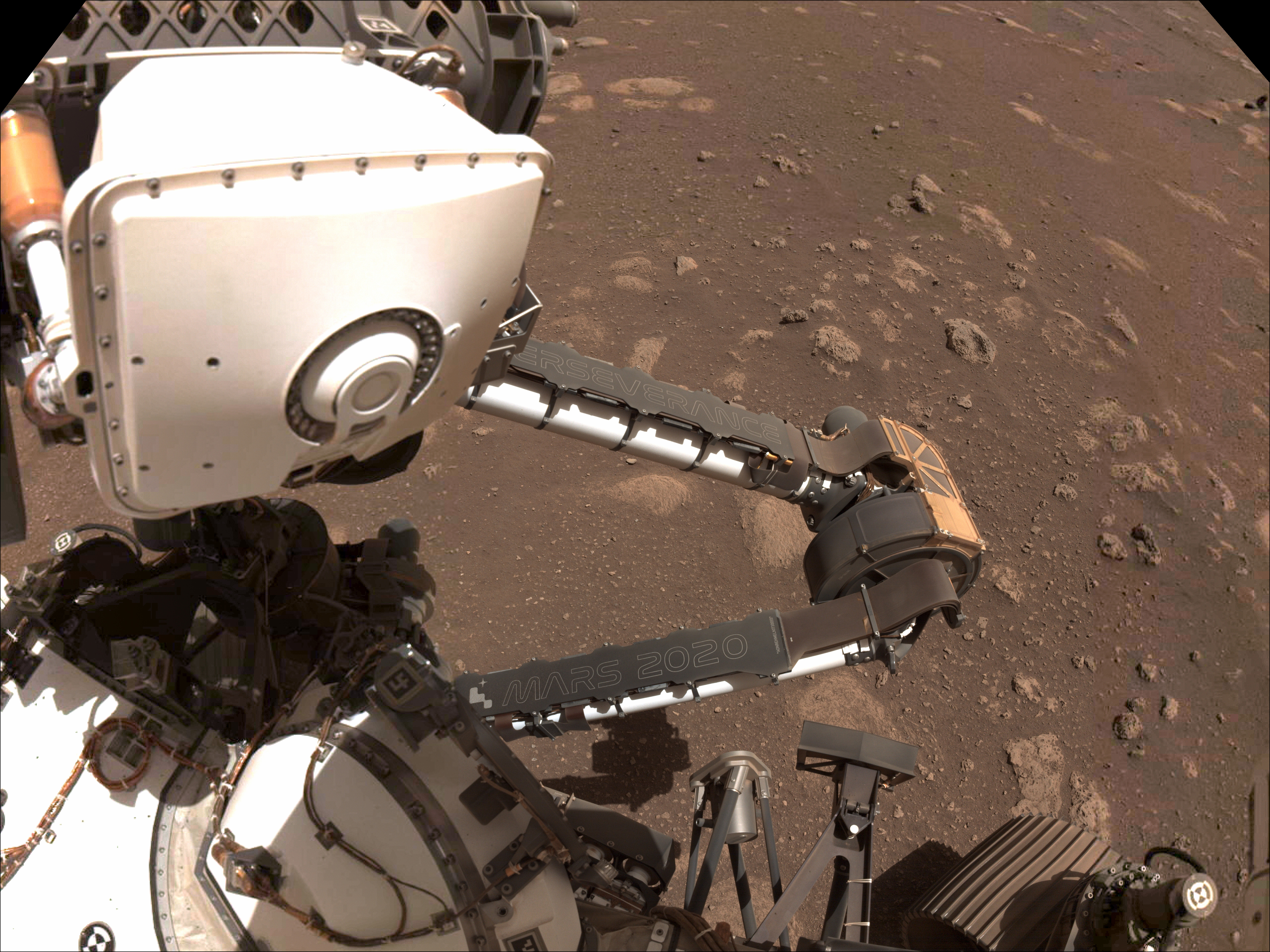
PIXL, the white instrument at top left, is one of several science tools located on the end of the robotic arm aboard NASA’s Perseverance rover. The Mars rover’s left navcam took the images that make up this composite on March 2, 2021
NASA/JPL-Caltech

The software supports PIXL (Planetary Instrument for X-ray Lithochemistry), a spectrometer developed by NASA’s Jet Propulsion Laboratory in Southern California. By mapping the chemical composition of minerals across a rock’s surface, PIXL allows scientists to determine whether the rock formed in conditions that could have been supportive of microbial life in Mars’ ancient past.

Called “adaptive sampling,” the software autonomously positions the instrument close to a rock target, then looks at PIXL’s scans of the target to find minerals worth examining more deeply. It’s all done in real time, without the rover talking to mission controllers back on Earth.

“We use PIXL’s AI to home in on key science,” said the instrument’s principal investigator, Abigail Allwood of JPL. “Without it, you’d see a hint of something interesting in the data and then need to rescan the rock to study it more. This lets PIXL reach a conclusion without humans examining the data.”

rock target nicknamed “Thunderbolt Peak”
This image of a rock target nicknamed “Thunderbolt Peak” was created by NASA’s Perseverance Mars rover using PIXL, which determines the mineral composition of rocks by zapping them with X-rays. Each blue dot in the image represents a spot where an X-ray hit.
NASA/JPL-Caltech/DTU/QUT

Data from Perseverance’s instruments, including PIXL, helps scientists determine when to drill a core of rock and seal it in a titanium metal tube so that it, along with other high-priority samples, could be brought to Earth for further study as part of NASA’s Mars Sample Return campaign.

Adaptive sampling is not the only application of AI on Mars. About 2,300 miles (3,700 kilometers) from Perseverance is NASA’s Curiosity, which pioneered a form of AI that allows the rover to autonomously zap rocks with a laser based on their shape and color. Studying the gas that burns off after each laser zap reveals a rock’s chemical composition. Perseverance features this same ability, as well as a more advanced form of AI that enables it to navigate without specific direction from Earth. Both rovers still rely on dozens of engineers and scientists to plan each day’s set of hundreds of individual commands, but these digital smarts help both missions get more done in less time.

“The idea behind PIXL’s adaptive sampling is to help scientists find the needle within a haystack of data, freeing up time and energy for them to focus on other things,” said Peter Lawson, who led the implementation of adaptive sampling before retiring from JPL. “Ultimately, it helps us gather the best science more quickly.”

Using AI to Position PIXL

AI assists PIXL in two ways. First, it positions the instrument just right once the instrument is in the vicinity of a rock target. Located at the end of Perseverance’s robotic arm, the spectrometer sits on six tiny robotic legs, called a hexapod. PIXL’s camera repeatedly checks the distance between the instrument and a rock target to aid with positioning.

Temperature swings on Mars are large enough that Perseverance’s arm will expand or contract a microscopic amount, which can throw off PIXL’s aim. The hexapod automatically adjusts the instrument to get it exceptionally close without coming into contact with the rock.

“We have to make adjustments on the scale of micrometers to get the accuracy we need,” Allwood said. “It gets close enough to the rock to raise the hairs on the back of an engineer’s neck.”

Making a Mineral Map

Once PIXL is in position, another AI system gets the chance to shine. PIXL scans a postage-stamp-size area of a rock, firing an X-ray beam thousands of times to create a grid of microscopic dots. Each dot reveals information about the chemical composition of the minerals present.

Minerals are crucial to answering key questions about Mars. Depending on the rock, scientists might be on the hunt for carbonates, which hide clues to how water may have formed the rock, or they may be looking for phosphates, which could have provided nutrients for microbes, if any were present in the Martian past.

There’s no way for scientists to know ahead of time which of the hundreds of X-ray zaps will turn up a particular mineral, but when the instrument finds certain minerals, it can automatically stop to gather more data — an action called a “long dwell.” As the system improves through machine learning, the list of minerals on which PIXL can focus with a long dwell is growing.

“PIXL is kind of a Swiss army knife in that it can be configured depending on what the scientists are looking for at a given time,” said JPL’s David Thompson, who helped develop the software. “Mars is a great place to test out AI since we have regular communications each day, giving us a chance to make tweaks along the way.”

When future missions travel deeper into the solar system, they’ll be out of contact longer than missions currently are on Mars. That’s why there is strong interest in developing more autonomy for missions as they rove and conduct science for the benefit of humanity.

More About the Mission

A key objective for Perseverance’s mission on Mars is astrobiology, including the search for signs of ancient microbial life. The rover will characterize the planet’s geology and past climate, pave the way for human exploration of the Red Planet, and be the first mission to collect and cache Martian rock and regolith (broken rock and dust).

Subsequent NASA missions, in cooperation with ESA (European Space Agency), would send spacecraft to Mars to collect these sealed samples from the surface and return them to Earth for in-depth analysis.

The Mars 2020 Perseverance mission is part of NASA’s Moon to Mars exploration approach, which includes Artemis missions to the Moon that will help prepare for human exploration of the Red Planet.

JPL, which is managed for NASA by Caltech in Pasadena, California, built and manages operations of the Perseverance rover.

For more about Perseverance:

mars.nasa.gov/mars2020/

News Media Contacts

Andrew Good
Jet Propulsion Laboratory, Pasadena, Calif.
818-393-2433
andrew.c.good@jpl.nasa.gov

Karen Fox / Alana Johnson
NASA Headquarters, Washington
202-358-1600 / 202-358-1501
karen.c.fox@nasa.gov / alana.r.johnson@nasa.gov

2024-099

Powered by WPeMatico

Get The Details…
Anthony Greicius

NASA Announces Leadership Changes

NASA Announces Leadership Changes

Two portrait images side by side. On the left is Clayton P. Turner, director of NASA Langley Research Center. On the right is Dawn Schaible, deputy director of NASA Glenn Research Center .
Clayton Turner, director of NASA’s Langley Research Center in Hampton, Virginia (left), and Dawn Schaible, deputy director of NASA’s Glenn Research Center in Cleveland (right).
Credit: NASA

NASA Administrator Bill Nelson announced Tuesday Dr. Kurt Vogel, associate administrator for the Space Technology Mission Directorate (STMD), is retiring from the agency. NASA Langley Research Center Director Clayton Turner will become the acting associate administrator for STMD, and NASA Glenn Research Center Deputy Director Dawn Schaible will become acting Langley center director. The changes are effective immediately, and for Turner and Schaible, these will be temporary assignments.  

“I’d like to thank Dr. Vogel for his service at NASA and wish him well in the future,” said Nelson. “Our Space Technology Mission Directorate and Langley Research Center are in good hands with Clayton and Dawn, and I look forward to continuing to work with them as we lead NASA into the future.”

Dr. Vogel has served as the head of STMD since January. Before leading STMD, Vogel served as director of space architectures and was chair of NASA’s Agency Cross-Directorate Federated Board. Vogel has more than 30 years of U.S. government service, primarily in the Defense Department, as a technical leader, senior program manager, and chief technologist.

Turner has been Langley’s center director since September 2019 and has served the agency for more than 30 years. He has held several roles at NASA Langley, including engineering director, associate center director, and deputy center director. Throughout his NASA career, he has worked on many projects for the agency, including: the Earth Science Cloud-Aerosol Lidar and Infrared Pathfinder Satellite Observation Project; the materials technology development Gas Permeable Polymer Materials Project; the Space Shuttle Program’s Return to Flight work; the flight test of the Ares 1-X rocket; the flight test of the Orion Launch Abort System; and the entry, descent, and landing segment of the Mars Science Laboratory.

At NASA Langley, Schaible will lead a diverse group of more than 3,000 civil servant and contractor scientists, researchers, engineers, and support staff, who work to advance aviation, expand understanding of Earth’s atmosphere, and develop technology for space exploration. At NASA Glenn, Schaible has shared with the center director responsibility for planning, organizing, and managing the agency level programs and projects assigned to the center. Before becoming Glenn’s deputy director in February 2023, Schaible was the director of engineering for Langley. Prior to that, Schaible was appointed the NASA deputy chief engineer after serving as the manager of the Systems Engineering Office for the NASA Engineering and Safety Center. She began her career with NASA at the Kennedy Space Center in 1987, where she held a number of lead engineering and management positions for the Space Shuttle and International Space Station Programs.

To learn more about NASA’s Space Technology Mission Directorate, NASA’s Langley Research Center, and NASA’s Glenn Research Center, visit:

https://www.nasa.gov

-end-

Meira Bernstein / Allard Beutel
Headquarters, Washington
202-358-1600
meira.b.bernstein@nasa.gov / allard.beutel@nasa.gov

Powered by WPeMatico

Get The Details…
Tiernan P. Doyle

Rebekah Hounsell: Tracking Cosmic Light to Untangle the Universe’s Darkest Mysteries

Rebekah Hounsell: Tracking Cosmic Light to Untangle the Universe’s Darkest Mysteries

Rebekah Hounsell is an assistant research scientist working on ways to optimize and build infrastructure for future observations made by the Nancy Grace Roman Space Telescope. The mission will shed light on many astrophysics topics, like dark energy, which are currently shrouded in mystery. Rebekah also works as a support scientist for the TESS (Transiting Exoplanet Survey Satellite) mission, helping scientists access and analyze data.

Name: Rebekah Hounsell
Title: Assistant Research Scientist
Formal Job Classification: Support Scientist for the TESS mission and Co-Principal Investigator of the Roman Supernova Project Infrastructure Team (PIT)
Organization: Code 667.0

Rebekah Hounsell knew she wanted to study space from a very young age. Now, she’s a scientist at NASA’s Goddard Space Flight Center in Greenbelt, Md.
NASA/Chris Gunn

What do you do and what is most interesting about your role at Goddard?

I am fortunate to have several roles at Goddard. I am a support scientist for TESS. Here I aid the community in accessing and analyzing TESS data. I am a co-principal investigator of a Roman project infrastructure team, focusing on building infrastructure to support supernova cosmology with the Roman HLTDS (High Latitude Time-Domain Survey). In addition, I am part of the Physics of the Cosmos program analysis group executive committee, co-chairing both the Cosmic Structure Science interest group and the Time-Domain and Multi-Messenger Astrophysics Science interest group. In these roles I have been fortunate enough to get a glimpse into how missions such as TESS and Roman work and how we can make them a success for the community. Missions like TESS are paving the way for future wide area surveys like Roman, providing a plethora of high cadence transient and variable star data, which can be used to gain a better understanding of our universe and our place within it.

How will your current work influence the Nancy Grace Roman Space Telescope’s future observations?

The Roman team I am leading is tasked with developing a pixels-to-cosmology pipeline for the analysis of supernova data from the HLTDS. What this means is that we will develop tools to aid the community in obtaining supernova lightcurves and prism spectra, which are precise enough to be used in testing various cosmological modes. We are also working to develop tools which will allow the community to test various HLTDS designs, adjusting cadence, filters, exposure times, etc., to best optimize its output for their science.

What got you interested in astrophysics? What was your path to your current role?

When I was a child I lived in a very rural area in England, with little to no light pollution. I had a wonderful view of the night sky and was fascinated by stars. I remember when I found out that the universe was expanding and my first thought was “into what?” I think it was that which fueled my curiosity about space and pushed me into astrophysics. At about 10 years old, I decided astrophysics was the path for me, and after that I really started to focus on physics and math at school.

At 18, 19 I went to Liverpool University/Liverpool John Moores and completed my master’s in astrophysics in 2008. I then went on to obtain my Ph.D., focusing on classical and recurrent novae. In 2012 I received my first postdoc at STScI (the Space Telescope Science Institute in Baltimore). It was at STScI that I learned about how the instruments operating on Hubble worked and figured out that what I really loved doing was working on data and improving it. At the time however, I wasn’t ready to leave academia altogether, so I took another postdoc at the University of Illinois Champaign Urbana/UC Santa Cruz. It was here that I first started working on Roman, only back then it was known as WFIRST. I was a member of a Supernova Science Investigation Team for WFIRST and worked to optimize the design of what was then known as the SN survey, later to become the HLTDS. During this time I published a paper that created some of the most realistic simulations of the survey, including various statistical and systematic effects. After this I headed to the University of Pennsylvania to work on core collapse supernovae from the Dark Energy Survey. This was an exciting data set, but again I realized what I really liked doing was working on data from or for a mission. As such I took my current job at NASA.

A woman stands beside a telescope model
Rebekah stands by a model of NASA’s upcoming Nancy Grace Roman Space Telescope. The observatory’s deployable aperture cover, or sun shade, is visible in the background in the largest clean room at Goddard.
NASA/David Friedlander

What are you most looking forward to exploring through Roman’s eyes?

Given the nature of the mission, Roman is going to discover a plethora of transient events. Some of these will be extremely rare and if caught in one of Roman’s high cadenced, deep fields, the data obtained will be able to shed new light on the physics driving these phenomena. I am also excited about these data being used with those from other observatories including the Vera C. Rubin Observatory and NASA’s James Webb Space Telescope.

What has surprised you the most about the universe as you’ve learned more about it?

We are still discovering so many new things which shed new light on the universe, its evolution, and our place in it. In recent years we have learned about kilonovae, gravitational waves, and we’ve discovered various diverse supernovae. There are so many extreme and complex events that we are still trying to understand, and I suspect that Roman will reveal even more.

What is your favorite thing about working for NASA?

There is no one path to working at NASA. I have met so many people who entered into the field following completely different paths than myself. I love this. We all have something different to bring to the table and those differences are what makes NASA what it is today.

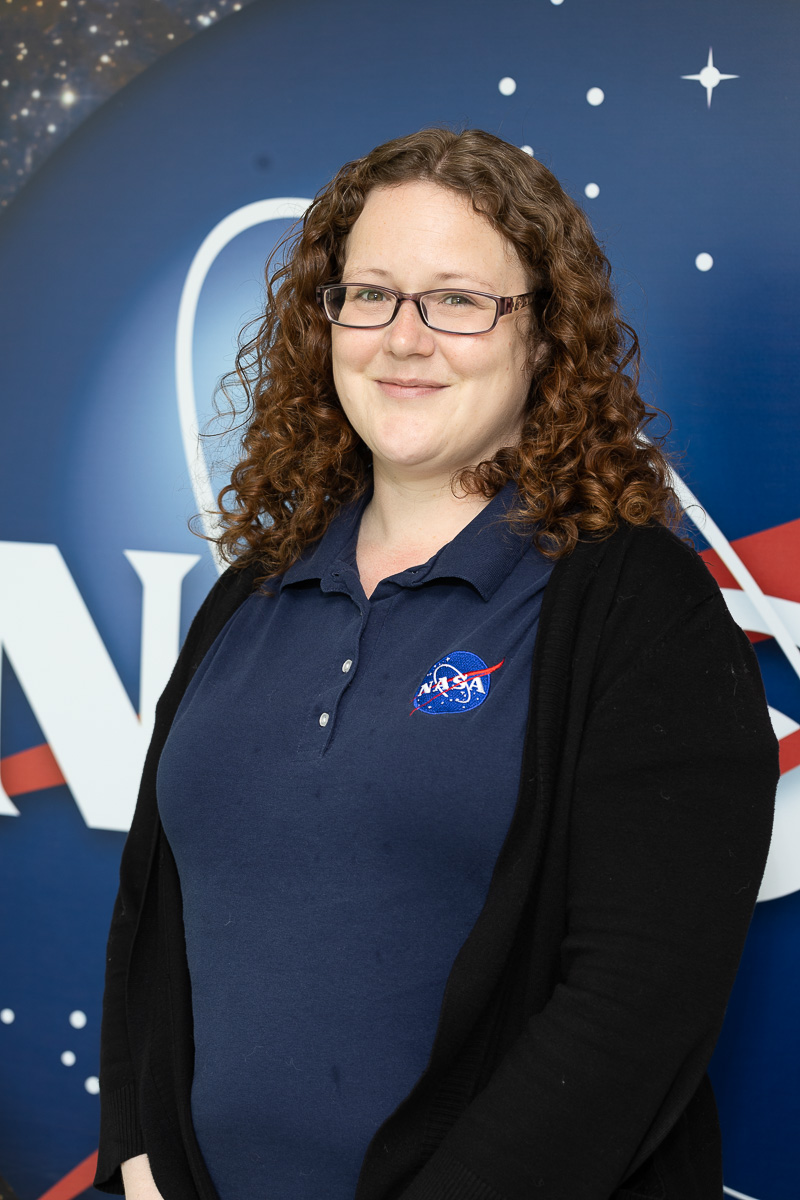
A woman smiling
A portrait of Rebekah in front of the NASA meatball.
NASA/David Friedlander

What hobbies fill your time outside of work?

I like to paint and draw. I also enjoy looking after animals. I also love participating in outreach events. When I lived in Philly I helped to set up the Astronomy on Tap branch there. I think it is important to talk about what we do and why it is needed.

What advice do you have for others who are interested in working in astronomy?

There is no one path. Don’t think you have to complete x, y, z steps and then you make it. That is not true. Do what you are passionate about, what you enjoy to learn about. And most importantly ask questions! Learn about what others are doing in the field, how they got there, and figure out what works for you.

By Ashley Balzer
NASA’s Goddard Space Flight Center, Greenbelt, Md.

A graphic with a collection of people's portraits grouped together in front of a soft blue galaxy background. The people come from various races, ethnicities, and genders. A soft yellow star shines in the upper left corner, and the stylized text

Conversations With Goddard is a collection of Q&A profiles highlighting the breadth and depth of NASA’s Goddard Space Flight Center’s talented and diverse workforce. The Conversations have been published twice a month on average since May 2011. Read past editions on Goddard’s “Our People” webpage.

Share

Details

Last Updated

Jul 16, 2024

Contact
Ashley Balzer
Location
Goddard Space Flight Center

Powered by WPeMatico

Get The Details…
Ashley Balzer