NASA Selects 5 New Roman Technology Fellows in Astrophysics
9 min read
NASA Selects 5 New Roman Technology Fellows in Astrophysics
NASA has awarded Nancy Grace Roman Technology Fellowships (RTF) to five early-career researchers in astrophysics for the class of 2023. The program will support the advancement of their ideas for new technologies to further the exploration of the universe.
This annual fellowship gives researchers the opportunity to develop the skills necessary to become principal investigators of future astrophysics missions, and fosters new talent by putting early-career instrument builders on track towards long-term positions. Specifically, the fellowship facilitates the development of skills necessary to lead astrophysics flight instrumentation development projects, as well as the development of innovative technologies that have the potential to enable major scientific breakthroughs.
“We saw higher numbers of strong applications for this class than in recent years, so we are especially honored to welcome this new group of five fellows,” says Mario Perez, RTF program scientist and chief technologist for NASA’s Astrophysics Division, based at the agency’s headquarters in Washington. “These new fellows advance important areas of technological interest to NASA astrophysics, and we expect them to become leaders in their fields and principal investigators of supporting technologies and space missions.”
Since the RTF program was established in 2011, all 31 researchers who have previously been awarded the fellowship are still active in careers within the fields of astrophysics or planetary mission development. In 2024, five additional fellows were competitively selected, making the total 36 researchers who have been awarded this fellowship since the program began.
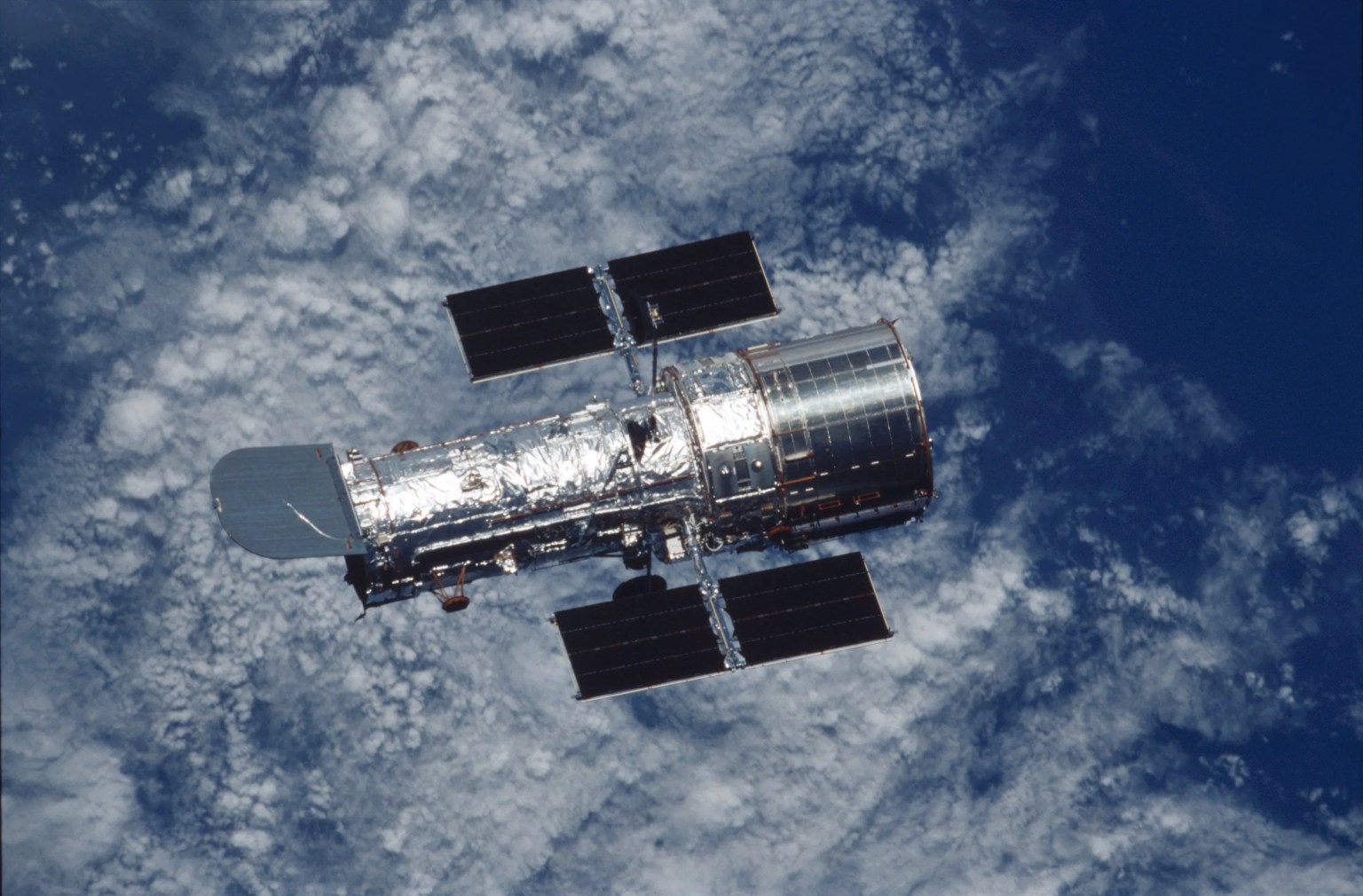
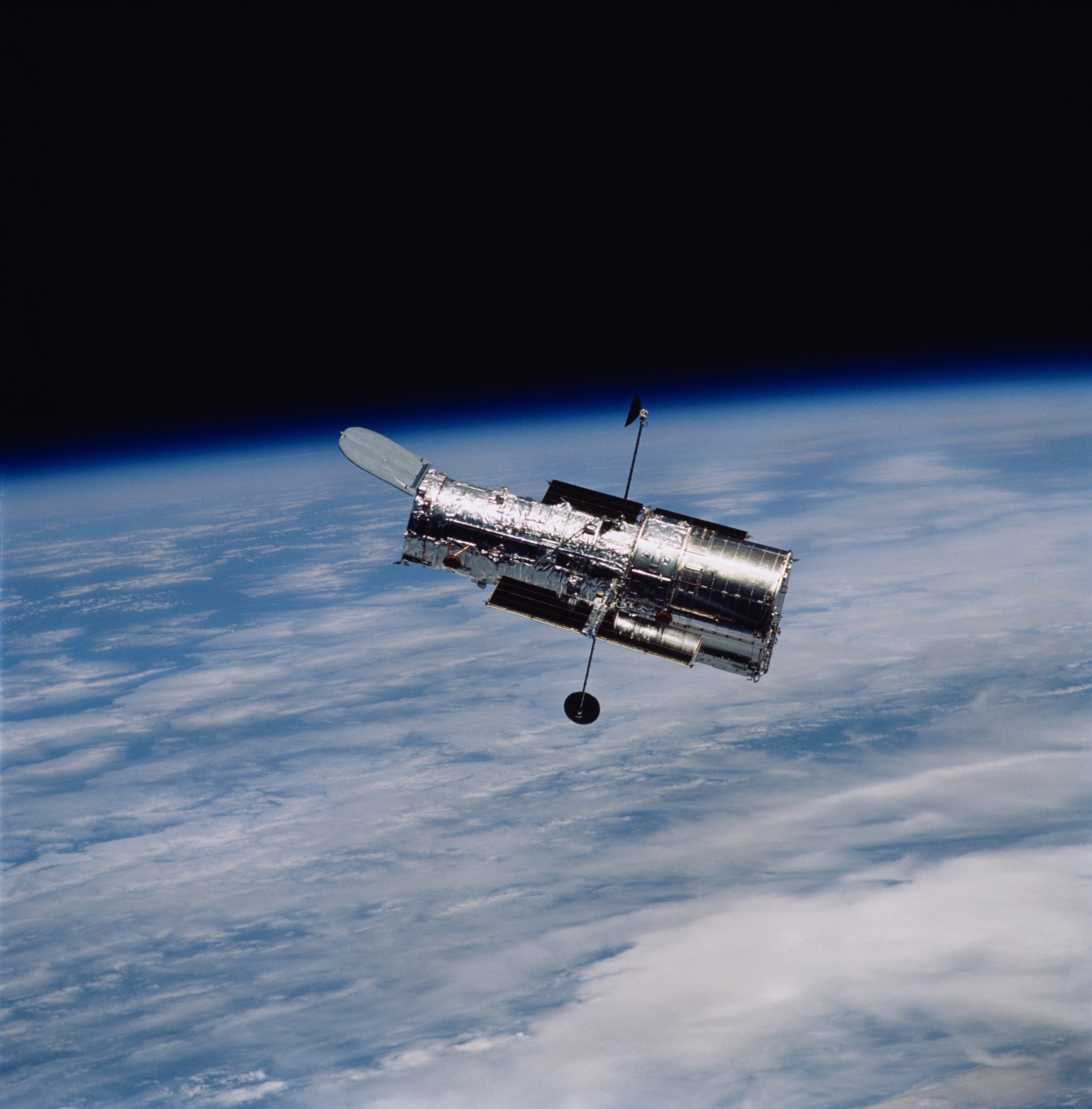
The program’s name honors Dr. Nancy Grace Roman, the first female executive at NASA who created the agency’s first astronomical program. She is known as the “Mother of Hubble” for her foundational role in planning NASA’s Hubble Space Telescope. NASA’s forthcoming Nancy Grace Roman Space Telescope is also named for her.
The five newly selected fellows are:
Nicholas Kruczek
Position: Instrument engineer, Laboratory for Atmospheric and Space Physics (LASP) at the University of Colorado, Boulder
Hometown: Orchard Park, New York (“Go Bills!”)
Education: B.A. in Physics, Drexel University; Ph.D. in Astrophysical and Planetary Science, University of Colorado, Boulder
What is the focus of your research? Ultraviolet (UV) instrumentation and sounding rockets, with a focus on diffraction grating development.
What does this fellowship mean to you? At LASP, we’ve assembled a team that’s knowledgeable and passionate about sounding rockets and developing novel UV technologies. Having this environment provides a strong platform for mentoring undergraduate and graduate students. This fellowship provides much needed support to keep that team together and maintain our mission of the training the next generation of UV principal investigators and Roman fellows.
What inspired you to pursue your career in astrophysics? I’ve always been fascinated by the physics of light and its interaction with optics. Astrophysical instrumentation provided an outlet to channel that passion into a career. It gives me the opportunity to study optical phenomena in detail, but in the context of gaining a deeper understanding of the physical processes governing our universe.
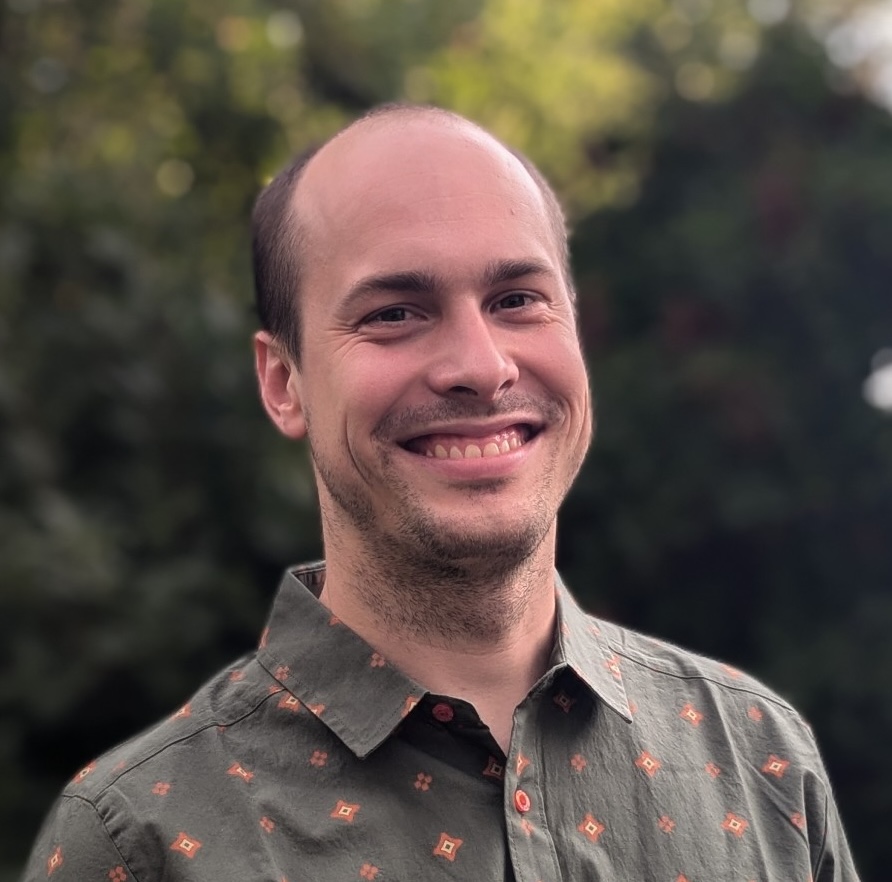
Drew Miles
Name: Drew Miles
Position: Research assistant professor, California Institute of Technology
Hometown: Marshalltown, Iowa
Education: B.B.A in Accounting and B.S. in Physics and Astronomy, University of Iowa; M.S. and Ph.D. in Astronomy and Astrophysics, Penn State University
What is the focus of your research? My research is focused on developing and demonstrating technologies for space-based grating spectrographs. In this work we develop the full life cycle of the technology: conceiving new spectrograph designs and applications, using nanofabrication techniques to manufacture next-generation diffraction gratings, implementing the gratings into astronomy instruments, and verifying their performance in applications representative of their applicability to large NASA missions.
What does this fellowship mean to you? This fellowship will help allow me to further develop my research program and implement the lab support and characterization capabilities needed to advance our technologies. Further, the Nancy Grace Roman Technology Fellowship program continues to be an excellent investment in the careers of early-career researchers, and I am appreciative at being awarded a fellowship and having the opportunity to advance impactful instrumentation for the future.
What inspired you to pursue your career in astrophysics? After not having exposure to physics and astronomy prior to college, I became interested in further exploring astronomy while taking a few elective physics and astronomy courses during my business degree. The idea of working to better understand the nature and evolution of our universe is extremely compelling. Later, I was fortunate to become involved in a research lab for experimental astrophysics and was hooked by the hands-on nature of the research and the need to maintain a long-term vision for the technology while ensuring the smallest details are well understood. Throughout my time as a student and postdoctoral researcher, the positive mentorship from my dissertation advisor (and former Roman Technology Fellow), Dr. Randall McEntaffer, and other members of the field have been critical in teaching me and allowing me to grow into the field.
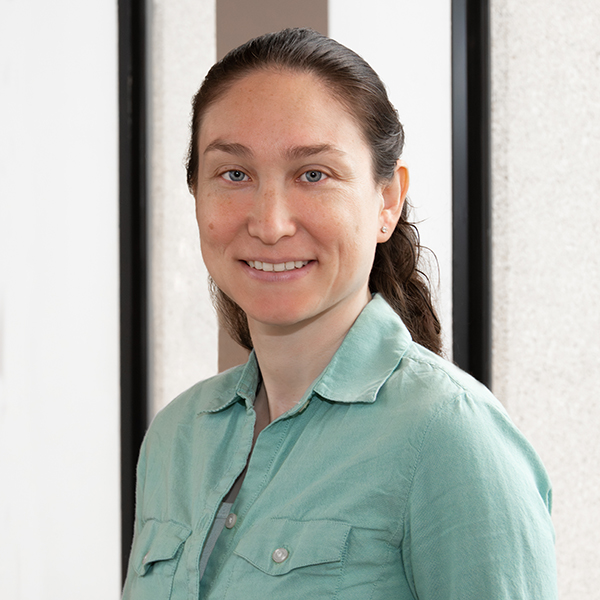
Johanna Nagy
Position: Warren E. Rupp Assistant Professor of Physics at Case Western Reserve University
Hometown: Lompoc, California
Education: B.S. in Physics, Stanford University; Ph.D. in Physics, Case Western Reserve University
What is the focus of your research? My research group focuses on cosmology, studying the evolution and composition of the universe through increasingly precise measurements of the Cosmic Microwave Background. We build instruments to measure its polarization and analyze the resulting data. Several of our current projects use NASA’s stratospheric balloons to access signals that are difficult to see from the ground.
What does this fellowship mean to you?
This fellowship will allow me to continue to grow my research group and expand our lab’s capabilities. I am most excited about being able to work with more undergraduate and graduate students and to help them pursue their own career paths.
What inspired you to pursue your career in astrophysics?
I became deeply interested in space when I was in middle school, but in college I learned how much I enjoy experimental work. It still amazes me that instruments we build by hand in the lab can help us answer fundamental questions about the universe. I have also been fortunate to have many fantastic mentors throughout my career and hope to pay it forward.
Dustin Swarm
Name: Dustin Swarm
Position: Postdoctoral Research Scholar in the Department of Physics & Astronomy at University of Iowa
Hometown: Greenville, Illinois
Education: B.S. in Spanish Education, B.A. in Physics and Mathematics, Greenville University; Ph.D. in Physics, University of Iowa
What is the focus of your research? My research involves the design and fabrication of focusing optics for high-energy astrophysics investigations. Constructing telescopes with focusing optics that operate in the hard X-ray to soft gamma-ray regime (100-600 keV) is unfeasible with current technologies. Developing high-performance focusing optics for this regime would enable deeper investigations of, for instance, accreting compact objects or sources of electron-positron annihilation.
What does this fellowship mean to you? The Roman Technology Fellowship is impactful for my early career in a number of ways. It is a major source of encouragement that my work is interesting and meaningful to people beyond myself. It is a validation that I have a place in the broader astrophysics community. It offers a chance of stability and a solid foundation on which to build my nascent career. I am also grateful for the opportunity it provides me to mentor and train future astrophysicists, following in the footsteps of the mentors who have poured into me along this journey. I am honored to be selected as a Roman Technology Fellow.
What inspired you to pursue your career in astrophysics? I grew up with a love of science. From my mother burying chicken bones in my sandbox to inspire my play as a paleontologist to my grandfather purchasing a telescope so we could look at the Moon in his backyard, my ambition was to become a scientist. I began college on an aerospace engineering path, but along the way I switched majors to Spanish education. I spent six years as a high school Spanish teacher, but during that time I followed the physics and astronomy world through documentaries, news articles, and books. I missed engaging with mathematics and science, and I eventually decided it was time to go back to school to become an astrophysicist. It was in this time that NASA’s Juno spacecraft was transmitting high quality photographs of Jupiter, and the ground-based LIGO, the Laser Interferometer Gravitational-wave Observatory, was detecting black hole mergers. I was wrapping up my second undergraduate degree when news broke of the simultaneous detection of gravitational waves and electromagnetic radiation from the neutron star merger GW170817. I was fascinated by the papers published on this event, and it cemented my desire to become a high-energy astrophysicist.
Kyle Van Gorkom
Name: Kyle Van Gorkom
Position: Assistant research professor at Steward Observatory, University of Arizona
Hometown: Tucson, Arizona
Education: B.S. in Physics and Philosophy, Brandeis University; Ph.D. in Optical Sciences, University of Arizona
What is the focus of your research: My research focuses on the use of high-contrast imaging techniques and wavefront control to directly image exoplanets (planets around other stars) with space- and ground-based observatories.
What does this fellowship mean to you: This fellowship will enable me to start building an independent research program, to set up a laboratory for technology development in coronagraphy, and to begin mentoring the next generation of instrument builders.
What inspired you to pursue a career in astrophysics: I first became interested in astrophysics after taking a philosophy of science course during college, which led me to realize that if I wanted to be able to think carefully about the world, I needed a deeper understanding of physics. I joined a research group doing radio astronomy and then, following graduation, worked several years at the Space Telescope Science Institute in Baltimore, which introduced me to astronomical instrumentation and motivated me to pursue a PhD in optics. Over the years, I’ve had several supportive mentors whose guidance set me on my current career trajectory.
Keep Exploring
Discover Related Topics
Powered by WPeMatico
Get The Details…



![An almost circular galaxy fills the image. It has a glowing bar stretching across its core; from the ends of the bar, thin spiral arms wrap around the galaxy to form a closed disk. The arms are fuzzy from the dust and stars they contain. The galaxy is on a black, mostly empty background. A few foreground stars with cross-shaped diffraction spikes can be seen, as well as some distant galaxies in the background.]](https://science.nasa.gov/wp-content/uploads/2024/08/potw2433a.jpg)