NASA Decides to Bring Starliner Spacecraft Back to Earth Without Crew 

NASA Decides to Bring Starliner Spacecraft Back to Earth Without Crew 
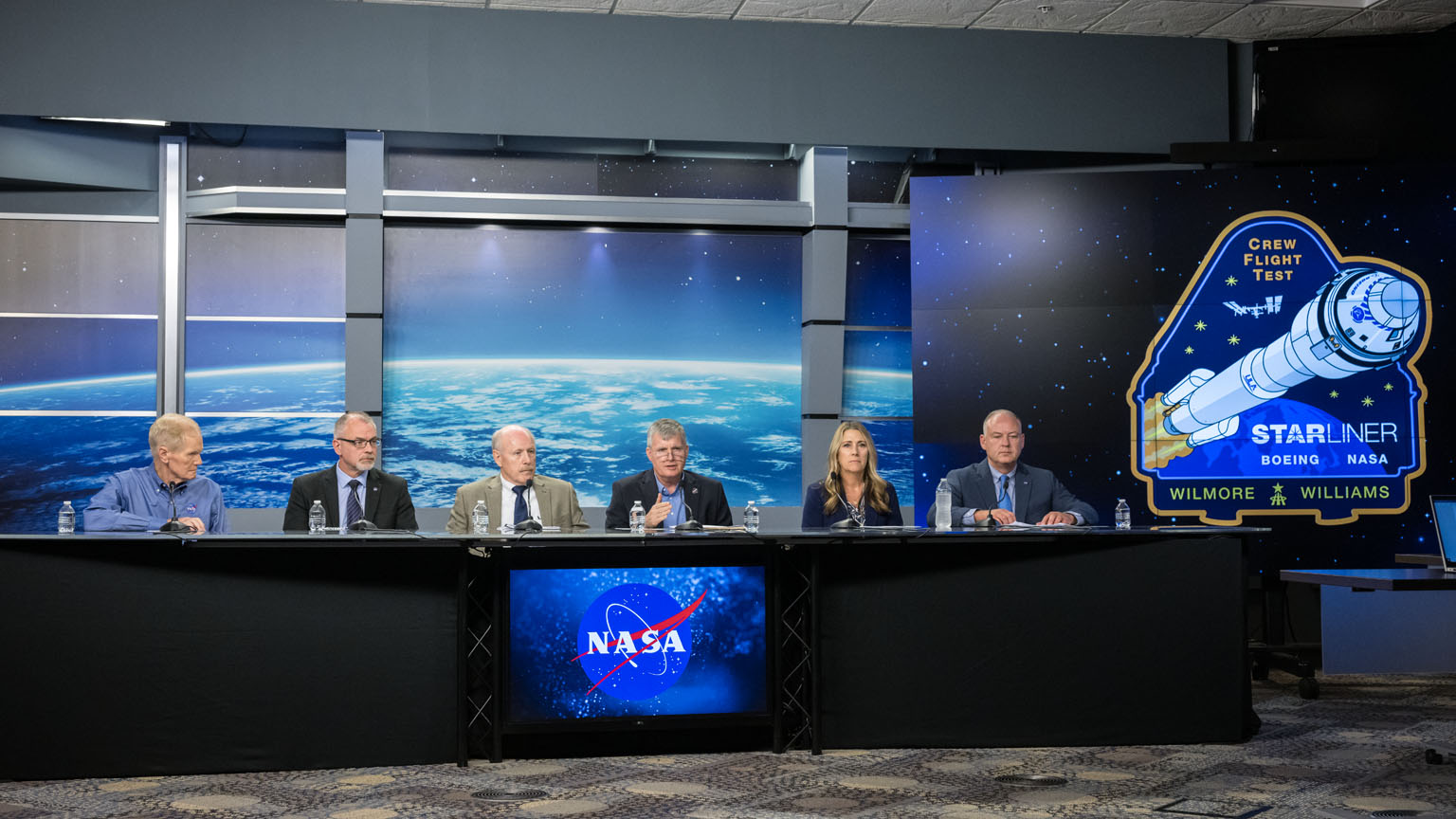
A group of NASA leaders sit at a table to conduct a live news conference at NASA Johnson.
NASA Administrator Bill Nelson and leadership participate in a live news conference on Saturday, Aug. 24, 2024, at the agency’s Johnson Space Center in Houston where they provided an update about NASA’s Boeing Crew Flight Test.
Credit: NASA

NASA will return Boeing’s Starliner to Earth without astronauts Butch Wilmore and Suni Williams aboard the spacecraft, the agency announced Saturday. The uncrewed return allows NASA and Boeing to continue gathering testing data on Starliner during its upcoming flight home, while also not accepting more risk than necessary for its crew.

Wilmore and Williams, who flew to the International Space Station in June aboard NASA’s Boeing Crew Flight Test, have been busy supporting station research, maintenance, and Starliner system testing and data analysis, among other activities.

“Spaceflight is risky, even at its safest and most routine. A test flight, by nature, is neither safe, nor routine. The decision to keep Butch and Suni aboard the International Space Station and bring Boeing’s Starliner home uncrewed is the result of our commitment to safety: our core value and our North Star,” said NASA Administrator Bill Nelson. “I’m grateful to both the NASA and Boeing teams for all their incredible and detailed work.”

Wilmore and Williams will continue their work formally as part of the Expedition 71/72 crew through February 2025. They will fly home aboard a Dragon spacecraft with two other crew members assigned to the agency’s SpaceX Crew-9 mission. Starliner is expected to depart from the space station and make a safe, controlled autonomous re-entry and landing in early September.

NASA and Boeing identified helium leaks and experienced issues with the spacecraft reaction control thrusters on June 6 as Starliner approached the space station. Since then, engineering teams have completed a significant amount of work, including reviewing a collection of data, conducting flight and ground testing, hosting independent reviews with agency propulsion experts, and developing various return contingency plans. The uncertainty and lack of expert concurrence does not meet the agency’s safety and performance requirements for human spaceflight, thus prompting NASA leadership to move the astronauts to the Crew-9 mission.

“Decisions like this are never easy, but I want to commend our NASA and Boeing teams for their thorough analysis, transparent discussions, and focus on safety during the Crew Flight Test,” said Ken Bowersox, associate administrator for NASA’s Space Operations Mission Directorate. “We’ve learned a lot about the spacecraft during its journey to the station and its docked operations. We also will continue to gather more data about Starliner during the uncrewed return and improve the system for future flights to the space station.”
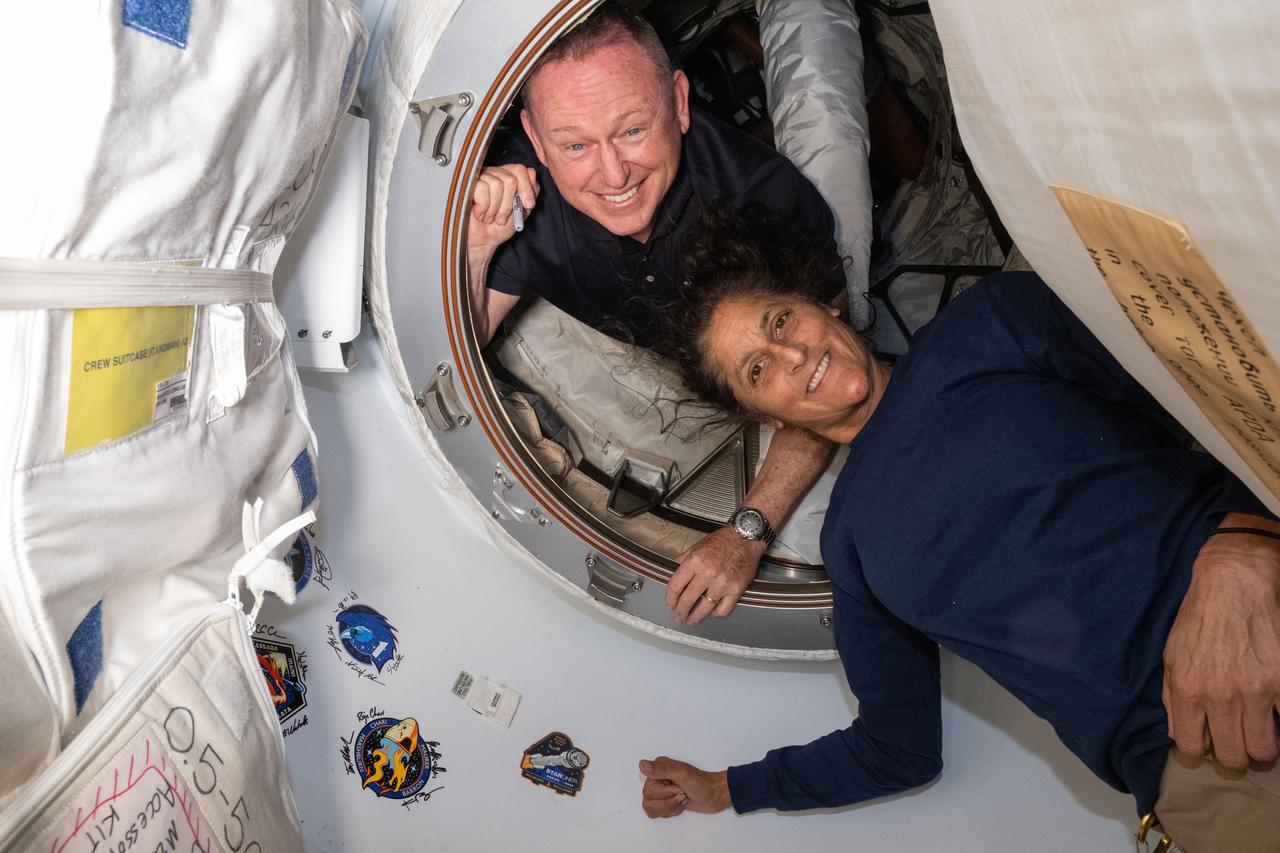
NASA's Boeing Crew Flight Test astronauts (from top) Butch Wilmore and Suni Williams pose on June 13, 2024 for a portrait inside the vestibule between the forward port on the International Space Station's Harmony module and Boeing's Starliner spacecraft.
NASA’s Boeing Crew Flight Test astronauts (from top) Butch Wilmore and Suni Williams pose on June 13, 2024 for a portrait inside the vestibule between the forward port on the International Space Station’s Harmony module and Boeing’s Starliner spacecraft.
Credit: NASA

Starliner is designed to operate autonomously and previously completed two uncrewed flights. NASA and Boeing will work together to adjust end-of-mission planning and Starliner’s systems to set up for the uncrewed return in the coming weeks. Starliner must return to Earth before the Crew-9 mission launches to ensure a docking port is available on station.

“Starliner is a very capable spacecraft and, ultimately, this comes down to needing a higher level of certainty to perform a crewed return,” said Steve Stich, manager of NASA’s Commercial Crew Program. “The NASA and Boeing teams have completed a tremendous amount of testing and analysis, and this flight test is providing critical information on Starliner’s performance in space. Our efforts will help prepare for the uncrewed return and will greatly benefit future corrective actions for the spacecraft.”

NASA’s Commercial Crew Program requires spacecraft fly a crewed test flight to prove the system is ready for regular flights to and from the space station. Following Starliner’s return, the agency will review all mission-related data to inform what additional actions are required to meet NASA’s certification requirements.

The agency’s SpaceX Crew-9 mission, originally slated with four crew members, will launch no earlier than Tuesday, Sept. 24. The agency will share more information about the Crew-9 complement when details are finalized. 

NASA and SpaceX currently are working several items before launch, including reconfiguring seats on the Crew-9 Dragon, and adjusting the manifest to carry additional cargo, personal effects, and Dragon-specific spacesuits for Wilmore and Williams. In addition, NASA and SpaceX now will use new facilities at Space Launch Complex-40 at Cape Canaveral Space Force Station in Florida to launch Crew-9, which provides increased operational flexibility around NASA’s planned Europa Clipper launch.

The Crew-9 mission will be the ninth rotational mission to the space station under NASA’s Commercial Crew Program, which works with the American aerospace industry to meet the goal of safe, reliable, and cost-effective transportation to and from the orbital outpost on American-made rockets and spacecraft launching from American soil.

For more than two decades, people have lived and worked continuously aboard the International Space Station, advancing scientific knowledge and demonstrating new technologies, making research breakthroughs not possible on Earth. The station is a critical testbed for NASA to understand and overcome the challenges of long-duration spaceflight and to expand commercial opportunities in low Earth orbit. As commercial companies focus on providing human space transportation services and destinations as part of a robust low Earth orbit economy, NASA’s Artemis campaign is underway at the Moon where the agency is preparing for future human exploration of Mars.

Find more information on NASA’s Commercial Crew Program at:

https://www.nasa.gov/commercialcrew

-end- 

Meira Bernstein / Josh Finch
Headquarters, Washington
202-358-1100
meira.b.bernstein@nasa.gov / joshua.a.finch@nasa.gov

Steve Siceloff / Danielle Sempsrott / Stephanie Plucinsky
Kennedy Space Center, Florida
321-867-2468
steven.p.siceloff@nasa.gov / danielle.c.sempsrott@nasa.gov / stephanie.n.plucinsky@nasa.gov

Leah Cheshier / Sandra Jones
Johnson Space Center, Houston
281-483-5111
leah.d.cheshier@nasa.gov / sandra.p.jones@nasa.gov

Share

Details

Last Updated

Aug 24, 2024

Editor
Jessica Taveau

Powered by WPeMatico

Get The Details…
Jessica Taveau
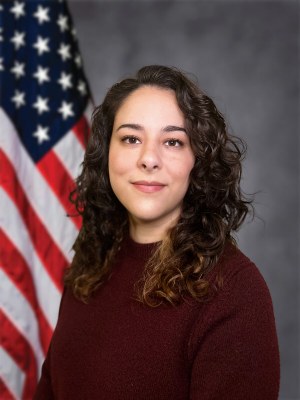
August 2024 Transformer of the Month: Selina Salgado

August 2024 Transformer of the Month: Selina Salgado

Portrait of Selina Salgado

As a Human Resource Business Partner at NASA Headquarters, Selina Salgado describes her job as helping with “all things people” for the enterprise. By facilitating technological solutions to human resources (HR) challenges and needs, she excels at an often-underestimated aspect of Digital Transformation (DT): the interpersonal side. As a champion of community building, knowledge sharing, and digital upskilling, Selina was an easy selection for this month’s Digital Transformer award.   

Selina started at NASA in 2019 as a Pathways intern and previously worked as a mentoring coordinator for Marshall Space Flight Center (MSFC), which is where her Digital Transformation journey began. At MSFC, she created an all-in-one, automated system for open job postings, which decreased the agency’s time to hire and increased visibility for available positions. She has aspirations for further leveraging these types of systems to improve inclusive teaming across NASA by making HR tools available and interoperable across centers. Her current team under the Office of the Chief Human Capital Officer (OCHCO) operates with an 80-20 mentality, working to create common tools and solutions that are 80% interoperable and 20% customizable to the specific organization or scenario.   

In addition to her technical work on digital HR tools like the automated job board, Selina takes initiative to help people understand what transformation means to them and how to practice transformation in their daily lives. In collaboration with Jess Deibert, DT Digital Academy Lead, Selina created the new Transformation Tips (TxTips) series, which features NASA employees’ tech-related tips for doing their work. The instant popularity of the community-led series led to speaker requests for TxTip presentations from several other offices at NASA, including the Office of STEM Engagement. 

Most recently, Selina has become a key contributor and partner in NASA’s Summer of AI upskilling campaign to help employees maximize the benefits of AI while managing risks. As a self-taught developer, Selina has created several tools and apps to streamline agency-wide collaboration and data collection. She leveraged PowerApps, Power Automate, and Power BI, integrated with SharePoint, to feed data to a dashboard used by the Agency Chief AI Officer to brief the Administrator on impact metrics from the Summer of AI campaign. Selina also developed and executed several events to engage and excite the workforce around this campaign, including conceiving the agency’s first “Battle of the Bots” event. Her Reddit-style “Ask Me Anything” event helped employees understand the differences in large language models by pitting ChatGPT against Microsoft CoPilot to respond to participant-submitted prompts and questions. The Battle of the Bots saw the highest engagement of any asynchronous Summer of AI event.  

Selina’s educational background aligns with her focus on the connective and collaborative aspects of Digital Transformation. She received her bachelor’s degree in business management with a focus in human resource management and her master’s degree in education and student affairs, which led to her interest in NASA’s internship and mentorship programs. The connection piece, she says, is what she enjoys most about collaborating with DT. “If you run into an issue, there’s a community of practice out there for you to reach out to and engage with…to build that network with other employees that are interested in and passionate about transformation.”   

The other influence Selina points to along her Digital Transformation journey is her military background. “I grew up in a military household, and then I joined the Navy right out of high school. There’s a culture there of how to get things done,” says Selina. “What drives my passion for processes and systems is that it’s transferrable to somebody else…I need to be able to pass that on to the next person.” She gets energized by learning new tools and finding solutions to roadblocks, especially when she can establish procedures for others to leverage and build on her work. “That’s something that I love about transformation and just change in general—that you get to develop and learn and connect with new people.”    

If there’s one message Selina hopes to spread at NASA through her achievements as a Digital Transformer, it’s that Digital Transformation is for everyone. “You don’t have to be in IT, you don’t have to have that background or technical [ability],” she says. “I mean, I’m in HR. Any field at NASA can utilize the digital landscape and digital transformation. Those principles and resources are available for everybody.” 

Powered by WPeMatico

Get The Details…
Maya L. Kikuchi

NASA Ames Stars of the Month: August 2024

NASA Ames Stars of the Month: August 2024

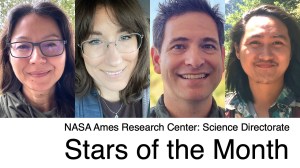
A collage of photos featuring 4 scientists who received the Star of the Month Award from the NASA Ames Science Directorate. Pictured left to right are the scientists Sangsavang Stevie Phothisane, Taryn Kavanagh, Andro Rios, and Hami E. Ray.

The NASA Ames Science Directorate recognizes the outstanding contributions of (pictured left to right) Sangsavang Stevie Phothisane, Taryn Kavanagh, Andro Rios, and Hami Ray. Their commitment to the NASA mission represents the talent, camaraderie, and vision needed to explore this world and beyond.

Photo of Stevie Phothisane

Earth Science Star: Sangsavang Stevie Phothisane

Sangsavang Stevie Phothisane, a Deputy Project Manager in the Earth Science Project Office (ESPO), demonstrated outstanding leadership as the site manager for both of the field campaigns of the Arctic Radiation-Cloud-Aerosol-Surface Interaction Experiment (ARCSIX) based at Pituffik Space Base, Greenland.  He has excelled in managing this large and complex project, which encompasses over 75 scientists and engineers and 3 research aircraft, in an extremely remote location 750 miles north of the Arctic Circle.

Image of Research Support Specialist Taryn Kavanagh of NASA Ames Research Center.

Space Science & Astrobiology Star: Taryn Kavanagh

Taryn Kavanagh, Research Support Specialist, is an indispensable member of the Astrophysics Branch. She is a consummate professional in all of her administrative duties and goes above and beyond expectations to support our team, our customers and our mission. Taryn recently supported many high-level visits with increased workload in addition to meeting branch needs which has boosted morale and goodwill with both internal and external partners.

Andro Rios

Space Science & Astrobiology Star of the Month: Andro Rios

Dr. Andro Rios, a research scientist in the Exobiology Branch, established new strategic partnerships with San Jose State University and Skyline College through the Science Mission Directorate Bridge Program (now MOSAICS). He was awarded grant funding for the ASPIRE Program (Astrobiology Scholars Program Immersive Research Experience), offering a two-year internship for under-represented undergraduates to work with NASA scientists and engineers. Dr. Rios selected and successfully led the first cohort of students for ASPIRE this summer.

Portrait image of Dr. Hami E. Ray of NASA Ames Research Center.

Space Biosciences Star: Hami Ray

Hami Ray has stepped up as the Deputy Project Manager for the Lunar Explorer Instrument for space biology Applications (LEIA) mission to study the biological effects of the lunar surface’s extreme environmental conditions on living organisms. She has been instrumental in timely and critical process improvement efforts for LEIA to enable project success. In addition to Ray’s role with LEIA, she also excels as the Deputy Project Manager for the Space Synthetic Biology (SynBio) mission and as the Project Manager for the GLOW mission concept to explore Venus’ upper atmospheric dynamics.

Powered by WPeMatico

Get The Details…
Aaron McKinnon

First Look at Hybrid Electric Research Aircraft 

First Look at Hybrid Electric Research Aircraft 

A four engine turboprop aircraft wrapped in a red and white livery with logos and names of each partner on the project sits under the lights inside an aircraft hangar. On the ground in front of the plane is an electric powertrain with an electric motor and battery pack that will soon be swapped out with one of the aircraft’s traditional engines to form a hybrid electric system.
The Dash 7 that will be modified into a hybrid electric research vehicle under NASA’s Electrified Powertrain Flight Demonstration (EPFD) project on display with its new livery for the first time. In front of the plane is an electric powertrain that magniX will integrate into the current aircraft to build a hybrid electric propulsion system.
NASA/David C. Bowman

In a special unveiling ceremony on Aug. 22, 2024, the public received a first look at magniX’s Dash 7 aircraft that will serve as a testbed for sustainable aviation research with NASA’s Electrified Powertrain Flight Demonstration (EPFD) project. 

Hosted by magniX at King County International Airport, commonly known as Boeing Field, in Seattle, Washington, leaders from NASA and magniX unveiled the research vehicle in its new livery.  

EPFD is a collaboration between NASA and industry to demonstrate the capabilities of electrified aircraft propulsion technologies in reducing emissions for future commercial aircraft in mid-2030s.  

As part of this demonstration, magniX will modify the Dash 7 with a new hybrid electric system to conduct ground and flight tests. NASA will use data gathered from these tests to identify and minimize barriers in certifying these new technologies and help inform new standards and regulations for future electrified aircraft.  

“We are a research organization that continues to advance aviation, solve the problems of flight, and lead the community into the future,” said Robert A. Pearce, associate administrator for NASA’s Aeronautics Research Mission Directorate. “Through our EPFD project, we’re taking big steps in partnership to make sure electric aviation is part of the future of commercial flight.” 

With the aircraft livery complete, magniX will begin the process of converting the Dash 7 into a research testbed with a hybrid electric propulsion system. Flight tests with the new system are planned for 2026.

Image Credit: NASA/David C. Bowman

Powered by WPeMatico

Get The Details…
Anisha Engineer

NASA Funds Studies to Support Crew Performance on Long-Duration Missions

NASA Funds Studies to Support Crew Performance on Long-Duration Missions

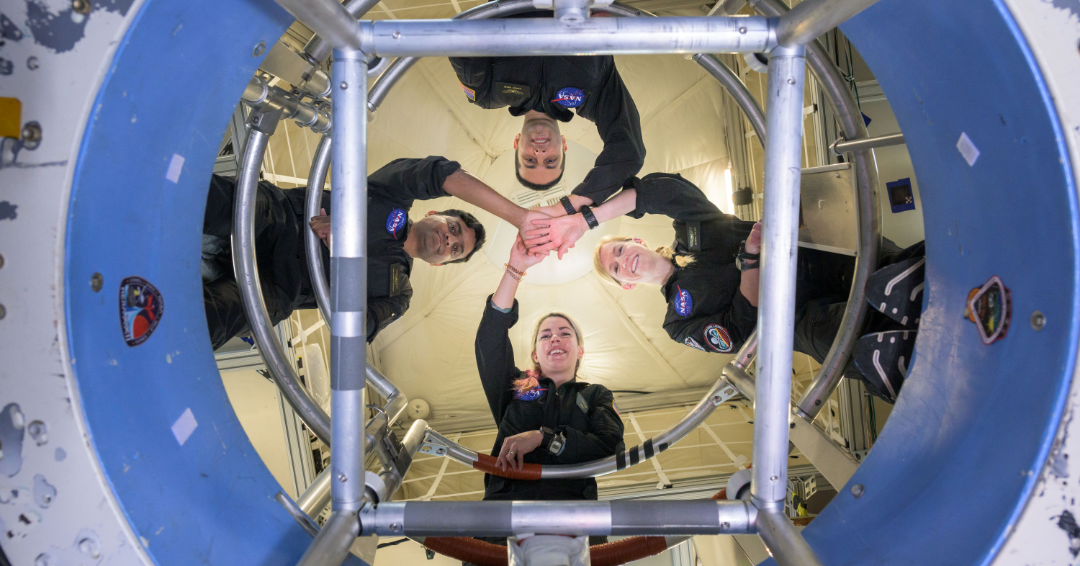
The crew of the Human Exploration Research Analog’s Campaign 7 Mission 1 clasp hands above their simulated space habitat’s elevator shaft.
Credit: NASA

NASA is funding 11 new studies to better understand how to best support the health and performance of crew members during long-duration spaceflight missions. The awardees will complete the studies on Earth without the need for samples and data from astronauts.

Together, the studies will help measure physiological and psychological responses to physical and mental challenges that astronauts may encounter during spaceflight. The projects will address numerous spaceflight risks related to team performance, communication, living environment, decision-making, blood flow, and brain health. With this information, NASA will better mitigate risks and protect astronaut health and performance during future long-duration missions to the Moon, Mars, and beyond.

The 11 finalists were selected from 123 proposals in response to the 2024 Human Exploration Research Opportunities available through the NASA Solicitation and Proposal Integrated Review and Evaluation System. Selected proposals originate from 10 institutions, and the cumulative award totals about $14.6 million. The durations of the projects range from one to five years.

The following investigators and teams were selected:

  • Katya Arquilla, University Of Colorado, Boulder, “Investigating Countermeasures for Communication Delays through the Laboratory-based Exploration Mission Analog”
  • Tripp Driskell, Florida Maxima Corporation, “CADMUS (Crew Adaptive Decision Making Under Stress) and Crew Decision Support System: Development, Validation, and Proof-of-Concept”
  • Christopher Jones, University of Pennsylvania, Philadelphia, “Predicting Operationally Meaningful Performance with Multivariate Biomarkers Using Advanced Algorithms”
  • Jessica Marquez, NASA Ames Research Center, Silicon Valley, California, “Enhancing Performance and Communication for Distributed Teams During Lunar Spacewalks”
  • Shu-Chieh Wu, San Jose State University Research Foundation, California, “Lessening the Impact of Interface Inconsistency Through Goal-Directed Crew Operations”
  • Erika Rashka, Johns Hopkins University, Baltimore, “Local Psychiatric Digital Phenotyping for Isolated, Constrained, and Extreme (ICE) Environments via Multimodal Sensing”
  • Ana Diaz Artiles, Texas A&M Engineering Experiment Station, College Station, “Dose-response Curves of Cardiovascular and Ocular Variables During Graded Lower Body Negative Pressure in Microgravity Conditions Using Parabolic Flight”
  • Theodora Chaspari, University Of Colorado, Boulder, “A Speech-Based Artificial Intelligence System for Predicting Team Functioning Degradation in HERA (Human Exploration Research Analog) Missions”
  • Ute Fischer, Georgia Tech Research Corporation, Atlanta, “Supporting Collaboration and Connectedness between Space and Ground at Lunar Latencies”
  • Xiaohong Lu, Louisiana State University, Shreveport, “Space Exposome Converges on Genotoxic Stress to Accelerate Brain Aging and Countermeasures to Mitigate Acute and Late Central Nervous System Risks”
  • Catherine Davis, Henry M. Jackson Foundation For The Advancement of Military Medicine, North Bethesda, Maryland, “NeuroSTAR (Neurobehavioral Changes Following Stressors and Radiation): Predicting Mission Impacts from Analogous Human and Rodent Endpoints”

Proposals were independently reviewed by subject matter experts in academia, industry, and government using a dual anonymous peer-review process to assess scientific merit. NASA assessed the top scoring proposals for relevance to the agency’s human research roadmap before final selections were made.

____

NASA’s Human Research Program pursues the best methods and technologies to support safe, productive human space travel. Through science conducted in laboratories, ground-based analogs, and the International Space Station, the program scrutinizes how spaceflight affects human bodies and behaviors. Such research continues to drive NASA’s mission to innovate ways that keep astronauts healthy as space exploration expands to the Moon, Mars, and beyond.

Powered by WPeMatico

Get The Details…
Nathan Cranford