NASA Invites Media to Discuss Europa Clipper Mission

NASA Invites Media to Discuss Europa Clipper Mission
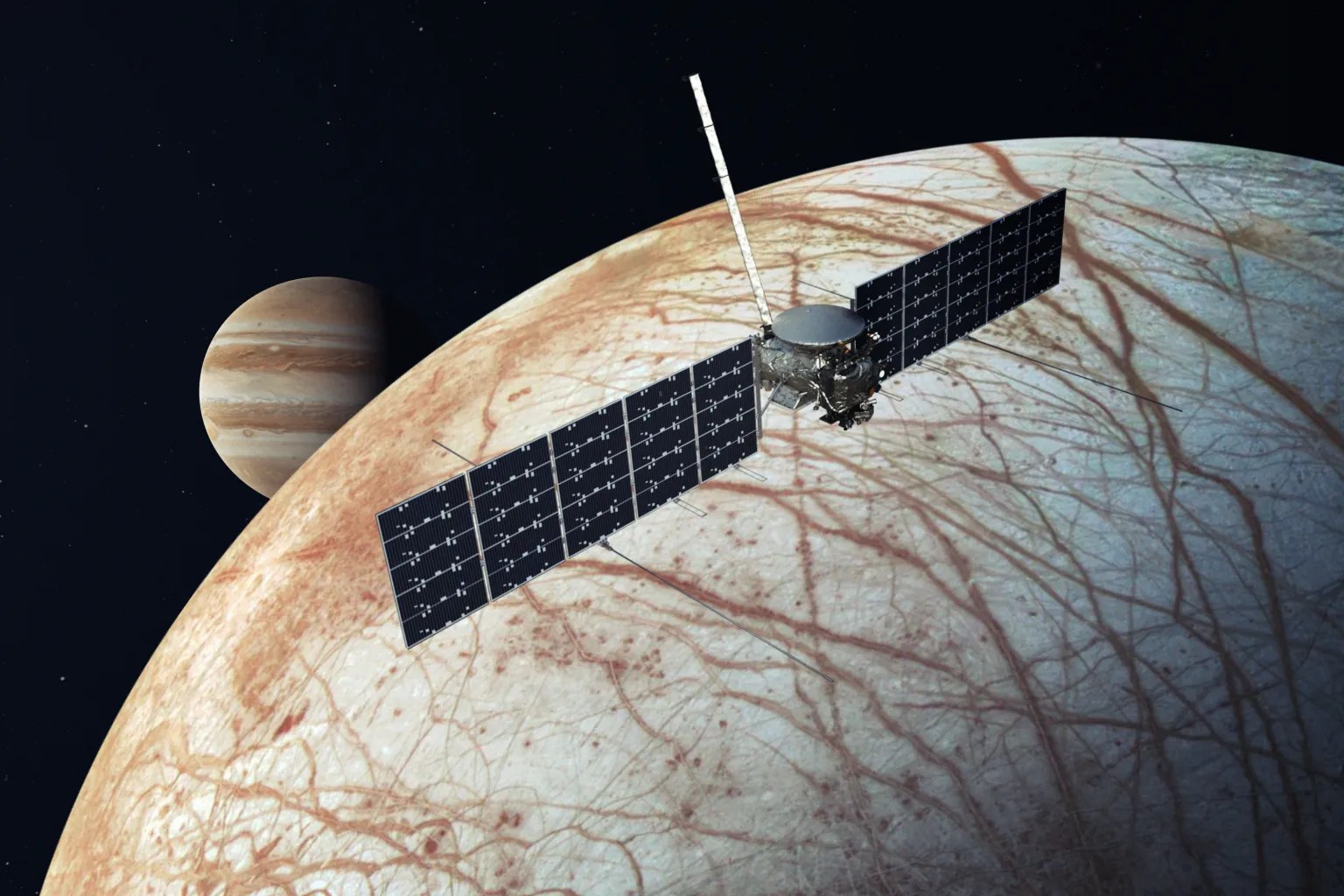
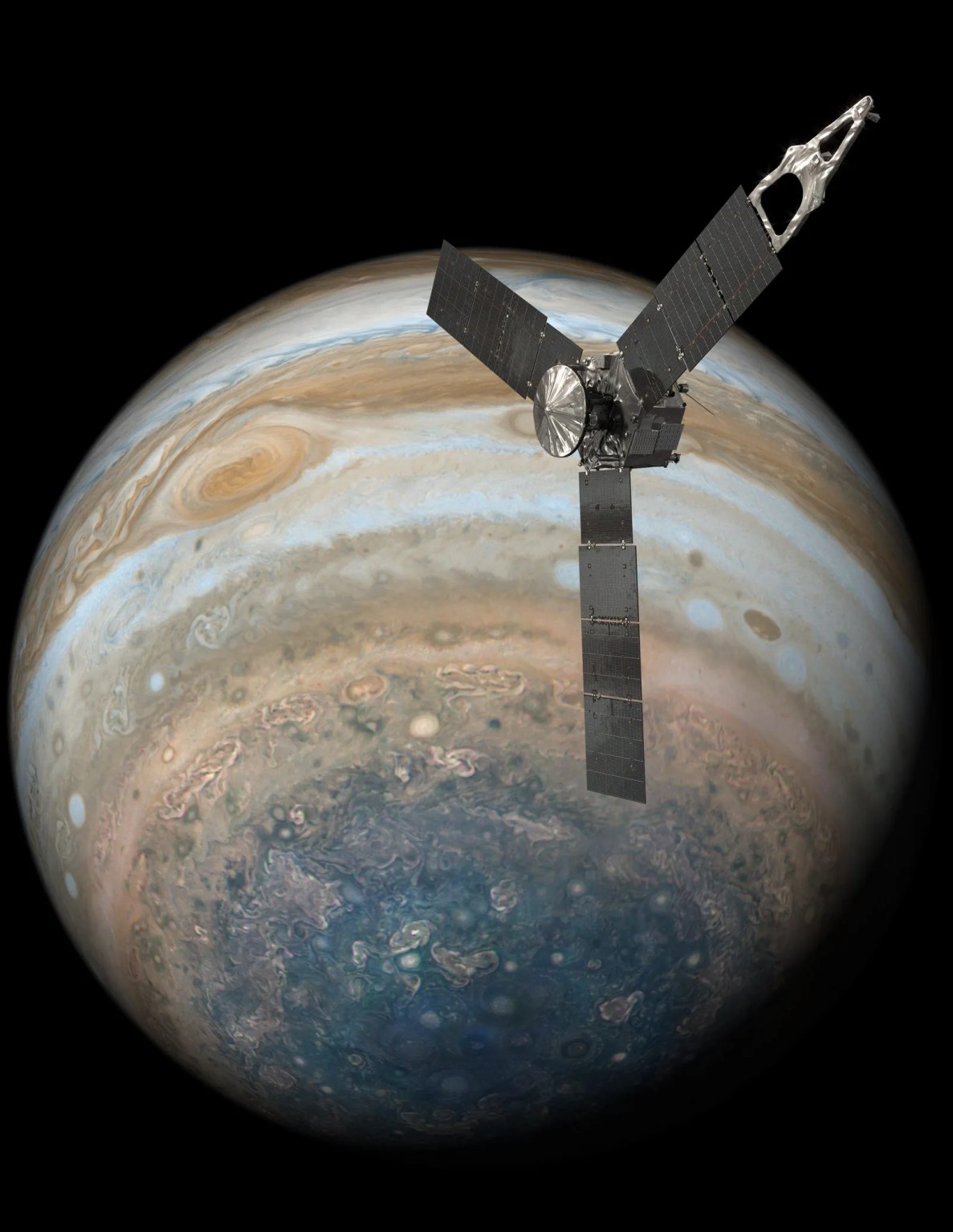
Artist’s rendering of NASA’s Europa Clipper spacecraft.
Credit: NASA/JPL-Caltech

NASA will hold a media teleconference at 4 p.m. EDT, Monday, Sept. 9, to provide an update on Europa Clipper, a mission that will study whether Jupiter’s moon Europa could be hospitable to life. The teleconference will occur after a key decision point meeting earlier that day regarding next steps for the mission.

Audio of the teleconference will stream live on the agency’s website at:

https://www.nasa.gov/live

Participants in the teleconference include:

  • Nicola Fox, associate administrator, Science Mission Directorate, NASA Headquarters
  • Laurie Leshin, center director, NASA’s Jet Propulsion Laboratory
  • Curt Niebur, Europa Clipper program scientist, NASA Headquarters
  • Jordan Evans, Europa Clipper project manager, NASA’s Jet Propulsion Laboratory

To ask questions during the teleconference, media must RSVP no later than two hours before the event to Molly Wasser at: molly.l.wasser@nasa.gov. NASA’s media accreditation policy is available online.

Europa Clipper’s main science goal is to determine whether there are places below the surface of Jupiter’s icy moon that could support life. The mission’s objectives are to understand the nature of Europa’s ice shell and the ocean beneath it, as well as to study the moon’s composition and geology. A detailed exploration of Europa also will help astrobiologists better understand the potential for habitable worlds beyond our planet.

To learn more about Europa Clipper, visit: 

https://europa.nasa.gov

-end- 

Karen Fox / Molly Wasser
Headquarters, Washington 
202-358-1600
karen.c.fox@nasa.gov / molly.l.wasser@nasa.gov

Gretchen McCartney
Jet Propulsion Laboratory, Pasadena, Calif.
818-393-6215
gretchen.p.mccartney@jpl.nasa.gov

Share

Details

Last Updated

Sep 06, 2024

Powered by WPeMatico

Get The Details…
Lauren E. Low
NASA Summer Camp Inspires Future Climate Leaders

NASA Summer Camp Inspires Future Climate Leaders

2 min read

NASA Summer Camp Inspires Future Climate Leaders

From July 15-19, 2024, the Coastal Equity and Resilience Hub at the Georgia Institute of Technology collaborated with the University of Georgia (UGA) Marine Extension and Georgia Sea Grant to host a week-long NASA Sea Level Changemakers Summer Camp. The camp introduced 14 rising 7th-8th graders to how coastal areas are changing due to sea level rise. Set at the UGA Marine Education Center and Aquarium on Skidaway Island, the camp offered students hands-on activities and outdoor educational experiences, where they analyzed real data collected by NASA scientists and learned about community adaptations to flooding. Students interacted with experts from NASA’s Jet Propulsion Laboratory, UGA, and Georgia Tech, gaining insights into satellite observations, green infrastructure, environmental sensors, and careers related to sea level rise. The camp also included a visit to the Pin Point Heritage Museum, where students engaged with leaders from the historic Gullah Geechee community of Pin Point. The camp concluded with a boat trip to Wassaw Island, where students observed the effects of sea level rise on an undeveloped barrier island and compared these observations with earlier findings from urban environments. Funding from the NASA’s Science Activation Program and its Sea Level Education, Awareness, and Literacy (SEAL) team ensured that the camp was accessible to all students, eliminating financial barriers for groups traditionally underrepresented in STEM education.

“This investment from NASA has provided an amazing opportunity for youth in coastal Georgia to utilize NASA data and resources on a critical issue affecting their communities,” said Jill Gambill, executive director of the Coastal Equity and Resilience (CEAR) Hub at Georgia Tech. “They have more confidence now in their knowledge of sea level rise and potential solutions.”

The Sea Level Education, Awareness, and Literacy (SEAL) team is supported by NASA under cooperative agreement award number NNH21ZDA001N-SCIACT and is part of NASA’s Science Activation Portfolio. Learn more about how Science Activation connects NASA science experts, real content, and experiences with community leaders to do science in ways that activate minds and promote deeper understanding of our world and beyond: https://science.nasa.gov/learn

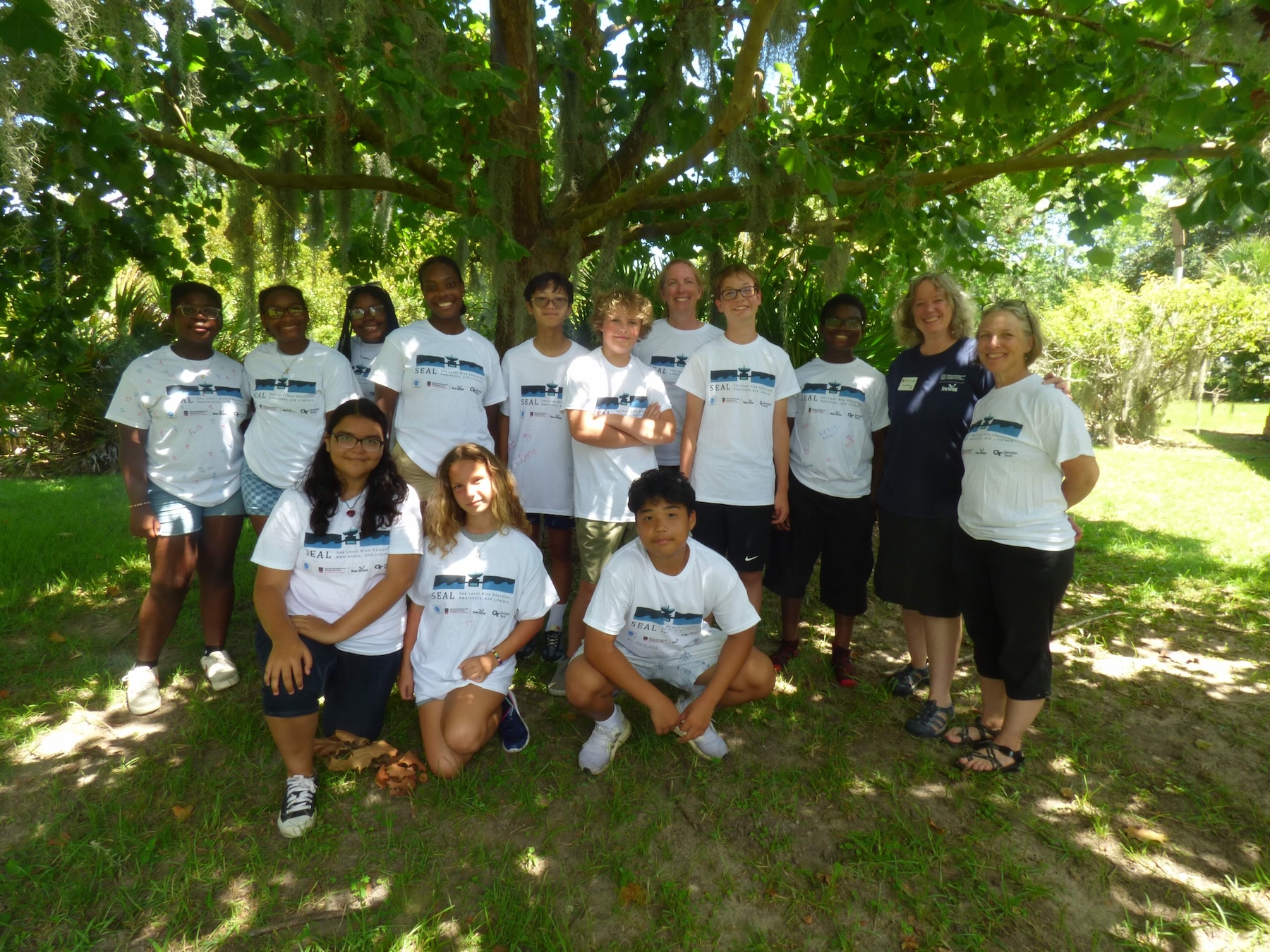
Middle school students and camp counselors standing in front of a tree smiling.
Participants of the 2024 NASA Sea Level Changemakers Summer Camp in Savannah, GA

Share

Details

Last Updated
Sep 06, 2024
Editor
NASA Science Editorial Team
Location
Jet Propulsion Laboratory

Powered by WPeMatico

Get The Details…


CubeSats are pictured after being deployed into Earth orbit

CubeSats are pictured after being deployed into Earth orbit

Tiny satellites, also known as CubeSats, are pictured after being deployed into Earth orbit from a small satellite orbital deployer on the outside of the International Space Station's Kibo laboratory module.

Tiny satellites, also known as CubeSats, are pictured after being deployed into Earth orbit from a small satellite orbital deployer on the outside of the International Space Station’s Kibo laboratory module. The CubeSats were delivered aboard the Northrop Grumman Cygnus space freighter and will serve a variety of educational and research purposes for public and private organizations around the world.

Image Credit: NASA/Tracy Dyson

Powered by WPeMatico

Get The Details…
Gary Daines

OSAM-1 Partnership Opportunity: Request for Information 

OSAM-1 Partnership Opportunity: Request for Information 

1 min read

Preparations for Next Moonwalk Simulations Underway (and Underwater)

NASA is exploring potential partnerships for alternate use cases for the On-orbit Servicing, Assembly, and Manufacturing 1 (OSAM-1) flight hardware, test facilities, and experienced personnel. Through a Request for Information for OSAM-1 Partnerships released Sept. 5, 2024, NASA seeks interest from U.S. organizations that will benefit commercial, civil, and national objectives, thereby advancing domestic leadership in In-space Servicing, Assembly, and Manufacturing (ISAM) capabilities.  

A comprehensive list of OSAM-1 resources and technologies organizations can consider using are outlined in the full Request for Information for OSAM-1 Partnerships available at www.sam.gov. Responses are due Sept. 30, 2024, by 11:59 p.m. EDT. 

Share

Details

Last Updated

Sep 06, 2024

Editor
Loura Hall

Powered by WPeMatico

Get The Details…
Loura Hall

Hubble Examines a Busy Galactic Center

Hubble Examines a Busy Galactic Center

2 min read

Hubble Examines a Busy Galactic Center

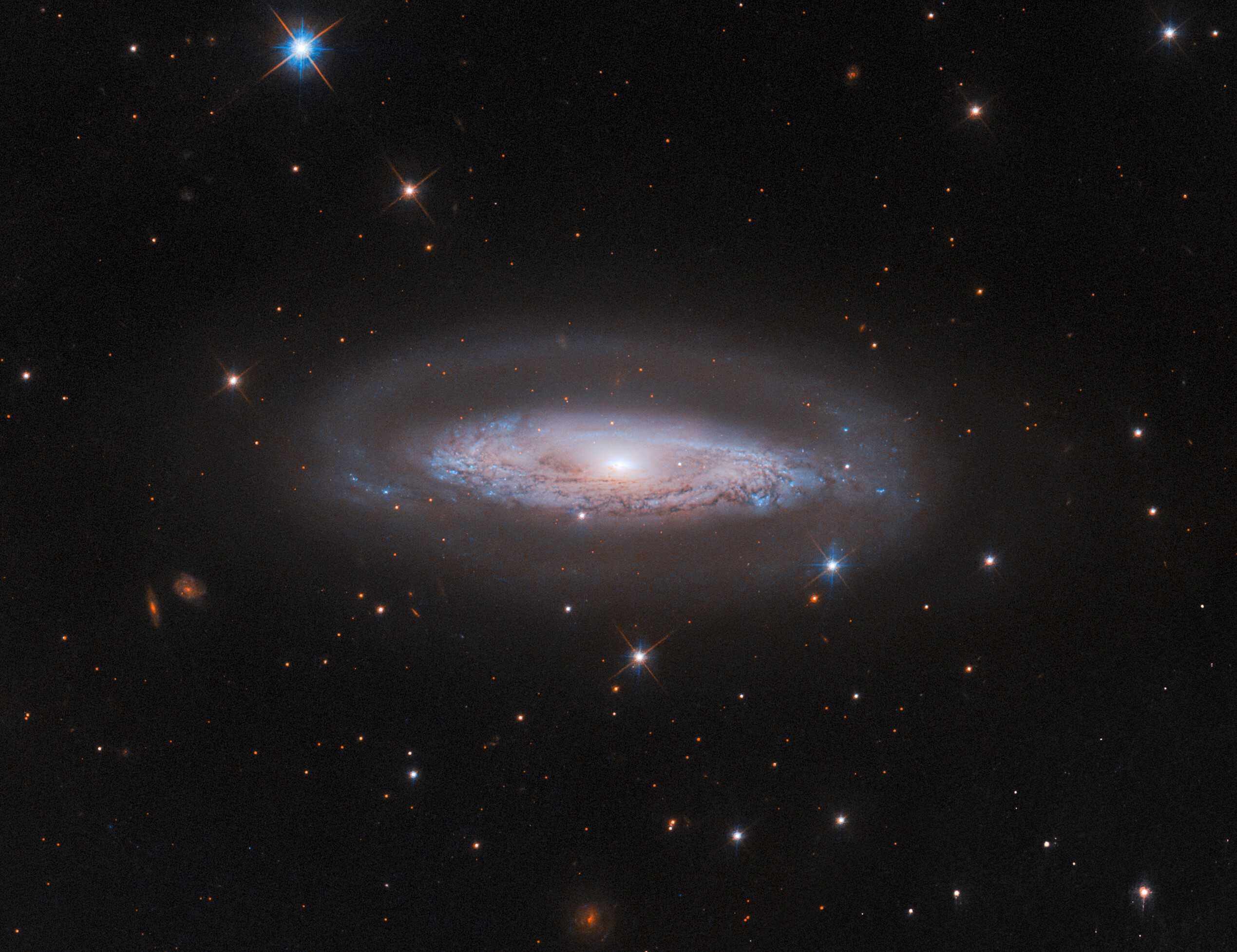
A spiral galaxy with a bright-white core, a glowing disk thick with swirling patterns of dark dust, and a faint halo around the disk. It is on a black background with a few small, distant galaxies and some foreground stars around it.
This NASA/ESA Hubble Space Telescope image features the active spiral galaxy IC 4709.
ESA/Hubble & NASA, M. Koss, A, Barth

This NASA/ESA Hubble Space Telescope image features the spiral galaxy IC 4709 located around 240 million light-years away in the southern constellation Telescopium. Hubble beautifully captures its faint halo and swirling disk filled with stars and dust bands. The compact region at its core might be the most remarkable sight. It holds an active galactic nucleus (AGN).

If IC 4709’s core just held stars, it wouldn’t be nearly as bright. Instead, it hosts a gargantuan black hole, 65 million times more massive than our Sun. A disk of gas spirals around and eventually into this black hole, crashing together and heating up as it spins. It reaches such high temperatures that it emits vast quantities of electromagnetic radiation, from infrared to visible to ultraviolet light and X-rays. A lane of dark dust, just visible at the center of the galaxy in the image above, obscures the AGN in IC 4709. The dust lane blocks any visible light emission from the nucleus itself. Hubble’s spectacular resolution, however, gives astronomers a detailed view of the interaction between the quite small AGN and its host galaxy. This is essential to understanding supermassive black holes in galaxies much more distant than IC 4709, where resolving such fine details is not possible.

This image incorporates data from two Hubble surveys of nearby AGNs originally identified by NASA’s Swift telescope. There are plans for Swift to collect new data on these galaxies. Swift houses three multiwavelength telescopes, collecting data in visible, ultraviolet, X-ray, and gamma-ray light. Its X-ray component will allow SWIFT to directly see the X-rays from IC 4709’s AGN breaking through the obscuring dust. ESA’s Euclid telescope — currently surveying the dark universe in optical and infrared light — will also image IC 4709 and other local AGNs. Their data, along with Hubble’s, provides astronomers with complementary views across the electromagnetic spectrum. Such views are key to fully research and better understand black holes and their influence on their host galaxies.

Media Contact:

Claire Andreoli
NASA’s Goddard Space Flight CenterGreenbelt, MD
claire.andreoli@nasa.gov

Powered by WPeMatico

Get The Details…