Sols 4334-4335: Planning with Popsicles — A Clipper Celebration!

Sols 4334-4335: Planning with Popsicles — A Clipper Celebration!

3 min read

Sols 4334-4335: Planning with Popsicles — A Clipper Celebration!

A grayscale photograph of the Martian surface shows a wide expanse of very rocky terrain, with sharp, angular stones arrayed as far as the eye can see, as if set together in a mosaic, stretching to the horizon where distant hills rise up, all in medium gray, A portion of the Curiosity rover is visible in the lower right corner of the frame.
This image was taken by Left Navigation Camera aboard NASA’s Mars rover Curiosity on Sol 4329 — Martian day 4,329 of the Mars Science Laboratory mission — on Oct. 10, 2024, at 05:35:08 UTC.
NASA/JPL-Caltech

Earth planning date: Monday, Oct. 14, 2024

Today was an unusually exciting day during tactical planning on the Curiosity mission because it intersected with a momentous event in space exploration: the launch of Europa Clipper from Kennedy Space Center. Even though the launch window occurred right in the middle of our morning planning meetings, at 9:06 a.m. PDT to be specific, today’s Tactical Uplink Lead and Science Operations Working Group Chair agreed it would be OK for the entire tactical team to take a 15-minute pause to turn on NASA TV and watch the launch together. Down the hall the Perseverance rover tactical team had decided the same, and for a few moments, the two teams paused their planning and watched together in anticipation as the countdown ticked down to T-0. Many of my close friends and co-workers had worked for years — some for decades — to make this mission a reality, and it was amazing to watch the enormous rocket carrying the Clipper spacecraft leap off the pad knowing how hard it was to get to this point. I cannot wait for the mission’s discoveries once it reaches Jupiter’s watery moon Europa!

In true JPL tradition, we of course had to commemorate the event with some sweet frozen treats on-lab. Back when Curiosity landed, we had a full fridge of ice cream that was kept stocked for the first 90 sols of the mission. (Eating ice cream cones at 2 in the morning is a core memory of mine from those early days in our mission.) Today, in a clever nod to Europa’s icy surface, we celebrated with some even icier sweets: fruit and coffee popsicles to anyone on-lab. I chose coffee of course; the caffeine was great to help me get through a busy day of planning for Curiosity!

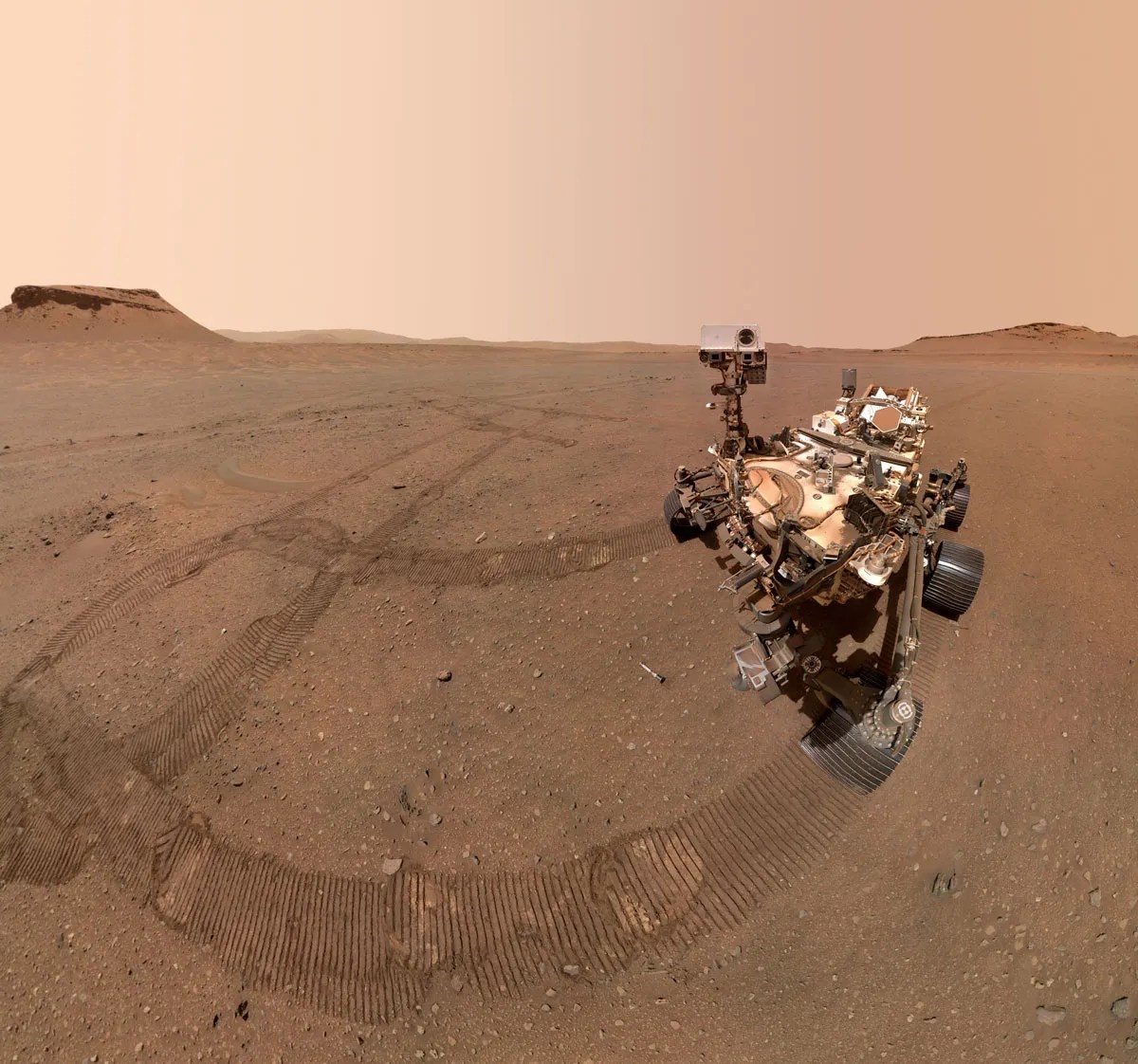
On Mars, things with our rover are going well. We completed our mega ~50-meter drive (about 164 feet) over the weekend, which took Curiosity further north along the western side of Gediz Vallis channel. Our plan today is a “touch and go,” which means we’ll do contact science with APXS and MAHLI on a block in front of us named “Dollar Lake,” some remote sensing, including ChemCam LIBS of a target named “Cape Horn” and a couple Mastcam mosaics, followed by a drive to the north. We’ll continue to follow the western side of Gediz Vallis channel as we descend slightly down Mount Sharp, until we reach a location where we are able to head west towards a more easily traversable valley, and then restart our ascent.

What a fun day of planning today. Congratulations to everyone involved helping Europa Clipper reach this incredible milestone, and go Clipper go!

Written by Abigail Fraeman, Planetary Geologist at NASA’s Jet Propulsion Laboratory

Share

Details

Last Updated
Oct 16, 2024

Related Terms

Powered by WPeMatico

Get The Details…

NASA’s Hubble Sees a Stellar Volcano

NASA’s Hubble Sees a Stellar Volcano

3 Min Read

NASA’s Hubble Sees a Stellar Volcano

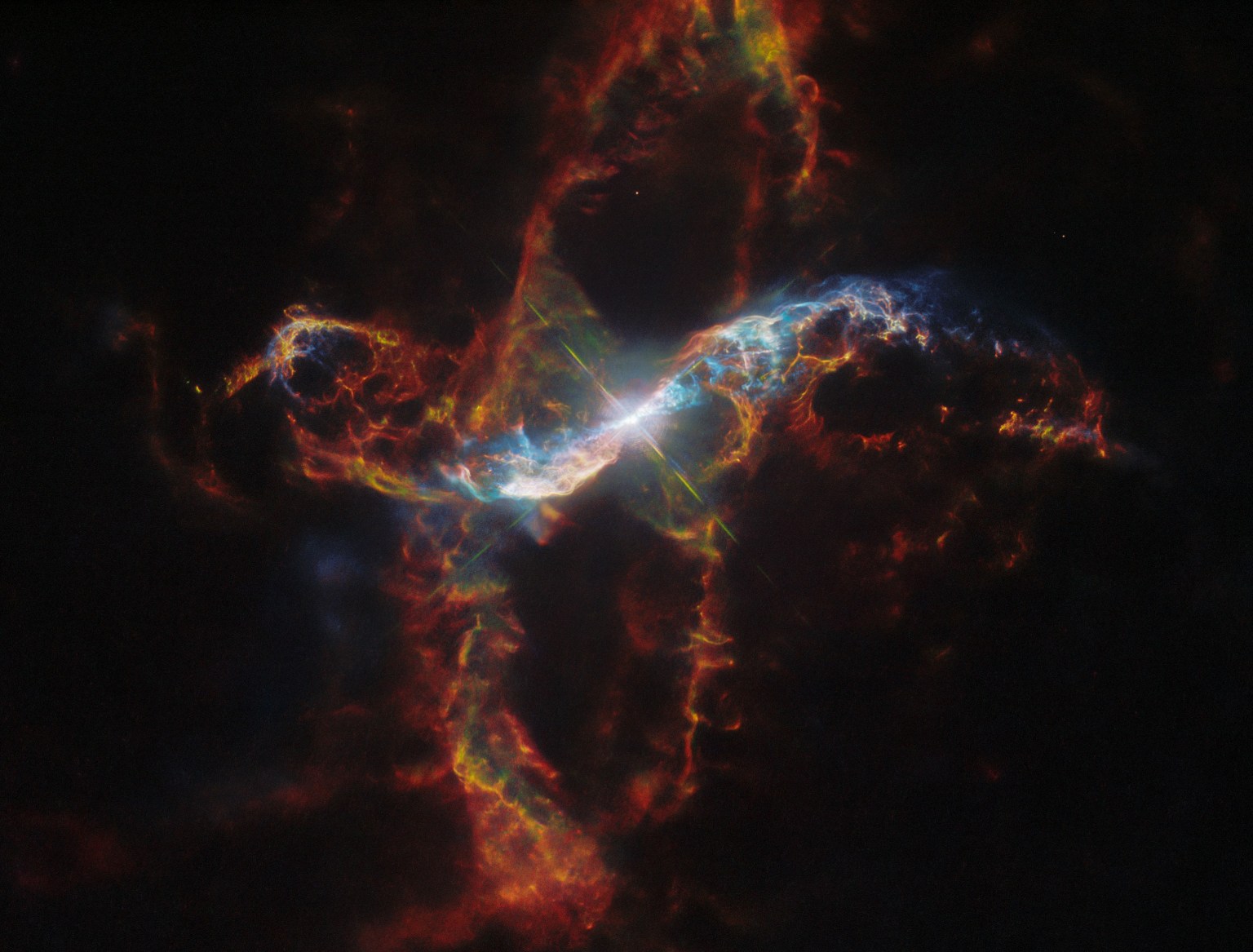
A bright binary star surrounded by a colorful loops of nebula on the black background of space. One loop is vertical the other is horizontal across the center of the image.
NASA’s Hubble Space Telescope captures a spectacular view the star R Aquarii.
Credits:
NASA, ESA, Matthias Stute , Margarita Karovska , Davide De Martin (ESA/Hubble), Mahdi Zamani (ESA/Hubble)

NASA’s Hubble Space Telescope has provided a dramatic and colorful close-up look at one of the most rambunctious stars in our galaxy, weaving a huge spiral pattern among the stars.

Located approximately 700 light-years away, a binary star system called R Aquarii undergoes violent eruptions that blast out huge filaments of glowing gas. The twisted stellar outflows make the region look like a lawn sprinkler gone berserk. This dramatically demonstrates how the universe redistributes the products of nuclear energy that form deep inside stars and jet back into space.

R Aquarii belongs to a class of double stars called symbiotic stars. The primary star is an aging red giant and its companion is a compact burned-out star known as a white dwarf. The red giant primary star is classified as a Mira variable that is over 400 times larger than our Sun. The bloated monster star pulsates, changes temperature, and varies in brightness by a factor of 750 times over a roughly 390-day period. At its peak the star is blinding at nearly 5,000 times our Sun’s brightness.

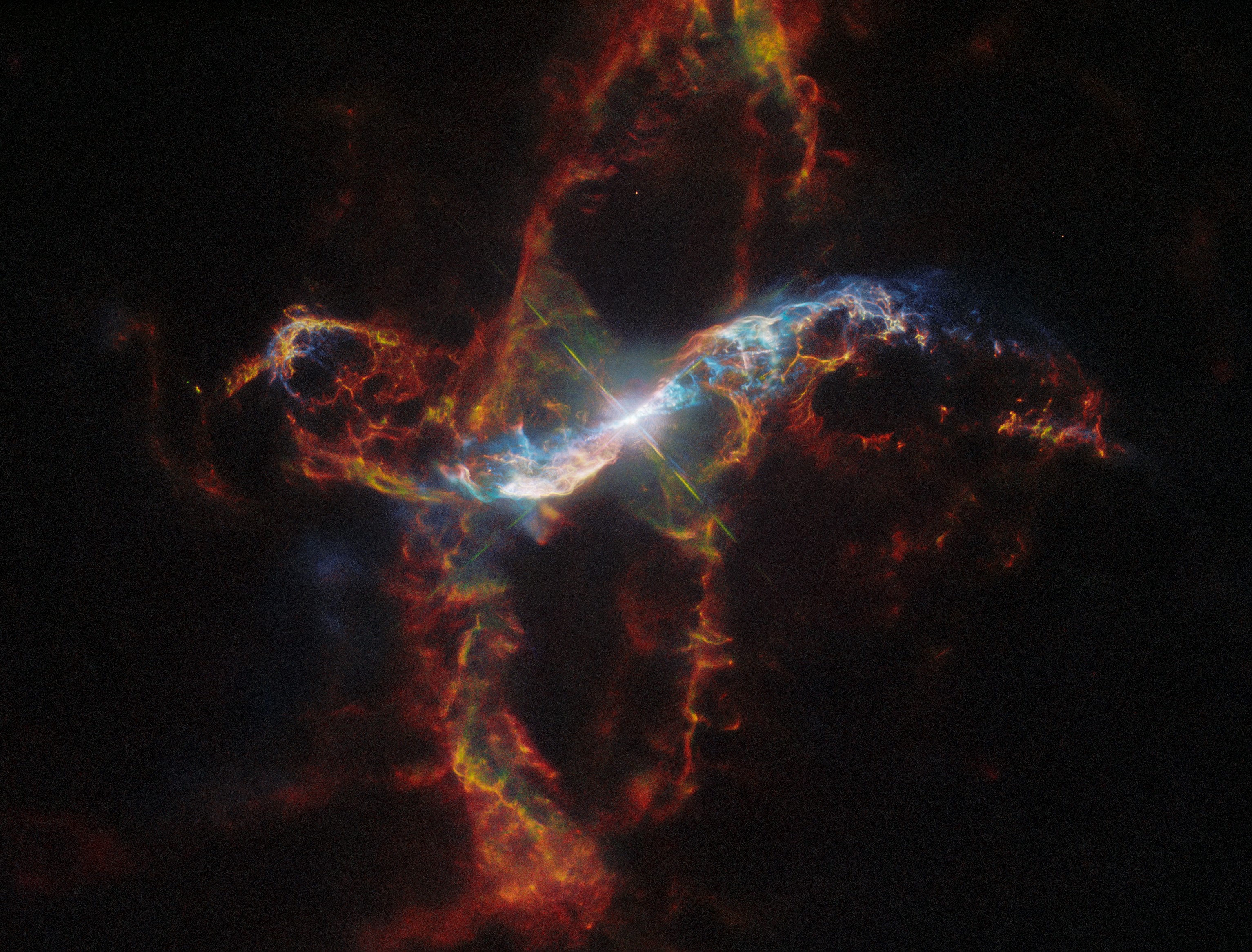
A bright binary star surrounded by a colorful loops of nebula on the black background of space. One loop is vertical the other is horizontal across the center of the image.
This NASA Hubble Space Telescope image features the binary star system R Aquarii.
NASA, ESA, Matthias Stute , Margarita Karovska , Davide De Martin (ESA/Hubble), Mahdi Zamani (ESA/Hubble)

When the white dwarf star swings closest to the red giant along its 44-year orbital period, it gravitationally siphons off hydrogen gas. This material accumulates on the dwarf star’s surface until it undergoes spontaneous nuclear fusion, making that surface explode like a gigantic hydrogen bomb. After the outburst, the fueling cycle begins again.

This outburst ejects geyser-like filaments shooting out from the core, forming weird loops and trails as the plasma emerges in streamers. The plasma is twisted by the force of the explosion and channeled upwards and outwards by strong magnetic fields. The outflow appears to bend back on itself into a spiral pattern. The plasma is shooting into space over 1 million miles per hour – fast enough to travel from Earth to the Moon in 15 minutes! The filaments are glowing in visible light because they are energized by blistering radiation from the stellar duo.

Hubble first observed the star in 1990. R Aquarii was resolved into two very bright stars separated by about 1.6 billion miles. The ESA/Hubble team now has made a unique timelapse of R Aquarii’s dynamic behavior, from observations spanning from 2014 to 2023. Across the five images, the rapid and dramatic evolution of the binary star and its surrounding nebula can be seen. The binary star dims and brightens due to strong pulsations in the red giant star.

This video features five frames spanning from 2014 to 2023 of R Aquarii. These frames show the brightness of the central binary changing over time due to strong pulsations in the red giant star. The central structures spiral outward due to their interaction with material previously ejected by the binary. This timelapse highlights the value of Hubble’s high resolution optical observations in the changing universe, known as time-domain astronomy.
NASA, ESA, Matthias Stute , Margarita Karovska , Davide De Martin , Mahdi Zamani , N. Bartmann (ESA/Hubble)

The scale of the event is extraordinary even in astronomical terms. Space-blasted material can be traced out to at least 248 billion miles from the stars, or 24 times our solar system’s diameter. Images like these and more from Hubble are expected to revolutionize our ideas about such unique stellar “volcanoes” as R Aquarii.

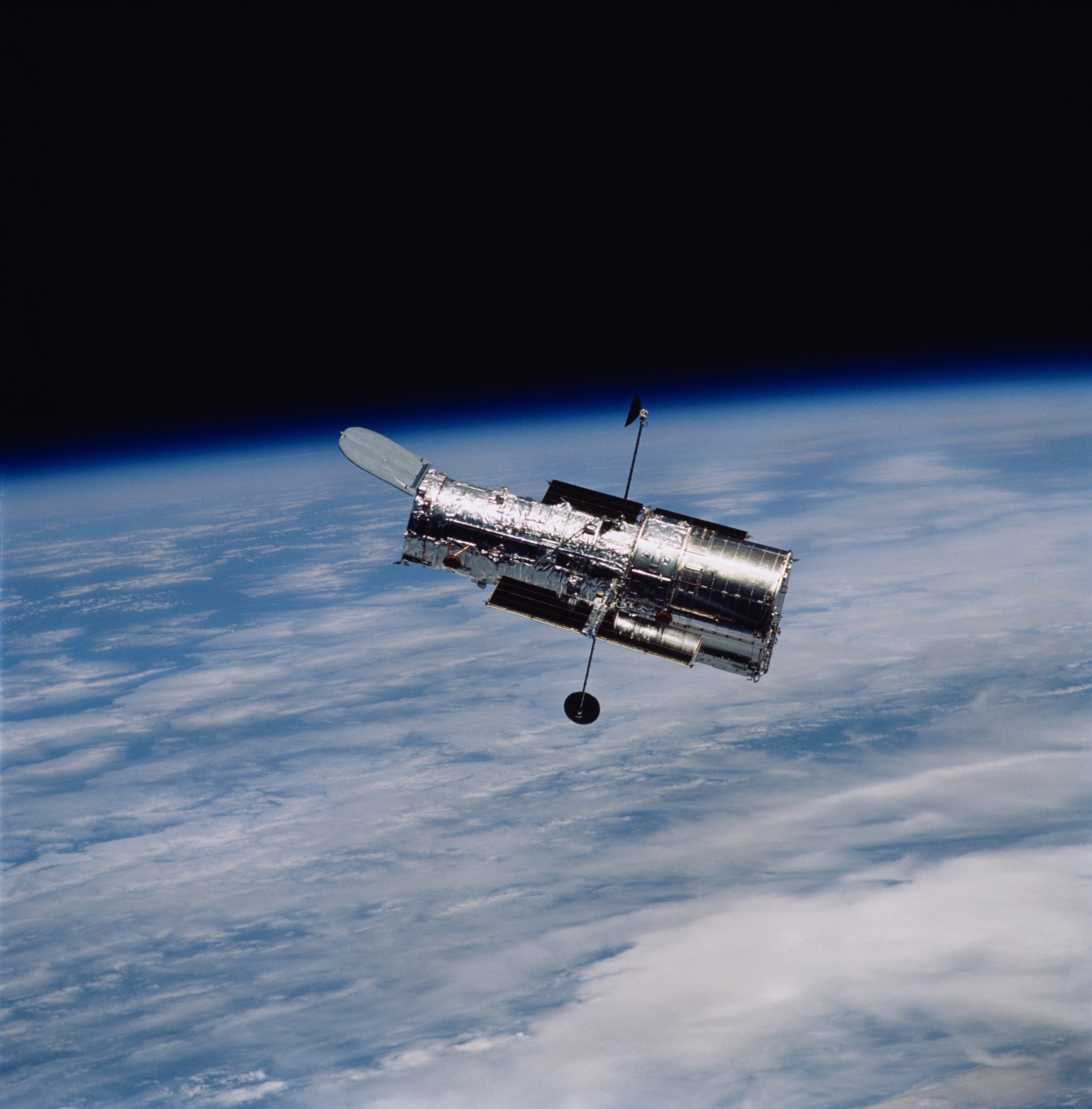
The Hubble Space Telescope has been operating for over three decades and continues to make ground-breaking discoveries that shape our fundamental understanding of the universe. Hubble is a project of international cooperation between NASA and ESA (European Space Agency). NASA’s Goddard Space Flight Center in Greenbelt, Maryland, manages the telescope and mission operations. Lockheed Martin Space, based in Denver, Colorado, also supports mission operations at Goddard. The Space Telescope Science Institute in Baltimore, Maryland, which is operated by the Association of Universities for Research in Astronomy, conducts Hubble science operations for NASA.

Media Contact:

Claire Andreoli
NASA’s Goddard Space Flight CenterGreenbelt, MD
claire.andreoli@nasa.gov

Ray Villard
Space Telescope Science Institute, Baltimore, MD

Bethany Downer
ESA/Hubble

Powered by WPeMatico

Get The Details…

Christine Knudson Uses Earthly Experience to Study Martian Geology

Christine Knudson Uses Earthly Experience to Study Martian Geology

Name: Christine Knudson
Title: Geologist
Formal Job Classification: Research Assistant
Organization: Planetary Environments Laboratory, Science Directorate (Code 699)

person stands in front of stanchions and red ribbon, behind which is a model of the six-wheeled, SUV-sized Curiosity rover
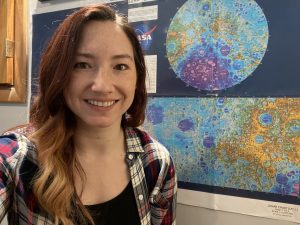
Christine Knudson is a geologist at NASA’s Goddard Space Flight Center in Greenbelt, Md. She began graduate school in August 2012, the same month that NASA’s Curiosity rover landed on Mars. “It is very exciting to be part of the rover team and to be involved in an active Mars mission,” she says. “On days when we’re downlinking science data and I’m on shift, I am one of the first people to see data from an experiment done on Mars!”
Courtesy of Christine Knudsen

What do you do and what is most interesting about your role here at Goddard?

I am a geologist doing both laboratory and field work, primarily focusing on Mars analog research. I work on the Curiosity rover as part of the Sample Analysis at Mars (SAM) instrument team.

Why did you become a geologist?

As a child, I always loved being outside and I was really interested in all things related to the Earth. In college, I figured out that I wanted to be a geologist after taking an introduction to geology course. I wanted to learn more about the Earth and its interior, specifically volcanism.

What is your educational background?

In 2012, I received a B.S. in geology and environmental geoscience from Northern Illinois University. In August 2012, the same month that Curiosity landed on Mars, I started graduate school and in December 2014, I received a M.S. in geology from the same university. I focused on igneous geochemistry, investigating the pre-eruptive water contents of a Guatemalan volcano.

Why did you come to Goddard?

I came to Goddard in February 2015 to perform laboratory analyses of Mars analog materials, rock and mineral samples, from Earth, that the Curiosity rover and spectral orbiters have also identified on Mars. It is very exciting to be part of the rover team and to be involved in an active Mars mission.

What is a highlight of your work as a laboratory geologist doing Mars analog research?

Using laboratory analyses to interpret data we are getting back from Curiosity is incredibly exciting! I perform evolved gas analysis to replicate the analyses that the SAM instrument does on the rover. Curiosity scoops sand or drills into the rocks at stops along its drive through Gale Crater on Mars, then dumps the material into a small cup within the SAM instrument inside the rover. The rock is heated in a small oven to about 900 C [about 1650 F], and the instrument captures the gases that are released from the sample as it is heated. SAM uses a mass spectrometer to identify the different gases, and that tells us about the minerals that make up the rock.

We do the same analyses on rocks and minerals in our lab to compare to the SAM analyses. The other instruments on Curiosity also aid in the identification of the rocks, minerals, and elements present in this location on the Martian surface.

I also serve as a payload downlink lead for the SAM instrument. I check on the science and engineering data after we perform an experiment on Mars. On the days I’m on shift, I check to make sure that our science experiments finish without any problems, and that the instrument is “healthy,” so that the rover can continue driving and begin the science that is planned for the next sol.

On days when we’re downlinking science data and I’m on shift, I am one of the first people to see data from an experiment done on Mars!

What is some of the coolest field work you have done?

I have done Mars analog field work in New Mexico, Hawaii, and Iceland. The field work in Hawaii is exciting because one of our field sites was inside a lava tube on Mauna Loa. We expect that there are lava tubes on Mars, and we know that the interior of the tubes would likely be better shielded from solar radiation, which might allow for the preservation of organic markers. Scientifically, we’re interested in characterizing the rocks and minerals inside lava tubes to understand how the interior differs from the surface over time and to investigate differences in elemental availability as an accessible resource for potential life. Learning about these processes on Earth helps us understand what might be possible on Mars too.

a person wearing an orange reflective safety vest stands in a dark gray, rocky lava tube tunnel
“The field work in Hawaii is exciting because one of our field sites was inside a lava tube on Mauna Loa,” Knudson says. “We expect that there are lava tubes on Mars, and we know that the interior of the tubes would likely be better shielded from solar radiation, which might allow for the preservation of organic markers.”
Courtesy of Christine Knudson

I use handheld versions of laboratory instruments, some of which were miniaturized and made to fit on the Curiosity rover, to take in situ geochemical measurements — to learn what elements are present in the rocks and in what quantities. We also collect samples to analyze in the laboratory.

I also love Hawaii because the island is volcanically active. Hawaii Volcano National Park is incredible! A couple years ago, I was able to see the lava lake from an ongoing eruption within the crater of Kīlauea volcano. The best time to see the lava lake is at night because the glowing lava is visible from multiple park overlooks.

As a Mars geologist, what most fascinates you about the Curiosity rover?

When Curiosity landed, it was the largest rover NASA had ever sent to Mars: It’s about the size of a small SUV, so landing it safely was quite the feat! Curiosity also has some of the first science instruments ever made to operate on another planet, and we’ve learned SO much from those analyses.

Curiosity and the other rovers are sort of like robotic geologists exploring Mars.  Working with the Curiosity rover allows scientists to do geology on Mars — from about 250 million miles away! Earth analogs help us to understand what we are seeing on Mars, since that “field site” is so incredibly far away and inaccessible to humans at this time.  

What do you do for fun?

I spend most of my free time with my husband and two small children. We enjoy family hikes, gardening, and both my boys love being outside as much as I do.

I also enjoy yoga, and I crochet: I make hats, blankets, and I’m starting a sweater soon.

What is your “six-word memoir”? A six-word memoir describes something in just six words.

Nature-lover. Mom. Geologist. Cat-enthusiast. Curious. Snack-fiend.

By Elizabeth M. Jarrell
NASA’s Goddard Space Flight Center, Greenbelt, Md.

A banner graphic with a group of people smiling and the text "Conversations with Goddard" on the right. The people represent many genders, ethnicities, and ages, and all pose in front of a soft blue background image of space and stars.

Conversations With Goddard is a collection of Q&A profiles highlighting the breadth and depth of NASA’s Goddard Space Flight Center’s talented and diverse workforce. The Conversations have been published twice a month on average since May 2011. Read past editions on Goddard’s “Our People” webpage.

Share

Details

Last Updated

Oct 16, 2024

Editor
Rob Garner
Contact
Rob Garner
Location
Goddard Space Flight Center

Powered by WPeMatico

Get The Details…
Rob Garner

What is a Coral Reef?

What is a Coral Reef?

7 min read

Preparations for Next Moonwalk Simulations Underway (and Underwater)

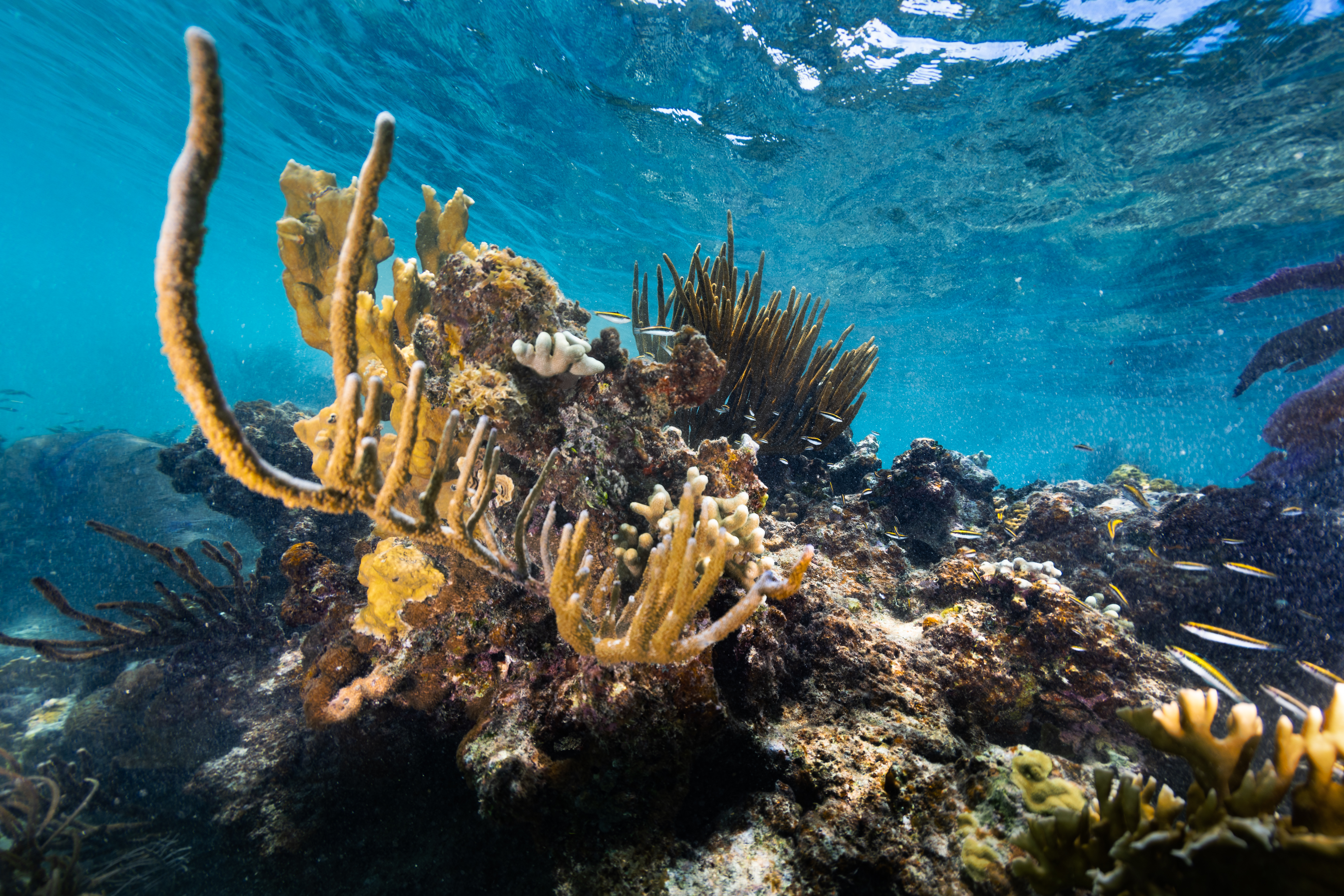
An underwater photo of a Juvenile black, white, and yellow-striped Bluehead wrasse fish dart in and out of a dead colony of golden colored pillar coral (Dendrogyra cylindrus), now covered in various algae, in the waters of Playa Melones, Puerto Rico.
Juvenile black, white, and yellow-striped Bluehead wrasse fish dart in and out of a dead colony of pillar coral (Dendrogyra cylindrus), now covered in various algae, in the waters of Playa Melones, Puerto Rico.
NASA Ames/Milan Loiacono

Coral reefs cover only 1% of the ocean floor, but support an estimated 25% of all marine life in the ocean, earning them the moniker ‘rainforest of the sea.’ They also play a critical role for coastal communities; preventing coastal erosion, protecting coastlines from hurricane damage, and generating $36 billion in annual income worldwide.

We asked Juan Torres-Pérez, a research scientist and coral reef expert at NASA Ames Research Center, about the science behind coral reefs, and the role they play in both marine ecosystems and human communities.

What is the difference between a reef, coral, and a coral reef?

Reef

Reefs are ridge-like structures, either natural or artificial. “A reef by definition is a structure that provides some relief above the ocean floor,” Torres-Pérez said. “It could be something man-made: you can pile a bunch of car tires, and then they get colonized by different organisms. Or it could be natural: a small hill on top of the ocean floor in which the primary framework is a rock.”

Corals

Corals are animals from the phylum Cnidaria, typically found along tropical coastlines. They comprise hundreds to thousands of living organisms called polyps, each only a few millimeters in diameter. Each polyp has its own body and a mouth with stinging tentacles to capture food such as plankton and small fish. The polyps grow together until they form a colony, and it is this colony that we recognize as a coral. There are two types of coral: hard corals and soft corals. Hard corals, also known as stony corals or more formally as Scleractinians, secrete calcium carbonate to form a hard skeleton; it is this type of coral that form a coral reefs. Soft corals, also known as Alcyonacea, are fleshy and bendable, often resembling trees or fans.  

An underwater image of a juvenile black, white, and yellow-striped Bluehead wrasse fish dart in and out of a reef, composed of yellow fire coral (Millepora complanate, back left), branching finger coral (Porites furcate, front left), and various species of sea rods and sea fans. This coral reef sits in the waters of Playa Melones, Puerto Rico.
Juvenile black, white, and yellow-striped Bluehead wrasse fish dart in and out of a reef, composed of yellow fire coral (Millepora complanate, back left), branching finger coral (Porites furcate, front left), and various species of sea rods and sea fans. This coral reef sits in the waters of Playa Melones, Puerto Rico.
NASA Ames/Milan Loiacono

The colorful appearance of corals comes from the microscopic algae that live inside coral cells, called zooxanthellae. These algae perform photosynthesis, bringing vital food and nutrients to the corals. “The majority of the products from photosynthesis, about 80 to 90%, pass on to the coral, and then the coral uses those for its own metabolism,” said Torres-Pérez. “This is why corals are usually found in shallow waters: because these organisms need the sunlight to photosynthesize.”

Coral Reefs

A coral reef is a term used to describe the collective structure of hard corals that help shape a coral reef ecosystem. “A coral reef is a reef whose main structure is made by living organisms, in this case corals,” said Torres-Pérez. “A coral reef will always be a reef, but not all reefs are coral reefs.” The largest coral reef in the world is Australia’s Great Barrier Reef, which is over 1,000 miles long and covers around 133,000 square miles.

Why are coral reefs important?

Healthy coral reefs play a crucial role in providing coastal protection, habitats for marine life, and even key ingredients for potential new medicines.

“Coral reef ecosystems provide habitat for thousands of species, from unicellular organisms like bacteria or some phytoplankton communities, to large organisms like sharks, groupers or snappers, and reptiles like sea turtles,” Torres-Pérez said.

Corals act as a protective barrier during big storm events such as typhoons or hurricanes and have proven to be 97% effective in preventing damage to the natural and built environment. As coral reefs have been damaged in recent decades, coastal flooding and erosion have increased, causing significant damage to coastal communities.

Many communities depend on coral reefs as a resource to sustain their livelihoods. “These are critical ecosystems, not only in terms of the whole biodiversity of the planet but because they also provide sustenance for millions of people, especially in island nations,” Torres-Pérez said. Coral reefs also support fisheries (fish caught for commercial, recreational, or subsistence purposes), recreational activities, and educational purposes.

Scientists have been exploring coral as a new ingredient source for some medicines. They have discovered that a chemical from coral can be extracted to create antibiotics that are effective against bacteria resistant to other types of antibiotics. These ingredients are replicated in a lab, eliminating the need to continuously harvest and harm corals.

What are some current threats to coral reefs?

According to a 2020 report produced by the Global Coral Reef Monitoring Network (GCRMN), 14% of the world’s coral reefs have been lost since 2009. In the wake of the 2023-2024 global coral bleaching event, that number is expected to increase.

A satellite image of the coast of Australia shows the landmass in light gray, and the water in various shades of dark crimson through pale yellow. The red is clustered close to the coast, and extends out to the bottom right of the frame.
Map showing sea surface temperatures in March, 2022 near the Great Barrier Reef in Australia. The darker red colors indicate an in increase in sea surface temperature.

Coral bleaching is caused by increasing ocean temperatures. As water temperatures rise, it causes corals to expel their zooxanthellae, leaving behind a bone-white shell and depriving the coral of its main food source. “Eventually what happens is that the coral is too weak to compete with other organisms, like filamentous algae, that can overgrow the coral and eventually kill the whole colony,” said Torres-Pérez.

Other threats to coral reefs come from human activity, such as pollution or physical damage. “Increases in sedimentation from poor land management get deposited into the reefs,” said Torres-Pérez, citing urban stormwater runoff and deforestation as two examples of sedimentation. Coral sedimentation is the deposition and accumulation of sediments, like fine sands or mud, on a reef. This clouds the waters, blocking critical sunlight and reducing the ability of zooxanthellae to photosynthesize.

Another human-caused threat to corals is eutrophication, the unnatural increase of nutrients in the water. “Eutrophication provides grounds for the development of filamentous algae, which grows much faster than corals,” said Torres-Pérez. Some of these excess nutrients in the water come from sewage released into coastal waters or runoff of agricultural fertilizers into the ocean. The algae feed off the excess nutrients and grow into massive blooms, which suppress the growth of corals.

An underwater photo in shallow teal water shows the blurry silhouette of people swimming in the background, with bits of floating material in the foreground. This material looks like puffy brown cotton balls.
Cyanobacteria overgrowth crowds the water of Playa Melones, Puerto Rico, likely caused by an on-land source of pollution leeching excess nutrients into the water. In the background float students and instructors from the NASA OCEANOS internship.
NASA Ames/Milan Loiacono

Moreover, Torres-Pérez pointed out that human-caused physical damage to reefs can result from mechanical damage, such as ship anchors being thrown onto corals. Some fishing techniques, like deep water trawling (dragging fishing nets along the sea floor), can also damage reefs by pulling and tearing corals away from their bases. On a more individual scale, coral damage can also result from being stepped on by humans, or accumulated trash left behind by beach-goers.

What is being done to protect coral, at NASA and beyond?

Many coral reefs in the world are still unclassified, unexplored, or yet to be discovered. NASA’s NeMO-Net hopes to change that. Torres-Pérez, who is a Co-Investigator for NeMO-Net, described how the citizen science project functions like an interactive mobile video game, allowing anyone to identify corals. “Users can characterize different components of a coral reef based on 2D [and 3D] images of a coral reef,” said Torres-Pérez. “which goes into a machine learning component.” The information from these classifications is fed into a scientific model and helps NASA both classify and assess the health of coral reefs around the world. To learn more about NeMO-Net and how to get involved, check out their website.

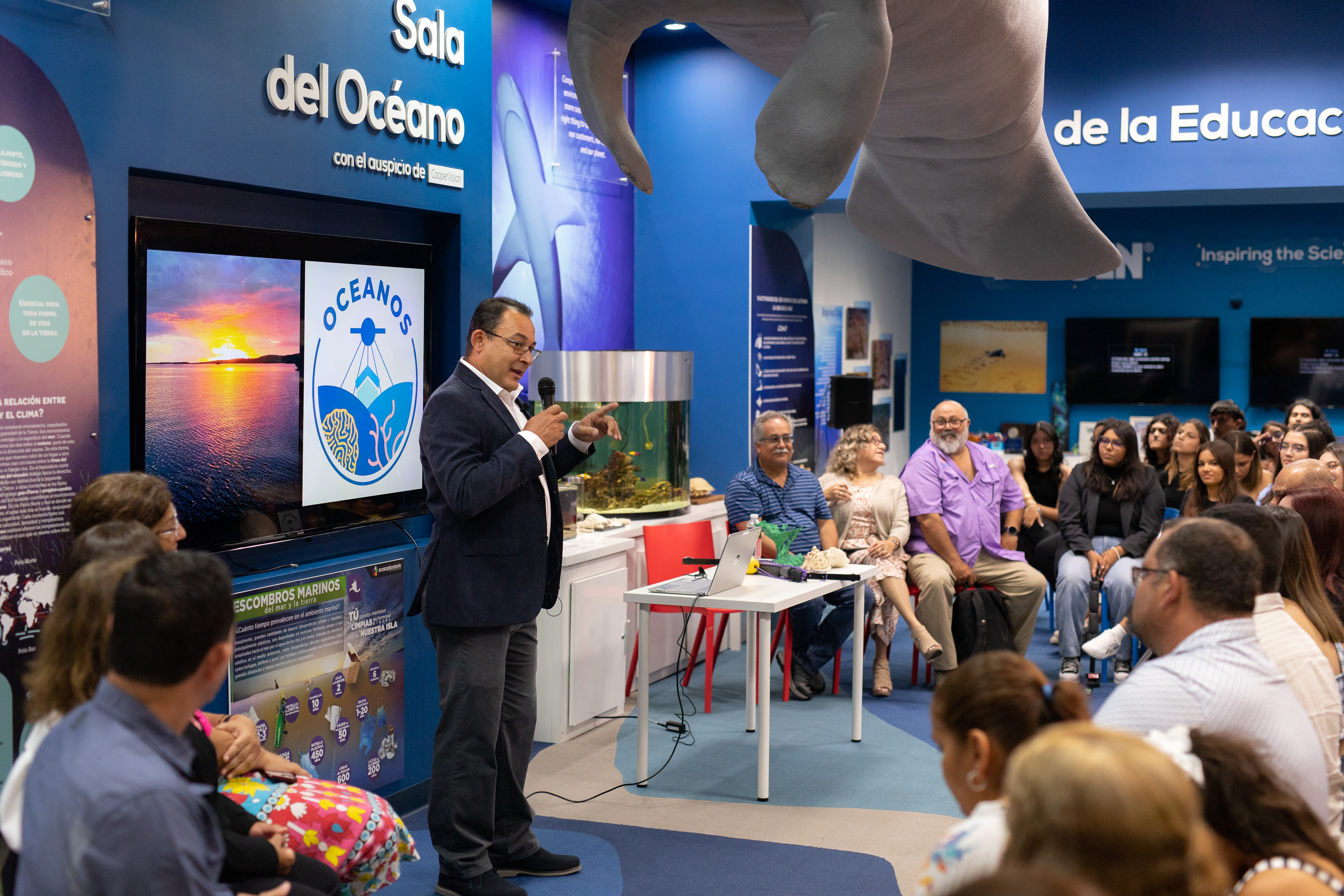
In 2022, Torres-Pérez founded OCEANOS (Ocean Community Engagement and Awareness using NASA Earth Observations and Science for Hispanic/Latino Students), a program aimed at bringing oceanography and STEM opportunities to the next generation of Hispanic/Latino students in Puerto Rico. During the program, students build and test their own low-cost optical sensors, test data in a phytoplankton lab, replant coral reefs, and create storymap presentations of their work. “We want students to feel confident and capable to pursue STEM careers,” Torres-Pérez said, “and we want them to become agents of change in their community to share the importance of preserving the ocean.”

OCEANOS PI Juan Torres-Perez delivers the opening address of the final presentations to a crowded room at the EcoExploratorio: el Museo de Ciencias de Puerto Rico.
OCEANOS PI Juan Torres-Pérez delivers the opening address of the 2023 final presentations to a crowded room at the EcoExploratorio: el Museo de Ciencias de Puerto Rico.
NASA Ames/Milan Loiacono

Outside of NASA, Torres-Pérez is an active member of the U.S. Coral Reef Task Force (USCRTF); an interagency body established in 1998 from Executive Order 13089: Coral Reef Protection that aims to preserve, protect, and restore coral reef ecosystems.

Resources to Learn More

To learn more about coral reefs and how they are monitored, Torres-Pérez recommends checking out resources from the National Oceanic and Atmospheric Administration (NOAA), which has a section on their website dedicated to corals. One notable coral reef resource from NOAA is their Coral Reef Watch website, which monitors sea surface temperatures on global and local scales. The website serves government and non-governmental agencies with their data products, which are used to monitor and predict climate impacts on coral reefs worldwide.

Written by: Katera Lee, NASA Ames Research Center

Share

Details

Last Updated

Oct 15, 2024

Powered by WPeMatico

Get The Details…
Milan Loiacono

Station Science Top News: Oct. 11, 2024

Station Science Top News: Oct. 11, 2024

Researchers verified that 3D micro-computed tomography scans can map the orientation of plant roots in space and used the method to demonstrate that carrots grown in actual and simulated microgravity both had random root orientation. These findings suggest that simulated microgravity offers a reliable and more affordable tool for studying plant adaptation to spaceflight.

MULTI-TROP evaluated the role of gravity and other factors on plant growth. Plant roots grow downward in response to gravity on Earth, but in random directions in microgravity, which is a challenge for developing plant growth facilities for space. Results from this investigation could help address this challenge, advancing efforts to grow plants for food and other uses on future space missions as well as improving plant cultivation on Earth.

Preflight image of the BIOKON facility used to grow carrots for MULTI-TROP.
Kayser Italia

For climate model simulations, researchers developed four parameters of electrical discharges from thunderclouds that produce visual emissions known as Blue LUminous Events or BLUEs. BLUEs are thought to affect regional atmospheric chemistry and climate. The parameters reported by this study could inform models that help test the global and regional effects of thunderstorm corona discharges, including how their geographic distribution and global occurrence rate will change as the atmosphere warms.

ASIM, an investigation from ESA (European Space Agency), studies high-altitude lightning in thunderstorms and the role it plays in Earth’s atmosphere and climate. Scientists need to understand processes occurring in Earth’s upper atmosphere to determine how lightning is connected to Earth’s climate and weather so they can develop better atmospheric models to guide weather and climate predictions.

View from space showing bright blue flashes of lightning over the dark Earth, with city lights visible along the coastline.
Lightning in a thunderstorm off the coast of Africa as seen from the International Space Station.
NASA/Matthew Dominick

technique to detect sounds generated by the inner ear could be used as a non-invasive tool for monitoring changes in fluid pressure in the head during spaceflight. Increased fluid pressure in the head that occurs in microgravity can cause visual impairment and may also affect the middle and inner ear. Insight into fluid pressure changes could help scientists develop ways to protect astronauts from these effects.

The ESA and ASI investigation Acoustic Diagnostics monitored hearing function in astronauts on long-term missions using otoacoustic emissions (sounds generated by the inner ear in response to specific tones). Researchers compared these measurements before and during flight to indirectly detect changes in fluid pressure in the head. Different body position and fit of the ear probes affected results of the test and the authors note that these issues need to be addressed.

NASA astronaut Drew Morgan participates in a hearing test for the Acoustic Diagnostics investigation.
ESA (European Space Agency)/Luca Parmitano

Powered by WPeMatico

Get The Details…
Sumer Loggins