NASA Shares Views of August Solar Eclipse from Ground, Air, Space
3 Min Read
NASA Shares Views of August Solar Eclipse from Ground, Air, Space
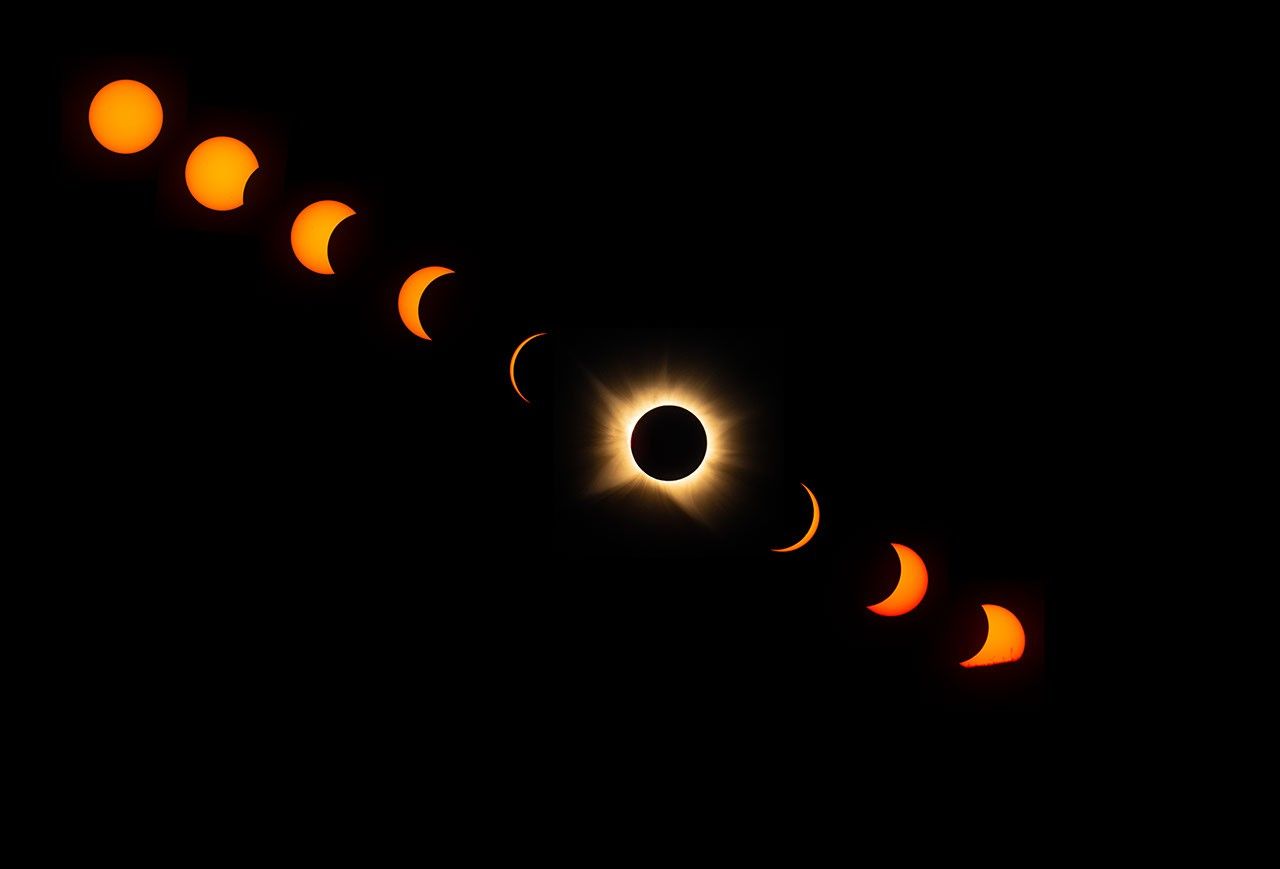
This composite image shows the progression of a total solar eclipse as the Sun sets over San Millán de los Caballeros, Spain, on Wednesday, Aug. 12, 2026.
Credits: NASA/Bill Ingalls
On Aug. 12, a total solar eclipse darkened skies over Greenland, Iceland, and Spain. As the Moon covered the Sun, it briefly revealed the Sun’s wispy outer atmosphere — the corona — to those in the path of totality who were lucky enough to have clear skies. NASA researchers and photographers were along the eclipse path to study the corona, capture the phenomenon, and observe how the eclipse affected our planet.
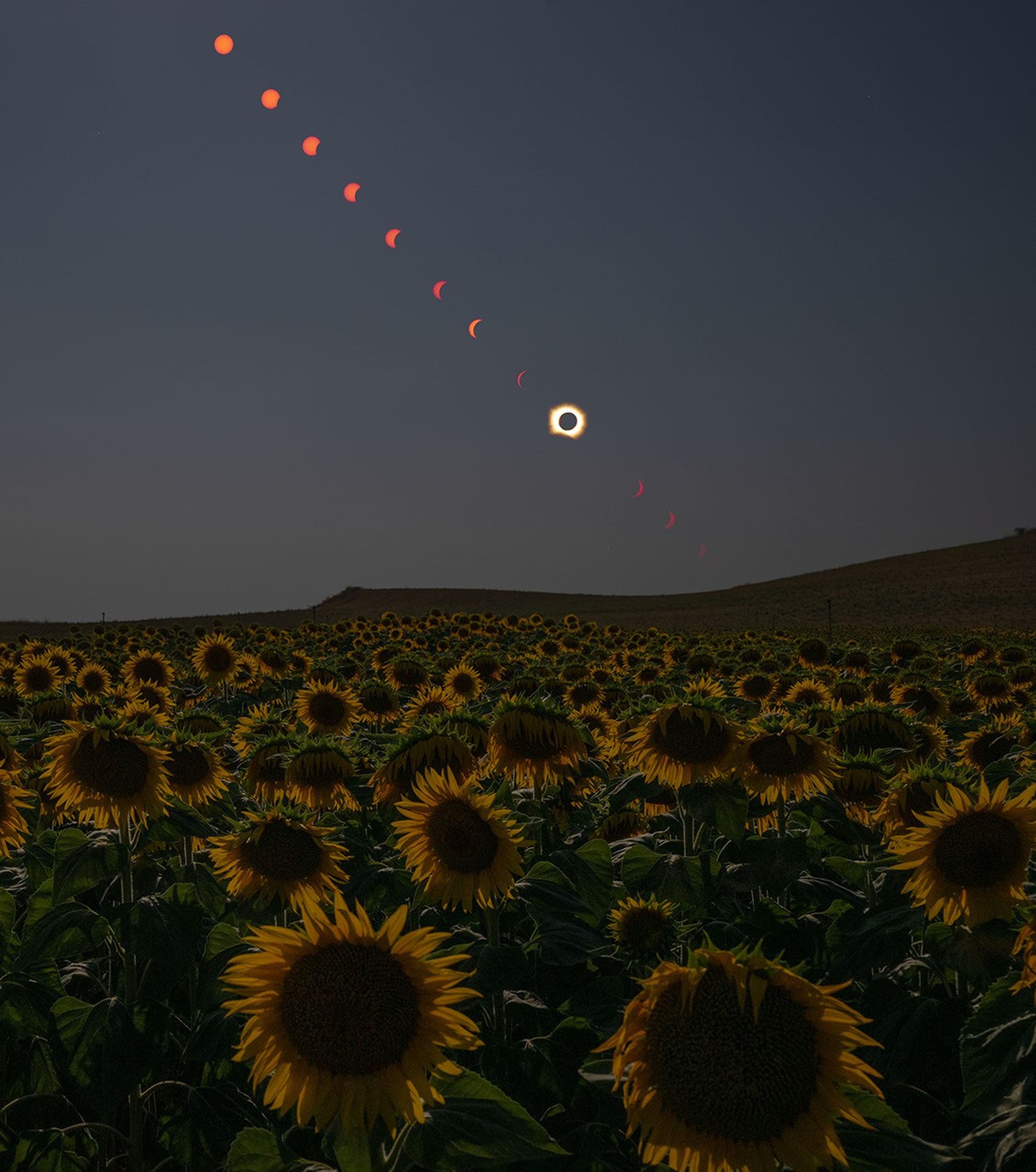
One NASA photographer in Spain captured the total solar eclipse as well as the partial phases before and after, until the Sun set below the horizon.
This composite image shows the progression of a total solar eclipse over a field of sunflowers in San Millán de los Caballeros, Spain, on Aug. 12, 2026. Credit: NASA/Bill Ingalls
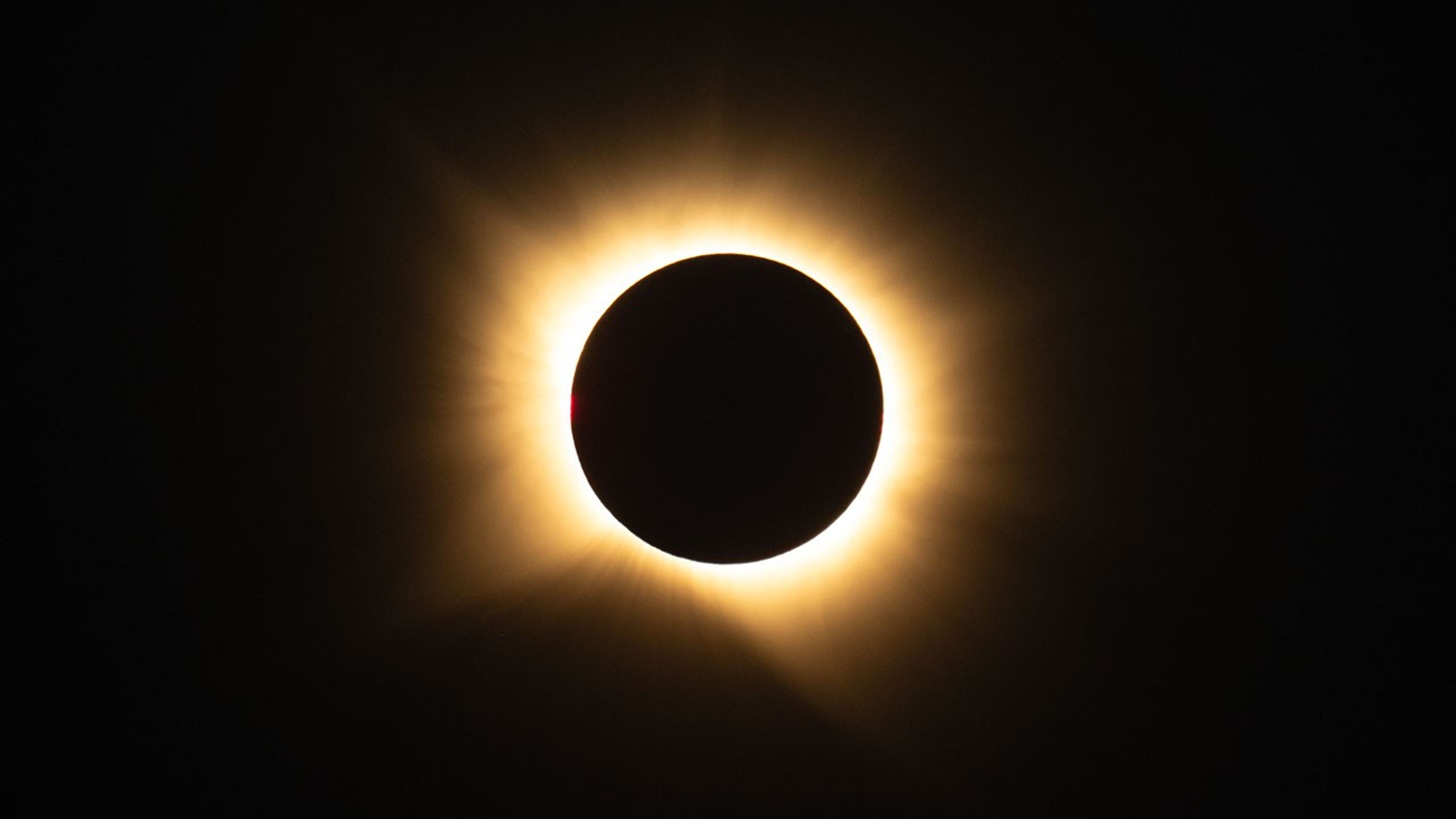
The solar corona appears in this photograph of a total solar eclipse captured from San Millán de los Caballeros, Spain, on Aug. 12, 2026. Credit: NASA/Bill Ingalls
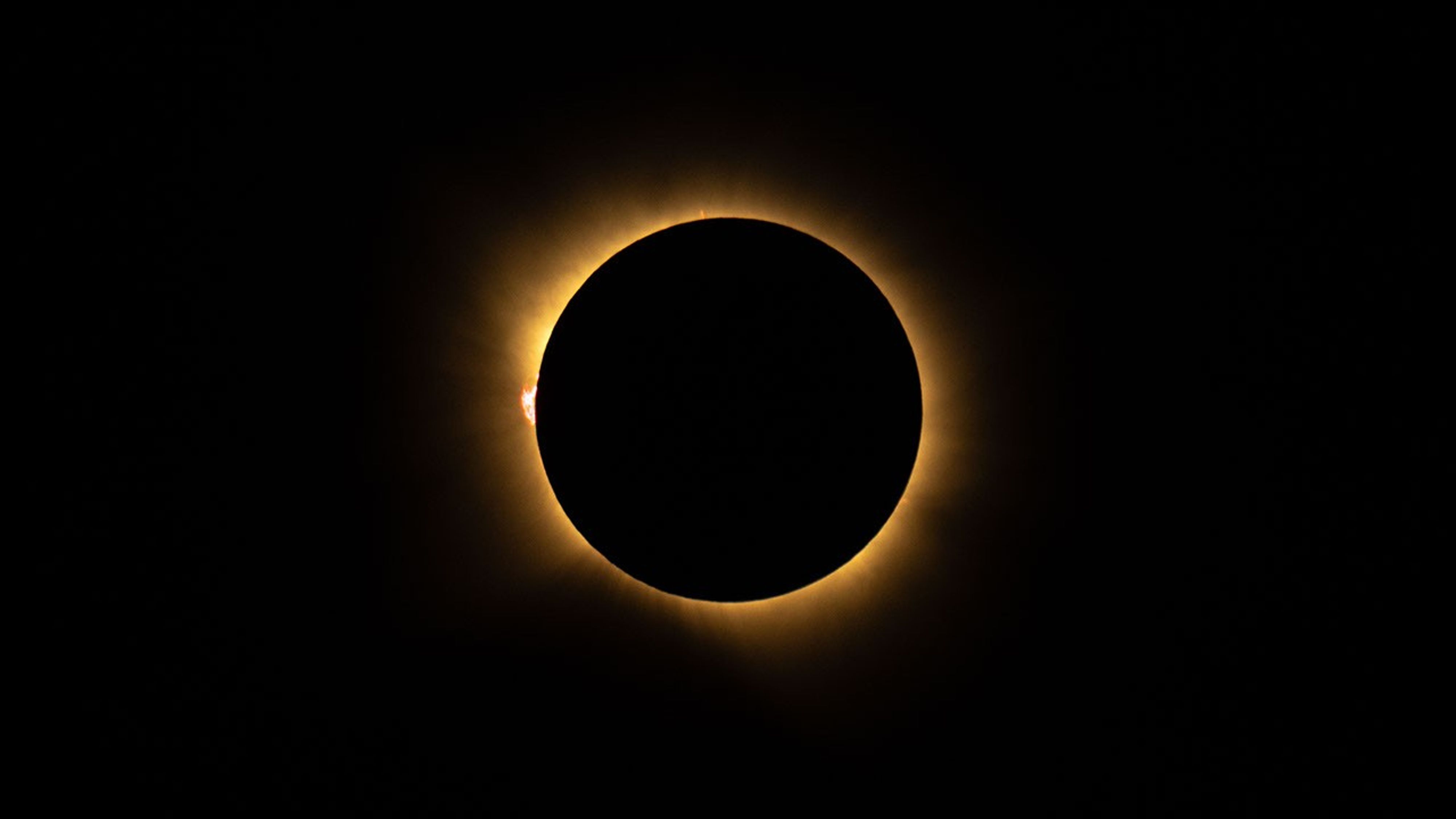
A solar prominence, a plume of electrically charged gas suspended above the Sun by strong magnetic forces, appears as a pink feature along the left edge of the eclipsed Sun in this photograph taken from San Millán de los Caballeros, Spain, on Aug. 12, 2026. Credit: NASA/Bill Ingalls
This composite image shows the progression of a total solar eclipse as the Sun sets in San Millán de los Caballeros, Spain, on Aug. 12, 2026. Credit: NASA/Bill Ingalls
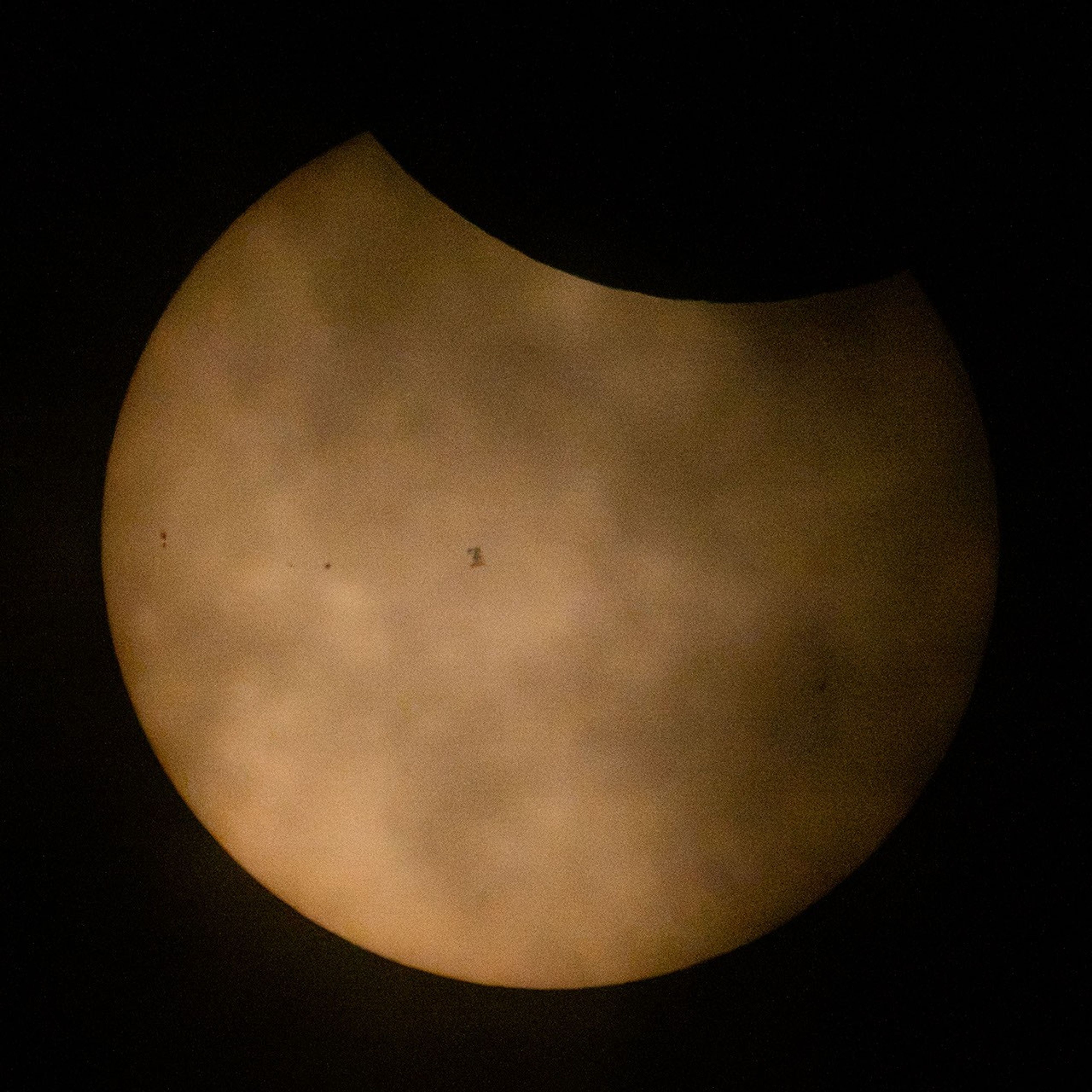
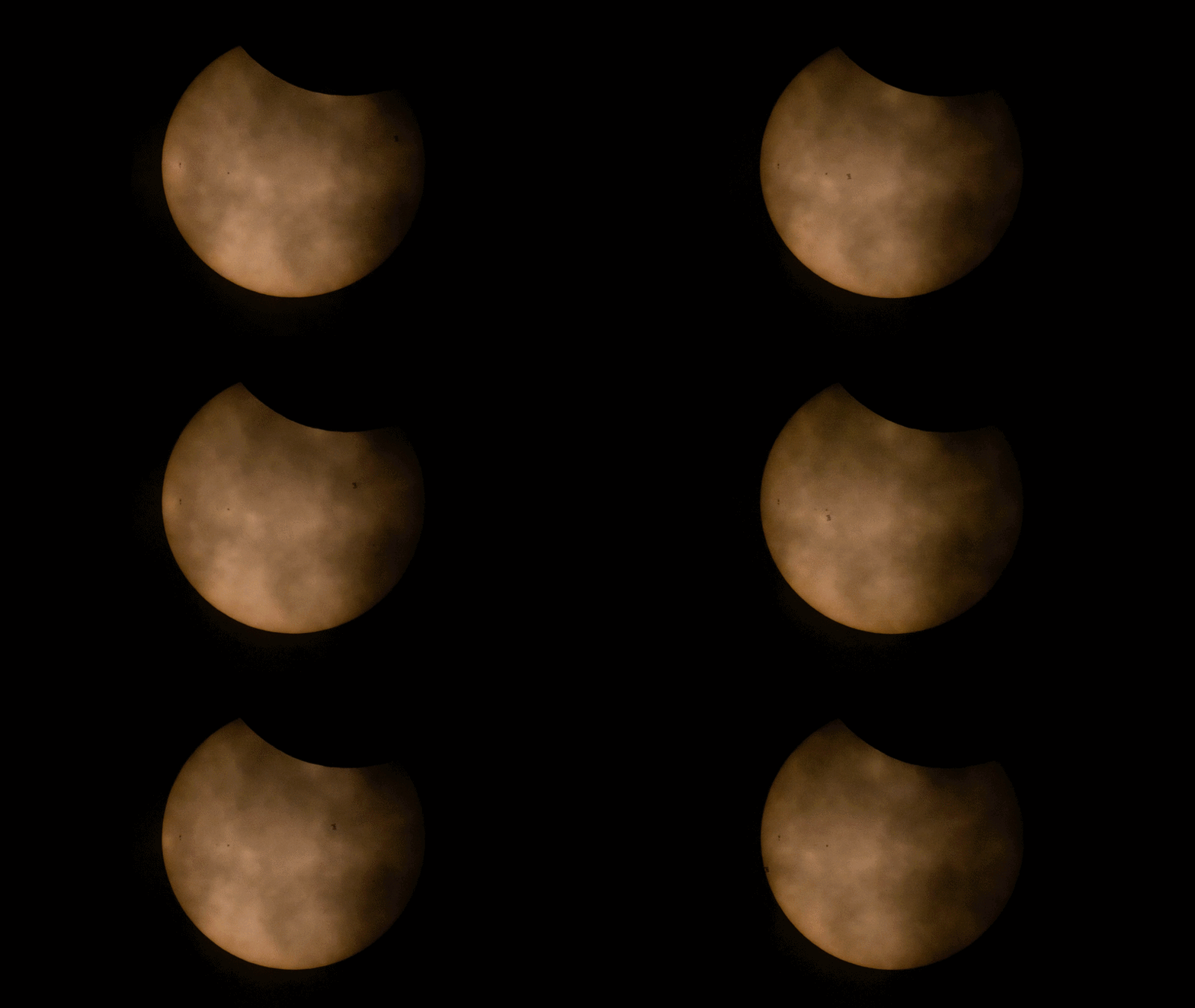
In northern Maine, where only a partial eclipse was visible, another NASA photographer captured the International Space Station, with its crew of seven aboard, speeding past the partially eclipsed Sun.
In this image of a partial solar eclipse, which is veiled by clouds, the International Space Station, with a crew of seven aboard, appears in silhouette as it transits at roughly five miles per second on Aug. 12, 2026, as seen near Hodgdon, Maine. Aboard the station as part of Expedition 75 are NASA astronauts Jessica Meir, Anil Menon, and Jack Hathaway; ESA (European Space Agency) astronaut Sophie Adenot; and Roscosmos cosmonauts Pyotr Dubrov, Andrey Fedyaev, and Anna Kikina. Credit: NASA/Joel Kowsky
Twelve frames assembled in sequence show the International Space Station, with a crew of seven aboard, in silhouette as it transits the Sun at roughly five miles per second during a partial solar eclipse on Aug. 12, 2026, as seen near Hodgdon, Maine. Clouds partially obscure the view of the Sun. Aboard the station as part of Expedition 75 are NASA astronauts Jessica Meir, Anil Menon, and Jack Hathaway; ESA (European Space Agency) astronaut Sophie Adenot; and Roscosmos cosmonauts Pyotr Dubrov, Andrey Fedyaev, and Anna Kikina. Credit: NASA/Joel Kowsky
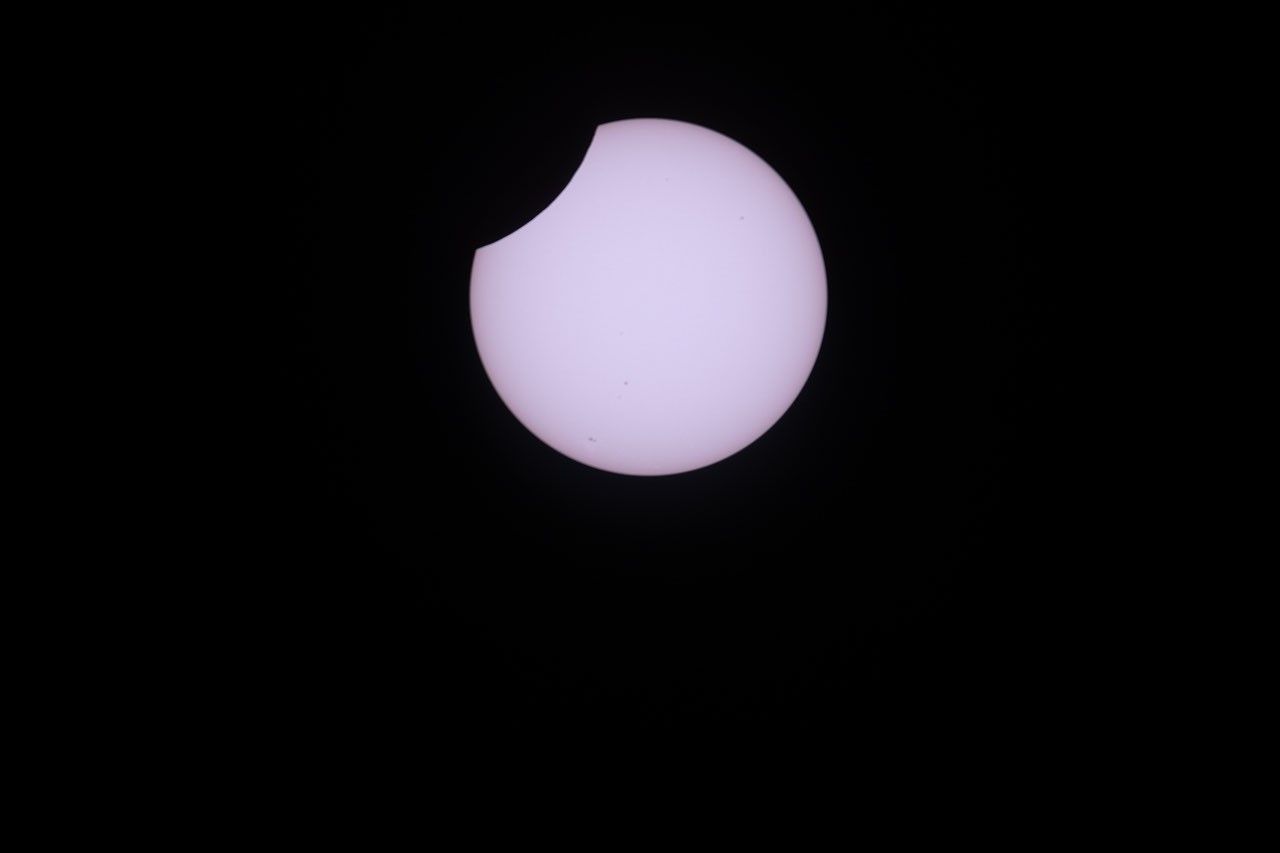
Meanwhile, from about 250 miles above the ground, a NASA astronaut aboard the International Space Station snapped a few photos of the partial eclipse from their perspective as well.
NASA astronaut Jessica Meir captured this photo of the partial solar eclipse from the International Space Station on Aug. 12, 2026, as the orbital outpost soared 262 miles above southern Quebec, Canada. From the station, the Moon covered about 18% of the Sun at the peak of the eclipse. Credit: NASA/Jessica Meir
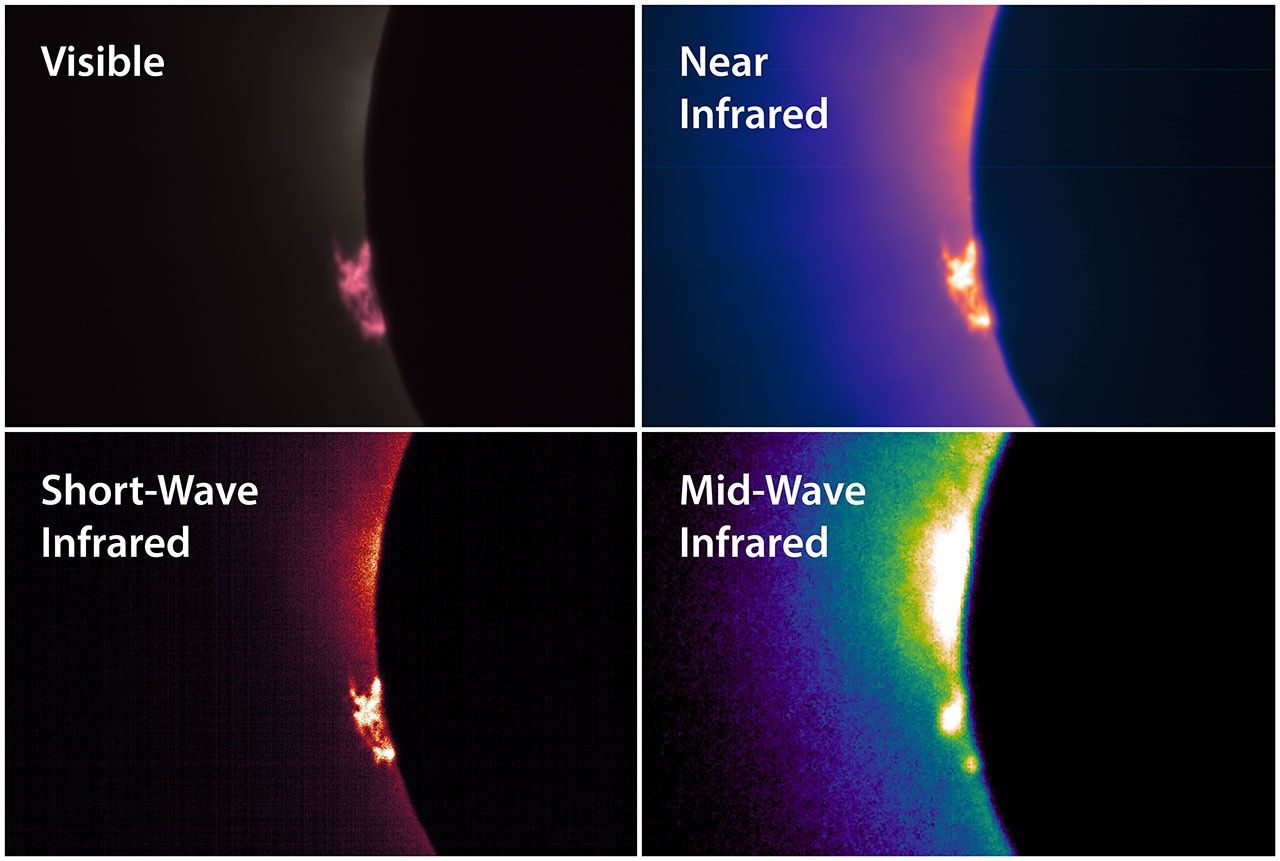
Between the ground and the space station, NASA pilots flew NASA’s WB-57F research jet at an altitude of 50,000 feet, passing through the eclipse’s shadow to lengthen their time in the eclipse. The jet carried a suite of cameras that captured high-resolution images of the corona and prominences, plumes of electrically charged gas rising off the Sun, in several different wavelengths of light.
The total solar eclipse on Aug. 12, 2026, was captured by a camera mounted inside the cockpit window of NASA’s WB-57F aircraft as it flew around 50,000 feet altitude off the coast of Iceland.
NASA
A suite of cameras installed on NASA’s WB-57F aircraft captured images of the solar corona and prominences in different wavelengths of visible and infrared light during the total solar eclipse on Aug. 12, 2026. A science team led by the Southwest Research Institute in Boulder, Colorado, will analyze the images to learn more about complex and dynamic features in the Sun’s outer atmosphere. Credit: NASA/SwRI/Will Ashfield
In both Iceland and Spain, teams of students participating in the NASA-funded Nationwide Eclipse Ballooning Project launched scientific balloons that carried instruments to capture images of the eclipse’s shadow and study the eclipse’s effects on our atmosphere. Even though clouds obscured the view of the eclipse from the ground in Iceland, the weather did not interfere with the balloon-borne instruments’ ability to gather information about how the brief loss of light and heat affected the lower atmosphere.
Students participating in the NASA-funded Nationwide Eclipse Ballooning Project prepare to launch a scientific balloon in Mosfellsbær, Iceland, during the total solar eclipse on Aug. 12, 2026. Credit: NASA/Abbey Interrante
The Moon’s shadow passes over the atmosphere during the total solar eclipse on Aug. 12, 2026. The video was taken by a camera carried by a scientific balloon launched from Spain by a student team from Montana State University participating in the NASA-funded Nationwide Eclipse Ballooning Project. The video captures about six minutes of time but is sped up to play at four times real speed. Passing through the foreground are some other science instruments carried by the same balloon.
Nationwide Eclipse Ballooning Project/Montana State University
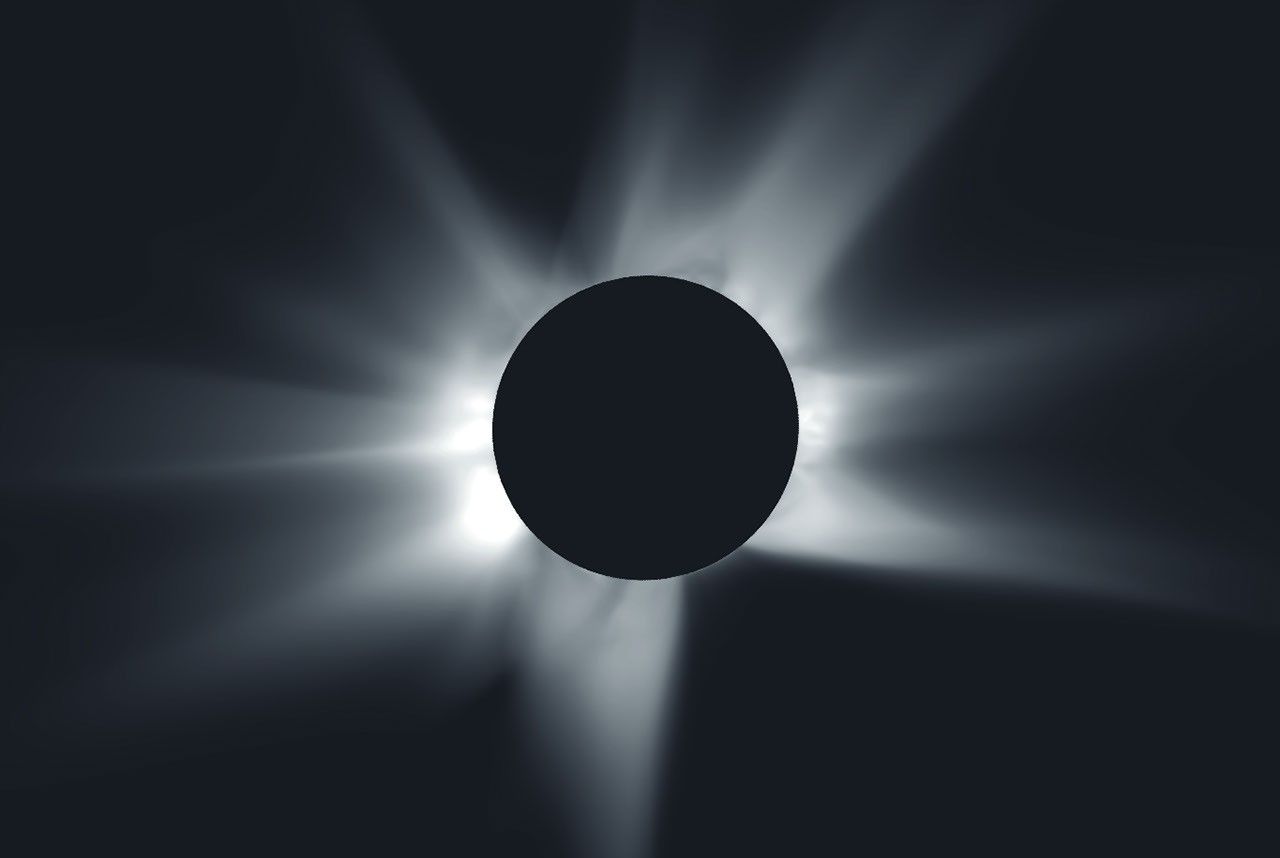
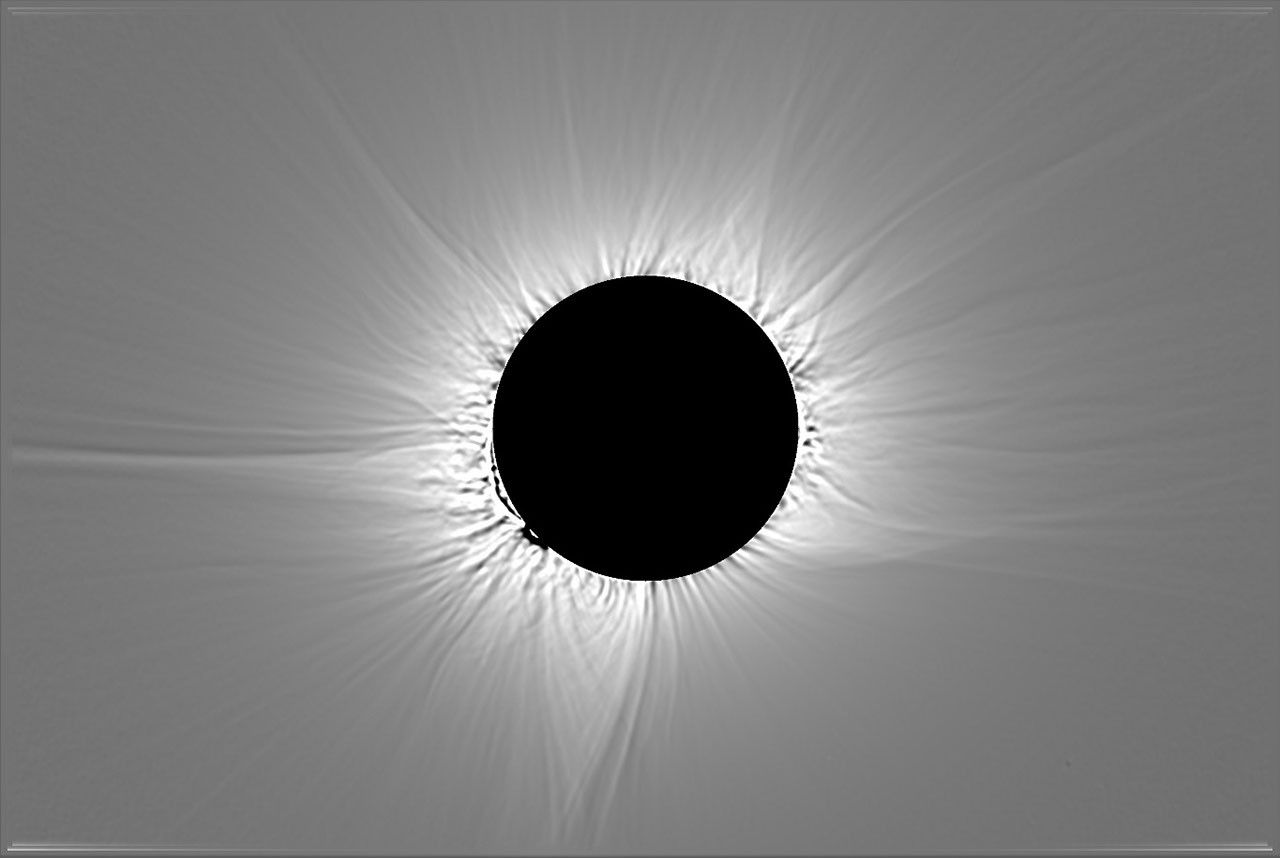
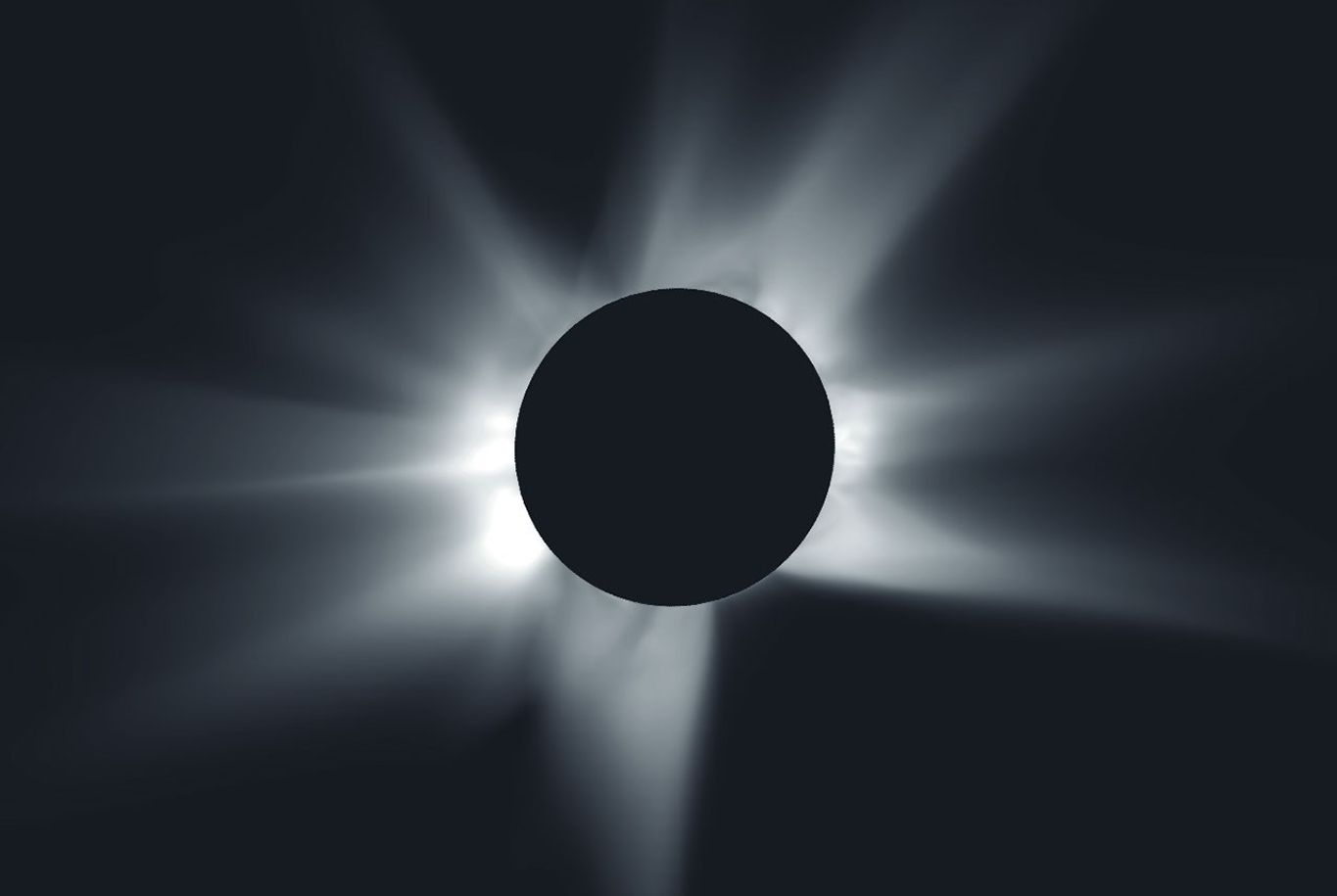
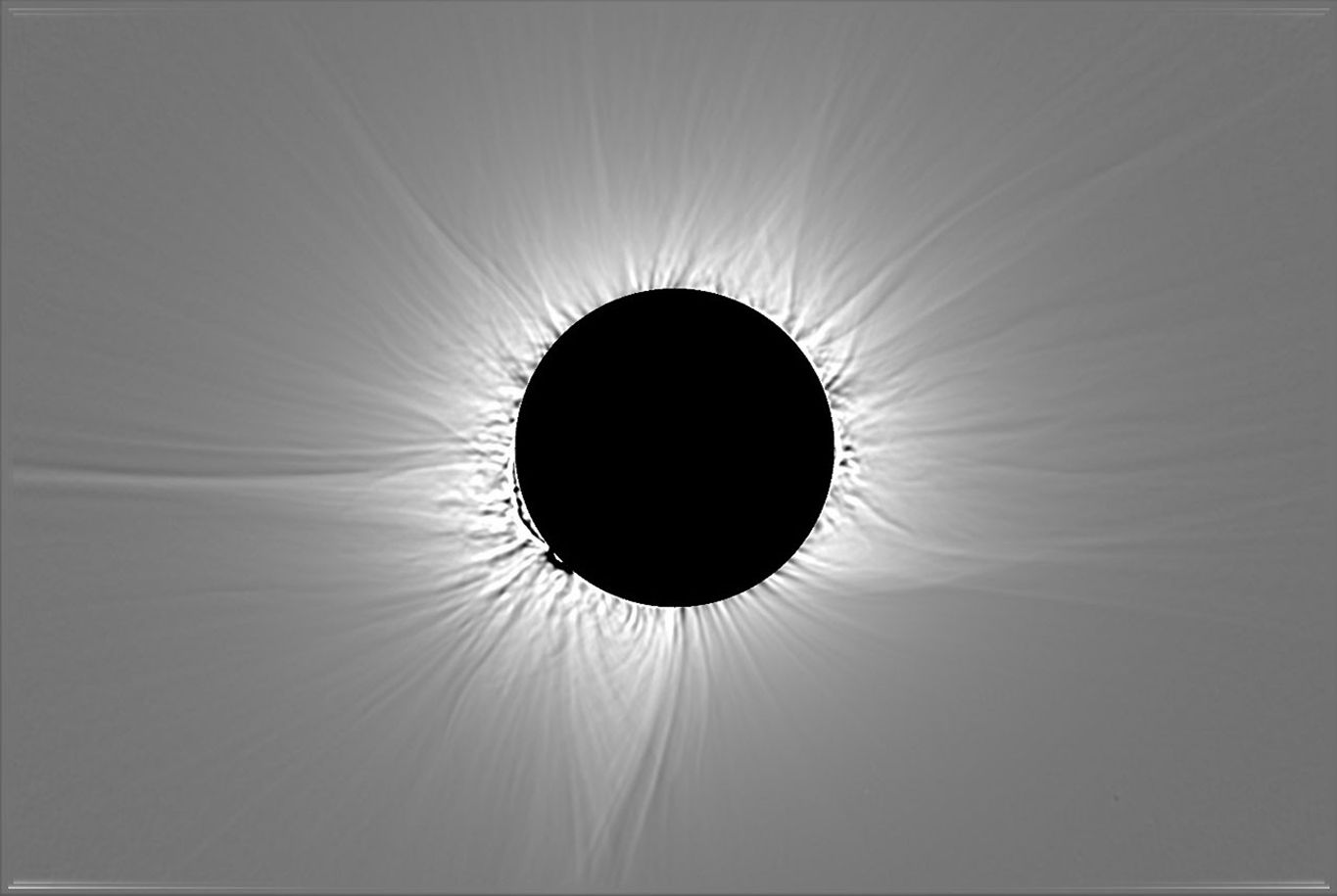
Before the eclipse, scientists at Predictive Science Inc., with support from NASA grants and supercomputers, used observations of the Sun from NASA spacecraft and ground-based telescopes to predict what the corona would look like during the eclipse. Below, their corona prediction is compared to a composite image of the corona, which combines multiple images captured by the NASA-supported DEB Initiative project during the total eclipse near León, Spain.
prediction
image
This image shows a prediction from the morning of Aug. 12, 2026, of what the solar corona would look like to the human eye during the total solar eclipse that day.
Predictive Science Inc.
This processed, composite image of the corona combines multiple images captured near León, Spain, during the total solar eclipse on Aug. 12, 2026.
DEB Initiative Team/Zack Stockbridge
This image shows a prediction from the morning of Aug. 12, 2026, of what the solar corona would look like to the human eye during the total solar eclipse that day.
Predictive Science Inc.
This processed, composite image of the corona combines multiple images captured near León, Spain, during the total solar eclipse on Aug. 12, 2026.
DEB Initiative Team/Zack Stockbridge
prediction
image
The left image shows a prediction from the morning of Aug. 12, 2026, of what the solar corona would look like to the human eye during the total solar eclipse that day. The right image is processed, composite image of the corona that combines multiple images captured near León, Spain, during the total solar eclipse on Aug. 12, 2026. Left image credit: Predictive Science Inc.; right image credit: DEB Initiative Team/Zack Stockbridge
Over the coming months, scientists will analyze the observations and images captured during the solar eclipse on Aug. 12 and present what they have learned about the Sun and its effects on our home planet. These observations will also help prepare science teams to investigate future solar eclipses, such as a much longer total solar eclipse that will be visible from southern Spain and northern Africa on Aug. 2, 2027.
NASA’s Chemical Equilibrium with Applications (CEA) code is a foundational tool for propulsion system analysis. It provides equilibrium chemistry, rocket performance, shock, and detonation calculations used across NASA and the broader aerospace community. NASA Engineering and Safety Center (NESC) Activity TI-22-01730 modernized the legacy CEA2 Fortran code into CEA v3, a Fortran 2008, object-oriented software package with expanded interface support, updated thermochemical data, improved maintainability, and substantially improved workflow integration. The modernized code preserves backward compatibility with legacy CEA input workflows while enabling direct use from modern analysis environments, including Python, C, MATLAB, and automated design studies.
Background
CEA2 was released in 2002 and has remained widely used for propulsion and thermochemistry analysis. However, the original procedural Fortran implementation became increasingly difficult to maintain, extend, and integrate into modern engineering workflows due to the lack of a subroutine interface. Current propulsion analysis increasingly requires automated parametric sweeps, integration with other modeling tools and engineering workflows, and support for emerging propellants and fuels, including green propellants and sustainable aviation fuels. These needs motivated a comprehensive modernization effort to preserve CEA’s validated technical basis while improving its maintainability, usability, and integration with modern engineering software.
Technical Improvements
Modern Software Architecture
CEA v3 is implemented in Fortran 2008 using object-oriented data structures, stricter typing, and a thread-safe equilibrium solver architecture. The software supports Fortran, C, Python, MATLAB, and Excel interfaces. These interfaces allow CEA to be used directly in automated analysis pipelines, multidisciplinary design frameworks, and high-volume designof- experiments studies. Backward compatibility is supported through a legacy command-line interface, allowing existing CEA input files and workflows to be carried forward with minimal disruption.
Expanded Species and Thermodynamic Data
The thermodynamic database has been expanded to support additional propellants and fuels relevant to current NASA applications, including green propellant constituents such as ADN, HAN, and LMP-103S, and sustainable aviation fuel candidates such as n-Butanol. This expanded species coverage improves the applicability of CEA for next-generation propulsion, green propellant, and sustainable aviation fuel studies.
New Modeling Capabilities
CEA v3 adds or improves support for several modeling capabilities, including:
Subroutine interface enabling direct integration and high-volume calculations
Negative reactant amounts
Inert hydrocarbon fuel representations, including RP-1, Jet-A, and JP-series fuels
Analytic total derivatives for coupling with optimization and sensitivity analysis workflows
Performance Improvements
For standalone use, individual equilibrium calculations in CEA v3 are moderately slower than comparable CEA2 calculations because the modernized architecture and added robustness introduce additional computational overhead. In representative testing, a single calculation was approximately 40 percent slower, but the absolute difference was only about 0.004 seconds per case. However, the modernized architecture provides substantial performance advantages for multi-case workflows, which are common in design-of-experiments studies, parametric sweeps, optimization, and uncertainty analyses. In one benchmark, a sweep of 108,500 cases completed in approximately 1.11 seconds with CEA v3, compared with approximately 15 minutes using CEA2. This corresponds to an approximately 800-times reduction in runtime for that workflow. These improvements make large-scale propulsion trade studies and automated design-space exploration significantly more practical.
Guidance for Engineering Use
NASA engineering users should consider the following guidance:
Use CEA v3 for new propulsion and thermochemistry analyses when possible to take advantage of the modernized interfaces, expanded database, and improved workflow integration.
Use the Python, MATLAB, or C interfaces for automated workflows, including parametric sweeps, optimization studies, and iterative design analyses.
Use the updated species database for green propellant and sustainable aviation fuel studies when the relevant species are included and validated for the intended application.
Use the classic command-line interface when continuity with legacy CEA workflows or input files is required.
Retain appropriate engineering review and validation when transitioning established CEA2 workflows to CEA v3, particularly for mission-critical analyses or cases that depend on legacy assumptions.
NASA’s Artemis II Crew Set to Receive Congressional Space Medal of Honor
From left, Artemis II crew NASA astronauts Reid Wiseman, Victor Glover, Christina Koch, and CSA (Canadian Space Agency) astronaut Jeremy Hansen are photographed on April 29, 2026, in the White House Oval Office with President Donald J. Trump.
Credit: White House
President Donald J. Trump will award each of NASA’s Artemis II crew members the Congressional Space Medal of Honor at 11 a.m. EDT on Friday, Aug. 28, during a ceremony at the agency’s Johnson Space Center in Houston.
NASA astronauts Reid Wiseman, Victor Glover, and Christina Koch, and CSA (Canadian Space Agency) astronaut Jeremy Hansen, completed a 10-day mission around the Moon on April 10. During a historic test flight as the first astronauts to fly aboard NASA’s Orion spacecraft, these crew members were the first to travel beyond the Moon in more than 50 years and traveled farther in space than humans have ever before.
NASA Administrator Jared Isaacman will join the President and astronauts in the awards ceremony.
The event will stream live on a variety of platforms. Learn how to watch online:
In addition to pooled media, limited media credentialing is available for this event. To apply, please submit your request online by 5 p.m. CDT on Tuesday, Aug. 25.
Learn more about NASA’s Artemis program on the agency’s website.
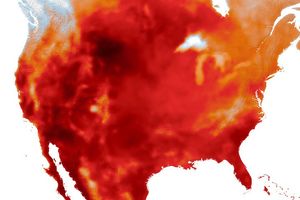
Output from NASA’s GEOS (Goddard Earth Observing System) global model shows daily maximum surface air temperature across Western Europe from May 1 to August 19, 2026. The darkest red areas indicate temperatures that met or exceeded 40°C (104°F).
NASA Earth Observatory/Lauren Dauphin
Western Europe got its first hint of an unusual summer in May 2026, when a heat dome produced exceptional temperatures that shattered records in several countries. Remarkable as it was, that early heat wave turned out to be only the opening salvo.
By mid-August, Europeans were sweating through their fifth heat wave of the season, with the latest onslaught pushing temperatures well above 40 degrees Celsius (104 degrees Fahrenheit) across a broad area. During these bouts of extreme weather, high temperatures were often unrelenting, persisting for several days and sometimes weeks on end, and remaining overnight.
For a region accustomed to relatively mild summers, the heat upended everyday life. Hospitalizations and heat-related deaths spiked. Highways and train tracks buckled, forcing road closures and service disruptions. Large and destructive wildfires raged in areas where they were once rarely seen. The heat also worsened the severe drought that has gripped the region for months, contributing to record-low river water levels and disrupting water and power supplies, transportation routes, and agriculture.
The animation above shows the daily maximum surface air temperature across Western Europe from May 1 to August 19, 2026. It was produced by combining satellite observations with temperatures predicted by a version of NASA’s GEOS (Goddard Earth Observing System) global model, which uses mathematical equations to represent physical processes in the atmosphere. The darkest red areas indicate where temperatures met or exceeded 40°C.
The heat broke records at a furious pace, often by wide margins. According to the UK Met Office, temperatures soared as high as 35.1°C (95.2°F) in London on May 26, smashing the previous May record by 2.3°C (4.1°F). In June, Bordeaux, France, broke its maximum-temperature record on three consecutive days, hitting 42.5°C on June 24, Météo-France reported. Slovakia, meanwhile, set new national records for both daytime and nighttime highs in August. Combined June and July temperatures in Western Europe were the highest on record, according to Europe’s Copernicus climate monitoring service.
In Europe, extreme temperatures collided with several vulnerabilities, including limited access to air conditioning, high nighttime temperatures, and a lack of green space in some cities. The circumstances triggered not just discomfort but heat exhaustion and heatstroke in some cases. Preliminary reports suggest that heat may have been associated with 10,000 excess deaths, including thousands of people in the UK, France, Germany, and Belgium.
“Air conditioning is an especially critical issue in Europe in the short term,” said Anamika Shreevastava, a researcher at New York University who studied urban heat islands as a postdoc at NASA’s Jet Propulsion Laboratory. One of her goals was to produce thermal maps based on NASA data from missions like ECOSTRESS that city planners could use to make cities more resilient to heat waves.
International Energy Agency data show that 23 percent of homes in Europe have air conditioning, compared to 90 percent of homes in the United States. That difference contributes to the much higher death rates that researchers have documented in European cities during heat waves than in comparable American cities. “Longer term, cities can also plant trees, expand parks, use reflective roof paint, and transition to building materials less likely to retain heat,” Shreevastava said.
An analysis from the World Health Organization indicates that heat stress is the world’s leading cause of weather-related deaths, noting it exacerbates underlying illnesses, including cardiovascular disease, diabetes, mental health conditions, and asthma. Researchers have calculated that roughly 489,000 heat-related deaths occur each year, with 45 percent of the deaths in Asia and 36 percent in Europe.
“For older adults with physical health problems, temperatures as low as 26.7°C (80°F) can pose significant danger,” said Deborah Carr, a Boston University sociologist who specializes in the study of aging. “Nighttime heat is especially harmful for older adults whose homes lack air conditioning.”
Carr is part of a research team that used demographic data, along with temperature and climate data archived by NASA, to identify which parts of the world are at the greatest risk of current and future heat exposure. Southern Europe was among the areas facing growing heat exposure and an aging population, the researchers found.
Other research, published in Lancet Planetary Health in August 2026, underscores the importance of demographics in assessing the risks posed by heat. This study, led by Stanford researcher Qinqin Kong, mapped where increasing heat is likely to lead to intolerable conditions in the coming decades for young, middle-aged, and older adults, concluding that safe thresholds will be breached often and widely, with risks falling disproportionately on older people.
“The human body can tolerate only a limited range of ambient heat,” said Kong, a recipient of a NASA Earth and Space Science and Technology award. “Understanding where, when, and to what extent these limits are exceeded is critical.”
With intolerable levels of heat expected to affect more people across larger regions and for longer periods than previously thought, Kong and his colleagues hope that their findings will inform targeted heat action plans, emergency preparedness, and health system planning.