Meloë Kacenelenbogen Eyes the Future of Air Quality, Climate Research

Meloë Kacenelenbogen Eyes the Future of Air Quality, Climate Research

A mentor of research scientist Meloë Kacenelenbogen once shared a sentiment from French author André Gide: “You cannot discover new oceans unless you have the courage to lose sight of the shore.” Kacenelenbogen pushes beyond her comfort zone to explore the unknown.

Name: Meloë S. Kacenelenbogen
Formal Job Classification: Research scientist
Organization: Climate and Radiation Laboratory, Science Directorate (Code 613)

Meloë S. Kacenelenbogen looks at the camera on a boat with blue water and land in the background. She is wearing a black hat and a red, white, and blue jacket that has a logo with a globe and the words "Spirit of the Ocean, Marinepool" on the sleeve.
Dr. Meloë S. Kacenelenbogen is a research scientist at NASA’s Goddard Space Flight Center in Greenbelt, Md. She studies the impact of aerosols on air quality and the Earth’s climate.
Photo courtesy of Meloë Kacenelenbogen

What do you do and what is most interesting about your role here at Goddard?

I study the impact of aerosols — suspended particles from, for example, wildfire smoke, desert dust, urban pollution, and volcanic eruptions — on air quality and the Earth’s climate. I use space, air, and ground-based observations, as well as models.

Why did you become a scientist? What is your educational background?

I never made a deliberate choice to become a scientist. I started with very little confidence as a child and then built up my confidence by achieving things I thought I could not do. I chose the hardest fields to work on along the way. Science looked hard and so did fluid mechanics, remote sensing, and atmospheric physics. I have failed many times, but I always learn something and move on. I do get scared and maybe even paralyzed for a day or two, but I never let fear or failure immobilize me for long.

I was born in Maryland, but my family moved to France when I was young, so I am fluent in French. I have a bachelor’s and master’s degree in mechanical engineering, and physical methods in remote sensing from the Université Pierre et Marie Curie (Paris VI, Jussieu). In 2008, I got a Ph.D. in atmospheric physics for applying satellite remote sensing to air quality at the Université des Sciences et Technologies de Lille (USTL), France.

What are some of your career highlights?

After my Ph.D., I worked for the Atmospheric Lidar Group at the University of Maryland, Baltimore County (UMBC), on spaceborne and ground-based lidars. In 2009, I got a NASA Post-doctoral Program (NPP) fellowship at the agency’s Ames Research Center in California’s Silicon Valley, where I worked for 13 years on space-based, aircraft-based, and ground-based atmospheric aerosol vertical distribution and aerosol typing.

In 2022, I came to work at the Climate and Radiation Lab at Goddard.

What is most interesting about aerosols?

Aerosols are very topical because they have a huge impact on the air we breathe and our Earth’s climate. The smaller the aerosol, the deeper it can get into our lungs. Among other sources, aerosols can come from cars, factories, or wildfires. We all know that wildfires are becoming bigger and more frequent. They are expected to happen even more frequently in the future due to climate change. Both when I was living in California and here in Maryland, I have experienced first-hand choking from the wildfire smoke. I will always remember how apocalyptic it felt back in the summer of 2020 in California when wildfire smoke was paired with COVID confinement, and the sky turned Mars-like orange.

Please tell us about your involvement with the Atmosphere Observing System (AOS)?

I am incredibly lucky to be able to contribute to the next generation of NASA’s satellites. I am working on AOS, which will observe aerosols, clouds, convention, and precipitation in the Earth’s atmosphere. I am part of the team that is helping design several instruments and algorithms.

My role is to connect this spaceborne observing system to all our other space, ground, and air-based measurements at the time of launch. We are making a mesh of observations to address the science questions, run the algorithms, and validate the spaceborne measurements. I am constantly pushed to expand my horizon and my own knowledge.

Why do you enjoy always challenging yourself intellectually?

I started that way. I had no confidence, so I felt that the only way I could build my confidence was to try doing things that scared me. I may sometimes be a little scared, but I am never bored.

What did you learn from your mentors?

A few years ago, a mentor shared a quote from André Gide with me that encapsulates what we are talking about: “You cannot discover new oceans unless you have the courage to lose sight of the shore.” In other words, it is OK, maybe preferable, to be out of my comfort zone to explore the unknown as scary as it may be.

Along the way, it has been extremely important for me to deliberately choose mentors. To me, a good mentor has earned the respect of all who have worked with them, is uplifting, reassuring, and gives me the invaluable guidance and support that I need. I deliberately try to surround myself with the right people. I have been very, very fortunate to find incredible people to encourage me.

As a mentor, what do you advise?

I tell them to deliberately choose their mentors. I also tell them that it is OK to be uncomfortable. Being uncomfortable is the nature of our field. To do great things, we often need to be uncomfortable.

Why do you enjoy working on a team?

I love working on teams, I love to feed off the positive energy of a team whether I lead it or am part of it. In my field, teamwork with a positive energy is incredibly satisfying. Everybody feeds off everybody’s energy, we go further, are stronger, and achieve more. This may not happen often, but when it does it makes it all worth it.

What are the happiest moments in your career?

I am always happiest when the team publishes a paper and all our efforts, are encapsulated in that one well-wrapped and satisfying peer-reviewed paper that is then accessible to everyone online. Every paper we publish feels, to me, the same as a Ph.D. in terms of the work, pain, energy, and then, finally, satisfaction involved.

What do you hope to achieve in your career?

I want to have been a major contributor to the mission by the time the AOS satellites launch.

What do you do for fun?

I do mixed martial arts. I love the ocean, diving, and sailing. I also love going to art galleries, especially to see impressionist paintings to reconnect with my Parisian past.

A photo of  Meloë Kacenelenbogen looking at the camera, underwater, wearing full scuba diving gear including a mask, oxygen tank, and snorkel. Another diver is visible in the background.
Meloë Kacenelenbogen once shared a sentiment from French author André Gide: “You cannot discover new oceans unless you have the courage to lose sight of the shore.”
Photo courtesy of Meloë Kacenelenbogen

Who is your favorite author?

I love Zweig, Kafka, Dostoyevsky, Saint-Exupéry, and Kessel. The latter two wrote a lot about aviators in the early 1900s back in the days when it was new and very dangerous. Those pilots, like Mermoz, were my heroes growing up.

Who would you like to thank?

I would like to thank my family for being my rock.

What are your guiding principles?

To paraphrase Dostoevsky, everyone is responsible to all men for all men and for everything. I have a strong sense of purpose, pride, justice, and honor. This is how I try to live my life for better or for worse.

By Elizabeth M. Jarrell
NASA’s Goddard Space Flight Center, Greenbelt, Md.
A banner graphic with a group of people smiling and the text "Conversations with Goddard" on the right. The people represent many genders, ethnicities, and ages, and all pose in front of a soft blue background image of space and stars.

Conversations With Goddard is a collection of Q&A profiles highlighting the breadth and depth of NASA’s Goddard Space Flight Center’s talented and diverse workforce. The Conversations have been published twice a month on average since May 2011. Read past editions on Goddard’s “Our People” webpage.

Share

Details

Last Updated

Oct 22, 2024

Editor
Madison Olson
Contact
Rob Garner
Location
Goddard Space Flight Center

Powered by WPeMatico

Get The Details…
Madison Olson
Sols 4338-4340: Decisions, Decisions

Sols 4338-4340: Decisions, Decisions

3 min read

Sols 4338-4340: Decisions, Decisions

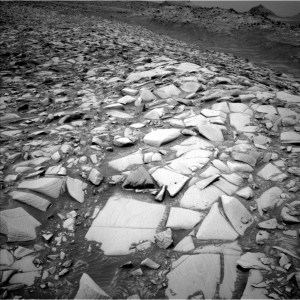
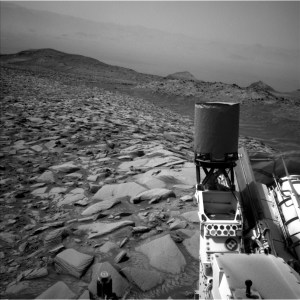
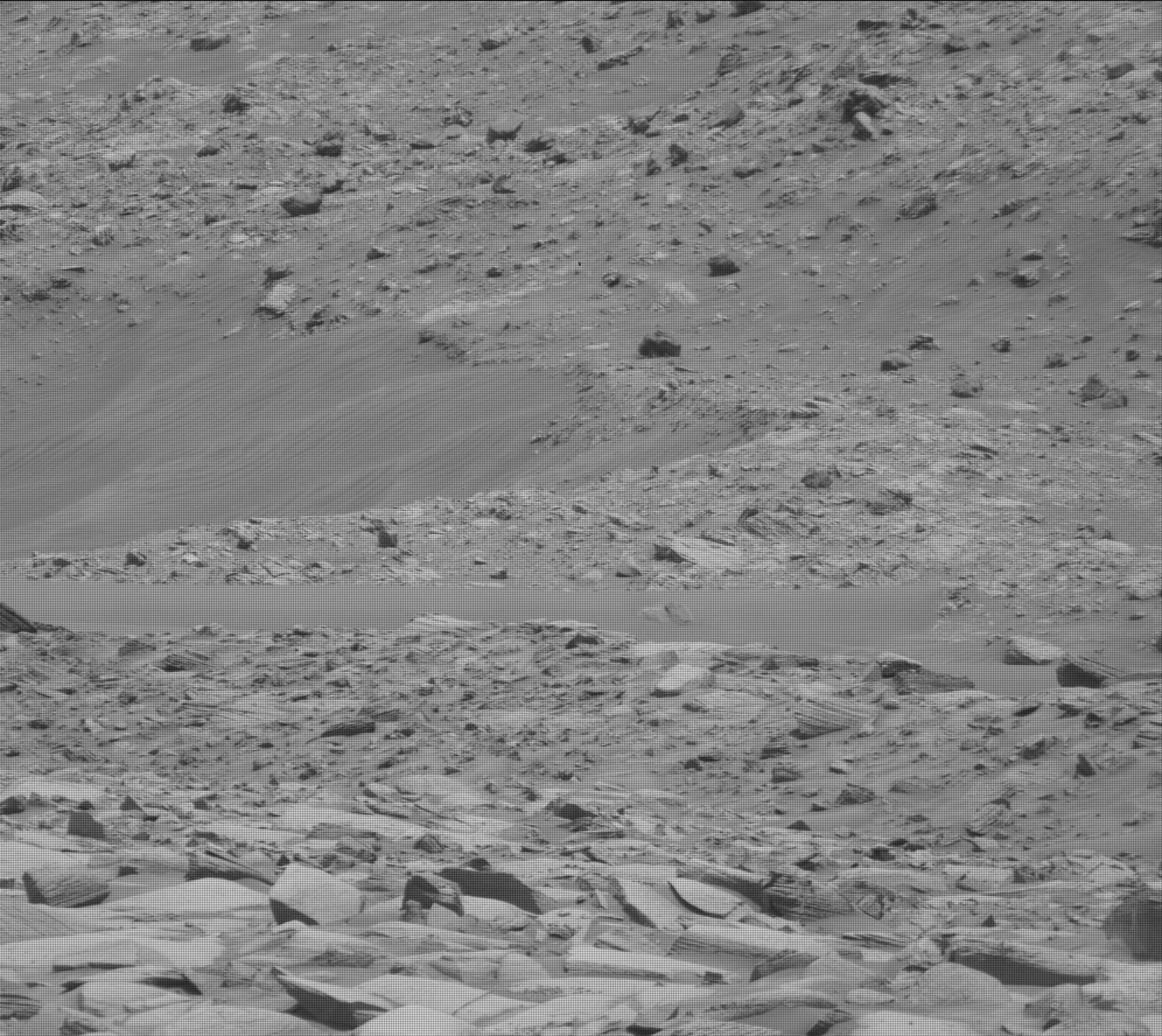
A grayscale image of the Martian surface shows a slightly sloping area of desert-looking rocky terrain in medium gray. An area that looks more smooth and sandy creates a triangle that juts from the left side of the frame and ends at the image center; in the scene it appears to be sloping downward toward the left offscreen. The rest of the terrain is scattered sharp rocks of various sizes.
This image was taken by Mast Camera (Mastcam) aboard NASA’s Mars rover Curiosity on sol 4338 — Martian day 4,338 of the Mars Science Laboratory mission — Oct. 19, 2024, at 08:29:23 UTC.
NASA/JPL-Caltech/MSSS

Earth planning date: Friday, Oct. 18, 2024

On sol 4338, we have a science block planned as well as some arm activities. Our science activities include a ChemCam observation of “Donkey Lake.” This is a bedrock target with exposed laminations. In geology, lamination is a sequence of small-scale, embedded fine layers of sedimentary rock. Next, we will do an RMI mosaic as well as Mastcam imaging on “Fascination Turret” to document the boulder configuration for study of both debris flow and rock deposition processes. We’ll also do a Navcam dust devil survey to study the Martian atmosphere, before moving into our arm backbones. We’ll perform a DRT and APXS on several bedrock targets with exposed layering. An exciting sol for geology!

Sol 4339 presented some interesting decisions for our planning team to make. We started out with a science block. This included a ChemCam LIBS analysis on a soil target with interesting color differences. We also performed an RMI mosaic and Mastcam imaging of “Whitebark Pass” to study possible surface erosion. After this science block, we planned to do a long traverse, which is where planning got a bit tricky. 

The drive was a bit complicated to plan. The terrain had lots of rocks which ultimately prevented us from planning a guarded drive (i.e., a drive using auto navigation), which would have extended the drive length. There are occlusion considerations — we always want to end the drive in a good orientation for a communications link. When evaluating our end of drive, there are potential configurations where the line of sight for communications would be blocked, either due to terrain or due to objects on the rover deck. Here, because of the many and large size of rocks in our terrain, we were not confident that auto-navigation would not fault and position us in a bad orientation for our next communications window. With this risk, we decided to take a shorter drive with a sure unoccluded end-of-drive orientation. As planned, our drive will reach about 27 meters (almost 89 feet), whereas a guarded drive if the terrain was better might have yielded around 50 meters (about 164 feet). After the drive, we’ll take some imaging and do a Mastcam survey to observe soils along the traverse path.

On sol 4340, we planned for two science blocks. The first included a ChemCam AEGIS activity — this will allow the rover to examine its surroundings and pick out some interesting targets for analysis. We will also perform a Navcam dust devil movie to capture any interesting dust activities in the atmosphere. Next, we’ll move into our second science block, which is focused on environmental science. We’ll first take Mastcam tau observations, which will allow us to study and measure the optical depth of the atmosphere, which is often used as a proxy to understand the dust in the atmosphere. We’ll also do some early morning remote science, including Navcam cloud movies at zenith and at suprahorizon.

Written by Remington Free, Operations Systems Engineer at NASA’s Jet Propulsion Laboratory

Share

Details

Last Updated
Oct 22, 2024

Related Terms

Powered by WPeMatico

Get The Details…

NASA Reveals Prototype Telescope for Gravitational Wave Observatory

NASA Reveals Prototype Telescope for Gravitational Wave Observatory

2 min read

NASA Reveals Prototype Telescope for Gravitational Wave Observatory

NASA has revealed the first look at a full-scale prototype for six telescopes that will enable, in the next decade, the space-based detection of gravitational waves — ripples in space-time caused by merging black holes and other cosmic sources.

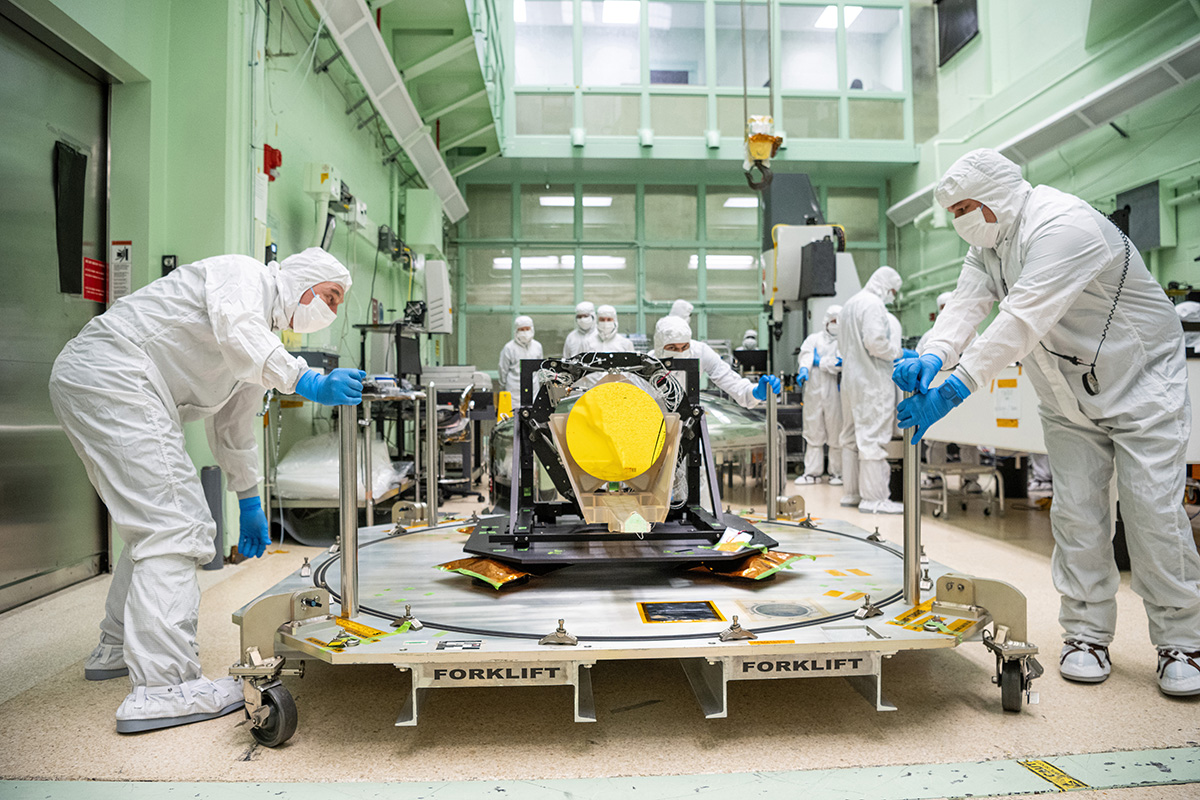
Clean room technicians move a prototype LISA telescope.
On May 20, the full-scale Engineering Development Unit Telescope for the LISA (Laser Interferometer Space Antenna) mission, still in its shipping frame, was moved within a clean room at NASA’s Goddard Space Flight Center in Greenbelt, Maryland.
NASA/Dennis Henry

The LISA (Laser Interferometer Space Antenna) mission is led by ESA (European Space Agency) in partnership with NASA to detect gravitational waves by using lasers to measure precise distances — down to picometers, or trillionths of a meter — between a trio of spacecraft distributed in a vast configuration larger than the Sun. Each side of the triangular array will measure nearly 1.6 million miles, or 2.5 million kilometers.

“Twin telescopes aboard each spacecraft will both transmit and receive infrared laser beams to track their companions, and NASA is supplying all six of them to the LISA mission,” said Ryan DeRosa, a researcher at NASA’s Goddard Space Flight Center in Greenbelt, Maryland. “The prototype, called the Engineering Development Unit Telescope, will guide us as we work toward building the flight hardware.”

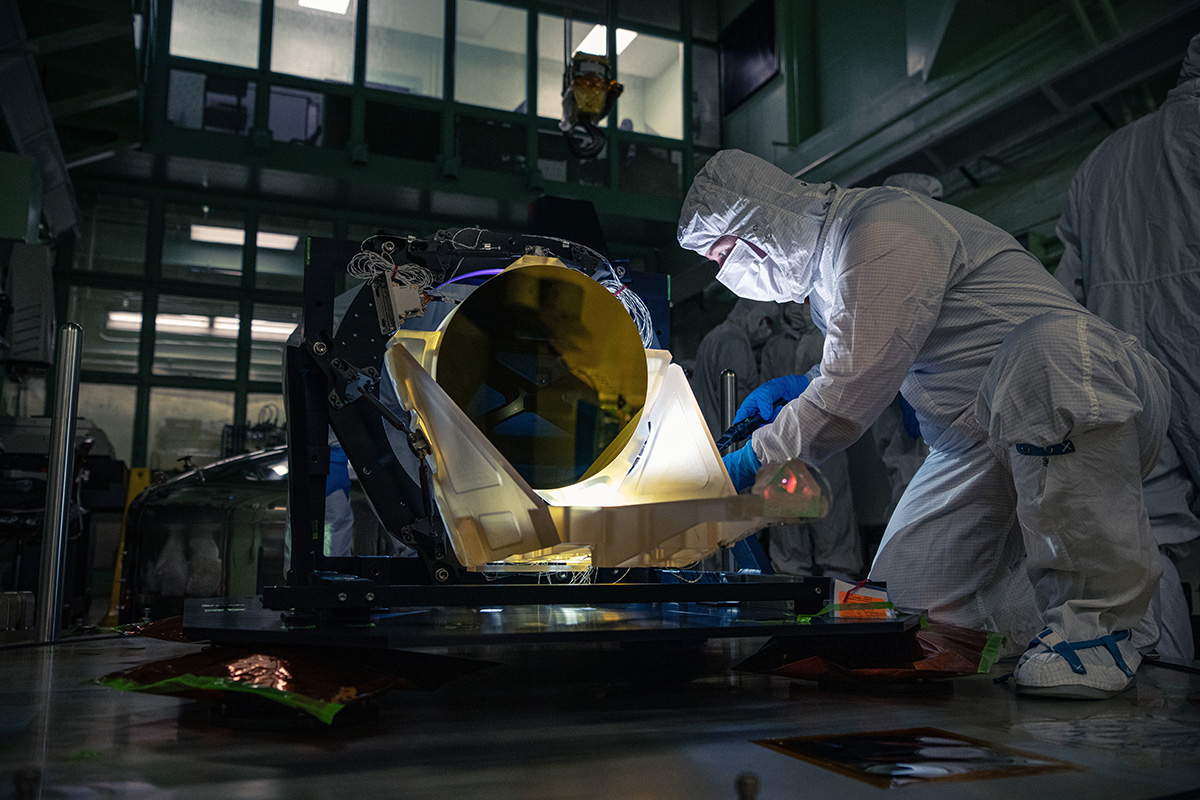
A technician inspects a prototype LISA telescope.
The prototype LISA telescope undergoes post-delivery inspection in a darkened NASA Goddard clean room on May 20. The entire telescope is made from an amber-colored glass-ceramic that resists changes in shape over a wide temperature range, and the mirror’s surface is coated in gold.
NASA/Dennis Henry

The Engineering Development Unit Telescope, which was manufactured and assembled by L3Harris Technologies in Rochester, New York, arrived at Goddard in May. The primary mirror is coated in gold to better reflect the infrared lasers and to reduce heat loss from a surface exposed to cold space since the telescope will operate best when close to room temperature.

The prototype is made entirely from an amber-colored glass-ceramic called Zerodur, manufactured by Schott in Mainz, Germany. The material is widely used for telescope mirrors and other applications requiring high precision because its shape changes very little over a wide range of temperatures.

The LISA mission is slated to launch in the mid-2030s.

By Francis Reddy
NASA’s Goddard Space Flight Center, Greenbelt, Md.

Media Contact:
Claire Andreoli
301-286-1940
claire.andreoli@nasa.gov
NASA’s Goddard Space Flight Center, Greenbelt, Md.

Powered by WPeMatico

Get The Details…

Gateway: Life in a Lunar Module

Gateway: Life in a Lunar Module

Teams from NASA and ESA (European Space Agency), including NASA astronaut Stan Love (far right) and ESA astronaut Luca Parmitano (far left) help conduct human factors testing inside a mockup for the Gateway lunar space station.
Thales Alenia Space

Teams at NASA, ESA (European Space Agency), and Thales Alenia Space, including astronauts Stan Love and Luca Parmitano, came together in Turin, Italy, this summer for a test run of Gateway, humanity’s first space station to orbit the Moon.

The group conducted what is known as human factors testing inside a mockup of Lunar I-Hab, one of four Gateway modules where astronauts will live, conduct science, and prepare for missions to the Moon’s South Pole region. The testing is an important step on the path to launch by helping refine the design of spacecraft for comfort and safety.

Lunar I-Hab is provided by ESA and Thales Alenia Space and is slated to launch on Artemis IV. During that mission, four astronauts will launch inside the Orion spacecraft atop an upgraded version of the SLS (Space Launch System) rocket and deliver Lunar I-Hab to Gateway in orbit around the Moon.

ESA, CSA (Canadian Space Agency), JAXA (Japan Aerospace Exploration Agency), and the Mohammad Bin Rashid Space Centre of the United Arab Emirates are providing major hardware for Gateway, including science experiments, the modules where astronauts will live and work, robotics, and life support systems.

International teams of astronauts will explore the scientific mysteries of deep space with Gateway as part of the Artemis campaign to return to the Moon for scientific discovery and chart a path for the first human missions to Mars and beyond.

Full-scale mock-up of ESA’s Lunar I-Hab habitation module for Gateway. The cylindrical structure is set up in a testing facility, with stairs leading to access points on the module. Engineers use this low-fidelity model to finetune interior design for astronaut safety and functionality.
A mockup of ESA’s Lunar I-Hab module, one of four elements of the Gateway space station where astronauts will live, conduct science, and prepare for missions to the lunar South Pole Region.
Thales Alenia Space
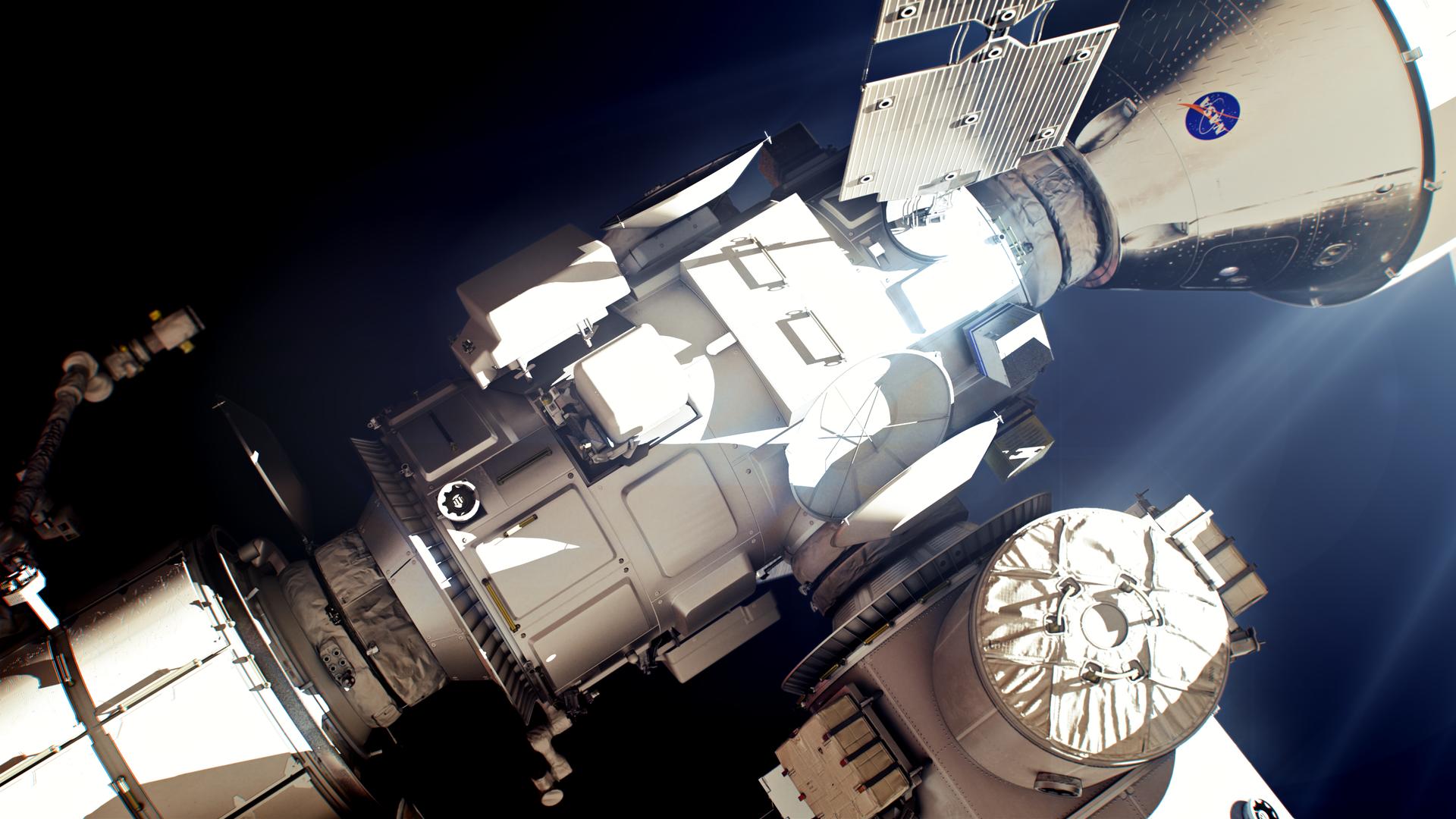
This artist’s rendering of Gateway’s Lunar I-Hab module shows a detailed view of the element with Orion attached. The module and spacecraft are illuminated against the backdrop of outer space.
An artist’s rendering of ESA’s Lunar I-Hab module in orbit around the Moon, one of four elements of the Gateway space station where astronauts will live, conduct science, and prepare for missions to the lunar South Pole Region.
NASA/Alberto Bertolin, Bradley Reynolds

Powered by WPeMatico

Get The Details…
Dylan Connell

Industry Supported Battery Passivation Techniques – Request for Information

Industry Supported Battery Passivation Techniques – Request for Information

The National Aeronautics and Space Administration (NASA) Ames Research Center (ARC) on behalf of the Space Technology Mission Directorate’s (STMD) Small Spacecraft Technology (SST) Program and is hereby soliciting information from potential sources for inputs on industry, academia, or government adopted battery passivation techniques. As part of a continual process improvement effort and potential requirement revisions, the NASA Small Spacecraft community, Office of Safety and Mission Assurance, and Orbital Debris Program Office are seeking inputs from industry on battery passivation techniques that are used by industry to satisfy the Orbital Debris Mitigation Standard Practices (ODMSP) requirements 2-2. Limiting the risk to other space systems from accidental explosions and associated orbital debris after completion of mission operations: All on-board sources of stored energy of a spacecraft or upper stage should be depleted or safed when they are no longer required for mission operations or post mission disposal. Depletion should occur as soon as such an operation does not pose an unacceptable risk to the payload. Propellant depletion burns and compressed gas releases should be designed to minimize the probability of subsequent accidental collision and to minimize the impact of a subsequent accidental explosion.

Background

NASA has well-established procedures for passivating power sources on large, highly redundant spacecraft to mitigate debris generation at end-of-life. However, the rise of capable small spacecraft utilizing single-string and Commercial Off-The-Shelf (COTS) components presents challenges. Directly applying passivation strategies designed for redundant systems to these less complex spacecraft can introduce risks and may not be cost-effective for these missions.

Recognizing that the commercial sector has emerged as a leader in Low Earth Orbit (LEO) small satellite operations, NASA seeks to engage with industry, academia, and government spacecraft operators to gain insights into current battery passivation techniques. Understanding industry-adopted practices, their underlying rationale, and performance data will inform NASA’s ongoing efforts to develop safe and sustainable end-of-life procedures for future missions.

NASA invites government, academic, or industry stakeholders, including small satellite operators, manufacturers, and component suppliers, to share information on battery passivation strategies employed in their spacecraft.

Click here for more information.

Powered by WPeMatico

Get The Details…
Sonja Caldwell