Red Rocks with Green Spots at ‘Serpentine Rapids’

Red Rocks with Green Spots at ‘Serpentine Rapids’

2 min read

Red Rocks with Green Spots at ‘Serpentine Rapids’
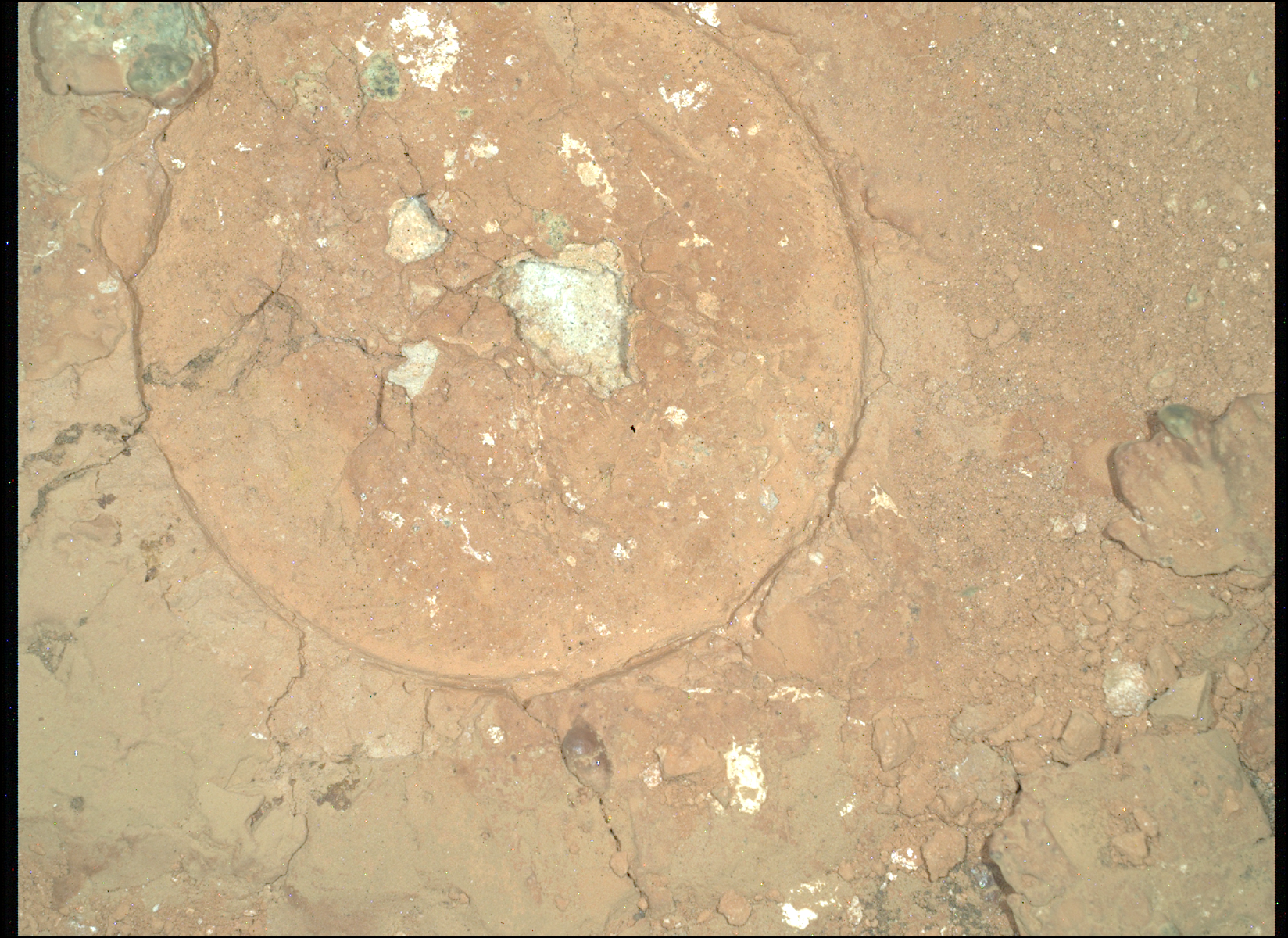
A close-up color photo of the Martian surface shows pale orange, rocky ground, with a circular outline scraped into the ground covering the upper left quarter of the frame. Inside the circle, chipped areas reveal several bright white spots, as well as a small spot of pale green. Another, larger green spot sits outside the circle, in the far upper left corner of the image.
NASA’s Mars Perseverance rover acquired this image, a nighttime mosaic of the Malgosa Crest abrasion patch at “Serpentine Rapids,” using its SHERLOC WATSON camera, located on the turret at the end of the rover’s robotic arm. The diameter of the abrasion patch is 5 centimeters (about 2 inches) and the large green spot in the upper center left of the image is approximately 2 millimeters (about 0.08 inch) in diameter. Mosaic source images have been debayered, flat-fielded, and linearly color stretched. This image was acquired on Aug. 19, 2024 (sol 1243, or Martian day 1,243 of the Mars 2020 mission) at the local mean solar time of 19:45:30.
NASA/JPL-Caltech

After discovering and sampling the “leopard spots” of “Bright Angel,” it became apparent that Perseverance’s journey of discovery in this region was not yet finished. Approximately 20 sols (Martian days) after driving south across Neretva Vallis from Bright Angel, the rover discovered the enigmatic and unique red rocks of “Serpentine Rapids.”

At Serpentine Rapids, Perseverance used its abrading bit to create an abrasion patch in a red rock outcrop named “Wallace Butte.” The 5-cm diameter abrasion patch revealed a striking array of white, black, and green colors within the rock. One of the biggest surprises for the rover team was the presence of the drab-green-colored spots within the abrasion patch, which are composed of dark-toned cores with fuzzy, light green rims.

On Earth, red rocks — sometimes called “red beds” — generally get their color from oxidized iron (Fe3+), which is the same form of iron that makes our blood red, or the rusty red color of metal left outside. Green spots like those observed in the Wallace Butte abrasion are common in ancient “red beds” on Earth and form when liquid water percolates through the sediment before it hardens to rock, kicking off a chemical reaction that transforms oxidized iron to its reduced (Fe2+) form, resulting in a greenish hue. On Earth, microbes are sometimes involved in this iron reduction reaction. However, green spots can also result from decaying organic matter that creates localized reducing conditions. Interactions between sulfur and iron can also create iron-reducing conditions without the involvement of microbial life.

Unfortunately, there was not enough room to safely place the rover arm containing the SHERLOC and PIXL instruments directly atop one of the green spots within the abrasion patch, so their composition remains a mystery. However, the team is always on the lookout for similar interesting and unexpected features in the rocks.

The science and engineering teams are now dealing with incredibly steep terrain as Perseverance ascends the Jezero Crater rim. In the meantime, the Science Team is hanging on to the edge of their seats with excitement and wonder as Perseverance makes the steep climb out of the crater it has called home for the past two years. There is no shortage of wonder and excitement across the team as we contemplate what secrets the ancient rocks of the Jezero Crater rim may hold.

Written by Adrian Broz, Postdoctoral Scientist, Purdue University/University of Oregon

Share

Details

Last Updated
Oct 25, 2024

Related Terms

Powered by WPeMatico
Get The Details…

Destacado de la NASA: Felipe Valdez, un ingeniero inspirador

Destacado de la NASA: Felipe Valdez, un ingeniero inspirador

4 min read

Preparations for Next Moonwalk Simulations Underway (and Underwater)

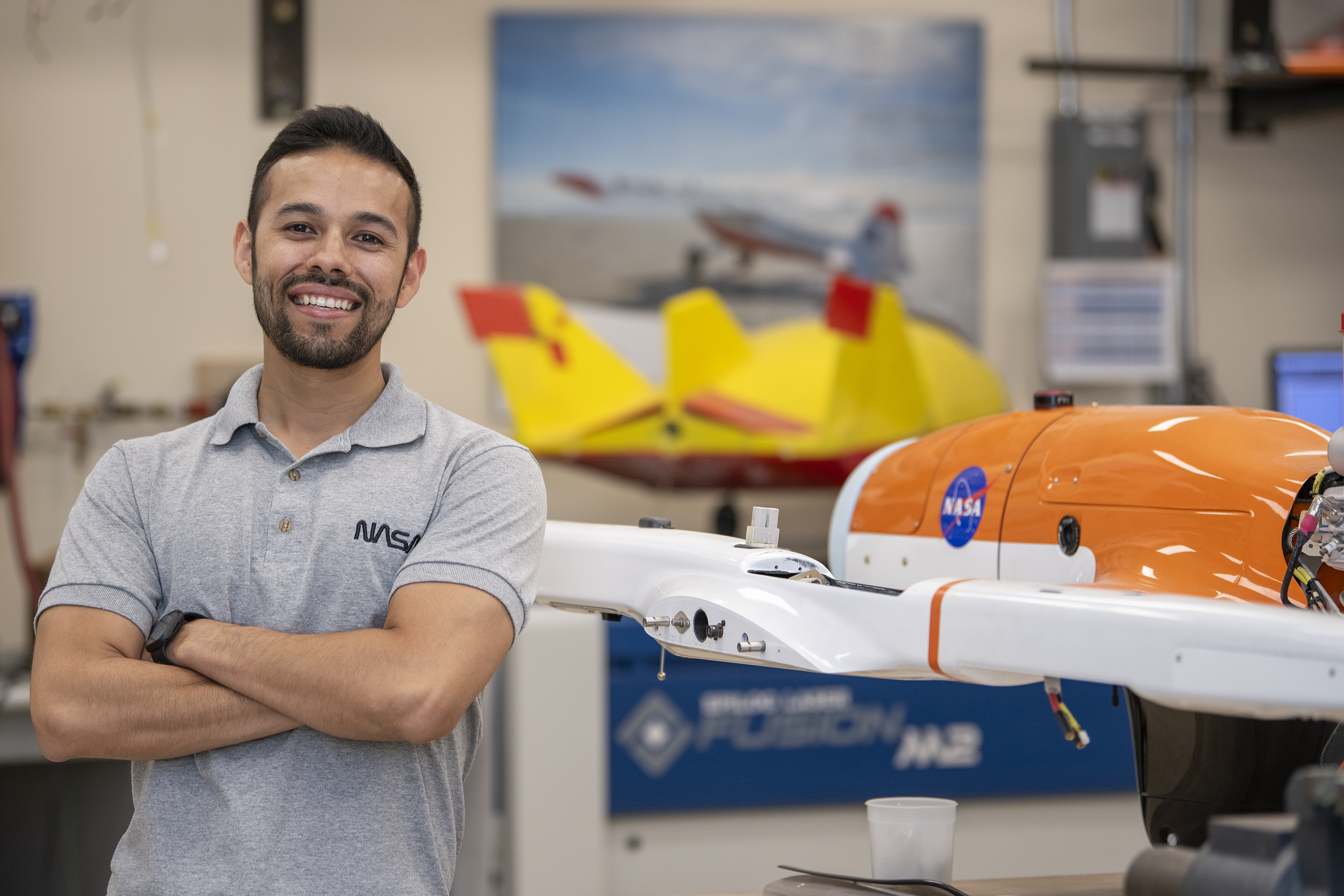
Un hombre trae puesta una camisa de la NASA, color gris. A su izquierda está un modelo a subescala del HQ-90 color naranja y blanco con la insignia de la NASA.
Felipe Valdez, ingeniero de la NASA en el Laboratorio de Investigación de Vuelo a Subescala Dale Reed del Centro de Investigación de Vuelo Armstrong, junto a un modelo a subescala de la aeronave Hybrid Quadrotor (HQ-90).
NASA / Charles Genaro Vavuris

Read this story in English here.

Felipe Valdez es una persona que aprovechó todas las oportunidades posibles en la NASA, trabajando desde que inicio como pasante universitario hasta su trabajo actual como ingeniero de controles de vuelo. 

Nacido en los Estados Unidos pero criado en México, Valdez enfrentó grandes desafíos mientras crecía.    

“Mi madre trabajaba por largas horas, mi padre batallaba contra la adicción, y eventualmente la escuela se volvió inaccesible,” dijo Valdez. 

Determinado a continuar su educación, Valdez tomó la difícil decisión de dejar a su familia y regresar a EE. UU. Pero en su adolescencia, aprender inglés y adaptarse a un nuevo ambiente fue un choque cultural para él. A pesar de estos cambios, su curiosidad por materias como las matemáticas y la ciencia nunca decayó.

“De niño, siempre se me ha facilitado trabajar con los números y me fascinaba cómo funcionaban las cosas. La ingeniería combinó ambas cosas,” dijo Valdez. “Eso despertó mi interés.”

Mientras estudiaba ingeniería mecánica en la Universidad Estatal de California en Sacramento, la orientación de su profesor, José Granda, resultó fundamental.  

“Él me animó a solicitar una pasantía en la NASA,” dijo Valdez. “Él había sido portavoz en español para una misión de transbordador [espacial], así que al escuchar que alguien con mis antecedentes tuvo éxito me dio la confianza que yo necesitaba para dar ese paso”. 

El esfuerzo de Valdez valió la pena – él fue seleccionado como pasante en la Oficina de STEM de la NASA en el Centro Espacial Johnson en Houston. Allí, él trabajó en el desarrollo de software para la dinámica de vehículos, actuadores y modelos de controladores para una cápsula espacial en simulaciones por computadora.

“No podía creerlo,” dijo Valdez. “Conseguir esa oportunidad cambió todo.”

Esta pasantía abrió la puerta a una segunda oportunidad con la NASA, esta vez en el Centro de Investigación de Vuelo Armstrong de la agencia en California. Tuvo la oportunidad de trabajar en el desarrollo de computadoras de vuelo para el Diseño Aerodinámico de Investigación Preliminar para Disminuir la Resistencia, un diseño experimental de ala volante.  

Después de estas experiencias, fue aceptado como un pasante en el Programa Pathways de la NASA, un programa de trabajo y estudio que ofrece la posibilidad de trabajar a tiempo completo en la NASA después de graduarse. 

“Eso fue el comienzo de mi carrera en la NASA, donde realmente despego mi pasión por la aeronáutica,” dijo Valdez. 

Valdez fue el primero en su familia en seguir una educación superior, obteniendo su licenciatura en la Universidad Estatal de Sacramento y su maestría en ingeniería mecánica y aeroespacial en la Universidad de California, Davis.

Hoy en día, trabaja como ingeniero de controles de vuelo de la NASA en la rama de Dinámica y Controles del centro Armstrong. La mayor parte de su experiencia se ha centrado en el desarrollo de simulaciones de vuelo y diseño de sistemas de control, particularmente para aviones de propulsión eléctrica distribuida. 

“Es gratificante formar parte de un grupo que se centra en hacer que la aviación sea más rápida, más silenciosa, y más sostenible,” dijo Valdez. “Como ingeniero de controles, trabajar en conceptos avanzados de aeronaves como la propulsión eléctrica distribuida me permite diseñar algoritmos para controlar directamente múltiples motores, mejorando la seguridad, la controlabilidad y la estabilidad, al tiempo que permite operaciones más limpias y silenciosas que amplían los límites de la aviación sostenible.”

A lo largo de su carrera, Valdez se ha sentido orgulloso de su herencia. “Siento un fuerte orgullo de saber que la inclusión es uno de nuestros valores fundamentales aquí en la NASA y que las oportunidades están abiertas para todos.” 

Crédito: NASA / Charles Genaro Vavuris

Entrevistadora: NASA/ Lupita L Alcala

Share

Details

Last Updated

Oct 25, 2024

Editor
Lillian Gipson
Contact
Jessica Arreola

Powered by WPeMatico
Get The Details…
Lillian Gipson

NASA Stennis Achieves Milestone in Preparation for Future Artemis Testing

NASA Stennis Achieves Milestone in Preparation for Future Artemis Testing

4 min read

Preparations for Next Moonwalk Simulations Underway (and Underwater)

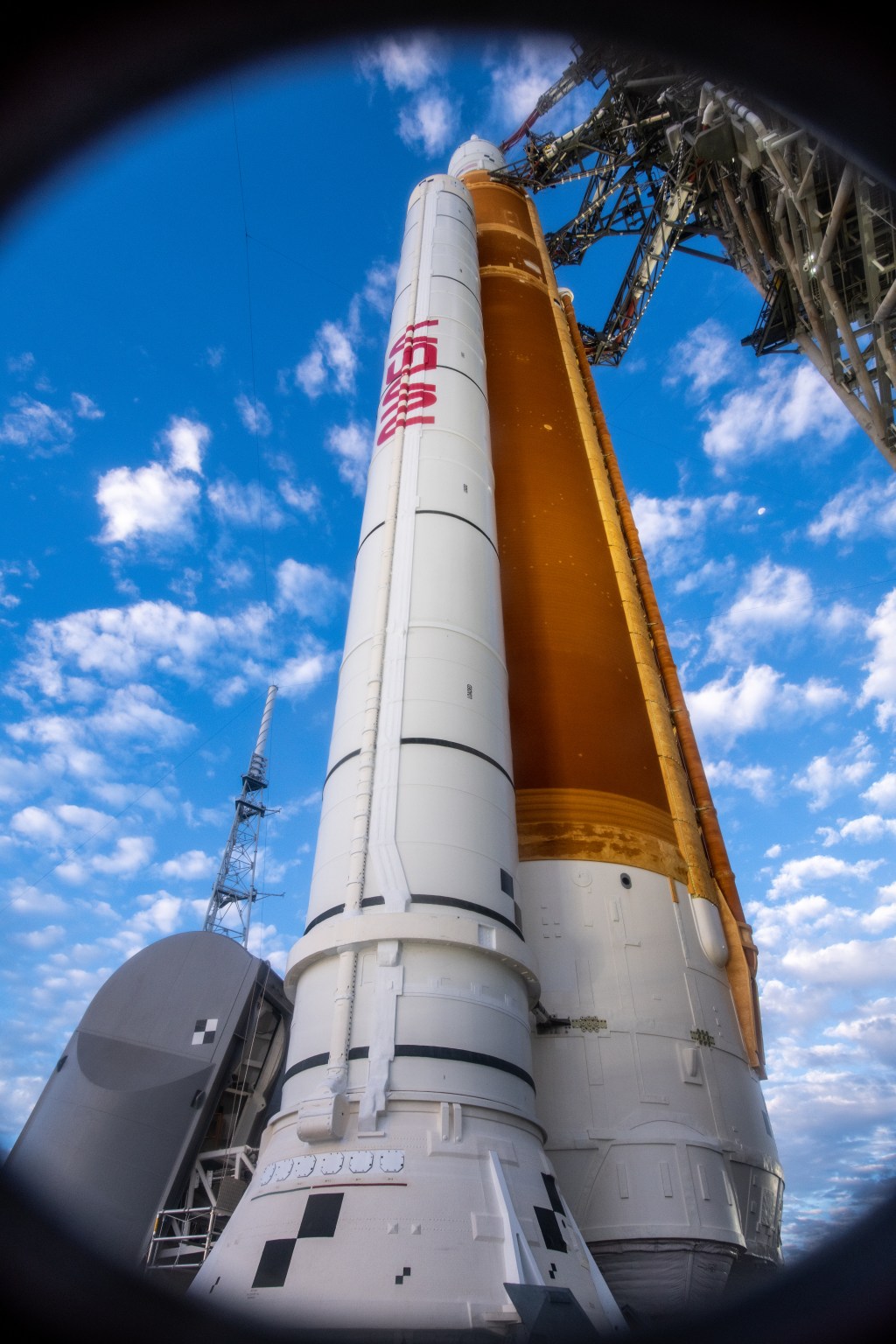
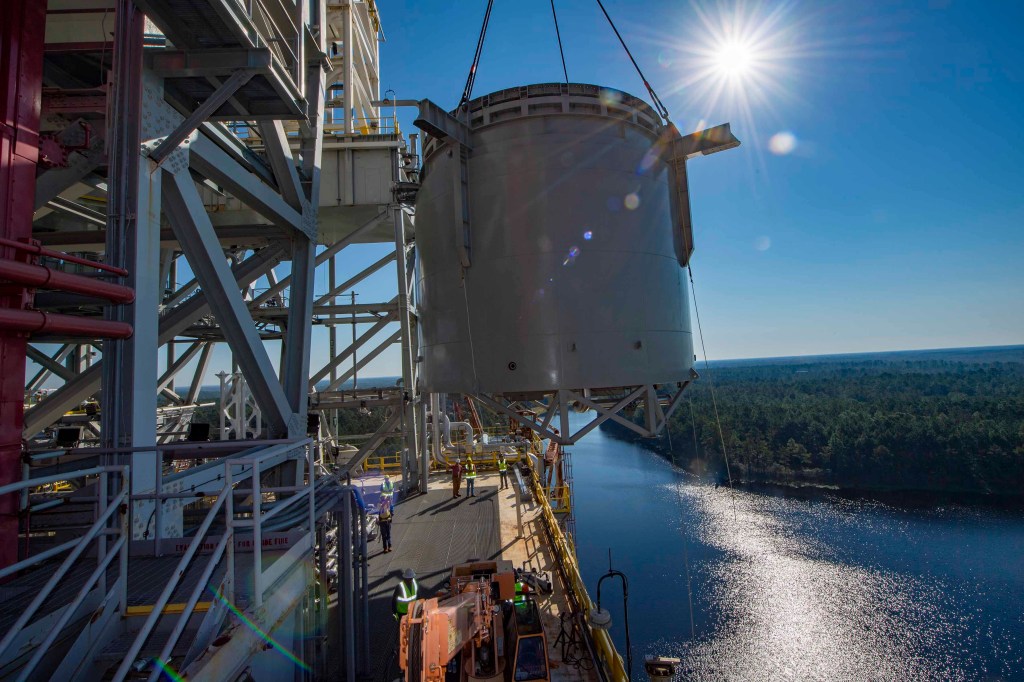
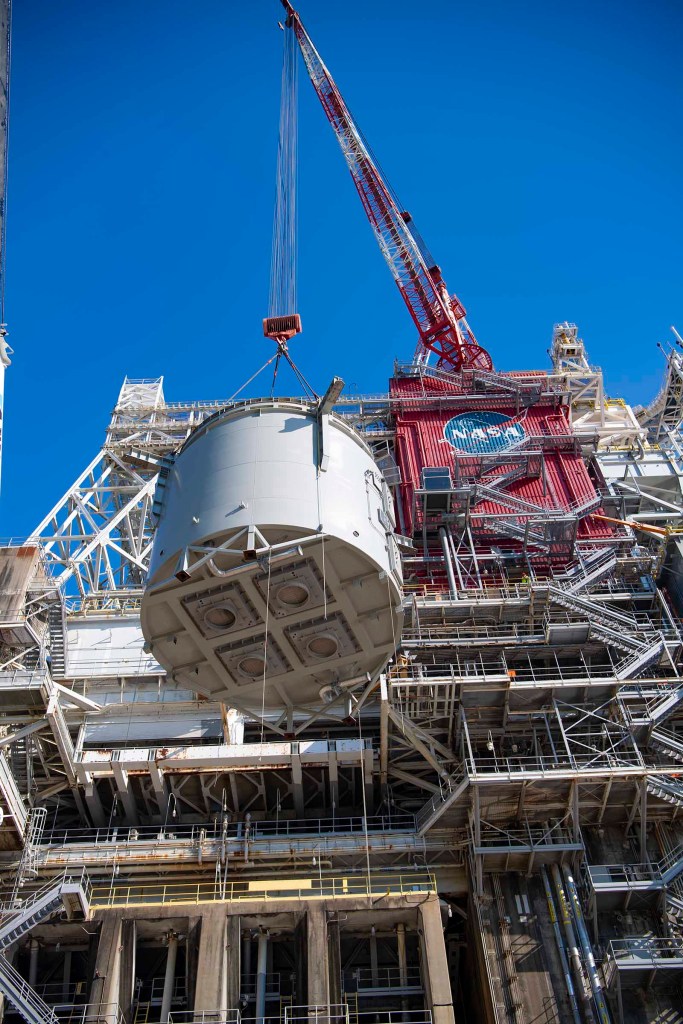
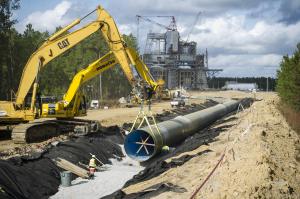
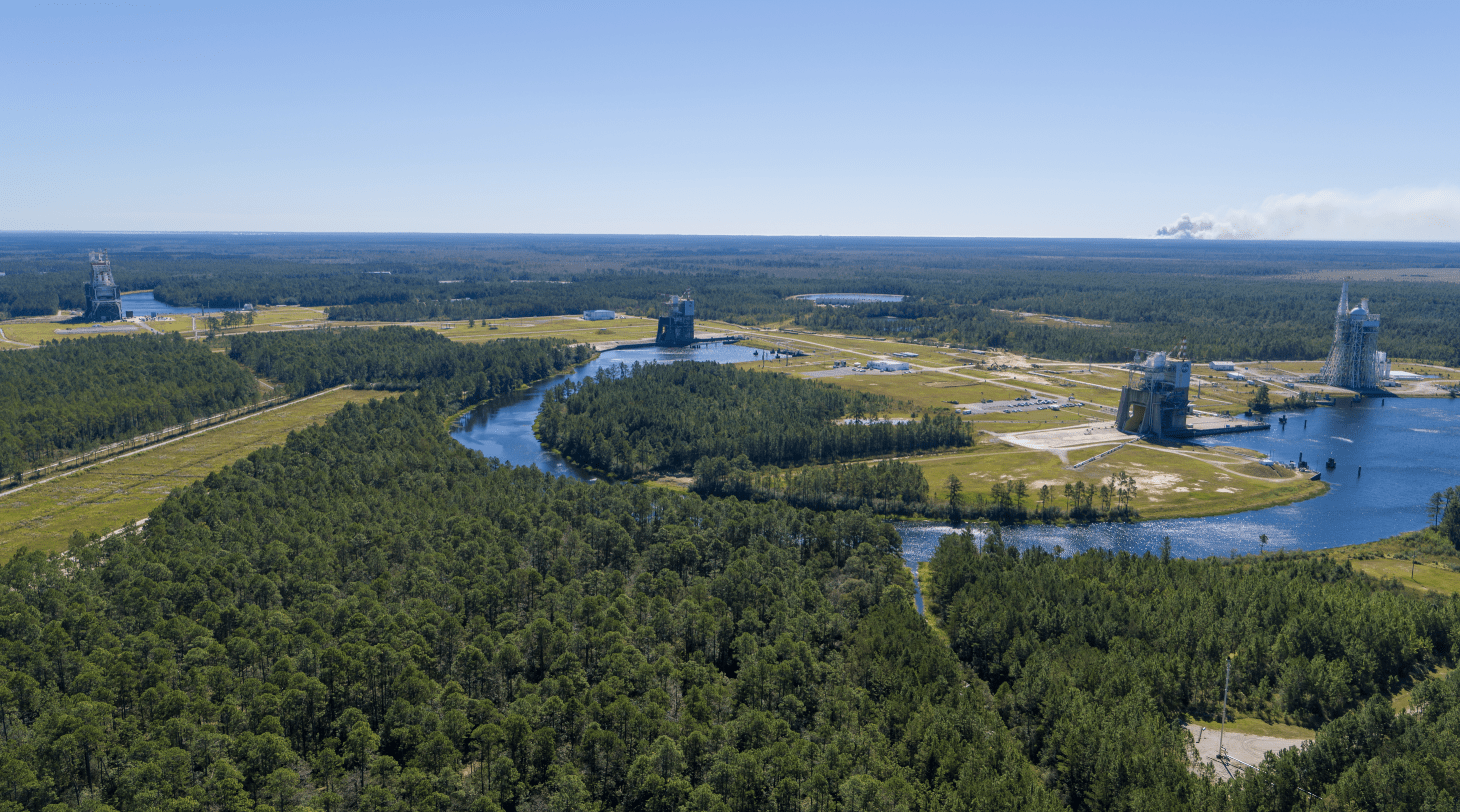
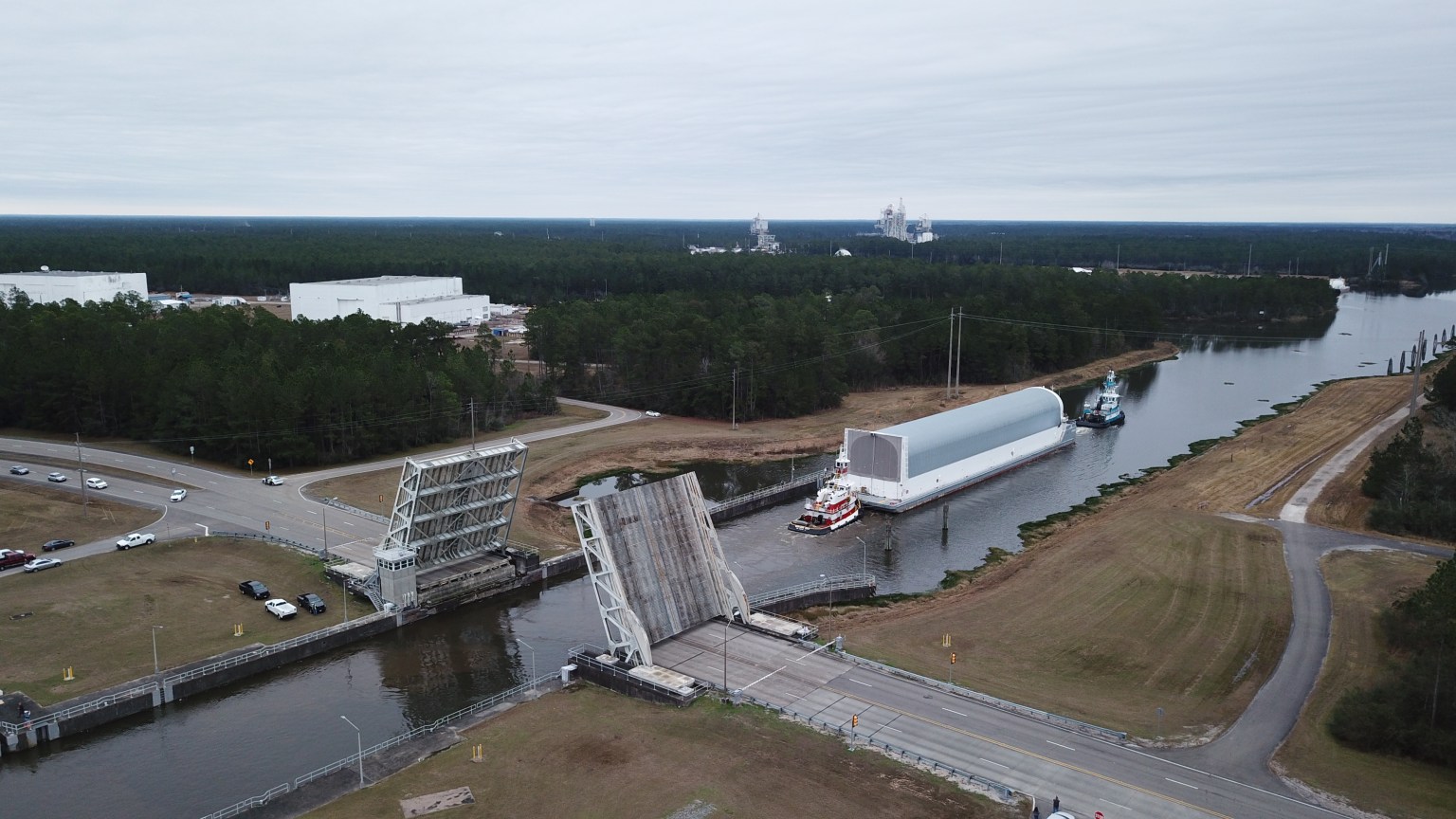
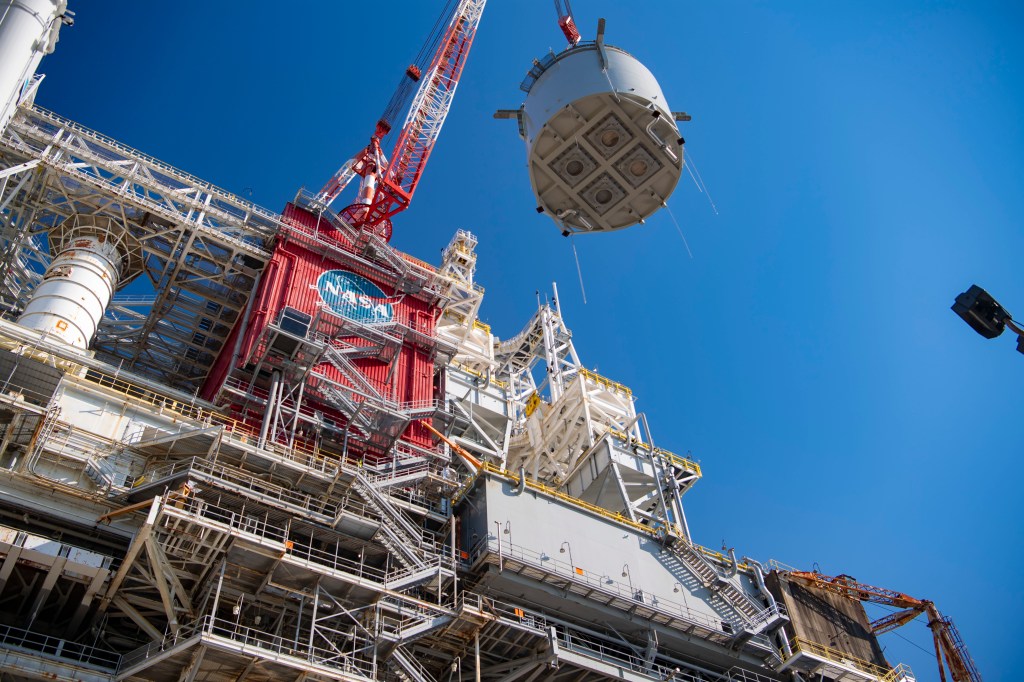
NASA’s Stennis Space Center near Bay St. Louis, Mississippi, achieved a key milestone this week for testing a new SLS (Space Launch System) rocket stage to fly on future Artemis missions to the Moon and beyond.

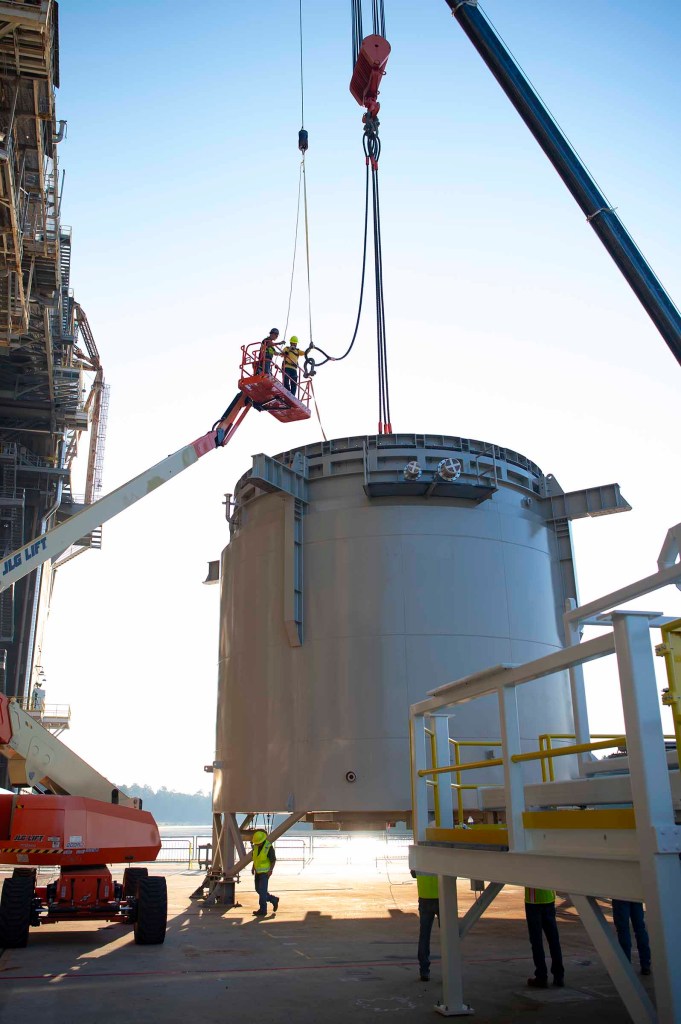
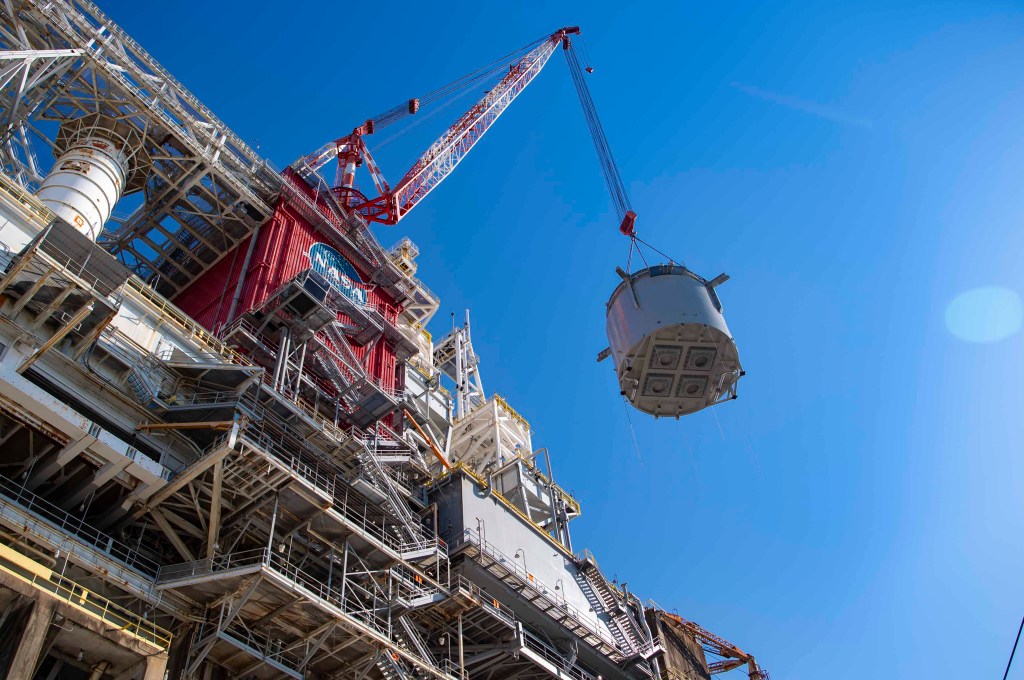
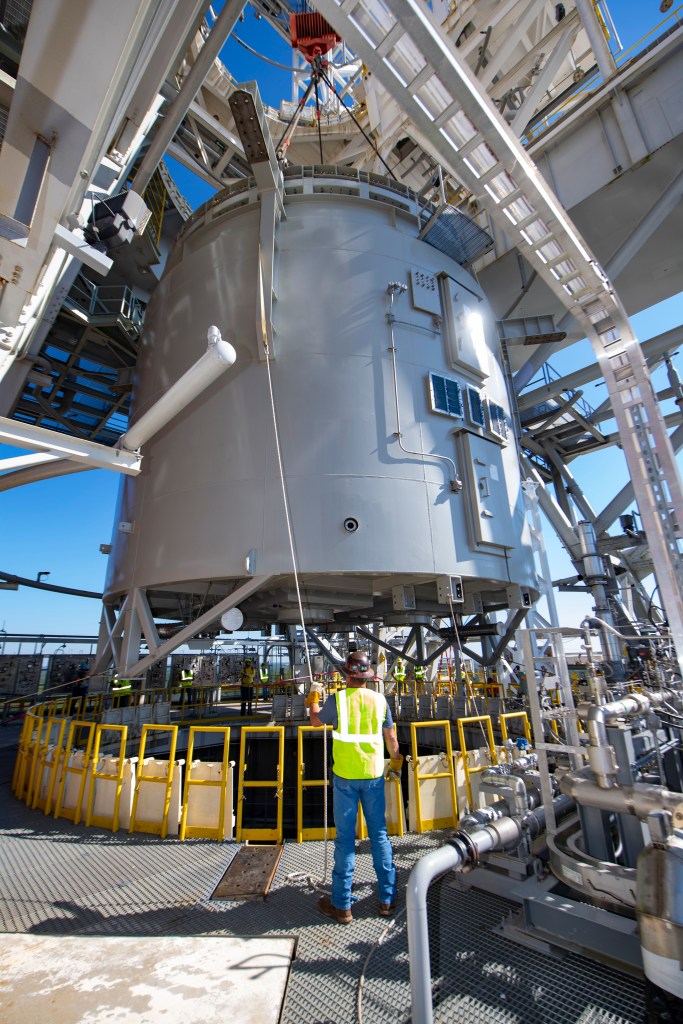
Over a two-week period beginning Oct. 10, crews completed a safe lift and installation of the interstage simulator component needed for future testing of NASA’s exploration upper stage (EUS) in the B-2 position of the Thad Cochran Test Stand. The component will function like the SLS interstage section that helps protect the upper stage during Artemis launches.

“NASA Stennis is at the front end of the critical path for future space exploration,” said Barry Robinson, project manager for exploration upper stage Green Run testing on the Thad Cochran Test Stand. “Installing the interstage simulator is a significant step in our preparation to ensure the new, more powerful upper stage is ready to safely fly on future Artemis missions.”

The EUS unit, built by Boeing at NASA’s Michoud Assembly Facility in New Orleans, which will be the upper stage for the evolved Block 1B version of SLS and will enable NASA to launch its most ambitious deep space missions. The new stage will replace the current interim cryogenic propulsion stage on the Block 1 version of SLS, which features a single engine and is capable of lifting 27 tons of crew and cargo to lunar orbit.

The new exploration upper stage will be powered by four RL10 engines, manufactured by SLS engines contractor L3Harris. It will increase payload capacity by 40%, enabling NASA to send 38 tons of cargo with a crew to the Moon or 42 tons of cargo without a crew.

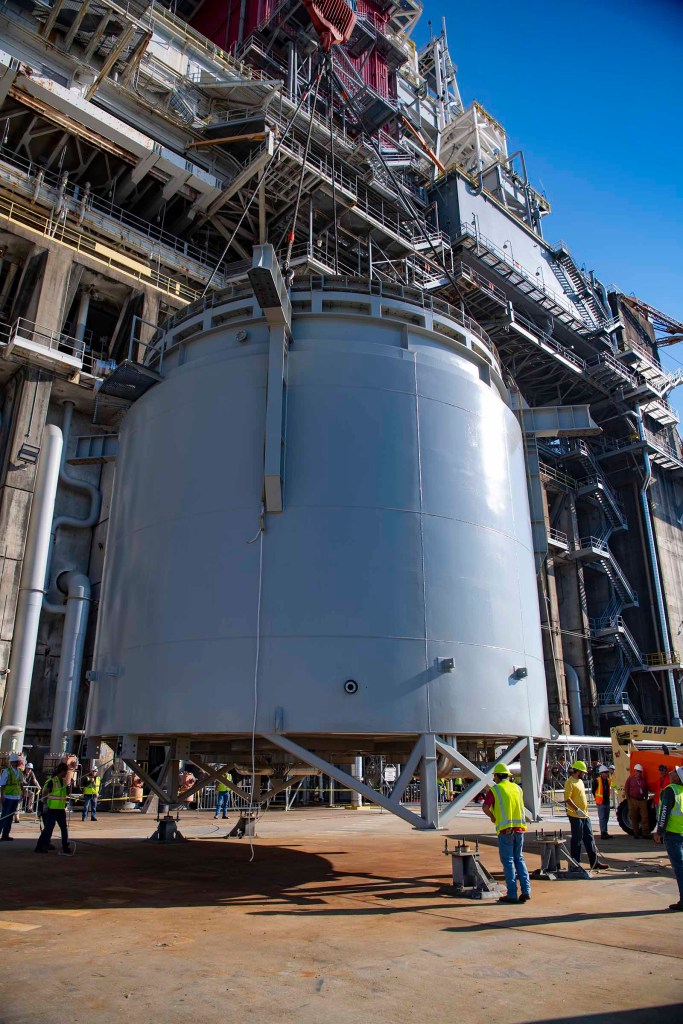
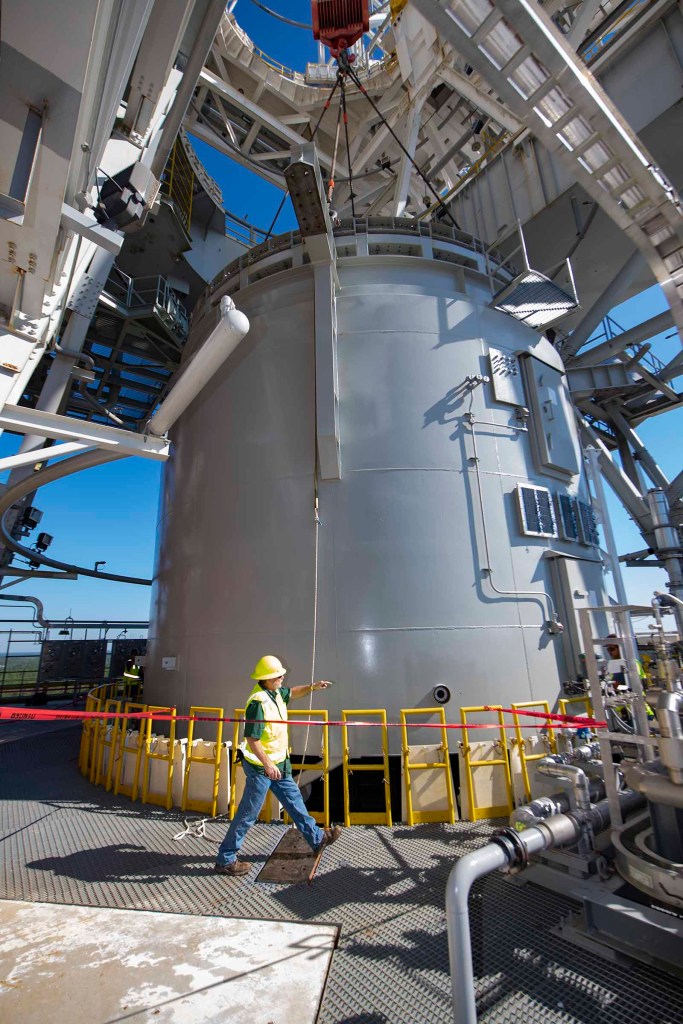
In the first two weeks of October 2024, crews at NASA’s Stennis Space Center completed a successful lift and installation of an interstage simulator unit on the B-2 side of the Thad Cochran test Stand. The interstage simulator is a key component for future testing of NASA’s new exploration upper stage that will fly on Artemis missions to the Moon and beyond.

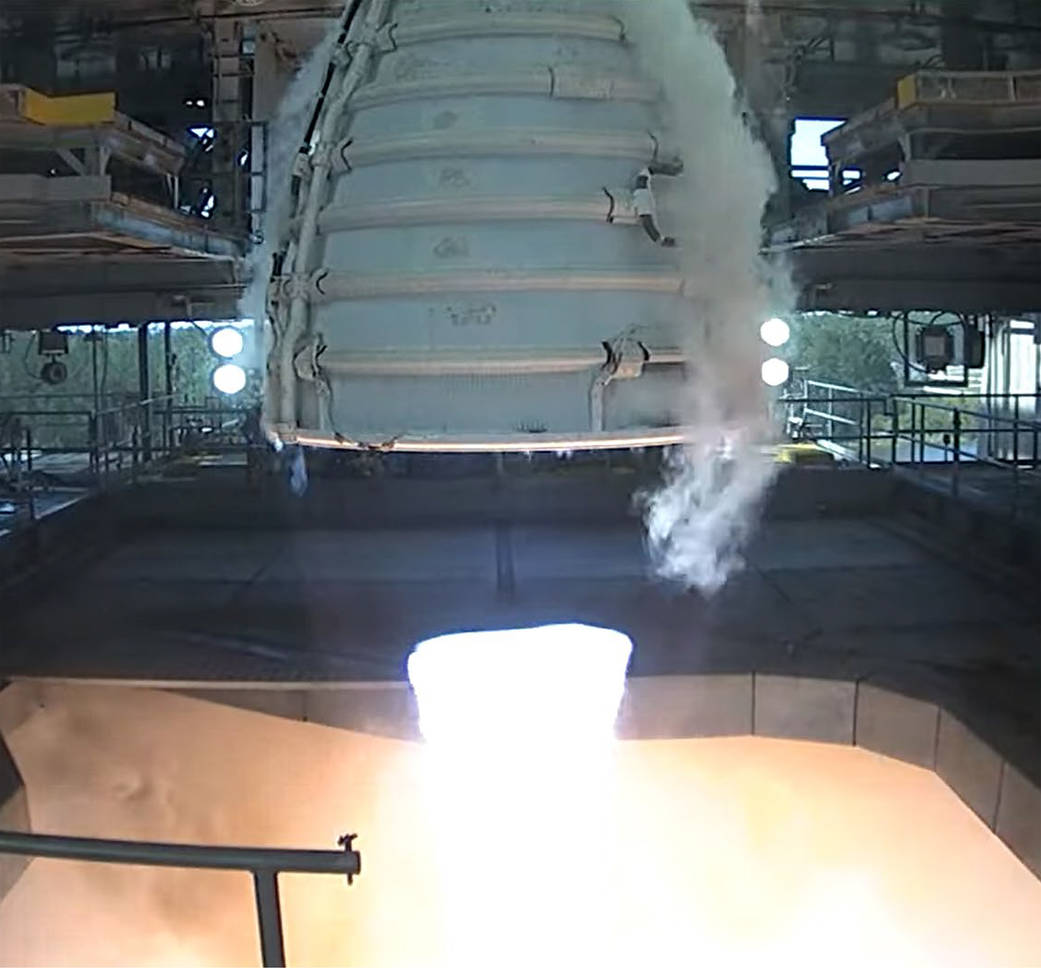
Before the first flight of the exploration upper stage on the Artemis IV mission, the stage will undergo a series of Green Run tests of its integrated systems at NASA Stennis. The test series will culminate with a hot fire of the stage’s four RL10 engines, just as during an actual mission.

The simulator component installed on the Thad Cochran Test Stand (B-2) at NASA Stennis weighs 103 tons and measures 31 feet in diameter and 33 feet tall. It will function like the SLS interstage section to protect EUS electrical and propulsion systems during Green Run testing. The top portion of the simulator also will serve as a thrust takeout system to absorb the thrust of the EUS hot fire and transfer it back to the test stand. The four-engine EUS provides more than 97,000 pounds of thrust.

NASA Stennis crews previously lifted the interstage simulator to measure and align it relative to the test stand. It is now outfitted with all piping, tubing, and electrical systems necessary to support future Green Run testing.

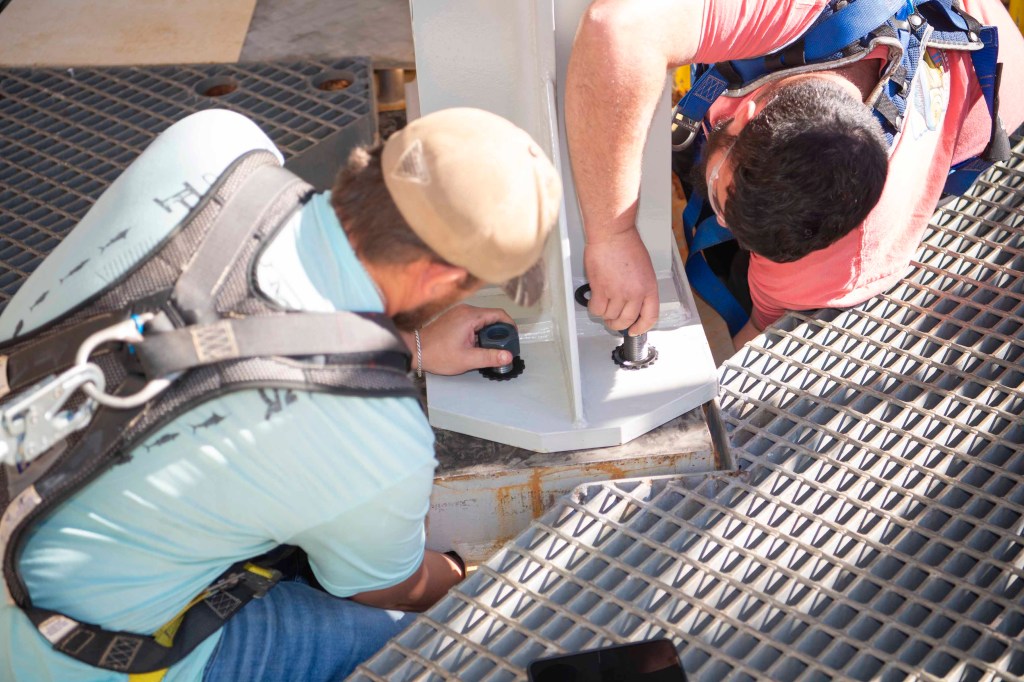
Installation onto the test stand enables NASA Stennis crews to begin fabricating the mechanical and electrical systems connecting the facility to the simulator. As fabrication of the systems are completed, crews will conduct activation flows to ensure the test stand can operate to meet test requirements.

Through Artemis, NASA will establish the foundation for long-term scientific exploration at the Moon; land the first woman, first person of color and first international partner astronaut on the lunar surface; and prepare for human expeditions to Mars for the benefit of all.

For information about NASA’s Stennis Space Center, visit:

https://www.nasa.gov/stennis

Share

Details

Last Updated

Oct 25, 2024

Editor
NASA Stennis Communications
Contact
C. Lacy Thompson
Location
Stennis Space Center

Powered by WPeMatico

Get The Details…
LaToya Dean

Hubble Sees a Celestial Cannonball

Hubble Sees a Celestial Cannonball

2 min read

Hubble Sees a Celestial Cannonball

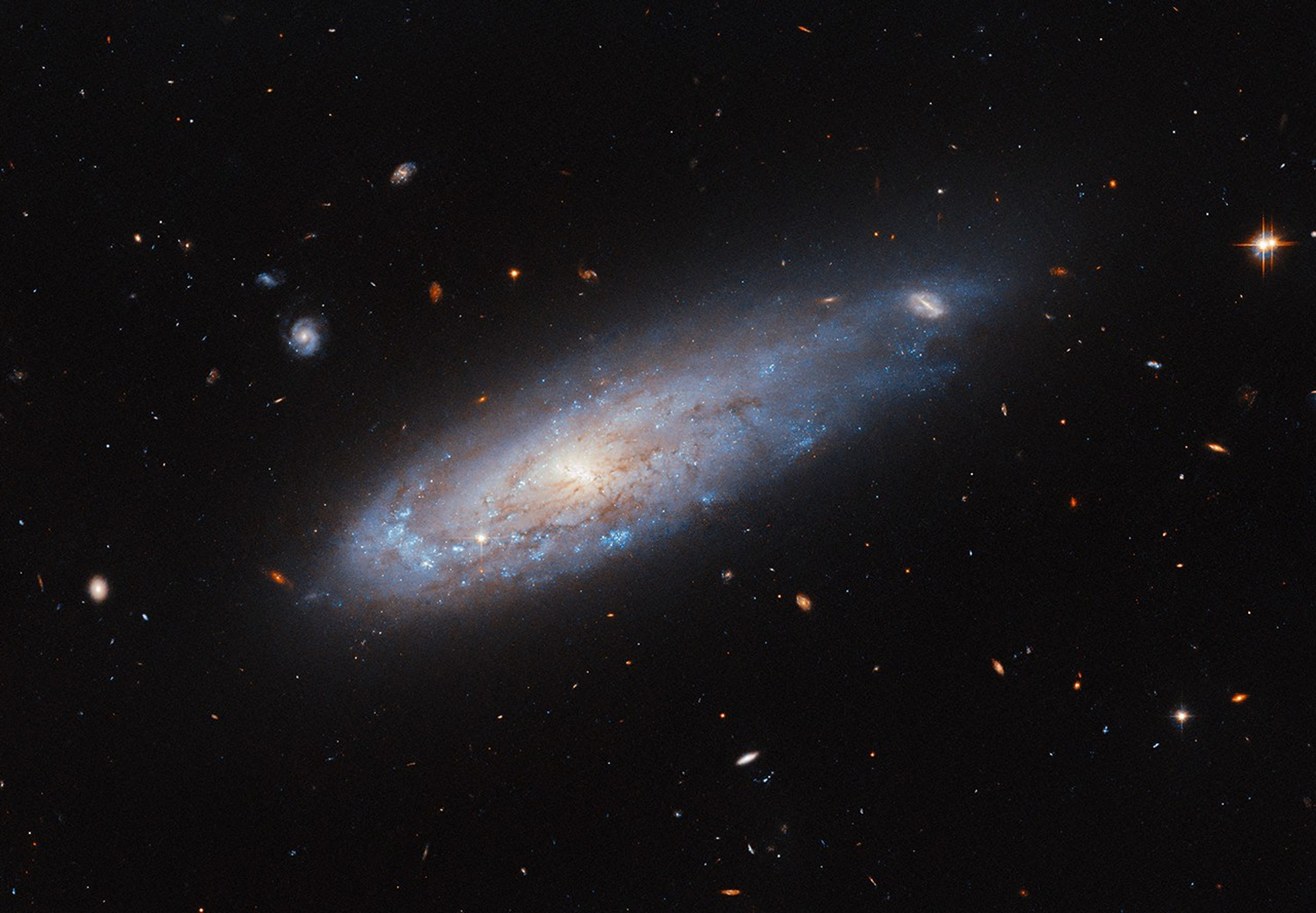
A spiral galaxy with a disk that glows visibly from the center. It has faint dust threaded through it. A spiral arm curves around the left edge of the disk and is noticeably denser with bright blue spots that hold hot and new stars. On the opposite side, the disk stretches out into a short tail where it covers a distant background galaxy. Other distant galaxies and some nearby stars are visible are also visible in this image.
This NASA/ESA Hubble Space Telescope image features the spiral galaxy IC 3225.
ESA/Hubble & NASA, M. Sun

The spiral galaxy in this NASA/ESA Hubble Space Telescope image is IC 3225. It looks remarkably as if it was launched from a cannon, speeding through space like a comet with a tail of gas streaming from its disk behind it. The scenes that galaxies appear in from Earth’s point of view are fascinating; many seem to hang calmly in the emptiness of space as if hung from a string, while others star in much more dynamic situations!

Appearances can be deceiving with objects so far from Earth — IC 3225 itself is about 100 million light-years away — but the galaxy’s location suggests some causes for this active scene, because IC 3225 is one of over 1,300 members of the Virgo galaxy cluster. The density of galaxies in the Virgo cluster creates a rich field of hot gas between them, called ‘intracluster medium’, while the cluster’s extreme mass has its galaxies careening around its center in some very fast orbits. Ramming through the thick intracluster medium, especially close to the cluster’s center, places enormous ‘ram pressure’ on the moving galaxies that strips gas out of them as they go.

As a galaxy moves through space, the gas and dust that make up the intracluster medium create resistance to the galaxy’s movement, exerting pressure on the galaxy. This pressure, called ram pressure, can strip a galaxy of its star-forming gas and dust, reducing or even stopping the creation of new stars. Conversely, ram pressure can also cause other parts of the galaxy to compress, which can boost star formation. IC 3225 is not so close to the cluster core right now, but astronomers have deduced that it has undergone ram pressure stripping in the past. The galaxy looks compressed on one side, with noticeably more star formation on that leading edge (bottom-left), while the opposite end is stretched out of shape (upper-right). Being in such a crowded field, a close call with another galaxy may also have tugged on IC 3225 and created this shape. The sight of this distorted galaxy is a reminder of the incredible forces at work on astronomical scales, which can move and reshape entire galaxies!

Media Contact:

Claire Andreoli
NASA’s Goddard Space Flight CenterGreenbelt, MD
claire.andreoli@nasa.gov

Share

Details

Last Updated

Oct 25, 2024

Editor
Andrea Gianopoulos

Powered by WPeMatico

Get The Details…

Back on Earth: NASA’s SpaceX Crew-8 Mission Splashes Down Off Florida

Back on Earth: NASA’s SpaceX Crew-8 Mission Splashes Down Off Florida

The four NASA SpaceX Crew-8 members sit in a row, smiling and waving in their spacesuits aboard a Dragon spacecraft.
NASA’s SpaceX Crew-8 members, from left to right, Roscosmos cosmonaut Alexander Grebenkin and NASA astronauts Michael Barratt, Matthew Dominick, and Jeanette Epps, are seen inside the Dragon spacecraft shortly after having landed off the coast of Pensacola, Florida, on Oct. 25, 2024.
Credit: NASA/Joel Kowsky

NASA’s SpaceX Crew-8 mission successfully splashed down at 3:29 a.m. EDT Friday, off Pensacola, Florida, concluding a nearly eight-month science mission and the agency’s eighth commercial crew rotation mission to the International Space Station.  

After launching March 3 on a SpaceX Falcon 9 rocket from NASA’s Kennedy Space Center in Florida, NASA astronauts Matthew Dominick, Michael Barratt, and Jeanette Epps, as well as Roscosmos cosmonaut Alexander Grebenkin, spent 232 days aboard the space station.

Recovery teams from NASA and SpaceX quickly secured the spacecraft and assisted the astronauts during exit. The crew now will head to NASA’s Johnson Space Center in Houston, while the Dragon spacecraft will return to SpaceX facilities at Cape Canaveral Space Force Station in Florida for inspection and refurbishment for future missions.

During their mission, crew members traveled nearly 100 million miles and completed 3,760 orbits around Earth. They conducted new scientific research to advance human exploration beyond low Earth orbit and benefit human life on Earth. Research and technology demonstrations included conducting stem cell research to develop organoid models for studying degenerative diseases, exploring how fuel temperature affects material flammability, and studying how spaceflight affects immune function in astronauts. Their work aims to improve astronaut health during long-duration spaceflights, contributing to critical advancements in space medicine and benefitting humanity.

Crew-8’s return follows the arrival of NASA’s SpaceX Crew-9 to the orbiting laboratory Sept. 29. These missions are part of NASA’s Commercial Crew Program, which provides reliable access to space, maximizing the use of the station for research and development and supporting future missions beyond low Earth orbit by partnering with private companies to transport astronauts to and from the space station. 

Learn more about NASA’s Commercial Crew program at:

https://www.nasa.gov/commercialcrew

-end-

Josh Finch / Jimi Russell
Headquarters, Washington
202-358-1100
joshua.a.finch@nasa.gov / james.j.russell@nasa.gov

Leah Cheshier / Sandra Jones
Johnson Space Center, Houston
281-483-5111 
leah.d.cheshier@nasa.gov / sandra.p.jones@nasa.gov  

Steve Siceloff / Stephanie Plucinsky
Kennedy Space Center, Florida
321-867-2468
steven.p.siceloff@nasa.gov / stephanie.n.plucinsky@nasa.gov

Share

Details

Last Updated

Oct 25, 2024

Editor
Jessica Taveau

Powered by WPeMatico
Get The Details…
Jessica Taveau