Entrevista con Instructor de OCEANOS Samuel Suleiman

Entrevista con Instructor de OCEANOS Samuel Suleiman

3 min read

Preparations for Next Moonwalk Simulations Underway (and Underwater)

A Puerto Rican man with a bushy white beard, green bucket hat, teal longsleeve shirt, and black shorts gestures to a group of high school students wearing neon orange shirts.
Samuel Suleiman, instructor de la pasantía OCEANOS, enseña a los estudiantes sobre el sargazo y la ecología costera en la Isla Culebra, Puerto Rico, durante la sección de trabajo de campo del proyecto. Suleiman también es el Director Ejecutivo de Sociedad Ambiente Marino: una ONG puertorriqueña que trabaja en la conservación y restauración de arrecifes de coral.
NASA ARC/Milan Loiacono

¿Cuál es tu nombre y tu rol en OCEANOS?

Mi nombre es Samuel Suleiman. Soy director ejecutivo de la Sociedad Ambiente Marino, una organización sin fines de lucro que se dedica a la conservación de las costas y los arrecifes en Puerto Rico desde hace más de 25 años. Trabajo en este gran proyecto de OCEANOS como investigador y participante de los recursos costeros y marinos, particularmente los ecosistemas marinos en la Isla de Culebra.

¿Cómo llegaste a la ciencia?

Yo empecé en ciencias desde bien pequeños con el interés de ser pediatra. Luego cambiaron un poco los intereses y me tiré hacia la educación secundaria en ciencia, manteniendo las ciencias como base, y tuve una mezcla de la pasión del agua. A los cinco años estuve por ahogarme, y en vez de congelarme entre el miedo y el susto que había pasado de estar casi ahogándome. Me puse una careta y desde ese entonces no me he quitado la careta, aprendiendo cada vez un poquito más del océano, de nuestros mares, nuestras costas.

¿Cuál es la importancia de un programa como OCEANOS, particularmente en Puerto Rico?

Yo creo que debería haber muchos más proyectos como OCEANOS en Puerto Rico que le den la oportunidad a jóvenes de explorar los recursos naturales que tiene nuestra isla. Si nosotros no aprendemos a cuidar nuestros recursos, no lo vamos a tener en el futuro. Así que una experiencia en un océano que nos permita a los internos tener en vida una experiencia en la que les acerque más a estos recursos marinos que tenemos tan bellos, que permitan que se envuelvan y se apasionen por la defensa de los mismos.

¿Qué crecimiento o cambio ve en los estudiantes a lo largo de la pasantía?

El programa OCEANOS le ha permitido a los estudiantes tener un cambio de actitud, de pensamiento, en el que entiendo que han ido creciendo a lo largo de las experiencias. No solamente han tenido experiencias académicas y de instrucción, sino también experiencias prácticas en el campo, y cada uno de ellos se ha soltado de una manera increíble. Algunos han tenido la posición de liderazgo en sus grupos de trabajo y colaboración, en su grupo de trabajo y en otros grupos de trabajo, por lo que yo creo que la experiencia de OCEANOS le ha permitido madurar de cierta manera a estos jóvenes lo que es tan importante para el país y para el planeta.

¿Qué es algo que espera que los estudiantes se lleven con ellos cuando se vayan?

A mí me gustaría que los estudiantes, y estoy muy seguro de que lo van a hacer, van a llevar una pasión bien grande por el océano, por nuestros mares, nuestras costas, nuestros arrecifes. Y definitivamente estoy muy confiado en que van a ser embajadores para la protección de estos recursos. Así que creo que programas como OCEANOS deben asfixiarse en muchos sectores para que podamos tener una participación un poquito más amplia alrededor de lugares y estudiantes que tienen acceso a este tipo de recursos y apoyo.

Powered by WPeMatico

Get The Details…
Milan Loiacono

Astronomers Find Early Fast-Feeding Black Hole Using NASA Telescopes

Astronomers Find Early Fast-Feeding Black Hole Using NASA Telescopes

This release features an illustration of the galaxy in which black hole LID-568 resides. A smaller illustration of black hole itself, in an outlined box, is superimposed on top of the galaxy image toward our upper right. Two lines extend from a single point in the middle of the galaxy and terminate on corners of the outlined box containing the black hole illustration. The placement of the lines and outlined box indicate that the superimposed black hole image is an enlargement of a tiny place in the center of the galaxy.
This illustration shows a red, early-universe dwarf galaxy that hosts a rapidly feeding black hole at its center. Using data from NASA’s James Webb Space Telescope and Chandra X-ray Observatory, a team of astronomers have discovered this low-mass supermassive black hole at the center of a galaxy just 1.5 billion years after the Big Bang. It is pulling in matter at a phenomenal rate — over 40 times the theoretical limit. While short lived, this black hole’s “feast” could help astronomers explain how supermassive black holes grew so quickly in the early universe.
NOIRLab/NSF/AURA/J. da Silva/M. Zamani

A rapidly feeding black hole at the center of a dwarf galaxy in the early universe, shown in this artist’s concept, may hold important clues to the evolution of supermassive black holes in general.

Using data from NASA’s James Webb Space Telescope and Chandra X-ray Observatory, a team of astronomers discovered this low-mass supermassive black hole just 1.5 billion years after the big bang. The black hole is pulling in matter at a phenomenal rate — over 40 times the theoretical limit. While short lived, this black hole’s “feast” could help astronomers explain how supermassive black holes grew so quickly in the early universe.

Supermassive black holes exist at the center of most galaxies, and modern telescopes continue to observe them at surprisingly early times in the universe’s evolution. It’s difficult to understand how these black holes were able to grow so big so rapidly. But with the discovery of a low-mass supermassive black hole feasting on material at an extreme rate so soon after the birth of the universe, astronomers now have valuable new insights into the mechanisms of rapidly growing black holes in the early universe.

The black hole, called LID-568, was hidden among thousands of objects in the Chandra X-ray Observatory’s COSMOS legacy survey, a catalog resulting from some 4.6 million seconds of Chandra observations. This population of galaxies is very bright in the X-ray light, but invisible in optical and previous near-infrared observations. By following up with Webb, astronomers could use the observatory’s unique infrared sensitivity to detect these faint counterpart emissions, which led to the discovery of the black hole.

The speed and size of these outflows led the team to infer that a substantial fraction of the mass growth of LID-568 may have occurred in a single episode of rapid accretion.

LID-568 appears to be feeding on matter at a rate 40 times its Eddington limit. This limit relates to the maximum amount of light that material surrounding a black hole can emit, as well as how fast it can absorb matter, such that its inward gravitational force and outward pressure generated from the heat of the compressed, infalling matter remain in balance.

These results provide new insights into the formation of supermassive black holes from smaller black hole “seeds,” which current theories suggest arise either from the death of the universe’s first stars (light seeds) or the direct collapse of gas clouds (heavy seeds). Until now, these theories lacked observational confirmation.

The new discovery suggests that “a significant portion of mass growth can occur during a single episode of rapid feeding, regardless of whether the black hole originated from a light or heavy seed,” said International Gemini Observatory/NSF NOIRLab astronomer Hyewon Suh, who led the research team.

A paper describing these results (“A super-Eddington-accreting black hole ~1.5 Gyr after the Big Bang observed with JWST”) appears in the journal Nature Astronomy.

About the Missions

NASA’s Marshall Space Flight Center manages the Chandra program. The Smithsonian Astrophysical Observatory’s Chandra X-ray Center controls science operations from Cambridge, Massachusetts, and flight operations from Burlington, Massachusetts.

The James Webb Space Telescope is the world’s premier space science observatory. Webb is solving mysteries in our solar system, looking beyond to distant worlds around other stars, and probing the mysterious structures and origins of our universe and our place in it. Webb is an international program led by NASA with its partners, ESA (European Space Agency) and CSA (Canadian Space Agency).

Read more from NASA’s Chandra X-ray Observatory.

Learn more about the Chandra X-ray Observatory and its mission here:

https://www.nasa.gov/chandra

https://chandra.si.edu

News Media Contact

Elizabeth Laundau
NASA Headquarters
Washington, DC
202-923-0167
elizabeth.r.landau@nasa.gov

Lane Figueroa
Marshall Space Flight Center, Huntsville, Alabama
256-544-0034
lane.e.figueroa@nasa.gov

Powered by WPeMatico

Get The Details…
Lee Mohon

NASA Glenn Chief Counsel Named to CSU Law Hall of Fame 

NASA Glenn Chief Counsel Named to CSU Law Hall of Fame 

1 min read

Preparations for Next Moonwalk Simulations Underway (and Underwater)

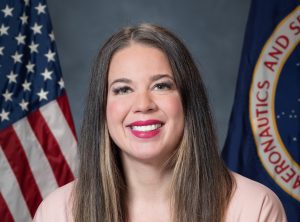
Portrait of Callista Puchmeyer with U.S. and NASA flags in background
Callista Puchmeyer
Credit: NASA

Cleveland State University (CSU) inducted Callista Puchmeyer, chief counsel at NASA’s Glenn Research Center in Cleveland, into the CSU College of Law Hall of Fame during a ceremony on Nov. 1.  

Puchmeyer provides expert legal advice to NASA Glenn’s center director and other senior leaders. She also manages Glenn’s Office of the General Counsel, a diverse legal staff that advises Glenn clients on a broad spectrum of federal matters. 

Established in 2017, CSU’s Law Hall of Fame honors the outstanding contributions of its distinguished alumni, faculty, staff, friends, and community leaders. 

Powered by WPeMatico

Get The Details…
Kelly M. Matter

NASA Encourages Careers in STEM During Event

NASA Encourages Careers in STEM During Event

1 min read

Preparations for Next Moonwalk Simulations Underway (and Underwater)

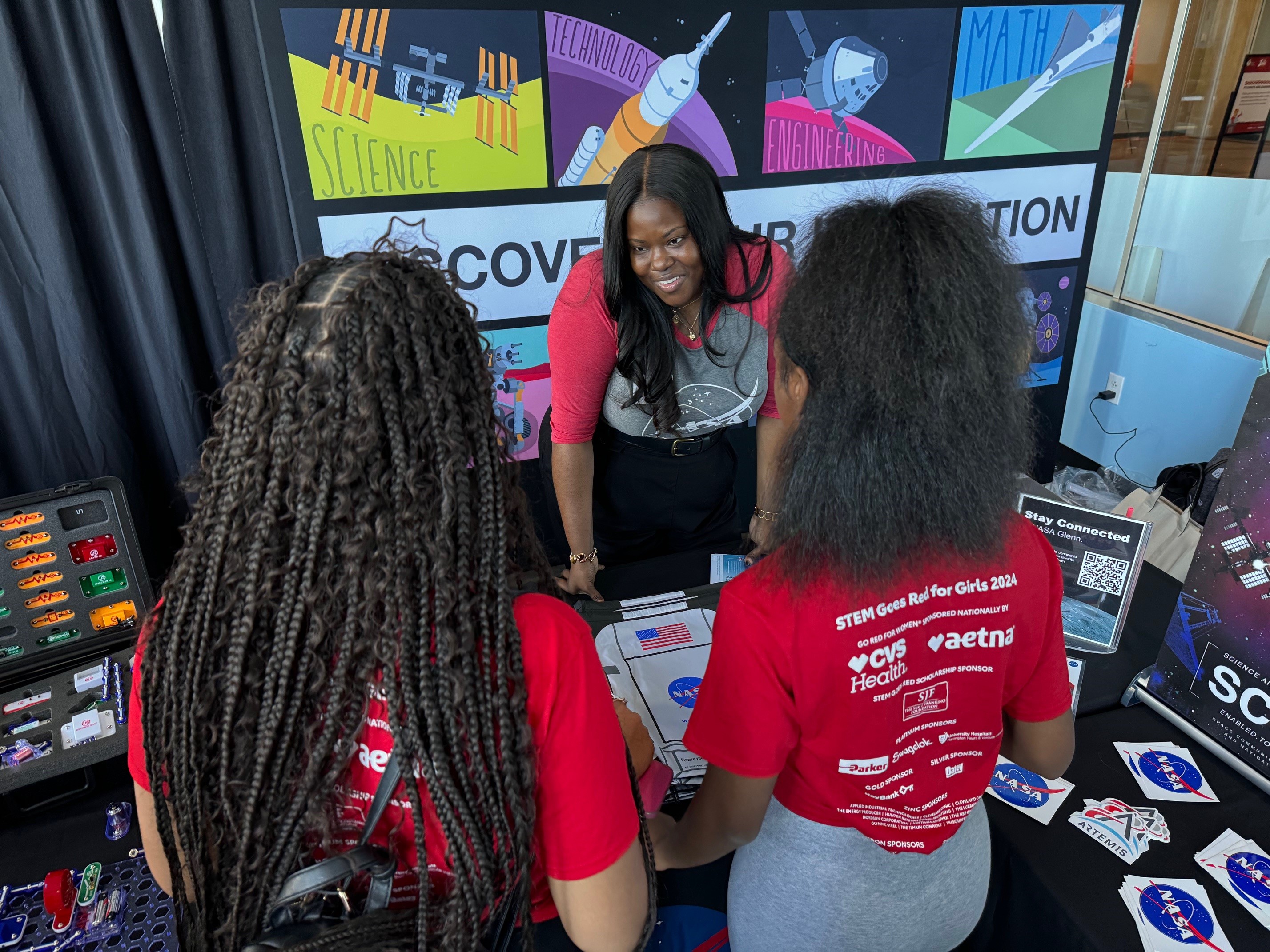
Shauntina Lilly speaks with students during the STEM Goes Red for Girls event at Great Lakes Science Center. She is smiling and is wearing a red and gray T-shirt with the NASA logo on the front.
Shauntina Lilly, a NASA Glenn public affairs officer, speaks to students about NASA’s available internships and educational resources during the STEM Goes Red for Girls event at Great Lakes Science Center, home of the NASA Glenn Visitor Center, on Oct. 21.
Credit: NASA/Debbie Welch

NASA’s Glenn Research Center in Cleveland supported this year’s STEM Goes Red for Girls event at Great Lakes Science Center on Oct. 21. The program provides seventh and eighth grade students exposure to some of Greater Cleveland’s leading STEM companies. The event also featured a hands-on exhibitor fair, speed mentoring, and educational classes. 

Hosted by the American Heart Association, this year’s event welcomed its largest audience to date with 352 students and educators from 32 schools within Northeast Ohio. NASA Glenn’s presence focused heavily on internships and career advice, but also highlighted the center’s work with the Space Communications and Navigation program’s Deep Space Network. Glenn’s Julie Sufka also served as a mentor, speaking to young girls about STEM opportunities in mathematics.  

Powered by WPeMatico

Get The Details…
Kelly M. Matter

NASA Glenn Employees Named AIAA Associate Fellows 

NASA Glenn Employees Named AIAA Associate Fellows 

2 min read

Preparations for Next Moonwalk Simulations Underway (and Underwater)

The American Institute of Aeronautics and Astronautics (AIAA) has named two distinguished engineers at NASA’s Glenn Research Center in Cleveland AIAA Associate Fellows.  

The grade of Associate Fellow recognizes individuals who have accomplished or overseen important engineering or scientific work, done original work of outstanding merit, or have otherwise made outstanding contributions to the arts, sciences, or technology of aeronautics or astronautics. To be selected as an Associate Fellow, an individual must be an AIAA Senior Member in good standing, with at least 12 years of professional experience, and be recommended by three AIAA members. 

Portrait of Danielle Koch posing in a red shirt.
L. Danielle Koch
Credit: NASA

L. Danielle Koch, aerospace engineer, performs research and educational outreach at NASA Glenn. Her 34-year career at NASA has been dedicated to conducting research for safer, cleaner, and quieter aircraft engines; high-performance ventilation systems for spacecraft; and bio-inspired broadband acoustic absorbers. She has authored over 50 technical publications and has been granted three patents. Koch has been recognized for excellence in engineering and educational outreach with many awards, most recently named as one of the 2024 Women of Distinction by the Girl Scouts of Northeast Ohio. 

Portrait of Dr. Sam Lee
Dr. Sam Lee
Credit: NASA

Dr. Sam Lee, a research engineer supporting the Aircraft Icing Branch, conducts research in NASA Glenn’s Icing Research Tunnel to study how ice builds up, or accretes, on aircraft surfaces. The results from the experiments are used to understand the physics of how ice accretes on aircraft during flight and to provide the validation data to develop computational tools to predict ice accretion. He also performs research on the effects of ice accretion on aircraft performance in aerodynamic wind tunnels. Lee has authored 17 conference papers and journal papers. He has contributed to the development of many future engineers and scientists as a mentor for NASA’s Explorer Scouts program and various college internship programs. Lee has been part of the Aircraft Icing Branch since 2002.   

AIAA will formally honor and induct the class at the AIAA Associate Fellows Induction Ceremony and Dinner on Jan. 8, 2025, during the 2025 AIAA SciTech Forum in Orlando.  

Powered by WPeMatico

Get The Details…
Kelly M. Matter