NASA Begins Moon Mission Plume-Surface Interaction Tests

NASA Begins Moon Mission Plume-Surface Interaction Tests
5 Min Read

NASA Begins Moon Mission Plume-Surface Interaction Tests

A run of the plume-surface interaction testing with the ethane nozzle firing into the simulated lunar dirt.

A run of the plume-surface interaction testing with the ethane nozzle firing into the simulated lunar dirt.

Credits:
NASA

EDITOR’S NOTE: This story, originally published in December, was revised Aug. 26, 2026 with an update on a new phase of testing, including video from a recent test run and new images.

To help NASA and commercial partners better understand the science of lunar landings, specifically the hazards that may occur when a lander’s engine plumes blast away at lunar dust, soil, and rocks, a team at NASA’s Langley Research Center in Hampton, Virginia, has initiated a series of plume-surface interaction tests inside a massive 60-foot spherical vacuum chamber.

As NASA works to return humans to the Moon starting with Artemis IV in 2028 and develop a Moon Base, the tests will provide a trove of data for researchers to use to improve predictive models and influence the design of space hardware.

“This plume-surface interaction ground test is the most complex test of its kind to be undertaken in a vacuum chamber,” said Ashley Korzun, testing lead at NASA Langley. “If I’m in a spacecraft and I’m going to move all that regolith while landing, some of that’s going to hit my lander. Some of it’s going to go out toward other things — payloads, science experiments, eventually rovers and other assets. Understanding those physics is pivotal to ensuring crew safety and mission success.”

The campaign involves multiple NASA centers, academic institutions, and commercial entities both small and large.

Korzun’ s team will test two types of propulsion systems in the vacuum sphere. For the first round of tests, they are using an ethane plume simulation system designed by NASA’s Stennis Space Center near Bay St. Louis, Mississippi, and built and operated by Purdue University. The ethane system generates a maximum of about 100 pounds of thrust — imagine the force necessary to lift or support a 100-pound person. It heats up but doesn’t burn.

The team recently began firing the system into a roughly six-and-a-half-foot diameter, one-foot-deep bin of simulated lunar regolith, called Black Point-1, that has jagged, cohesive properties similar to actual lunar regolith.

A number of different instruments, including a version of the Stereo Cameras for Lunar Plume Surface Studies system that imaged the plume-surface interaction when Firefly’s Blue Ghost Mission-1 landed on the Moon in 2025, are capturing data and imagery from the tests, which will only last about six seconds each. The instruments are measuring things such as crater formation, angle and height of the ejecta sheet, spatial distribution of solid ejecta, and the speed of the regolith particles as they get blasted out of the bin.
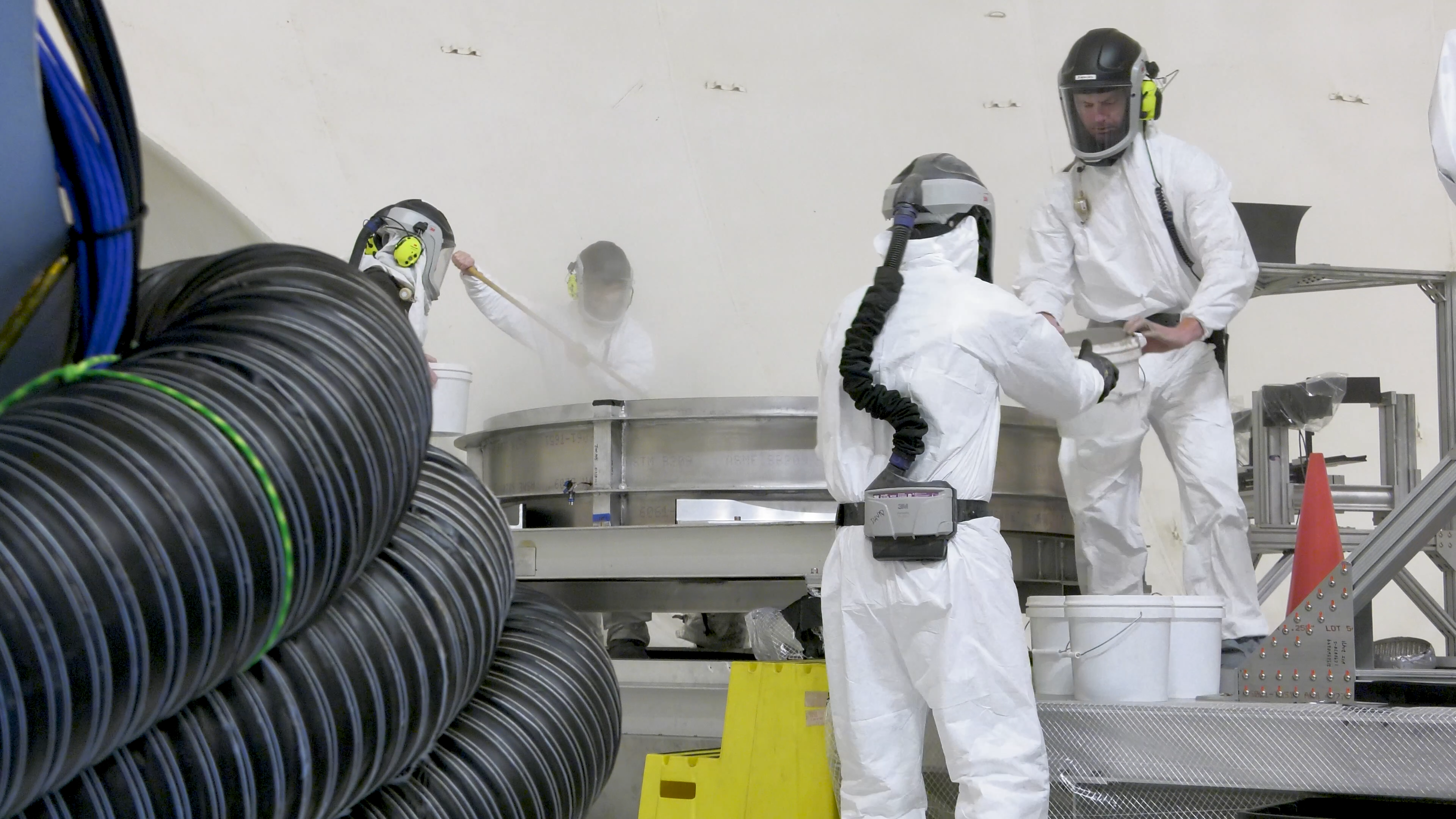
A crew loads simulated lunar dirt into the test bin in the 60' vacuum sphere.
A crew loads simulated lunar dirt into the test bin in the 60′ vacuum sphere.
NASA/Rob Lorkiewicz

Later this year, a second round of tests will involve a 14-inch, 3D-printed hybrid rocket motor developed at Utah State University in Logan, Utah, and tested at NASA’s Marshall Space Flight Center in Huntsville, Alabama. It produces around 35 pounds of thrust, igniting both solid propellant and a stream of gaseous oxygen to create a hot, powerful stream of rocket exhaust, simulating a real rocket engine but at smaller scale for this test series.
Researchers will test both propulsion systems at various heights.

“It gives us a huge range of test conditions,” Korzun said, “to be able to talk about spacecraft of all different kinds going to the Moon, and for us to understand what they’re going to do as they land or try to take back off from the surface.”

Korzun sees this test campaign as more than a one-shot, Moon-specific thing. The entire operation is modular by design and also can prepare NASA for missions to Mars. The lunar regolith simulant can be replaced with a Mars simulant that’s more like sand. Pieces of hardware and instrumentation can be unbolted and replaced to represent future Mars landers. Rather than take the vacuum sphere down to really low pressure like on the Moon, it can be adjusted to a pressure that simulates the atmosphere on the Red Planet.

“Mars has always been in our road maps,” Korzun said.

But for now, the Moon looms large.
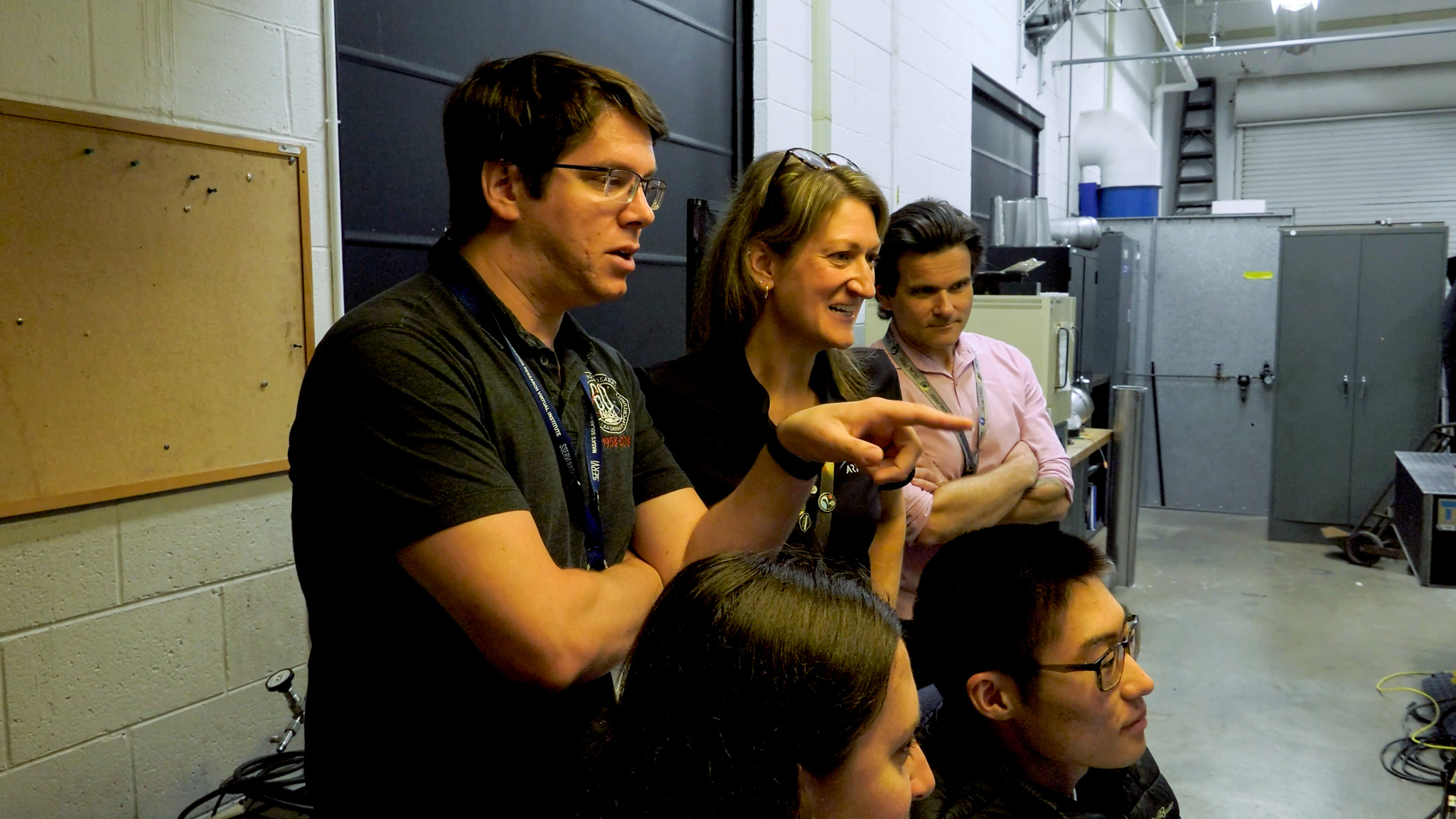
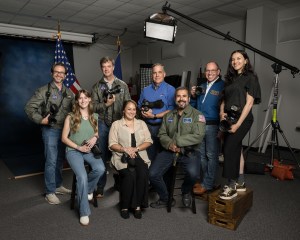
Clockwise from left: Wesley Chambers, deputy principal investigator for the PSI tests from Marshall’s Space Flight Center in Huntsville, Alabama; Ashley Korzun, test lead and principal investigator; Dave Lehotay, project manager; and Tylor Takahashi and Olivia Tyrrell, both from the SCALPSS instrument team, watch test footage in the control room.
NASA/Rob Lorkiewicz

“This test campaign is one of the most flight-relevant and highly instrumented plume-surface interaction test series NASA has ever conducted,” said Daniel Stubbs, an engineer with the Human Landing Systems plume and aero environments team at NASA Marshall. “The data from these tests at NASA Langley will be critical in developing and validating models to predict the effects of plume-surface interaction for landing on the Moon and even Mars, ensuring mission success for the human landing systems and the safety of our astronauts.”

Through the Artemis program, NASA will send astronauts on increasingly complex missions to explore the Moon for scientific discovery, economic benefits, establish an enduring human presence on the lunar surface, and to build on our foundation for the first crewed missions to Mars.

For more information about Artemis, visit:

https://www.nasa.gov/artemis

Powered by WPeMatico

Get The Details…
Joseph Atkinson
Contractor to Civil Servant: NASA Welcomes Jeret Howard

Contractor to Civil Servant: NASA Welcomes Jeret Howard

Jeret Howard
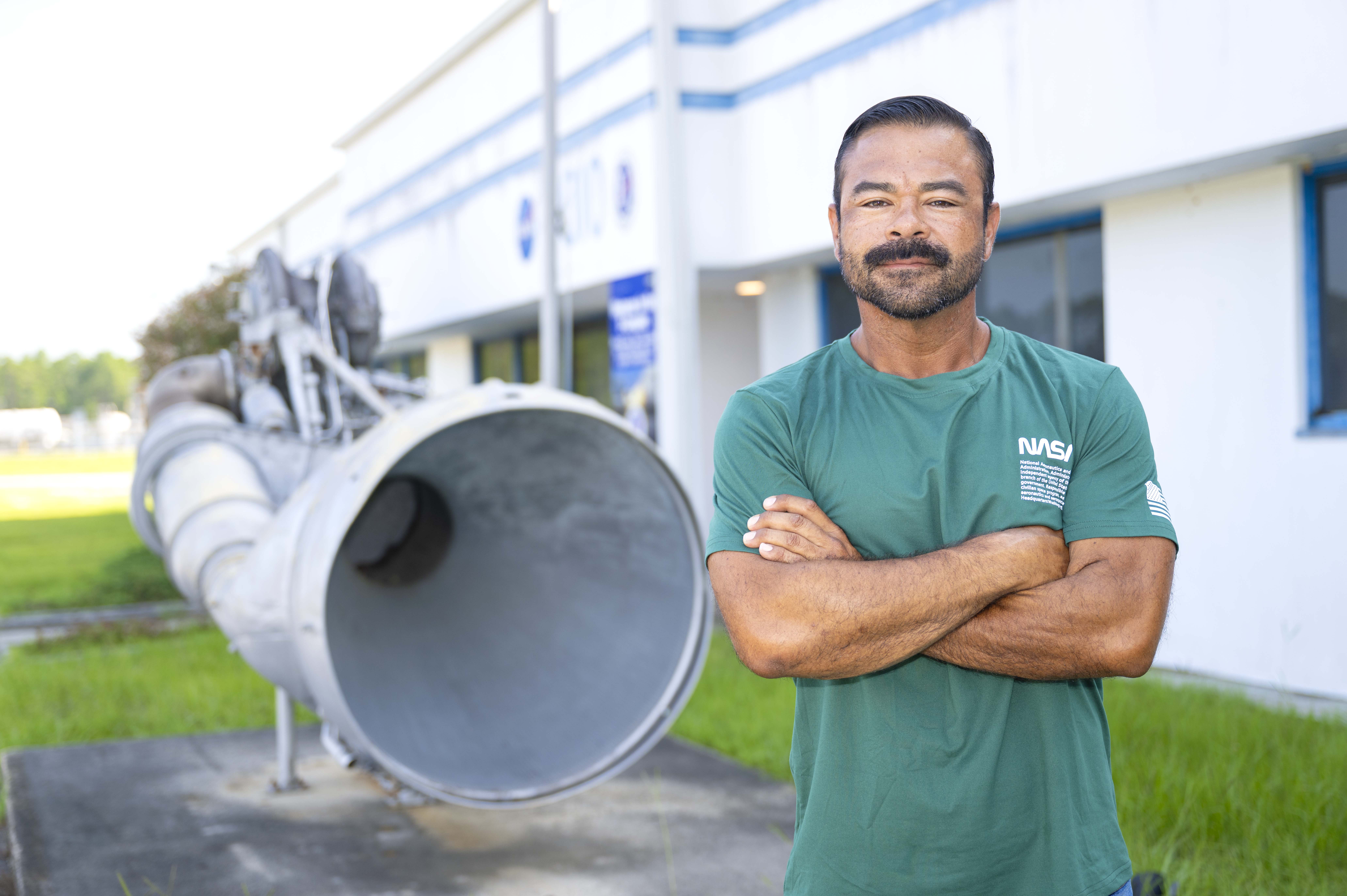
Jeret Howard, logistics management specialist at NASA’s Stennis Space Center near Bay St. Louis, Mississippi, poses for a photograph on July 27, 2026. Howard is now a NASA civil servant at Stennis as part of the administrator’s directive to strengthen technical core competencies within the civil service workforce.
NASA/Danny Nowlin

At 17, Jeret Howard raised his right hand to serve his country as a United States Army combat medic in Iraq. This past summer, he raised his right hand again at NASA’s Stennis Space Center near Bay St. Louis, Mississippi.

Hired as a civil servant under the agency’s workforce directive to restore core competencies by converting contractors to civil service, Howard’s transition from long-time contractor to logistics management specialist represents a continuation of a life dedicated to national service.

He has worked for more than 15 years at America’s largest rocket propulsion test site as a mechanical technician, turning wrenches and building test stand infrastructure as a contractor. Now, he steps into a NASA role that carries deep personal meaning.

“It is absolutely a continuation of service,” said Howard. “It is a point of pride to go from being a 17-year-old just wanting to serve your country to coming full circle like this, hoping to one day retire from NASA.”

As a logistics management specialist, Howard’s job is to secure necessary hardware and components for propulsion testing. He relies on years of technical experience to anticipate the needs of the engineering team. As he secures essential materials, Howard ensures taxpayer dollars are wisely spent.  

Howard’s expertise is not confined to a desk as he actively works alongside new technicians and supports testing across multiple areas, including the build up to support Blue Origin’s testing at NASA Stennis.

“Mechanical work is a challenge,” said Howard. “Everything is a puzzle. Even when it seems like it is going to be monotonous, there is always something new that comes up. It is a skill, and once you do it so much over the years and get really good at it, you do not want to waste it.”

Howard’s motivation for public service is rooted in his home. A resident of Kiln, Mississippi, Howard views his career as a chance to lead by example and make his family proud.

“My little girl can look at me, be proud, and know she can do anything,” said Howard.

This resonates just as strongly with his teenage son, who dreams of one day becoming a NASA engineer. Even as his son navigates physical challenges, the family’s focus is entirely on his limitless potential.

“We push him to not think about what he cannot do, but to focus on how much he can do,” said Howard.

The family balances drive with a “work hard, play hard” lifestyle by spending their free time riding dirt bikes and taking their boat out on the water.

The hard work is paying off at a time in history when NASA is returning humans to the Moon through the Artemis program and building a Moon Base as humanity’s first lunar outpost where astronauts will live, work, and explore near the Moon’s South Pole.

The future of spaceflight is a shared family passion for the Howards.

When the Artemis II mission launched last April, the family set up a large tablet outside next to their boat, using its heavy-duty sound system to amplify the broadcast.

“My daughter could feel the bass of the launch,” said Howard. “I got chills.”

As Howard’s work supports NASA and the commercial companies conducting propulsion test work at Stennis, the family is already anticipating the launch of Artemis III, a mission intended to demonstrate integrated operations before Artemis IV returns astronauts to the lunar surface.

Howard’s transition to a civil servant means he has a direct role with NASA. His work contributes to securing American leadership in space today, while inspiring the next generation of engineers, such as his son, into the future.

For more information about NASA’s Stennis Space Center, visit: www.nasa.gov/stennis

Share

Details

Last Updated

Aug 26, 2026

Editor
Bo Black
Location
Stennis Space Center

Related Terms

Powered by WPeMatico

Get The Details…
LaToya Dean

APOD: 2026 August 26 – JWST Images The Lion’s Head Nebula

APOD: 2026 August 26 – JWST Images The Lion’s Head Nebula

APOD

Astronomy Picture of the Day

Discover the cosmos! Each day a different image or photograph of our fascinating universe is featured, along with a brief explanation written by a professional astronomer.

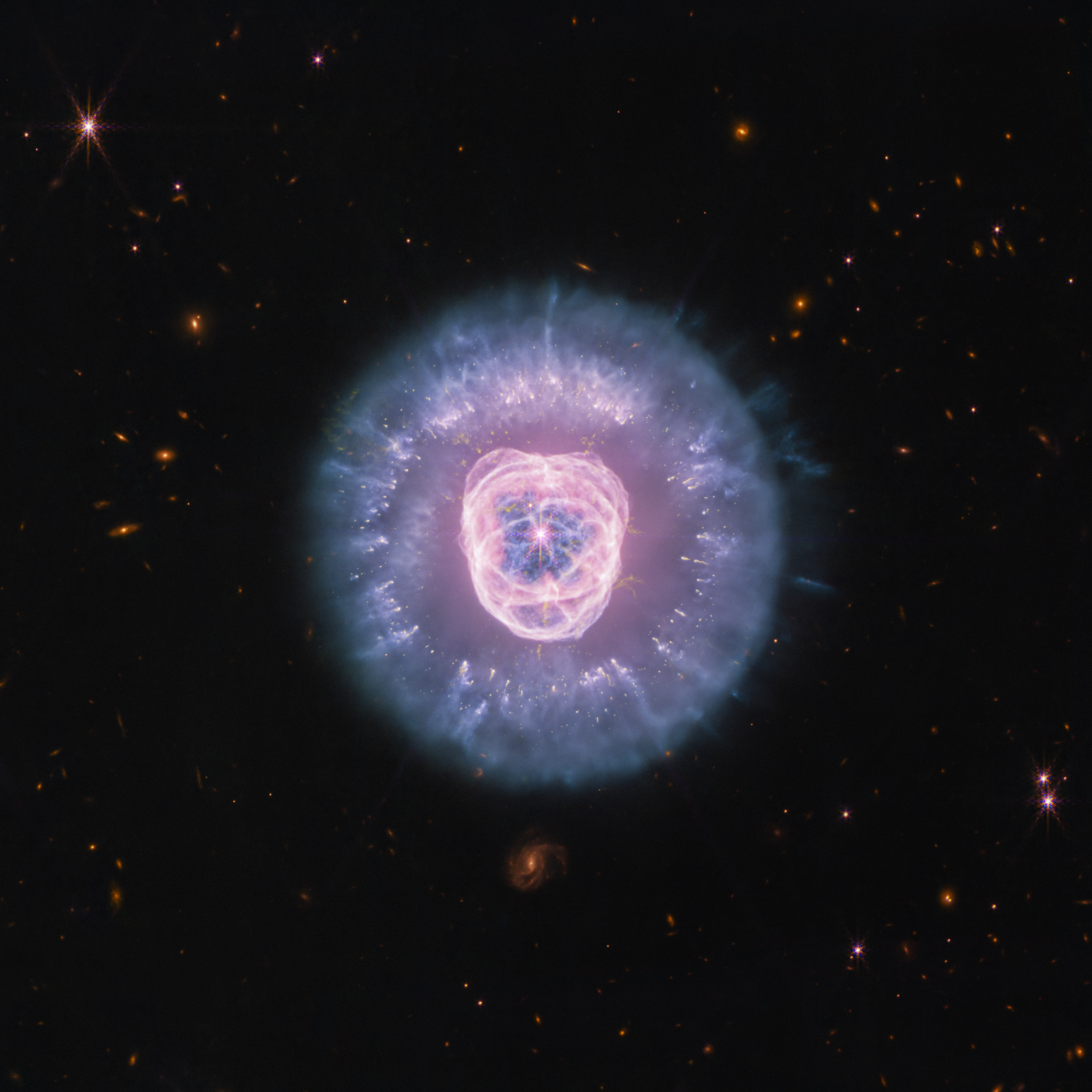
JWST’s Near Infrared Camera and Mid Infrared Instrument combined image of planetary nebula NGC 2392, the Lion Nebula, against the black background of space. The nebula is at center, circular in shape, and looks like a male lion’s head. In the center is a small, pinkish-white circle with eight-point diffraction spikes, a white dwarf star. Surrounding the star are purple-pink cavernous bubbles and shell-like rings. The bubbles and shells collectively form an oval with two small, wide arcs near the top, reminiscent of a lion’s face and its ears. What appears to be extended outward from the lion’s face is a thick ring of purple-blue material. The width of the ring is consistent throughout and resembles a mane. The area closest to the lion’s face looks cloudy, while the edges of the mane look like there are clumps of dust with comet-like tails. In the background are distant galaxies and stars. Some galaxies are yellow and orange points of light and others have spiral structures. Some stars have diffraction spikes.

JWST Images The Lion’s Head Nebula

Explanation: Are we looking at the future of our Sun? The James Webb Space Telescope captured today’s composite image of the Lion’s Head Nebula (NGC 2392) with its NIRCam and MIRI instruments. The Lion’s Head Nebula is the remnant of a Sun-like star. This star was unable to sustain the nuclear fusion in its core needed to remain stable. It began to shed layers of gas and dust into space, forming this planetary nebula. A hot stellar core, called a white dwarf, is left behind within the lion’s nose. Do not boop this nose! Intense radiation from the white dwarf is ionizing the gas as it expands, creating the irregular bubble that makes up the lion’s face. Dust clumps that have survived the white dwarf’s radiation and a cloud of ionized gas make up the lion’s mane. This new and more detailed view of the nebula will help humanity learn more about how the gas and dust interact with each other and the white dwarf radiation.

Tomorrow’s picture: a waterfall of light

Date: August 26, 2026
Credit: Image: NASA, ESA, CSA, STScI; Image Processing: Alyssa Pagan (STScI)
Authors & editors: Keighley Rockcliffe, Robert Nemiroff, Jerry Bonnell, Cecilia Chirenti
A service of: ASD at NASA / GSFC,
NASA Science Activation & Michigan Tech. U.

Powered by WPeMatico

Get The Details…

New Next-Gen Dish Adds Muscle to NASA’s Deep Space Network

New Next-Gen Dish Adds Muscle to NASA’s Deep Space Network

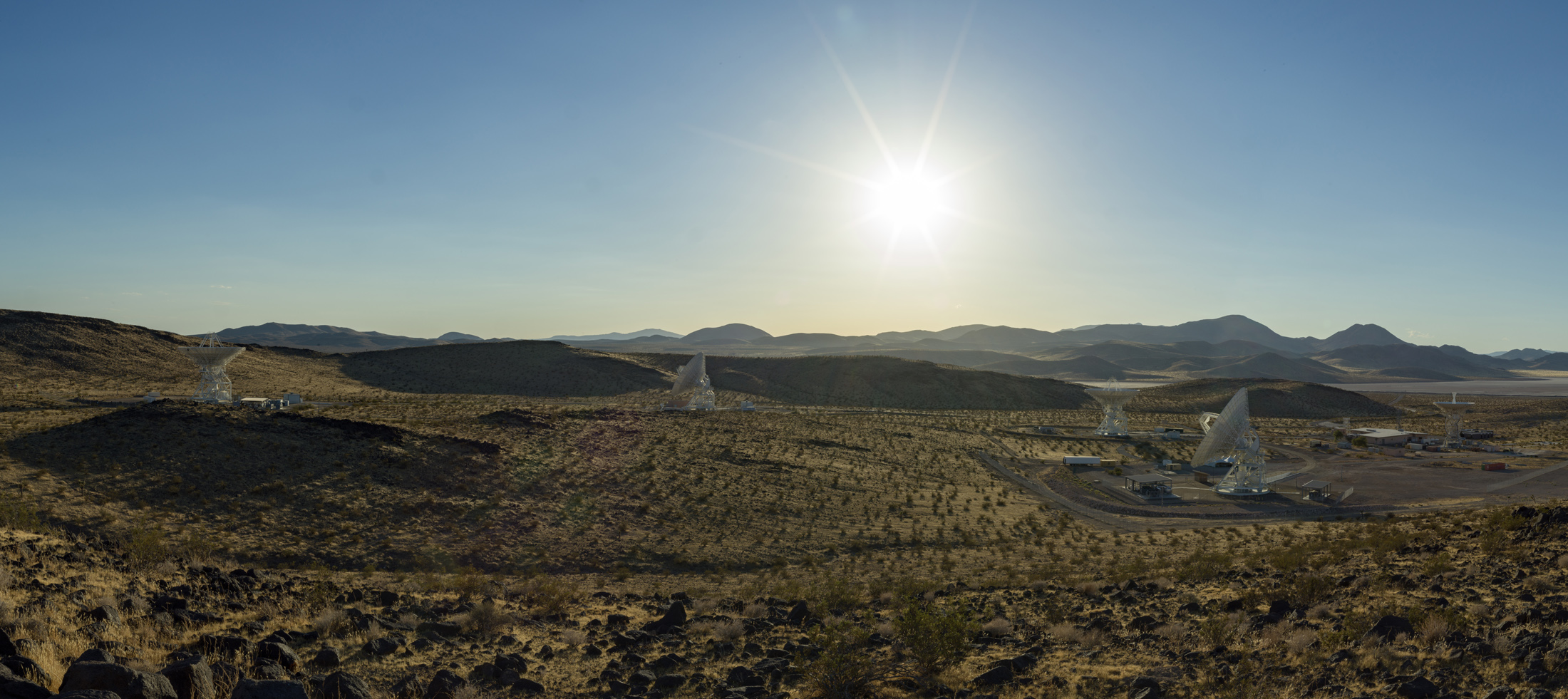
A wide desert landscape featuring several large white satellite dishes pointing toward a bright sun shining in a clear blue sky above distant mountain ranges.
Antennas soak in the summer Sun in August 2026 at the Deep Space Network’s Goldstone complex near Barstow, California, including the recently completed Deep Space Station 23 (shown in the foreground, to the right).
NASA/JPL-Caltech

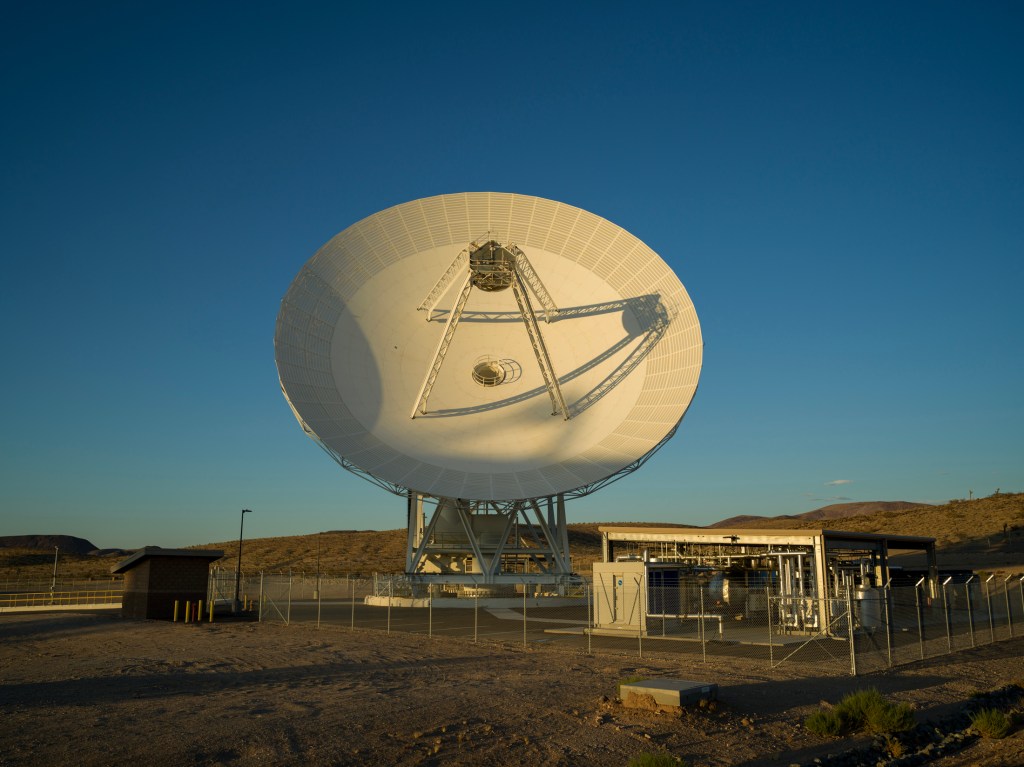
NASA’s Deep Space Network facility in California is marking the addition of a brand new 34-meter-wide (114-foot-wide) radio frequency antenna to the agency’s deep space communications and navigation system. The network uses giant dish antennas located at three global facilities to support more than 40 spacecraft exploring the solar system and interstellar space.

The new Deep Space Station 23 (DSS-23) is located at the Goldstone Deep Space Communications Complex, near Barstow, and is managed by NASA’s Jet Propulsion Laboratory in Southern California.

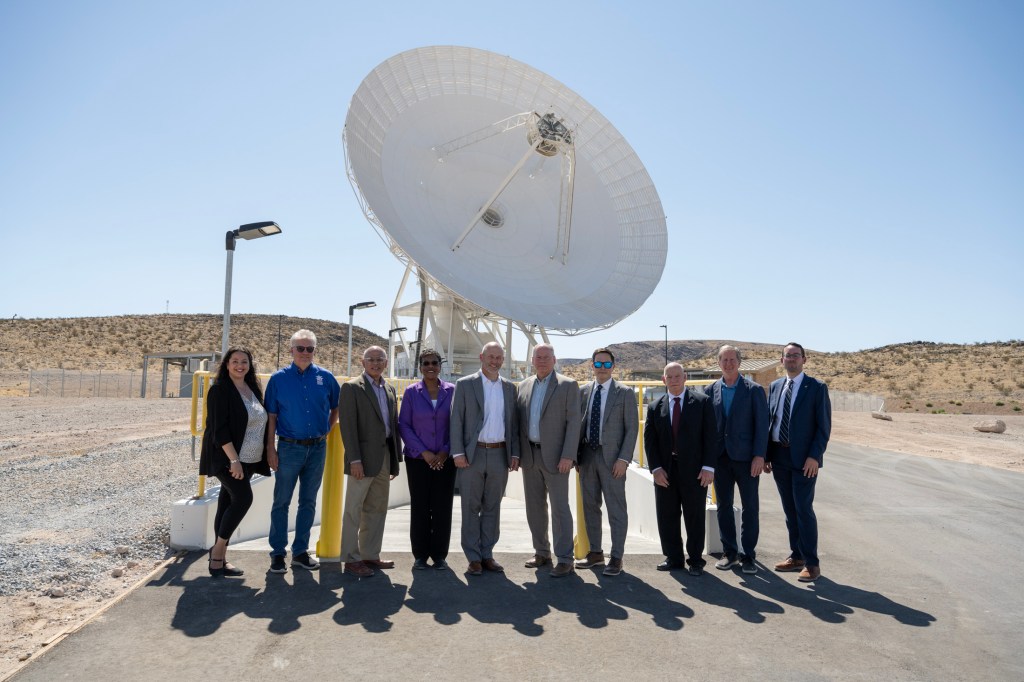
NASA leadership and personnel as well as dignitaries gathered at the complete DSS-23 antenna for a ceremonial ribbon cutting. It’s the latest to be added as part of the Deep Space Network’s Aperture Enhancement Project, which began in 2009 to upgrade and expand the network by adding six new 34-meter multifrequency beam-waveguide antennas. These versatile dishes can enhance many missions operating over different radio frequencies.

“By expanding the Deep Space Network, we are strengthening the communications foundation NASA needs for the bold missions ahead — from exploring more of the Moon than ever before to peering deeper into the solar system,” said James Kenyon, associate administrator of the Research and Technology Mission Directorate at NASA Headquarters in Washington. “This new antenna will help us deliver on our national goals for space exploration and push beyond the limits of what once seemed impossible.”

After completing a testing campaign from May through July to demonstrate its capabilities, the new DSS-23 began operations on Aug. 3, tracking NASA’s Chandra X-ray Observatory. Since then, it has been communicating with dozens of missions such as NASA’s Mars Reconnaissance Orbiter, Psyche, Juno, Voyager 1, and other robotic spacecraft in deep space.

“The addition of this next-generation antenna brings us closer to a completely modernized network that embraces advanced technology to ensure NASA’s leadership in deep space communications,” said Dave Gallagher, director of JPL. “After over 60 years of continuous operations supporting consequential missions, these upgrades prime the network for a new era of exploration. The teams that designed, planned, and built DSS-23 should be proud.”

Enhanced capabilities

Construction of DSS-23 began in February 2020. After the 133-ton metal reflector framework was placed and bolted atop the antenna’s pedestal in December 2024, engineers installed the panels to the framework that reflect radio frequency signals transmitted to and received from spacecraft. Then came the careful process of calibrating the antenna so it can work in concert with the rest of the network.

It is the fifth antenna at Goldstone (joining three 34-meter antennas and one 70-meter, or 230-foot, antenna) and the fifth enhancement project antenna to join the network, which includes antennas at the DSN’s Goldstone, Madrid, and Canberra, Australia, complexes. Multifrequency beam waveguide antennas direct signals down to a stable, climate-controlled underground room, rather than housing heavy, sensitive electronic equipment on the moving antenna dish. In addition to offering versatility, this design allows easy access for maintenance and upgrades to the system.

“The biggest challenge wasn’t actually constructing the antenna. It was transforming a complex collection of mechanical, electrical, software, radio frequency, and infrastructure systems into a single, mission-ready asset,” said Germaine Aziz, manager of the Deep Space Network Aperture Enhancement Project at JPL. “Every subsystem must be integrated, calibrated, and verified to operate with extraordinary precision and reliability before it can support NASA’s deep space missions.”

The enhancement project will be complete when a sixth enhancement-project antenna, Deep Space Station 33, comes online at the Canberra facility in 2029, bringing the total number of 34-meter antennas across the network to 13. The 34-meter antennas can be arrayed (combined and operated together) to provide an equivalent communications backup for each facility’s single 70-meter antenna, which, after more than 50 years of near-continuous operation, are getting increasingly costly to maintain and repair.

Managed by Caltech for NASA, JPL manages the agency’s Deep Space Network with the oversight of NASA’s SCaN (Space Communications and Navigation) Program within NASA’s Research and Technology Mission Directorate. More than 100 NASA and non-NASA missions rely on the Deep Space Network and Near Space Network. They include missions that support astronauts aboard the International Space Station and future Artemis missions, monitoring Earth, exploring the Moon, and exploring the solar system and beyond. 

For more information about the Deep Space Network, visit:

https://www.nasa.gov/communicating-with-missions/dsn

Powered by WPeMatico

Get The Details…
albarne1

NASA Invites Media to LunaRecycle Challenge Finale Event in Alabama

NASA Invites Media to LunaRecycle Challenge Finale Event in Alabama

NASA will announce the winners of the final phase of its LunaRecycle Challenge on Friday, Aug. 28, at The University of Alabama (UA) Lee Styslinger College of Engineering in Tuscaloosa, Alabama. Launched in 2024, the challenge incentivizes the invention of new recycling systems that could support non-metabolic waste management efforts for future lunar missions.

Media and the public are invited to the challenge’s Technology Showcase and Winners Announcement, where up to 14 finalist teams will showcase their solutions and hear from NASA and UA leadership about the future of lunar innovation. Opening remarks will begin at 8:30 a.m. CDT on Aug. 28, in Room 1026 of H.M. Comer Hall on the UA campus.

Media interested in covering the event should confirm their attendance with the NASA Marshall newsroom by 3 p.m., Wednesday, Aug. 27, at: joel.w.wallace@nasa.gov.

The LunaRecycle Challenge is a $3 million, two-phase competition focused on the design and development of recycling solutions that can reduce non-metabolic waste and improve the sustainability of longer-term lunar missions. In the Final Round of Phase 2, invited teams were tasked with refining their prototype and digital twin concepts in preparation for live testing at McAbee Construction in Tuscaloosa earlier this month.

After this event, up to 11 teams will receive a portion of the $1.325 million prize purse from NASA for their prototype and digital twin solutions. The top two prototypes will earn $500,00 and $225,000, while top two digital twins will receive $275,000 and $125,000. Up to six Technical Achievement Prizes will be awarded to teams who excel in categories determined by the judging panel during final deliberations. Additionally, a $25,000 People’s Choice Award will be presented to the team who receives the most votes from the public and stakeholders throughout the Technology Showcase.

Winners will be announced live during the Technology Showcase closing ceremony, which begins at 12 p.m.

The LunaRecycle Challenge is managed at NASA’s Marshall Space Flight Center by Centennial Challenges, part of the Prizes, Challenges, and Crowdsourcing Program within NASA’s Research and Technology Mission Directorate. NASA’s Centennial Challenges have a legacy of more than 20 years engaging the public to solve complex problems that benefit NASA’s broader initiatives. Past challenges have spurred advances in robotics, additive manufacturing, power and energy, textiles, chemistry, and biology.

Phase 1 of the competition received record-breaking interest from the global innovator community. The challenge received more than 1,200 registrations – more than any competition in the 20-year history of Centennial Challenges – and a panel of 50 judges evaluated nearly 200 submissions. Seventeen teams were selected as Phase 1 winners, representing five countries and nine U.S. states, announced via livestream on NASA Marshall’s YouTube channel.

The LunaRecycle Challenge also is supported by recycling subject matter experts at NASA’s Kennedy Space Center in Florida and NASA’s Ames Research Center in California’s Silicon Valley.  The University of Alabama Lee J. Styslinger Jr. College of Engineering executes the challenge in partnership with NASA.

To learn more about the LunaRecycle Challenge visit:

https://www.nasa.gov/lunarecycle

Share

Details

Last Updated

Aug 25, 2026

Editor
Lee Mohon
Contact

Powered by WPeMatico

Get The Details…
Lee Mohon