Sols 4416-4417: New Year, New Clouds

Sols 4416-4417: New Year, New Clouds

2 min read

Sols 4416-4417: New Year, New Clouds

A grayscale image from the Martian surface shows a small gentle hill covered in dark gray rocky terrain, in the bottom quarter of the image. Above that is a light gray sky filled with glowing clouds resembling luminescent mother-of-pearl.
NASA’s Mars rover Curiosity captured this image of noctilucent clouds using its Right Navigation Camera on sol 4401 — or Martian day 4,401 of the Mars Science Laboratory mission — on Dec. 23, 2024, at 08:57:15 UTC.
NASA/JPL-Caltech

Earth planning date: Monday, Jan. 6, 2025

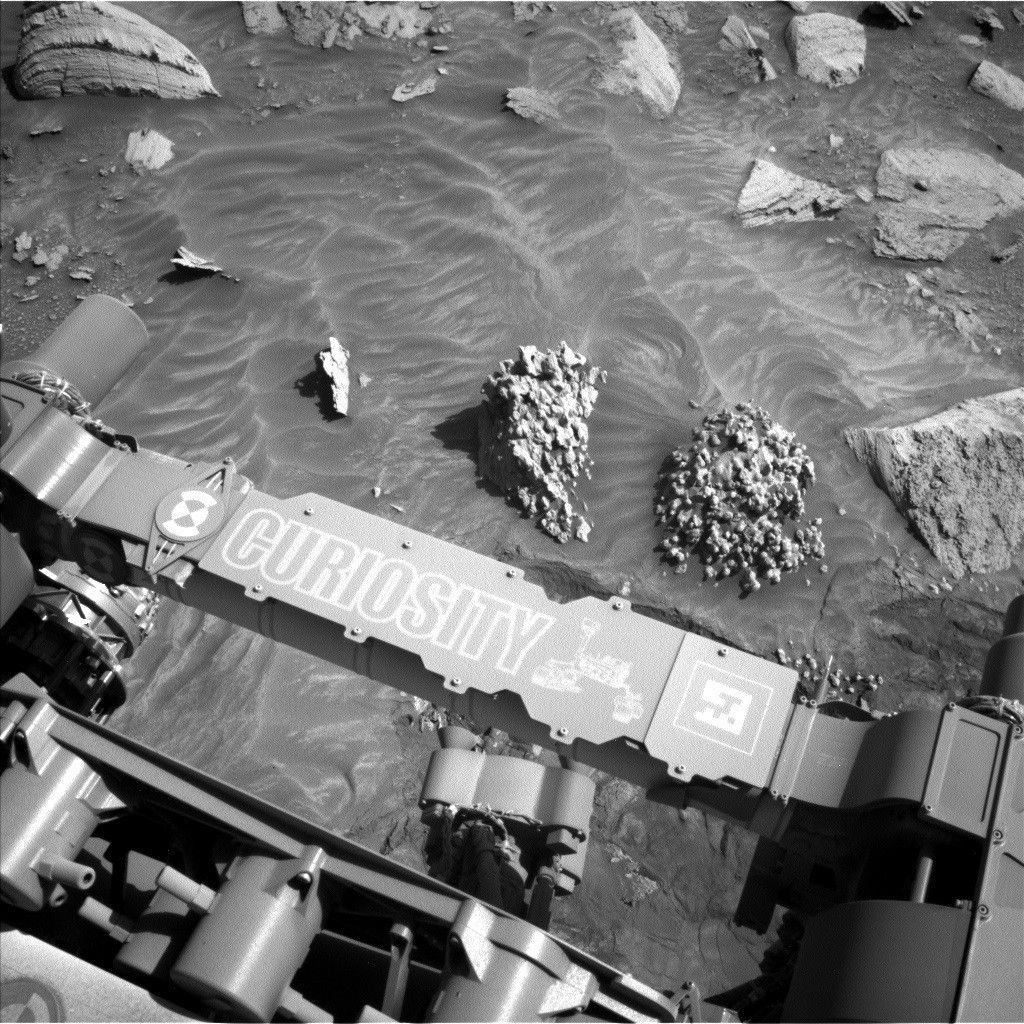
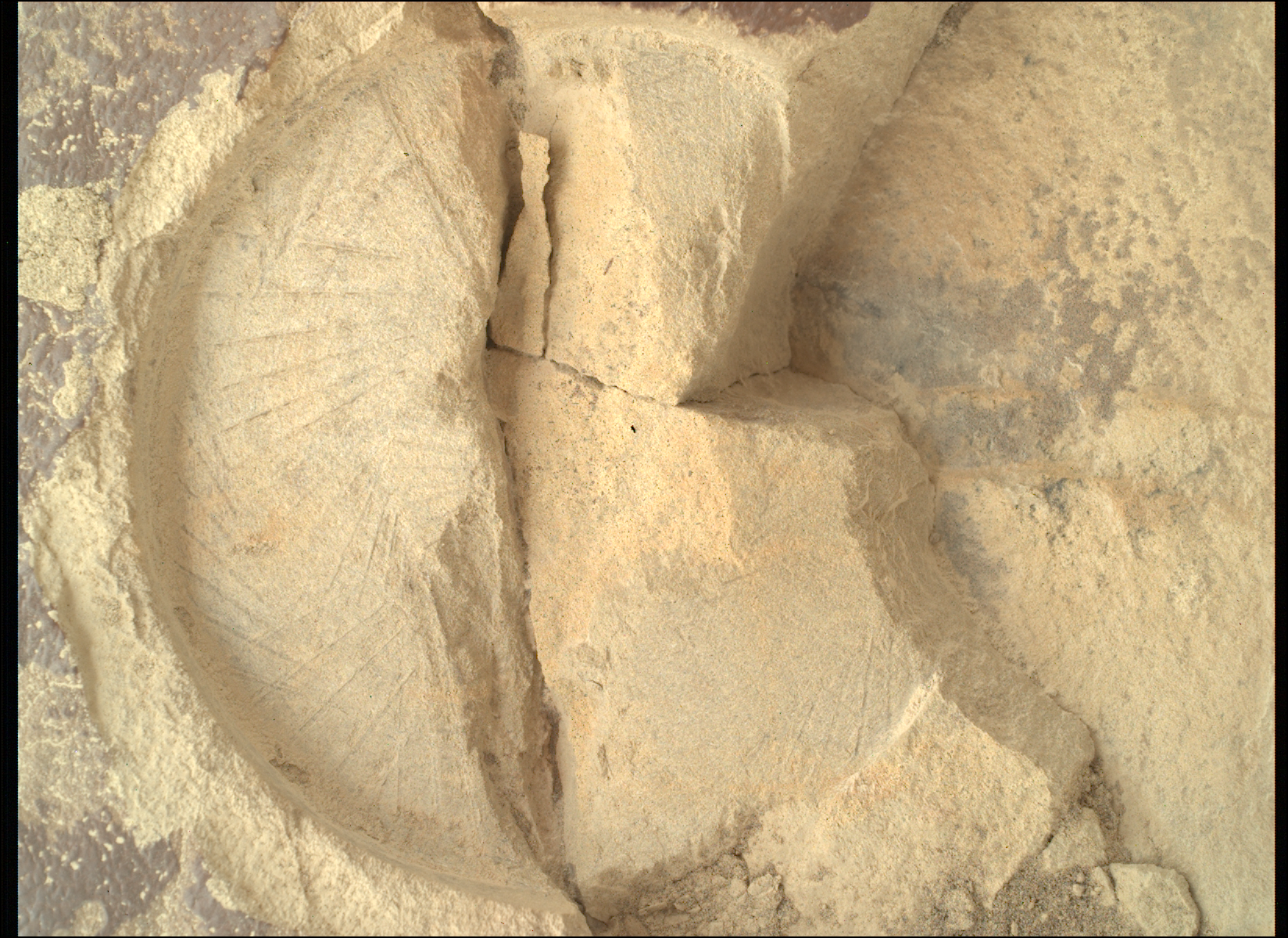
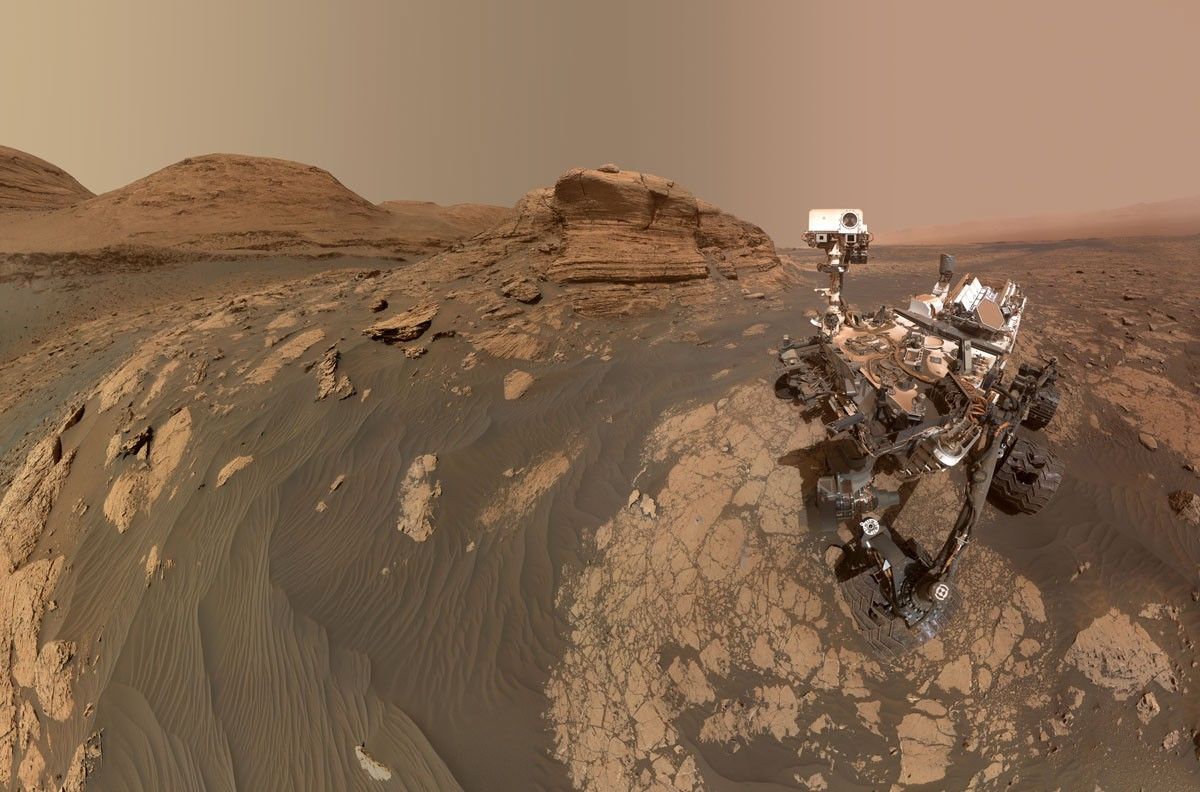
After our marathon holiday plan, we’re easing back into the new year with a standard two-sol plan. We did arrive today to the news that the drive hadn’t made it as far as we wanted, but luckily the rover planners determined that we were still in a good position to do contact science on two wintry targets — “Snow Creek” and “Winter Creek.” We also packed in lots of remote science with ChemCam using LIBS on “Grapevine” and “Skull Rock,” and we are doing long-distance imaging of the Texoli and Wilkerson buttes, and Gould Mesa. Mastcam will be imaging a number of targets near and far as well including “Red Box”’ “Point Mugu,” “Stone Canyon,” “Pine Cove,” and “Hummingbird Sage,” which will examine various structures in the bedrock. We can’t forget about the atmosphere either — we have a couple dust-devil surveys to look for dust lifting, but the real star of the show (at least for me) is the cloud imaging.

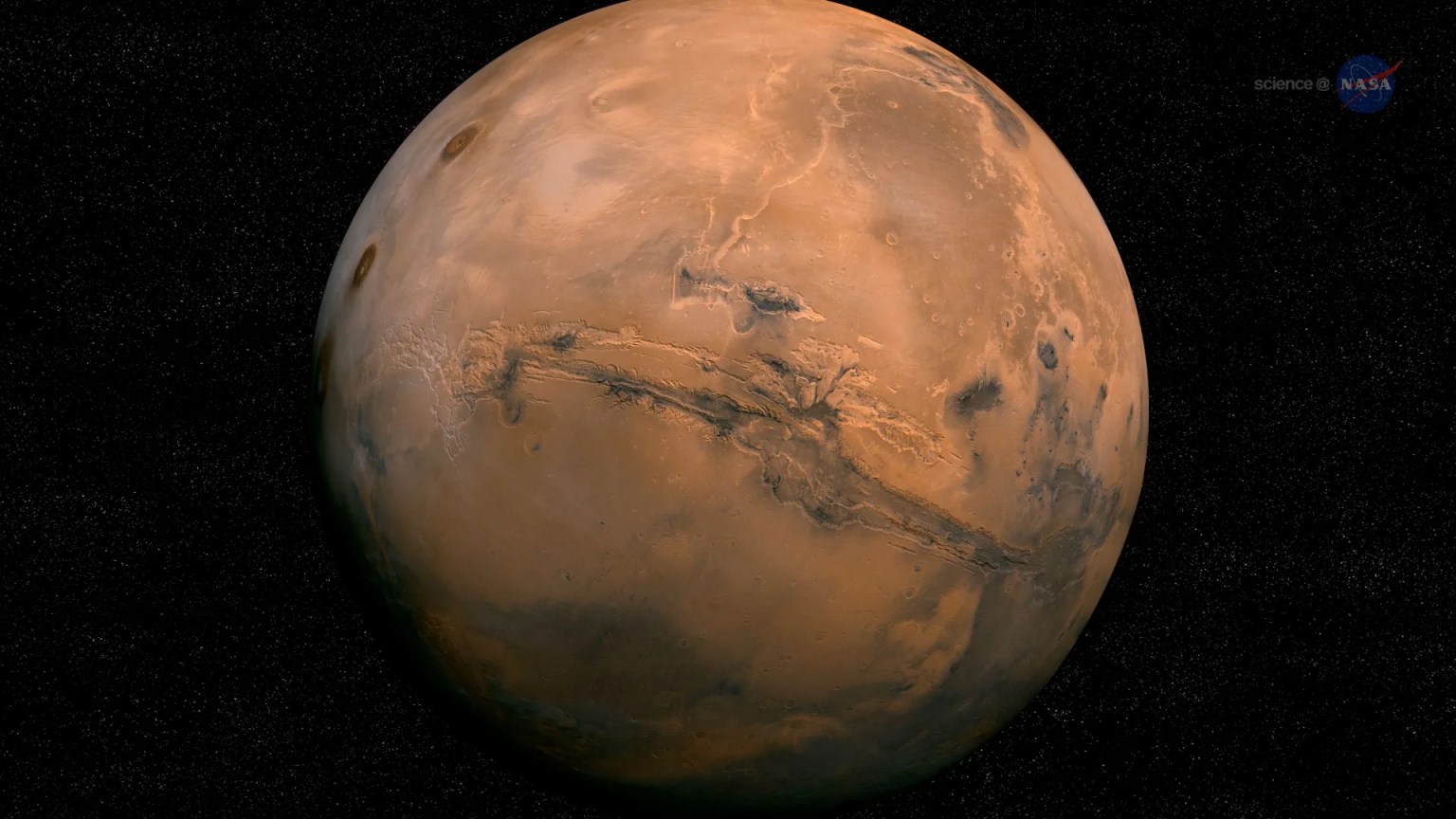
While we’re just into 2025 here on Earth, we’re also near the start of a new year on Mars! A Mars year starts at the northern vernal equinox (or the start of autumn in the southern hemisphere, where Curiosity is), and Mars year 38 started on Nov. 12.

We’re about a third of the way through autumn on Mars now, and the southern Martian autumn and winter bring one thing — clouds! Near the start of the Martian year we start seeing clouds around sunset. These are noctilucent (meaning “night illuminated”) clouds. Even though the sun has set in Gale Crater, the clouds are high enough in the atmosphere that the sun still shines on them, making them seem to almost glow in the sky. You can see this with clouds on Earth, too, around twilight! Mars year 38 will be our fourth year capturing these twilight clouds, and the Navcam images (one of which you can see above) already show it’s shaping up to be another year of spectacular clouds!

Written by Alex Innanen, Atmospheric Scientist at York University

Share

Details

Last Updated
Jan 08, 2025

Related Terms

Powered by WPeMatico

Get The Details…

Best of 2024: Reestablished NASA Art Program Begins with Mural in New York City

Best of 2024: Reestablished NASA Art Program Begins with Mural in New York City

Two adults and a child pose for a photo in front of a colorful space-themed mural. The child wears an astronaut costume.
NASA/Joel Kowsky

The New York-based artist team Geraluz, left, and WERC, right, pose in front of their mural “To the Moon, and Back” with their son Amaru, 5. The community mural was created as part of the reimagined NASA Art Program, which aims to inspire and engage the next generation of explorers – the Artemis Generation – in new and unexpected ways, including through art.

The NASA Headquarters photo team chose this image as one of their best from 2024. See more of the top 100 from last year on Flickr.

Image credit: NASA/Joel Kowsky

Powered by WPeMatico

Get The Details…
Monika Luabeya

NASA eClips Educator Receives 2024 VAST Science Educator Specialist Award

NASA eClips Educator Receives 2024 VAST Science Educator Specialist Award

2 min read

NASA eClips Educator Receives 2024 VAST Science Educator Specialist Award

On November 14, 2024, NASA eClips team member, Betsy McAllister, was recognized with the prestigious Virginia Association of Science Teachers (VAST) Science Educator Specialist Award at the 2024 VAST Annual Professional Development Institute. McAllister is an educator with Hampton City Schools in Virginia and Educator-in-Residence (EIR) at the National Institute of Aerospace’s Center for Integrative STEM Education (NIA-CISE).

Betsy earned this honor for her significant contributions to Science, Technology, Engineering, and Mathematics (STEM) education, having educated learners in formal and informal settings for over 30 years, 22 of those in the classroom. She taught 5th and 6th grade science, life and physical science, and gifted resource; she also served as a Science Teacher Specialist and STEM Teacher Specialist prior to her current position as EIR. In her EIR role with NIA, she is a key member of the NASA eClips team and works to bring NASA resources into the K-12 classroom while designing and aligning eClips resources with current curricula and pacing. She has been instrumental in creating strong collaborations between NASA and STEM-related organizations with Hampton City Schools and organizing community engagement experiences, such as their annual STEM Exploration Community Event.

In addition to her professional work with students, McAllister brings real-world learning opportunities to the public through volunteer roles as Commissioner with the Hampton Clean City Commission, a Peninsula Master Naturalist, and a Hampton Master Gardener. Congratulations, Betsy!

The NASA eClips project provides educators with standards-based videos, activities, and lessons to increase STEM literacy through the lens of NASA. It is supported by NASA under cooperative agreement award number NNX16AB91A and is part of NASA’s Science Activation Portfolio. Learn more about how Science Activation connects NASA science experts, real content, and experiences with community leaders to do science in ways that activate minds and promote deeper understanding of our world and beyond: https://science.nasa.gov/learn

Black background with green leaves overlaid with the VAST logo, wording about the award, and a headshot of Betsy McAllister in a blue sweater.
Betsy McAllister was presented with the Virginia Association of Science Teacher’s Science Educator Specialist Award at the November 2024 VAST Conference.
VAST

Share

Details

Last Updated
Jan 07, 2025
Editor
NASA Science Editorial Team

Related Terms

Powered by WPeMatico

Get The Details…

JAXA’s First Wooden Satellite Deploys from Space Station

JAXA’s First Wooden Satellite Deploys from Space Station

An open box is made of four wooden panels. The two missing wooden panels show a metal internal structure ensuring the box stays together.
Internal view of LignoSat’s structure shows the relationship among wooden panels, aluminum frames, and stainless-steel shafts.
Credit: Kyoto University

In December 2024, five CubeSats deployed into Earth’s orbit from the International Space Station. Among them was LignoSat, a wooden satellite from JAXA (Japanese Aerospace Exploration Agency) that investigates the use of wood in space. Findings could offer a more sustainable alternative to conventional satellites.

A previous experiment aboard station exposed three species of wood to the space environment to help researchers determine the best option for LignoSat. The final design used 10 cm long honoki magnolia wood panels assembled with a Japanese wood-joinery method.

Researchers will use sensors to evaluate strain on the wood and measure its responses to temperature and radiation in space. Geomagnetic levels will also be monitored to determine whether the geomagnetic field can penetrate the body of the wooden satellite and interfere with its technological capabilities. Investigating uses for wood in space could lead to innovative solutions in the future.

Powered by WPeMatico

Get The Details…
Andrea Lloyd

NASA to Explore Two Landing Options for Returning Samples from Mars

NASA to Explore Two Landing Options for Returning Samples from Mars

This photomontage shows each of the sample tubes shortly after they were deposited onto the surface by NASA’s Perseverance Mars rover, as viewed by the WATSON (Wide Angle Topographic Sensor for Operations and eNgineering) camera on the end of the rover’s 7-foot-long (2-meter-long) robotic arm. Shown, from left, are “Malay,” “Mageik,” “Crosswind Lake,” “Roubion,” “Coulettes,” “Montdenier,” “Bearwallow,” “Skyland,” “Atsah,” and “Amalik.” Deposited from Dec. 21, 2022, to Jan. 28, 2023, these samples make up the sample depot Perseverance built at “Three Forks,” a location within Mars’ Jezero Crater.
This photomontage shows tubes containing samples from Mars, as collected by NASA’s Perseverance Mars rover.  The agency’s Mars Sample Return Program plans to bring these samples back to study them in state-of-the-art facilities on Earth.
Credit: NASA/JPL-Caltech/MSSS

To maximize chances of successfully bringing the first Martian rock and sediment samples to Earth for the benefit of humanity, NASA announced Tuesday a new approach to its Mars Sample Return Program. The agency will simultaneously pursue two landing architectures, or strategic plans, during formulation, encouraging competition and innovation, as well as cost and schedule savings.

NASA plans to later select a single path forward for the program, which aims to better understand the mysteries of the universe, and to help determine whether the Red Planet ever hosted life. NASA is expected to confirm the program – and its design – in the second half of 2026.

“Pursuing two potential paths forward will ensure that NASA is able to bring these samples back from Mars with significant cost and schedule saving compared to the previous plan,” said NASA Administrator Bill Nelson. “These samples have the potential to change the way we understand Mars, our universe, and – ultimately – ourselves. I’d like to thank the team at NASA and the strategic review team, led by Dr. Maria Zuber, for their work.”

In September 2024, the agency accepted 11 studies from the NASA community and industry on how best to return Martian samples to Earth. A Mars Sample Return Strategic Review team was charged with assessing the studies and then recommending a primary architecture for the campaign, including associated cost and schedule estimates.

“NASA’s rovers are enduring Mars’ harsh environment to collect ground-breaking science samples,” said Nicky Fox, who leads NASA’s Science Mission Directorate. “We want to bring those back as quickly as possible to study them in state-of-the-art facilities. Mars Sample Return will allow scientists to understand the planet’s geological history and the evolution of climate on this barren planet where life may have existed in the past and shed light on the early solar system before life began here on Earth. This will also prepare us to safely send the first human explorers to Mars.”

During formulation, NASA will proceed with exploring and evaluating two distinct means of landing the payload platform on Mars. The first option will leverage previously flown entry, descent, and landing system designs, namely the sky crane method, demonstrated with the Curiosity and Perseverance missions. The second option will capitalize on using new commercial capabilities to deliver the lander payload to the surface of Mars.

For both potential options, the mission’s landed platform will carry a smaller version of the Mars Ascent Vehicle. The platform’s solar panels will be replaced with a radioisotope power system that can provide power and heat through the dust storm season at Mars, allowing for reduced complexity.

The orbiting sample container will hold 30 of the sample tubes containing samples the Perseverance lander has been collecting from the surface of Mars. A redesign of the sample loading system on the lander, which will place the samples into the orbiting sample container, simplifies the backward planetary protection implementation by eliminating the accumulation of dust on the outside of the sample container.

Both mission options rely on a capture, containment and return system aboard ESA’s (European Space Agency’s) Earth Return Orbiter to capture the orbiting sample container in Mars orbit. ESA is evaluating NASA’s plan.

For more information on NASA’s exploration of Mars, visit:

https://www.nasa.gov/mars

-end-

Meira Bernstein / Dewayne Washington
Headquarters, Washington
202-358-1100
meira.b.bernstein@nasa.gov / dewayne.a.washington@nasa.gov

Share

Details

Last Updated

Jan 07, 2025

Powered by WPeMatico

Get The Details…
Roxana Bardan