NASA Webb’s Autopsy of Planet Swallowed by Star Yields Surprise

NASA Webb’s Autopsy of Planet Swallowed by Star Yields Surprise

6 Min Read

NASA Webb’s Autopsy of Planet Swallowed by Star Yields Surprise

An illustration of a host star, which looks like an orange globe with flares coming out on various sides with a very transparent cloud of blue dust spread out from the star. A dark orange horizontal ring of material circles the host star.
NASA’s James Webb Space Telescope’s observations of what is thought to be the first-ever recorded planetary engulfment event revealed a hot accretion disk surrounding the star, with an expanding cloud of cooler dust enveloping the scene. Webb also revealed that the star did not swell to swallow the planet, but the planet’s orbit actually slowly depreciated over time, as seen in this artist’s concept. Full illustration below.
Credits:
NASA, ESA, CSA, R. Crawford (STScI)

Observations from NASA’s James Webb Space Telescope have provided a surprising twist in the narrative surrounding what is believed to be the first star observed in the act of swallowing a planet. The new findings suggest that the star actually did not swell to envelop a planet as previously hypothesized. Instead, Webb’s observations show the planet’s orbit shrank over time, slowly bringing the planet closer to its demise until it was engulfed in full.

“Because this is such a novel event, we didn’t quite know what to expect when we decided to point this telescope in its direction,” said Ryan Lau, lead author of the new paper and astronomer at NSF NOIRLab (National Science Foundation National Optical-Infrared Astronomy Research Laboratory) in Tuscon, Arizona. “With its high-resolution look in the infrared, we are learning valuable insights about the final fates of planetary systems, possibly including our own.”

Two instruments aboard Webb conducted the post-mortem of the scene – Webb’s MIRI (Mid-Infrared Instrument) and NIRSpec (Near-Infrared Spectrograph). The researchers were able to come to their conclusion using a two-pronged investigative approach.

Image A: Planetary Engulfment Illustration

A four panel illustration, with two boxes on the top row and two boxes on the bottom row. They are labeled: 1, 2, 3, 4. Panel 1 shows a host star, which looks like an orange globe with flares coming out on various sides. There is a blue line with arrows forming a spiral around the star. At 2 o’clock in the outer spiral, furthest away from the star, there is a blue planet. Panel 2 shows the same star and lines, but the planet is now at 7 o’clock and closer to the star. It is a little stretched out toward the star, appearing like an American football or rugby ball instead of a sphere. Panel 3 shows the same star and lines, but the planet is fully engulfed by the star, with big flares coming out where the planet and star collided. Panel 4 shows the aftermath, with a very transparent cloud of blue dust spread out from the star. A dark orange horizontal ring of material circles the host star.
NASA’s James Webb Space Telescope’s observations of what is thought to be the first-ever recorded planetary engulfment event revealed a hot accretion disk surrounding the star, with an expanding cloud of cooler dust enveloping the scene. Webb also revealed that the star did not swell to swallow the planet, but the planet’s orbit actually slowly depreciated over time, as seen in this artist’s concept.
NASA, ESA, CSA, R. Crawford (STScI)

Constraining the How

The star at the center of this scene is located in the Milky Way galaxy about 12,000 light-years away from Earth.

The brightening event, formally called ZTF SLRN-2020, was originally spotted as a flash of optical light using the Zwicky Transient Facility at the Palomar Observatory in San Diego, California. Data from NASA’s NEOWISE (Near-Earth Object Wide-field Infrared Survey Explorer) showed the star actually brightened in the infrared a year before the optical light flash, hinting at the presence of dust. This initial 2023 investigation led researchers to believe that the star was more Sun-like, and had been in the process of aging into a red giant over hundreds of thousands of years, slowly expanding as it exhausted its hydrogen fuel.

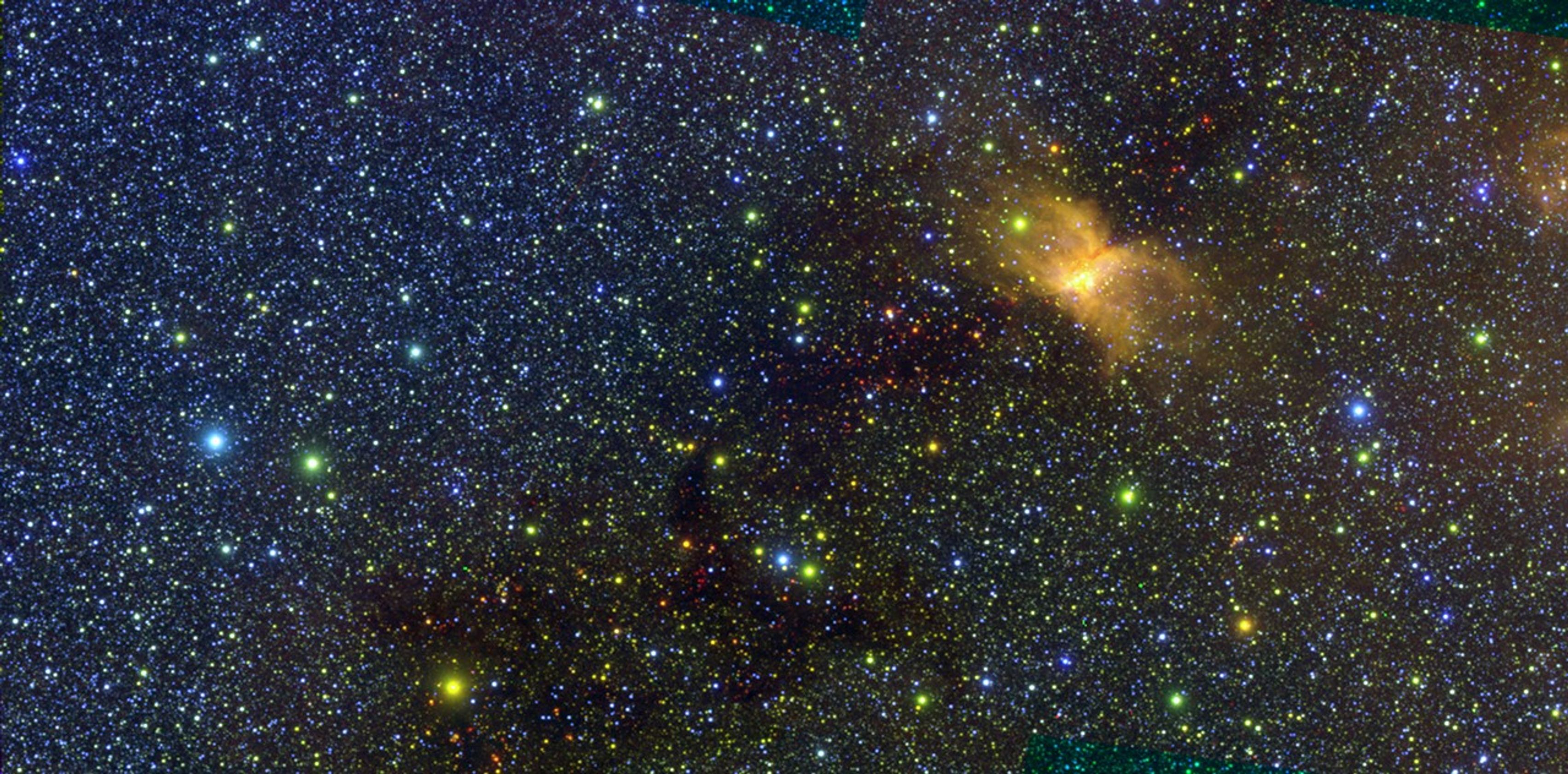
However, Webb’s MIRI told a different story. With powerful sensitivity and spatial resolution, Webb was able to precisely measure the hidden emission from the star and its immediate surroundings, which lie in a very crowded region of space. The researchers found the star was not as bright as it should have been if it had evolved into a red giant, indicating there was no swelling to engulf the planet as once thought.

Reconstructing the Scene

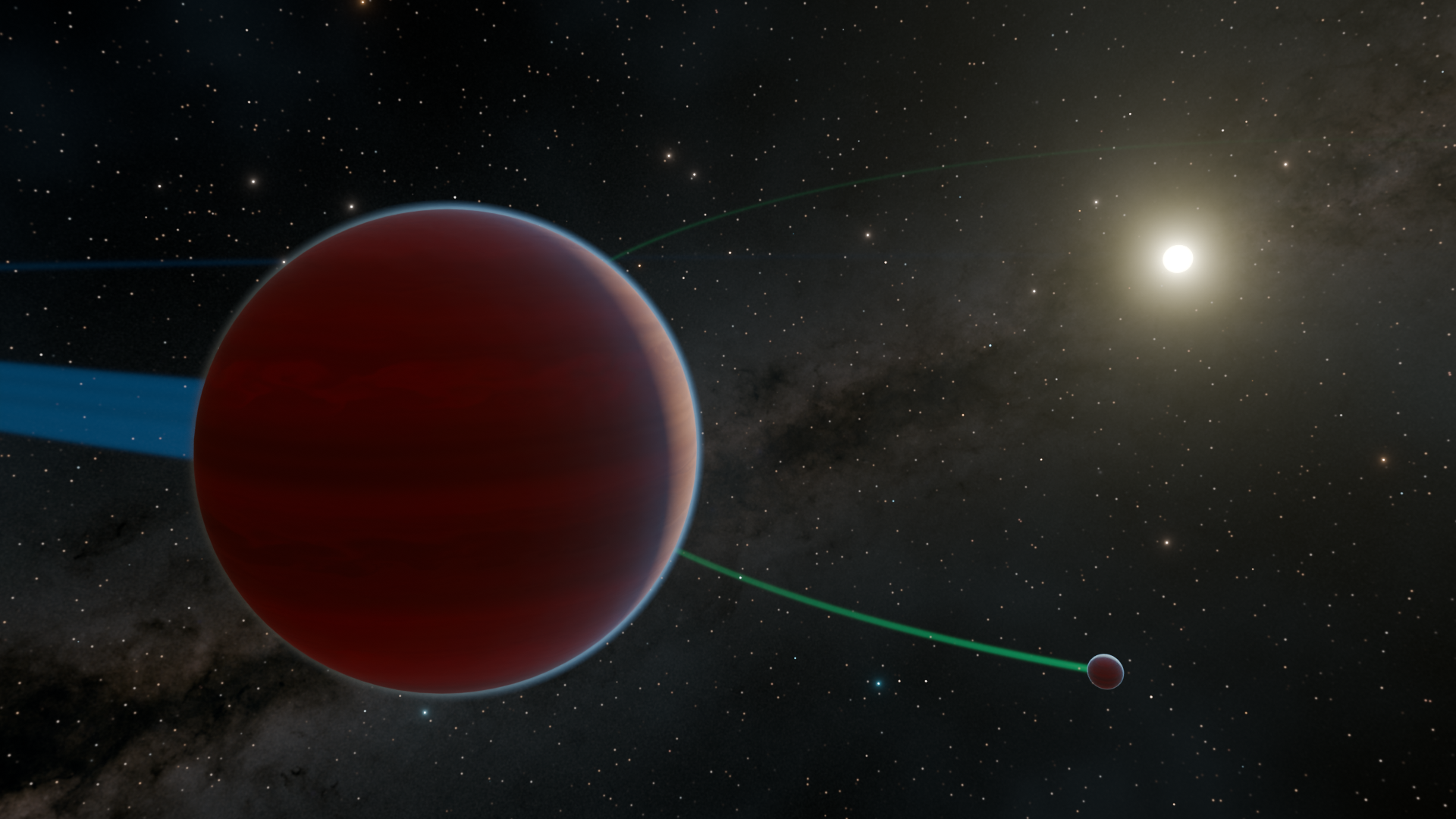
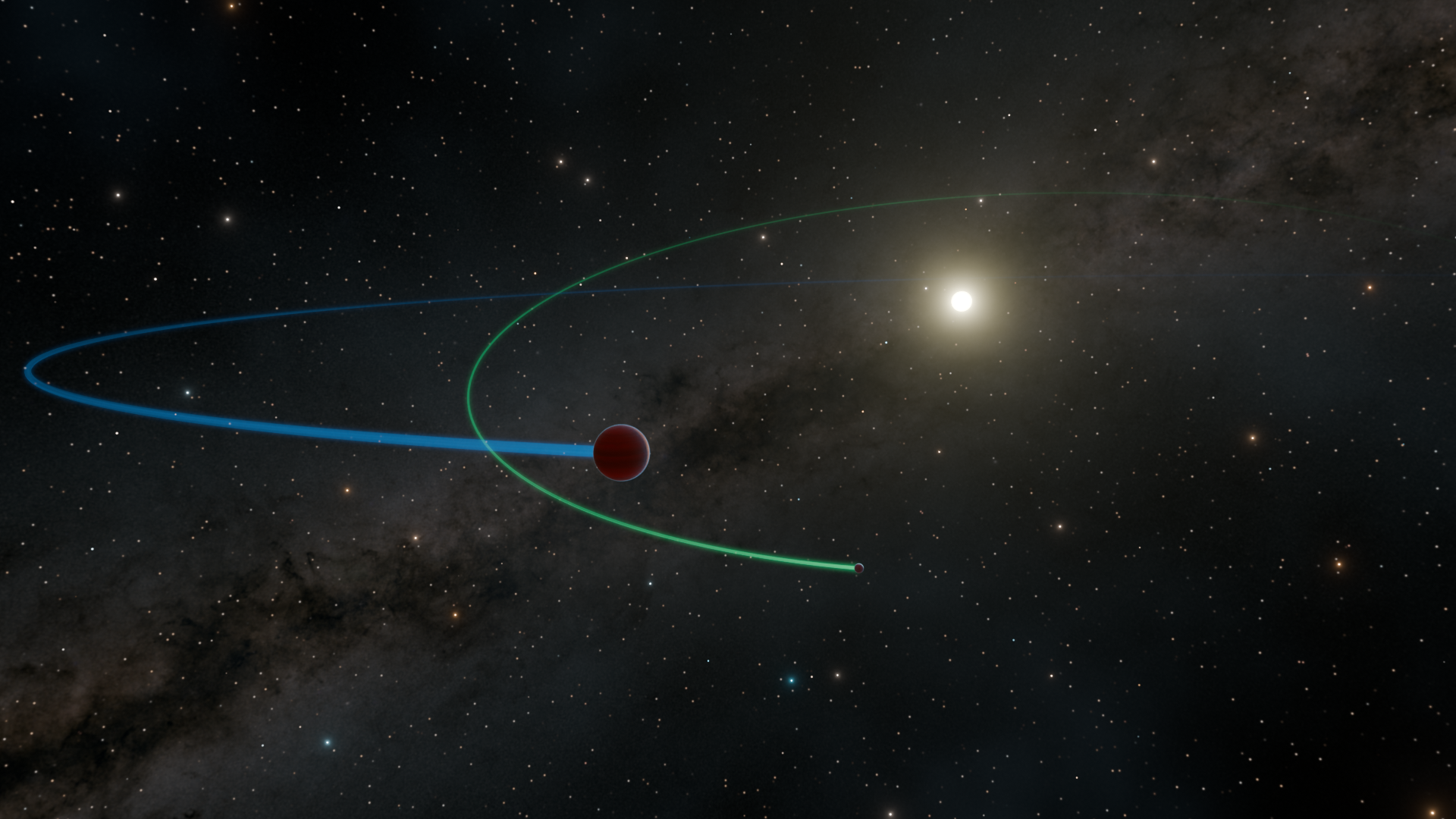
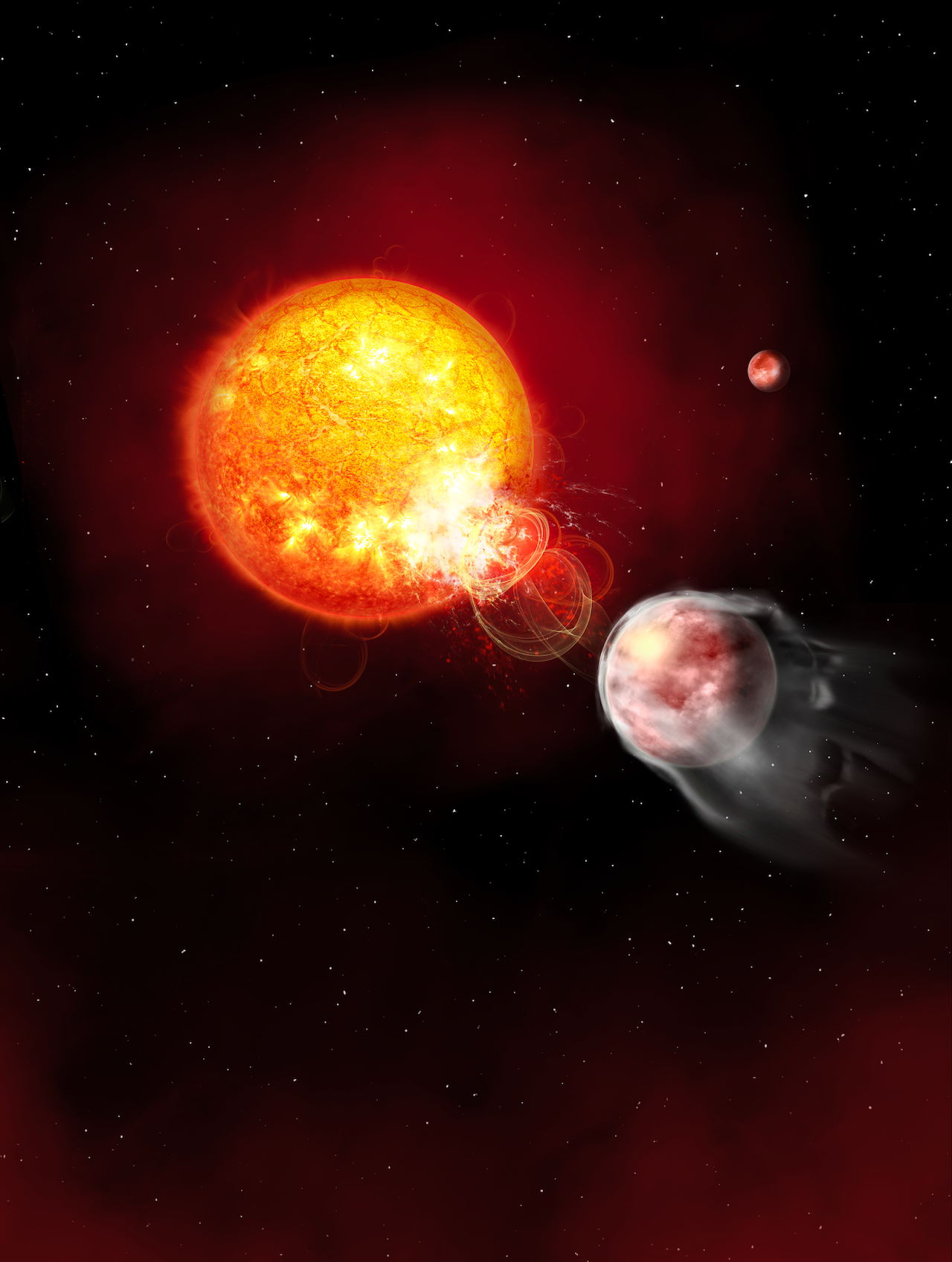
Researchers suggest that, at one point, the planet was about Jupiter-sized, but orbited quite close to the star, even closer than Mercury’s orbit around our Sun. Over millions of years, the planet orbited closer and closer to the star, leading to the catastrophic consequence.

“The planet eventually started to graze the star’s atmosphere. Then it was a runaway process of falling in faster from that moment,” said team member Morgan MacLeod of the Harvard-Smithsonian Center for Astrophysics and the Massachusetts Institute of Technology in Cambridge, Massachusetts. “The planet, as it’s falling in, started to sort of smear around the star.”

In its final splashdown, the planet would have blasted gas away from the outer layers of the star. As it expanded and cooled off, the heavy elements in this gas condensed into cold dust over the next year.

Inspecting the Leftovers

While the researchers did expect an expanding cloud of cooler dust around the star, a look with the powerful NIRSpec revealed a hot circumstellar disk of molecular gas closer in. Furthermore, Webb’s high spectral resolution was able to detect certain molecules in this accretion disk, including carbon monoxide.

“With such a transformative telescope like Webb, it was hard for me to have any expectations of what we’d find in the immediate surroundings of the star,” said Colette Salyk of Vassar College in Poughkeepsie, New York, an exoplanet researcher and co-author on the new paper. “I will say, I could not have expected seeing what has the characteristics of a planet-forming region, even though planets are not forming here, in the aftermath of an engulfment.”

The ability to characterize this gas opens more questions for researchers about what actually happened once the planet was fully swallowed by the star.

“This is truly the precipice of studying these events. This is the only one we’ve observed in action, and this is the best detection of the aftermath after things have settled back down,” Lau said. “We hope this is just the start of our sample.”

These observations, taken under Guaranteed Time Observation program 1240, which was specifically designed to investigate a family of mysterious, sudden, infrared brightening events, were among the first Target of Opportunity programs performed by Webb. These types of study are reserved for events, like supernova explosions, that are expected to occur, but researchers don’t exactly know when or where. NASA’s space telescopes are part of a growing, international network that stands ready to witness these fleeting changes, to help us understand how the universe works.

Researchers expect to add to their sample and identify future events like this using the upcoming Vera C. Rubin Observatory and NASA’s Nancy Grace Roman Space Telescope, which will survey large areas of the sky repeatedly to look for changes over time.

The team’s findings appear today in The Astrophysical Journal.

The James Webb Space Telescope is the world’s premier space science observatory. Webb is solving mysteries in our solar system, looking beyond to distant worlds around other stars, and probing the mysterious structures and origins of our universe and our place in it. Webb is an international program led by NASA with its partners, ESA (European Space Agency) and CSA (Canadian Space Agency).

To learn more about Webb, visit: https://science.nasa.gov/webb

Downloads

Click any image to open a larger version.

View/Download all image products at all resolutions for this article from the Space Telescope Science Institute.

View/Download the science paper from the The Astrophysical Journal.

Media Contacts

Laura Betz – laura.e.betz@nasa.gov
NASA’s Goddard Space Flight Center, Greenbelt, Md.

Hannah Braunhbraun@stsci.edu
Space Telescope Science Institute, Baltimore, Md.

Related Information

Read more about Webb’s impact on exoplanet research

Video: How to Study Exoplanets

Learn more about exoplanets

More Webb News

More Webb Images

Webb Science Themes

Webb Mission Page

Related For Kids

What is the Webb Telescope?

SpacePlace for Kids

En Español

Ciencia de la NASA

NASA en español 

Space Place para niños

Powered by WPeMatico

Get The Details…

NASA Offers Free High School Engineering Program This Summer

NASA Offers Free High School Engineering Program This Summer

This summer, NASA’s Glenn Research Center in Cleveland is offering a free summer STEM program for high school students in their junior and senior years.
Credit: NASA

NASA’s Glenn Research Center in Cleveland is launching the NASA Glenn High School Engineering Institute this summer. The free, work-based learning experience is designed to help high school students prepare for a future in the aerospace workforce.

Rising high school juniors and seniors in Northeast Ohio can submit applications for this new, in-person summer program from Friday, April 11, through Friday, May 9.

The NASA Glenn High School Engineering Institute will immerse students in NASA’s work while providing essential career readiness tools to help them in future science, technology, engineering, and mathematics-focused academic and professional pursuits.

Throughout the five-day institute, students will use authentic NASA mission content and work alongside Glenn’s technical experts to gain a deeper understanding of the engineering design process, develop practical engineering solutions to real-world challenges, and test prototypes to answer questions in key mission areas:

  • Acoustic dampening – How can we reduce noise pollution from jet engines?
  • Power management and distribution – How can we develop a smart power system for future space stations?
  • Simulated lunar operations – Can we invent tires that don’t use air?

Program Dates
Selected students will participate in one of the following week-long sessions.

  • Session 1: July 7 – 11, 2025
  • Session 2: July 14 – 18, 2025
  • Session 3: July 21 – 25, 2025

Eligibility and Application Requirements
To be eligible for this program, students must:

  • Be entering 11th or 12th grade for the 2025-2026 academic year
  • Have a minimum 3.2 GPA, verified by their school counselor
  • Submit a letter of recommendation from a teacher

Additional application requirements are outlined in the Supplemental Application.

How to Apply:
To be considered for this opportunity, complete and submit the NASA Gateway application and the Supplemental Application by Friday May 9.

Questions pertaining to the NASA Glenn High School Engineering Institute should be directed to Gerald Voltz at GRC-Ed-Opportunities@mail.nasa.gov.

For information about NASA Glenn, visit:

https://www.nasa.gov/glenn

-end-

Debbie Welch
Glenn Research Center, Cleveland
216-433-8655
debbie.welch@nasa.gov

Powered by WPeMatico

Get The Details…
Kelly M. Matter

NASA’s Juno Back to Normal Operations After Entering Safe Mode

NASA’s Juno Back to Normal Operations After Entering Safe Mode

3 min read

NASA’s Juno Back to Normal Operations After Entering Safe Mode

This illustration depicts NASA's Juno spacecraft in orbit above Jupiter's Great Red Spot.
NASA’s Juno flies above Jupiter’s Great Red Spot in this artist’s concept.
NASA/JPL-Caltech

The spacecraft was making its 71st close approach to Jupiter when it unexpectedly entered into a precautionary status.

Data received from NASA’s Juno mission indicates the solar-powered spacecraft went into safe mode twice on April 4 while the spacecraft was flying by Jupiter. Safe mode is a precautionary status that a spacecraft enters when it detects an anomaly. Nonessential functions are suspended, and the spacecraft focuses on essential tasks like communication and power management. Upon entering safe mode, Juno’s science instruments were powered down, as designed, for the remainder of the flyby.

The mission operations team has reestablished high-rate data transmission with Juno, and the spacecraft is currently conducting flight software diagnostics.The team will work in the ensuing days to transmit the engineering and science data collected before and after the safe-mode events to Earth.

Juno first entered safe mode at 5:17 a.m. EDT, about an hour before its 71st close passage of Jupiter — called perijove. It went into safe mode again 45 minutes after perijove. During both safe-mode events, the spacecraft performed exactly as designed, rebooting its computer, turning off nonessential functions, and pointing its antenna toward Earth for communication.

Of all the planets in our solar system, Jupiter is home to the most hostile environment, with the radiation belts closest to the planet being the most intense. Early indications suggest the two Perijove 71 safe-mode events occurred as the spacecraft flew through these belts. To block high-energy particles from impacting sensitive electronics and mitigate the harmful effects of the radiation, Juno features a titanium radiation vault.

Including the Perijove 71 events, Juno has unexpectedly entered spacecraft-induced safe mode four times since arriving at Jupiter in July 2016: first, in 2016 during its second orbit, then in 2022 during its 39th orbit. In all four cases, the spacecraft performed as expected and recovered full capability.

Juno’s next perijove will occur on May 7 and include a flyby of the Jovian moon Io at a distance of about 55,300 miles (89,000 kilometers).

More About Juno

NASA’s Jet Propulsion Laboratory, a division of Caltech in Pasadena, California, manages the Juno mission for the principal investigator, Scott Bolton, of the Southwest Research Institute in San Antonio. Juno is part of NASA’s New Frontiers Program, which is managed at NASA’s Marshall Space Flight Center in Huntsville, Alabama, for the agency’s Science Mission Directorate in Washington. The Italian Space Agency (ASI) funded the Jovian InfraRed Auroral Mapper. Lockheed Martin Space in Denver built and operates the spacecraft. Various other institutions around the U.S. provided several of the other scientific instruments on Juno.

More information about Juno is available at:

https://www.nasa.gov/juno

News Media Contacts

DC Agle
Jet Propulsion Laboratory, Pasadena, Calif.
818-393-9011
agle@jpl.nasa.gov

Karen Fox / Molly Wasser
NASA Headquarters, Washington
202-358-1600
karen.c.fox@nasa.gov / molly.l.wasser@nasa.gov

Deb Schmid
Southwest Research Institute, San Antonio
210-522-2254
dschmid@swri.org

2025-049

Share

Details

Last Updated
Apr 09, 2025

Related Terms

Powered by WPeMatico

Get The Details…

Hubble Helps Determine Uranus’ Rotation Rate with Unprecedented Precision

Hubble Helps Determine Uranus’ Rotation Rate with Unprecedented Precision

3 Min Read

Hubble Helps Determine Uranus’ Rotation Rate with Unprecedented Precision

This visual shows three panels that each show Uranus and dynamic aurora activity. The images were captured in October 2022 on the 8th, 10, and 24th respectively. Each image shows the planet with a strong blue hue and a visible white region. A faint ring is also visible around the planet in each image. Each image shows fuzzy blue/purple regions hovering over the planet in different locations to indicate the aurorae.
These images from the NASA/ESA Hubble Space Telescope showcase the dynamic aurora on Uranus in October 2022.
Credits:
ESA/Hubble, NASA, L. Lamy, L. Sromovsky

An international team of astronomers using the NASA/ESA Hubble Space Telescope has made new measurements of Uranus’ interior rotation rate with a novel technique, achieving a level of accuracy 1,000 times greater than previous estimates. By analyzing more than a decade of Hubble observations of Uranus’ aurorae, researchers have refined the planet’s rotation period and established a crucial new reference point for future planetary research.

This visual shows three panels that each show Uranus and dynamic aurora activity. The images were captured in October 2022 on the 8th, 10, and 24th respectively. Each image shows the planet with a strong blue hue and a visible white region. A faint ring is also visible around the planet in each image. Each image shows fuzzy blue/purple regions hovering over the planet in different locations to indicate the aurorae.
These images from the NASA/ESA Hubble Space Telescope showcase the dynamic aurora on Uranus in October 2022. These observations were made by the Space Telescope Imaging Spectrograph (STIS) and includes both visible and ultraviolet data. An international team of astronomers used Hubble to make new measurements of Uranus’ interior rotation rate by analyzing more than a decade of the telescope’s observations of Uranus’ aurorae. This refinement of the planet’s rotation period achieved a level of accuracy 1000 times greater than previous estimates and serves as a crucial new reference point for future planetary research.
ESA/Hubble, NASA, L. Lamy, L. Sromovsky

Determining a planet’s interior rotation rate is challenging, particularly for a world like Uranus, where direct measurements are not possible. A team led by Laurent Lamy (of LIRA, Observatoire de Paris-PSL and LAM, Aix-Marseille Univ., France), developed an innovative method to track the rotational motion of Uranus’ aurorae: spectacular light displays generated in the upper atmosphere by the influx of energetic particles near the planet’s magnetic poles. This technique revealed that Uranus completes a full rotation in 17 hours, 14 minutes, and 52 seconds — 28 seconds longer than the estimate obtained by NASA’s Voyager 2 during its 1986 flyby.

“Our measurement not only provides an essential reference for the planetary science community but also resolves a long-standing issue: previous coordinate systems based on outdated rotation periods quickly became inaccurate, making it impossible to track Uranus’ magnetic poles over time,” explains Lamy. “With this new longitude system, we can now compare auroral observations spanning nearly 40 years and even plan for the upcoming Uranus mission.”

This Hubble image shows Uranus and dynamic aurora activity on 10 October 2022. The planet is dominated by a blue hue and a large white region in the lower left. A faint ring is also visible around the planet. Fuzzy blue/purple regions hovering over the planet on the left and ride indicate the presence of aurorae.
This image of Uranus’ aurorae was taken by the NASA/ESA Hubble Space Telescope on 10 October 2022. These observations were made by the Space Telescope Imaging Spectrograph (STIS) and includes both visible and ultraviolet data. An international team of astronomers used Hubble to make new measurements of Uranus’ interior rotation rate by analyzing more than a decade of the telescope’s observations of Uranus’ aurorae. This refinement of the planet’s rotation period achieved a level of accuracy 1000 times greater than previous estimates and serves as a crucial new reference point for future planetary research.
ESA/Hubble, NASA, L. Lamy, L. Sromovsky

This breakthrough was possible thanks to Hubble’s long-term monitoring of Uranus. Over more than a decade, Hubble has regularly observed its ultraviolet auroral emissions, enabling researchers to produce magnetic field models that successfully match the changing position of the magnetic poles with time.

“The continuous observations from Hubble were crucial,” says Lamy. “Without this wealth of data, it would have been impossible to detect the periodic signal with the level of accuracy we achieved.”

Unlike the aurorae of Earth, Jupiter, or Saturn, Uranus’ aurorae behave in a unique and unpredictable manner. This is due to the planet’s highly tilted magnetic field, which is significantly offset from its rotational axis. The findings not only help astronomers understand Uranus’ magnetosphere but also provide vital information for future missions.

These findings set the stage for further studies that will deepen our understanding of one of the most mysterious planets in the Solar System. With its ability to monitor celestial bodies over decades, the Hubble Space Telescope continues to be an indispensable tool for planetary science, paving the way for the next era of exploration at Uranus.

These results are based on observations acquired with Hubble programs GO #12601, 13012, 14036, 16313 and DDT #15380 (PI: L. Lamy). The team’s paper was published in Nature Astronomy.

The Hubble Space Telescope has been operating for over three decades and continues to make ground-breaking discoveries that shape our fundamental understanding of the universe. Hubble is a project of international cooperation between NASA and ESA (European Space Agency). NASA’s Goddard Space Flight Center in Greenbelt, Maryland, manages the telescope and mission operations. Lockheed Martin Space, based in Denver, also supports mission operations at Goddard. The Space Telescope Science Institute in Baltimore, which is operated by the Association of Universities for Research in Astronomy, conducts Hubble science operations for NASA.

Share

Details

Last Updated
Apr 09, 2025
Editor
Andrea Gianopoulos
Contact
Media

Claire Andreoli
Astrophysics Communications Manager
NASA’s Goddard Space Flight Center
Greenbelt, Maryland
claire.andreoli@nasa.gov

Bethany Downer
ESA/Hubble Chief Science Communications Officer
Bethany.Downer@esahubble.org

Powered by WPeMatico

Get The Details…

Expedition 73 Crew Launches to International Space Station

Expedition 73 Crew Launches to International Space Station

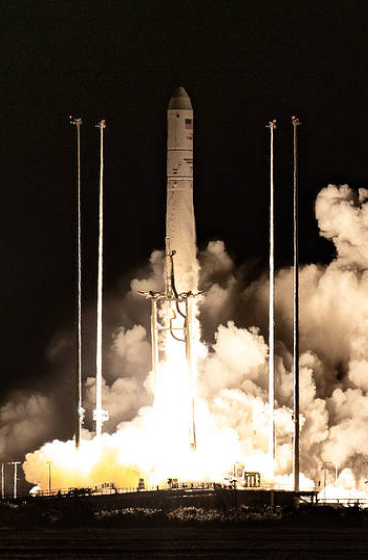
A light gray rocket lifts off, leaving flames and light brown vapor in its wake. Green supports lie perpendicular to the rocket.
NASA/Joel Kowsky

A Soyuz rocket launches to the International Space Station with Expedition 73 crew members including NASA astronaut Jonny Kim on Tuesday, April 8, 2025, at the Baikonur Cosmodrome in Kazakhstan.

The crew arrived at the space station the same day, bringing the number of residents to 10 for the next two weeks. Expedition 73 will begin on Saturday, April 19, following the departure of NASA astronaut Don Pettit and Roscosmos cosmonauts Alexey Ovchinin and Ivan Vagner, as they conclude a seven-month science mission aboard the orbiting laboratory.

Throughout his eight-month stay aboard the orbital outpost, Kim will conduct scientific research in technology development, Earth science, biology, and human research.

Follow space station activities on the International Space Station blog.

Image credit: NASA/Joel Kowsky

Powered by WPeMatico

Get The Details…
Monika Luabeya