Meet the Space Ops Team: Becky Brocato

Meet the Space Ops Team: Becky Brocato

4 min read

Preparations for Next Moonwalk Simulations Underway (and Underwater)
As an adventurous individual, Becky Brocato, Ph.D.,  has a deep curiosity for understanding the conditions of the human body, especially as it pertains to spaceflight. This passion directly translates to her role at NASA, where Brocato serves as the Element Scientist in the Human Health Countermeasures division and oversees research that seeks to reduce medical risks that astronauts face from spaceflight, ensuring the continual health and safety of current and future NASA astronauts.

As part of the Human Research Program, the group strives to understand the physiological effects of spaceflight and develop strategies to mitigate any detrimental effects on human health and performance. For Brocato, her role presents the exciting opportunity to tangibly improve the lives of astronauts and actively contribute to the success of their missions.

A graphic features a photo of Becky Brocato, Human Health Countermeasures Element Scientist, and a quote from Brocato: "The thrill of my job comes from the sheer audacity of what we are undertaking-enabling humans to conquer the challenges of deep space."
Becky Brocato, Human Health Countermeasures Element Scientist for NASA’s Human Research Program

“The thrill of my job comes from the sheer audacity of what we are undertaking—enabling humans to conquer the challenges of deep space,” said Brocato. “I’m invested in ensuring our astronauts are not just prepared—but confident—as they tackle immense physical and mental demands.”

Brocato attributes her early interest in flight and space research to her father and grandfather, who built a plane together when Brocato was younger. She recalls sitting in the plane’s fuselage, pretending she was traveling the world.

“My dad was my childhood hero for opening my eyes to the skies,” said Brocato. Fueled by this passion, she began her career as an aerospace engineer at the U.S. Army’s Yuma Proving Ground in Arizona, where she tested parachutes for aerial delivery, including the parachute designed for NASA’s X-38 crew return vehicle.

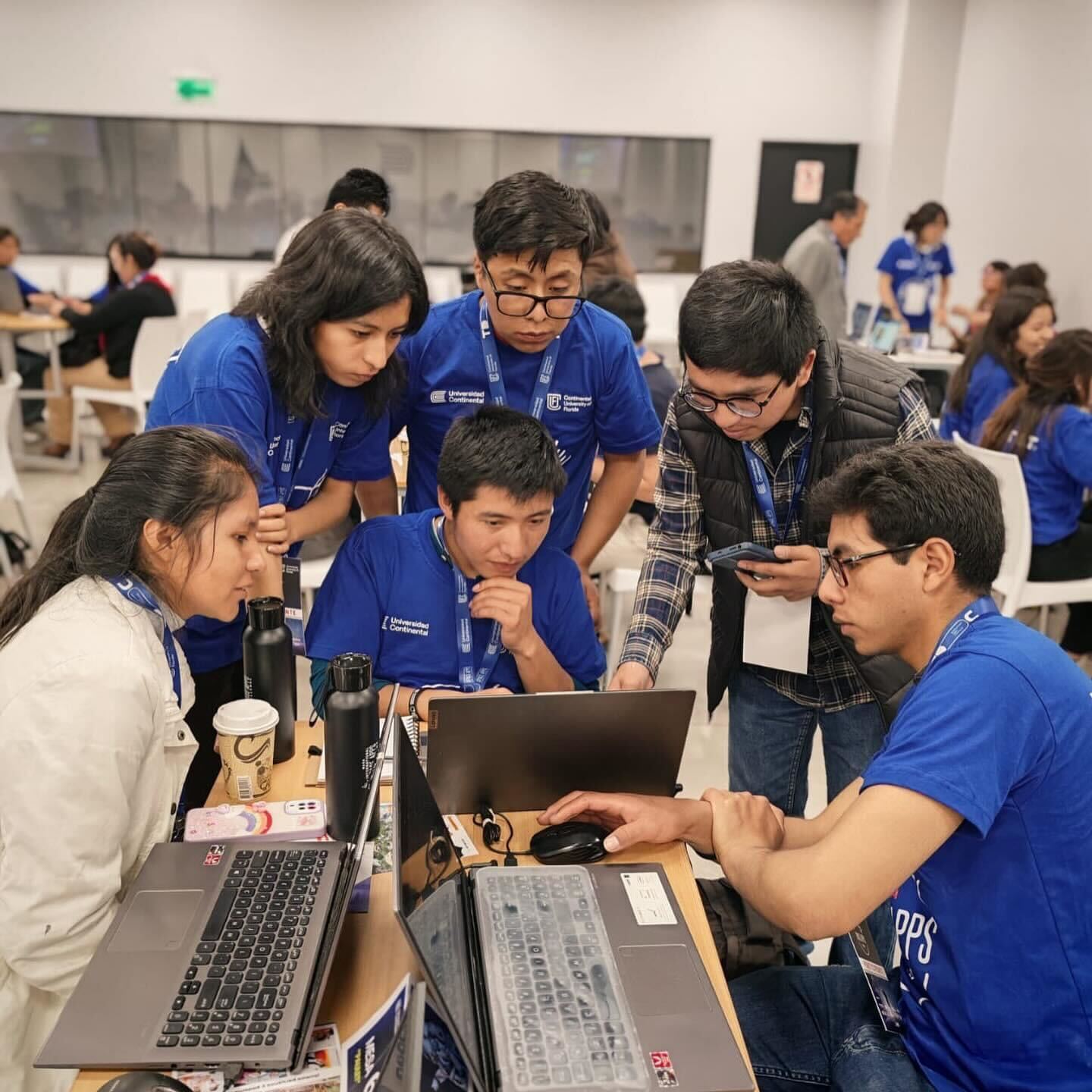
Now, having worked at NASA for four years, Brocato is excited to pass down her insight to younger generations, teaching them how her work ensures the sustainability of future space missions. Recently, after delivering a seminar on the methods to counter the risks humans face from spaceflight, Brocato spoke with college students eager to learn more about the complexities of the human body.

Becky Brocato gives a presentation on the research strategy for NASA’s Human Research Program to the Food and Nutrition Risk at the International Space Life Sciences Working Group Plant Symposium, held in Liverpool, England in September 2024.
Becky Brocato

“I felt like I wasn’t just sharing knowledge; I was helping to inspire a new generation of potential researchers to tackle the challenges of space exploration that was a real bright spot,” said Brocato. “Seeing their enthusiasm reaffirmed exactly why I came to NASA.”

This enthusiasm manifests in Brocato’s personal life: as a mother, she loves witnessing her child’s reaction to launches. “It was awesome to see the pure, unadulterated awe in my 7-year-old’s eyes when NASA’s SpaceX Crew-8 lifted off,” said Brocato. “Moments like that are a reminder that spaceflight can touch all generations, which fuels my passion both at work and at home.”

For Brocato, prioritizing her personal time is crucial, and she enjoys spending it pursuing physical activities. She is an avid runner, whether she is jogging to work at NASA’s Johnson Space Center or competing in local adventure races. She has even been skydiving, which is where she met her husband.

Brocato is excited to witness NASA continue to push boundaries in human exploration, returning to the Moon and onto Mars. As a dedicated worker known for her curiosity and enthusiasm, Brocato’s work is crucial to advancing NASA’s mission.

NASA’s Space Operations Mission Directorate maintains a continuous human presence in space for the benefit of people on Earth. The programs within the directorate are the hub of NASA’s space exploration efforts, enabling Artemis, commercial space, science, and other agency missions through communication, launch services, research capabilities, and crew support.

To learn more about NASA’s Space Operation Mission Directorate, visit:  

https://www.nasa.gov/directorates/space-operations

Share

Details

Last Updated

Apr 17, 2025

Editor
Heather Monaghan

Powered by WPeMatico

Get The Details…
Heather Monaghan

Science Meets Art: NASA Astronaut Don Pettit Turns the Camera on Science

Science Meets Art: NASA Astronaut Don Pettit Turns the Camera on Science

4 Min Read

Science Meets Art: NASA Astronaut Don Pettit Turns the Camera on Science

NASA astronaut Don Pettit takes an out-of-focus selfie facing the camera while floating through an International Space Station corridor. He is wearing glasses and a black t-shirt. The walls surrounding him are blurry and light yellow in color.

NASA astronaut Don Pettit is scheduled to return home in mid-April after a seven-month mission aboard the International Space Station as part of Expedition 72. Throughout his stay, Pettit contributed to research that benefits humanity and future space missions.

Pettit also shared what he calls “science of opportunity” to demonstrate how experimenting with our surroundings can help gain a better understanding of how things work. This understanding is perhaps enhanced when art, science, and microgravity come together.

Electrostatic Displays

A closeup image of a Teflon knitting needle with what looks like white scribbles around it. The image is a compilation of all the frames taken from a video of water droplets orbiting the needle. The superimposed frames make the water droplets look like white scribbles. The background is black.

NASA astronaut Don Pettit demonstrates electrostatic forces using charged water droplets and a knitting needle made of Teflon. This series of overlapping frames displays the unique attraction-repulsion properties of Teflon and charged droplets, similar to how charged particles from the Sun behave when they come in contact with Earth’s magnetic field. Highly energetic particles from space that collide with atoms and molecules in the atmosphere create the aurora borealis.

Specialized Equipment for Superb Science

Two pairs of hands in white gloves give a thumbs-up from within a sealed glovebox. The gloves are attached to a transparent enclosure used for handling sensitive materials in a sterile or hazardous setting. Various scientific tools, test kits, and lab equipment are visible inside the glovebox.

NASA astronaut Don Pettit snaps an image of the hands of NASA astronauts Nick Hague, left, and Suni Williams inside the Life Science Glovebox, a facility at the International Space Station that separates the science from the scientists, thus protecting both from contamination.

The freezers on the International Space Station are as crucial as its experiment modules, preserving samples for further analysis on Earth. The Minus Eighty-Degree Laboratory Freezer for International Space Station stores samples at ultra-cold temperatures. NASA astronaut Don Pettit used it to freeze thin ice wafers, which he photographed with a polarizing filter to reveal unique crystal structures.

New Tech Roll-Out

NASA astronaut Don Pettit films a time-lapse sequence of Canadarm2 retrieving Materials International Space Station Experiment (MISSE-20-Commercial) samples at the International Space Station. This investigation exposed various experiments to the harsh space environment, such as vacuum, radiation, and extreme temperatures. Findings could help in many areas, from designing more durable materials to advancing quantum communications.

Two solar arrays fill this image diagonally. The solar array on the left has a rectangular grid pattern and is dark blue with a light brown outer edge. The solar array to the right is black with a red grid pattern and many parallel white lines within the grid. In the background is part of the Earth is blue, and space is black.

A surge in International Space Station research supports NASA’s exploration efforts at the Moon and beyond, requiring more energy to operate the orbiting laboratory. NASA astronaut Don Pettit photographs new and old solar arrays side by side. The technology used by the International Space Station Roll-Out Solar Arrays (IROSA) on the right was first tested aboard the station in 2017. By 2023, six IROSAs were deployed aboard station, providing a 20-30% increase in power for research and operations. Roll-Out Solar Arrays were also used on NASA’s DART asteroid mission and now are slated for the Gateway lunar outpost, a vital component of Artemis.

Squire for Spacewalks

Two uncrewed white spacewalk spacesuits are positioned next to another. A fisheye effect focuses on the reflective helmets from which NASA astronaut Don Pettit’s reflection can be seen. The spacesuits are surrounded by narrow white walls.

I am the nameless boy who stays in the confines of the tent helping the Knights suit up for battle. I remain in the airlock, preparing these knights for a walk outside.

Don Pettit

Don Pettit

«Space Squire» posted to X

NASA astronaut Don Pettit helped his colleagues suit up for two spacewalks in January. The first spacewalk involved patching the Neutron Star Interior Composition Explorer (NICER), a telescope that measures X-rays from neutron stars and other cosmic objects. Sunlight interference affected data collection, and the patches reduced this issue. On the second spacewalk, astronauts collected samples from the exterior of the International Space Station for ISS External Microorganisms. This investigation examines whether the orbiting laboratory releases microbes, how many, and how far these may travel. Findings could inform the design of future spacecraft, including spacesuits, to limit biocontamination during future space missions.

Photography with a Spin

A small part of Earth from space is shown in dark green, and the edge of the curvature is illuminated with light that diffuses into space in shades of violet and then dark blue. In the background, a portion of the Milky Way runs perpendicular to the Earth’s curvature. Many other stars dot the area surrounding the Milky Way.

NASA astronaut Don Pettit photographs “cosmic colors at sunrise.” From 250 miles above, the International Space Station’s orbital path covers most of Earth’s population, offering valuable data and a great opportunity for shooting breathtaking photography.

NASA astronaut Don Pettit faces the camera wearing a gray short-sleeve shirt, with a camera floating on his right side and a large lens the size of a water pitcher floating on his left. His arms are crossed, and the walls of the space station are visible in the background, along with various equipment and wires. He grabs the camera on his right side, untwists its lens, and lets it float, then grabs the lens on his left side and installs it on the camera.

NASA astronaut Don Pettit leveraged his stay aboard the International Space Station to photograph our planet with an artistic twist.

Swirls of water, like paintbrush strokes, display shades of gray and white glints.

NASA astronaut Don Pettit wrote on social media about his snapshot of the Mediterranean Sea from the International Space Station, “Sun glint off the Mediterranean Sea (infrared and converted to black and white). When the Sun reflects off the ocean, watery details unseen with normal lighting appear. Small centimeter differences in ocean height become visible, revealing hidden currents.”

Light purple lightning illuminates the center of puffy clouds while the edges, untouched by light, are pitch-black.

NASA astronaut Don Pettit’s photography could contribute to the study of transient luminous events, colorful electrical discharges that occur above thunderstorms. His imagery can be paired with data from the Atmosphere-Space Interactions Monitor (ASIM) and Thor-Davis, a high-speed thunderstorm camera. The combined efforts of crew photography and instruments aboard the International Space Station help scientists better understand thunderstorms and their impacts on Earth’s upper atmosphere.

More of Pettit’s photography can be found on his X profile, @astro_Pettit.

Powered by WPeMatico

Get The Details…
Christian M. Getteau

Testing in the Clouds: NASA Flies to Improve Satellite Data

Testing in the Clouds: NASA Flies to Improve Satellite Data

3 min read

Preparations for Next Moonwalk Simulations Underway (and Underwater)

A plane begins to ascend from the runway on dim desert morning, heading toward the left of the frame. The wheels of the plane are still dropped and the nose of the plane is pointed upward toward higher skies, its tail featuring the NASA insignia. The helmeted pilot inside is barely visible through the cockpit window. Below a desert landscape with indiscernible buildings are flanked by a hazy mountain range in the distance.
Piloted by NASA’s Tim Williams, the ER-2 science aircraft ascends for one of the final science flights for the GSFC Lidar Observation and Validation Experiment (GLOVE) on Feb. 1, 2025. As a collaboration between engineers, scientists, and aircraft professionals, GLOVE aims to improve satellite data products for Earth Science applications.
NASA/Steve Freeman

In February, NASA’s ER-2 science aircraft flew instruments designed to improve satellite data products and Earth science observations. From data collection to processing, satellite systems continue to advance, and NASA is exploring how instruments analyzing clouds can improve data measurement methods.

Researchers participating in the Goddard Space Flight Center Lidar Observation and Validation Experiment (GLOVE) used the ER-2 – based at NASA’s Armstrong Flight Research Center in Edwards, California – to validate satellite data about cloud and airborne particles in the Earth’s atmosphere. Scientists are using GLOVE instruments installed onboard the aircraft to measure and validate data about clouds generated by satellite sensors already orbiting in space around Earth.

“The GLOVE data will allow us to test new artificial intelligence algorithms in data processing,” said John Yorks, principal investigator for GLOVE and research physical scientist at NASA’s Goddard Space Flight Center in Greenbelt, Maryland. “These algorithms aim to improve the cloud and aerosol detection in data produced by the satellites.”

A woman face peers between two frames of a scientific instrument. The instrument is riddled with cables and cords and she manipulates some unseen component with blue rubber gloves. The right part of the instrument has a beveled reflective surface parallel to her face, and her reflection is distorted on the exposed metallic surface.
Jennifer Moore, a researcher from NASA’s Goddard Space Flight Center, checks the cabling on the Roscoe instrument at NASA’s Armstrong Flight Research Center in Edwards, California, for the GSFC Lidar Observation and Validation Experiment (GLOVE) on Feb. 1, 2025. The Roscoe instrument will be uploaded onto NASA’s ER-2 science aircraft.
NASA/Steve Freeman

The validation provided by GLOVE is crucial because it ensures the accuracy and reliability of satellite data. “The instruments on the plane provide a higher resolution measurement ‘truth’ to ensure the data is a true representation of the atmospheric scene being sampled,” Yorks said.

The ER-2 flew over various parts of Oregon, Arizona, Utah, and Nevada, as well as over the Pacific Ocean off the coast of California. These regions reflected various types of atmospheres, including cirrus clouds, marine stratocumulus, rain and snow, and areas with multiple types of clouds.

“The goal is to improve satellite data products for Earth science applications,” Yorks said. “These measurements allow scientists and decision-makers to confidently use this satellite information for applications like weather forecasting and hazard monitoring.”

A man’s torso pokes up through the floorboard of a cylindrical aircraft pod. He manipulates an unseen component of the inside paneling of the pod, installed with an intricate network of cables, cords, and switches. He has blonde hair and a beard, and wears glasses with a striped shirt.
Researcher Jackson Begolka from the University of Iowa examines instrument connectors onboard the ER-2 aircraft at NASA’s Armstrong Flight Research Center in Edwards, California, on Feb. 1, 2025. The GLOVE instrument will validate data from satellites orbiting the Earth.
NASA/Steve Freeman

The four instruments installed on the ER-2 were the Cloud Physics Lidar, the Roscoe Lidar, the enhanced Moderate Resolution Imaging Spectroradiometer Airborne Simulator, and the Cloud Radar System. These instruments validate data produced by sensors on NASA’s Ice, Cloud, and Land Elevation Satellite 2 (ICESat-2) and the Earth Cloud, Aerosol and Radiation Explorer (EarthCARE), a joint venture between the ESA (European Space Agency) and JAXA (Japan Aerospace Exploration Agency).

“Additionally, the EarthCARE satellite is flying the first ever Doppler radar for measurements of air motions within clouds,” Yorks said. While the ER-2 is operated by pilots and aircrew from NASA Armstrong, these instruments are supported by scientists from NASA Goddard, NASA’s Ames Research Center in California’s Silicon Valley, and the Naval Research Laboratory office in Monterey, California, as well as by students from the University of Iowa in Iowa City and the University of Maryland College Park.

Powered by WPeMatico

Get The Details…
Dede Dinius

NASA’s SpaceX 32nd Commercial Resupply Mission Overview

NASA’s SpaceX 32nd Commercial Resupply Mission Overview

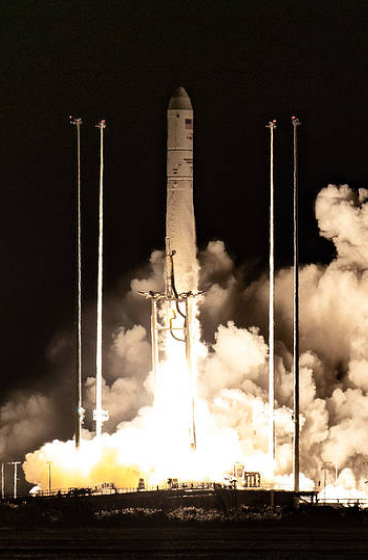
NASA and SpaceX are targeting no earlier than 4:15 a.m. EDT on Monday, April 21, for the next launch to deliver scientific investigations, supplies, and equipment to the International Space Station. Filled with about 6,700 pounds of supplies, the SpaceX Dragon spacecraft, on the company’s Falcon 9 rocket, will lift off from Launch Complex 39A at NASA’s Kennedy Space Center in Florida.

This launch is the 32nd SpaceX commercial resupply services mission to the orbital laboratory for the agency, and the 12th SpaceX launch under the Commercial Resupply Services-2 (CRS) contract. The first 20 launches were under the original resupply services contract.

NASA’s live launch coverage will begin at 3:55 a.m. on NASA+. Learn how to watch NASA content through a variety of platforms.

NASA's SpaceX 32nd commercial resupply mission will launch on the company’s Dragon spacecraft on the SpaceX Falcon 9 rocket to deliver research and supplies to the International Space Station
NASA’s SpaceX 32nd commercial resupply mission will launch on the company’s Dragon spacecraft on the SpaceX Falcon 9 rocket to deliver research and supplies to the International Space Station
NASA
NASA’s SpaceX 32nd commercial resupply mission will launch from Launch Complex 39A at NASA’s Kennedy Space Center in Florida.

Arrival & Departure

The SpaceX Dragon spacecraft will arrive at the space station and dock autonomously to the zenith port of the station’s Harmony module at approximately 8:20 a.m. Tuesday, April 22. Live coverage NASA’s coverage of the rendezvous and docking will begin at 6:45 a.m on NASA+. NASA astronaut Jonny Kim, Expedition 73 commander and JAXA (Japan Aerospace Exploration Agency) astronaut Takuya Onishi will monitor the arrival of the spacecraft, which will stay docked to the orbiting laboratory for about one month before splashing down and returning critical science and hardware to teams on Earth.

Astronauts Jonny Kim of NASA and Takuya Onishi of JAXA (Japan Aerospace Exploration AGency) will monitor the arrival of the SpaceX Dragon spacecraft from the International Space Station.
Astronauts Jonny Kim of NASA and Takuya Onishi of JAXA (Japan Aerospace Exploration Agency) will monitor the arrival of the SpaceX Dragon cargo spacecraft from the International Space Station.
NASA

Research Highlights

Robotic Spacecraft Guidance

Smartphone Video Guidance Sensor-2 (SVGS-2) uses the space station’s Astrobee robots to demonstrate using a NASA developed, vision-based sensor to control a formation flight of small satellites.
NASA

Smartphone Video Guidance Sensor-2 (SVGS-2) uses the space station’s Astrobee robots to demonstrate using a NASA developed, vision-based sensor to control a formation flight of small satellites. Based on a previous in-space demonstration of the technology, this investigation is designed to refine the maneuvers of multiple robots and integrate the information with spacecraft systems.

Potential benefits of this technology include improved accuracy and reliability of systems for guidance, navigation, and control that could be applied to docking crewed spacecraft in orbit and remotely operating multiple robots on the lunar or Martian surface.

Protection From Particles

The Aerosol Monitors investigation tests three different air quality monitors to determine which is best suited to protect crew health and ensure mission success.
NASA

During spaceflight, especially long-duration missions, concentrations of airborne particles must be kept within ranges safe for crew health and hardware performance. The Aerosol Monitors investigation tests three different air quality monitors to determine which is best suited to protect crew health and ensure mission success.

The investigation also tests a device for distinguishing between smoke and dust. Aboard the orbital outpost, the presence of dust can cause false smoke alarms that require crew member response. Reducing false alarms could save valuable crew time while continuing to protect astronaut safety.

Next-Generation Pharmaceutical Nanostructures

The newest Industrial Crystallization Cassette (ADSEP-ICC) investigation adds capabilities to an existing protein crystallization facility.
NASA

The newest Industrial Crystallization Cassette (ADSEP-ICC) investigation adds capabilities to an existing protein crystallization facility. The cassette can process more sample types, including tiny gold particles used in devices that detect cancer and other diseases or in targeted drug delivery systems. Microgravity makes it possible to produce larger and more uniform gold particles, which improves their use in research and real-life applications of technologies related to human health.

Better Materials, Better Drugs

The DNA Nano Therapeutics-Mission 2 produces a special type of molecule formed by DNA-inspired, customizable building blocks known as Janus base nanomaterials.
NASA

The DNA Nano Therapeutics-Mission 2 produces a special type of molecule formed by DNA-inspired, customizable building blocks known as Janus base nanomaterials. It also evaluates how well the materials reduce joint inflammation and whether they can help regenerate cartilage lost due to arthritis. These materials are less toxic, more stable, and more compatible with living tissues than current drug delivery technologies.

Environmental influences such as gravity can affect the quality of these materials and delivery systems. In microgravity, they are larger and have greater uniformity and structural integrity. This investigation could help identify the best formulations and methods for cost-effective in-space production. These nanomaterials also could be used to create novel systems targeting therapy delivery that improves patient outcomes with fewer side effects.

Helping Plants Grow

The Rhodium USAFA NIGHT payload examines how tomato plants respond to microgravity and whether a carbon dioxide replacement can reduce how much space-grown plants depend on photosynthesis.
NASA

The Rhodium USAFA NIGHT payload examines how tomato plants respond to microgravity and whether a carbon dioxide replacement can reduce how much space-grown plants depend on photosynthesis. Because photosynthesis needs light, which requires spacecraft power to generate, alternatives would reduce energy use.

The investigation also examines whether using supplements increases plant growth on the space station, which has been observed in preflight testing on Earth. In future plant production facilities aboard spacecraft or on celestial bodies, supplements could come from available organic materials such as waste.

Understanding how plants adapt to microgravity could help grow food during long-duration space missions or harsh environments on Earth.

Atomic Clocks in Space

An ESA (European Space Agency) investigation, Atomic Clock Ensemble in Space (ACES), examines fundamental physics concepts such as Einstein’s theory of relativity using two next-generation atomic clocks operated in microgravity.
NASA

An ESA (European Space Agency) investigation, Atomic Clock Ensemble in Space (ACES), examines fundamental physics concepts such as Einstein’s theory of relativity using two next-generation atomic clocks operated in microgravity. Results have applications to scientific measurement studies, the search for dark matter, and fundamental physics research that relies on highly accurate atomic clocks in space. The experiment also tests a technology for synchronizing clocks worldwide using global navigation satellite networks.

Cargo Highlights

NASA’s SpaceX 32nd commercial resupply mission will carry about 6,700 pounds of cargo to the International Space Station.
NASA

Hardware

Launch:

  • Catalytic Reactor – The catalytic reactor replacement unit oxidizes volatile organics from the wastewater so they can be removed by the gas separator and ion exchange bed replacement units as part of the station’s water recycling system. This unit failed in orbit and is being returned for analysis and refurbishment. This unit is being launched as an in-orbit spare.
     
  • Food Reach Tool Assembly – An L-shaped, hand-held tool that allows crew members to reach packages in the back of the food warmer without having to insert their hands. This tool is launching to replace a unit in orbit.
  • Reducer Cylinder Assembly – A cylinder tank that provides 15 minutes of oxygen to a crew member in case of an emergency. Launching two units as in-orbit spares.
  • Thermal Expansion Device – A device used to allow for thermal expansion of water within the Hydrogen Dome while it is being removed and replaced. Launching to maintain minimum in-orbit spares.

Return:

  • Urine Processor Assembly Pressure Control and Pump Assembly – This multi-tube purge pump enables the removal of non-condensable gas and water vapor from the distillation assembly within the greater urine processing assembly subsystem. This unit is returning to the ground for repair and refurbishment in support of the legacy environmental control and life support system fleet.
  • Assembly Contingency Transmitter Receiver Assembly – A part of the S-Band Radio Frequency Group, this assembly is a pressurized enclosure that contains electronics for this upper-level assembly. The Radio Frequency Group is used for command, control, and transmission communication for the space station. It was retrieved by NASA astronauts Suni Williams and Butch Wilmore during US EVA 92 and will return for repair.
  • High Gain Antenna Feed Assembly – Part of the S-Band Radio Frequency Group, this system features a two-axis, gimballed assembly with a pedestal and a large horn antenna. It was retrieved by NASA astronauts Suni Williams and Butch Wilmore during U.S. spacewalk 92 and will return for repair.
  • Low Gain Antenna Sub-Assembly – Part of the S-Band Radio Frequency Group, this sub-assembly consists of a helix antenna that provides a wide field of signal transmission capability. It was retrieved by NASA astronauts Suni Williams and Butch Wilmore during U.S. spacewalk 92 and will return for repair. 
  • Planar Reflector Assembly – With an aluminum base and reflective element, visiting spacecraft reflect a laser to compute relative range, velocity, and attitude to the space station. This broken unit was retrieved and replaced by NASA astronaut Suni Williams during U.S. spacewalk 91 and will return for repair.
  • Multifiltration Bed – Supporting the water processor assembly, this spare unit will continue the International Space Station program’s effort to replace a degraded fleet of units in-orbit that improve water quality through a single bed. This unit will return for refurbishment and re-flight.

Watch and Engage

Live coverage of the launch from NASA Kennedy will air at 3:55 a.m. on NASA+..

For additional information on the mission, visit: https://www.nasa.gov/mission/nasas-spacex-crs-32/

Powered by WPeMatico

Get The Details…
Mark A. Garcia

Scrub Jay at the Vehicle Assembly Building

Scrub Jay at the Vehicle Assembly Building

A small, gray bird perches on a thin, leafless branch. Its head is turned to the left. There are leaves on the other branches in view at the bottom of the photo. The NASA meatball logo is in the background, out of focus.
NASA/Ben Smegelsky

A scrub jay perches on a branch near the Vehicle Assembly Building at NASA’s Kennedy Space Center in Florida on June 22, 2020. Kennedy shares space with the Merritt Island National Wildlife Refuge, which is home to more than 65 amphibian and reptile, 25 mammal, 117 fish, and 330 bird species.

At the time this photo was taken, the NASA “meatball” logo – in the background here – on the Vehicle Assembly Building was being repainted. This iconic building is where the Artemis launch vehicles are stacked and processed in preparation for future missions to the Moon.

Image credit: NASA/Ben Smegelsky

Powered by WPeMatico

Get The Details…
Monika Luabeya