Feeling the Heat: Perseverance Looks for Evidence of Contact Metamorphism 

Feeling the Heat: Perseverance Looks for Evidence of Contact Metamorphism 

2 min read

Feeling the Heat: Perseverance Looks for Evidence of Contact Metamorphism 

A color photo from the surface of Mars shows very rocky terrain in the foreground sloping downward from left to right. The ground ranges in shades from orange-tan to brown, while the rocks are mostly gray. A trio of hills rises up in the distance.
NASA’s Mars Perseverance rover acquired this image of the boulders along the contact at Westport, using its Mastcam-Z Left Camera, one of a pair of cameras located high on the rover’s mast. The rover acquired the image on July 10, 2025 — Sol 1560, or Martian day 1,560 of the Mars 2020 mission — at the local mean solar time of 11:23:38.
NASA/JPL-Caltech/ASU

Written by Melissa Rice, Professor of Planetary Science at Western Washington University

Following a short break for the July 4th holiday, Perseverance drove westward to a site called “Westport,” where the clay-bearing “Krokodillen” unit meets an olivine-bearing rock formation. It is possible that the olivine-rich rocks are an intrusive igneous unit, meaning they could have formed when molten magma from deep within Mars got pushed upwards and cooled under the surface. If that’s the case, Westport could preserve a dramatic moment in Mars’ history when hot, molten material intruded into existing rock formations.  

Those intrusive processes are common on Earth, and the heat of the intruding magma can fundamentally alter the surrounding geology through a process called “contact metamorphism.” The heat from the intrusion will “bake” nearby rocks, creating new minerals and potentially new environments for microbial life. Conversely, the intrusive rocks get rapidly “chilled” where they meet preexisting solid rock formations. 

At Westport, Perseverance is looking for evidence that the Krokodillen rocks at the contact were baked, and that the olivine-bearing rocks at the contact were chilled. Images from the Mastcam-Z instrument reveal that the contact is littered with intriguing dark, rubbly rocks alongside lighter-toned, smooth boulders. Both rock types are proving challenging to study. 

The dark fragments are too small and rough for Perseverance’s standard abrasion techniques, but the rover cleared off the surface of a rock called “Holyrood Bay” with its gas Dust Removal Tool (gDRT). Perseverance also tried to abrade a nearby boulder named “Drake’s Point,” but the rock shifted to the side, causing the abrasion to stop short. The science questions here are compelling enough, however, that Perseverance will keep trying to look within the rocks at this important boundary. 

Share

Details

Last Updated
Jul 22, 2025

Related Terms

Powered by WPeMatico

Get The Details…

Curiosity Blog, Sols 4607-4608: Deep Dip

Curiosity Blog, Sols 4607-4608: Deep Dip

3 min read

Curiosity Blog, Sols 4607-4608: Deep Dip

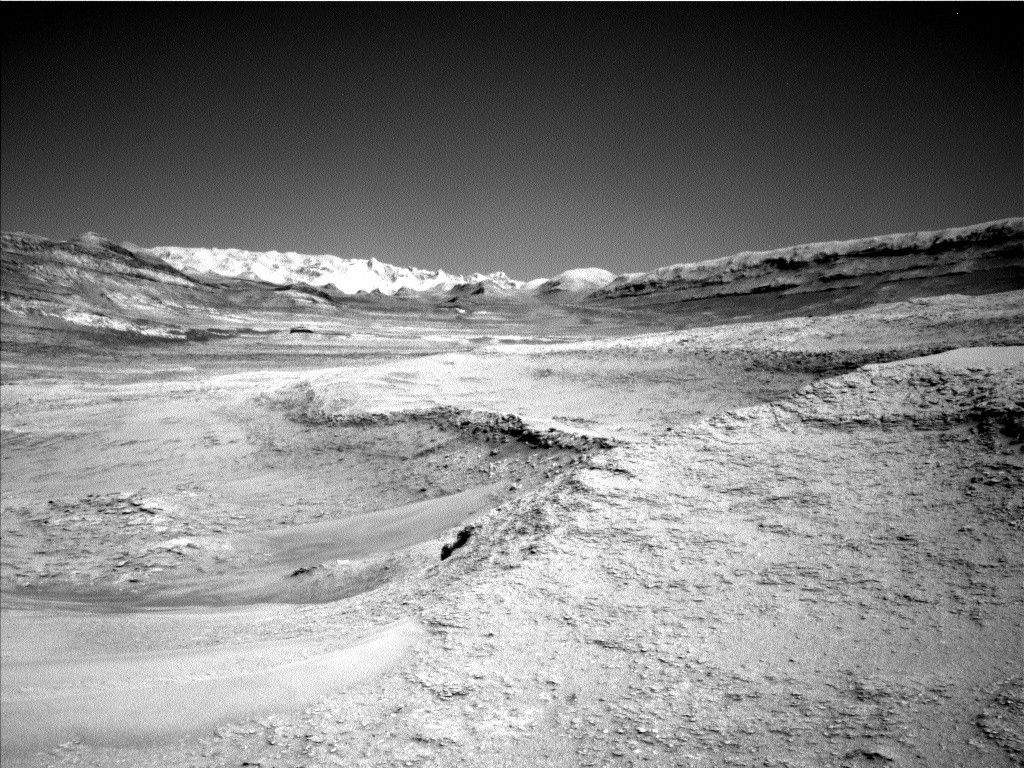
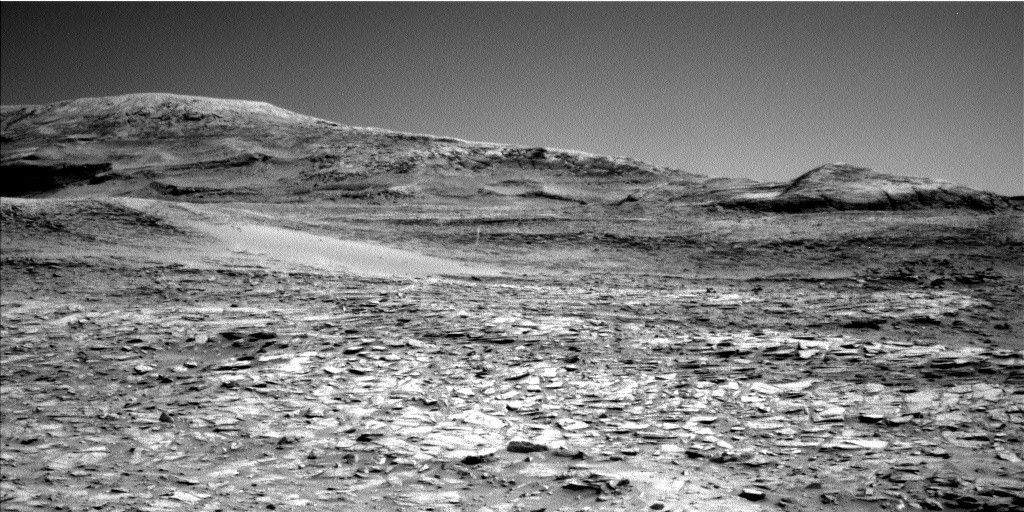
A grayscale photo from the Martian surface shows a landscape of undulating but mostly smooth terrain, in light gray. A plateau on the right side of the foreground drops down toward the left about mid-frame, in a gentle curve. A ridge across the upper middle of the frame creates a V-shaped horizon line. Beyond that in the distance, filling the bottom of the V, a jagged line of rocks is brilliant white, looking like snow-capped mountains.
NASA’s Mars rover Curiosity acquired this image, looking toward the upper slopes of Mount Sharp, using its Left Navigation Camera (Left Navcam) on July 20, 2025. Curiosity captured the image on Sol 4605, or Martian day 4,605 of the Mars Science Laboratory mission, at 18:58:26 UTC.
NASA/JPL-Caltech

Written by Deborah Padgett, MSL OPGS Task Lead at NASA’s Jet Propulsion Laboratory 

Earth planning date: Monday, July 21, 2025

Curiosity continues our exploration of the fractured boxwork terrain on the slopes of Mount Sharp. After a successful 5-meter drive (about 16 feet), our rover is resting in a hollow on its way to a boxwork ridge viewpoint. Over the weekend, Curiosity began an atmospheric observation with the SAM instrument, which will continue into today’s plan. Because the SAM instrument is complex and powerful, it uses a great deal of energy when it operates, causing what we call a “deep dip” in the battery charge level. This means that we have to wait a bit after the SAM observations complete for the battery to recharge enough for Curiosity to observe its surroundings with other science instruments, or move its arm or wheels. For this reason, the plan today does not include a drive, and contact science at this location will be done on the second sol of the plan. 

On Sol 4607, Curiosity will begin the day with SAM atmospheric composition activity, which will run for several hours. After it finishes, we will use the rover’s navigation camera to perform a cloud altitude observation, looking for cloud shadows on the upper reaches of Mount Sharp, and clouds drifting by overhead at the zenith. Overnight, Curiosity’s battery will recharge, allowing us to perform a targeted science block on the morning of Sol 4608. This starts with Navcam observations of dust opacity across the floor of Gale Crater, then a measurement of dust in the air toward the Sun with Mastcam. Curiosity then turns Mastcam toward the ridge ahead to obtain a 15×1 mosaic on target “Cueva De Los Vencejos Y Murcielagos (Cave of Swifts and Bats).” Afterwards, Mastcam will look back along Curiosity’s tracks, hoping to see freshly broken rocks and determine the texture of disturbed ground. Next, ChemCam’s laser spectrograph will zap a nodular rock pillar named for the famous high-altitude “Lake Titicaca” bordering Bolivia and Peru. A second ChemCam observation with the RMI telescopic camera will study stratigraphy on the Mishe Mokwa butte with a 5×2 image mosaic. Mastcam will finish off this science block by looking at the pits left behind by the ChemCam laser on target “Lake Titicaca.”  

In the afternoon, Curiosity’s arm will reach out to brush the dust from the bedrock target “La Tranquita,” then observe it with the MAHLI microscopic imager and APXS. MAHLI and APXS will also investigate plate-like rock formations at target “Aqua Dulce.” A third target with more complex rock structures dubbed “Paposo,” after a natural monument along the Pacific Coast of northern Chile, will be imaged only by MAHLI. The next morning will include another targeted science block. Curiosity will then drive away toward the next viewpoint in the boxwork terrain of Mars.

Share

Details

Last Updated
Jul 22, 2025

Related Terms

Powered by WPeMatico

Get The Details…

NASA eClips STEM Student Ambassadors Light Up CNU’s 2025 STEM Community Day

NASA eClips STEM Student Ambassadors Light Up CNU’s 2025 STEM Community Day

3 min read

NASA eClips STEM Student Ambassadors Light Up CNU’s 2025 STEM Community Day

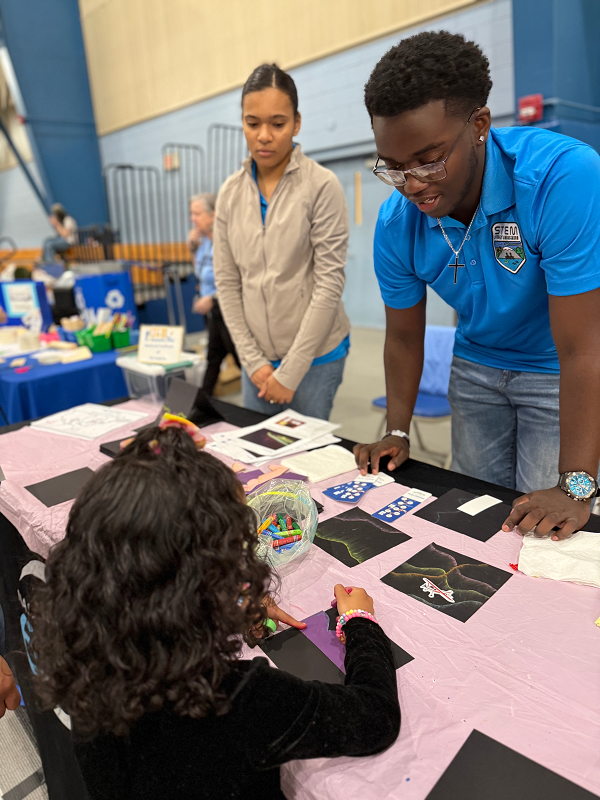
More than 2,000 curious visitors from Newport News and the surrounding Hampton Roads region of Virginia flocked to Christopher Newport University (CNU) on May 31, 2025 for their annual STEM (Science, Technology, Engineering, & Mathematics) Community Day, and the NASA eClips team from the National Institute of Aerospace’s Center for Integrative STEM Education (NIA-CISE) made sure every one of them left with their eyes—and imaginations—fixed on the Sun.

At the heart of the NASA eClips exhibit were NIA’s STEM Student Ambassadors—a team of carefully selected high school students from the Tidewater region of Virginia who underwent extensive training with NASA eClips educators during the summer of 2024. These bright, enthusiastic young leaders are passionate about communicating about and advocating for STEM. The STEM Student Ambassador program is made possible through a Coastal Virginia STEM Hub grant from the Virginia General Assembly and is already having an impact.

Throughout the day, the Ambassadors engaged learners of all ages with two creative, hands-on experiences that connected STEM and the arts:

  • Chalk Corona – Using black construction paper and vibrant chalk, participants recreated the Sun’s corona—the super-hot, gaseous “crown” that’s visible during a total solar eclipse. While they shaded and smudged, the Ambassadors explained why the corona is so important to solar research and handed out certified solar viewers for safe Sun-watching back home.
  • Pastel Auroras – Visitors also discovered how solar wind, storms, and coronal mass ejections (aka Sun “sneezes”) spark Earth’s dazzling auroras. Guided by the Ambassadors, budding artists layered pastels to capture swirling curtains of light, tying recent mid-Atlantic aurora sightings to real-time space weather.

Throughout the day, the Ambassadors’ energy was contagious, turning complex heliophysics into hands-on fun and opening eyes to the opportunities and careers that await in STEM. Judging by the smiles—and the dusting of chalk and pastels—NASA eClips’ presence was, quite literally, the “crowning” touch on an unforgettable community celebration of STEM.

The NASA eClips project provides educators with standards-based videos, activities, and lessons to increase STEM literacy through the lens of NASA. It is supported by NASA under cooperative agreement award number NNX16AB91A and is part of NASA’s Science Activation Portfolio. Learn more about how Science Activation connects NASA science experts, real content, and experiences with community leaders to do science in ways that activate minds and promote deeper understanding of our world and beyond: https://science.nasa.gov/learn

Two STEM Student Ambassadors, one a female wearing a tan jacket and one a male with glasses wearing his turquoise Ambassador polo shirt look over an exhibit table laden with black construction paper and pastels and explain to a young female with curly dark hair and a black shirt with pink bracelet as she draws her own aurora using a purple stencil on a piece of black construction paper.
Two STEM Student Ambassadors engage a young girl while she creates her own Pastel Aurora artwork.

Share

Details

Last Updated
Jul 22, 2025
Editor
NASA Science Editorial Team

Powered by WPeMatico

Get The Details…

NASA Challenge Wraps, Student Teams Complete Space Suit Challenges

NASA Challenge Wraps, Student Teams Complete Space Suit Challenges

After months of work in the NASA Spacesuit User Interface Technologies for Students (SUITS) challenge, more than 100 students from 12 universities across the United States traveled to NASA’s Johnson Space Center in Houston to showcase potential user interface designs for future generations of spacesuits and rovers.  

NASA Johnson’s simulated Moon and Mars surface, called “the rock yard,” became the students’ testing ground as they braved the humid nights and abundance of mosquitoes to put their innovative designs to the test. Geraldo Cisneros, the tech team lead, said, “This year’s SUITS challenge was a complete success. It provided a unique opportunity for NASA to evaluate the software designs and tools developed by the student teams, and to explore how similar innovations could contribute to future, human-centered Artemis missions. My favorite part of the challenge was watching how the students responded to obstacles and setbacks. Their resilience and determination were truly inspiring.”

A woman wears a virtual reality headset with three people observing behind her.
Tess Caswell and the Rice Owls team from Rice University test their augmented reality heads-up display at Johnson Space Center’s Rock Yard in Houston on May 19, 2025.
NASA/James Blair

Students filled their jam-packed days not only with testing, but also with guest speakers and tours. Swastik Patel from Purdue University said, “All of the teams really enjoyed being here, seeing NASA facilities, and developing their knowledge with NASA coordinators and teams from across the nation. Despite the challenges, the camaraderie between all the participants and staff was very helpful in terms of getting through the intensity. Can’t wait to be back next year!”

John Mulnix with Team Cosmoshox from Wichita State University presents the team’s design during the Spacesuit User Interface Technologies for Students (SUITS) exit pitches at Johnson on May 22, 2025.
NASA/David DeHoyos

“This week has been an incredible opportunity. Just seeing the energy and everything that’s going on here was incredible. This week has really made me reevaluate a lot of things that I shoved aside. I’m grateful to NASA for having this opportunity, and hopefully we can continue to have these opportunities.”  

At the end of test week, each student team presented their projects to a panel of experts. These presentations served as a platform for students to showcase not only their technical achievements but also their problem-solving approaches, teamwork, and vision for real-world application. The panel–composed of NASA astronaut Deniz Burnham, Flight Director Garrett Hehn, and industry leaders–posed thought-provoking questions and offered constructive feedback that challenged the students to think critically and further refine their ideas. Their insights highlighted potential areas for growth, new directions for exploration, and ways to enhance the impact of their projects. The students left the session energized and inspired, brimming with new ideas and a renewed enthusiasm for future development and innovation. Burnham remarked, “The students did such a great job. They’re all so creative and wonderful, definitely something that can be implemented in the future.” 

A man and a woman stand in front of a projector holding an "Artemis Educator Award."
Gamaliel Cherry, director of the Office of STEM Engagement at Johnson, presents the Artemis Educator Award to Maggie Schoonover from Wichita State University on May 22, 2025.
NASA/David DeHoyos

NASA SUITS test week was not only about pushing boundaries; it was about earning a piece of history. Three Artemis Student Challenge Awards were presented. The Innovation and Pay it Forward awards were chosen by the NASA team, recognizing the most groundbreaking and impactful designs. Students submitted nominations for the Artemis Educator Award, celebrating the faculty member who had a profound influence on their journeys. The Innovation Award went to Team JARVIS from Purdue University and Indiana State University, for going above and beyond in their ingenuity, creativity, and inventiveness. Team Selene from Midwestern State University earned the Pay it Forward Award for conducting meaningful education events in the community and beyond. The Artemis Educator Award was given to Maggie Schoonover from Wichita State University in Kansas for the time, commitment, and dedication she gave to her team.

“The NASA SUITS challenge completes its eighth year in operation due to the generous support of NASA’s EVA and Human Surface Mobility Program,” said NASA Activity Manager Jamie Semple. “This challenge fosters an environment where students learn essential skills to immediately enter a science, technology, engineering, and mathematics (STEM) career, and directly contribute to NASA mission operations. These students are creating proposals, generating designs, working in teams similar to the NASA workforce, utilizing artificial intelligence, and designing mission operation solutions that could be part of the Artemis III mission and beyond. NASA’s student design challenges are an important component of STEM employment development and there is no better way to learn technical skills to ensure future career success.”

The week serves as a springboard for the next generation of space exploration, igniting curiosity, ambition, and technical excellence among young innovators. By engaging with real-world challenges and technologies, participants not only deepen their understanding of space science but also actively contribute to shaping its future. Each challenge tackled, each solution proposed, and each connection formed represents a meaningful step forward; not just for the individuals involved, but for humanity as a whole. With every iteration of the program, the dream of venturing further into space becomes more tangible, transforming what once seemed like science fiction into achievable milestones.

Are you interested in joining the next NASA SUITS challenge? Find more information here.

The next challenge will open for proposals at the end of August 2025.

A group of people pose for a photo in a large building.
The 2025 NASA SUITS teams represent academic institutions across the United States.
NASA/David DeHoyos

Powered by WPeMatico

Get The Details…
Sumer Loggins

Curiosity Blog, Sols 4604-4606: Taking a Deep Breath of Martian Air

Curiosity Blog, Sols 4604-4606: Taking a Deep Breath of Martian Air

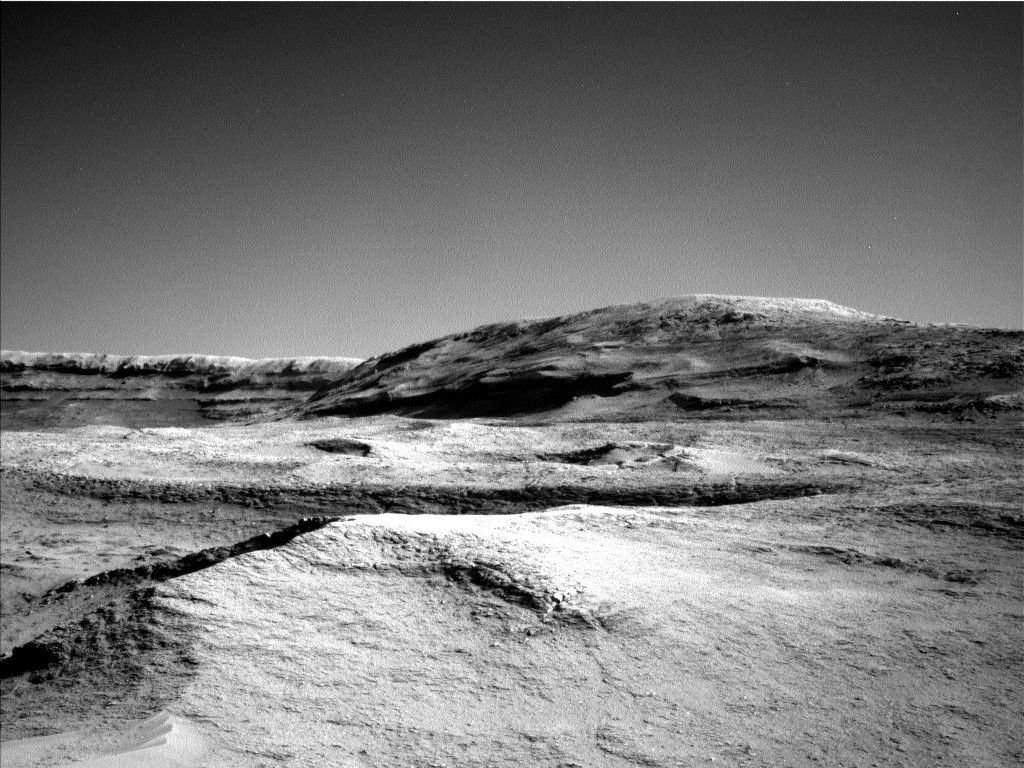
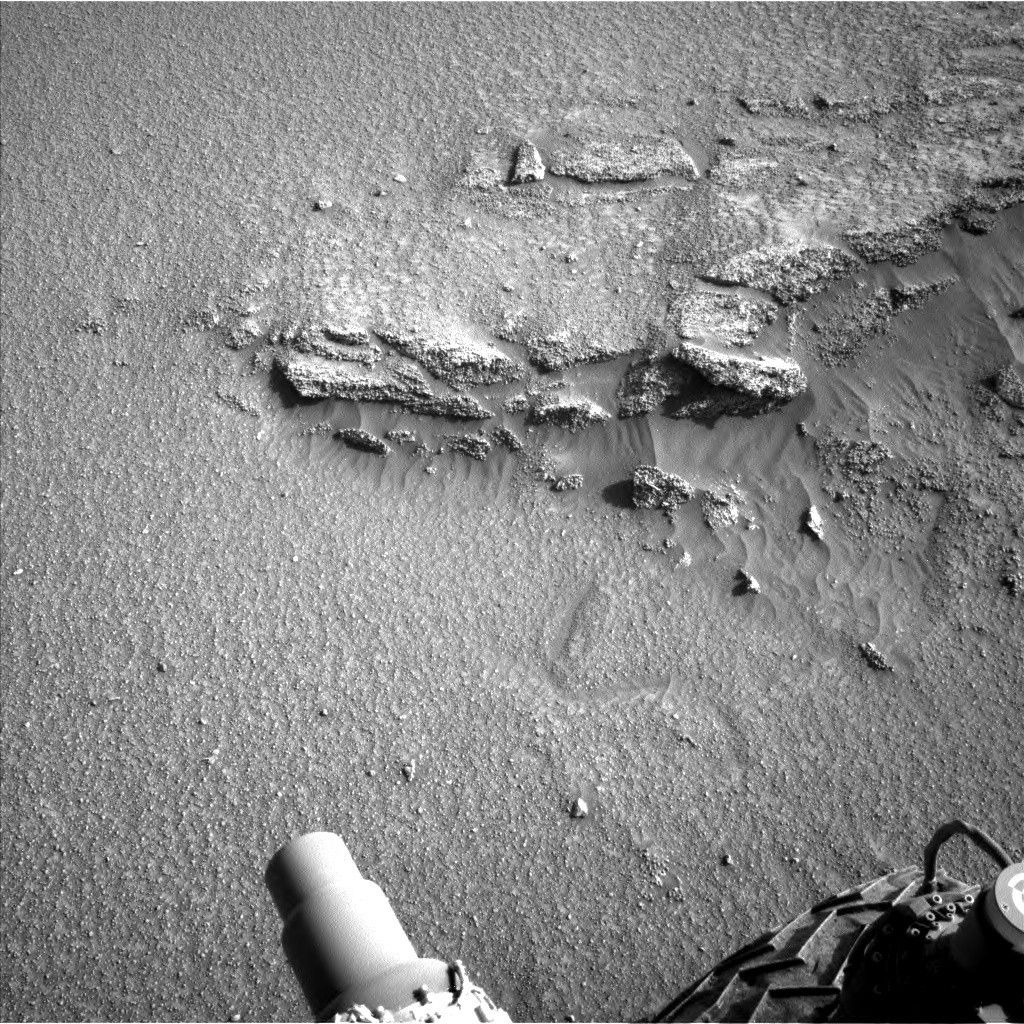
A grayscale photo from the Martian surface shows a landscape of undulating but mostly smooth terrain from the front of the image to a gently sloping hill that rises from the center of the image toward the upper right side of the frame. Beyond that, a straight ridge creates a horizon line along the left side of the image, disappearing from sight behind the hill.
NASA’s Mars rover Curiosity acquired this image, looking south across the large boxwork structures, using its Left Navigation Camera on July 17, 2025. A series of ridges and hollows forms the dramatic topography in the foreground, while the distant buttes expose additional sedimentary structures. Curiosity acquired this image on Sol 4602, or Martian day 4,602 of the Mars Science Laboratory mission, at 17:49:18 UTC.
NASA/JPL-Caltech

Written by Lauren Edgar, Planetary Geologist at USGS Astrogeology Science Center

Earth planning date: Friday, July 18, 2025

Curiosity has started to investigate the main exposure of the boxwork structures! What was once a distant target is now on our doorstep, and Curiosity is beginning to explore the ridges and hollows that make up this terrain, to better understand their chemistry, morphology, and sedimentary structures.

I was on shift as Long Term Planner during this three-sol weekend plan, and the team put together a very full set of activities to thoroughly investigate this site — from the sky to the sand. The plan starts with Navcam and Mastcam observations to assess the amount of dust in the atmosphere, followed by a large Mastcam mosaic to characterize the resistant ridge on which the rover is parked. ChemCam will also acquire a LIBS observation on a target named “Vicuna” to assess the chemistry of a well-exposed vein. The team chose this parking location to characterize the chemistry and textures of this topographic ridge (to compare with topographic lows), so the next part of the plan involves contact science using APXS and MAHLI to look at different parts of the nodular bedrock in our workspace, at targets named “Totoral” and “Sillar.” There’s also a MAHLI observation of the same vein that ChemCam targeted.

The second sol involves more Mastcam imaging to look at different parts of this prominent ridge, along with a ChemCam LIBS observation on top of the ridge, and a ChemCam RMI mosaic to document the sedimentary structures in a distant boxwork feature. Navcam will also be used to look for dust devils. Then Curiosity will take a short drive of about 5 meters (about 16 feet) to explore the adjacent hollow (seen as the low point in the foreground of the above Navcam image). After the drive we’ll take more images for context, and to prepare for targeting in Monday’s plan.

After all of this work it’s time to pause and take a deep breath… of Martian atmosphere. The weekend plan involves an exciting campaign to look for variations in atmospheric chemistry between night and day. So Curiosity will take an overnight APXS atmospheric observation at the same time that two instruments within SAM assess its chemical and isotopic abundance.

On the third sol Curiosity will acquire a ChemCam passive sky observation, leading to a great set of atmospheric data. These measurements will be compared to even more atmospheric activities in Monday’s plan to get the full picture. As you can imagine, this plan requires a lot of power, but it’s worth it for all of the exciting science that we can accomplish here.

The road ahead has many highs and lows (literally), but I can’t wait to see what Curiosity will accomplish. The distant buttes remind us that there’s so much more to explore, and I look forward to continuing to see where Curiosity will take us.

Powered by WPeMatico

Get The Details…