Summary of the 2025 GEDI Science Team Meeting
30 min read
Summary of the 2025 GEDI Science Team Meeting
Introduction
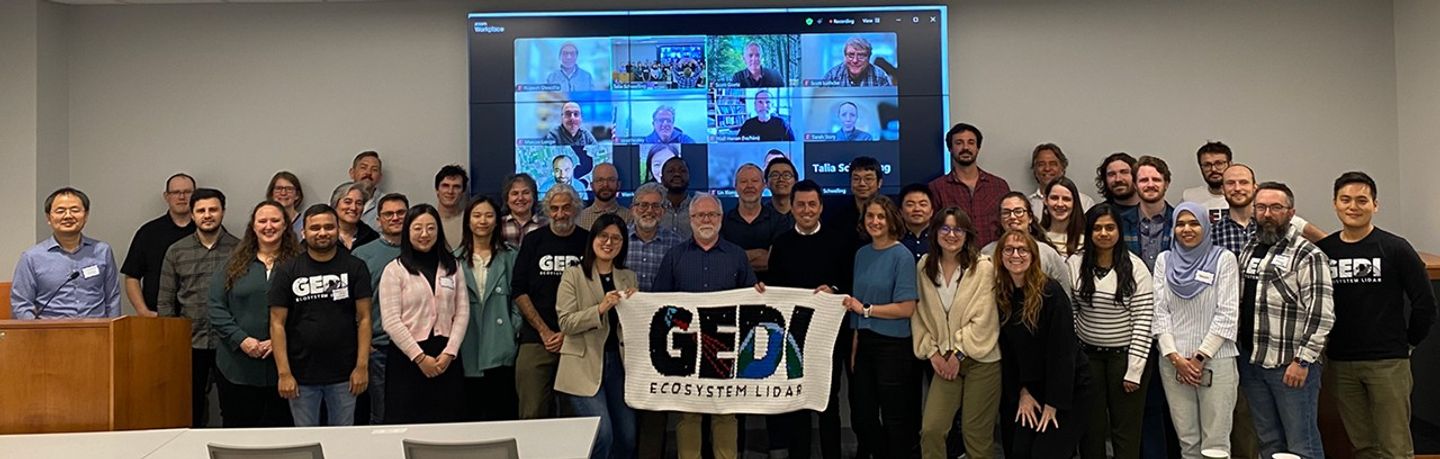
The 2025 Global Ecosystem Dynamics Investigation (GEDI) Science Team Meeting (STM) took place April 1–3, 2025 at the University of Maryland, College Park (UMD). Upwards of 60 participants attended in-person, while several others joined virtually by Zoom. The GEDI Mission and Competed Science Team members were in attendance along with the GEDI NASA program manager and various postdoctoral associates, graduate students, collaborators, and data users – see Photo. Participants shared updates on the GEDI instrument and data products post-hibernation with the GEDI community. They also shared progress reports on the second Competed Science Team cohort’s projects as well as applications of GEDI data.
This article provides a mission status update and summaries of the presentations given at the STM. Readers who would like to learn more about certain topics can submit specific questions through the GEDI website’s contact form.
Mission Status Update: GEDI Up and Running After its Time in Hibernation
When the 2023 GEDI STM summary was published in June 2024 – see archived article, “Summary of the 2023 GEDI Science Team Meeting” [The Earth Observer, June 18, 2024] – GEDI had been placed in a temporary state of hibernation and moved from the International Space Station’s (ISS) Japanese Experiment Module–Exposed Facility (JEM–EF) Exposed Facility Unit (EFU)-6 to EFU-7 (storage).
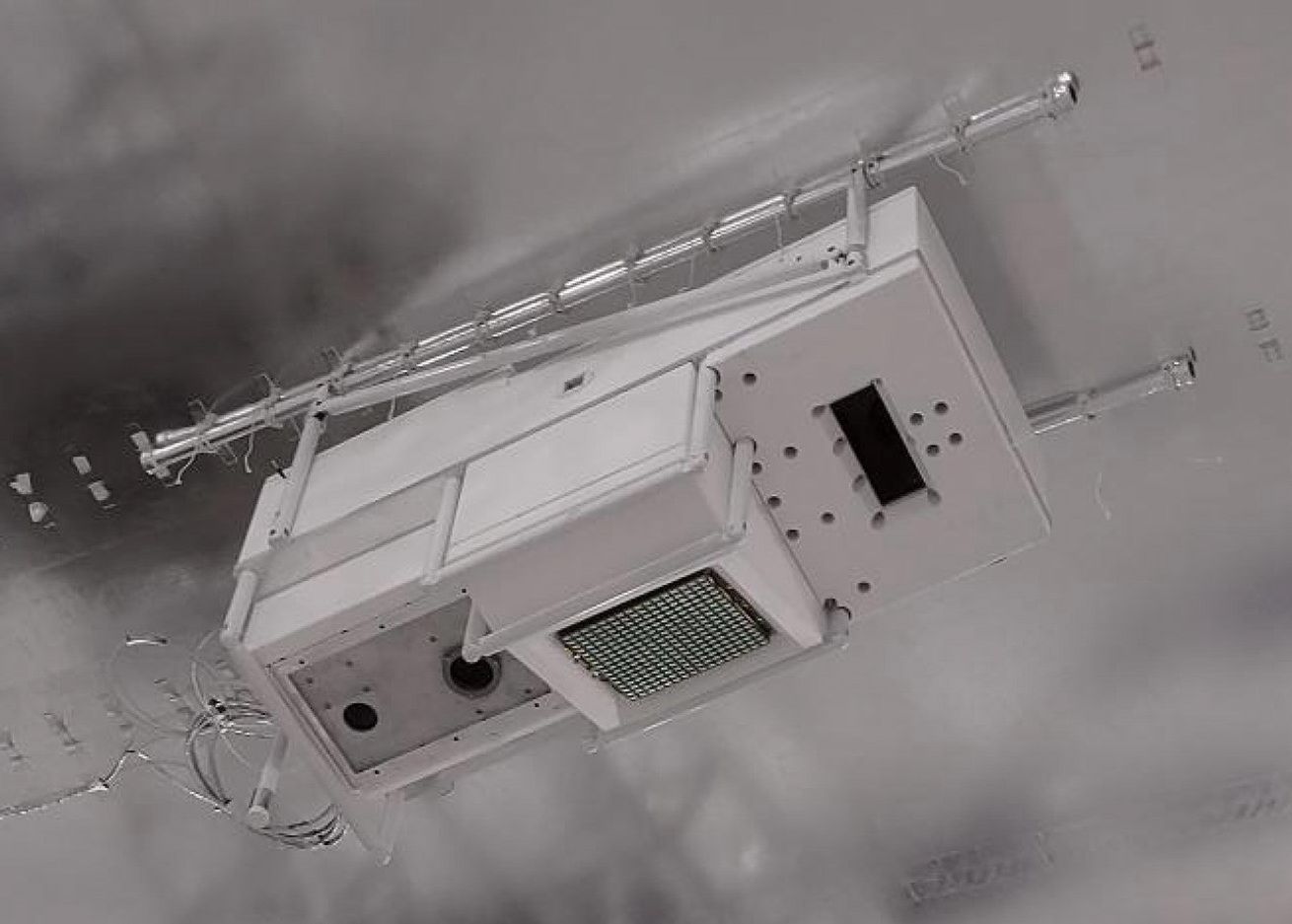
Two years later, as the 2025 GEDI STM took place, the GEDI instrument was back in its original location on EFU-6 collecting high-resolution observations of Earth’s three-dimensional (3D) structure from space.
DAY ONE
GEDI Mission and Data Product Status I
Ralph Dubayah [UMD—GEDI Principal Investigator (PI)] opened the STM with updates on mission status (see previous section) and the development of current and pending GEDI data products.
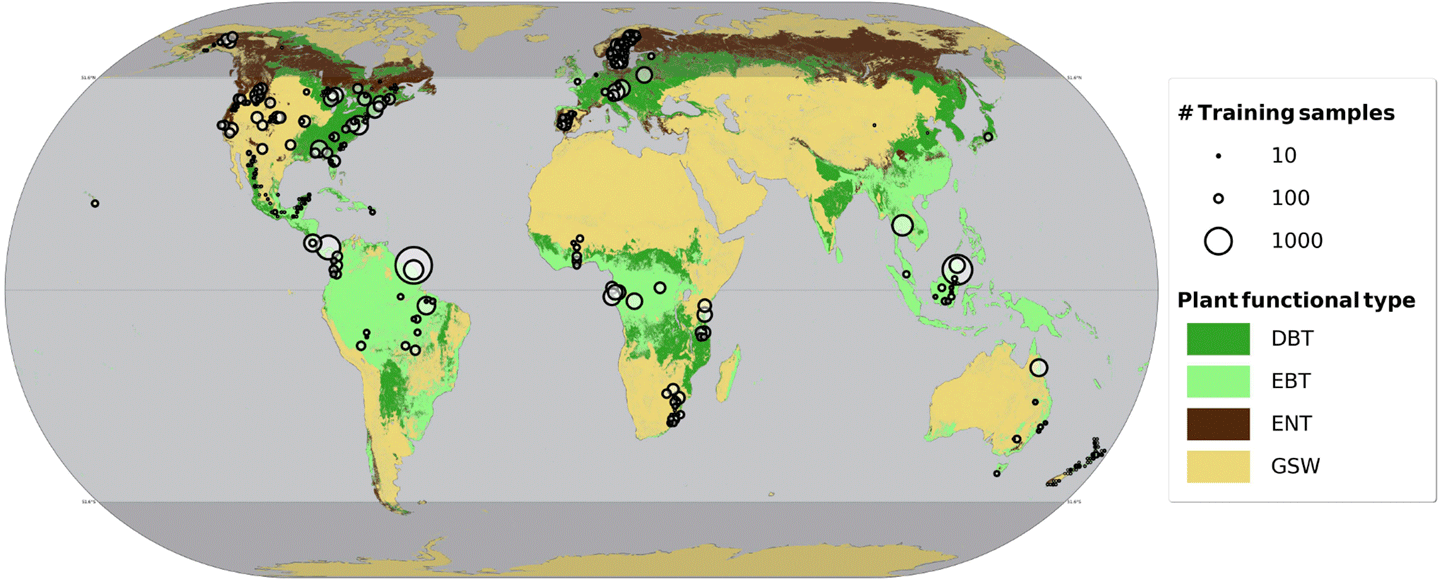
Following its hibernation on the ISS from March 2023–April 2024, the GEDI mission entered its second extension period. Since re-installation, the instrument’s lasers have been operating nominally, steadily collecting data, increasing coverage, and filling gaps. As of November 27, 2024, GEDI had collected 33 billion Level-2A (L2A) land surface returns, with approximately 12.1 billion passing quality filters. Since the last STM, an additional 1422 new simulated GEDI footprints have been added to GEDI’s forest structure and biomass database (FSBD), which is a database of forest inventory and airborne laser scanning data (ALS) from around the globe that is used for cal/val of GEDI data. The FSBD now has 27,876 simulated footprints in total – see Figure 1. This data will support improved L4A biomass algorithm calibration.
Version 2.1 (V2.1) of GEDI L1B, L2A, L2B, and L4A data products are the latest product releases available for download. This version incorporates post-storage data through November 2024. In January 2025, the team also released the new L4C footprint-level Waveform Structural Complexity Index (WSCI) product using pre-storage data. The upcoming V3.0 release will incorporate pre- and post-storage data that will improve quality filtering, geolocation accuracy, and algorithm performance.
Although GEDI met its L1 mission science requirements before entering hibernation, orbital resonance on the ISS impacted GEDI’s coverage in the tropics. To help address these gaps, the team is exploring data fusion opportunities with other missions – e.g., NASA-Indian Space Research Organisation Synthetic Aperture Radar (NISAR), the Deutsches Zentrum für Luft- und Raumfahrt’s (DLR – German Aerospace Center) Terra Synthetic Aperture Radar–X (TerraSAR-X) and TerraSAR add-on for Digital Elevation Measurement (TanDEM-X) missions, and the European Space Agency’s upcoming forest mission – Biomass. [UPDATE: Biomass launched successfully on April 29, 2025 from Europe’s Spaceport in Korou, French Guiana, and NISAR launched July 30, 2025 from the Satish Dhawan Space Centre located on Sriharikota Island in India.] Additional ongoing mission team efforts include advancing waveform processing, developing gridded products tailored to end-user needs, understanding error and bias, and continuing expansion of the FSBD.
Dubayah concluded by highlighting the steady rise in GEDI-related publications and datasets appearing in high-impact journals, including PNAS, Nature, and Science families. Visit the GEDI website to gain access to a comprehensive list of GEDI-related publications.
After beginning with general updates from the mission PI, attendees heard a series of more in-depth reports on science data planning, mission operations, and instrument status.
Scott Luthcke [NASA’s Goddard Space Flight Center (GSFC)—GEDI Co-Investigator (Co-I)] reported on Science Operations Center activities, including geolocation performance and improvements. He shared that the Science Planning System, which is used to plan GEDI data acquisition locations, has been upgraded to improve targeting capabilities using high-resolution Reference Ground Tracks. The Science Data Processing System also underwent a technical refresh that increased computational and data storage capability and has completed processing and delivery of all V2.1 data products, including post-storage (or post-hibernation) data (April–November 2024), to the Land Processes and Oak Ridge National Laboratory (ORNL) Distributed Active Archive Centers (DAACs).
Luthcke explained that V2.1 improves on precision orbit determination, precision attitude determination, tracking point modeling, time tags, and oscillator calibration. Looking ahead, V3.0 will enhance range bias calibration, improve pointing bias calibration, and provide additional modifications to L1A, L1B, L2A, and L2B products. Luthcke also discussed updates to the L3 data product, which include corrected timing and range bias, improved positioning and elevation, and a wall-to-wall 1-km (0.62-mi) elevation map to be released alongside V3.0.
Tony Scaffardi [GSFC—GEDI Mission Director] provided an update on the Science and Mission Operations Center since its post-hibernation return to science operations on June 3, 2024. He addressed various on-orbit events that may have briefly disrupted data collection and reviewed upcoming ISS altitude plans. As of March 2025, each of the instrument’s three lasers logged over 22,000 hours in firing mode, collecting more than 20 billion shots each, with 72% of that time directly over land surfaces. As of April 2025, 95,346 hours of science data have been downlinked, averaging 51.21 GB of data per day.
Bryan Blair [GSFC—GEDI Deputy PI and Instrument Scientist] concluded this section of the meeting with a discussion of GEDI instrument status, reporting that all three lasers are operating nominally and that both the detectors and digitizers continue to perform well. He noted that the laser pulse shapes have remained stable since the mission began, indicating consistent system performance over time. Blair also addressed the inherent challenges of operating in space, such as radiation exposure, and emphasized the importance of designing systems for graceful degradation. A recent firmware update was successfully applied to all three digitizers, and no life-limiting concerns have been identified to date.
Competed Science Team Presentations – Session I
Jim Kellner [Brown University—GEDI Co-I] kicked off the Competed Science Team (CST) presentations with an overview of his work investigating the role of stratification and quality filtering to improve GEDI data products and the impact of stratification error on prediction. He explained how GEDI quality filtering and aboveground biomass density (AGBD) model selection and prediction rely heavily on stratification by plant functional type (PFT) and geographic world region. Thus, evaluation and improvement of stratification and quality filtering will help maximize the number of usable GEDI shots, some of which are potentially excluded unnecessarily. To support these improvements, Kellner is exploring replacement of the current 1-km stratification layer with a 30-m (98-ft) product derived from Landsat and similarly upgrading the 500-m (1640-ft) phenology stratification layer to a 30-m Landsat version. These changes aim to improve the L4A footprint-level AGBD estimates in particular, but flow through to the GEDI L4B data product.
Birgit Peterson [United States Geological Survey (USGS), Earth Resources Observation and Science (EROS) Center] presented her research on the decomposition of GEDI waveforms to derive vegetation structure information for 3D fuels and wildfire modeling, emphasizing the importance of consistent and comprehensive information on vegetation status for effective wildland fire management. Canopy structure data, like that provided by GEDI, can play a key role in developing physics-based fire behavior models, such as QUIC-Fire. With study sites in South Dakota, the Sierra Nevada, and dispersed around the southeastern United States, Peterson’s work aims to demonstrate how vegetation structure parameters needed to run the QUIC-Fire model can be derived from GEDI waveform data.
David Roy [Michigan State University] shared updates on his CST project leveraging GEDI data to improve understanding of species-specific tropical forest regrowth in central Africa. Focusing on the Mai Ndombe region in the western part of the Democratic Republic of the Congo (DRC), the project aims to quantify forest regrowth by integrating GEDI-derived structural data with satellite and airborne laser scanner (ALS) based maps of forest height. Roy emphasized the potential of secondary and recovering forest conservation as a low-cost mechanism for carbon sequestration and climate change mitigation. GEDI data – combined with satellite maps – provide new opportunities to quantify forest regrowth and carbon sequestration in secondary forests at finer detail, although high species diversity and varying regrowth rates can be complex to assess with remote sensing. Roy also presented a 2025 paper validating the GEDI relative height product in the DRC and at two temperate forest sites in the United States with a simple method to improve the GEDI canopy height using digital terrain heights measured by airborne laser scanning (ALS).
Perspectives I
After the morning CST presentation session, meeting attendees heard the first perspectives presentation from Amanda Whitehurst [NASA Headquarters (HQ] GEDI Program Scientist and NASA Terrestrial Ecology Program Manager]. Whitehurst is new to the GEDI Program Scientist role; she used this opportunity to officially introduce herself to the ST and expressed her enthusiasm for the work ahead She commended the GEDI team on the impressive accomplishments of the mission to date, and spoke about the exciting potential for continued data collection and scientific discovery through the program.
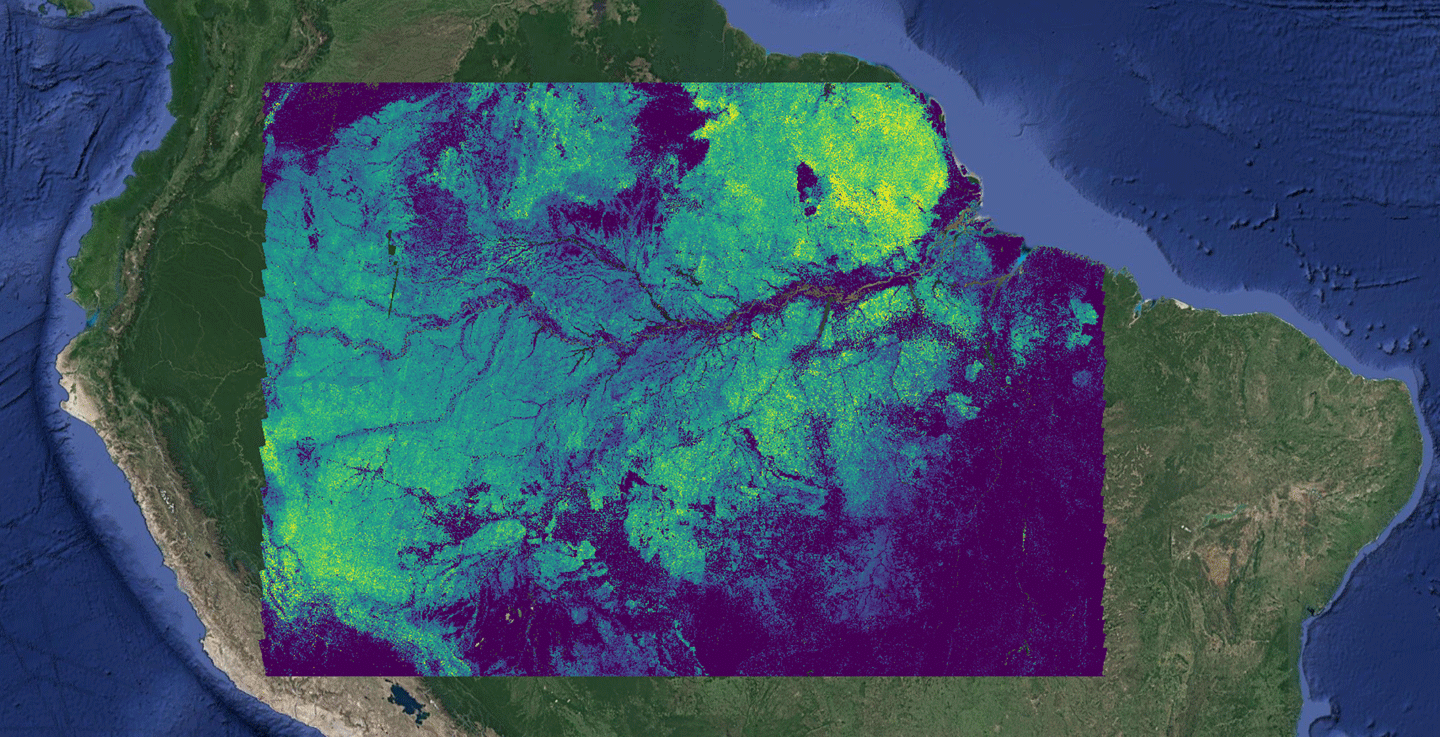
Matteo Pardini [DLR] shared his perspective on the potential of combining synthetic aperture radar (SAR) with lidar data to improve four-dimensional (4D) forest structure mapping. He highlighted DLR’s TerraSAR-X and TanDEM-X missions, which have been acquiring interferometric data since 2007 and 2010, respectively. Both missions are expected to continue acquiring data through 2028. The TanDEM-X Global Digital Elevation Model, covering 150 million km2 (58 million mi2) with approximately 1-m (3-ft) accuracy, can be used to derive forest height and biomass. The fusion of TanDEM-X and GEDI data can improve biomass estimates – see Figure 2 – and help researchers parameterize the relationship between coherence and forest structure. Pardini also previewed the upcoming BIOMASS mission, which will operate at a lower frequency and be able to penetrate vegetation, providing complementary information to the TerraSAR-X and TanDEM-X missions.
CST Presentations – Session II
Chris Hakkenberg [University of California, Los Angeles (UCLA)] opened the second CST presentation session with a discussion on his research using GEDI to characterize fuel structure, burn severity, and post-fire response across the regions of California affected by wildfire. He began by highlighting significant land cover changes resulting from wildfires in recent years that are visible as enormous [greater than 100 km2 (38 mi2)] conversions from forest to grass/scrub in the National Land Cover Dataset. Hakkenberg’s project aims to examine the role of fuel structure in driving fire severity patterns, improve burn severity maps using GEDI for change detection, and characterize post-fire response using data from Landsat 5, 7, and 8, and GEDI. He noted that while fire behavior is heavily dependent on weather, topography, and fuels – only fuels can be actively managed. GEDI provides valuable insights into forest fuel structure by measuring canopy volume (total fuel quantities) and vertical continuity (how fire may spread through those volumes). Hakkenberg and his team found that vertical fuel continuity metrics were stronger predictors of severity than fuel volume, especially in extreme weather conditions, and are most closely related to the high-burn severities that can delay long-term recovery. Finally, Hakkenberg presented research that combines GEDI and Landsat to improve burn severity assessments, which will be the focus on the next phase of this research project.
Sean Healey [U.S. Forest Service (USFS)—GEDI Co-I] presented an overview of the Online Biomass Inference using Waveforms and iNventory (OBI-WAN) project. OBI-WAN provides globally consistent estimates of biomass and carbon, as well as changes in these estimates over time, for user-defined areas and periods of interest rather than fixed 1-km (0.62-mi) squares. The project leverages GEDI L4A models to predict biomass at the footprint level and uses this dense collection of footprints to create local-level biomass models with Landsat (assuming consistent calibration of Landsat through time). To quantify uncertainty in change estimates, OBI-WAN employs a statistical method called bootstrapping, which can be embedded into customized accounting systems through a powerful programming interface accessed through Google Earth Engine.
Data Product Status I
Michelle Hofton [UMD—GEDI Co-I] and Sarah Story [GSFC] returned to the topic of GEDI data product status. They presented an update on the GEDI L2A product, which includes ground topography and canopy height measurements. Encouragingly, preliminary testing shows that GEDI’s post-storage performance has remained consistent with pre-storage. Hofton explained GEDI observations are compared with high-quality intersections with the Land, Vegetation, and Ice Sensor (LVIS) (an airborne lidar) data in order to assess GEDI data quality and accuracy. She highlighted the use of bingos – pairs of GEDI waveforms believed to be spatially coincident in vegetated areas – as a valuable tool for assessing geolocation and waveform errors as well as algorithm performance. As of December 2024, more than one million bingos had been collected. Hofton and Story concluded with a preview of anticipated updates to the L2A product for V3.0, including new quality flags for data cleaning and a refined algorithm selection approach.
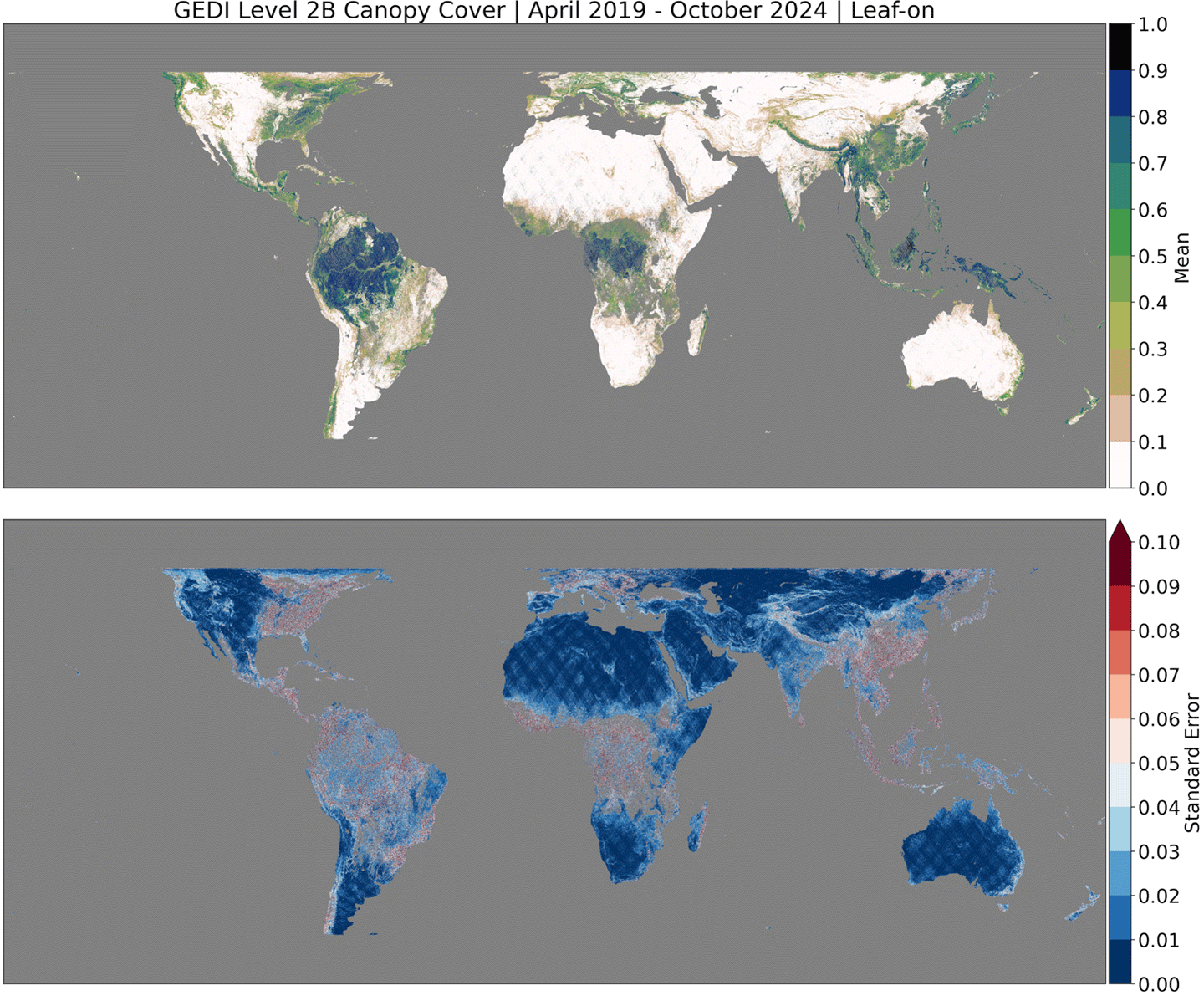
John Armston [UMD—GEDI Co-I] presented on GEDI L2B data, which provides gridded footprint-level [25-m (82-ft) resolution] metrics such as canopy cover – see Figure 3 – plant area index (PAI), plant area volume density (PAVD), and foliage height diversity (FHD). He shared that the upcoming V3.0 release will differ from V2.0 in that it will use GEDI-derived canopy-ground reflectance ratios — rather than values derived from NASA LVIS — to estimate canopy cover, thus allowing for spatial variability. However, waveform analysis will remain largely unchanged from V2.0. Armston also presented 1-km leaf-on and leaf-off gridded L2B canopy cover fraction maps using both pre- and post-storage data (April 2019–November 2024), explaining how post-storage data were used to fill gaps. Additionally, the mission team has mapped GEDI canopy cover distributions using a H3-indexing API developed by Tiago de Conto [UMD], which are being used to improve GEDI L2A algorithms for ground detection. V3.0 will offer a more direct measure of canopy structure to complement L2A relative height metrics by improving quality flags and including relative canopy height metrics. Finally, the team presented progress on the independent validation of GEDI L2B V3.0 algorithms and products using the GEDI FSBD and NASA LVIS campaign data from Costa Rica, Gabon, French Guiana and the United States.
Jamis Bruening [UMD] shared the final data product update of the day. He discussed GEDI’s L4B gridded aboveground biomass density (AGBD) product, which is a 1-km raster dataset representing area-level estimates of mean AGBD and associated uncertainty across the mission’s range of observation. GEDI’s L4B estimates are derived from the footprint-level L4A AGBD predictions through one of two statistical modes of inference. Currently, hybrid estimation is used to generate L4B. This approach uses GEDI data as the sole input and requires at least two GEDI tracks in a 1-km grid cell to produce a mean estimate. The hybrid estimator also provides a standard error, accounting for both model variance in the L4A predictions and GEDI’s sampling uncertainty. To address gaps in GEDI’s coverage where hybrid estimates cannot be produced, the team has begun implementing an alternative inference mode, called generalized hierarchical model-based (GHMB) estimation. GHMB incorporates auxiliary imagery, such as Landsat, SAR, and GEDI’s L4A predictions, to infer mean biomass and its standard error. Although the addition of post-storage data has increased GEDI’s coverage, GHMB remains essential for producing a complete, gap-free 1-km AGBD map. Both hybrid and GHMB approaches will soon be used together to generate a global, gap-free L4B product. Users can expect the release of V3.0 L4B estimates – featuring hybrid and GHMB models of biomass inference using both pre- and post-storage data – later in 2025.
What’s Next?
Day one concluded with John Armston presenting on a potential new satellite laser altimetry mission called Earth Dynamics Geodetic Explorer (EDGE), which was competitively selected for a Phase A Concept Study under NASA’s Earth Systems Explorer Announcement of Opportunity. If selected, EDGE would launch in 2030 and operate for a two-year mission, providing a critical link between current and future satellite laser altimetry missions.
Armston explained that EDGE addresses two of the targeted observables identified in the 2017 Earth Science Decadal Survey – terrestrial ecosystem structure and ice elevation. It provides a dramatic improvement in coverage and resolution over current active missions by operating in a Sun-synchronous orbit that will enable the direct measurement of change in the 3D structure of vegetation and the surface topography of ice at the spatial and temporal scales needed to observe the driving processes. EDGE will provide fine-scale detail of ecosystem structure in some of the world’s most critical and challenging-to-quantify regions, including the boreal, transforming the field’s understanding of global terrestrial ecosystem structure and its response to natural and anthropogenic change over all of Earth’s wooded ecosystems.
DAY TWO
Data Product Status II/Extended and Demonstrative Products I
Jim Kellner began day two with an L4A footprint-level AGBD product update. His presentation focused on current product status and planned evaluation of and improvements to the L4A algorithm. Since the last STM, L4A V2.1 was updated to include data through mission week (MW) 311 (i.e., through November 2024) and is now available to end users. V3.0, along with an updated Algorithm Theoretical Basis Document (ATBD), is expected later in 2025. The revised ATBD will outline enhancements to the waveform simulator, quality filtering, stratification, and model selection thanks in part to the availability of on-orbit data. V3.0 will also benefit from the ingestion of approximately 35% more simulated waveforms that passed quality assurance and quality control in the FSBD, significantly expanding training data coverage, particularly in Africa and North America. Kellner noted that users should be aware of key differences between L2 and L4 quality flags; L4 flags account for factors such as sensitivity, water presence, urban conditions, and phenology. Additionally, updates to the selected models may lead to changes in AGBD estimates, which will be more clearly communicated in the V 3.0 release. Comparing pre- and post-storage data, Kellner and his team found that AGBD estimates remain stable across both periods. He encouraged users to review the updated ATBD upon release to fully understand the changes and their implications.
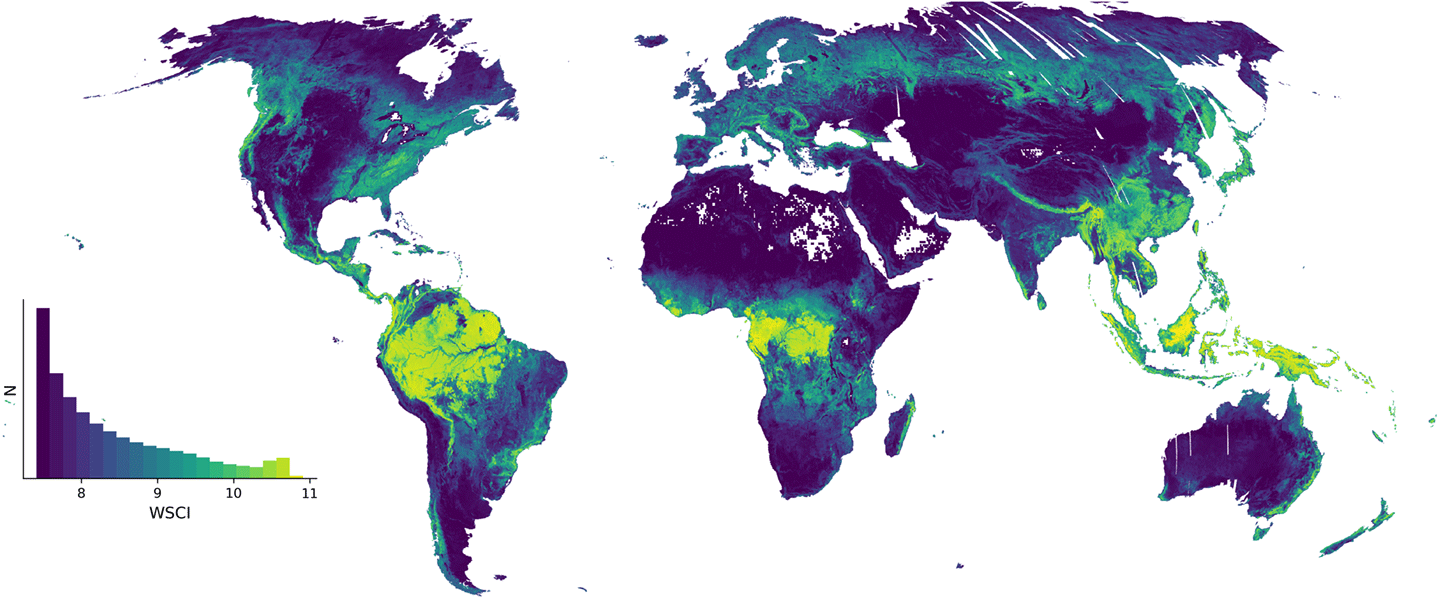
Tiago de Conto [UMD] presented the new GEDI L4C WSCI product, which was released in May 2024 and available through the ORNL DAAC – see Figure 4. This footprint-level metric captures the amount and variability of canopy structure in 3D space, reflecting the richness of structural information underlying any given GEDI observation. It synthesizes multiple structural attributes into a single metric and incorporates elements of both vertical and horizontal variability. WSCI models are trained at the PFT level (i.e., deciduous broadleaf trees, evergreen broadleaf trees, evergreen needleleaf trees, and the combination of grasslands, shrubs, and woodlands) using crossovers of GEDI and airborne lidar point clouds. While WSCI tends to scale with canopy height, the relationship varies across biomes. Looking ahead, de Conto previewed forthcoming WSCI–SAR fusion work designed to produce wall-to-wall maps that are suitable for applications, such as change detection. Early fusion results using data from the European Union’s Copernicus Sentinel-1 (a synthetic aperture radar mission) and the Japan Aerospace Exploration Agency’s (JAXA) Advanced Land Observing Satellite Phased Array L-band Synthetic Aperture Radar (ALOS-PALSAR) show stable prediction performance across different biomes and time periods as well as consistent performance against airborne lidar wall-to-wall reference data.
Paul May [South Dakota School of Mines and Technology] presented his work on predicting interpolated waveforms, along with their associated uncertainties, over USDA Forest Inventory and Analysis (FIA) field plots across the contiguous United States (CONUS). This project aims to develop regression models that convert GEDI’s waveform data into measurements of key forest attributes and enhance monitoring capabilities for a variety of applications. The resulting data product – GEDI-FIA Fusion: Training Lidar Models to Estimate Forest Attributes – was released June 2025 and is publicly available through the ORNL DAAC.
Sean Healey presented ongoing work on the GEDI L4D Imputed Waveform product, led by postdoctoral researcher Eugene Seo [Oregon State University]. This product aims to generate a wall-to-wall 30-m (98-ft) resolution map of GEDI waveforms across the globe in 2023. To achieve this, Seo, Healey, and Zhiqiang Yang [USFS] are using a k-nearest neighbor (k-NN) imputation approach to address areas without GEDI observations. The model operates at a 10-km (6-mi) scale but draws neighbors from a surrounding 30×30 km (19×19 mi) window. The resulting 30-m resolution imputed waveform map is aligned with Landsat data from 2023. Users can expect the release of the L4D product later in 2025.
GEDI Applications and Perspectives II
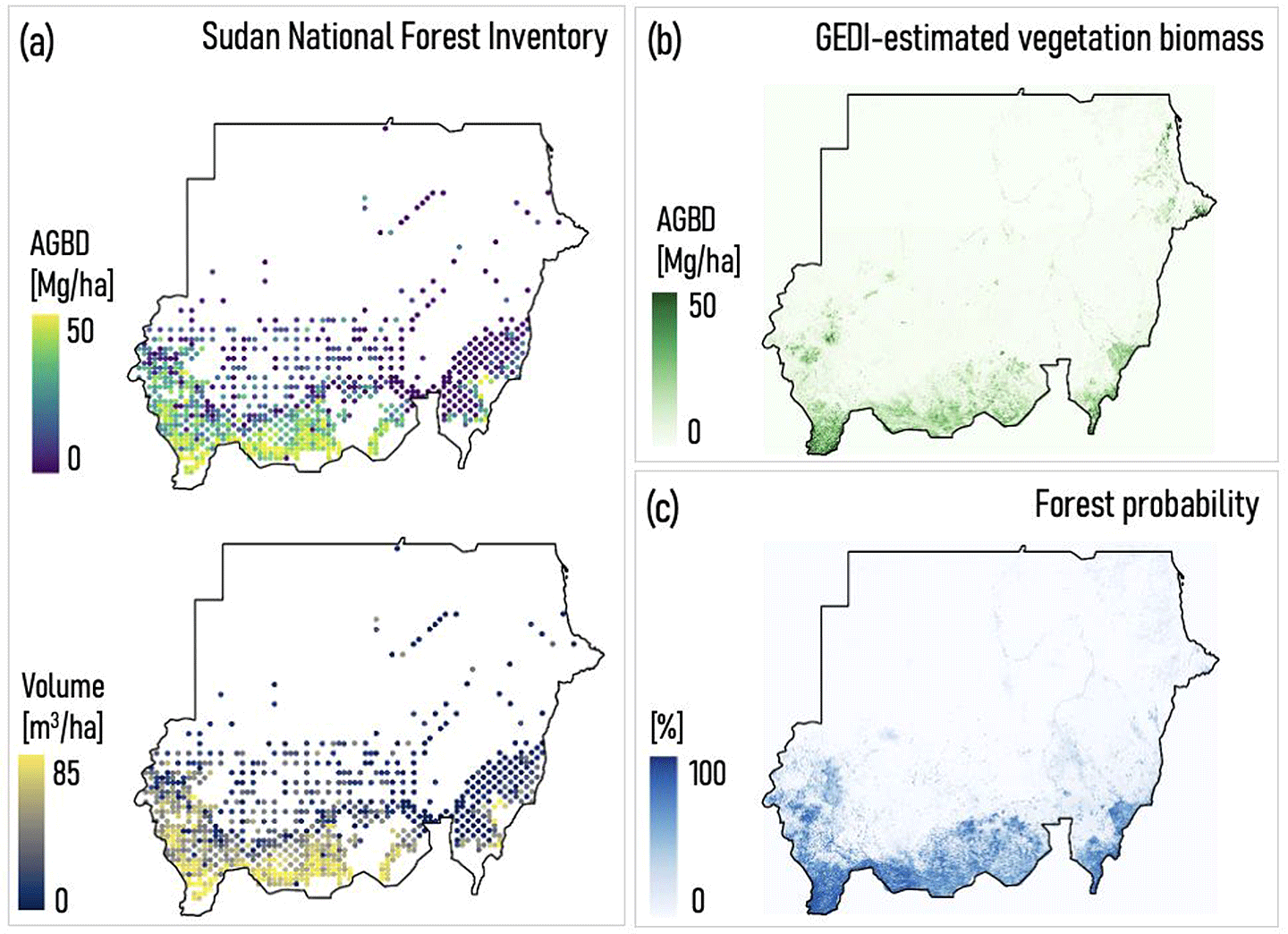
Neha Hunka [European Space Agency] shared her work using GEDI to fill gaps in the Republic of Sudan’s National Forest Inventory (NFI) in support of their Forest Reference Level (FRL) report to the United Nations Framework Convention on Climate Change (UNFCCC). Using existing NFI data for calibration, Hunka and colleagues developed a geostatistical model-based approach that interpolates between NFI sample units, allowing predictions of AGBD to be made in areas of interest – see Figure 5. (Hunka was lead author on a 2025 paper in Remote Sensing of Environment that describes a similar approach to what she described in this presentation.) UNFCCC called for the modeling approach to be transparent and replicable. Hunka emphasized the importance of access to and preparation of covariate data and called for greater capacity-building and knowledge-transfer support to help other countries adopt GEDI in their reporting. Sudan’s submission marks the first time GEDI data has been used in an FRL report.
Forests cover about 30% of Earth’s land area, store over 80% of terrestrial biomass and carbon, and absorb around 30% of anthropogenic carbon dioxide (CO₂) emissions. While storing carbon in forests can help mitigate carbon emissions, deforestation, disturbances, shifting global economy, and low confidence in forest carbon credits add risk and uncertainty to this strategy. By monitoring forest biomass, some of these risks can be alleviated. Stuart Davies [Smithsonian Institution] joined the STM to present his work on GEO-TREES, a global forest biomass reference system aiming to provide high-quality, publicly available ground data from a network of long-term forest inventory sites to improve biomass mapping on the global scale. Despite many Earth observing (EO) missions focused on forest biomass, a lack of standardized ground reference data has hindered accurate validation. GEO-TREES addresses this need, by fostering collaboration between carbon monitoring, biodiversity research, and EO communities. The project includes 100 core sites and 200 supplementary sites across tropical and temperate regions, selected to represent environmental and human-use gradients, with greater emphasis on sampling in the tropics. Each core site follows Committee on Earth Observation Satellites (CEOS) protocol and includes three types of measurements: forest plot inventory plot, terrestrial laser scanning, and ALS.
CST Presentations – Session III
Atticus Stovall [GSFC] shared first-year findings from his research on post-fire disturbance forest recovery in Mediterranean ecosystems – specifically Spain and Portugal – where the frequency and intensity of wildfires have significantly increased in the 21st century. Using Iberian Forest Inventory ALS data and GEDI footprint data, Stovall and his team showed that GEDI can be used to assess post-fire change as well as evaluate degradation patterns from increasing fire recurrence and intensity. Stovall shared examples demonstrating the use of GEDI to detect both immediate fire effects as well as recovery after disturbance, including stand-replacement and understory clearing. By overlaying disturbance maps with GEDI data, the team observed that recovery rates differ across height class. Looking forward, they plan to investigate how recovery rates vary across environmental gradients and incorporate field plot data to validate their findings.
KC Cushman [ORNL] presented on biomass calibration and validation (cal/val) activities for the NISAR mission, which launched in July 2025. She outlined the general approach to the NISAR biomass algorithm, which uses multiple observations from NISAR every year to produce annual biomass estimates at 1-ha (0.004 mi2) resolution. Cal/val efforts will use ALS to link sparse field data to larger landscapes with estimates at two or more sites in 15 different ecoregions. NISAR has supported cal/val field plot data collection in Spain, South Africa, and various National Ecological Observatory Network (NEON) sites in addition to ALS campaigns at Agua Salud, Panama, near the Los Amigos Biological Station; Peru, in the Chaco ecosystem; Argentina; and near Madrid, Spain.
Chi Chen [Rutgers University] presented his work exploring vertical acclimation of vegetation canopy structure and photosynthetic activities using GEDI data. Chen’s research aims to generate gap-free, high-temporal-frequency canopy profile data and to develop a novel framework that integrates GEDI observations into a multi-layer canopy process model. By training a random forest model with spatially discontinuous GEDI PAVD profiles and multiple features, e.g., multiband spectral reflectance, tree height, and forest type, Chen and his team successfully estimated spatially continuous PAI profiles across different canopy heights. The team cross-validated their predicted PAI with GEDI PAI, NEON PAI, and LAI measurements from the Moderate Resolution Imaging Spectroradiometer (MODIS) instrument on NASA’s Terra and Aqua platforms. These data could be used to study seasonal variation in different canopy heights. Using a Global Multilayer Canopy OPTimization (GMC-OPT) model, they also found that GEDI-informed data has the potential to identify the vertical position of “net” seasonal leaf turnover – ultimately improving the accuracy of estimates of carbon and water fluxes.
CST Presentations – Session IV
Marcos Longo [Lawrence Berkeley National Laboratory (LBNL) in transition to Instituto Nacional de Pesquisas Espacials (INPE – Brazilian National Institute for Space Research)] and his team presented a proposed project that integrates GEDI data with process-based models to assess the impact of wildfires on forest structure, recovery, and ecosystem function. As forests in the western United States face increasing wildfire risk due to drier climates, more human ignitions, and a legacy of fire suppression, changes in forest structure, composition, and function are likely to become more detectable over time. This project, under the leadership of Robinson Negron Juarez [University of California, Irvine and LBNL—PI] aims to quantify biomass changes in mixed conifer forests across California, Oregon, and Washington using both ALS and GEDI data. The team plans to use GEDI L2A and L2B data to assess immediate fire impacts on forest structure, investigate post-fire forest recovery, and establish relationships between forest structure and fire intensity/severity. This information will inform process-based models – e.g., the U.S. Department of Energy’s Functionally Assembled Terrestrial Ecosystem Simulator (FATES) – and support a better understanding of forest resilience under fire disturbance regime changes.
Ovidiu Csillik [Wake Forest University] presented work using GEDI and ALS to investigate biomass and structural changes in tropical forests. The work, conducted with Michael Keller [NASA/ Jet Propulsion Laboratory (JPL), USFS—PI], aims to use models to quantify changes in tropical forest biomass and evaluate understanding of topical forest productivity drivers. The project will use ALS data from over the Brazilian Amazon and other sites in Brazil, Gabon, French Guiana, Costa Rica, Mexico, and Borneo alongside GEDI data over pantropical regions around the globe. Csillik and Keller are currently conducting ALS–ALS and GEDI–GEDI comparisons, and are planning to estimate aboveground biomass change from ALS–ALS, ALS–GEDI, and GEDI–GEDI comparisons at both regional and pantropical scales from 2008–2026.
Zhenpeng Zuo [Boston University (BU)] presented his team’s research, led by Ranga Myneni [BU—PI], using mechanistic model-GEDI integration to map potential canopy top height (pCTH) and inform forest restoration planning. Predicting restoration potential is challenging, as empirical, deep-learning, and mechanistic methods vary in their accuracy, interpretability, and spatial detail. This project uses a mechanistic model based on water use and supply equilibrium, calibrated using GEDI canopy height metrics, to predict pCTH. The team found this approach produced robust pCTH predictions and shows that the Eastern United Sates has vast restorable areas. Future work will expand to dynamic modeling to incorporate disturbance risks and effects under different climate scenarios.
DAAC Reports
Rupesh Shrestha [ORNL DAAC] presented the status of GEDI L3 and L4 datasets at the ORNL DAAC – see Figure 6. Since the 2023 STM, three new datasets have been released: L4B (country-level summaries of aboveground biomass), L4C (footprint level waveform structural complexity index), and a GEDI-FIA (fusion dataset for training lidar models to forest attributes). In total, almost 34,000 unique users have downloaded GEDI L3 and L4A–C data 13,770,648 times, with L4A being the most popular at 13.1 million downloads. As of April 30, 2025, all GEDI footprint-level datasets from L1–L4 are available with data through MW 311 (November 2024), besides L4C. Users can look forward to a GEDI L4D Imputation Dataset later in 2025 along with the much-anticipated V3.0 GEDI data product release. All levels of GEDI data can now be accessed in one place through the NASA Earthdata Search and Data Catalog. In addition to the data products themselves, data tools and services, publications citing GEDI data and GEDI data tutorials and workshops can be found at the ORNL DAAC website. The ORNL DAAC provides data user support through the Earthdata Forum, or via their email uso@daac.ornl.gov.
Jared Beck [Land Processes Distributed Active Archive Center (LP DAAC)] presented on GEDI data products at the LP DAAC, a USGS–NASA partnership that archives and distributes lower-level GEDI products (GEDI L1B, L2A, and L2B). The LP DAAC has distributed over seven petabytes of GEDI data so far, and is now exclusively distributing GEDI data through NASA’s Earth Data Cloud. GEDI L2A is the most popular of the products in terms of terabytes of distribution. Like the ORNL DAAC, data user support also flows through the NASA Earthdata Forum. Tutorials can be found on GitHub. All levels of GEDI data can now be accessed in one place through the NASA Earthdata search and data catalog options.
GEDI Extended and Demonstrative Products II
Scott Goetz [NAU] discussed his team’s research leveraging GEDI data for biodiversity applications, emphasizing its potential to help improve species distribution models and the high value of understanding forest structure for conservation assessments. He highlighted a 2022 Nature Ecology & Evolution article showing that forests with higher structural integrity and cover reduced the extinction risk for over 16,000 threatened or declining species. Another 2023 study in Nature demonstrated how biodiversity indicators, such as habitat cover, canopy structure, and human pressures, can influence the effectiveness of protected areas. In order to have a wider variety of gridded products to work with for species distribution models, Pat Burns [NAU], Chris Hakkenberg, and Goetz developed the Gridded GEDI Vegetation Structure Metrics and Biomass Density at Multiple Resolutions product that has been released through the ORNL DAAC and Google Earth Engine along with a data descriptor paper published in a Nature Scientific Data paper – see Figure 7. Burns elaborated that, relative to fusion products, gridded GEDI products performed better when measuring structure, especially in the understory. The team is now comparing species distribution models in mainland Southeast Asia using fusion versus solely GEDI data.
Perspectives III
STM attendees concluded day two with a perspectives presentation from Marc Simard [JPL], who showcased a range of studies demonstrating diverse applications of GEDI data, opportunities for its improvement, and potential for informing future scientific research. Drawing on his own work, Simard shared examples of using GEDI data for cal/val of global Digital Elevation Measurement (DEM) and Digital Terrain Model (DTM), mapping global mangrove heights, monitoring forest growth, and analyzing hydrological processes. In more detail, he explained how he led the development of a 12-m (39-ft) spatial resolution global mangrove height product using GEDI and TanDEM-X data. Additionally, he discussed a study evaluating tree growth rates in the Laurentides Wildlife Reserve in Quebec, Canada using both GEDI and ALS. The analysis revealed an average growth rate of approximately 32 ±23 cm (12 ±9 in) per year. Finally, he presented a paper under review examining water level detection and hydrological conditions in coastal regions using GEDI alongside Ice, Cloud, and land Elevation Satellite 2 (ICESat-2) data. In closing, Simard emphasized that GEDI datasets can help identify critical data and knowledge gaps, guiding the development of new missions – e.g., the Surface Topography and Vegetation (STV) mission concept called for in the 2017 Earth Science Decadal Survey report. As described in the STV Study Team Report, the mission would focus on elevation and vertical structure to study the solid Earth, cryosphere, vegetation structure, hydrology, and coastal geomorphology.
DAY THREE
CST Presentations – Session V
Jody Vogeler [Colorado State University] opened the final CST presentation session with an overview of her research using GEDI data fusions to characterize post-fire landscapes and understand habitat refugia for the threatened Canada lynx (Lynx canadensis). This project builds on her team’s phase-I work, which produced 30-m resolution gridded GEDI fusion maps across six Western U.S. states to support habitat and diversity applications related to cavity-nesting birds, small mammals, and carnivore–prey relationships. The team is now focusing on validating and improving their GEDI fusion products within post-disturbance landscapes, specifically post-fire. Using this data, Vogeler and her team aim to better understand how post-fire structural information from GEDI improves their ability to understand lynx behavior–habitat relationships across early post-fire landscapes. This information can help evaluate what structural attributes determine post-fire refugia patch use by lynx. Next steps for this work include integrating GEDI V3.0 data upon its release, identifying new GEDI metrics and derived products, and incorporating lynx radio-collar data into their analyses. Vogeler also presented her work as co-PI on a NASA Ecological Conservation Project in Greater Kruger National Park, South Africa, where she and her team are developing spatial monitoring tools to support management and conservation planning.
Jingfeng Xiao [University of New Hampshire] provided updates on his team’s research using GEDI data to understand how structural diversity influences productivity and carbon uptake of forests in the United States. The project aims to assess GEDI’s ability to quantify structural diversity, investigate how that diversity regulates forest productivity and carbon uptake, and understand its role in resilience of forest productivity to drought. When analyzing the relationships of gross primary production (GPP) and evapotranspiration (ET) with canopy structure metrics, the team found that increased canopy structure complexity positively affected GPP and ET and reduced their seasonal variability. They also found that greater canopy complexity improved ecosystem resistance to drought. As part of the project, the team also produced 1-km (0.62-mi) resolution gridded maps of GPP and ET.
Lei Ma [UMD] delivered the final presentation of the STM, presenting his project that integrates GEDI observations with mechanistic ecosystem modeling to quantify forest regrowth in a changing climate. Ma used GEDI data and the Ecosystem Demography (ED) model in his research and found that height and aboveground biomass (AGB) regrowth rates can be derived by combining GEDI and land-use and land-cover change data. Ma found that regrowth rates derived from different inputs are generally consistent at large scales but variable at fine scales. Notably, regrowth rates showed temporal dependence, decreasing by roughly 50% every decade. Lastly, Ma and his team found that spatial variation in height and AGB regrowth rates can be partially explained by environmental conditions and disturbance frequency.
Conclusion
The 2025 GEDI STM was especially exciting, as it came on the cusp of post-storage data being processed and released as V2.1. Additionally, it marked the first time the new CST cohort presented on their research and joined breakout sessions with the wider GEDI team. The meeting highlighted the mission’s ongoing success and scientific value following hibernation on the ISS. Looking ahead, data users can anticipate the V3.0 product release later in 2025.
Talia Schwelling
University of Maryland College Park
tschwell@umd.edu
Powered by WPeMatico
Get The Details…