Tech From NASA’s Hurricane-hunting TROPICS Flies on Commercial Satellites

Tech From NASA’s Hurricane-hunting TROPICS Flies on Commercial Satellites

NASA science and American industry have worked hand-in-hand for more than 60 years, transforming novel technologies created with NASA research into commercial products like cochlear implants, memory-foam mattresses, and more. Now, a NASA-funded device for probing the interior of storm systems has been made a key component of commercial weather satellites.

The novel atmospheric sounder was originally developed for NASA’s TROPICS (short for Time-Resolved Observations of Precipitation structure and storm Intensity with a Constellation of SmallSats), which launched in 2023. Boston-based weather technology company Tomorrow.io integrated the same instrument design into some of its satellites.
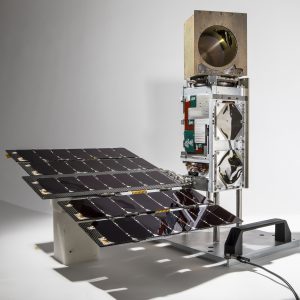
NASA's TROPICs pathfinder satellite is shown in flight configuration. Rocket Lab is preparing to launch four TROPICS CubeSats from Launch Complex 1 in Mahia, New Zealand for the agency.
NASA’s TROPICS instrument. TROPICS pioneered a novel, compact atmospheric sound now flying aboard a fleet of commercial small satellites created by the weather technology company Tomorrow.io.
Credit: Blue Canyon Technologies

Atmospheric sounders allow researchers to gather data describing humidity, temperature, and wind speed — important factors for weather forecasting and atmospheric analysis. From low-Earth orbit, these devices help make air travel safer, shipping more efficient, and severe weather warnings more reliable.

Novel tools for Observing Storm Systems

In the early 2000s, meteorologists and atmospheric chemists were eager to find a new science tool that could peer deep inside storm systems and do so multiple times a day. At the same time, CubeSat constellations (groupings of satellites each no larger than a shoebox) were emerging as promising, low-cost platforms for increasing the frequency with which individual sensors could pass over fast-changing storms, which improves the accuracy of weather models.

The challenge was to create an instrument small enough to fit aboard a satellite the size of a toaster, yet powerful enough to observe the innermost mechanisms of storm development. Preparing these technologies required years of careful development that was primarily supported by NASA’s Earth Science Division.

William Blackwell and his team at MIT Lincoln Laboratory in Cambridge, Massachusetts, accepted this challenge and set out to miniaturize vital components of atmospheric sounders. “These were instruments the size of a washing machine, flying on platforms the size of a school bus,” said Blackwell, the principal investigator for TROPICS. “How in the world could we shrink them down to the size of a coffee mug?”

With a 2010 award from NASA’s Earth Science Technology Office (ESTO), Blackwell’s team created an ultra-compact microwave receiver, a component that can sense the microwave radiation within the interior of storms.

The Lincoln Lab receiver weighed about a pound and took up less space than a hockey puck. This innovation paved the way for a complete atmospheric sounder instrument small enough to fly aboard a CubeSat. “The hardest part was figuring out how to make a compact back-end to this radiometer,” Blackwell said. “So without ESTO, this would not have happened. That initial grant was critical.”

In 2023, that atmospheric sounder was sent into space aboard four TROPICS CubeSats, which have been collecting torrents of data on the interior of severe storms around the world.

Transition to Industry

By the time TROPICS launched, Tomorrow.io developers knew they wanted Blackwell’s microwave receiver technology aboard their own fleet of commercial weather satellites. “We looked at two or three different options, and TROPICS was the most capable instrument of those we looked at,” said Joe Munchak, a senior atmospheric data scientist at Tomorrow.io.

In 2022, the company worked with Blackwell to adapt his team’s design into a CubeSat platform about twice the size of the one used for TROPICS. A bigger platform, Blackwell explained, meant they could bolster the sensor’s capabilities.

“When we first started conceptualizing this, the 3-unit CubeSat was the only game in town. Now we’re using a 6-unit CubeSat, so we have room for onboard calibration,” which improves the accuracy and reliability of gathered data, Blackwell said.

Tomorrow.io’s first atmospheric sounders, Tomorrow-S1 and Tomorrow-S2, launched in 2024. By the end of 2025, the company plans to have a full constellation of atmospheric sounders in orbit. The company also has two radar instruments that were launched in 2023 and were influenced by NASA’s RainCube instrument — the first CubeSat equipped with an active precipitation radar.

More CubeSats leads to more accurate weather data because there are more opportunities each day — revisits — to collect data. “With a fleet size of 18, we can easily get our revisit rate down to under an hour, maybe even 40 to 45 minutes in most places. It has a huge impact on short-term forecasts,” Munchak said.

Having access to an atmospheric sounder that had already flown in space and had more than 10 years of testing was extremely useful as Tomorrow.io planned its fleet. “It would not have been possible to do this nearly as quickly or nearly as affordably had NASA not paved the way,” said Jennifer Splaingard, Tomorrow.io’s senior vice president for space and sensors.

A Cycle of Innovation

The relationship between NASA and industry is symbiotic. NASA and its grantees can drive innovation and test new tools, equipping American businesses with novel technologies they may otherwise be unable to develop on their own. In exchange, NASA gains access to low-cost data sets that can supplement information gathered through its larger science missions.

Tomorrow.io was among eight companies selected by NASA’s Commercial SmallSat Data Acquisition (CSDA) program in September 2024 to equip NASA with data that will help improve weather forecasting models. “It really is a success story of technology transfer. It’s that sweet spot, where the government partners with tech companies to really take an idea, a proven concept, and run with it,” Splaingard said.

By Gage Taylor

NASA’s Goddard Space Flight Center, Greenbelt, Md.

Powered by WPeMatico

Get The Details…
Katy Mersmann

NASA Astronaut Megan McArthur Retires

NASA Astronaut Megan McArthur Retires

Astronaut working on the International Space Station
NASA astronaut and Expedition 65 Flight Engineer Megan McArthur removes Kidney Cells-02 hardware inside the Space Automated Bioproduct Laboratory and swaps media inside the Microgravity Science Glovebox. The human research study seeks to improve treatments for kidney stones and osteoporosis

NASA astronaut Megan McArthur has retired, concluding a career spanning more than two decades. A veteran of two spaceflights, McArthur logged 213 days in space, including being the first woman to pilot a SpaceX Dragon spacecraft and the last person to “touch” the Hubble Space Telescope with the space shuttle’s robotic arm.

McArthur launched as pilot of NASA’s SpaceX Crew-2 mission in April 2021, marking her second spaceflight and her first long-duration stay aboard the International Space Station. During the 200-day mission, she served as a flight engineer for Expeditions 65/66, conducting a wide array of scientific experiments in human health, materials sciences, and robotics to advance exploration of the Moon under Artemis and prepare to send American astronauts to Mars.

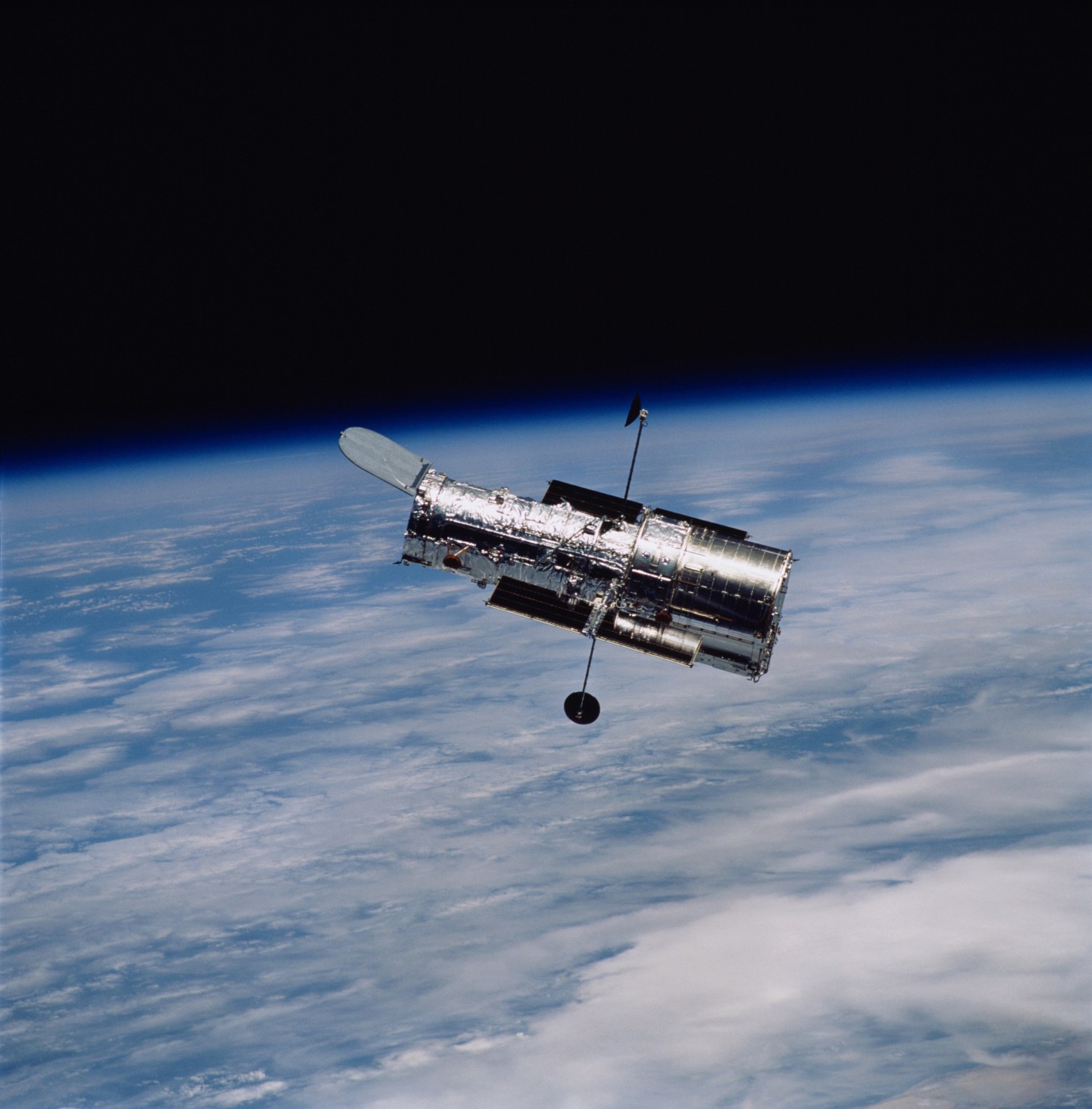
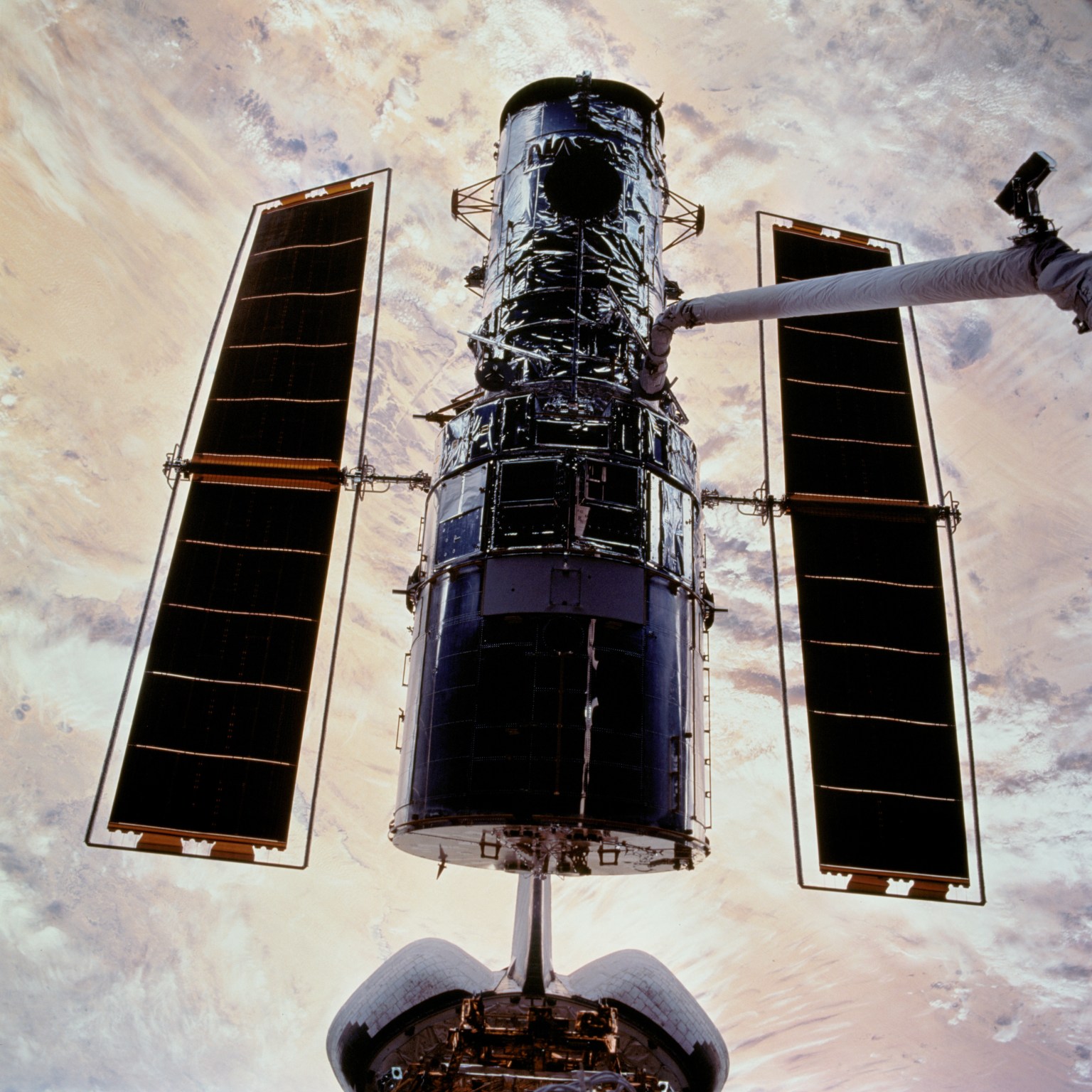
Her first spaceflight was STS-125 in 2009, aboard the space shuttle Atlantis, the fifth and final servicing mission to Hubble. As a mission specialist, she was responsible for capturing the telescope with the robotic arm, as well as supporting five spacewalks to update and repair Hubble after its first 19 years in space. She also played a key role in supporting shuttle operations during launch, rendezvous with the telescope, and landing.

“Megan’s thoughtful leadership, operational excellence, and deep commitment to science and exploration have made a lasting impact,” said Steve Koerner, acting director of NASA’s Johnson Space Center in Houston. “Her contributions have helped shape the future of human space exploration, and we are incredibly grateful for her service.”

In addition to her flight experience, McArthur has served in various technical and leadership roles within NASA. In 2019, she became the deputy division chief of the Astronaut Office, supporting astronaut training, development, and ongoing spaceflight operations. She also served as the assistant director of flight operations for the International Space Station Program starting in 2017.

Since 2022, McArthur has served as the chief science officer at Space Center Houston, NASA Johnson’s official visitor center. Continuing in this role, she actively promotes public engagement with space exploration themes, aiming to increase understanding of the benefits to humanity and enhance science literacy.

“Megan brought a unique combination of technical skill and compassion to everything she did,” said Joe Acaba, chief of the Astronaut Office at NASA Johnson. “Whether in space or on the ground, she embodied the best of what it means to be an astronaut and a teammate. Her contributions will be felt by the next generation of explorers she helped train.”

McArthur was born in Honolulu and raised as a “Navy kid” in many different locations worldwide. She earned a Bachelor of Science in aerospace engineering from the University of California, Los Angeles, and a doctorate in oceanography from the Scripps Institution of Oceanography at the University of California, San Diego. Before being selected as an astronaut in 2000, she conducted oceanographic research focusing on underwater acoustics, which involved shipboard work and extensive scuba diving.

McArthur is married to former NASA astronaut Robert Behnken, who also flew aboard the Dragon Endeavour spacecraft during the agency’s SpaceX Demo-2 mission in 2020.

“It was an incredible privilege to serve as a NASA astronaut, working with scientists from around the world on cutting-edge research that continues to have a lasting impact here on Earth and prepares humanity for future exploration at the Moon and Mars,” said McArthur. “From NASA’s Hubble Space Telescope to the International Space Station, our research lab in low Earth orbit, humanity has developed incredible tools that help us answer important scientific questions, solve complex engineering challenges, and gain a deeper understanding of our place in the universe. Seeing our beautiful planet from space makes it so clear how fragile and precious our home is, and how vital it is that we protect it. I am grateful I had the opportunity to contribute to this work, and I’m excited to watch our brilliant engineers and scientists at NASA conquer new challenges and pursue further scientific discoveries for the benefit of all.”

To learn more about NASA’s astronauts and their contributions to space exploration, visit:

https://www.nasa.gov/astronauts

-end-

Shaneequa Vereen
Johnson Space Center, Houston
281-483-5111
shaneequa.y.vereen@nasa.gov

Powered by WPeMatico

Get The Details…
Wendy K. Avedisian

Landsat 9 Sees Buccaneer Archipelago

Landsat 9 Sees Buccaneer Archipelago

A satellite image shows brown-red, jagged land in the bottom-right corner jutting into blue-green water. Numerous islands dot the rest of the scene. The water appears to swirl around the islands. Some of the coastal areas are dotted with green.
In the sparsely populated Kimberley region of Western Australia, jagged landforms reach like fingers into the turquoise-blue ocean waters. Along the coastline north of Derby, they used to reach even farther. But rising sea levels submerged part of the coastal landscape, giving rise to hundreds of islands and low-lying reefs that compose the Buccaneer Archipelago.
NASA/Michala Garrison; U.S. Geological Survey

The Operational Land Imager on Landsat 9 captured this image of Buccaneer Archipelago on June 11, 2025. The scene encapsulates the striking interactions between land and water in the area where King Sound opens to the Indian Ocean.

The powerful tidal currents stir up sediment in shallow areas, producing the beautiful turquoise swirls visible in this image. This power, however, can be hazardous to seafarers and divers as water rips through the archipelago’s constricted passages. One infamous place of turbulence, known as “Hell’s Gate,” lies in the passage between Gerald Peninsula and Muddle Islands.

Learn more about this archipelago in Western Australia.

Text credit: Kathryn Hansen

Image credit: NASA/Michala Garrison; U.S. Geological Survey

Powered by WPeMatico

Get The Details…
Monika Luabeya

Hubble Homes in on Galaxy’s Star Formation

Hubble Homes in on Galaxy’s Star Formation

2 min read

Hubble Homes in on Galaxy’s Star Formation

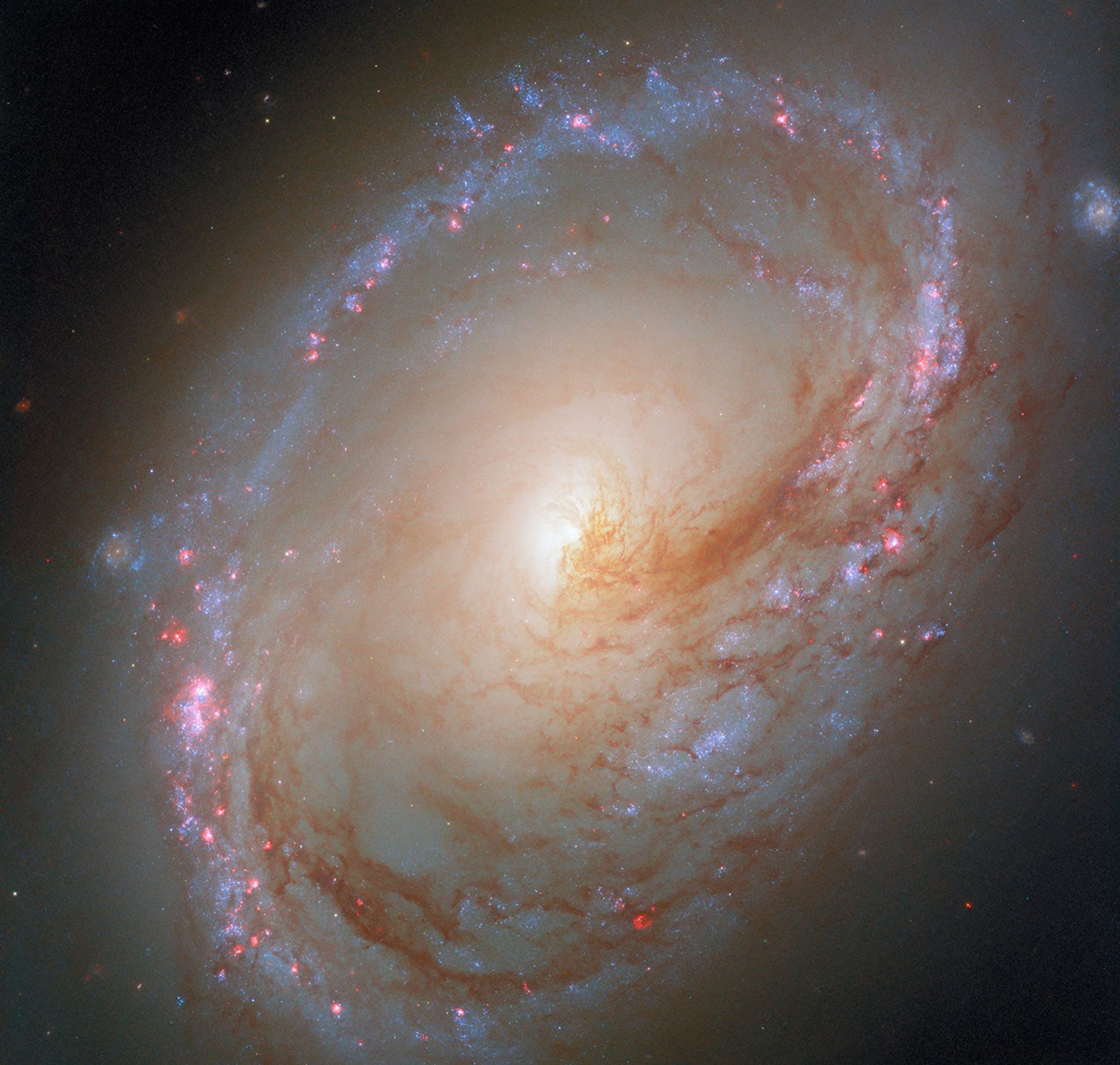
A spiral galaxy, tilted nearly face-on to us, with a slightly unusual shape. Its spiral arms form an oval-shaped ring around the galaxy’s disk, filled with blue light from stars, as well as pink glowing gas bubbles where new stars are forming. Threads of dark red dust swirl around the brightly glowing core, blocking some of its light. The dust lanes extend into and follow the spiral arms.
This NASA/ESA Hubble Space Telescope image features the asymmetric spiral galaxy Messier 96.
ESA/Hubble & NASA, F. Belfiore, D. Calzetti

This NASA/ESA Hubble Space Telescope image features a galaxy whose asymmetric appearance may be the result of a galactic tug of war. Located 35 million light-years away in the constellation Leo, the spiral galaxy Messier 96 is the brightest of the galaxies in its group. The gravitational pull of its galactic neighbors may be responsible for Messier 96’s uneven distribution of gas and dust, asymmetric spiral arms, and off-center galactic core.

This asymmetric appearance is on full display in the new Hubble image that incorporates data from observations made in ultraviolet, near infrared, and visible/optical light. Earlier Hubble images of Messier 96 were released in 2015 and 2018. Each successive image added new data, building up a beautiful and scientifically valuable view of the galaxy.

The 2015 image combined two wavelengths of optical light with one near infrared wavelength. The optical light revealed the galaxy’s uneven form of dust and gas spread asymmetrically throughout its weak spiral arms and its off-center core, while the infrared light revealed the heat of stars forming in clouds shaded pink in the image.

The 2018 image added two more optical wavelengths of light along with one wavelength of ultraviolet light that pinpointed areas where high-energy, young stars are forming.

This latest version offers us a new perspective on Messier 96’s star formation. It includes the addition of light that reveals regions of ionized hydrogen (H-alpha) and nitrogen (NII). This data helps astronomers determine the environment within the galaxy and the conditions in which stars are forming. The ionized hydrogen traces ongoing star formation, revealing regions where hot, young stars are ionizing the gas. The ionized nitrogen helps astronomers determine the rate of star formation and the properties of gas between stars, while the combination of the two ionized gasses helps researchers determine if the galaxy is a starburst galaxy or one with an active galactic nucleus.

The bubbles of pink gas in this image surround hot, young, massive stars, illuminating a ring of star formation in the galaxy’s outskirts. These young stars are still embedded within the clouds of gas from which they were born. Astronomers will use the new data in this image to study how stars are form within giant dusty gas clouds, how dust filters starlight, and how stars affect their environments.

Explore More:

Media Contact:

Claire Andreoli (claire.andreoli@nasa.gov)
NASA’s Goddard Space Flight Center, Greenbelt, MD

Powered by WPeMatico

Get The Details…

NASA Awards Spaceflight Operations, Systems Organization Contract

NASA Awards Spaceflight Operations, Systems Organization Contract

The letters NASA on a blue circle with red and white detail, all surrounded by a black background
Credit: NASA

NASA has awarded ASCEND Aerospace & Technology of Cape Canaveral, Florida, the Contract for Organizing Spaceflight Mission Operations and Systems (COSMOS), to provide services at the agency’s Johnson Space Center in Houston.

The COSMOS is a single award, indefinite-delivery/indefinite-quantity contract valued at $1.8 billion that begins its five-year base period no earlier than Dec. 1, with two option periods that could extend until 2034. The Aerodyne Company of Cape Canaveral, Florida, and Jacobs Technology Company of Tullahoma, Tennessee, are joint venture partners.

Work performed under the contract will support NASA’s Flight Operation Directorate including the Orion and Space Launch System Programs, the International Space Station, Commercial Crew Program, and the Artemis campaign. Services include Mission Control Center systems, training systems, mockup environments, and training for astronauts, instructors, and flight controllers.

For more information about NASA and agency programs, visit:

https://www.nasa.gov

-end-

Tiernan Doyle
Headquarters, Washington
202-358-1600
tiernan.doyle@nasa.gov

Chelsey Ballarte
Johnson Space Center, Houston
281-483-5111
chelsey.n.ballarte@nasa.gov

Powered by WPeMatico

Get The Details…
Tiernan P. Doyle