NASA Discovery Reveals Complex Water Systems on Early Mars

NASA Discovery Reveals Complex Water Systems on Early Mars

5 min read

Preparations for Next Moonwalk Simulations Underway (and Underwater)
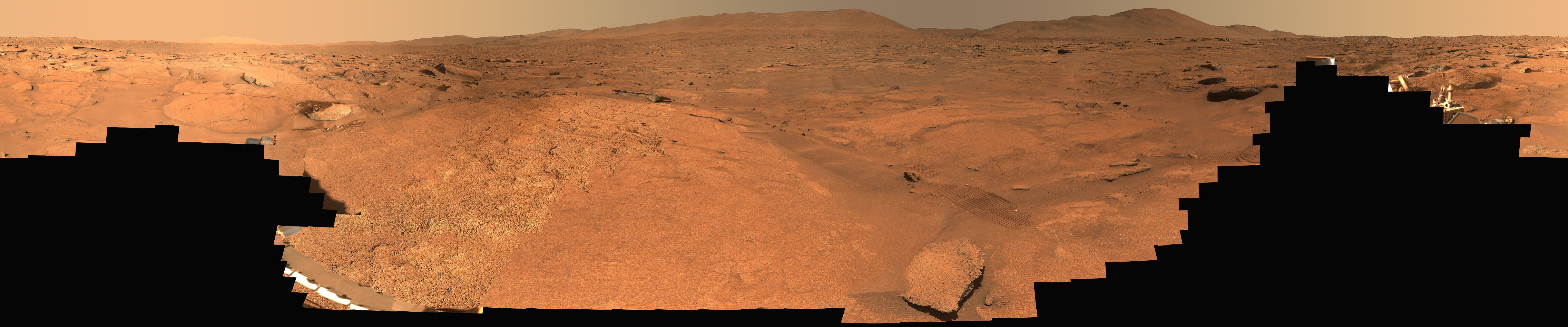
A panoramic view of a barren, reddish-orange Martian landscape stretching toward distant hills, partially obscured by the jagged black silhouettes of a rover in the foreground.
The Perseverance rover captured the data used in this panorama of the “Margin Unit,” a geologic area that hugs the inner edge of Jezero Crater’s rim, between Oct. 8 and Oct. 16, 2023.
NASA/JPL-Caltech/MSSS

When NASA’s Perseverance rover reached the inner edge of Mars’ Jezero Crater in September 2023, mission scientists were surprised by what they found. Called the “Margin Unit,” the geologic area stretches along the shoreline of an ancient Martian lake, so they expected sedimentary rocks, which would have formed as layers of sand piled on top of each other over millennia. Composed of clay and silt, sedimentary rocks on Earth are good at preserving past microbial life. The scientists were especially intrigued by strong signals of carbonate minerals detected by Mars orbiters. On Earth, carbonates frequently form in shallow ocean and lake environments capable of supporting life.  

Instead, the rover team found igneous rock, which can form deep underground from magma or from volcanic activity at the surface. Igneous rocks are excellent record-keepers, particularly because mineral crystals within them preserve details about the precise moment they formed. In this case, they preserved an astonishingly complex record of water activity on early Mars. In fact, these rocks showed signs of having interacted with water on at least three separate occasions, with each encounter further altering their chemistry and appearance. The findings were published Monday in the journal Communications Earth & Environment. 

The instrument behind the findings is SuperCam, which perches on the rover’s mast and determines the mineralogy of geologic features based on the light they reflect. When the science team spots an intriguing rock, they can send commands for SuperCam to fire its laser up to 21 feet (6.5 meters) away. The spectrum of the resulting plasma reveals the target’s chemistry. Perseverance has analyzed more than 185 bedrock targets across the unit this way. 

“Before we arrived at the Margin Unit, the main hypothesis — derived from orbital observations — was that the carbonate seen from orbit formed from interaction with the lake that existed in Jezero Crater,” said Candice Bedford, a research scientist at Purdue University in West Lafayette, Indiana, and the study’s lead author. “But now we know that this location became a sort of crossroads for aqueous systems. The Margin Unit findings are important because Jezero Crater sits inside one of the largest exposures of carbonate on Mars, so what we learn here reaches well beyond this crater.” 

Slow-cooling underground 

Perseverance explored the Margin Unit across approximately 870 feet (265 meters) of elevation. At higher elevations, it found rock that was coarse-grained and crystalline — hallmarks of the mineral olivine — with almost no sign that water had ever touched it. Made of magnesium and iron, the area’s olivine unit formed in a body of magma deep underground, cooling slowly enough for its grains to grow large, and reached the surface only after the ground above it eroded away. Lower in the unit, on the lakebed, the rock looks transformed, as the olivine grains were fractured with silica between them. 

Carbonate and silica minerals are an important signpost in the search for ancient life. When water interacts with olivine on Earth, the reaction can release hydrogen, which can be a food source for some microbes, and it leaves behind carbonate and silica, two minerals that lock in traces of the past existence of those microbes. 

Multiple episodes 

The Perseverance team can determine the sequence of the Margin Unit’s interactions with water, but not their age. On the first occasion water reached the rocks of the Margin Unit, carbon-dioxide-rich groundwater reacted with olivine, resulting in ridges of carbonate that run through the fractures in bedrock at low elevations. Today, these carbonate-filled fractures are left standing as the softer rock around them wears away.  

The second time water reached the rocks may have been related to the lake that once existed in the crater. 

“Some of the Margin Unit rocks also contain silica,” said Eleni Ravanis, a planetary scientist at the University of Hawaii at Manoa and a coauthor of the study. “Turning olivine into carbonate can leave silica behind, and we see more of that silica in rocks that sat below the water line.” 

Last came a water event that generated mineral veins at one location in the eastern part of the Margin Unit, about 10 inches (25 centimeters) thick, creating minerals like calcium sulfate and fluorite. Finding fluorite is an important clue because it typically forms when hot water circulates through volcanic rocks, revealing that this area experienced a later, heated underground-water event. 

“If there is one thing I have learned after 10 years working with Mars rovers, it is that Mars constantly throws surprises at you,” said Bedford. “It is very rare that things are as we expect them to be from orbital data. I hope this work helps reshape how scientists view the history of water in Jezero Crater and across Mars. Ultimately, I hope it helps planetary scientists reconstruct the changing climate and habitability of early Mars.” 

More about Perseverance 

A key objective of Perseverance’s mission on Mars is astrobiology, including the search for signs of ancient microbial life. The rover characterizes the planet’s geology and past climate and collects and stores Martian rock and regolith. 

Managed for NASA by Caltech, Jet Propulsion Laboratory in Southern California built and manages operations of the Perseverance rover on behalf of the agency’s Science Mission Directorate as part of NASA’s Mars Exploration Program portfolio. SuperCam is co-led by Purdue University in Indiana, Los Alamos National Laboratory in New Mexico, and IRAP (Research Institute in Astrophysics and Planetology) and CNES (Centre National d’Etudes Spatiales) in Toulouse, France. 

For more about Perseverance: 

https://science.nasa.gov/mission/mars-2020-perseverance

-end-

2026-062

Share

Details

Last Updated

Sep 21, 2026

Powered by WPeMatico

Get The Details…
Stephen Carney

Johnson Space Center Sparks Curiosity at Houston’s 33rd Annual Japan Festival  

Johnson Space Center Sparks Curiosity at Houston’s 33rd Annual Japan Festival  

2 Min Read

Johnson Space Center Sparks Curiosity at Houston’s 33rd Annual Japan Festival  

On Sept. 12-13, NASA’s Johnson Space Center employees brought the excitement and wonder of space exploration to Houston’s Japan Festival at Hermann Park. 

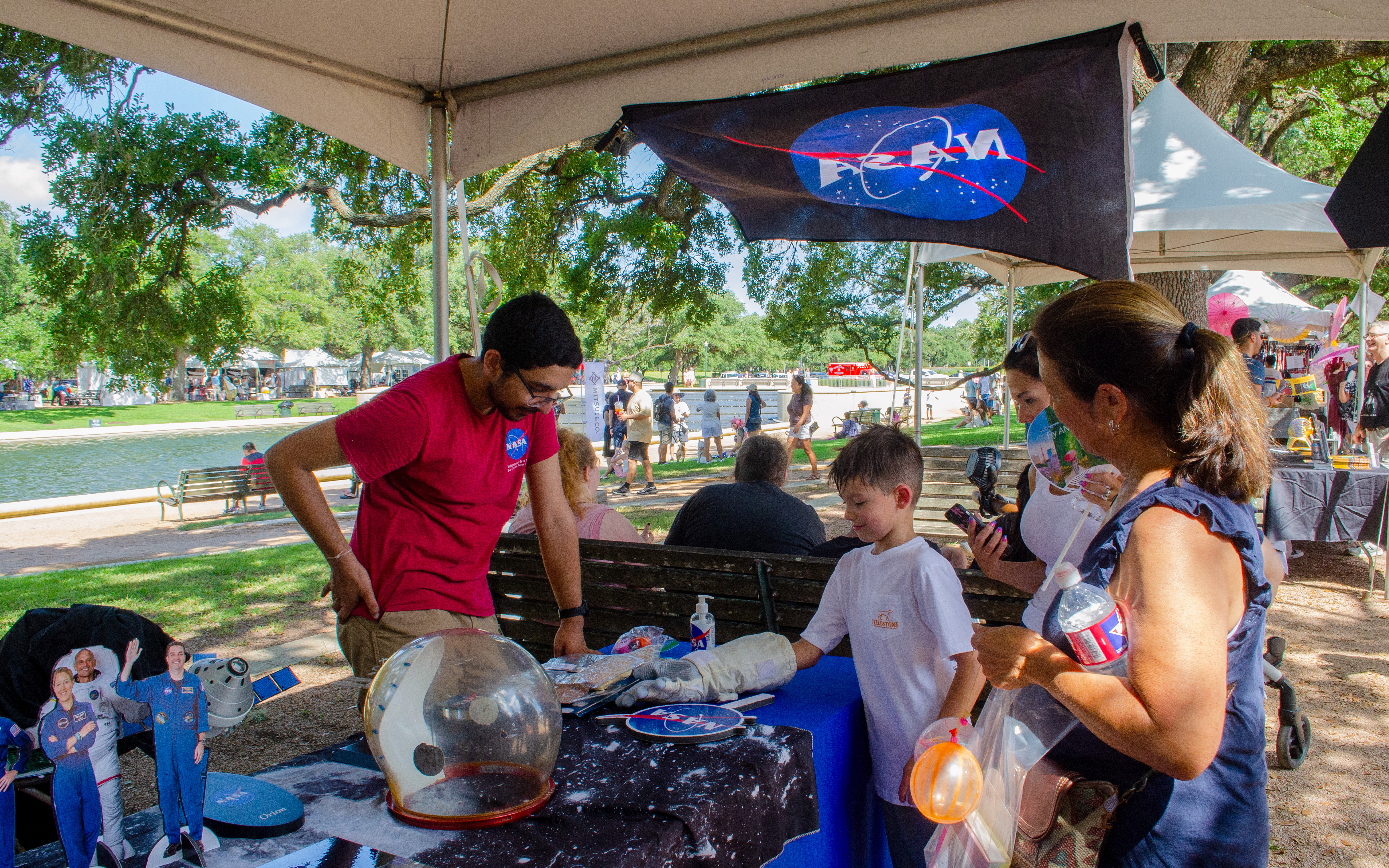
Attendees at the Japan Festival in Houston’s Hermann Park try on real astronaut gloves and a helmet while learning about NASA missions on Sept. 12, 2026.
NASA/Hailey Quist

For more than 30 years, the festival has immersed guests in traditional Japanese culture through food, dance, martial arts, music, and more, Johnson has supported the festival as an exhibitor for the past four years.

Johnson’s booth showcased the upcoming Artemis III mission and its crew, as well as NASA’s plans for the Moon Base. Display included models of NASA’s Orion spacecraft and the International Space Station, along with interactive exhibits featuring space food and a real astronaut glove and helmet for attendees to try on.

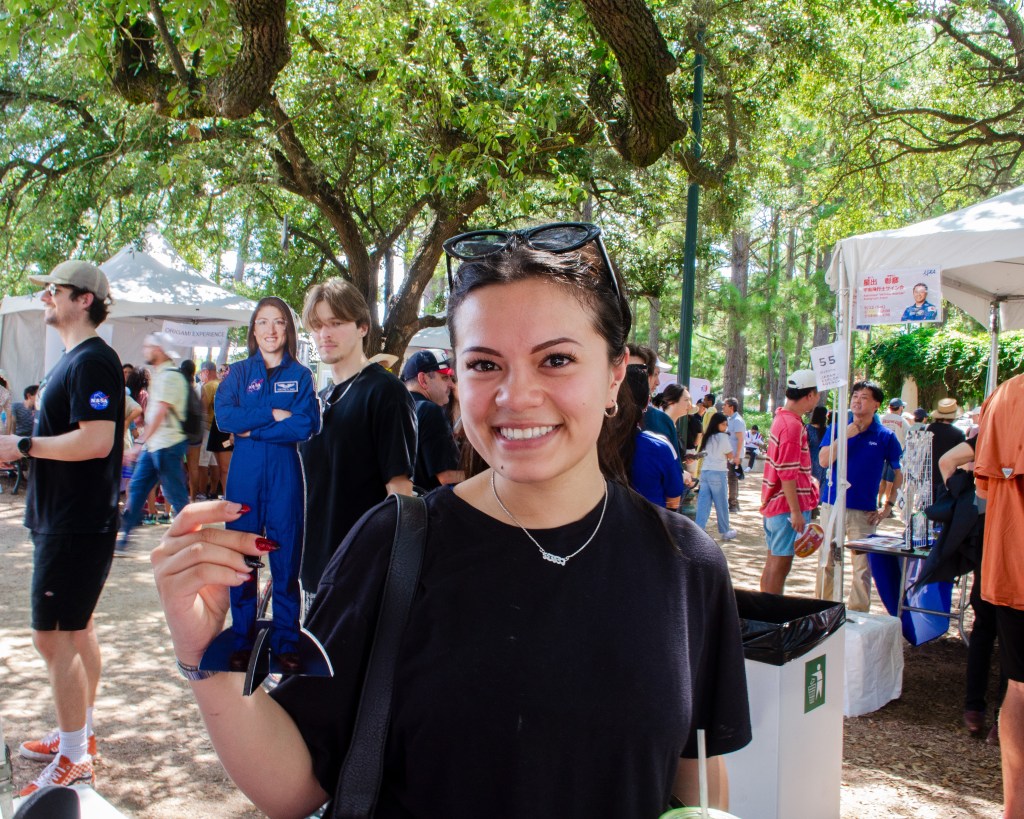
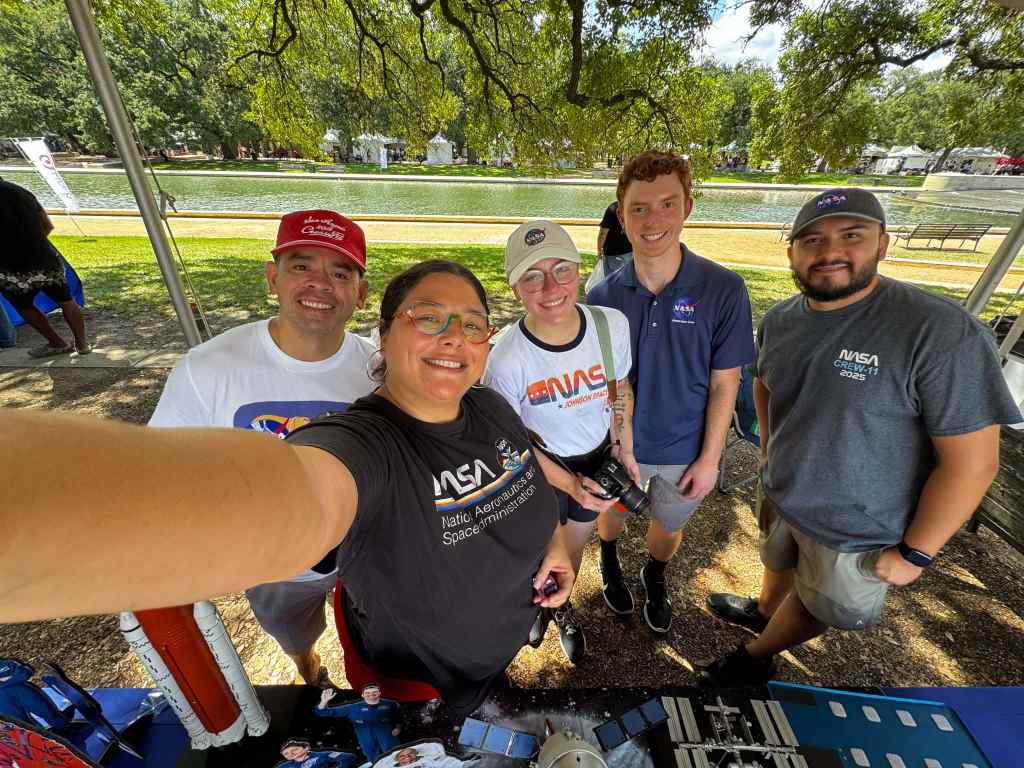
NASA’s Johnson Space Center volunteers share information about NASA missions with festival attendees.
NASA/Hailey Quist

Johnson employees interacted with over 3,000 festivalgoers, informing them about the agency’s current initiatives, handing out NASA stickers and pins, and inspiring the next generation of space explorers. According to Johnson employees, the highlight of the weekend was seeing the joy and excitement on the faces of children and adults as they explored the exhibits.

“It was amazing to see students as early as high school so passionate about NASA and asking questions on how to prepare for a NASA career,” said Brendan King, software engineer for Johnson’s Flight Dynamics Division.

Next to Johnson’s booth, JAXA (Japanese Aerospace Exploration Agency), displayed a model of the HTV-X1 cargo spacecraft, space food, and images of JAXA’s pressurized rover, which could support future crewed and uncrewed exploration on the Moon. JAXA astronaut Akihiko Hoshide also signed autographs and posed for pictures with festival attendees.

JAXA (Japan Aerospace Exploration Agency) astronaut Akihiko Hoshide signs autographs and poses for pictures with festivalgoers.
NASA/Hailey Quist

The proximity of the booths was no mistake, reflecting the long-standing partnership between NASA and JAXA. From the addition of the Kibo laboratory aboard the space station to Japan’s signing of the Artemis Accords and development of lunar surface hardware. NASA and JAXA’s commitment to innovation and international collaboration continues to advance exploration.

As the hub of human spaceflight, Johnson engages with the public through events like Japan Festival. These events give the Johnson community opportunities to share NASA’s history, ongoing work, and future missions. They also remind Houstonians that Giant Leaps Start Here, right in the heart of Houston.

About the Author

Johnson Space Center Office of Communications

Share

Details

Last Updated

Sep 21, 2026

Powered by WPeMatico

Get The Details…
Sumer Loggins

APOD: 2026 September 21 – Cocoon Nebula Wide Field

APOD: 2026 September 21 – Cocoon Nebula Wide Field

APOD

Astronomy Picture of the Day

Discover the cosmos! Each day a different image or photograph of our fascinating universe is featured, along with a brief explanation written by a professional astronomer.

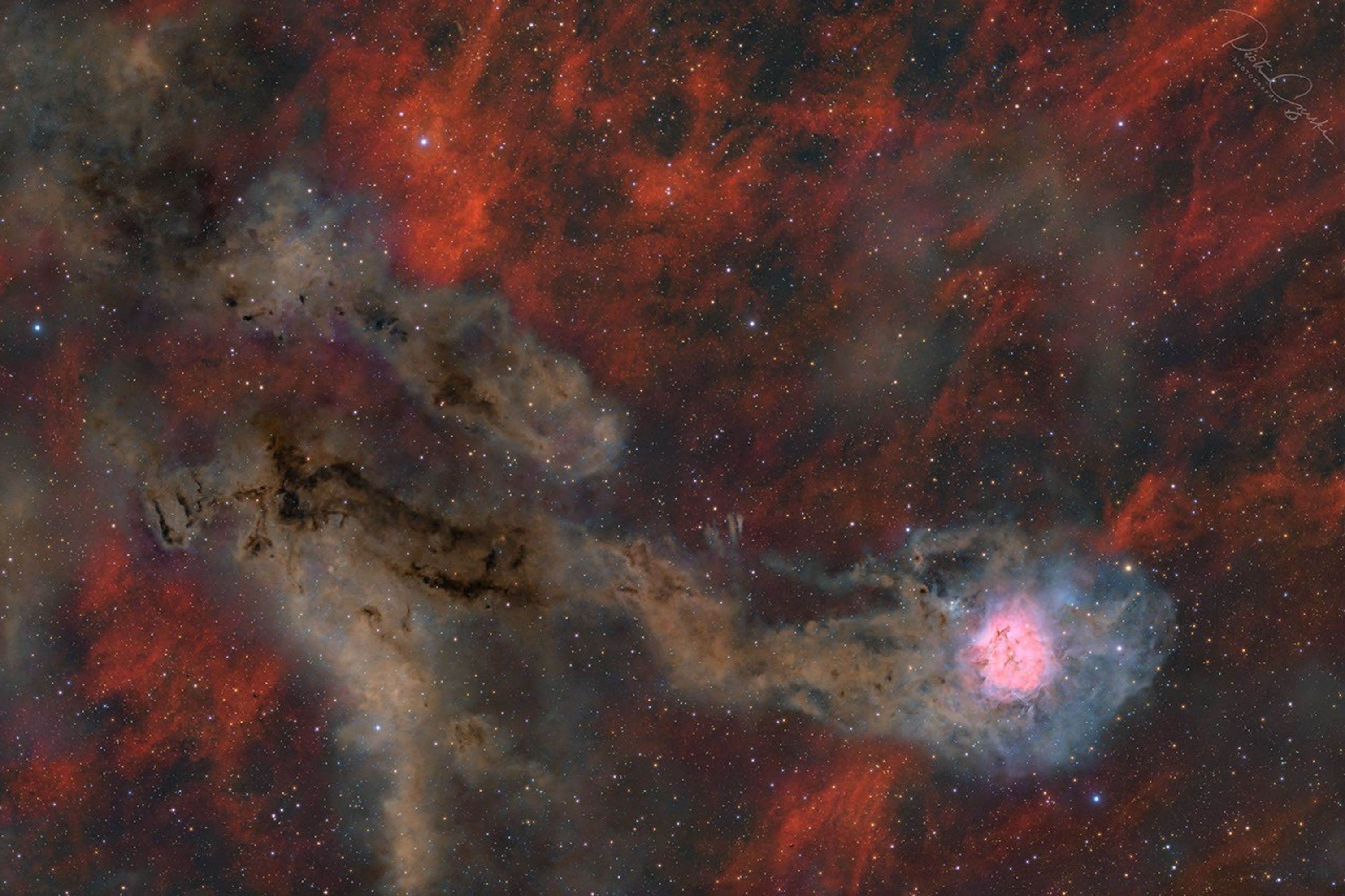
A starfield is shown against a patchy red-glowing background. Two irregular brown trails occur, the lower of which culminates in a bright pink and white region.

Cocoon Nebula Wide Field

Explanation: When does a nebula look like a comet? In this crowded starfield covering over two degrees within the high-flying constellation of the Swan (Cygnus), the eye is drawn to the Cocoon Nebula. A compact star forming region, the cosmic Cocoon punctuates a nebula bright in emission and reflection on the lower right, with a long trail of interstellar dust clouds to the left, making the entire complex appear a bit like a comet. Cataloged as IC 5146, the central bright head of the nebula spans about 10 light years, while the dark dusty tail spans nearly 100 light years. Both are located about 2,500 light years away. A bright star near the colorful nebula’s center likely supplies power and helps clear out a cavity. The long dusty filaments of the tail, although dark in this visible light image, hide stars in the process of formation. The featured image was captured in July from Death Valley, California, USA.

APOD’s main NASA site is moving: From apod.nasa.gov to science.nasa.gov/apod
Tomorrow’s picture: triple eclipse

Date: September 21, 2026
Credit & Copyright: Piotr Czerski
Authors & editors: Robert Nemiroff, Jerry Bonnell, Cecilia Chirenti, Keighley Rockcliffe
A service of: ASD at NASA / GSFC,
NASA Science Activation & Michigan Tech. U.

Powered by WPeMatico

Get The Details…

APOD: 2026 September 20 – Analemma over the Callanish Stones

APOD: 2026 September 20 – Analemma over the Callanish Stones

APOD

Astronomy Picture of the Day

Discover the cosmos! Each day a different image or photograph of our fascinating universe is featured, along with a brief explanation written by a professional astronomer.

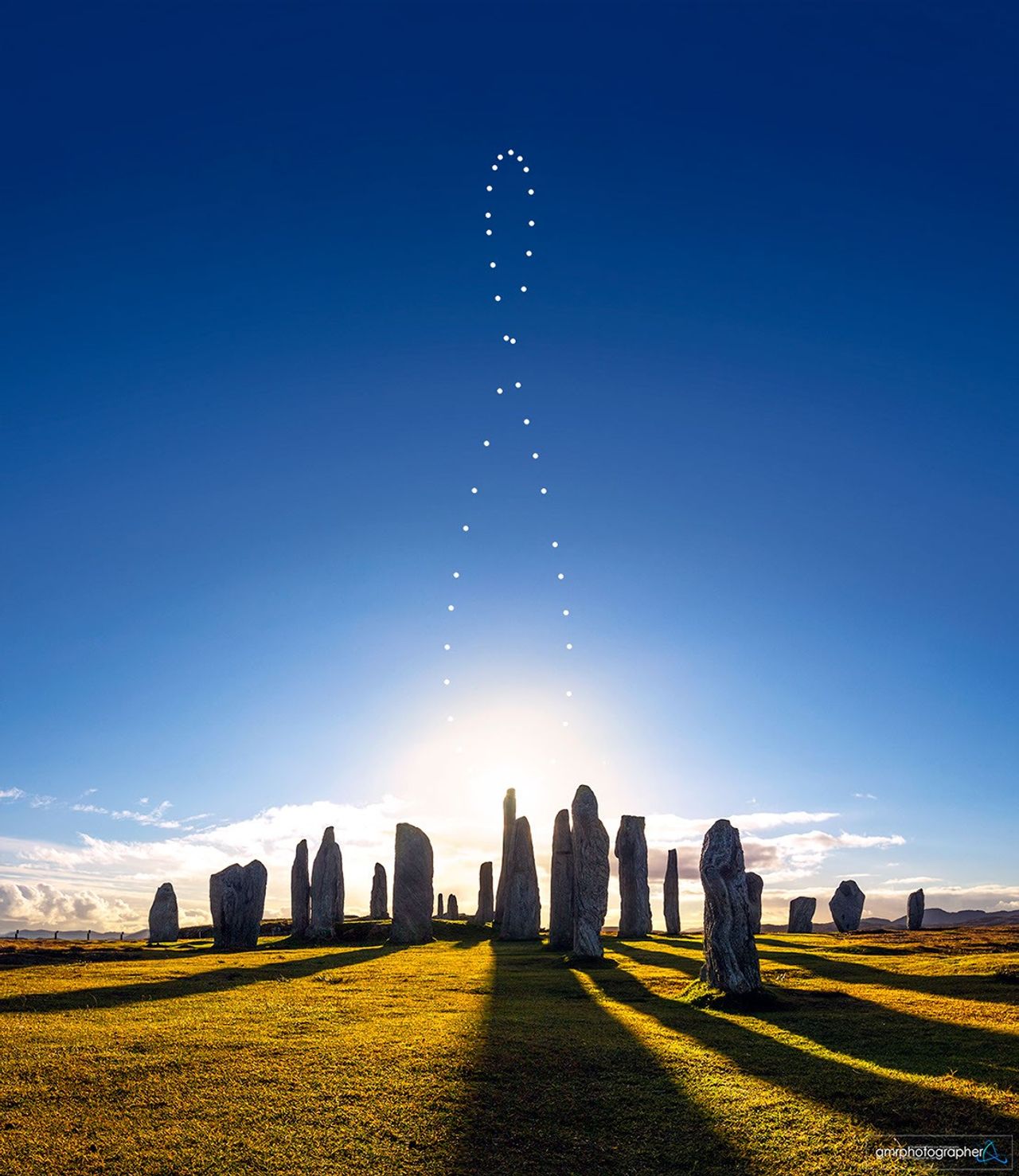
Multiple images of the Sun trace out an analemma curve in the daytime sky above the Callanish stones.

Analemma over the Callanish Stones

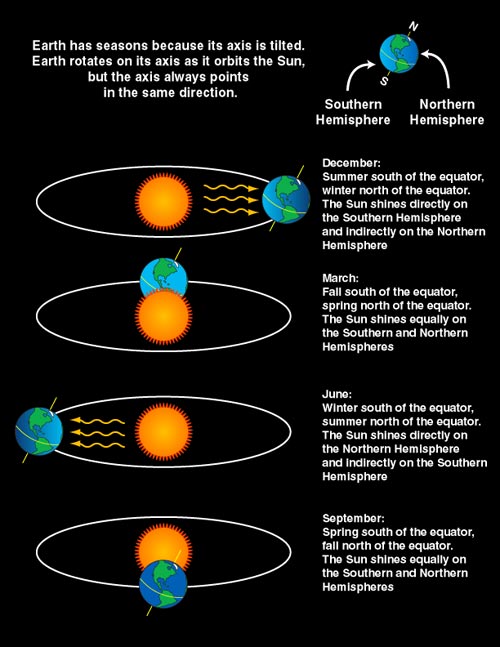
Explanation: If you went outside at the same time every day and took a picture that included the Sun, how would the Sun’s position change? A visual answer to that question is an analemma, a composite image taken from the same spot at the same time over the course of a year. The featured analemma was composed from images taken every few days at noon near the village of Callanish in the Outer Hebrides in Scotland, UK. In the foreground are the Callanish Stones, a stone circle built around 2700 BC during humanity’s Bronze Age. It is not known if the placement of the Callanish Stones has or had astronomical significance. The ultimate causes for the figure-8 shape of this and all analemmas are the tilt of the Earth axis and the ellipticity of the Earth’s orbit around the Sun. At the solstices, the Sun will appear at the top or bottom of an analemma. The featured image was taken near the December solstice and so the Sun appears near the bottom. Equinoxes, however, correspond to analemma middle points — not the intersection point. In two days there will be an equinox (“equal night”), when day and night are equal over all of planet Earth. Many cultures celebrate a change of season at an equinox.

APOD’s main NASA site is moving: From apod.nasa.gov to science.nasa.gov/apod
Tomorrow’s picture: open space

Date September 20, 2026
Credit & Copyright: Giuseppe Petricca
Authors & editors: Robert Nemiroff, Jerry Bonnell, Cecilia Chirenti, Keighley Rockcliffe
A service of: ASD at NASA / GSFC,
NASA Science Activation & Michigan Tech. U.

Powered by WPeMatico

Get The Details…

APOD: 2026 September 19 – A Zodiacal Night

APOD: 2026 September 19 – A Zodiacal Night

APOD

Astronomy Picture of the Day

Discover the cosmos! Each day a different image or photograph of our fascinating universe is featured, along with a brief explanation written by a professional astronomer.

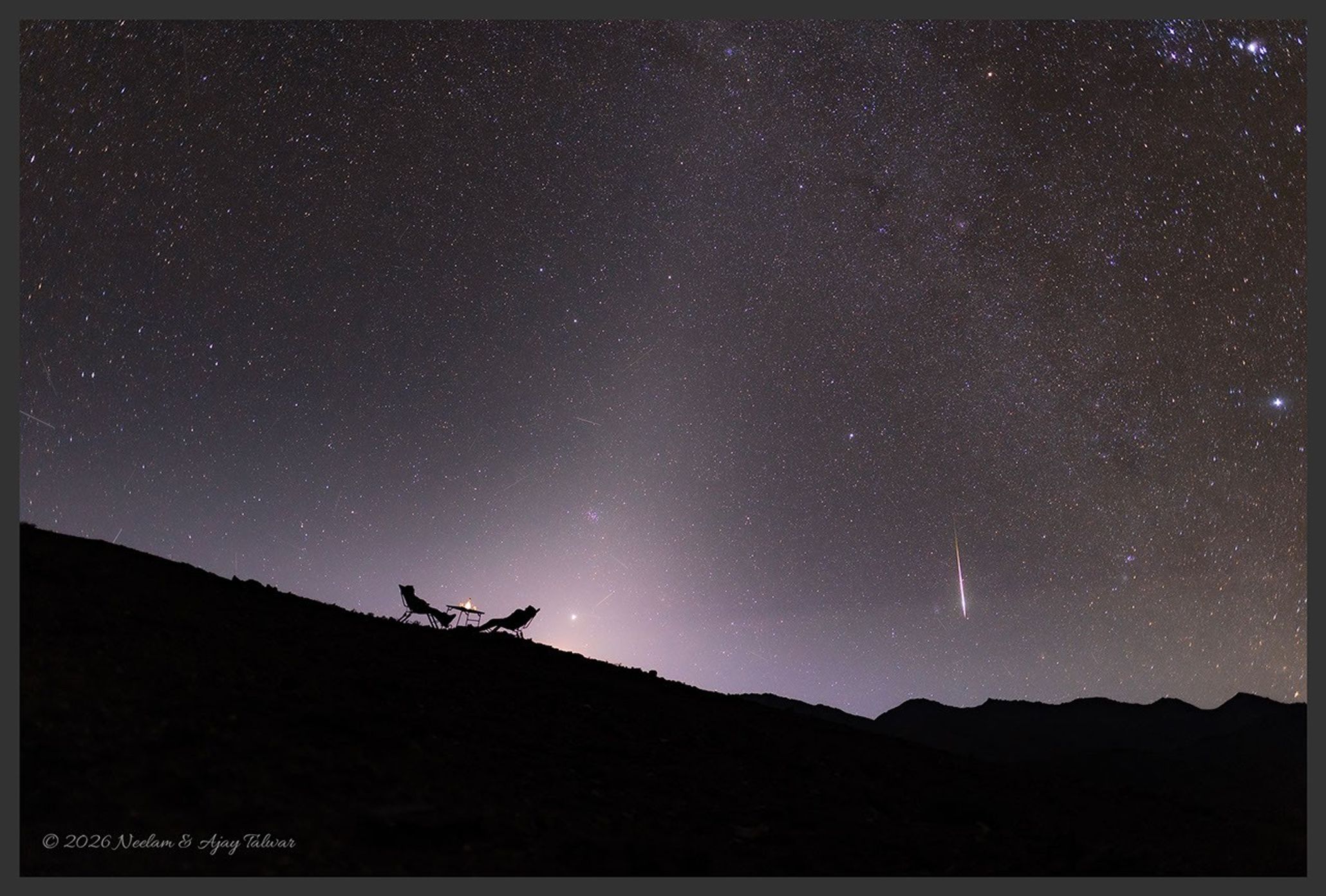
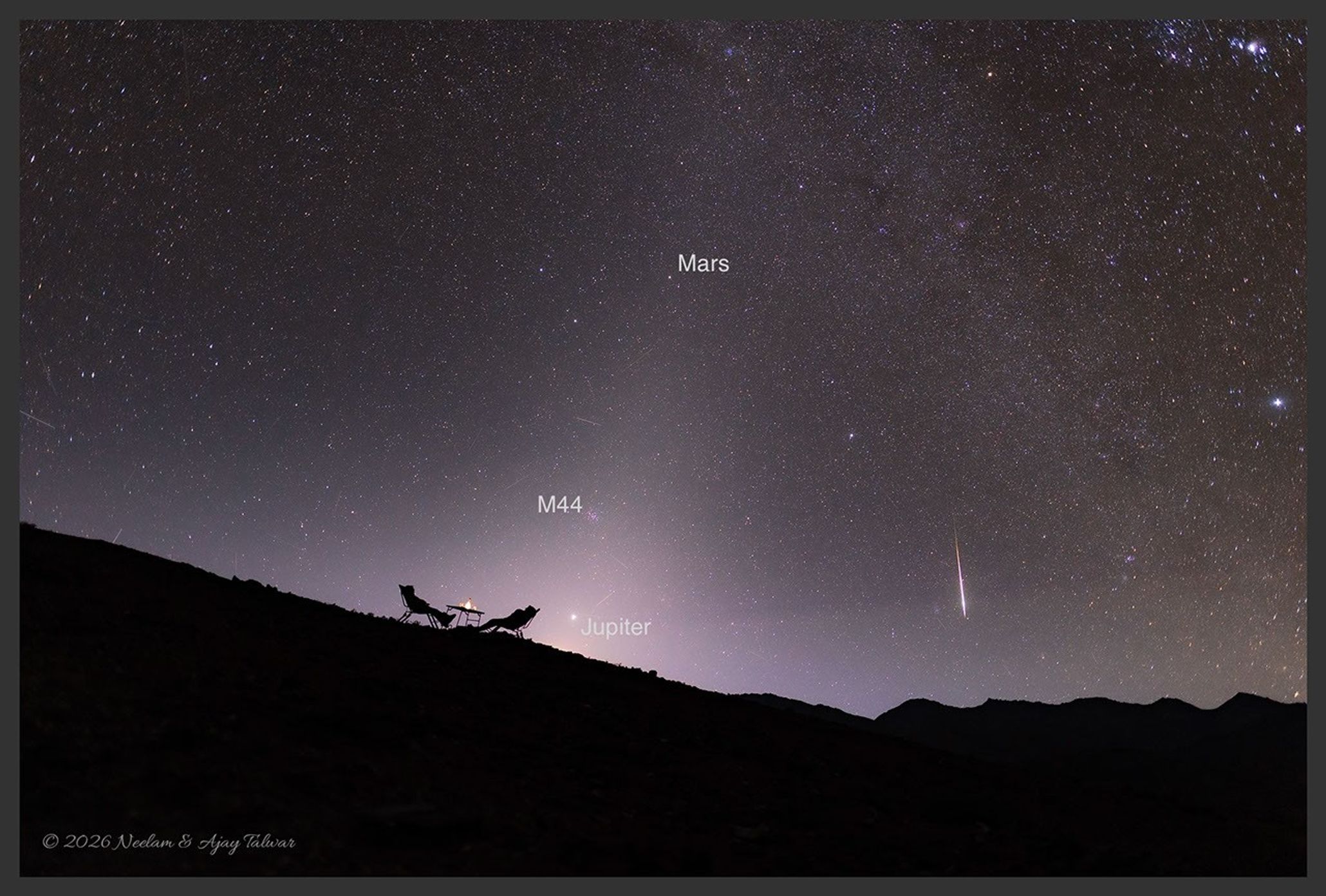
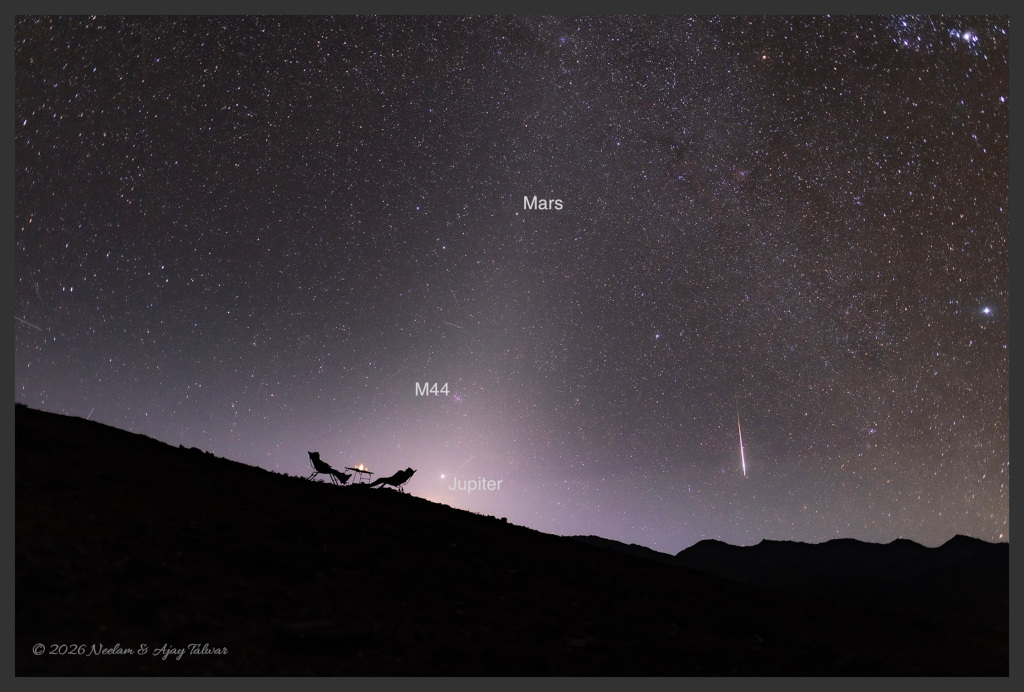
Two people are seated looking up at the night sky.Two people are seated looking up into the night sky. Jupiter, M44, and Mars are indicated with text labels.

A Zodiacal Night

Explanation: Also known as the false dawn, a luminous band of zodiacal light is captured in this dark night skyscape. The serene view was recorded just before the beginning of astronomical twilight during September’s star party at the remote Hanle Dark Sky Reserve, Ladakh, India, planet Earth. At about 4,500 meters altitude, the dark sky reserve presents a haven for hardy stargazing and astrophotography enthusiasts. While meteors streak through the night, bright planet Jupiter appears immersed in the faint zodiacal glow near the eastern horizon. Follow the zodiacal band toward the zenith to find open star cluster M44 and a yellowish tinged planet Mars near the center of the frame. In fact, serendipitous detections of interplanetary dust by NASA’s Juno spacecraft suggest Mars itself is the source of dust that back scatters sunlight and creates zodiacal light in planet Earth’s night.

APOD’s main NASA site is moving: From apod.nasa.gov to science.nasa.gov/apod
Tomorrow’s picture: only sunny days

Date September 19, 2026
Credit & Copyright: Neelam and Ajay Talwar (TWAN)
Authors & editors: Jerry Bonnell, Cecilia Chirenti, Robert Nemiroff, Keighley Rockcliffe
A service of: ASD at NASA / GSFC,
NASA Science Activation & Michigan Tech. U.

Powered by WPeMatico

Get The Details…