NASA, Blue Origin Invite Media to Attend Mars Mission Launch
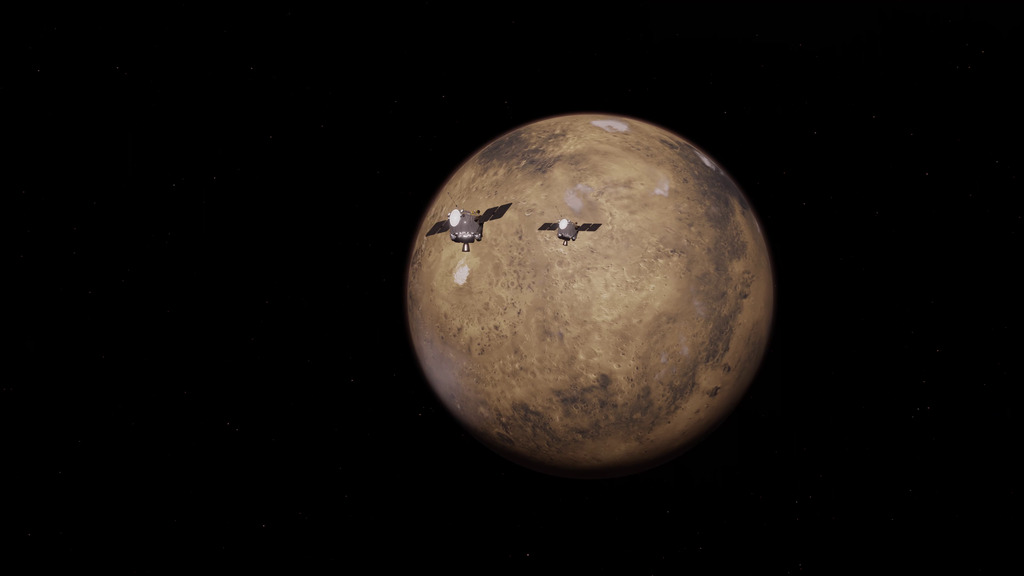
A stylized illustration shows the twin ESCAPADE spacecraft entering Mars’ orbit.
Credits: James Rattray/Rocket Lab USA
NASA and Blue Origin are reopening media accreditation for the launch of the agency’s ESCAPADE (Escape and Plasma Acceleration and Dynamics Explorers) mission. The twin ESCAPADE spacecraft will study the solar wind’s interaction with Mars, providing insight into the planet’s real-time response to space weather and how solar activity drives atmospheric escape. This will be the second launch of Blue Origin’s New Glenn rocket.
Media interested in covering ESCAPADE launch activities must apply for media credentials. Media who previously applied for media credentials for the ESCAPADE launch do not need to reapply.
U.S. media and U.S. citizens representing international media must apply by 11:59 p.m. EDT on Monday, Oct. 13. Media accreditation requests should be submitted online to: https://media.ksc.nasa.gov.
Blue Origin is targeting later this fall for the launch of New Glenn’s second mission (NG-2) from Space Launch Complex 36 at Cape Canaveral Space Force Station in Florida. Accredited media will have the opportunity to participate in prelaunch media activities and cover the launch. Once a specific launch date is targeted, NASA and Blue Origin will communicate additional details regarding the media event schedule.
NASA will post updates on launch preparations for the twin Martian orbiters on the ESCAPADE blog.
The ESCAPADE mission is part of the NASA Small Innovative Missions for Planetary Exploration program and is funded by the agency’s Heliophysics Division. The mission is led by the University of California, Berkeley Space Sciences Laboratory, and Rocket Lab designed the spacecraft. The agency’s Launch Services Program, based at NASA’s Kennedy Space Center in Florida, secured launch services under the VADR (Venture-class Acquisition of Dedicated and Rideshare) contract.
NASA, International Partners Deepen Commitment to Artemis Accords
Representatives of the Artemis Accords signatories, including acting NASA Administrator Sean Duffy and NASA Associate Administrator Amit Kshatriya, met Sept. 29, 2025, for a principals meeting during the 76th International Astronautical Congress in Sydney.
Credit: NASA/Max van Otterdyk
NASA, along with leaders from global space agencies and government representatives worldwide, convened on Monday to further the implementation of the Artemis Accords — practical principles designed to guide the responsible exploration of the Moon, Mars, and beyond.
The meeting was held during the 76th International Astronautical Congress (IAC) taking place in Sydney. In opening remarks, acting NASA Administrator Sean Duffy highlighted the five-year anniversary of the Artemis Accords next month.
“When President Trump launched the Artemis Accords in his first term, he made sure American values would lead the way – bringing together a coalition of nations to set the rules of the road in space and ensure exploration remains peaceful. After five years, the coalition is stronger than ever. This is critical as we seek to beat China to the Moon, not just to leave footprints, but this time to stay,” said Duffy.
The United States, led by NASA and the U.S. Department of State, signed the accords on Oct. 13, 2020, with seven other founding nations. The accords were created in response to the growing global interest in lunar activities by governments and private companies. They now comprise 56 country signatories — nearly 30% of the world’s countries.
The event was co-chaired by NASA, the Australian Space Agency, and the UAE Space Agency. Dozens of nations were represented, creating the foundation for future space exploration for the Golden Age of exploration and innovation.
“Australia is a proud founding signatory of the Artemis Accords and is focused on supporting new signatories in the Indo-Pacific region,” said Head of Australian Space Agency Enrico Palermo. “The purpose of the accords is as important — if not more important — as it was when first established. This annual gathering of principals at IAC 2025 is a key opportunity to reaffirm our collective commitment to exploring the Moon, Mars and beyond in a peaceful, safe, and sustainable way.”
During the meeting, leaders discussed recommendations for non-interference in each other’s space activities including transparency on expected launch dates, general nature of activities, and landing locations. They also discussed orbital debris mitigation and disposal management, interoperability of systems for safer and more efficient operations, and the release of scientific data.
In May 2025, the United Arab Emirates hosted an Artemis Accords workshop focused on topics, such as non-interference and space object registration and reporting beyond Earth orbit.
“Through our active participation in the Artemis Accords and by organizing specialised workshops, we aim to reinforce the principles of transparency, sustainability, and innovation in space activities. We are committed to strengthening international partnerships and facilitating the exchange of expertise, thereby contributing to the development of a robust global framework for safe and responsible space exploration, while opening new frontiers for scientific research,” said UAE Minister of Sports and Chairman of UAE Space Agency Ahmad Belhoul Al Falasi. “This reflects the UAE’s unwavering commitment to enhancing international cooperation in space exploration and promoting the peaceful use of space.”
More countries are expected to sign the Artemis Accords in the months and years ahead, as NASA continues its work to establish a safe, peaceful, and prosperous future in space.
What’s Up: October 2025 Skywatching Tips from NASA
A supermoon, and meteor showers from the Draconids and Orionids
A supermoon takes over the sky, the Draconid meteor shower peeks through, and the Orionid meteor shower shines bright.
Skywatching Highlights
Oct. 6: The October supermoon
Oct. 6-10: The Draconid meteor shower
Oct. 21: The Orionid meteor shower peaks (full duration Sept. 26 – Nov. 22)
Transcript
What’s Up for October? A Supermoon takes over, the Draconid meteor shower peeks through, and the Orionid meteors sparkle across the night sky.
The evening of October 6, look up and be amazed as the full moon is bigger and brighter because – it’s a supermoon!
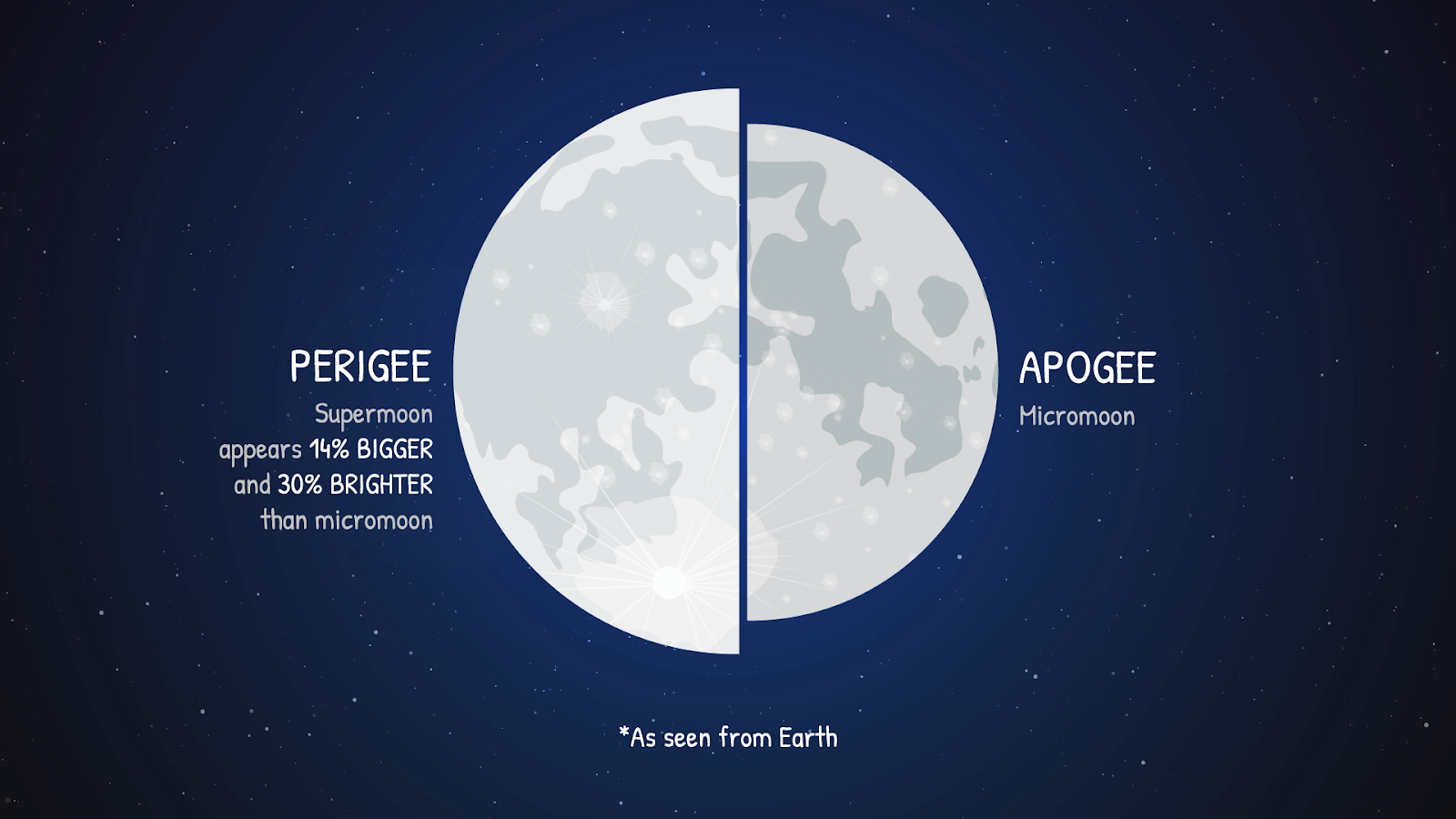
Illustrated infographic showing the difference (as seen from Earth) between perigee, when a supermoon appears, and apogee, when a micromoon appears.
NASA/JPL-Caltech
This evening, the moon could appear to be about 30% brighter and up to 14% larger than a typical full moon. But why?
Supermoons happen when a new moon or a full moon coincides with “perigee,” which is when the moon is at its closest to Earth all month.
So this is an exceptionally close full moon! Which explains its spectacular appearance.
And what timing – while the supermoon appears on October 6th, just a couple of days before on October 4th is “International Observe the Moon Night”!
It’s an annual, worldwide event when Moon enthusiasts come together to enjoy our natural satellite.You can attend or host a moon-viewing party, or simply observe the Moon from wherever you are.
So look up, and celebrate the moon along with people all around the world!
The supermoon will light up the sky on October 6th, but if you luck into some dark sky between October 6th and 10th, you might witness the first of two October meteor showers – the Draconids!
The Draconid meteor shower comes from debris trailing the comet 21P Giacobini-Zinner burning up in Earth’s atmosphere
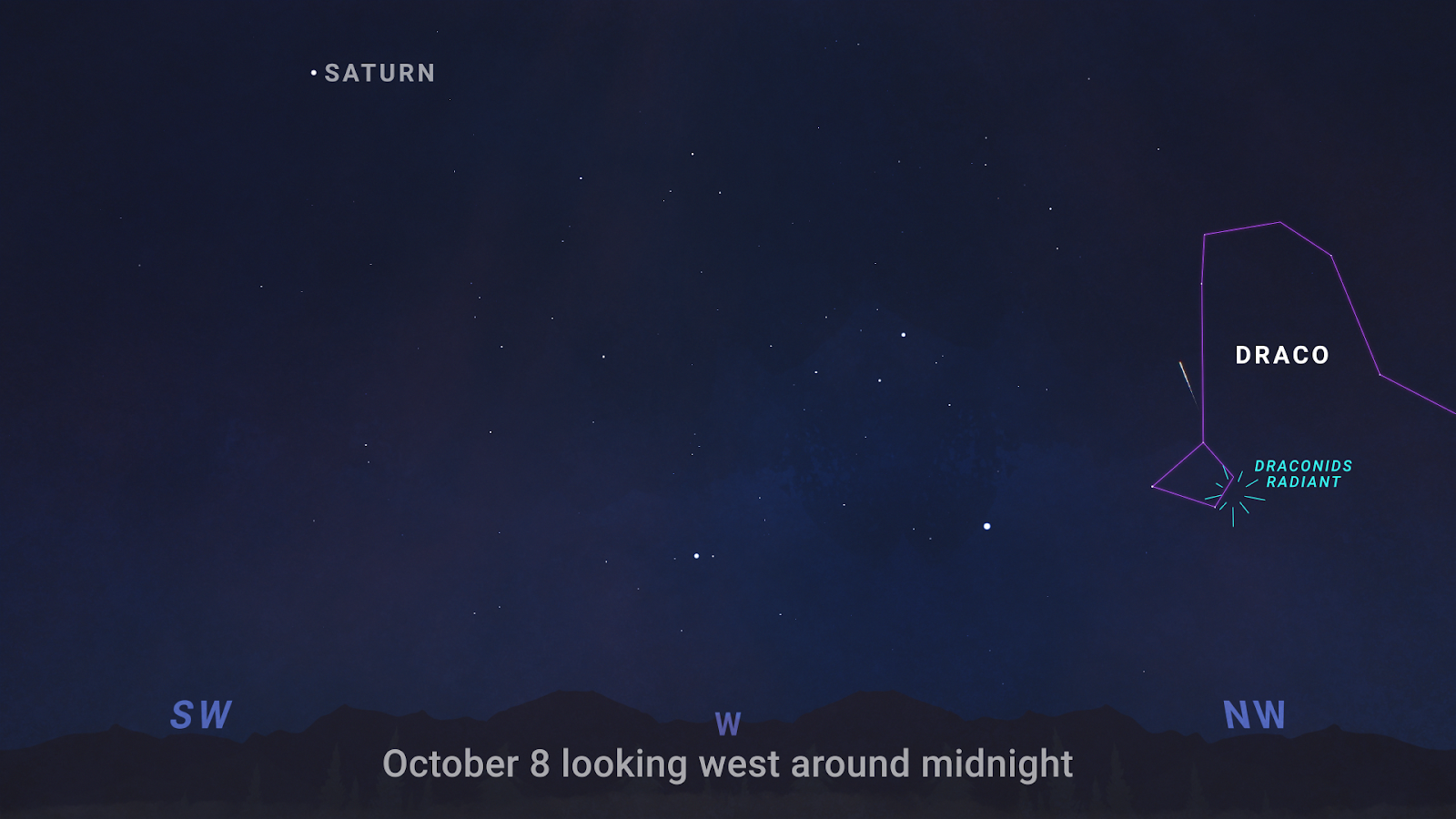
These meteors originate from nearby the head of the constellation Draco the dragon in the northern sky and the shower can produce up to 10 meteors per hour!
The Draconids peak around October 8th, but if you don’t see any, you can always blame the bright supermoon and wait a few weeks until the next meteor shower – the Orionids!
Sky chart showing the Draconid meteor shower, including the radiant point of the shower and the Draco constellation where the meteors in the shower are often seen and stem from.
NASA/JPL-Caltech
The Orionid meteor shower, peaking October 21, is set to put on a spectacular show, shooting about 20 meteors per hour across the night sky.
This meteor shower happens when Earth travels through the debris trailing behind Halley’s Comet and it burns up in our atmosphere.
The full duration of the meteor shower stretches from September 26 to November 22, but your best bet to see meteors is on October 21 before midnight until around 2 am.
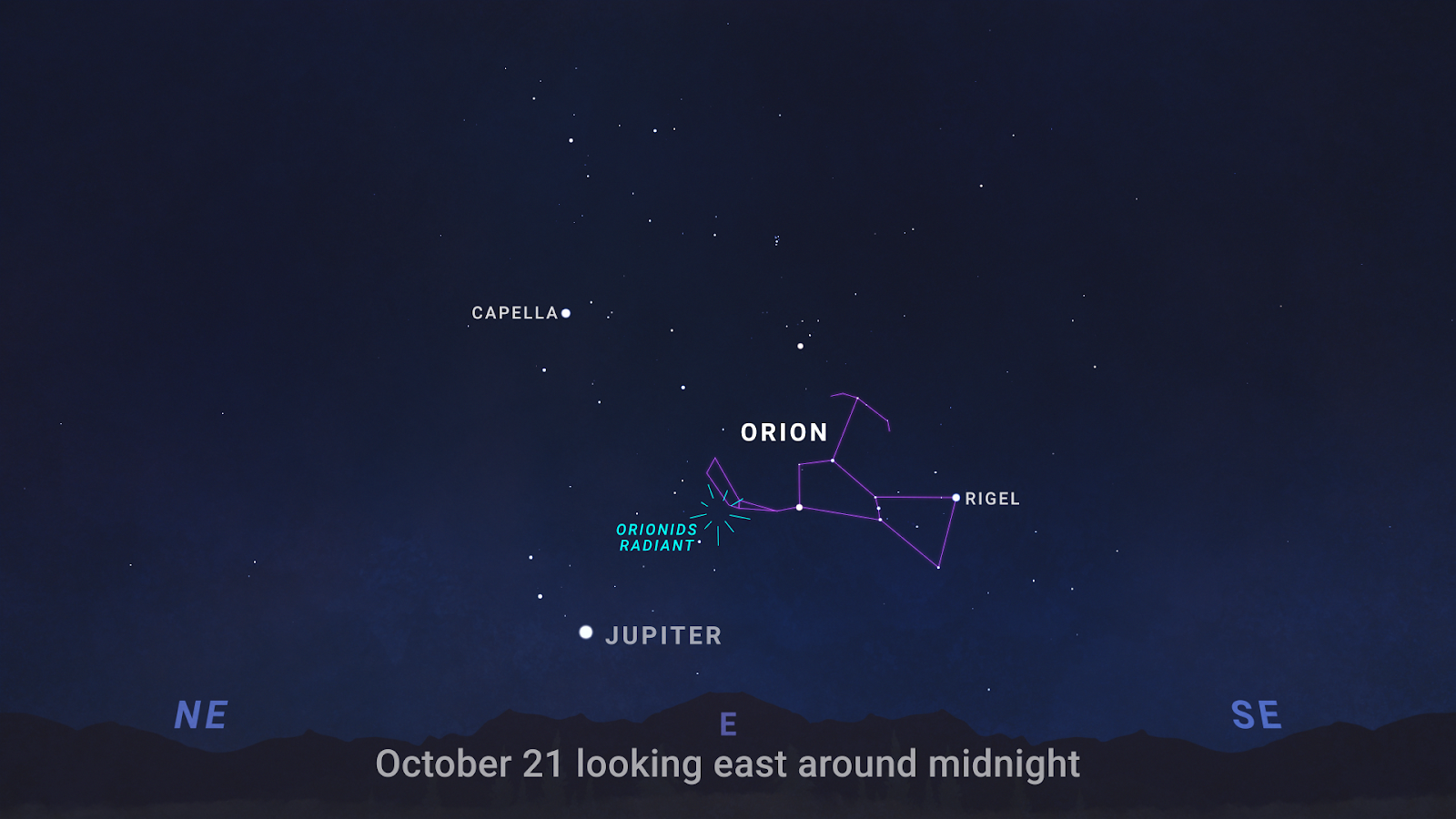
Sky chart showing the Orionid meteor shower, including the radiant point of the shower and the Orion constellation where the meteors in the shower are often seen and stem from.
NASA/JPL-Caltech
This is because, not only is this night the shower’s peak, it is also the October new moon, meaning the moon will be between the Earth and the Sun, making it dark and invisible to us.
With a moonless sky, you’re much more likely to catch a fireball careening through the night.
So find a dark location after the sun has set, look to the southeast sky (if you’re in the northern hemisphere) and the northeast (if you’re in the southern hemisphere) and enjoy!
Orionid meteors appear to come from the direction of the Orion constellation but you might catch them all across the sky.
Here are the phases of the Moon for October.
You can stay up to date on all of NASA’s missions exploring the solar system and beyond at science.nasa.gov.
I’m Chelsea Gohd from NASA’s Jet Propulsion Laboratory, and that’s What’s Up for this month.
NASA Education Specialist Christine Milotte demonstrates heliophysics activities during a teacher professional development event hosted by the NASA Heliophysics Education Activation Team (HEAT) at the Dallas Arboretum, Saturday, April 6, 2024.
Credits: NASA/Keegan Barber
The Sun and Our Lives
On a clear night, you might see thousands of stars in the sky. Most of these stars are dozens or hundreds of light years away from us. A light year is the distance a beam of light travels in a year: about 5.88 trillion miles (9.46 trillion kilometers). This means that for those stars we see at night, it takes their light, which travels at about 186,000 miles per second (or about 300 thousand kilometers per second), dozens or hundreds of years to reach us.
But in the daytime, we only see one star: the Sun. It dominates the daytime sky because it is so close – about 93 million miles (or 150 million kilometers) away. That distance is also called one astronomical unit, and its another unit of measurement astronomers use to record distance in space. But even if 1 astronomical unit seems like a long way, it’s still about 270 thousand times closer than Alpha Centauri, the next nearest star system.
The Sun isn’t just close – it’s also gigantic! The Sun is large enough to fit more than a million Earths inside it, and has more mass than 330 thousand Earths put together. Its light also provides the energy which allows life as we know it to flourish. For these reasons, the Sun is a powerful presence in our lives. We all have a relationship with the Sun, so knowing about it, and about the benefits and hazards of its presence, is essential.
Teaching About the Sun
Autumn is when most students in the United States return for a new school year after summer vacation. This back-to-school time offers a wonderful opportunity to reach students fresh off of a few months of fun in the Sun and capture their imaginations with new information about how our native star works and how it impacts their lives.
To that end, NASA conducts efforts to educate and inform students and educators about the Sun, its features, and the ways it impacts our lives. NASA’s Heliophysics Education Activation Team (HEAT) teaches people of all ages about the Sun, covering everything from how to safely view an eclipse to how to mitigate the effects of geomagnetic storms.
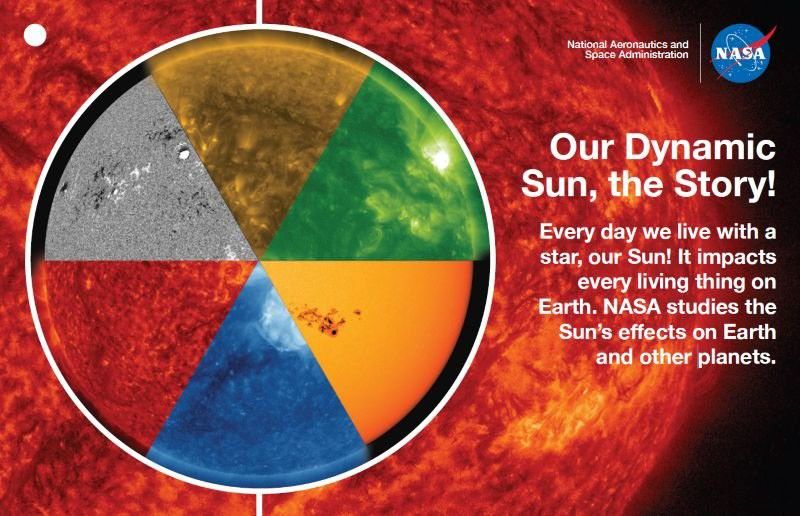
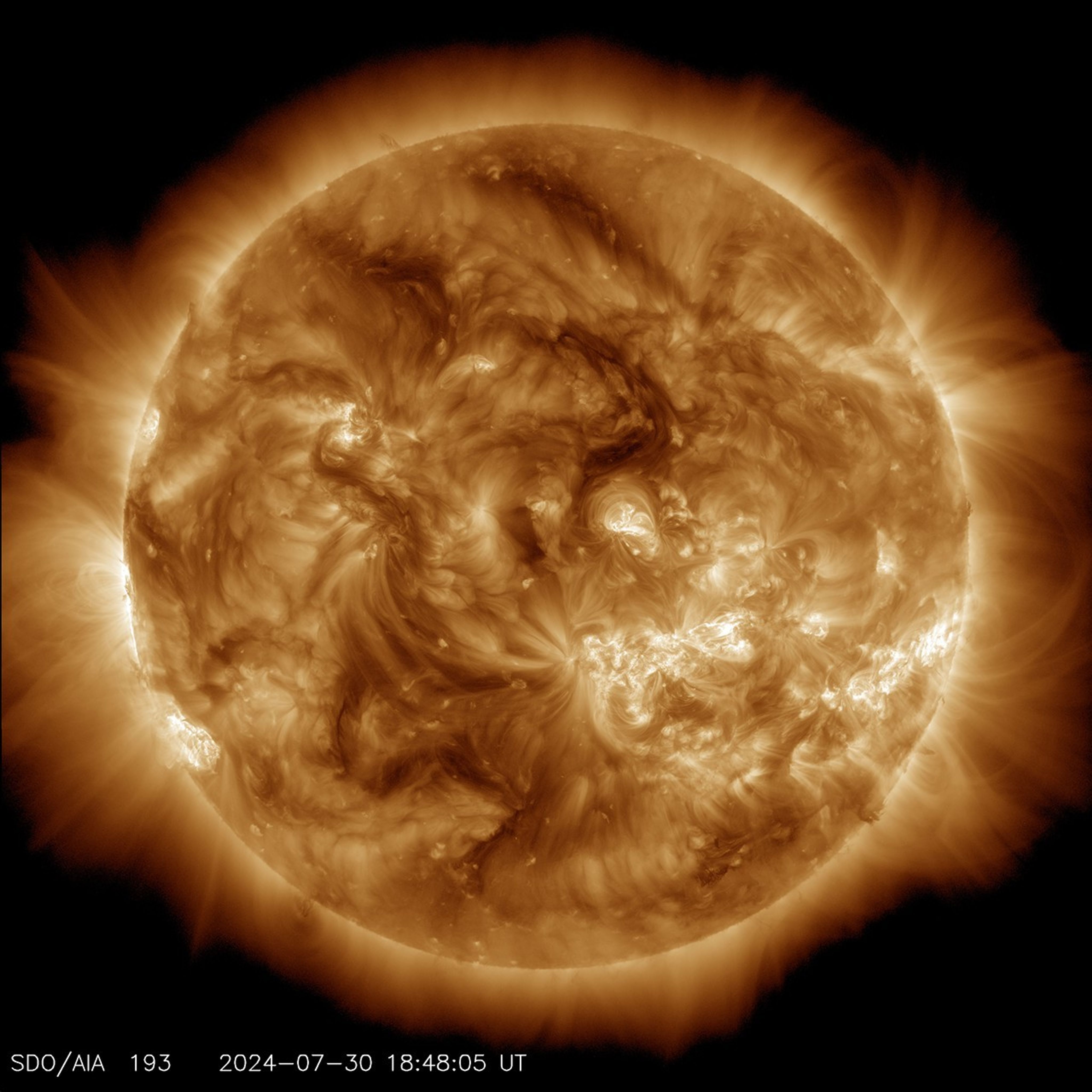
This “Our Dynamic Sun” banner is one of many educational outreach products offered by NASA HEAT. It uses imagery of the Sun at different wavelengths of light to demonstrate the features of our nearest star, and features information about how the Sun interacts with the rest of the Solar System.
NASA HEAT
This often means tailoring lesson plans for educators. By connecting NASA scientists who study Heliophysics with education specialists who align the material to K-12 content standards, HEAT gets Heliophysics out of the lab and into the classroom. Making Sun science accessible lets learners of all ages and backgrounds get involved in and excited about the discovery, and instills a lifelong thirst for knowledge that builds the next generation of scientists.
Since 2007, NASA’s Living With a Star (LWS) program and the University Corporation for Atmospheric Research’s Cooperative Programs for the Advancement of Earth System Science (CPAESS) have cooperated to offer the Heliophysics Summer School program for doctoral students and postdoctoral scholars. This program aims to foster heliophysics as an integrated science, teaching a new generation of researchers to engage in cross-disciplinary communication while they are still in the early days of their career.
One Way to Get Involved
As part of its efforts to increase awareness of the scientific and social importance of heliophysics, and to both inspire future scientists and spark breakthroughs in heliophysics as a discipline, the NASA Heliophysics Education Activation Team (NASA HEAT) is working on a slate of educational materials designed to get students involved with real-world mission data.
My NASA Data, in collaboration with NASA HEAT, has released a new set of resources for educators centered around space weather. My NASA Data supports the use of authentic NASA data as part of classroom learning materials. These materials include lesson plans, mini-lessons (shorter activities for quick engagement), student-facing web-based interactives, and a longer “story map,” which deepens the investigation of the phenomenon over multiple class periods.
These resources are designed to engage learners with data and observations collected during both past and ongoing missions, including the European Space Agency’s Solar Orbiter, NASA’s Parker Solar Probe and Solar Dynamics Observatory (SDO), and more.
One example of this is the educational material published to support outreach efforts focusing on the 2023 and 2024 American solar eclipses. These materials allowed learners to collect their own data on cloud and temperature observations during the eclipses with the GLOBE Observer Eclipse tool. This gave them the chance to participate in the scientific process by contributing meaningfully to our understanding of the Earth system and global environment.
New Ways to Engage
Groups like HEAT don’t just spark interest in science for the sake of inspiring the next generation of heliophysicists. Just like amateur astronomers can bring in a lot more data than their professional counterparts, citizen scientists can do a lot to support the same institutions that may have inspired them to take up the practice of citizen science. This can mean anything from helping to track sunspots to reporting on the effects of space weather events.
2023 Partial Solar Eclipse Viewing at Camino Real Marketplace with the View the Santa Barbara Astronomical Unit. Events like this, which can take place during major events such as eclipses or during impromptu circumstances, offer an excellent opportunity for the public to get involved in and excited about heliophysics.
Photo by Chuck McPartlin
These enthusiasts are also adept at sharing knowledge of heliophysics. Even just one person inspired to buy a telescope with the right solar filter (international standard ISO 12312-2), set it up in a park, and teach their neighbors about the Sun can do amazing work, and there are a lot more of them than there are professional scientists. That means these amateur heliophysicists can reach farther than even the best official outreach.
Whether they take place in the classroom, at conferences, or in online lectures, the efforts of science communicators are a vital part of the work done at NASA. Just as scientists make new discoveries, these writers, teachers, audio and video producers, and outreach specialists are passionate about making those discoveries accessible to the public.
All of this work helps to inspire the scientists of tomorrow, and to instill wonder in the citizen scientists of today. The Sun is a constant and magnificent presence in our lives, and it offers plenty of reasons to be inspired, both now and in the future.
Additional Resources
Lesson Plans & Educator Guides
Explore the Sun Toolkit
The Explore the Sun Toolkit includes postcards, a banner, and slides ideal for informal educators and community events to bring the wonder of NASA Solar Science to your community.
Sun as a Star Activities, Grades 5-12
Educator guide consisting of eight roughly one-hour, hands-on activities adapted from a classroom environment for after-school audiences, and which will work for a variety of audiences.
Interactive Resources
My NASA Data
My NASA Data, a NASA Langley Research Center Science Directorate project, supports the use of authentic NASA Earth data for educators and learners in grades 3-12.
NASA Space Place Sun Page
Videos, games, activities and more for engaging younger students in a variety of space science topics, including resources on the Sun which range from hands-on activities to detailed lessons.
Student HelioViewer: Solar Data Interactive
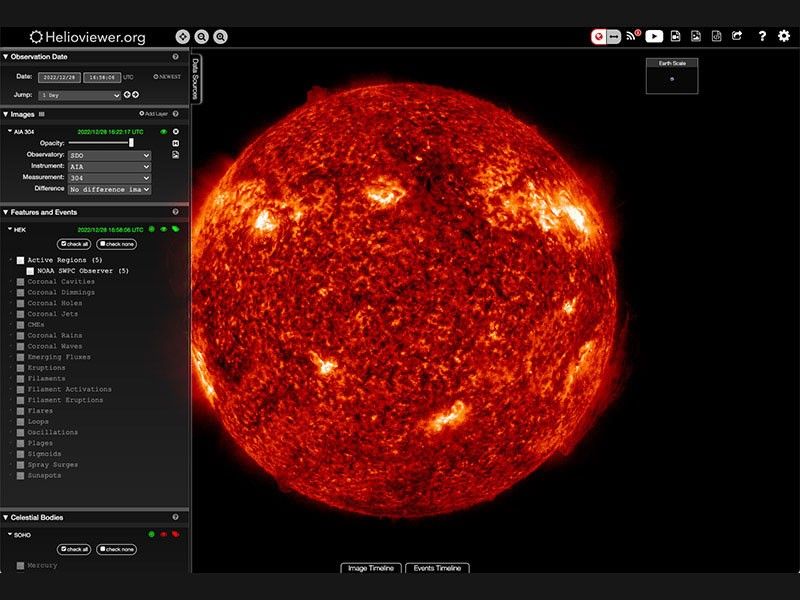
A user-friendly interactive where students can access NASA data collected by spacecraft about the Sun and its features, including solar flares, magnetic fields, sunspots, and CMEs.
Make a Solar Viewer Activity
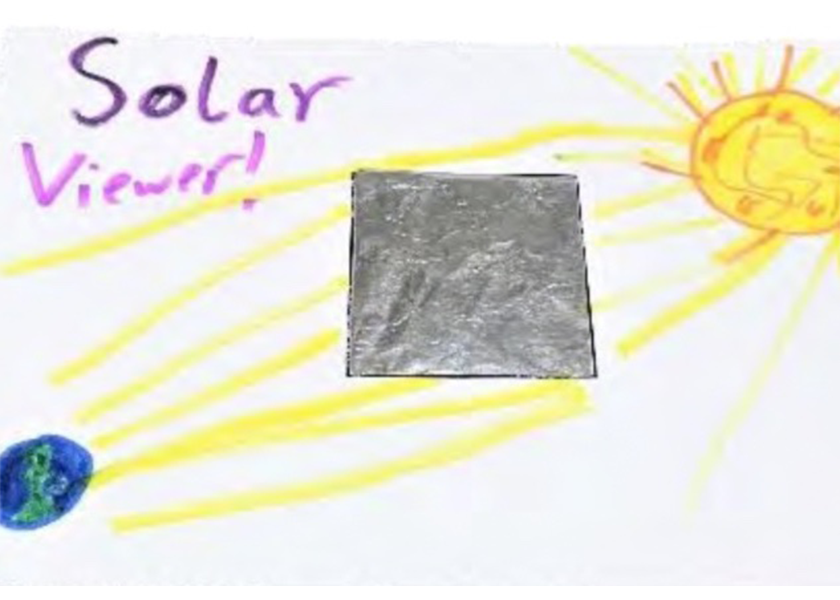
Create a simple solar viewer, or pinhole viewer, which works by projecting the image of the Sun through a small hole, to safely observe the Sun with just some paper and aluminum foil.
Webinars & Slide Decks
HBY & Math #3: The Sun Touches Everything
From agriculture to economics, the Sun touches all parts of our lives, especially with the sunlight that allows crops to grow. This webinar looks at sunlight through the year and how it changes.
The Solar Cycle As Seen From Space
Roughly 2-minute video which uses views of the Sun taken by a variety of spacecraft to show how different features of the Sun vary between solar minimum and solar maximum.
NASA signs US-Australia Agreement on Aeronautics, Space Cooperation
Acting NASA Administrator Sean Duffy and Australian Space Agency Head Enrico Palermo signed an agreement Sept. 30, 2025, in Sydney that strengthens collaboration in aeronautics and space exploration between the two nations.
Credit: NASA/Max van Otterdyk
At the International Astronautical Congress (IAC) taking place in Sydney this week, representatives from the United States and Australia gathered to sign a framework agreement that strengthens collaboration in aeronautics and space exploration between the two nations.
Acting NASA Administrator Sean Duffy and Australian Space Agency Head Enrico Palermo signed the agreement Tuesday on behalf of their countries, respectively.
“Australia is an important and longtime space partner, from Apollo to Artemis, and this agreement depends on that partnership,” said Duffy. “International agreements like this one work to leverage our resources and increase our capacities and scientific returns for all, proving critical to NASA’s plans from low Earth orbit to the Moon, Mars, and beyond.”
Australian Minister for Industry and Innovation and Minister for Science Tim Ayres said the signing builds on more than half a century of collaboration between the two nations.
“Strengthening Australia’s partnership with the U.S. and NASA creates new opportunities for Australian ideas and technologies, improving Australia’s industrial capability, boosting productivity, and building economic resilience,” Ayres said.
Known as the “Framework Agreement between the Government of the United States of America and the Government of Australia on Cooperation in Aeronautics and the Exploration and Use of Airspace and Outer Space for Peaceful Purposes,” it recognizes cooperation that’s mutually beneficial for the U.S. and Australia and establishes the legal framework under which the countries will work together.
Potential areas for cooperation include space exploration, space science, Earth science including geodesy, space medicine and life sciences, aeronautics research, and technology.
NASA has collaborated with Australia on civil space activities since 1960, when the two countries signed their first cooperative space agreement. The Canberra Deep Space Communication Complex played a vital role in supporting NASA’s Apollo Program, most notably during the Apollo 13 mission. Today, the complex is one of three global stations in NASA’s Deep Space Network, supporting both robotic and human spaceflight missions.
One of the original signatories to the Artemis Accords, Australia joined the United States under President Donald Trump and six other nations in October 2020, in supporting a basic set of principles for the safe and responsible use of space. Global space leaders from many of the 56 signatory countries met at IAC in Sydney this week to further their implementation.
As part of an existing partnership with the Australian Space Agency, Australia is developing a semi-autonomous lunar rover, which will carry a NASA analysis instrument intended to demonstrate technology for scientific and exploration purposes. The rover is scheduled to launch by the end of this decade through NASA’s CLPS (Commercial Lunar Payload Services) initiative.
NASA’s international partnerships reflect the agency’s commitment to peaceful, collaborative space exploration. Building on a legacy of cooperation, from the space shuttle to the International Space Station and now Artemis, international partnerships support NASA’s plans for lunar exploration under the Artemis campaign and future human exploration of Mars.
To learn more about NASA’s international partnerships, visit:






.jpg?w=5438&h=3638&fit=clip&crop=faces%2Cfocalpoint)