NASA Shares SpaceX Crew-14 Assignments for Space Station Mission

NASA Shares SpaceX Crew-14 Assignments for Space Station Mission
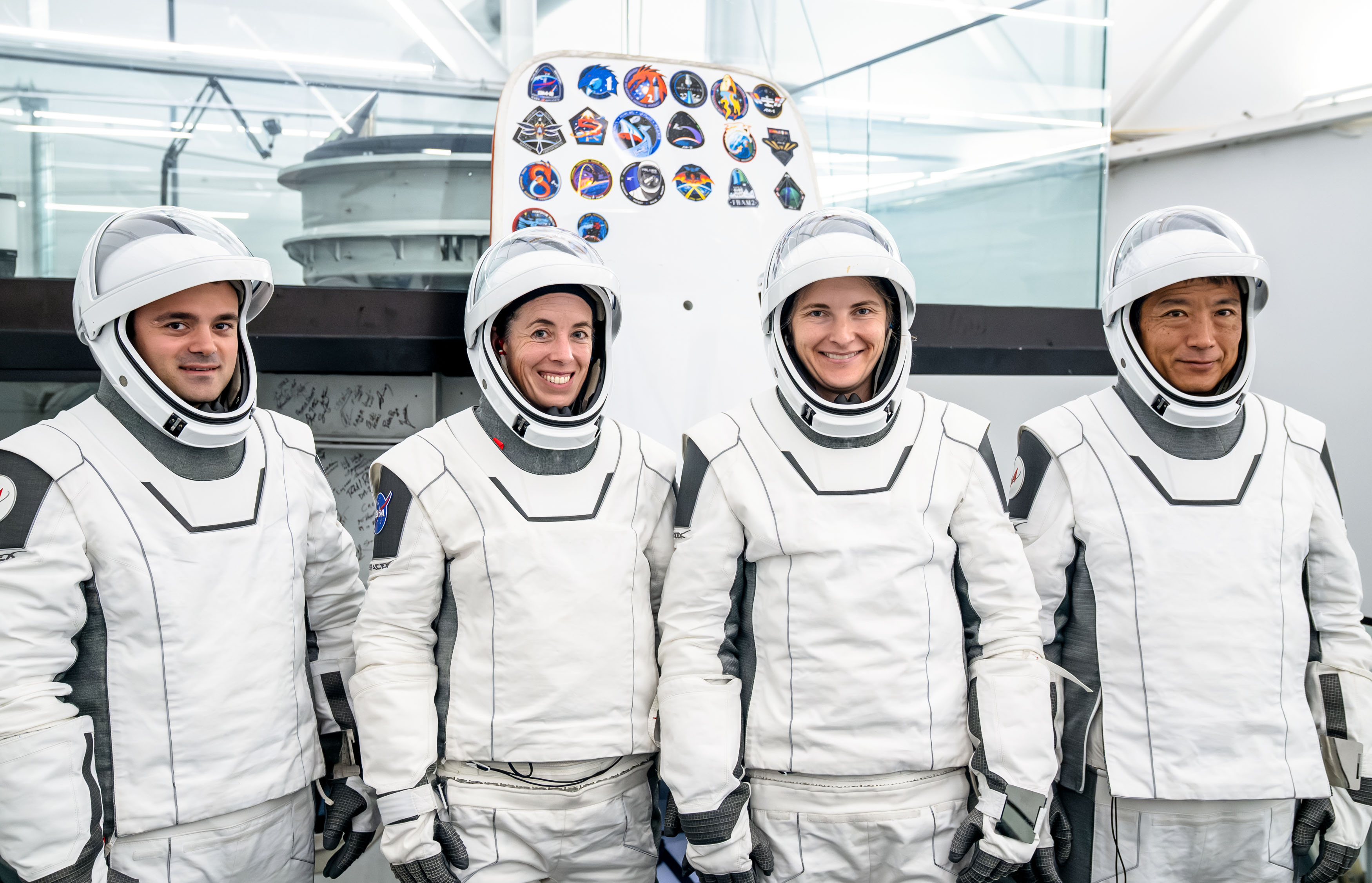
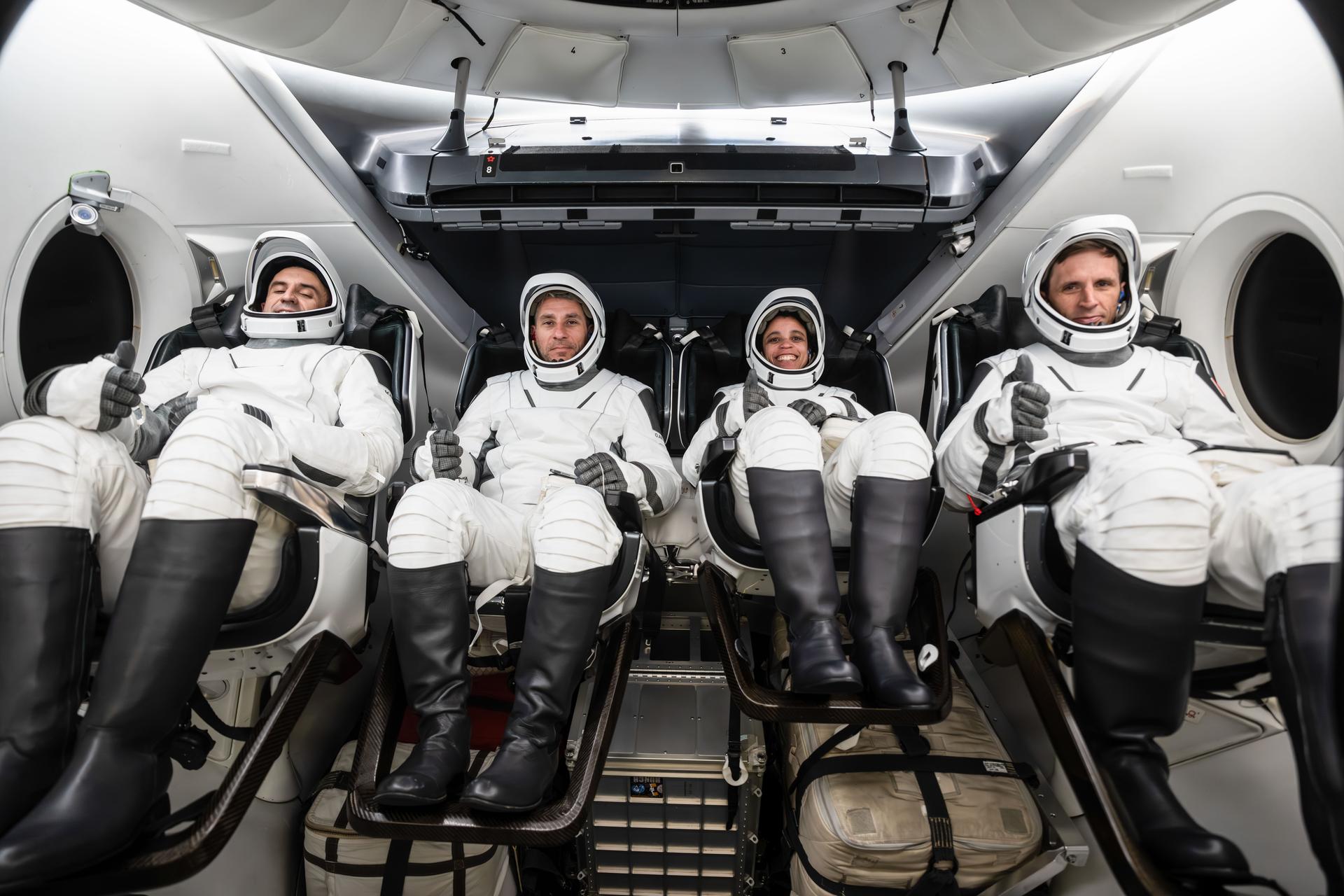
NASA’s SpaceX Crew-14 crew members during preflight training at SpaceX’s facility in Hawthorne, California (from left, Roscosmos cosmonaut Arutyun Kiviryan, NASA astronaut Chris Birch, NASA astronaut Kayla Barron, and JAXA (Japan Aerospace Exploration Agency) astronaut Makoto Suwa).        
Credit: SpaceX

Four crew members from three space agencies will launch to the International Space Station no earlier than spring 2027 for a long-duration science expedition as part of NASA’s SpaceX Crew-14 mission.

NASA astronauts Kayla Barron and Chris Birch will serve as spacecraft commander and pilot, with JAXA (Japan Aerospace Exploration Agency) astronaut Makoto Suwa, and Roscosmos cosmonaut Arutyun Kiviryan as mission specialists. After docking, Crew-14 will join the space station’s Expedition 75/76.

This mission is the 14th commercial crew rotation with SpaceX under NASA’s Low Earth Orbit Program. The crew will conduct scientific investigations and technology demonstrations to help prepare humans for future exploration missions to the Moon and Mars and to benefit people on Earth.

This will be Barron’s second flight to the space station. She was selected as a NASA astronaut in 2017. Barron earned a bachelor’s degree in systems engineering from the U.S. Naval Academy in Annapolis, Maryland and a master’s degree in nuclear engineering from the University of Cambridge in England. A commander in the U.S. Navy, Barron earned her submarine warfare officer qualification, deploying three times aboard the USS Maine. She first launched to the space station in 2021 aboard NASA’s SpaceX Crew-3 mission, spending a total of 177 days in space across space station Expeditions 66/67. She completed two spacewalks and served as lead robotics operator for another. Most recently, Barron supported the development of new technologies and operational concepts for NASA’s Artemis program.

Selected as a NASA astronaut in 2021, Birch graduated from the University of Arizona in Tucson with degrees in mathematics and biochemistry and molecular biophysics. She earned a doctorate in biological engineering from the Massachusetts Institute of Technology, and later taught bioengineering at the University of California, Riverside, and scientific writing and communication at the California Institute of Technology in Pasadena. Birch competed as a decorated track cyclist on the U.S. National Team and was named to the Olympic Long Team for the 2020 Tokyo Games. She has served as a capsule communicator, supporting crews aboard the space station and during the Artemis II mission. Birch was crew lead for Expedition 72, working with flight control teams to help manage daily operations, and served as a crew representative for NASA’s Orion Program, supporting Artemis II mission development and operations. This will be her first spaceflight.

The Crew-14 mission also is the first spaceflight assignment for Suwa. Before JAXA selected him as an astronaut candidate in 2023, Suwa spent nearly a decade with the World Bank Group. Previously, he served in Rwanda as a Japan Overseas Cooperation Volunteer before joining the United Nations World Meteorological Organization. Suwa holds a doctorate in geosciences from Princeton University and completed basic training to become certified as an astronaut in 2024.

This mission will be Kiviryan’s first trip to the space station. He graduated from Saint Petersburg Suvorov Military School in 2010 and later studied at the Baltic State Technical University. He graduated in 2015 as an engineer specializing in rocket science and completed training in the operation of computer-controlled machines. Kiviryan was selected for the Gagarin Research and Test Cosmonaut Training Center Cosmonaut Corps in 2021 and has served as a test cosmonaut since 2023.  

For more than 25 years, people have lived and worked continuously aboard the International Space Station, advancing scientific knowledge and making research breakthroughs that aren’t possible on Earth. The space station helps NASA understand and overcome the challenges of human spaceflight, expand commercial opportunities in low Earth orbit, and build on the foundation for long-duration missions to the Moon, as part of the Artemis program, and to Mars.

Learn more about International Space Station research and operations at:

https://www.nasa.gov/station

-end-

Joshua Finch / Jimi Russell
Headquarters, Washington
202-358-1100
joshua.a.finch@nasa.gov / james.j.russell@nasa.gov

Anna Schneider / Mary Pfister
Johnson Space Center, Houston
281-483-5111
anna.c.schneider@nasa.gov / mary.m.pfister@nasa.gov

Share

Details

Last Updated

Sep 24, 2026

Powered by WPeMatico

Get The Details…
Lauren E. Low
NASA’s Machines for Mars Make Beer Bubbly 

NASA’s Machines for Mars Make Beer Bubbly 

3 min read

Preparations for Next Moonwalk Simulations Underway (and Underwater)

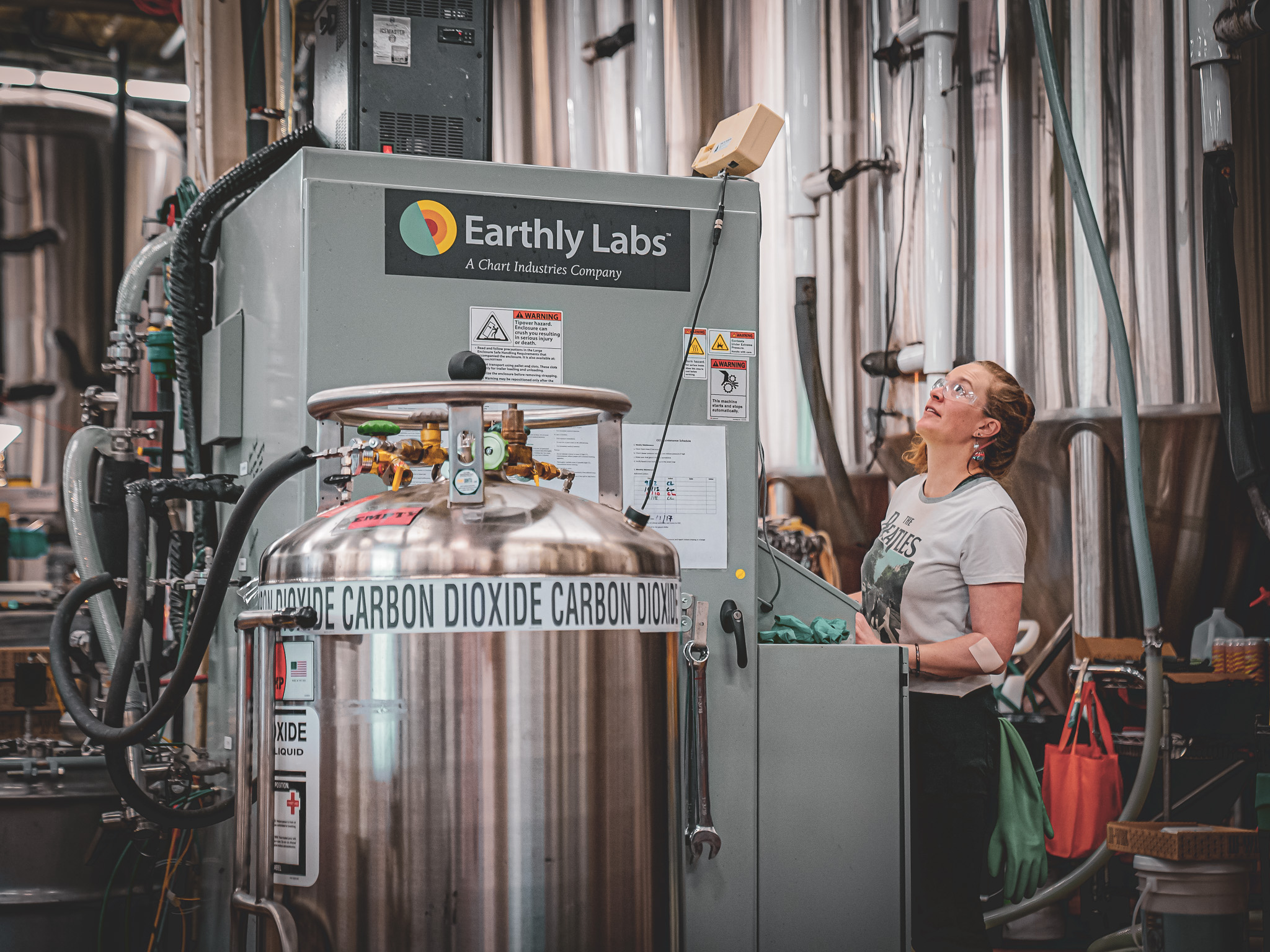
A woman controls an Earthly Labs-branded machine in a factory setting; a tank that says “carbon dioxide” is in the foreground.
A brewer makes adjustments to the Earthly Labs carbon-capture unit, which purifies carbon dioxide from the beer brewing process for use in carbonation.
Credit: Chart Industries Inc.

In 2021, Maine Beer Company’s carbon dioxide supplier ran short on carbon dioxide.

“There was potential for our beer to go stale in the tanks,” said Dave Love, the brewery’s sustainability manager. “We wouldn’t be able to use CO2 for any of our bottling, kegging, or centrifuge operations.”

The solution the company settled on originated on Mars — or more specifically, in NASA’s plans for harvesting resources from the Red Planet. Now it’s saving money and reducing emissions for wineries, distilleries, power companies, helium producers, and more.

Beginning in the 1990s, the company Pioneer Astronautics won multiple Small Business Innovation Research (SBIR) contracts from Johnson Space Center in Houston to build systems that could generate resources on Mars. The technology could, for example, capture carbon dioxide from the Martian atmosphere and combine it with hydrogen to produce water for life support and methane for rocket fuel. These capabilities weren’t entirely new, but Pioneer’s systems were compact, efficient, and automated.

Later, Pioneer Astronautics founder Robert Zubrin created Pioneer Energy to rearrange these subsystems into technology for the oil and gas industry (Spinoff 2015, 2020). He soon realized technology for capturing and purifying carbon dioxide on Mars could do the same in a brewery, capturing CO2 from the brewing process for use in carbonation. By 2015, the Craft Brewery Recovery System was in production (Spinoff 2016). In the end, though, the company put the system up for licensing.

Amy George founded Earthly Labs of Austin, Texas, in 2016 to develop small-scale carbon capture. She discovered the Craft Brewery Recovery System and obtained an exclusive license. 

Since the pandemic reduced its availability, carbon dioxide has continued experiencing shortages and volatility, and George said these have emerged as major drivers of interest in the technology. 

And it isn’t just helping brewers. After expanding into wineries and distilleries, Earthly Labs started discovering other markets. Energy companies often generate carbon dioxide as a by-product, which they can sell if it’s captured. Several are now customers.

Another application finding new customers is helium production. Helium, which is used to make microchips and fiber-optic cables, among other applications, is found in underground deposits, mixed with other gases, such as methane and carbon dioxide, that need to be separated. 

In 2021, Earthly Labs was acquired by Chart Industries Inc., which specializes in cryogenic equipment engineering and has helped scale up the technology for applications like power plants.

Share

Details

Last Updated

Sep 24, 2026

Powered by WPeMatico

Get The Details…
Andrew Wagner

Practicing for Safe Landings on the Moon and Beyond

Practicing for Safe Landings on the Moon and Beyond

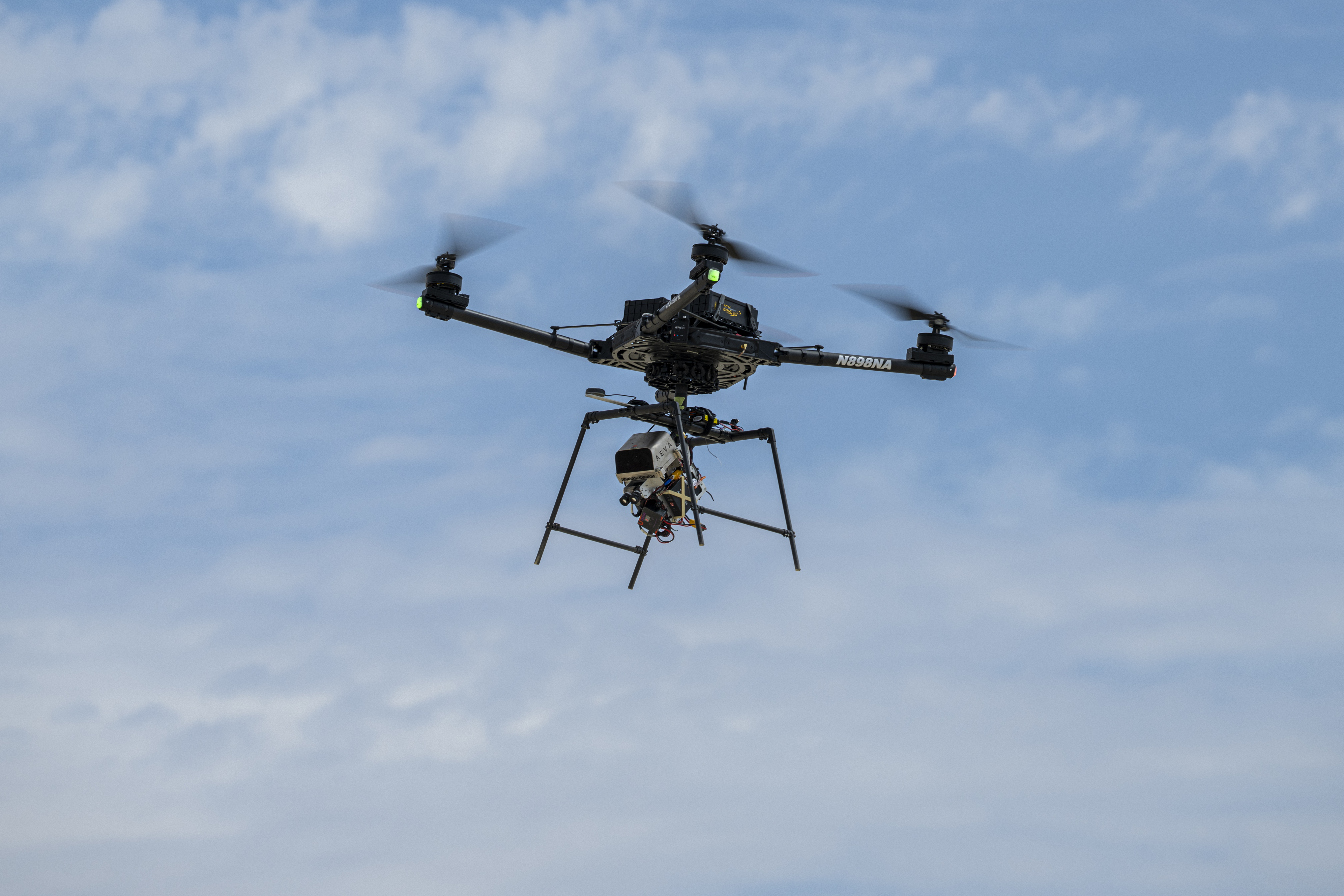
A remotely piloted drone with four rotors carries a guidance and navigation experiment through flight maneuvers.
NASA/Ryan Kline

In this Aug. 27, 2026, image, an Alta-X drone flies an advanced guidance and navigation system known as the Safe and Precise Landing – Integrated Capabilities Evolution (SPLICE) experiment near NASA’s Armstrong Flight Research Center in Edwards, California.

Researchers at NASA’s Johnson Space Center in Houston developed SPLICE, which successfully completed simulated lunar descent and landing maneuvers during recent testing. Its technologies provide safe and precise landing for the Moon, Mars, icy worlds, and other destinations using specialized navigation, guidance, and processing techniques. It enables landing in hard-to-reach and unknown areas that are of high scientific interest.

Image credit: NASA/Ryan Kline

Powered by WPeMatico

Get The Details…
HQ Web Team

US-India Satellite Captures Time-lapse Video of Volcanic Eruption

US-India Satellite Captures Time-lapse Video of Volcanic Eruption

In this animation, frames of NISAR data from December 2025 to August 2026 show the spread of lava from the northern crater of Krasheninnikov, a volcano pair on Russia’s Kamchatka Peninsula. In the image, the lava field appears brighter in the foreground than the surrounding surfaces.
 Credit: NASA’s Scientific Visualization Studio

Like tendrils on a vine, lava spreads out from the northern crater of Krasheninnikov, a volcano pair on the Pacific coast of Russia’s Kamchatka Peninsula. On July 30, 2025, an 8.8-magnitude earthquake had struck in the nearby ocean, apparently jolting one of the two volcanoes awake. A few days later, for the first time in nearly five centuries, Krasheninnikov started erupting. Since that day, the northern volcano has been spilling a steady, eastward-flowing field of molten rock and debris, and the NASA-ISRO Synthetic Aperture Radar (NISAR) mission has been tracking the changes in the landscape.

From its vantage point 464 miles (747 kilometers) above the surface, NISAR captured an image of Krasheninnikov on Dec. 25, 2025, just as the Earth-observing satellite was finishing post-launch checks and becoming operational. Twice every 12 days since — once as the satellite passed south to north, and again as it passed north to south — NISAR has returned to the same spot in orbit and taken detailed radar snapshots.

Researchers put 17 of the frames captured through mid-August into sequence, forming a time-lapse video that shows lava filling a smaller, inner caldera, then overflowing into a wider crater before widening into a fan. The animation highlights how NISAR’s observations can monitor the development of natural hazards, both for science and potentially for emergency response.

Though remote, many of Kamchatka’s dozens of volcanoes are closely monitored with ground instruments because they erupt frequently. Not so with Krasheninnikov, which has been quiet since about the year 1550. That NISAR’s L-band radar observed it at all speaks to the satellite’s near-global coverage of the planet’s land surface at resolutions in the dozens of feet; that it captured the erupting volcano over time shows the precision and reliability of its measurements.

“The consistency is crucial. Twice every 12 days, acquiring in this high-resolution mode and in two observation directions, this shows the promise of NISAR to closely monitor natural hazards,” said Matthew Pritchard, a member of the NISAR science team and geophysicist at Cornell University who analyzed the data used to create the animation. 

Images from microwaves

The detail in a single NISAR image results from the use of synthetic aperture radar, or SAR, a specialized processing technique pioneered by NASA’s Jet Propulsion Laboratory in Southern California for Earth observation from space. As the satellite orbits, the radar sends thousands of microwave pulses per second to Earth and receives the return signals, each of which is effectively a snapshot in time that contains information about the properties and characteristics of the surface below.

The SAR processing combines the many images of the same area, sharpening the view just as a lens brings a blurry object into focus. Each pixel in the individual frames of the Krasheninnikov time-lapse represents about a 30-foot-by-30-foot (10-meter-by-10-meter) square on the surface — about half the size of a tennis court.

Lava shows up lighter in the images due to the way that microwaves reflect more brightly compared with the surrounding surface, which, depending on the time of year, is either snow or bare ground. In addition to the lava field growing to the east, the video shows another flow to the northwest, one that likely formed before NISAR captured the first NISAR image.

When Pritchard was doing his doctoral research on Kamchatka volcanoes more than 20 years ago, analysis-ready radar data was difficult to come by, both because satellites didn’t revisit as often and the resolution of the images was relatively low.

Now in addition to getting frequent and comprehensive coverage of virtually all the planet’s roughly 1,300 active, above-sea-level volcanoes, the images are sharp down to the several-meter scale and are easily accessible via the cloud. 

“We’re seeing volcanoes around the world that we’ve never really had eyes on like this before,” said Pritchard.

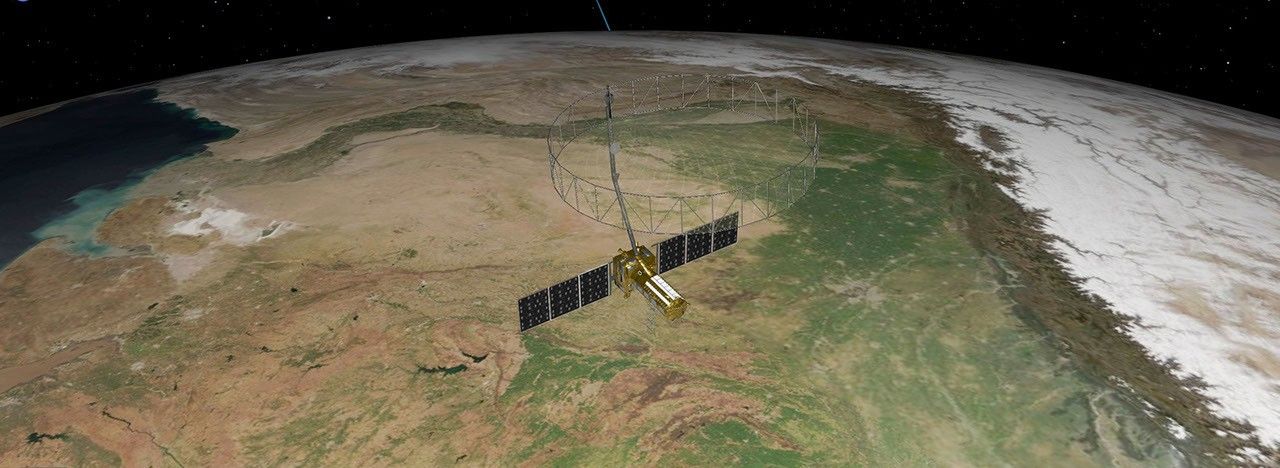
The NISAR satellite is the first free-flying space mission to feature two radar instruments: an L-band system and an S-band system. The systems are complementary due to their differing wavelengths. For example, the longer-wave L-band can pass through tree canopies, imaging the ground beneath. Meanwhile, depending on leaf sizes, S-band can collect observations of those canopies.

The data products from the NISAR mission’s L-band radar are available at the Alaska Satellite Facility Distributed Active Archive Center in Fairbanks, which hosts and distributes all NASA synthetic aperture radar data.

More about NISAR

Managed by Caltech for NASA, JPL leads the United States component of the project and provided the satellite’s L-band SAR and antenna reflector. The spacecraft bus and its S-band SAR were provided by ISRO (Indian Space Research Organisation).

The NISAR satellite is the first to carry two SAR instruments at different wavelengths, collecting data using the spacecraft’s giant drum-shaped reflector, which measures 39 feet (12 meters) wide, which is the largest radar antenna reflector NASA has sent into space.

To learn more about NISAR, visit: 

https://science.nasa.gov/mission/nisar/

Media Contacts

Andrew Wang / Andrew Good 
Jet Propulsion Laboratory, Pasadena, Calif. 
626-379-6874 / 818-393-2433 
andrew.wang@jpl.nasa.gov / andrew.c.good@jpl.nasa.gov 

2026-064

Powered by WPeMatico

Get The Details…
Stephen Carney

NASA to Study Human Health, Performance During Crew-13 Mission

NASA to Study Human Health, Performance During Crew-13 Mission

The SpaceX Crew-13 members are pictured in their pressure suits seated inside a mockup Dragon spacecraft during a preflight training session at the company's headquarters in Hawthorne, California. From left are, Roscosmos Sergey Teteryatnikov, NASA astronauts Luke Delaney and Jessica Watkins, and CSA (Canadian Space Agency) astronaut Joshua Kutryk.
(April 30, 2026) — The SpaceX Crew-13 members are pictured in their pressure suits seated inside a mockup Dragon spacecraft during a preflight training session at the company’s headquarters in Hawthorne, California. From left are, Roscosmos Sergey Teteryatnikov, NASA astronauts Luke Delaney and Jessica Watkins, and CSA (Canadian Space Agency) astronaut Joshua Kutryk.
Credit: SpaceX

During NASA’s SpaceX Crew‑13 mission aboard the International Space Station, astronauts will support a series of biomedical and human performance investigations, including a new collaborative effort to study how spaceflight affects blood flow and clotting. NASA also is testing crew members’ manual piloting skills, evaluating methods to counter vision and brain changes, gathering essential health data to inform future missions, and measuring forces astronauts experience during return‑to‑Earth to help refine re-entry hardware and procedures.

Among upcoming research, a new collaboration with ESA (European Space Agency), called Venous Haemostasis, builds on previous studies of blood flow in space by combining the two space agencies’ research efforts. By coordinating blood collections and other physiological data, researchers can reduce how often astronauts need blood drawn while combining analytical measurements to better understand how microgravity affects blood clotting and circulation.

“In space, weightlessness can disrupt normal blood flow in astronauts’ veins,” said Jason Lytle, one of the study’s principal investigators and a cardiovascular researcher at NASA’s Johnson Space Center in Houston. “Irregular and slow blood flow can increase the risk of blood clot formation, a serious health condition. Venous Haemostasis will help us understand why these changes may occur in some astronauts but not others.”

Before, during, and after flight, astronauts will undergo MRI scans, jugular vein ultrasounds, blood pressure checks, and blood draws so researchers can track changes in blood flow and blood composition. Results will inform preventative measures for at-risk crew members and improve health and safety on future missions. Researchers also hope to learn whether knowledge gained from this and other studies may lead to better ways to prevent and treat blood clots both in space and on Earth.

A performance study, called Manual Piloting, uses lunar-landing simulations to test how well astronauts can handle challenging landings after spending extended time in microgravity. Because long-duration spaceflight can affect sensory systems, orientation, and motion control during shifts between gravity environments, researchers are evaluating how those changes influence piloting performance and whether refresher training shortly before landing can strengthen capabilities and decision-making.

Researchers also will continue the B-Complex study, which investigates if a daily B-vitamin supplement can reduce or prevent Spaceflight-Associated Neuro-ocular Syndrome (SANS), a condition that can change astronauts’ eye structure during long-duration missions. Past research suggests taking B vitamins daily during spaceflight may help protect astronauts from SANS. Participating crew members will undergo vision tests and take B vitamins before, during, and after flight to evaluate the supplement’s effectiveness. The study also will assess whether the B vitamins influence how crew members’ blood vessels function before and after flight.

Select Crew-13 astronauts also will participate in three additional Human Research Program studies: Standard Measures, Spacecraft Occupant Risk, and Zero T2. Standard Measures collects consistent physiological and behavioral data from as many crew members as possible to establish baselines for research aimed at countering adverse effects. Spacecraft Occupant Risk characterizes the forces astronauts experience during landing to help NASA refine strategies and hardware to reduce injury risks. Zero T2 tracks the exercise routines of select crew members to compare health and performance data between astronauts who use the treadmill for aerobic exercise aboard station and those who do not. The comparisons will help researchers build exercise plans for future Artemis and deep-space missions, where spacecraft size could limit or eliminate treadmill use.

“Together, these investigations will help NASA better understand how the human body responds to spaceflight and whether specific strategies can effectively protect astronaut health and performance,” said Michael Stenger, Human Research Program chief scientist at NASA Johnson. “Knowledge gained will pave the way for NASA’s efforts to safely send humans farther into the solar system, including Artemis missions to the Moon, work on the Moon Base, and future expeditions to Mars.”

____

NASA’s Human Research Program pursues methods and technologies to support safe, productive human space travel. Through science conducted in laboratories, ground-based analogs, commercial missions, the International Space Station and Artemis missions, the program scrutinizes how spaceflight affects human bodies and behaviors. Such research drives the program’s quest to innovate ways that keep astronauts healthy and mission ready as human space exploration expands to the Moon, Mars, and beyond.

Powered by WPeMatico

Get The Details…
Monica Edwards