Artemis II Crew Both Subjects and Scientists in NASA Deep Space Research

Artemis II Crew Both Subjects and Scientists in NASA Deep Space Research

Artemis II NASA astronauts (left to right) Reid Wiseman, Victor Glover, and Christina Koch, and CSA (Canadian Space Agency) astronaut Jeremy Hansen stand in the white room on the crew access arm of the mobile launcher at Launch Pad 39B as part of an integrated ground systems test at Kennedy Space Center in Florida on Wednesday, Sept. 20, 2023. The test ensures the ground systems team is ready to support the crew timeline on launch day.
NASA/Frank Michaux

With Artemis II, NASA is taking the science of living and working in space beyond low Earth orbit. While the test flight will help confirm the systems and hardware needed for human deep space exploration, the crew also will be serving as both scientists and volunteer research subjects, completing a suite of experiments that will allow NASA to better understand how human health may change in deep space environments. Results will help the agency build future interventions, protocols, and preventative measures to best protect astronauts on future missions to the lunar surface and to Mars.

Science on Artemis II will include seven main research areas:

ARCHeR: Artemis Research for Crew Health and Readiness 

NASA’s Artemis II mission provides an opportunity to explore how deep space travel affects sleep, stress, cognition, and teamwork — key factors in astronaut health and performance. While these effects are well-documented in low Earth orbit, they’ve never been fully studied during lunar missions.

Artemis II astronauts who agreed to be part of the study will wear wristband devices that continuously monitor movement and sleep patterns throughout the mission. The data will be used for real-time health monitoring and safety assessments, while pre- and post-flight evaluations will provide deeper insights into cognition, behavior, sleep quality, and teamwork in the unique environment of deep space and the Orion spacecraft.

The findings from the test flight will inform future mission planning and crew support systems, helping NASA optimize human performance for the next era of exploration on the Moon and Mars.

Immune Biomarkers

Saliva provides a unique window into how the human immune system functions in a deep space environment. Tracing changes in astronauts’ saliva from before, during, and after the mission will enable researchers to investigate how the human body responds to deep space in unprecedented ways.

Dry saliva will be collected before, during, and after the mission. It will be blotted onto specialized paper in pocket-sized booklets since equipment needed to preserve wet spit samples in space – including refrigeration – will not be available due to volume constraints. To augment that information, liquid saliva and blood samples will be collected before and after the mission.  

Astronaut Randy Bresnik in a red shirt looks at small white booklet for saliva collection. He is on the International Space Station.
NASA Astronaut Randy Bresnik prepares to collect a dry saliva sample aboard the International Space Station. The process, which helps scientists investigate how the immune system is affected by spaceflight and will be part of the Artemis II mission, involves blotting saliva onto special paper that’s stored in pocket-sized booklets.
Credit: NASA

With these wet and dry saliva samples, scientists will gain insights into how the astronauts’ immune systems are affected by the increased stresses of radiation, isolation, and distance from Earth during their deep space flight. They also will examine whether otherwise dormant viruses are reactivated in space, as has been seen previously on the International Space Station with viruses that can cause chickenpox and shingles.

The information gathered from this study, when combined with data from other missions, will help researchers develop ways to keep crew members safe and healthy as we explore farther and travel for longer periods on deep space missions.

AVATAR: A Virtual Astronaut Tissue Analog Response

AVATAR is another important component of NASA’s strategy to gain a holistic understanding of how the deep space environment affects humans. Scientists plan to use organ-on-a-chip technology during Artemis II, marking the first time these devices will be used beyond the Van Allen belts.

Roughly the size of a USB thumb drive, the chips will measure how individual astronauts respond to deep space stressors, including extreme radiation and microgravity. The organ chips will contain cells developed from preflight blood donations provided by crew members to create miniature stand-ins, or “avatars,” of their bone marrow. Bone marrow plays a vital role in the immune system and is particularly sensitive to radiation, which is why scientists selected it for this study.

Two fingers holding a transparent rectangular device the size of a USB drive. Inside the device is a long line of blue with two short, red lines at opposite ends.
An organ chip for conducting bone marrow experiments in space.
Credit: Emulate

A key goal for this research is to validate whether organ chips can serve as accurate tools for measuring and predicting human responses to stressors. To evaluate this, scientists will compare AVATAR data with space station findings, as well as with samples taken from the crew before and after flight.

AVATAR could inform measures to ensure crew health on future deep space missions, including personalizing medical kits to each astronaut. For citizens on Earth, it could lead to advancements in individualized treatments for diseases such as cancer.

AVATAR is a demonstration of the power of public-private partnerships. It’s a collaboration between government agencies and commercial space companies: NASA, National Center for Advancing Translational Sciences within the National Institutes of Health, Biomedical Advanced Research and Development Authority, Space Tango, and Emulate.

Artemis II Standard Measures

The crew also will become the first astronauts in deep space to participate in the Spaceflight Standard Measures study, an investigation that’s been collecting data from participating crew members aboard the space station and elsewhere since 2018. The study aims to collect a comprehensive snapshot of astronauts’ bodies and minds by gathering a consistent set of core measurements of physiological response.

The crew will provide biological samples including blood, urine, and saliva for evaluating nutritional status, cardiovascular health, and immunological function starting about six months before their launch. The crew also will participate in tests and surveys evaluating balance, vestibular function, muscle performance, changes in their microbiome, as well as ocular and brain health. While in space, data gathering will include an assessment of motion sickness symptoms. After landing, there will be additional tests of head, eye, and body movements, among other functional performance tasks. Data collection will continue for a month after their return.

All this information will be available for scientists interested in studying the effects of spaceflight via request to NASA’s Life Sciences Data Archive. The results from this work could lead to future interventions, technologies, and studies that help predict the adaptability of crews on a Mars mission.

Radiation Sensors Inside Orion

During the uncrewed Artemis I mission, Orion was blanketed in 5,600 passive and 34 active radiation sensors. The information they gathered assured researchers Orion’s design can provide protection for crew members from hazardous radiation levels during lunar missions. That doesn’t mean that scientists don’t want more information, however.

Similar to Artemis I, six active radiation sensors, collectively called the Hybrid Electronic Radiation Assessors, will be deployed at various locations inside the Orion crew module. Crew also will wear dosimeters in their pockets. These sensors will provide warnings of hazardous radiation levels caused by space weather events made by the Sun. If necessary, this data will be used by mission control to drive decisions for the crew to build a shelter to protect from radiation exposure due to space weather. 

Additionally, NASA has again partnered the German Space Agency DLR for an updated model of their M-42 sensor – an M-42 EXT – for Artemis II. The new version offers six times more resolution to distinguish between different types of energy, compared to the Artemis I version. This will allow it to accurately measure the radiation exposure from heavy ions which are thought to be particularly hazardous for radiation risk. Artemis II will carry four of the monitors, affixed at points around the cabin by the crew.

Collectively, sensor data will paint a full picture of radiation exposures inside Orion and provide context for interpreting the results of the ARCHeR, AVATAR, Artemis II Standard Measures, and Immune Biomarkers experiments.

Lunar Observations Campaign

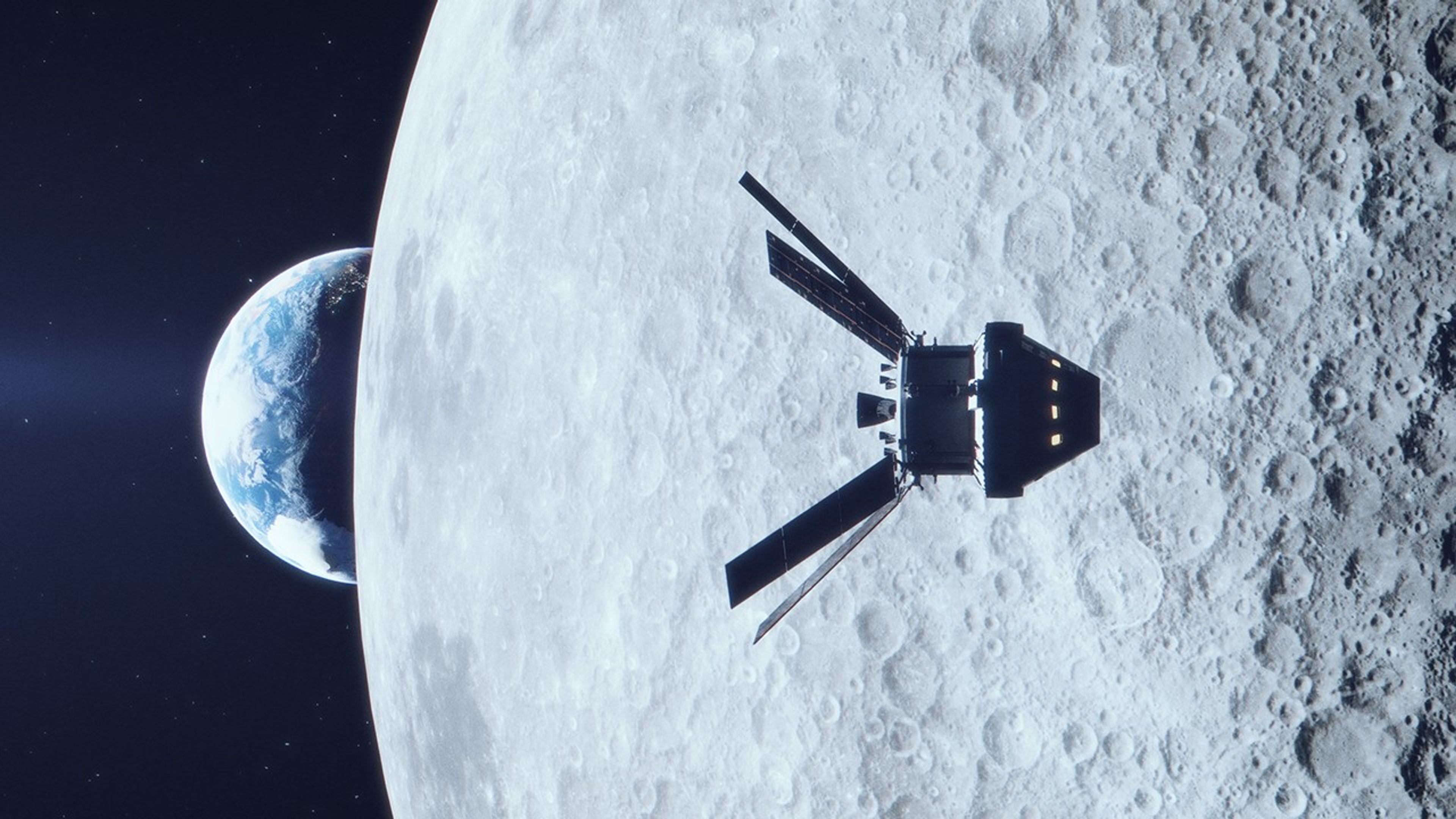
The Artemis II crew will take advantage of their location to explore the Moon from above. As the first humans to see the lunar surface up close since 1972, they’ll document their observations through photographs and audio recordings to inform scientists’ understanding of the Moon and share their experience of being far from Earth. It’s possible the crew could be the first humans to see certain areas of the Moon’s far side, though this will depend on the time and date of launch, which will affect which areas of the Moon will be illuminated and therefore visible when the spacecraft flies by.

Spacecraft such as NASA’s Lunar Reconnaissance Orbiter have been surveying and mapping the Moon for decades, but Artemis II provides a unique opportunity for humans to evaluate the lunar surface from above. Human eyes and brains are highly sensitive to subtle changes in color, texture, and other surface characteristics. Having the crew observe the lunar surface directly – equipped with questions that scientists didn’t even know to ask during Apollo missions – could form the basis for future scientific investigations into the Moon’s geological history, the lunar environment, or new impact sites.

This visualization simulates what the crew of Artemis II might see out the Orion windows on the day of their closest approach to the Moon. It compresses 36 hours into a little more than a minute as it flies the virtual camera on a realistic trajectory that swings the spacecraft around the Moon’s far side. This sample trajectory is timed so that the far side is fully illuminated when the astronauts fly by, but other lighting conditions are possible depending on the exact Artemis II launch date. The launch is scheduled for no later than April of 2026.
NASA Goddard/Ernie Wright

It will also offer the first opportunity for an Artemis mission to integrate science flight control operations. From their console in the flight control room in mission control, a science officer will consult with a team of scientists with expertise in impact cratering, volcanism, tectonism, and lunar ice, to provide real-time data analysis and guidance to the Artemis II crew in space. During the mission, the lunar science team will be located in mission control’s Science Evaluation Room at NASA’s Johnson Space Center in Houston. 

Lessons learned during Artemis II will pave the way for lunar science operations on future missions.

CubeSats

Several additional experiments are hitching a ride to space onboard Artemis II in the form of CubeSats – shoe-box-sized technology demonstrations and scientific experiments. Though separate from the objectives of the Artemis II mission, they may enhance understanding of the space environment.

Technicians install the Korea AeroSpace Administration (KASA) K-Rad Cube within the Orion stage adapter inside the Multi-Payload Processing Facility at NASA’s Kennedy Space Center in Florida on Tuesday, Sept. 2, 2025. The K-Rad Cube, about the size of a shoebox, is one of the CubeSats slated to fly on NASA’s Artemis II test flight in 2026.
Credit: NASA

Four international space agencies have signed agreements to send CubeSats into space aboard the SLS (Space Launch System) rocket, each with their own objectives. All will be released from an adapter on the SLS upper stage into a high-Earth orbit, where they will conduct an orbital maneuver to reach their desired orbit.

  • ATENEA – Argentina’s Comisión Nacional de Actividades Espaciales will collect data on radiation doses across various shielding methods, measure the radiation spectrum around Earth, collect GPS data to help optimize future mission design, and validate a long-range communications link.
  • K-Rad Cube – The Korea Aerospace Administration will use a dosimeter made of material designed to mimic human tissue to measure space radiation and assess biological effects at various altitudes across the Van Allen radiation belt.
  • Space Weather CubeSat – The Saudi Space Agency will measure aspects of space weather, including radiation, solar X-rays, solar energetic particles, and magnetic fields, at a range of distances from Earth.
  • TACHELES – The Germany Space Agency DLR will collect measurements on the effects of the space environment on electrical components to inform technologies for lunar vehicles.

Together, these research areas will inform plans for future missions within NASA’s Artemis campaign. Through Artemis, NASA will send astronauts to explore the Moon for scientific discovery, economic benefits, and build the foundation for the first crewed missions to Mars.

Powered by WPeMatico

Get The Details…
Rachel H. Kraft

NASA’s Northrop Grumman CRS-23 Infographics & Hardware

NASA’s Northrop Grumman CRS-23 Infographics & Hardware

A cylinder-shaped spacecraft with prominent cymbal-shaped solar arrays on either side of it nears a long robotic arm, with a cloudy Earth below.
Northrop Grumman’s Cygnus cargo craft awaits its capture by the International Space Stations’ Canadarm2 robotic arm, commanded by NASA astronaut Matthew Dominick on Aug. 6, 2024.
Credit: NASA

NASA’s Northrop Grumman Commercial Resupply Services 23, or Northrop Grumman CRS-23, will deliver more than 11,000 pounds of science and supplies to the International Space Station. This mission will be the first flight of the Cygnus XL, the larger, more cargo-capable version of the company’s solar-powered spacecraft.

The Cygnus XL will launch on a SpaceX Falcon 9 rocket from the Cape Canaveral Space Force Station in Florida.  Following arrival, astronauts aboard the space station will use the Canadarm2 to grapple Cygnus XL before robotically installing the spacecraft to the Unity module’s Earth-facing port for cargo unloading. Stream live launch and arrival coverage on NASA+Amazon PrimeYouTube.

Mission Infographics

NASA’s Northrop Grumman 23 commercial resupply mission will launch on a SpaceX Falcon 9 rocket to deliver research and supplies to the International Space Station.
NASA
NASA’s Northrop Grumman 23 commercial resupply mission will launch from Space Launch Complex 40 at Cape Canaveral Space Force Station in Florida.
NASA
NASA selected William
NASA selected William “Willie” McCool as an astronaut in 1996. McCool flew as a pilot on STS-107, his first mission. The STS-107 crew, including McCool, died on February 1, 2003, when space shuttle Columbia was lost during reentry over east Texas at about 9 a.m. EST, 16 minutes prior to the scheduled touchdown and NASA’s Kennedy Space Center. NASA’s Northrop Grumman 23 spacecraft is named in his honor.
NASA
NASA astronauts Jonny Kim and Zena Cardman will be on duty during the Cygnus spacecraft’s approach and rendezvous. Kim will be at the controls of the Canadarm2 robotic arm ready to capture Cygnus as Cardman monitors the vehicle’s arrival.
NASA

Mission Hardware

IDA Planar Reflector – This is a reflective element used by visiting spacecraft during docking. The spacecraft bounces a laser off the reflector to compute relative range, velocity, and attitude on approach to the International Space Station. Due to degradation found on the installed reflector, this unit will launch to support a future spacewalk to replace the damaged reflector.

Urine Processing Assembly (UPA) Distillation Assembly – The urine processor on the space station uses filtration and distillation to separate water from wastewater to produce potable water. This unit is launching as a spare.

Reactor Health Sensor – Part of the Environmental Control and Life Support System – Water Processing Assembly, includes two sensors with inlet and outlet ports to measure reactor health. This unit is being launched as a spare.

Pressure Management Device – This is an intravehicular activity system for performing pressurization and depressurization of the space station vestibules between the space station hatch and the hatch of a visiting spacecraft or other module, like the NanoRacks Airlock. During depressurization, most of the air will be added to the space station cabin air to save the valuable resource.

Air Selector Valve – This electro-mechanical assembly is used to direct airflow through the Carbon Dioxide Removal Assembly. Two units are launching as spares.

Major Constituent Analyzer Mass Spectrometer Assembly – This assembly monitors the partial pressure levels of nitrogen, oxygen, hydrogen, methane, water vapor, and carbon dioxide aboard station. This unit is launching as a contingency spare.

Major Constituent Analyzer Mass Sample/Series Pump Assembly – This contains plumbing and a pair of solenoid valves to direct sample gas flow to either of the redundant sample pumps. It draws sample gas from the space station’s atmosphere into the analyzer. This unit is launching as a contingency spare.

Major Constituent Analyzer Sample Distribution Assembly – This isolates the gas sample going to the Mass Spectrometer Assembly. The purpose is to distribute gas samples throughout the analyzer. This unit is launching as a contingency spare.

Charcoal Bed – The bed allows the Trace Contaminant Control System to remove high molecular weight contaminants from the station’s atmosphere. This unit is launching as a spare.

Common Cabin Air Assembly Heat Exchanger – This assembly controls cabin air temperature, humidity, and airflow aboard the space station. This unit is launching as a spare.

Sequential Shunt Unit – This regulates the solar array wing voltage when experiencing high levels of direct sunlight; in doing so, it provides usable power to the station’s primary power system. This unit is launching as a spare.

Solid State Lighting Assembly – This is a specialized internal lighting assembly aboard station. NASA will use one lighting assembly to replace a failed unit and will keep the others as spares.

Remote Power Control Module Type V This module distributes 120V/DC electrical power and provides current-limiting and fault protection to secondary loads aboard the orbiting laboratory. This module is launching as a spare.

Treadmill Isolator Assembly – The Upper, X, Y, and Z Isolator Assemblies are launching as spares for the space station’s treadmill, where they work together to reduce vibration and force transfer when astronauts are running.

Pump Fan Motor Controller – The controller is an electronic controller to modulate the power to the motor windings, which are coils of conductive wire that are wrapped around its core carrying electric current to drive the motor. Windings are commonly used in household appliances, cars (power steering), pumps, and more.

Quick Don Mask Assembly – This mask is used by the crew, along with the Pre-Breath Assembly, in emergency situations. This unit is launching to replace a unit aboard station.

Anomaly Gas Analyzer – This analyzer senses various gases, like oxygen, carbon dioxide, carbon monoxide, ammonia, and others, along with cabin pressure, water vapor and temperature. Two units are launching as an upgrade to the current analyzer system used on board.

Nitrogen, Oxygen Resupply Maintenance Kit – One tank of nitrogen and one tank of oxygen used for gas replenishment aboard the space station are launching to maintain gas reserves.

Crew and Equipment Translation Aid Luminaire – This is a lighting unit used aboard station to illuminate the astronauts’ equipment cart and surrounding work areas during spacewalks.

Powered by WPeMatico

Get The Details…
Joseph Zakrzewski

Near-Earth Asteroids as of September 2025

Near-Earth Asteroids as of September 2025

1 min read

Near-Earth Asteroids as of September 2025

The graphic presents data on near-Earth asteroids as of September 8, 2025.   Key statistics include: 39,123: Total number of discovered near-Earth asteroids of all sizes. 873: Discovered asteroids larger than 1 kilometer, with an estimated 50 left to be found. 11,343: Discovered asteroids larger than 140 meters, with an estimated 14,000 remaining to be found. NASA-DLR BECCAL Photo Op at the Space Symposium. 100 Tons amount of dust and sand-sized particles that bombard Earth daily. Near-Earth asteroid close approaches: 12 passed closer to Earth than the Moon in the last 30 days. 176 passed closer in the last 365 days. 500,000,000: Observations of near-Earth objects submitted to the Minor Planet Center. The background shows a space-themed image with the NASA logo at the top right.

Each month, NASA’s Planetary Defense Coordination Office releases a monthly update featuring the most recent figures on NASA’s planetary defense efforts, near-Earth object close approaches, and other timely facts about comets and asteroids that could pose an impact hazard with Earth. Here is what we’ve found so far.

Updated: September 11, 2025

Powered by WPeMatico

Get The Details…

NASA Uses Colorado Mountains for Simulated Artemis Moon Landing Course

NASA Uses Colorado Mountains for Simulated Artemis Moon Landing Course

4 Min Read

NASA Uses Colorado Mountains for Simulated Artemis Moon Landing Course

A LUH-72 Lakota helicopter flies over the mountains of northern Colorado Aug. 28 during a certification run for a lander flight training course for crewed Artemis missions. The mountains and valleys in Colorado have similar visual illusions to the Moon.

NASA has certified a new lander flight training course using helicopters, marking a key milestone in crew training for Artemis missions to the Moon. Through Artemis, NASA explore the lunar South Pole, paving the way for human exploration farther into the solar system, including Mars. 

The mountains in northern Colorado offer similar visual illusions and flight environments to the Moon. NASA partnered with the Colorado Army National Guard at the High-Altitude Army National Guard Aviation Training Site near Gypsum, Colorado, to develop the foundational flight training course.

“Artemis astronauts who will land on the Moon will need to master crew coordination and communication with one another,” said Paul Felker, acting deputy director of flight operations at NASA’s Johnson Space Center in Houston. “Much like they will on the Moon, astronaut teams are learning how to work together efficiently in a stressful environment to identify hazards, overcome degraded visual environments, and evaluate risks to successfully land.”

During the two-week certification run in late August, NASA astronauts Mark Vande Hei and Matthew Dominick participated in flight and landing training to help certify the course. The pair took turns flying a helicopter and navigating to landing zones. Artemis flight crew trainers, mission control leads, and lunar lander operational experts from NASA Johnson joined them on each helicopter flight to assess the instruction, training environment, and technical applications for crewed lunar missions.

The NASA astronauts and trained instructor pilots with the Army National Guard flew to progressively more challenging landing zones throughout the course, navigating the mountainous terrain, and working together to quickly and efficiently land the aircraft. 

Teams can train year-round using the course. Depending on the season, the snowy or dusty conditions can cause visual obstruction. Lunar dust can cause similar visual impairment during future crewed missions.

“Here in Colorado, we have specifically flown to dusty areas, so we know and understand just how important dust becomes during the final descent phase,” Vande Hei said. “Dust will interact with the lander thrusters on the Moon. During our flight training, we have had to revert to our instruments – just like we would on the Moon – because astronauts may lose all their visual cues when they’re near the surface.” 

During Artemis III, four astronauts inside the agency’s Orion spacecraft on top of the SLS (Space Launch System rocket) will launch to meet SpaceX’s Starship Human Landing System in lunar orbit. Orion will then dock with the Starship system and two astronauts will board the lander. Astronauts will use the Starship lander to safely transport themselves from lunar orbit to the lunar surface. Following surface operations, the two astronauts will use Starship to launch from the lunar surface, back to lunar orbit, and dock with Orion to safely journey back to Earth.

The NASA-focused course has been in development since 2021. Vande Hei and Dominick are the 24th and 25th NASA astronauts to participate in and evaluate the course based on functionality and Artemis mission needs. One ESA (European Space Agency) astronaut has also participated in the course.

“This course will likely be one of the first group flight training opportunities for the Artemis III crew,” said NASA astronaut Doug Wheelock, who helped to develop the foundational training course for the agency. “While the astronauts will also participate in ground and simulation training in Ohio and Texas, the real-world flight environment in Colorado at offers astronauts an amazing simulation of the problem solving and decision making needed to control and maneuver a lunar lander across an equally dynamic landscape.”

Though the course is now certified for Artemis, teams will continue to evaluate the training based on astronaut and technical feedback to ensure mission success and crew safety.

Through the Artemis campaign, NASA will send astronauts to explore the Moon for scientific discovery, economic benefits, and to build the foundation for the first crewed missions to Mars for the benefit of all. 

For more information about Artemis visit: 

https://www.nasa.gov/artemis

Share

Details

Last Updated

Sep 10, 2025

Editor
Beth Ridgeway
Contact
Corinne M. Beckinger

Powered by WPeMatico

Get The Details…
Corinne M. Beckinger

The Earth Observer Editor’s Corner: July–September 2025

The Earth Observer Editor’s Corner: July–September 2025

Editor's Corner header

13 min read

The Earth Observer Editor’s Corner: July–September 2025

Black Separator Line

NOTE TO READERS: After more than three decades associated with or directly employed by NASA, Steve Platnick [GSFC—Deputy Director for Atmospheres, Earth Sciences Division] stepped down effective August 8, 2025. Steve began his civil servant career at GSFC in 2002, but his GSFC association went back to 1993, first as a contractor and then as one of the earliest employees of the Joint Center for Earth Systems Technology (JCET). During his time at NASA, Steve played an integral role in the sustainability and advancement of NASA’s Earth Observing System platforms and data. He was actively involved in the Moderate Resolution Imaging Spectroradiometer (MODIS) Science Team, where he helped advance several key components of the MODIS instrument. He was also the NASA Lead/co-Lead for the Suomi National Polar-orbiting Partnership (Suomi NPP), Atmosphere Discipline from 2012–2020 where he focused on operational cloud optical and microphysical products.

In 2008, Steve became the Earth Observing System (EOS) Senior Project Scientist. In this role, he led the EOS Project Science Office that supported airborne sensors, ground networks, and calibration labs. The Kudos article titled “Steve Platnick Steps Down from NASA After 34 Years of Service” includes a more detailed account of Steve’s career and includes a list of awards he has received.

Steve’s departure leaves a vacancy in the author’s chair for “The Editor’s Corner” – another role Steve filled as EOS Senior Project Scientist. Barry Lefer [NASA Headquarters—Associate Director of Research, Earth Science Division] graciously agreed to serve as guest author of the editorial in the current compilation. I want to thank Steve for all his support for The Earth Observer over the years and thank Barry for stepping in as the author of “The Editor’s Corner” for the time being.

Alan Ward, Executive Editor, The Earth Observer

Black Separator Line

I begin this editorial with news of a successful Earth science launch. At 5:40 PM Indian Standard Time (IST), or 8:10 AM Eastern Daylight Time (EDT), on July 30, 2025, the joint NASA–Indian Space Research Organization (ISRO) Synthetic Aperture Radar, or NISAR, mission launched from the Satish Dhawan Space Centre on India’s southeastern coast aboard an ISRO Geosynchronous Satellite Launch Vehicle (GSLV) rocket 5. The ISRO ground controllers began communicating with NISAR about 20 minutes after launch, at just after 8:29 AM EDT, and confirmed it is operating as expected.

NISAR will use two different radar frequencies (L-band SAR and S-band SAR) to penetrate clouds and forest canopies. Including L-band and S-band radars on one satellite is an evolution in SAR airborne and space-based missions that, for NASA, started in 1978 with the launch of Seasat. In 2012, ISRO began launching SAR missions starting with Radar Imaging Satellite (RISAT-1), followed by RISAT-1A in 2022, to support a wide range of applications in India.

Combining the data from these two radars will allow researchers to systematically and globally map Earth – measuring changes of our planet’s surface down to a centimeter (~0.4 inches). With this detailed view, researchers will have an unprecedented ability to observe and measure complex processes from ecosystem disturbances to natural hazards to groundwater issues. All NISAR science data will be freely available and open to the public.

Following the successful launch, NISAR entered an approximately 90-day commissioning phase to test out systems before science operations begin. A key milestone of that phase was the completion of the deployment of the 39-ft (12-m) radar antenna reflector on August 15 – see Video. The process began on August 9, when the satellite’s boom, which had been tucked close to its main body, started unfolding one joint at a time until it was fully extended about four days later. The reflector assembly is mounted at the end of the boom. On August 15, small explosive bolts that held the reflector assembly in place were fired, enabling the antenna to begin a process called the bloom – its unfurling by the release of tension stored in its flexible frame while stowed like an umbrella. Subsequent activation of motors and cables pulled the antenna into its final, locked position.

Video: NISAR mission team members at NASA JPL, working with colleagues in India, executed the deployment of the satellite’s radar antenna reflector on Aug. 15, 2025. About 39 feet (12 meters) in diameter, the reflector directs microwave pulses from NISAR’s two radars toward Earth and receives the return signals. Credit: NASA/JPL-Caltech

The radar reflector will be used to direct and receive microwave signals from the two radars. By interpreting the differences between the L-band and S-band measurements, researchers will be able to discern characteristics about the surface below. As NISAR passes over the same locations twice every 12 days, scientists can evaluate how those characteristics have changed over time to reveal new insights about Earth’s dynamic surfaces.

With the radar reflector now in full bloom, scientists have turned their attention to tuning and testing the radar and preparing NISAR for Science Operations, which are anticipated to start around the beginning of November. Congratulations to the NISAR team on a successful launch and deployment of the radar reflector. Along with the science community, I am excited to see what new discoveries will result from the data collected by the first Earth System Observatory mission.

Turning now to news from active missions, the Soil Moisture Active Passive (SMAP) mission has collected over 10 years of global L-band radiometry observations that have resulted in surface soil moisture, vegetation optical depth (VOD), and freeze/thaw state estimates that outperform past and current products. A decade of SMAP soil moisture observations has led to scientific achievements, including quantifying the linkages of the three main metabolic cycles (e.g., carbon, water, and energy) on land. The data have been widely used by the Earth system science community to improve drought assessments and flood prediction as well as the accuracy of numerical weather prediction models.

SMAP’s Early Adopter program has helped connect SMAP data with people and organizations that need it. The program has increased the awareness of SMAP mission products, broadened the user community, increased collaboration with potential users, improved knowledge of SMAP data product capabilities, and expedited the distribution and uses of mission products for a suite of 16 products available. For example, the L-band VOD, which is related to water content in vegetation, is being used to better understand water exchanges in the soil–vegetation–atmosphere continuum.

The SMAP Active–Passive (AP) algorithm – based on data from SMAP and the European Copernicus Program Sentinel-1 C-band synthetic aperture radar (SAR) – will be adapted to work with L-band data from the newly launched NISAR mission. The result will be estimates of global soil moisture at a spatial resolution of 1 km (0.62 mi) or better approximately once per week.

In addition, the data collected during the SMAP mission would be continued and further enhanced by the European Union’s Copernicus Imaging Microwave Radiometer (CIMR) mission if it launches. This proposed multichannel microwave radiometry observatory includes L-band and four other microwave channels sharing a large mesh reflector – like the one used with SMAP. The plan calls for CIMR to follow a similar approach as SMAP for RFI detection and meet the instrument thermal noise and data latency of SMAP for next-mission desired characteristics.

To learn more about what SMAP has accomplished see “A Decade of Global Water Cycle Monitoring: NASA Soil Moisture Active Passive Mission.”

NASA’s Orbiting Carbon Observatory-2 (OCO-2) has been the “gold standard” for atmospheric carbon dioxide (CO2) observations from space for over a decade. The data returned from OCO-2 provide insights into plant health, forest management, forecasting crop yields, fire-risk models, and anticipating droughts. 

OCO-3, constructed from spare parts left after OCO-2, was launched to the International Space Station (ISS) in 2019, where it has operated for over five years. OCO-3 extends the global CO2 measurement record while adding new capabilities made possible by being on ISS (e.g., detailed views of urban and tropical regions). 

The overarching OCO mission hasn’t just about been about data and hardware. Although both those elements are parts of the story, the human stories woven through the mission’s successes and setbacks are really what holds the mission together. The feature, “A Tapestry of Tales: 10th Anniversary Reflections from NASA’s OCO-2 Mission,” sheds light on some of these personal stories from the OCO-2 and OCO-3 missions.

The individual tales contained in this article reveal the grit and determination behind the scenes of the success of OCO-2 and OCO-3, from the anxiety and excitement surrounding the launch of OCO-2, to moments of fieldwork in the Nevada desert, to internships where wildfire responders turned to OCO-2 data to improve fire-risk models. Taken together, these stories form a “tapestry” that reveals how the OCO-2 and OCO-3 missions continue to illuminate the dynamics of Earth’s atmosphere – one breath at a time.

These personal perspectives underscore that science is not just numbers; it’s people pushing boundaries, navigating failure, and inspiring ways to make our planet safer and healthier. In a time such as this, this is an important reminder.

The joint NASA–U.S. Geological Survey (USGS) Landsat program has been a cornerstone of Earth observation for over 50 years. On July 13, Landsat 9 collected its millionth image: a stunning shot of the Arctic National Wildlife Refuge in Alaska – see Figure. Landsat 9, the most recent satellite in the Landsat series, orbits Earth alongside Landsat 8. Together, these satellites collect invaluable data about Earth’s changing land surface every eight days.

Summer 2025 Editor's Corner Image
Figure: This Landsat 9 image showing the Beaufort Sea shoreline off Alaska and Canada is just one of the scenes captured and processed on July 13, 2025— the same day the USGS EROS archive reached a milestone of one million Landsat 9 Level-1 products. This false color image was made with bands 6, 5, and 4 from the Operational Land Imager. This remote area allows the pristine wilderness environment to support a diverse wildlife and unique ecosystem that includes various species of mammals, birds, and fish. Landsat Level-1 products from Landsat 1 through Landsat 9 can be downloaded at no charge from a number of systems – visit the Landsat Data Access webpage to learn more. 
Credit: Public Domain

After collecting more than 3.3 million images over the course of more than 26 years in orbit, Landsat 7 was decommissioned on June 4, 2025. A YouTube video released at the time of decommissioning provides a concise visual summary of the Landsat 7 mission’s achievements – and the technical challenges overcome. In addition, The Earth Observer did a feature for the 20th anniversary of Landsat 7 in the July–August 2019 issue, called “The Living Legacy of Landsat 7: Still Going Strong After 20 Years in Orbit” [Volume 31, Issue 4, pp. 4–14] that is a useful resource to learn more about the history and achievements (through 20 years) of the mission.

One of the strengths of the Landsat program is its potential for data integration with other satellites. The Harmonized Landsat and Sentinel-2 (HLS) product exemplifies this collaborative approach by combining data from Landsat 8 and 9 with data from the European Space Agency’s Copernicus Sentinel-2 A, B, and C missions. Whereas Landsat alone has a repeat time of eight days (i.e., combining Landsat 8 and 9 data); the combined HLS dataset provides imagery for the same location on Earth every 1.6 days – enabling researchers to monitor short-term changes in Earth’s land surface much more effectively than using Landsat or Sentinel-2 data alone.

HLS became one of the most-downloaded NASA data products in fiscal year 2024, with continued growth on the horizon. In February 2025, the program expanded with nine new vegetation indices based on HLS data, with historical processing back to 2013 scheduled for completion by early 2026. Low-latency HLS products will also be available in late 2026. For the full story of how HLS came to be – see the feature: “Harmonized Landsat and Sentinel-2: Collaboration Drives Innovation.”

Following a 13-month hibernation, the Global Ecosystem Dynamics Investigation (GEDI) mission was reinstalled to its original location aboard the ISS and resumed operations on April 22, 2024. Since this storage period, GEDI’s lasers have been operating nominally and the mission has continued to produce high-quality observations of the Earth’s three-dimensional structure, amassing 33 billion land surface returns as of November 27, 2024.

The mission team has been actively processing and releasing post-storage data to the public, with Version 2.1 – GEDI L1B, L2A, L2B, and L4A data products, which include data through November 2024, all available for download. The new L4C footprint-level Waveform Structural Complexity Index (WSCI) product using pre-storage data has also been released. Looking ahead, the team is preparing Version 3.0 (V3) of all data products, which will incorporate post-storage data while improving quality filtering, geolocation accuracy, and algorithm performance.

The 2025 GEDI Science Team Meeting (STM) brought together the mission science team, competed science team, representatives from the distributed active archive centers (DAACs), collaborators, stakeholders, and data users. Notably, it marked the first in-person gathering of the second competed science team, who shared updates on their research projects. The STM held an important space for brainstorming, knowledge-sharing, and discussion as the GEDI mission continues to flourish in its second epoch. To learn more, see “Summary of the 2025 GEDI Science Team Meeting.”

Shifting focus to the boreal forests of North America, the NASA Arctic–Boreal Vulnerability Experiment (ABoVE) is now in its final year, marking the end of a decade-long scientific endeavor that has transformed our understanding of environmental change in Alaska and western Canada. This ambitious campaign, funded primarily by NASA’s Terrestrial Ecology Program, has successfully progressed through three distinct phases: ecosystem dynamics (2015–2018), ecosystem services (2017–2022), and the current analysis and synthesis phase (2023–present).

As ABoVE approaches its conclusion, the program has grown to encompass 67 NASA-funded projects with over 1000 participating researchers – a testament to the collaborative scale required to address complex Arctic–boreal ecosystem questions. The program’s integrated approach, combining field research, airborne campaigns, and satellite remote sensing, has generated unprecedented insights into how environmental changes in these northern regions affect both vulnerable ecosystems and society.

The recent 11th – and final – ABoVE Science Team Meeting was an opportunity to showcase the program’s evolution from data collection to synthesis, highlighting successful community engagement initiatives, cutting-edge research on carbon dynamics and ecosystem responses, and innovative science communication strategies that have made this complex research accessible to diverse audiences. With synthesis activities now underway, ABoVE is positioned to deliver comprehensive insights that will inform Arctic and boreal research for years to come. To learn more, see “Summary of the 11th and Final ABoVE Science Team Meeting.”

Last but certainly not least, I want to both recognize and congratulate Compton J. Tucker [GSFC—Senior Researcher]. Compton retired from NASA in March 2025 after 48 years of public service, and then in April, was among 149 newly elected members to the National Academy of Sciences (NAS) – which is one of the highest honors in American science. This recognition from NAS brings Compton’s career full circle. He came to GSFC as a NAS postdoc before joining NASA as a civil servant. Compton is a pioneer in the field of satellite-based environmental analysis, using data from various Landsat missions and from the National Oceanographic and Atmospheric Administration’s (NOAA) Advanced Very High Resolution Radiometer (AVHRR) instrument. His research has focused on global photosynthesis on land, determining land cover, monitoring droughts and food security, and evaluating ecologically coupled disease outbreaks. The Kudos, “Compton J. Tucker Retires from NASA and is Named NAS Fellow,” provides more details about Compton’s research achievements and all of the other scientific awards and honors received throughout his career.

Barry Lefer
Associate Director of Research, Earth Science Division

Share

Details

Last Updated

Sep 10, 2025

Related Terms

Powered by WPeMatico

Get The Details…