Be a Clump Scout and Help Reveal Secrets of Stellar Nurseries
In the mid-20th century, astronomers discovered strange “clumpy” galaxies filled with mysterious bright blobs – massive stellar nurseries where stars are born at an explosive rate. Curiously, these clumpy galaxies were much more common in the early universe than they are today. We still don’t know why they vanished.
The Euclid space telescope, an ESA (European Space Agency) mission with critical contributions from NASA, has begun to capture images of millions of galaxies. These images – far more than any team of professional scientists could ever catalog alone – include high-definition views of clumpy galaxies that promise to reveal structure within and among the clumps. Astronomers hope to use these images to obtain new information about which galaxies host clumps, where the clumps are, how and why they evolved, and more – but they need your help!
To tackle this mountain of data, scientists are creating a “digital assistant” in the form of machine learning, a kind of artificial intelligence. The machine algorithm has been partially trained with results from an earlier project called “Galaxy Zoo: Clump Scout.” Now, as a volunteer for the new Galaxy Zoo: Clump Scout II project, you’ll improve and train this tool further. You’ll examine images of galaxies that the machine has labelled with squares where it thinks it sees a real clump. The machine often gets confused by distant stars or camera glitches. So you’ll gently move those squares around, delete them, or add new ones, to help the algorithm learn.
As a part of Galaxy Zoo: Clump Scout II, you will help investigate how giant star-forming nurseries formed, solve the mystery of their disappearance over cosmic time, and reveal more about how star formation really works in galaxies. All you need is a laptop or smartphone. Click here to learn more!
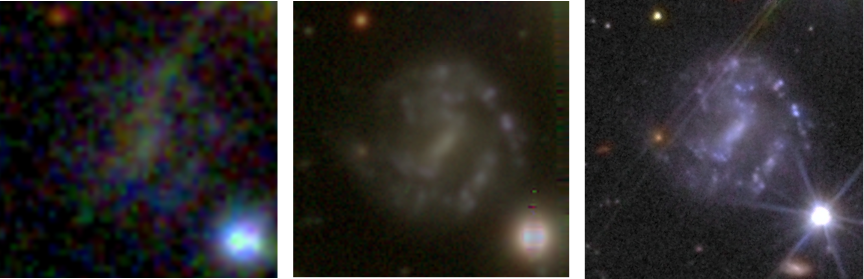
A clumpy galaxy seen by telescopes with the Sloan Digital Sky Survey (left), the Hyper Suprime-Cam (middle) and the Euclid mission (right). You can see how the better resolving power of each subsequent telescope helps us see more and more detail about the star-forming clumps. (The bright object at the bottom right is a foreground star.)
Image data: SDSS (left; Sloan Digital Sky Survey – CC BY 4.0); HSC (center; NAOJ/HSC Project – CC BY 4.0); Euclid (right; ESA/Euclid/Euclid Consortium/NASA – CC BY 3.0 IGO). Image post-processing and compilation by Hugh Dickinson and Jürgen Popp.
Learn More and Get Involved
Galaxy Zoo: Clump Scout II
Identify star-forming clumps in galaxy images, and help train machines to do the same.
Spacewalking With Scott Wray, Artemis EVA Training Lead
6 Min Read
Spacewalking With Scott Wray, Artemis EVA Training Lead
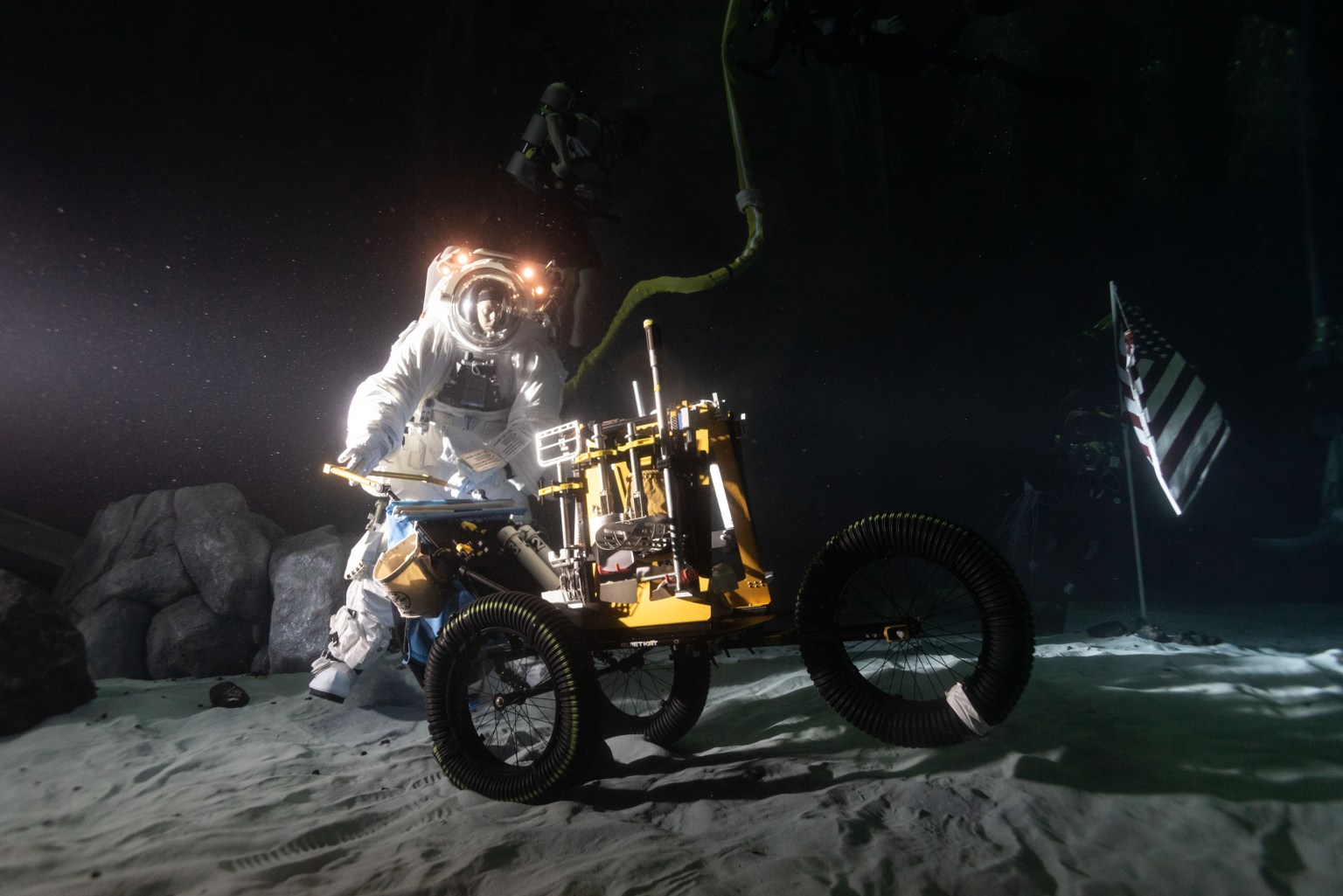
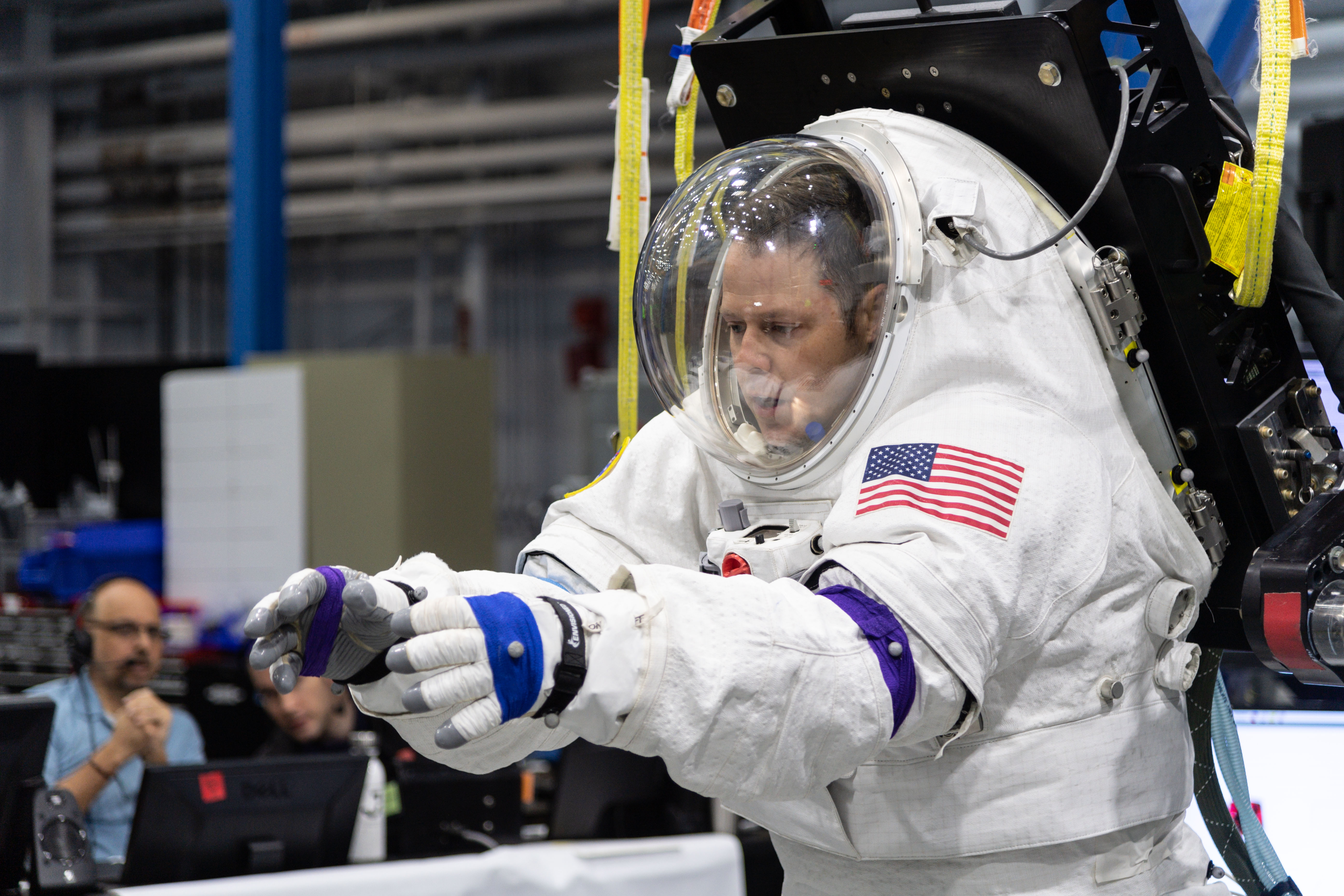
Scott Wray conducts an underwater test of NASA’s Exploration Extravehicular Mobility Unit (xEMU) spacesuit in the Neutral Buoyancy Laboratory at Johnson Space Center in Houston.
Credits: NASA/Bill Brassard
Scott Wray’s experience with spacewalks started when he was about 6 years old. A tent resembling a lunar lander provided the perfect imaginary spacecraft. “I would lie on my back with my feet propped up on a pillow as I imagined going through a launch countdown sequence,” he said. “Then I would exit the tent into a darkened bedroom and hop around just like the footage I had seen of Apollo astronauts.”
Today, with more than 16 years at NASA’s Johnson Space Center under his belt, Wray is proud to have shaped spacewalk training across three eras of human spaceflight.
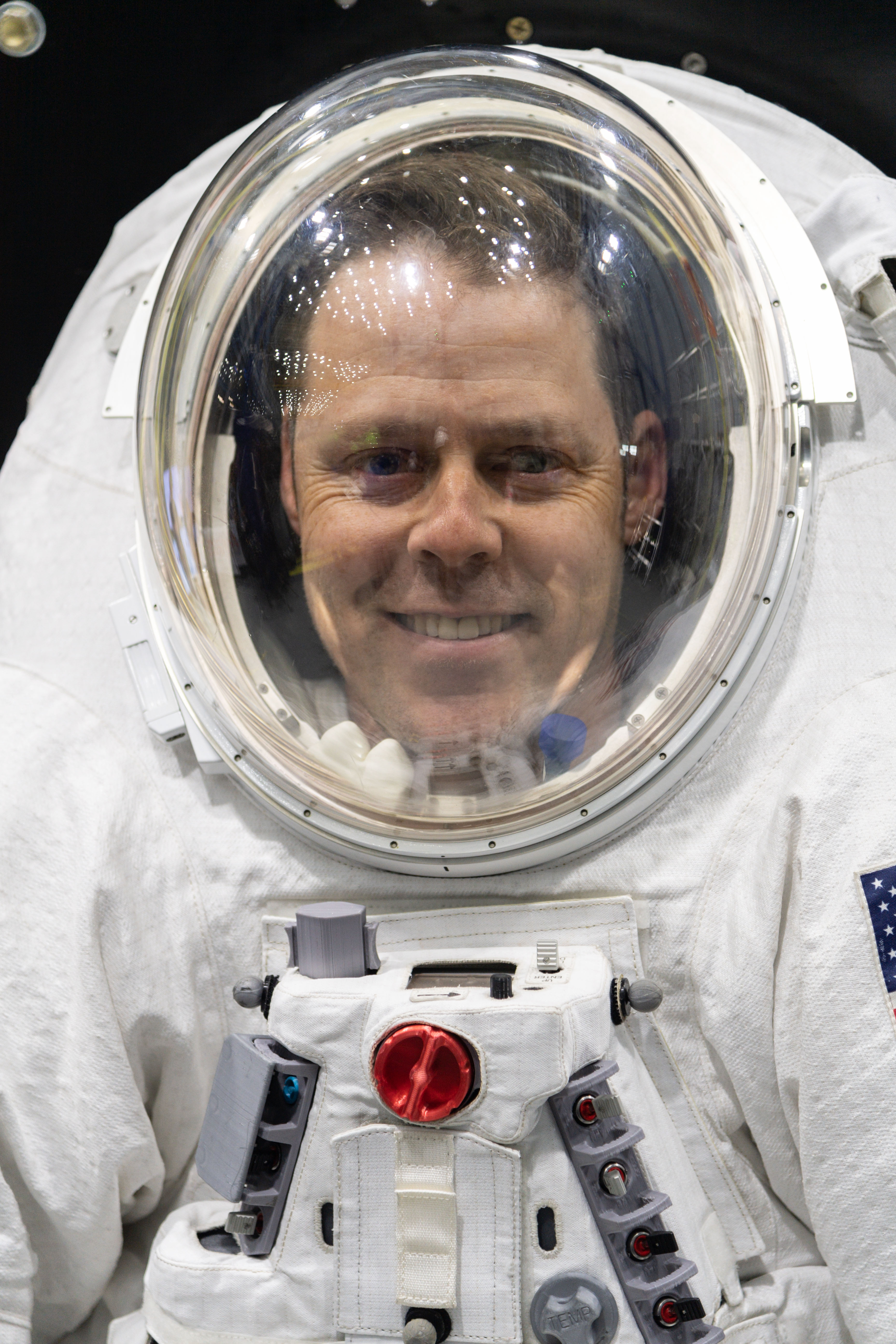
Scott Wray smiles before a suited test run with Johnson’s Active Response Gravity Offload System.
NASA/Josh Valcarcel
The childhood fascination with spaceflight evolved into a passion for engineering, demonstrated through countless LEGO and airplane model builds and voracious readership of aircraft design books. His path to NASA was cemented by a week-long camp at Space Center Houston, which included several tours of Johnson’s signature facilities and a visit by former NASA Flight Director Gene Kranz. “I was so inspired by the facilities and the incredible history of this place, I knew that I had to work here someday,” he said.
Wray participated in NASA’s Contractor Co-op Program with United Space Alliance while studying aerospace engineering at Embry-Riddle Aeronautical University and completed several tours with different organizations at Johnson. At the time, astronauts were training to conduct spacewalks, also known as EVAs, for both the Space Shuttle and International Space Station programs. During one co-op experience with the shuttle’s In-Flight Maintenance Team (IFM), Wray observed the IFM and EVA teams collaborating with the STS-117 crew to fix the peeled-back thermal blanket on space shuttle Atlantis’s Orbital Maneuvering System pod. He helped the teams develop crew procedures for practicing the repair inside the shuttle, using surgical staples and pins to tack the blanket down. “This real-time troubleshooting is where I learned about the EVA group and set my sights on working there during my final co-op tour,” he said. “I love to be hands-on, to take things apart and come up with creative solutions – that’s what really attracted me to EVA.”
EVA work also reminded Wray of time spent as a dog mushing guide in Alaska. “That is where I got my first taste of expeditionary skills,” he said. “We lived in a remote glacier camp, taking care of 250 Alaskan Huskies. I learned how to make do with the tools you have and make repairs to a broken sled miles away from home.” At times, Johnson’s EVA team must create similar workarounds. “Some of our best moments as a team have come when our hardware or vehicle has malfunctioned, requiring us to devise a real-time solution,” he said. “It sounds scrappy, but I think it’s how we put the human into human spaceflight.”
Wray became a full-time EVA team member at Johnson after graduation, working under various contracts until he transitioned to a civil servant position in 2021. He started as an EVA instructor focused on tools and hardware and teaching astronauts how to perform their maintenance and repair duties. As NASA’s astronaut corps evolved to include a wider range of backgrounds and body types, Wray worked to develop new EVA techniques and tools that could accommodate any crew member. “That meant creating a curriculum that capitalized on individual strengths while building teamwork and resilience,” he said.
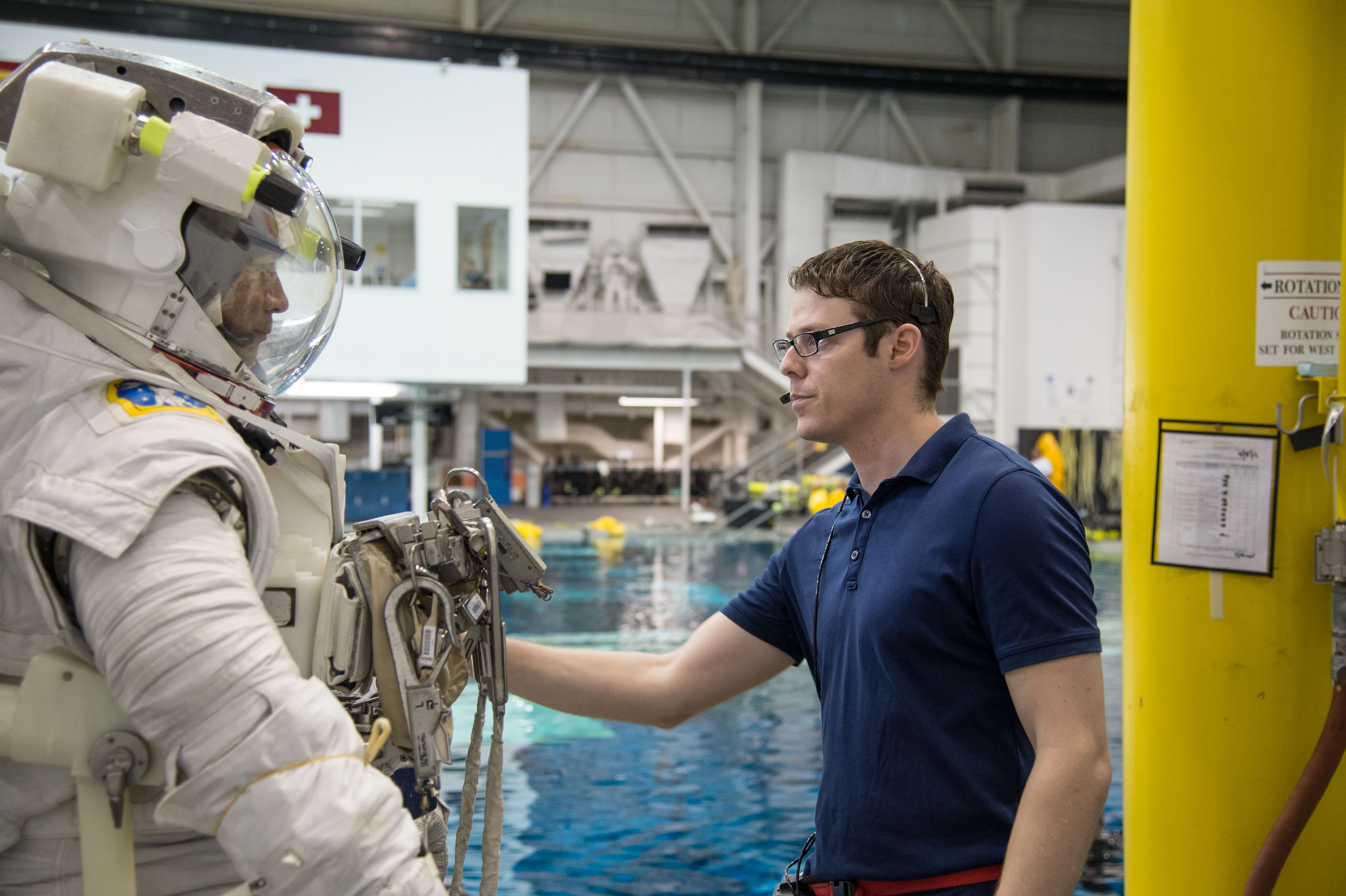
Scott Wray prepares JAXA (Japan Aerospace Exploration Agency) astronaut Kimiya Yui for an EVA training run in the Neutral Buoyancy Laboratory pool.
NASA/Bill Stafford
Wray also served as a flight controller for shuttle and space station EVAs. He remembers being on console in Johnson’s Mission Control Center during a space station EVA in July 2013. That excursion was terminated early after water began filling the spacesuit helmet of ESA (European Space Agency) astronaut Luca Parmitano, and the team could neither determine its source nor stop its flow. “That incident taught me that even after decades of operating a spacesuit, there are still failure modes we haven’t imagined,” he said. “It reinforced the need for vigilance, adaptability, and continuous learning—because in human spaceflight, lives depend on it.”
In the last few years, Wray’s responsibilities shifted to preparing Artemis crew members for missions to the Moon. Now the Artemis EVA training lead, Wray oversees the development of training flows that will ready astronauts for lunar surface operations – a challenge NASA has not faced in over 50 years.
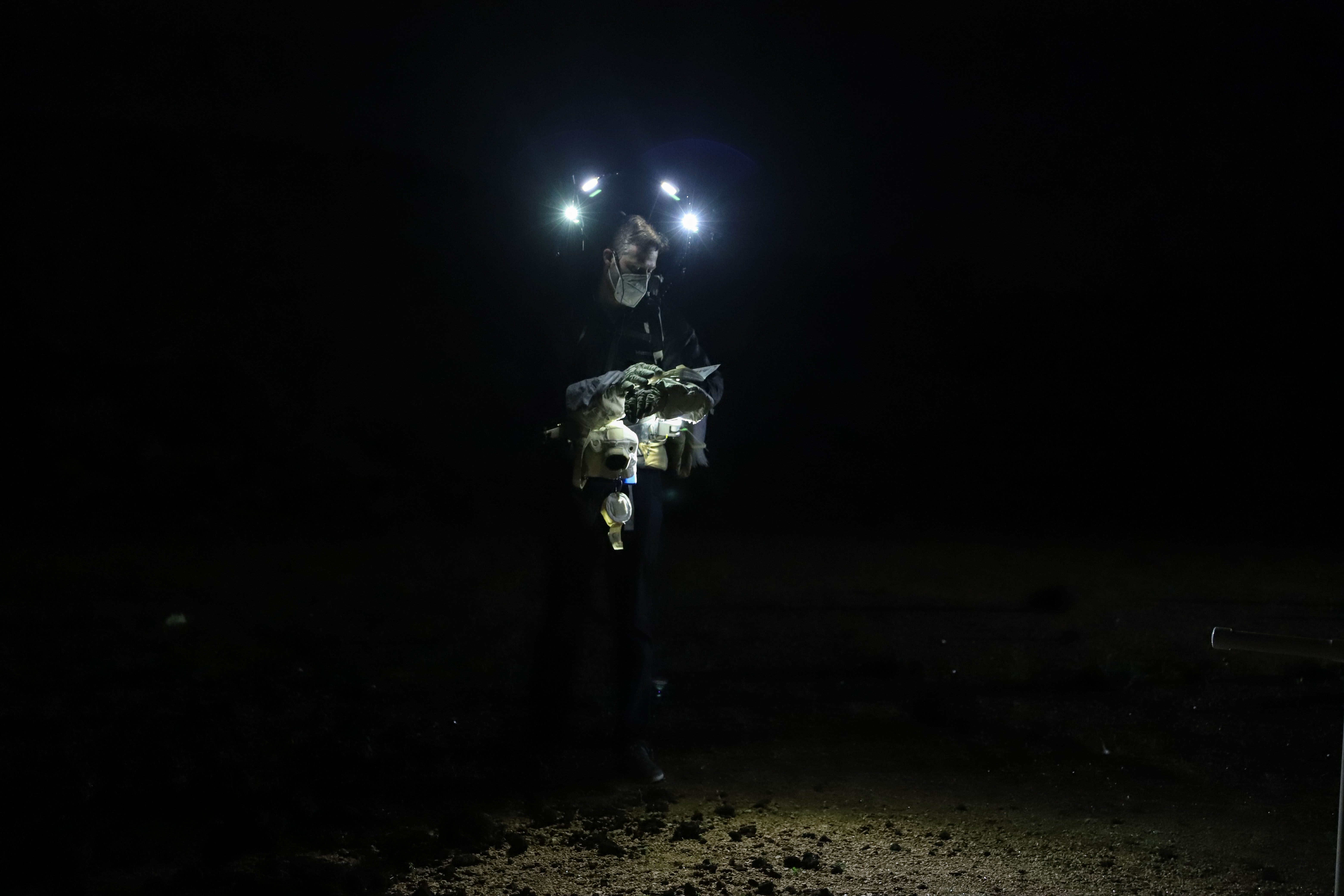
Scott Wray participates in a nighttime evaluation of EVA operations at the Johnson Space Center Rock Yard in March 2021. The evening test was designed to better understand the impact of lunar South Pole lighting conditions on EVA operations.
While many astronauts have completed space station training or an EVA, the skills required for lunar exploration will be different. “It’s going to be a completely new spacesuit, new vehicles, new environment,” Wray said. “And now they’re going to be walking instead of translating with their hands like we do on station.” At the same time, trainings must go beyond these foundational spacewalk techniques. “Our curriculum integrates geology, covering topics like impact cratering, volcanology, sample collection, and traverse planning,” Wray explained. “It’s about enabling astronauts to become effective field scientists while mastering complex EVA operations.”
To build these skills, the team uses multiple training environments. The Neutral Buoyancy Laboratory has been NASA’s flagship EVA training facility since it opened in 1997, but the team also uses the Active Response Gravity Offload System for suited mobility practice. Additional training systems include virtual reality, lighting laboratories that simulate the Moon’s harsh South Pole lighting conditions, field sites for geology training and sample collection, and suit simulators that prepare astronauts to respond to caution-and-warning scenarios.
“Spearheading this effort as EVA training lead allows me to ensure every element—from science to operations—is integrated into a program that will prepare astronauts for success on the Moon and beyond,” Wray said. “This effort is more than preparation, it’s the foundation for future exploration and a steppingstone toward Mars. Knowing that our work will help shape the next era of human spaceflight is incredibly rewarding.”
Scott Wray serves as the test subject for Exploration EVA Pressure Garment Subsystem mobility data collection using the Active Response Gravity Offload System.
Amid these complex preparations, Wray still finds time for new pursuits outside of the office. His daughter inspired him and his wife to try an acting class at a local fine arts studio, leading to Wray’s on-stage debut in a performance of “Rock of Ages.” He starred as William Shakespeare in this year’s production of “Something Rotten.” “I never would have thought I’d have so much fun acting, singing, and dancing on stage,” he said. “The community we are part of and the ability to join our daughter in activities she enjoys has been so rewarding.”
Wray said he is incredibly grateful to play another role off-stage – being part of missions that will conduct meaningful science on the lunar surface. “Returning to the Moon is something I’ve dreamed about since I was a kid,” he said. “Artemis isn’t just about going back—it’s about shaping the future. When we choose to push the boundaries of exploration, the advancements we make don’t just expand knowledge, they create lasting benefits for all of humanity.”
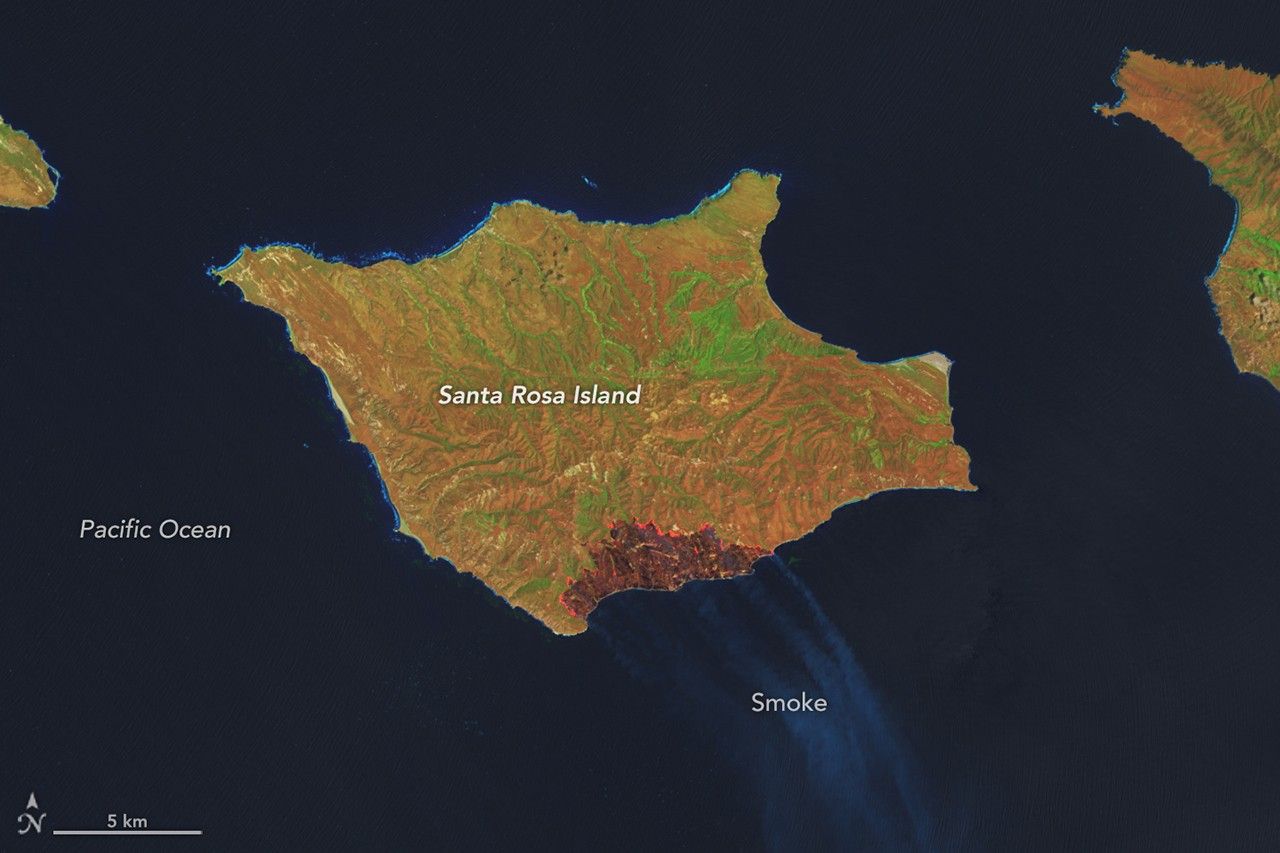
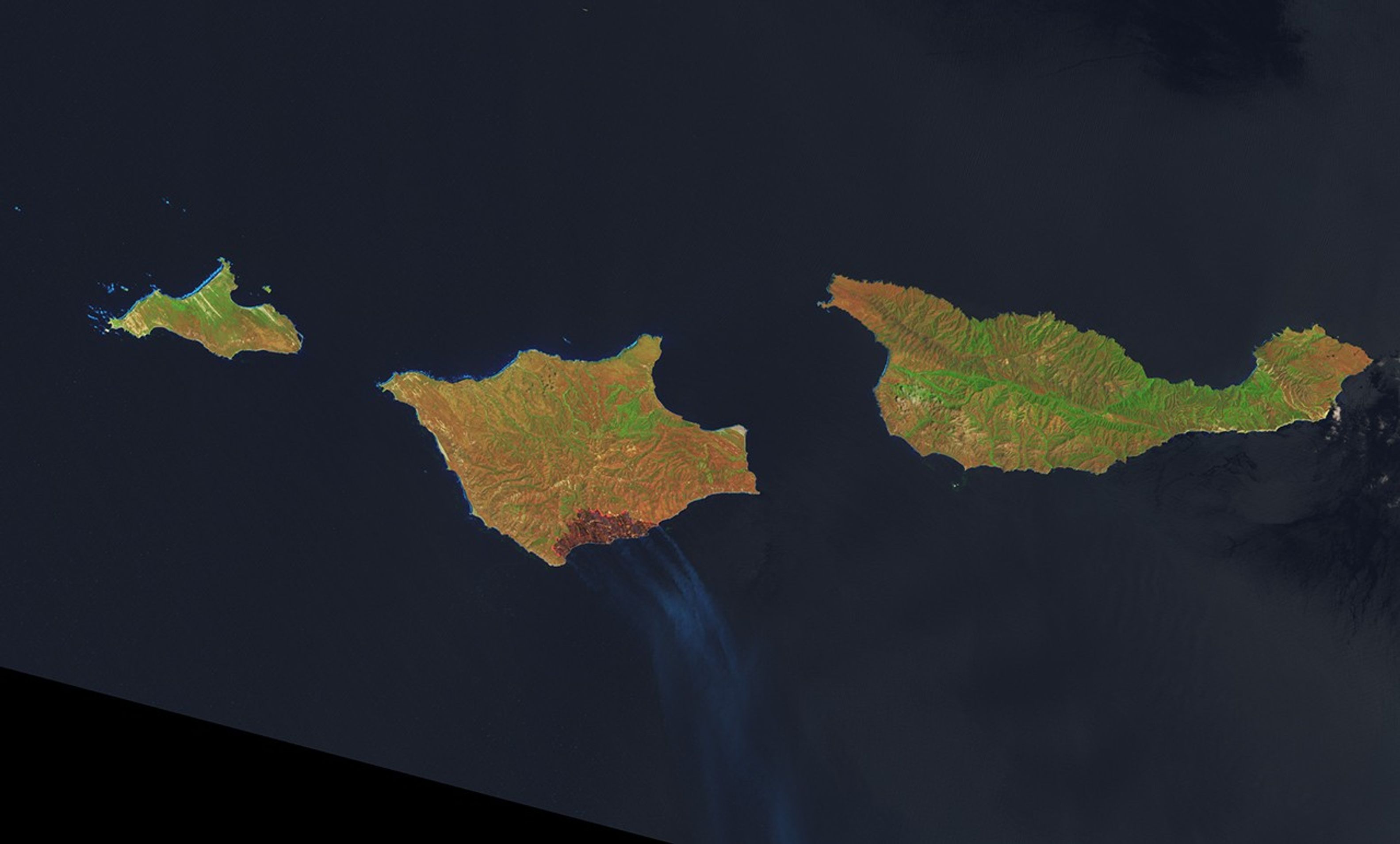
A false-color image of Santa Rosa Island from May 16, 2026, shows a dark-brown burned area toward the bottom-right. A thin, bright orange line runs along the burned area, indicating the active fire front.
NASA Earth Observatory / Lauren Dauphin
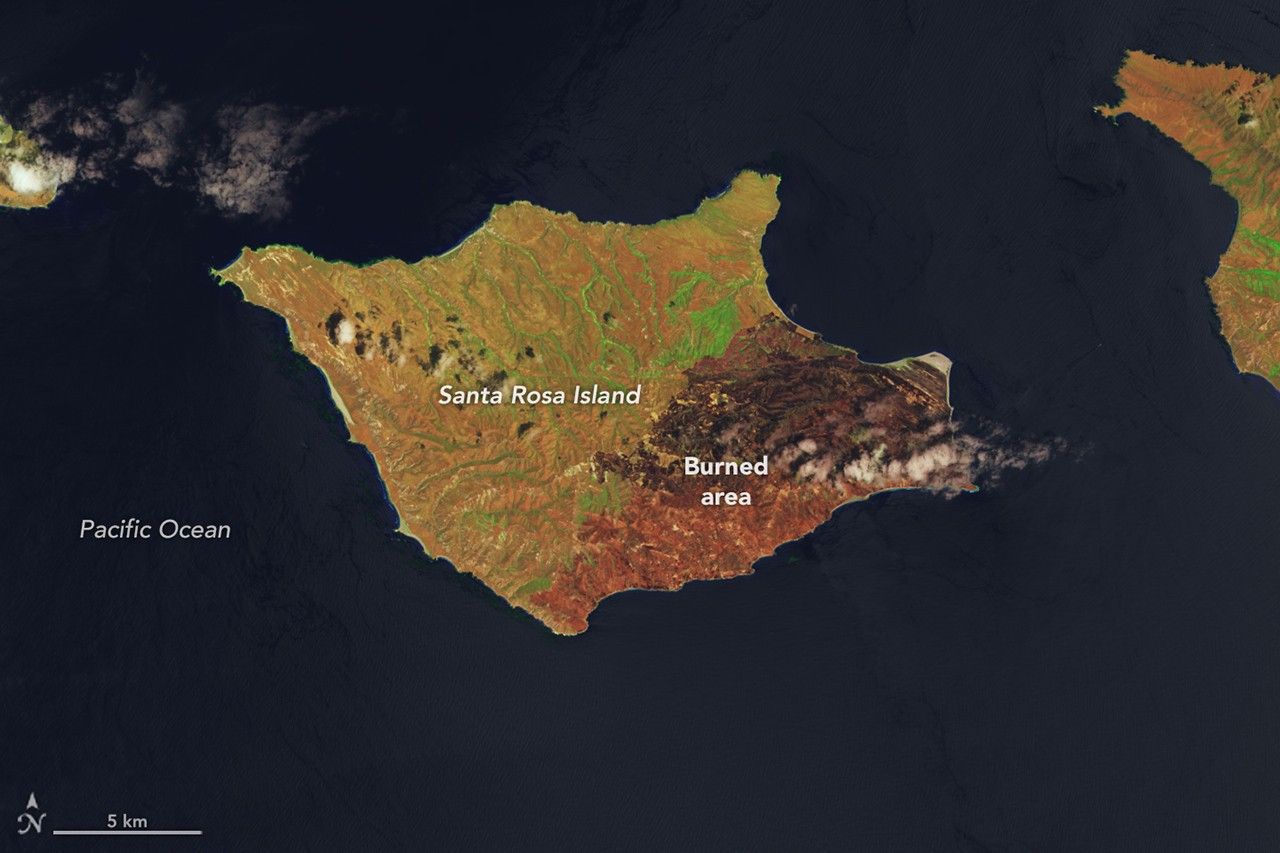
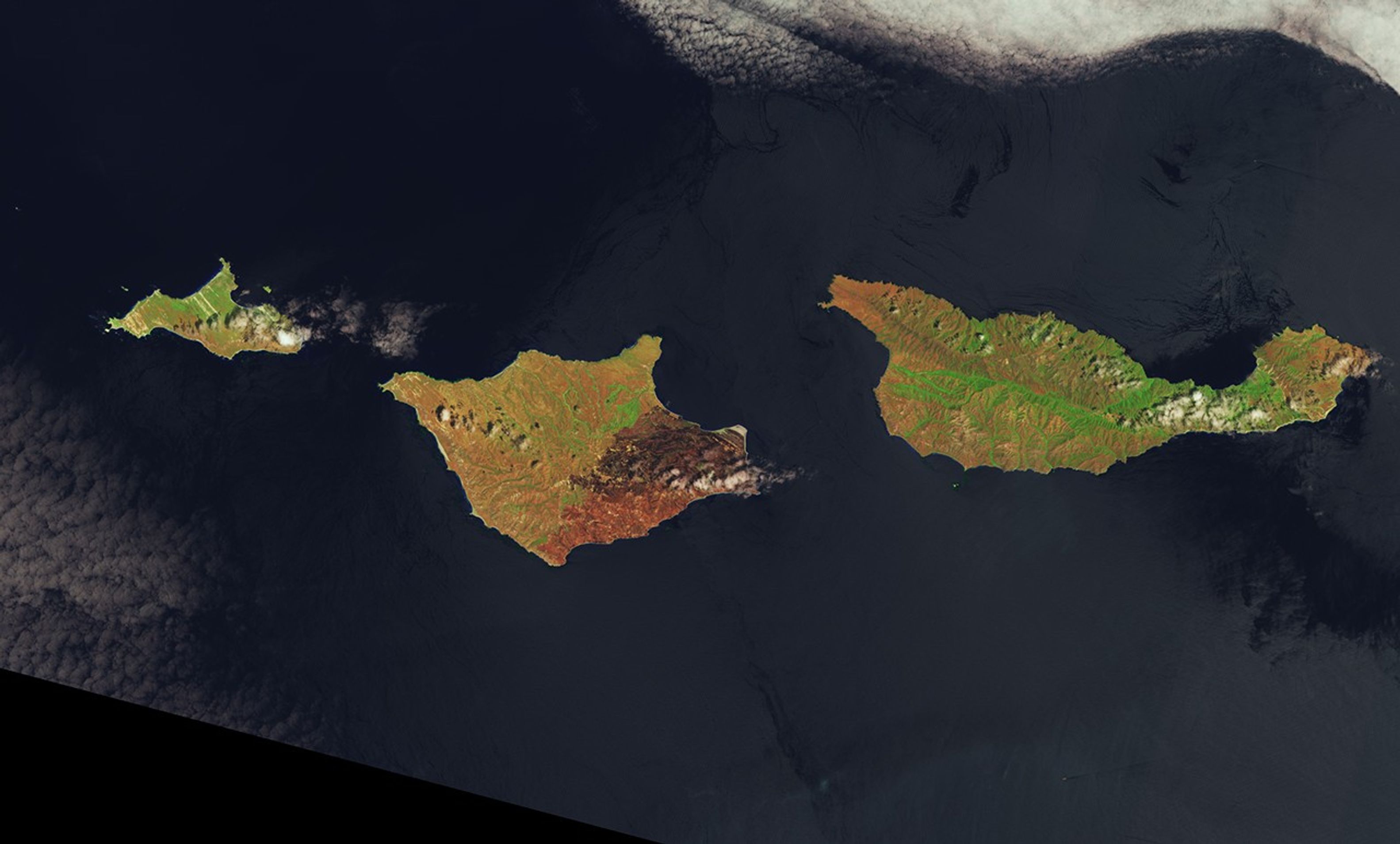
A false-color image of Santa Rosa Island from May 24, 2026, shows a reddish-brown burned area spanning the eastern third of the island.
NASA Earth Observatory / Lauren Dauphin
A false-color image of Santa Rosa Island from May 16, 2026, shows a dark-brown burned area toward the bottom-right. A thin, bright orange line runs along the burned area, indicating the active fire front.
NASA Earth Observatory / Lauren Dauphin
A false-color image of Santa Rosa Island from May 24, 2026, shows a reddish-brown burned area spanning the eastern third of the island.
NASA Earth Observatory / Lauren Dauphin
May 16, 2026
May 24, 2026
The burned area from a wildland fire on Santa Rosa Island in California’s Channel Islands National Park grows between May 16 (left) and May 24, 2026 (right), in these false-color images captured by the OLI (Operational Land Imager) on Landsat 9 and Landsat 8, respectively.
On May 15, 2026, a fire was spotted from aircraft on the southeastern side of Santa Rosa Island, part of California’s Channel Islands National Park. The blaze spread over the next several days, ultimately burning 18,379 acres (7,438 hectares)—about one-third of the island.
These images show the expansion of the fire’s burned area between May 16 (left), the day after it was discovered, and May 24 (right), after the fire’s growth had stabilized. The Landsat satellite images are false-color to help distinguish burned areas (brown) from healthy vegetation (green). Officials reported the fire was 97 percent contained by the evening of May 26.
NASA tools utilizing satellite observations, namely FIRMS (Fire Information for Resource Management System) and the Fire Event Explorer, show how the fire spread to the north and east over several days. As it advanced, it consumed areas of grassland, coastal sage scrub, and island chaparral.
Santa Rosa Island, like the other Channel Islands, is known for its diversity of plant and animal species, some of them rare. Observers were concerned that the fire threatened the island’s Torrey pines, a rare type of tree that in the United States grows naturally only on the northeastern coast of Santa Rosa Island and near San Diego.
Initial post-fire surveys by firefighters and unmanned aircraft indicated the Torrey pine stand remained largely intact. The fire mostly burned at lower intensity through the pine areas and spared the canopy. However, some pockets of forest sustained damage where intensity was higher. Along the northwest edge of the fire, suppression crews worked to protect another vulnerable area—the cloud forests—by cooling fuels ahead of the fire’s front.
Local reports suggest the Santa Rosa Island fire is the largest on record on any of California’s Channel Islands. Some of the islands’ chaparral and tree species are adapted to fire but less dependent on it than their mainland counterparts, according to the National Park Service, because naturally occurring fire is less frequent on the Channel Islands.
NASA Earth Observatory images by Lauren Dauphin, using Landsat data from the U.S. Geological Survey. Story by Lindsey Doermann.
NASA Awards Modification Contract for Reduced Gravity Test Aircraft
1 min read
Preparations for Next Moonwalk Simulations Underway (and Underwater)
NASA
NASA selected Denmar Technical Services of Nevada to provide aircraft modifications, maintenance, and testing services to the Human Spaceflight Mission Directorate at NASA’s Armstrong Flight Research Center in Edwards, California, and Johnson Space Center in Houston.
The award is a firm-fixed-price contract and will be time and material for any over and above and unforeseen work. This contract has a maximum potential value of $8.4 million, which runs through Feb. 1, 2027.
The contractor will modify a Boeing 737-700 aircraft to perform lunar-gravity parabolic flights to test NASA space equipment. Once modifications are complete, NASA Armstrong will own the aircraft and oversee aircraft operations out of NASA Johnson.
The aircraft will be used to validate astronaut lunar suits and associated crew systems required to support Artemis mission objectives. This can be done with the modified 737 aircraft in an operationally relevant, reduced-gravity environment prior to lunar mission execution.
For information about NASA and agency programs, visit:
NASA Invites Media to See Roman Space Telescope Arrive at Kennedy
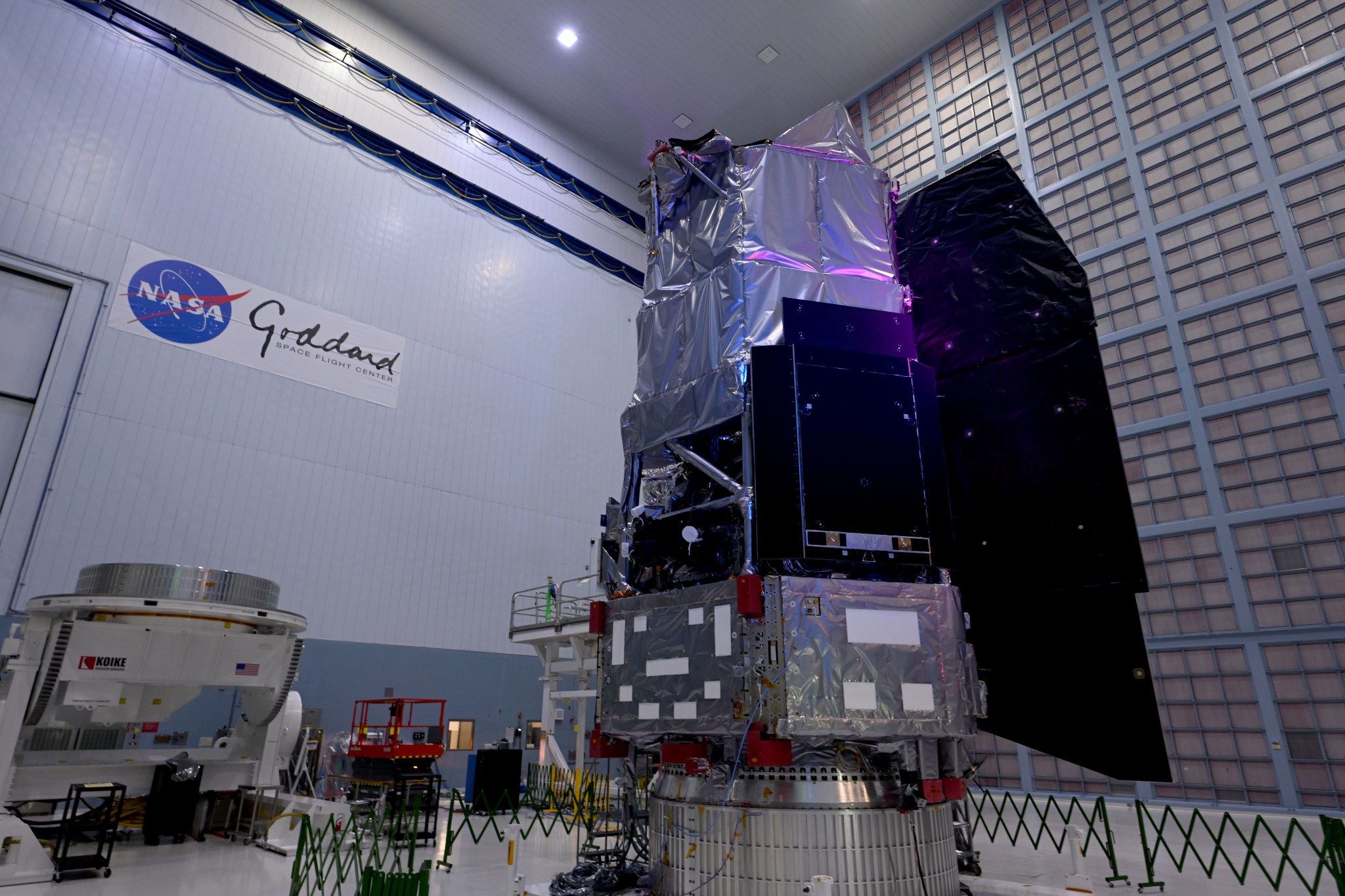
NASA’s Nancy Grace Roman Space Telescope stands complete in the largest clean room at the agency’s Goddard Space Flight Center in Greenbelt, Maryland. With its deep, sweeping views of the universe, Roman will observe billions of cosmic objects to explore fundamental questions about dark energy and planets outside our solar system.
Credit: NASA/Scott Wiessinger
Registration is open for media to cover the arrival of NASA’s Nancy Grace Roman Space Telescope at the agency’s Kennedy Space Center in Florida in the coming weeks.
The observatory will arrive aboard NASA’s Pegasus barge from NASA’s Goddard Space Flight Center in Greenbelt, Maryland, where teams completed its construction, assembly, and testing. Credentialed media will be able to witness the arrival and unloading of the space telescope in its transport container at NASA Kennedy’s turn basin. From there, technicians will move the telescope to the center’s Payload Hazardous Servicing Facility for launch processing.
NASA subject matter experts will be available on site to answer questions about the arrival.
Media interested in participating must apply for credentials at:
To receive credentials, media must apply by 11:59 p.m. EDT on Thursday, June 4. This opportunity is open to U.S. citizens only.
Once approved, credentialed media will receive a confirmation email. Additional information, including the specific date of arrival activities, will follow. NASA’s media accreditation policy is available online. For questions about accreditation, please email ksc-media-accreditat@mail.nasa.gov. For other questions, please contact Kennedy’s newsroom at: 321-867-2468.
Named after NASA’s first chief astronomer, the Nancy Grace Roman Space Telescope will have a deep, panoramic view of the cosmos, generating never-before-seen pictures that will revolutionize our understanding of the universe. The observatory will usher in a new era of cosmic surveys, unveiling troves of celestial objects, and shedding light on some of the universe’s most profound mysteries, including phenomena we can’t see. Roman also will showcase a test of the most advanced technology ever flown in space to directly image planets around nearby stars, a key step in NASA’s search for life on other worlds.
The Roman telescope is managed at NASA Goddard with participation by NASA’s Jet Propulsion Laboratory in Southern California; Caltech/IPAC in Pasadena, California; the Space Telescope Science Institute in Baltimore; and a science team of scientists from various research institutions. The primary industrial partners are BAE Systems Inc., L3Harris Technologies, and Teledyne Scientific & Imaging. Contributions to Roman also are made by ESA (European Space Agency), JAXA (Japan Aerospace Exploration Agency), the French space agency CNES (Centre National d’Études Spatiales), and the Max Planck Institute for Astronomy in Germany.
The agency’s Launch Services Program, based at NASA Kennedy, manages the launch service for the Roman Space Telescope, which will lift off as soon as early September on a SpaceX Falcon Heavy rocket from Launch Complex 39A.
For more information about NASA’s Roman telescope, visit: