NASA Retires UHF SmallSat Tracking Site Ops at Wallops

NASA Retires UHF SmallSat Tracking Site Ops at Wallops

3 min read

NASA Retires UHF SmallSat Tracking Site Ops at Wallops

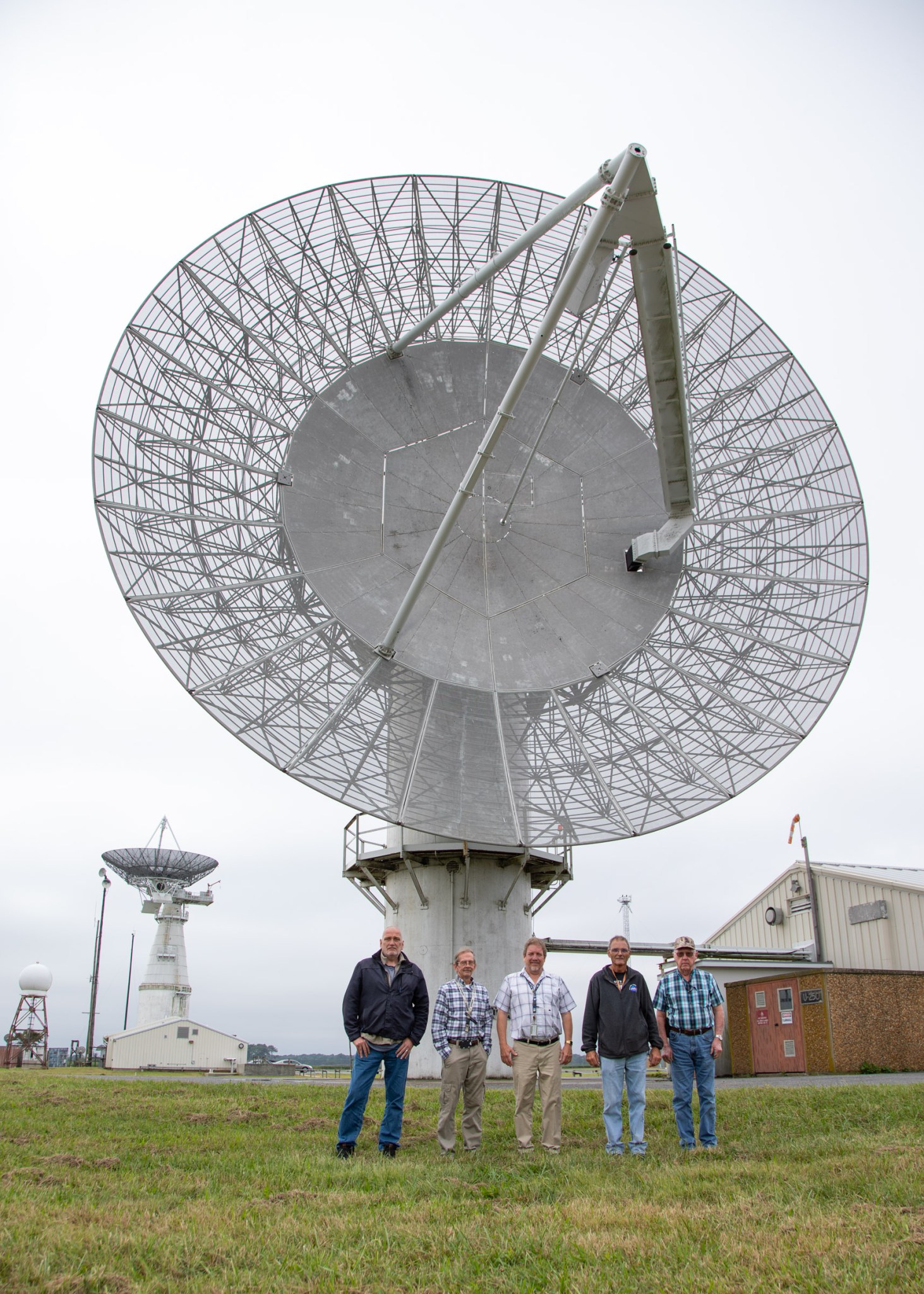
On Sept. 30, 2023, NASA’s Wallops Flight Facility marked the formal conclusion of the Ultra-High Frequency (UHF) Small Satellite (SmallSat) Tracking Operations in Wallops Island, Virginia, placing its workhorse, 60-plus-year-old, 18-meter antenna system in low-level maintenance status.
Five
NASA’s Wallops Flight Facility UHF operators pose with the 60-plus-year-old antenna at tracking site. From left: Magnus Einarsson, Frank Schaefer, Tim Parks (site lead), Tom Davenport, and Ronnie Thomas. Not pictured: Matt Schneider (TM supervisor), Stephanie Dennis (scheduler), and the numerous operators and technicians who worked at the site over the years.
NASA/Danielle Johnson

“Since 2011, the Wallops tracking site has tracked more than 25 spacecraft over 16,912 passes,” said Doug Voss, deputy chief of the Range and Mission Management Office at Wallops. “It has been an honor to operate this unique tracking capability in support of the Small Satellite Science community.”

Stepping back more than 60 years to 1959, MIT-Lincoln Labs built the dual-band UHF/X-Band antenna system, which included the repurposing of a Twin 5-inch, 38 MK 32 gun mount used extensively by the U.S. Navy in World War II. The mount enabled a precision pointing capability for the UHF antenna. The UHF and X-band antenna system was used for hypersonic missile re-entry plasma physics experiments up to 1965, and then various NASA atmospheric research programs.

In 2011, an agreement was established between NASA and the National Science Foundation (NSF) to dedicate the system to UHF SmallSat tracking. SmallSats, which are small spacecraft with a mass less than 180 kilograms or the size of a large kitchen refrigerator, are typically placed in a low-Earth orbit of about 160-320 kilometers above the Earth. The antenna system supported command and high data-rate downlink of these SmallSats, and nanosatellites called CubeSats, for the next decade plus. According to Voss, compared to most other UHF SmallSat communications systems, the Wallops system provided significantly higher data rates. Its precision pointing ability was critical to helping customers find “lost SmallSats.”  

With the increase of SmallSat missions from 2018 to 2020, the system was upgraded to provide end-to-end connectivity and increased automation. However, with more than a dozen spacecraft being supported and heavy pass schedules, the aging hardware was heavily taxed. As a result, in 2021, significant maintenance issues and obsolete parts created a need to reduce the pass schedule to decrease risk. At the same time, as the need for greater data rates continued to increase, SmallSat/CubeSat markets started to shift away from UHF to other higher frequency bands.

“UHF SmallSat tracking operations ended because the customer base has decreased over the years, which has prompted a steady reduction in tracking services. It is anticipated that no new UHF customers are on the horizon,” said Rachel Albertson, project manager for the UHF SmallSat tracking site at Wallops.

While the system formally concluded SmallSat tracking operations, future plans include support of special ionospheric radar experiments as a part of an initiative to establish a significantly increased Wallops Geophysical Observatory capability supporting mid-latitude heliophysics research. The system may be called on to support special emergent SmallSat needs. 

For more information, visit nasa.gov/wallops.

Share

Details

Last Updated

Oct 25, 2023

Editor

Jamie Adkins

Related Terms

Powered by WPeMatico

Get The Details…
Olivia F. Littleton
Record Number of Sea Turtles Hatch at NASA Spaceport

Record Number of Sea Turtles Hatch at NASA Spaceport

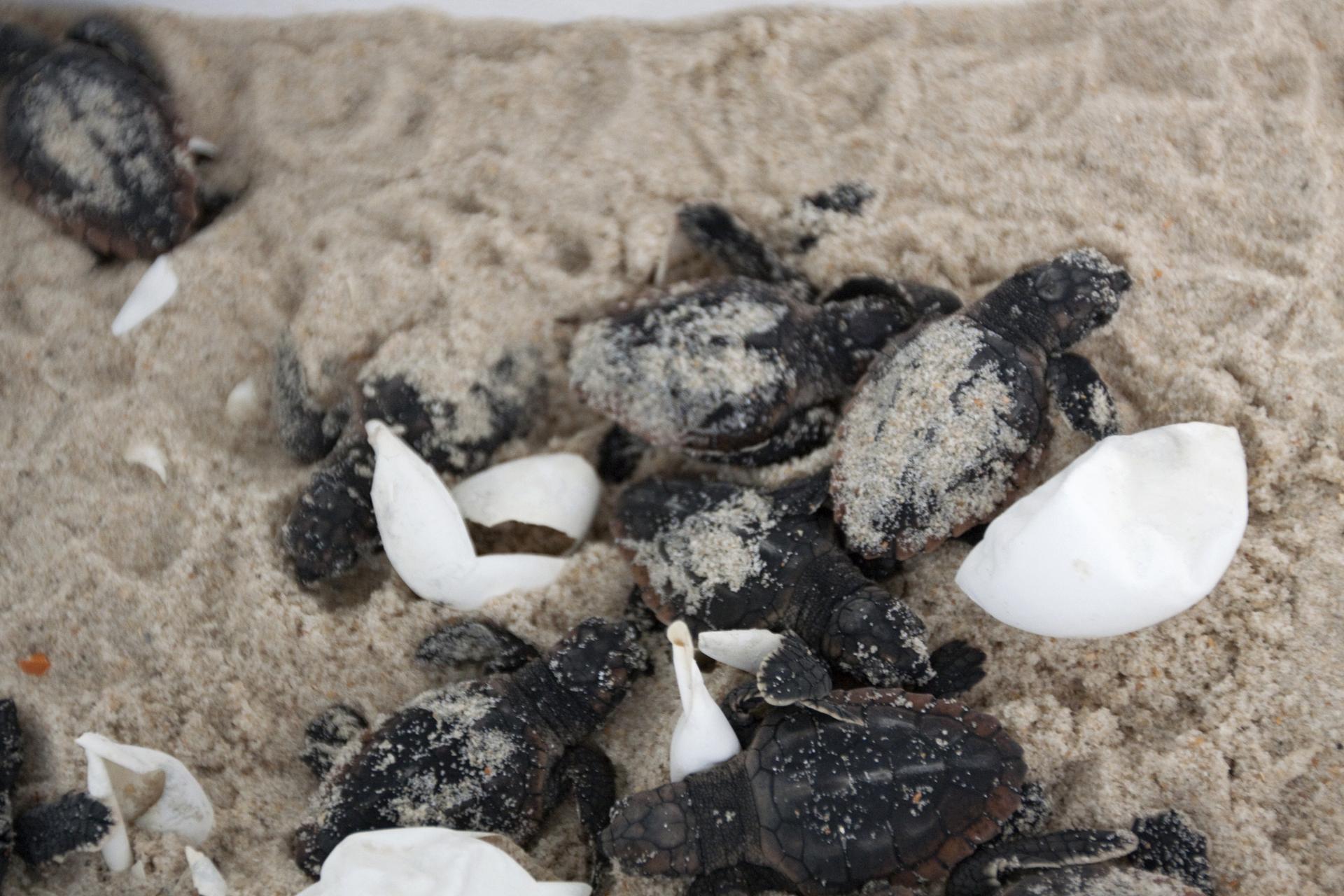
Sea turtle hatchlings emerge from their eggs at Kennedy Space Center in Florida.
NASA

Humans aren’t the only living creatures using NASA’s Kennedy Space Center as their launchpad to the future. This year, a record number of sea turtle hatchlings got their start in nests built on the undisturbed beaches of the Florida spaceport.

Biologists counted 13,935 sea turtle nests along Kennedy’s shoreline during the 2023 nesting season, 639 more nests than 2022 and the most found on center in a single year since record-keeping began in 1984. All of those sea turtle nests belong to species identified by the U.S. National Park Service as endangered or threatened, including the green (Chelonia mydas) and loggerhead (Caretta caretta).

“All our effort to protect Kennedy’s habitat is bearing fruit,” said NASA Environmental Protection Specialist Jeff Collins. “Kennedy’s use of turtle-friendly lighting and having a properly maintained dune helps to keep our beach dark and that really makes a difference to sea turtle nesting success.”

NASA partners to preserve the turtles and other fauna and flora at the spaceport with the Merritt Island National Wildlife Refuge and Canaveral National Seashore, which share a boundary with Kennedy. Working together, biologists found more than 8,800 nests at Kennedy this year were made by greens, with loggerheads creating almost 5,100.

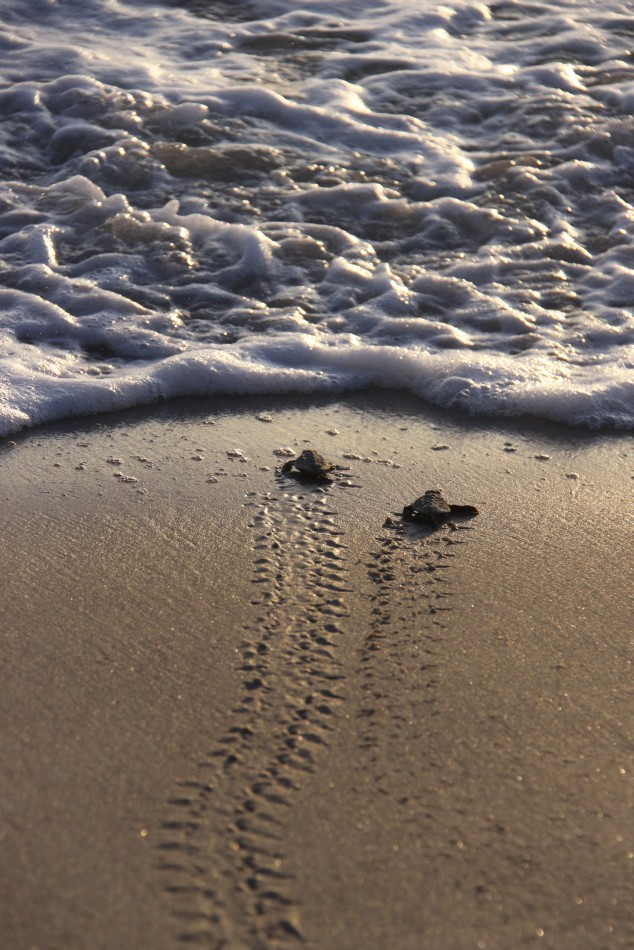
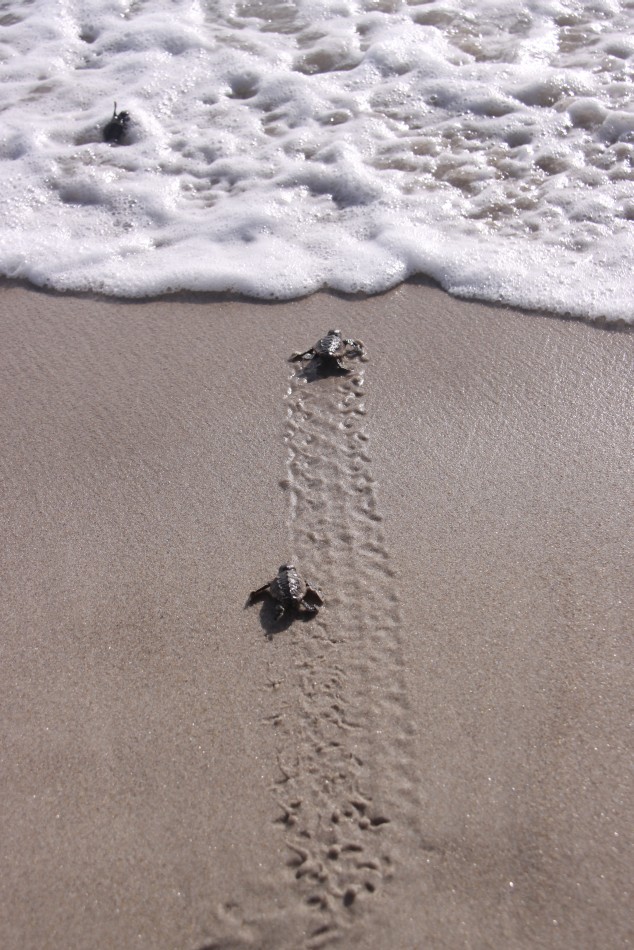
Sea turtle hatchlings make their way from their nests to the Atlantic Ocean at Kennedy Space Center in Florida.

“Kennedy’s sea turtle nests usually make up around 10% of the number Florida Fish and Wildlife reports in any given year,” said United States Fish and Wildlife Service Biologist Michael Legare. “Brevard, the Florida county where Kennedy is located, is particularly important to the future of loggerheads. That county and five others nearby – Indian River, St. Lucie, Martin, Palm Beach, and Broward – usually report around 80% of all loggerhead nests yearly in the Sunshine State.”

Florida normally sees between 40,000 to 84,000 sea turtle nests built annually, according to state Fish and Wildlife data.

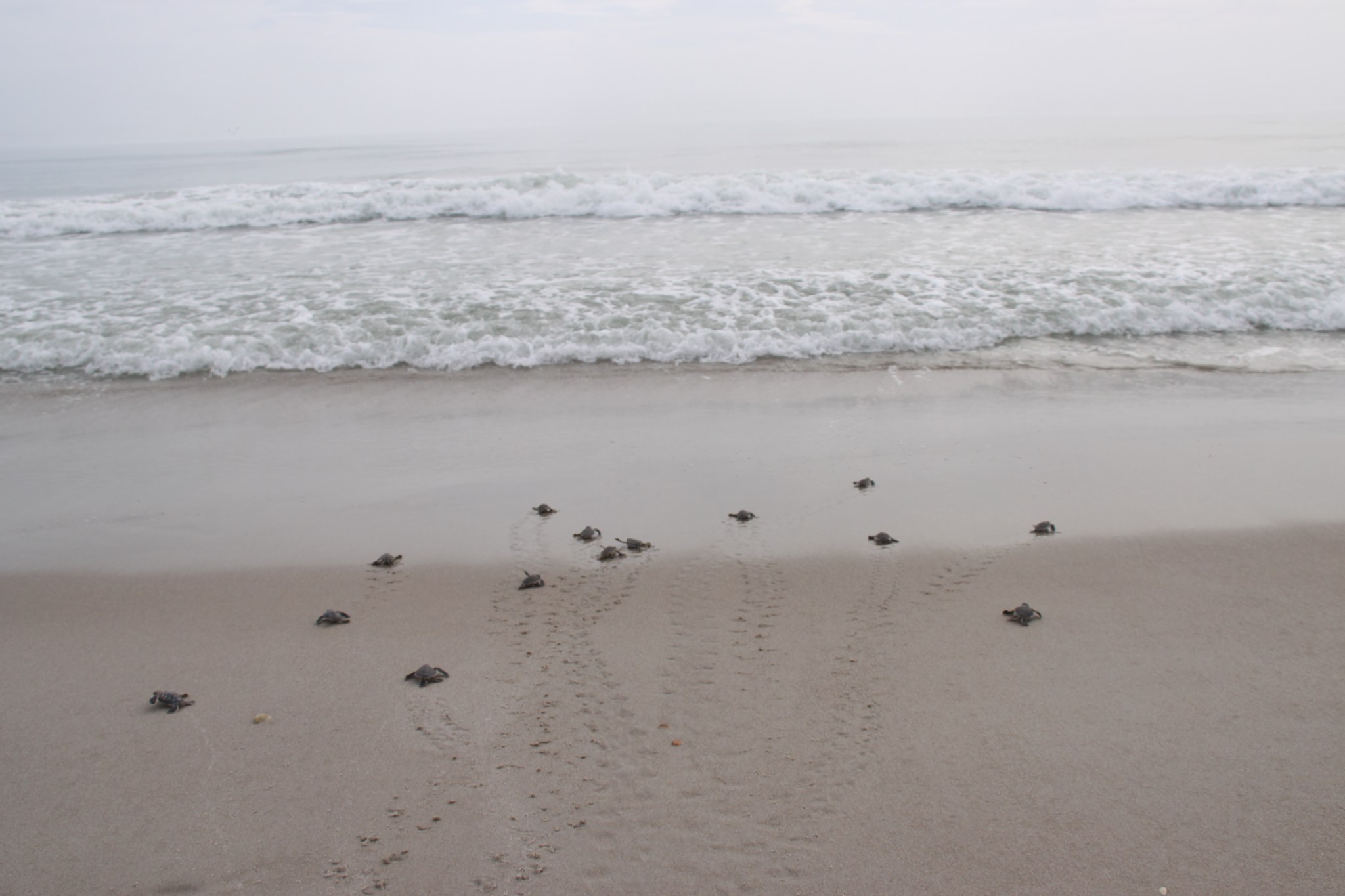
From the beginning of March through the end of October, the sand on Kennedy’s beaches is marked with the tracks of adult sea turtles as they emerge from the sea and make their way to where they lay their eggs. If all goes well, much smaller sand tracks follow months later when the hatchlings leave their nests and head to the sea, assuming they have the proper guidance to get there.

“Giving the sea turtles, especially the hatchlings, nothing but the moon and stars to shine their path to the ocean is one big way humans can help them,” Collins said. “Any other light can disorient them enough to where they’ll never find the ocean, making them easy prey while leading them away from the food and water they need to survive.”

Sea turtle hatchlings make their way from their nests to the Atlantic Ocean at Kennedy Space Center in Florida.
NASA

That is why closing window blinds or removing artificial beach lights are also important for shoreline buildings. “If the lights have to stay, then it’s essential that the bulbs be dimmed or replaced with amber or low wave-length lighting. Such simple things can make the difference between life and death for the turtles,” Legare said.

This year’s count includes 26 leatherback (Dermochelys coriacea) nests and one Kemp’s ridley (Lepidochelys kempii) nest, one of the world’s most endangered sea turtle species. There were no hawksbill (Eretmochelys imbricata) nests discovered this season at Kennedy. Like the Kemp’s ridley, the endangered hawksbill has been documented at Kennedy in the past, but both species are a rare sight on the spaceport’s beaches.

The leatherback, the largest of the sea turtle species that regularly nests at Kennedy, is normally among the first to lay their eggs in March. If any Kemp’s ridley or hawksbills come on shore to build their nests, that usually starts a month or so after the leatherbacks. Greens and loggerheads, the more common sea turtle species at Kennedy, often start nesting in late spring and continue through the summer months into fall.

The number of eggs in each nest and how many of them hatch successfully aren’t tracked by state biologists, but on average, greens lay around 110 per nest, with loggerheads (100) and leatherbacks (80) close behind. Hawksbills lay around 160 eggs per nest on average, while Kemp’s ridley average around 100 per nest.

Sea turtle hatchlings make their way from their nests to the Atlantic Ocean at Kennedy Space Center in Florida.
NASA

It generally takes around two months for the sea turtle babies to emerge from their nest once the eggs are inside, but that can vary depending on the species. Sand temperature also plays a big role in determining the sex of the new turtles. Cooler temperatures produce more males and warmer temperatures bring more females.

Florida Fish and Wildlife data shows about one of every 1,000 baby turtles makes it to adulthood.

“The continued success of sea turtle nests at Kennedy shows that it is possible to explore space while maintaining the ecosystem,” Collins said. “As the spaceport’s launch cadence grows, we will continue our efforts to preserve that balance into the future.”

Powered by WPeMatico

Get The Details…
Messod C. Bendayan

25 Years Ago: Launch of Deep Space 1 Technology Demonstration Spacecraft

25 Years Ago: Launch of Deep Space 1 Technology Demonstration Spacecraft

On Oct. 24, 1998, NASA launched the Deep Space 1 spacecraft. Managed by NASA’s Jet Propulsion Laboratory in Pasadena, California, Deep Space 1 served as a testbed for 12 new technologies, including solar electric, also known as ion propulsion, for use in future deep space and interplanetary missions. The spacecraft, the first in NASA’s New Millennium program, flew by asteroid Braille and comet Borrelly, returning images and scientific data about the two small bodies. The ion propulsion engine that Deep Space 1 successfully demonstrated allowed the Dawn spacecraft to explore the protoplanet Vesta and the dwarf planet Ceres using that technology. The Psyche spacecraft currently on its way to explore the asteroid of the same name, also uses ion propulsion. Future programs such as Gateway will use ion propulsion to enable human lunar exploration. Deep Space 1 completed its mission on Dec. 18, 2001.

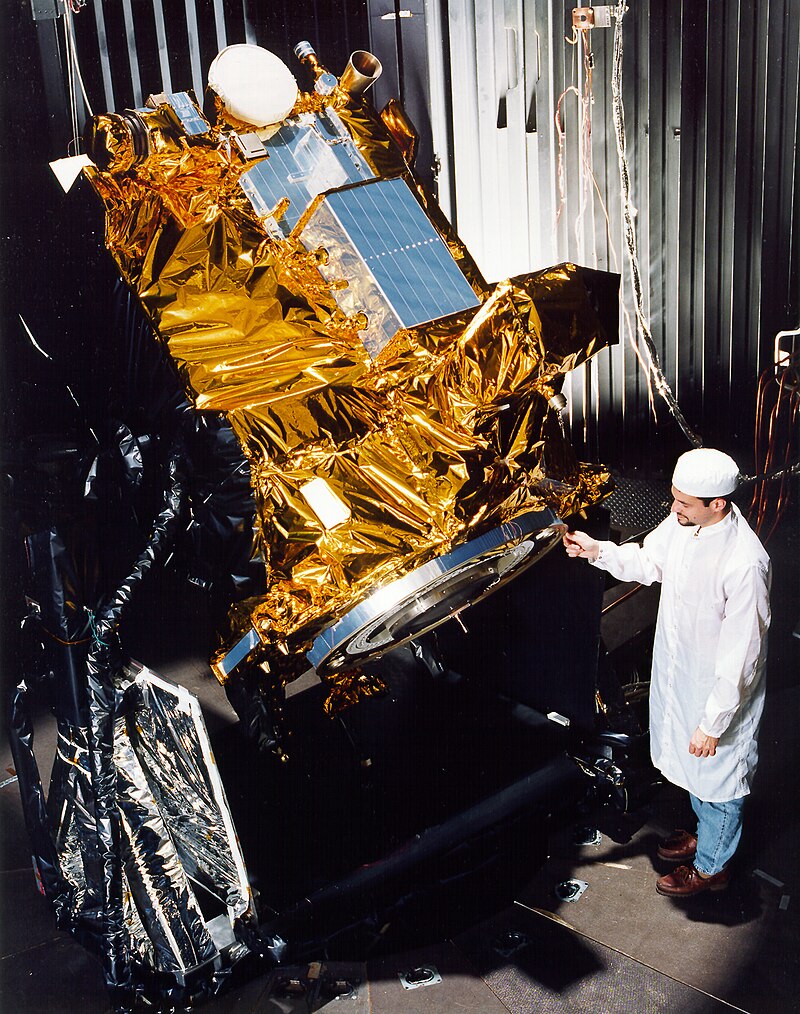
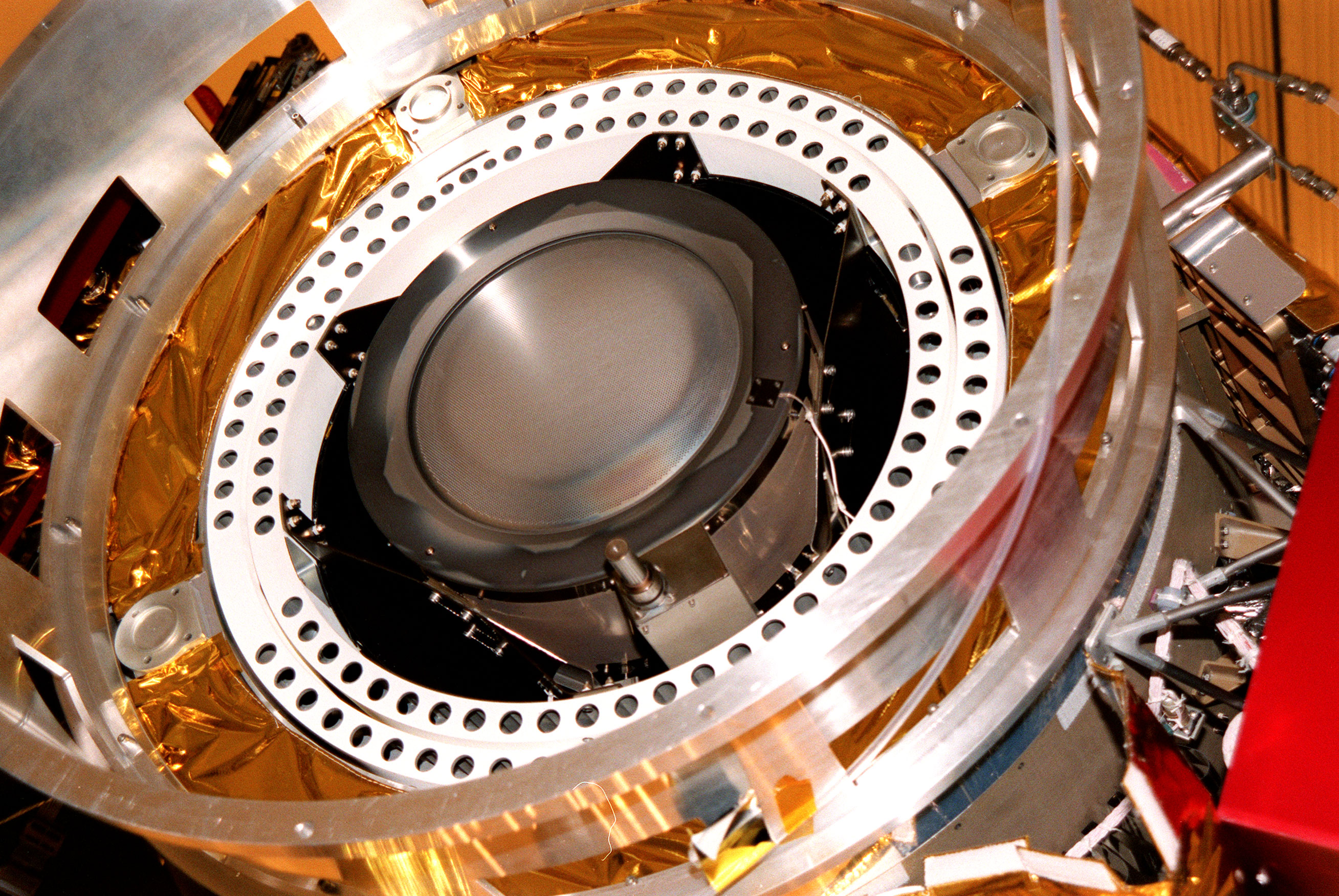
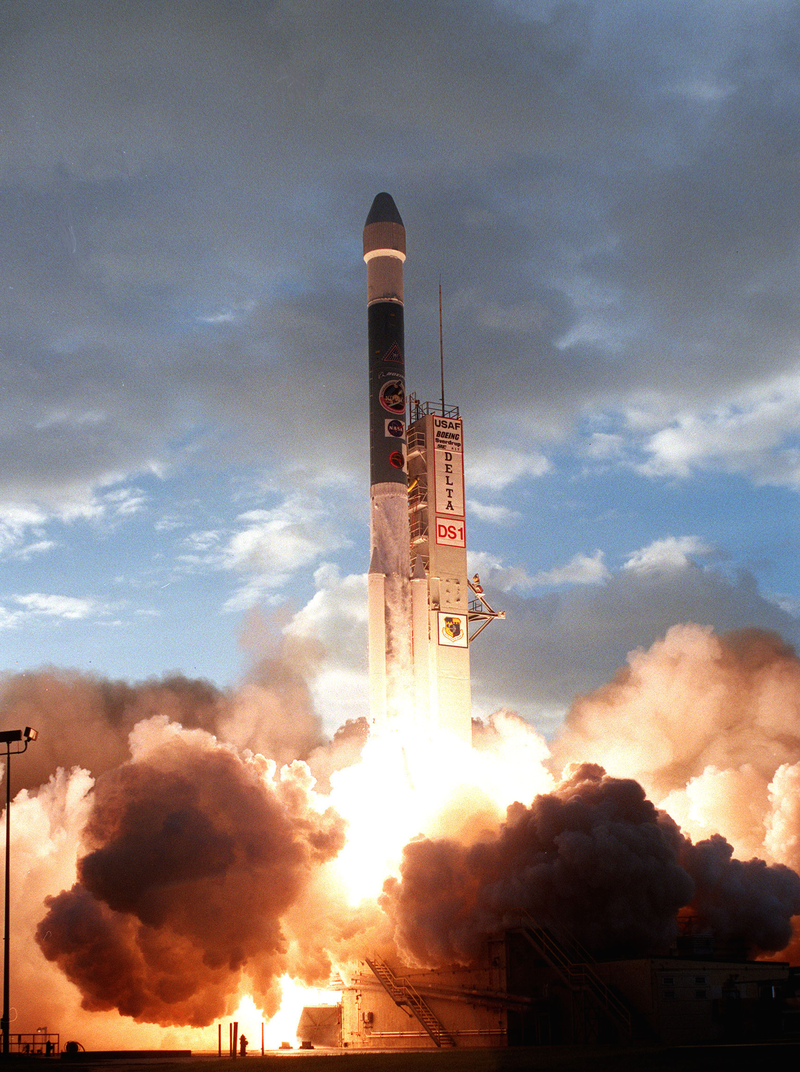
The fully assembled Deep Space 1 spacecraft prepared for launch View of the Deep Space 1 spacecraft’s ion propulsion engine Launch of Deep Space 1 on a Delta II rocket from Launch Pad 17A at Cape Canaveral Air Force Station, now Cape Canaveral Space Force Station, in Florida
Left: The fully assembled Deep Space 1 spacecraft prepared for launch. Middle: View of the Deep Space 1 spacecraft’s ion propulsion engine. Right: Launch of Deep Space 1 on a Delta II rocket from Launch Pad 17A at Cape Canaveral Air Force Station, now Cape Canaveral Space Force Station, in Florida.

The 12 technologies Deep Space 1 tested included the ion propulsion system; the autonomous navigation system; an autonomous control system; a beacon system that sends simple tones to Earth to advise controllers of spacecraft health; a solar array with concentrator lenses; an integrated camera and imaging spectrometer; an integrated ion and electron spectrometer; a small deep-space transponder; a Ka-band solid-state power amplifier; low-power electronics; a multifunctional structure testing new packaging technology; and a power activation and switching module. Scientists also gathered data on whether the ion engine’s plume interfered with any of the spacecraft’s instruments. The ion engine used xenon gas as its propellant and obtained power from the spacecraft’s high-efficiency solar arrays. Although providing low thrust overall, the engine achieved more thrust than any chemical engine.

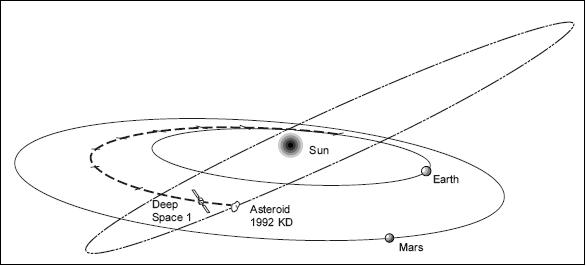
The Deep Space 1 spacecraft’s primary mission trajectory, including the flyby of asteroid 1992 KD, renamed 9969 Braille
The Deep Space 1 spacecraft’s primary mission trajectory, including the flyby of asteroid 1992 KD, renamed 9969 Braille.

The launch of Deep Space 1 took place atop a Delta II rocket on Oct. 24, 1998, from Launch Pad 17A at Cape Canaveral Air Force Station, now Cape Canaveral Space Force Station, in Florida. After entering an initial parking orbit around the Earth, the rocket’s third stage boosted Deep Space 1 into solar orbit. The initial mission plan included demonstration of the new technologies and a flyby of asteroid 1992 KD, renamed 9969 Braille shortly before the spacecraft’s encounter. On Nov. 10, ground controllers commanded the ion engine to commence firing but it only operated for 4.5 minutes. They tried again on Nov. 24 with the spacecraft 3 million miles from Earth, and this time the engine firing succeeded, running for the planned 14 days. Over the next six months, the spacecraft successfully tested all 12 of its technology demonstrations, completing the activity in June 1999.

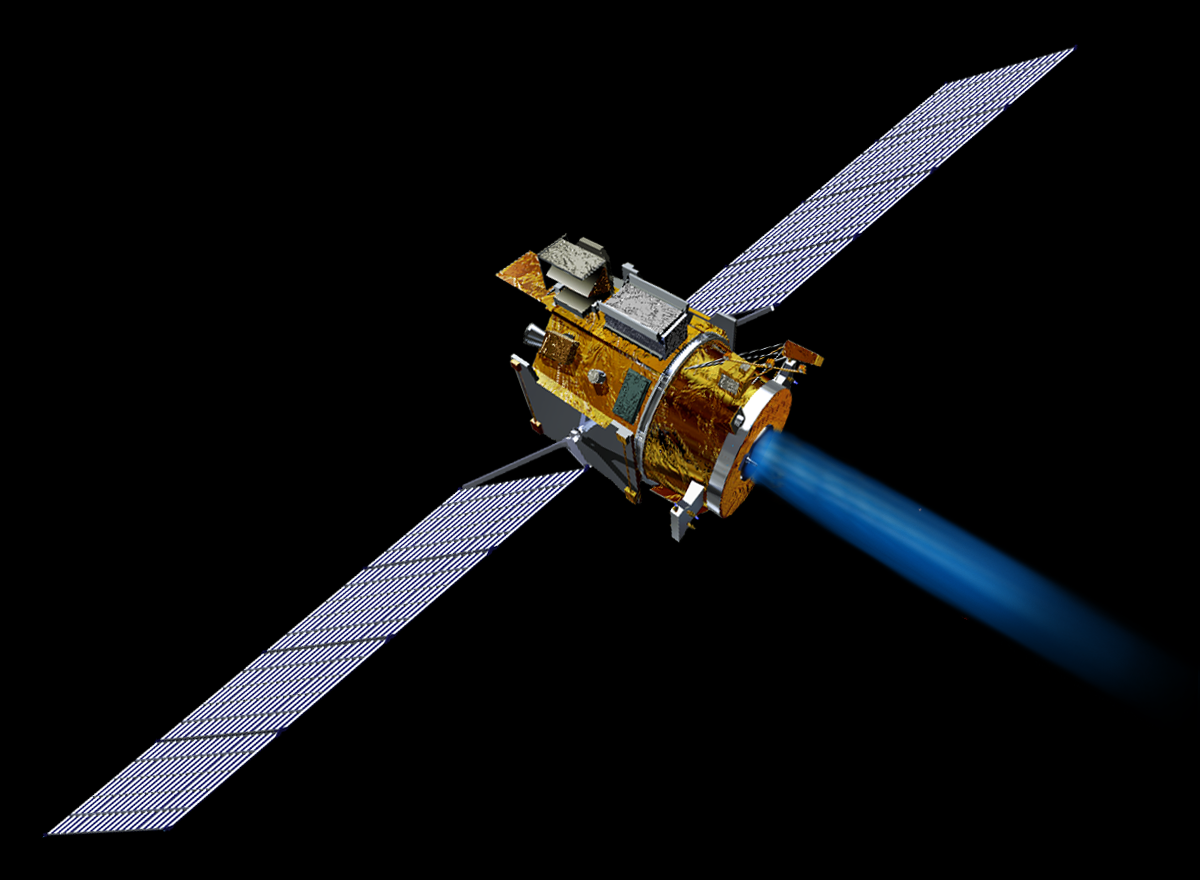
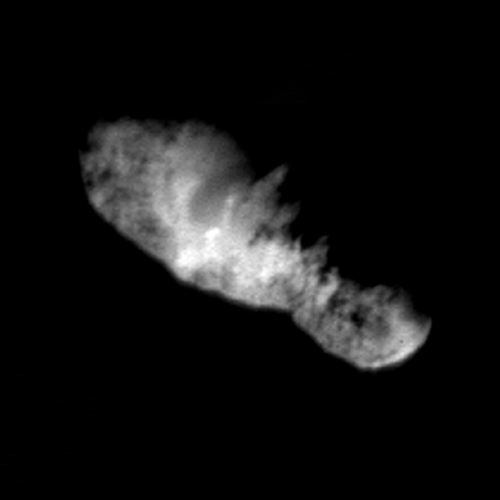
Illustration of Deep Space 1 and the blue exhaust of its ion propulsion engine Blurry image of asteroid 9969 Braille Image of comet 19P/Borrelly
Left: Illustration of Deep Space 1 and the blue exhaust of its ion propulsion engine. Middle: Blurry image of asteroid 9969 Braille. Right: Highest quality image of comet 19P/Borrelly.

Due to an onboard computer crash shortly before the encounter, as well as the inability of the autonomous navigation system to lock onto the darker than expected asteroid, Deep Space 1’s flyby of Braille on July 29, 1999, occurred at a distance of 16 miles instead of the planned 790 feet. Thus, the images the spacecraft returned did not show any detail, while other instruments provided good data. When the spacecraft’s primary mission ended on Sept. 18, 1999, mission managers approved an extended mission to target a flyby of comet 19P/Borrelly. The spacecraft’s star tracker failed on Nov. 11, 1999, putting the comet flyby in jeopardy. Over the next five months, ground controllers built a new attitude control system that did not rely on the star tracker, and the flyby could proceed. Deep Space 1 entered comet Borrelly’s coma on Sept. 22, 2001, and flew by its nucleus at a distance of 1,350 miles. The spacecraft provided the most detailed images of a comet’s nucleus up to that time. Having operated well beyond its expected lifetime and with its attitude control fuel running low, ground controllers turned off the spacecraft on Dec. 18, 2001. Its ion propulsion engine had operated for 16,265 hours, far longer than any previous spacecraft, and provided a total velocity change of three miles per second, the largest achieved by any spacecraft with its own propulsion system.

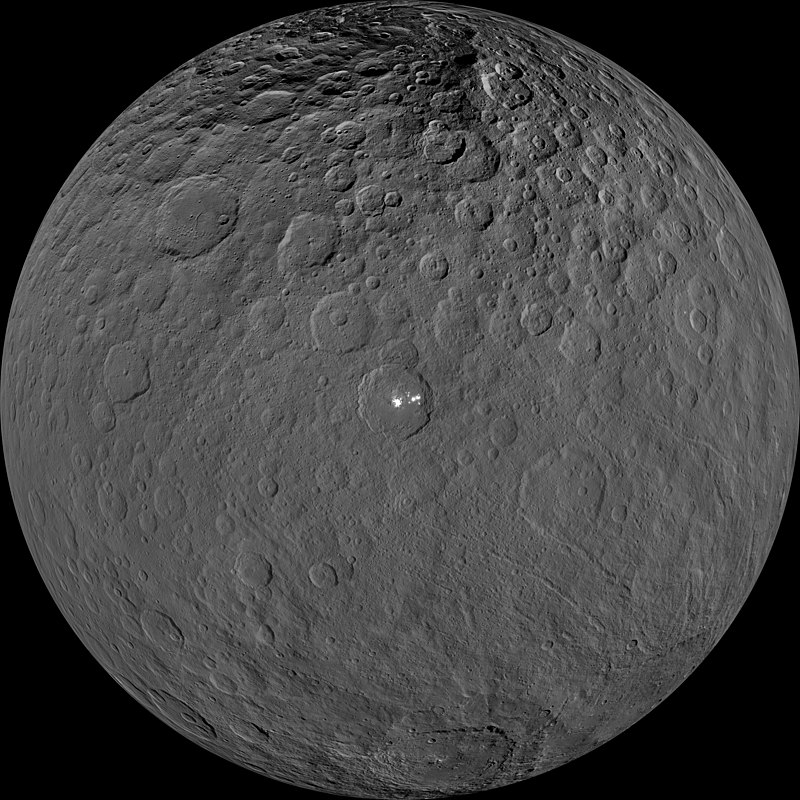
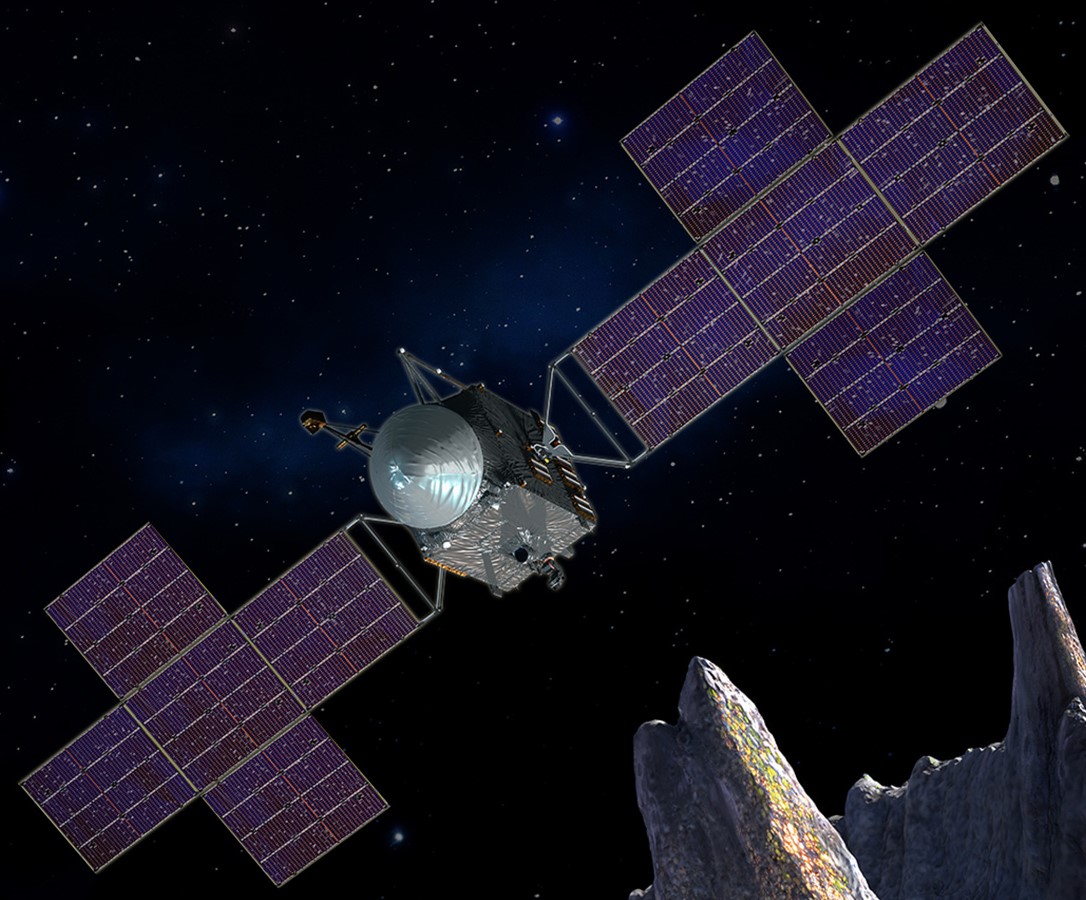
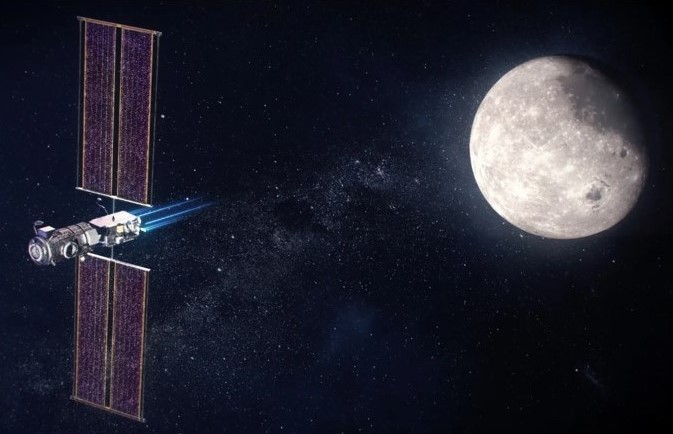
Dawn spacecraft image of dwarf planet Ceres Illustration of the Psyche spacecraft during its encounter with the asteroid of the same name Illustration of Gateway Habitation and Logistics Outpost and Power and Propulsion Element using ion propulsion
Left: Dawn spacecraft image of dwarf planet Ceres. Middle: Illustration of the Psyche spacecraft during its encounter with the asteroid of the same name. Right: Illustration of Gateway Habitation and Logistics Outpost and Power and Propulsion Element using ion propulsion.

The ion propulsion technology that Deep Space 1 demonstrated has found use in interplanetary uncrewed missions and will see use in future human lunar exploration. Launched in 2007, the Dawn spacecraft’s ion propulsion system enabled it to explore two worlds between 2011 and 2018, the protoplanet Vesta and the dwarf planet Ceres, entering orbit around each to conduct in-depth studies not otherwise possible. The Psyche spacecraft, currently on its way to explore the asteroid of the same name, also uses ion propulsion. In the arena of future human space exploration, the Gateway, part of NASA-led Artemis missions to return astronauts to the Moon, will establish a human presence in lunar orbit. The Gateway’s Power and Propulsion Element plans to use its Advanced Electric Propulsion System to arrive in lunar orbit and to maintain that orbit enabling regular astronaut visits.

Powered by WPeMatico

Get The Details…
Kelli Mars

How NASA Is Protecting Europa Clipper From Space Radiation

How NASA Is Protecting Europa Clipper From Space Radiation

5 min read

How NASA Is Protecting Europa Clipper From Space Radiation

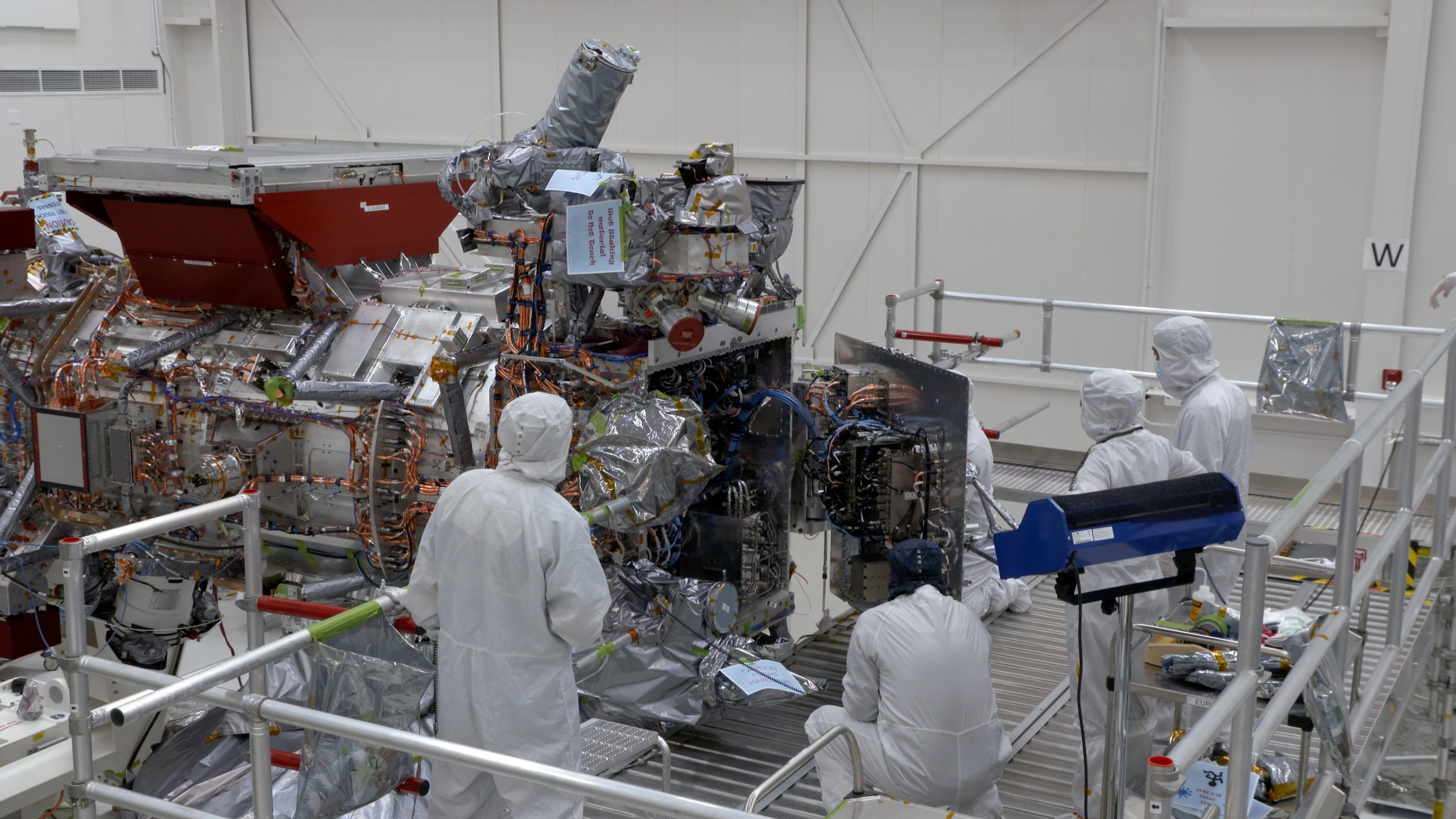
Engineers and technicians are seen closing the vault of NASA’s Europa Clipper in the main clean room of the Spacecraft Assembly Facility at JPL on Oct. 7. The vault will protect the electronics of the spacecraft as it orbits Jupiter.
NASA/JPL-Caltech

To explore the mysterious ice-encrusted moon Europa, the mission will need to endure bombardment by radiation and high-energy particles surrounding Jupiter.

When NASA’s Europa Clipper begins orbiting Jupiter to investigate whether its ice-encased moon, Europa, has conditions suitable for life, the spacecraft will pass repeatedly through one of the most punishing radiation environments in our solar system.

Hardening the spacecraft against potential damage from that radiation is no easy task. But on Oct. 7, the mission put the final piece of the spacecraft’s “armor” in place when it sealed the vault, a container specially designed to shield Europa Clipper’s sophisticated electronics. The probe is being put together, piece by piece, in the Spacecraft Assembly Facility at NASA’s Jet Propulsion Laboratory in Southern California ahead of its launch in October 2024.

Join team members from NASA’s Europa Clipper mission behind the scenes in a clean room at JPL to learn about the design of the spacecraft. Credit: NASA/JPL-Caltech

“Closing the vault is a major milestone,” said Kendra Short, Europa Clipper’s deputy flight system manager at JPL. “It means we’ve got everything in there that we have to have in there. We’re ready to button it up.”

Just under a half-inch (1 centimeter) thick, the aluminum vault houses the electronics for the spacecraft’s suite of science instruments. The alternative of shielding each set of electronic parts individually would add cost and weight to the spacecraft.

“The vault is designed to reduce the radiation environment to acceptable levels for most of the electronics,” said JPL’s Insoo Jun, the co-chair of the Europa Clipper Radiation Focus Group and an expert on space radiation.

Punishing Radiation

Jupiter’s gigantic magnetic field is 20,000 times as strong as Earth’s and spins rapidly in time with the planet’s 10-hour rotation period. This field captures and accelerates charged particles from Jupiter’s space environment to create powerful radiation belts. The radiation is a constant, physical presence – a kind of space weather – bombarding everything in its sphere of influence with damaging particles.

“Jupiter has the most intense radiation environment other than the Sun in the solar system,” Jun said. “The radiation environment is affecting every aspect of the mission.”

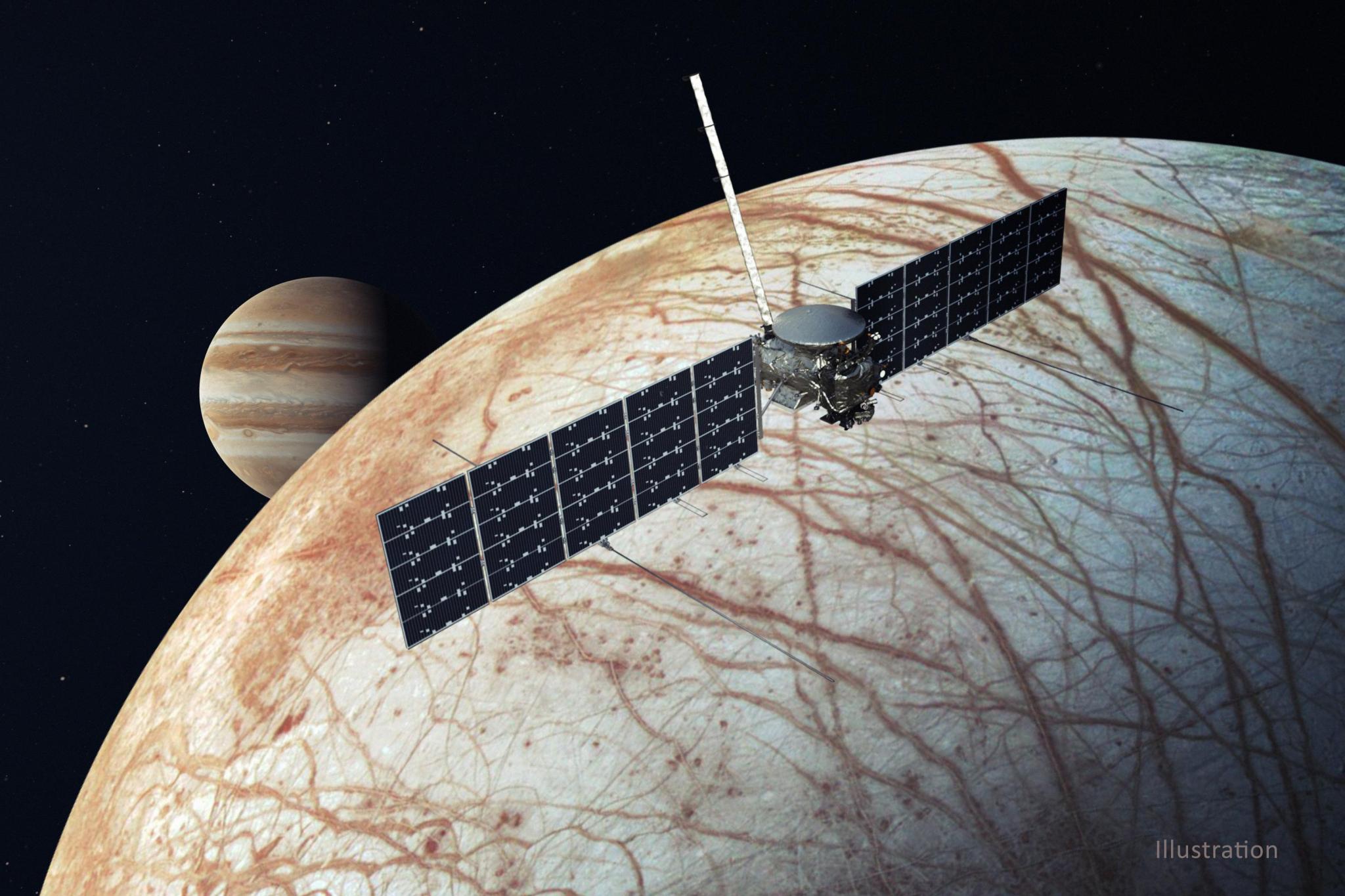
This illustration depicts NASA’s Europa Clipper as it flies by Jupiter’s moon Europa. The mission is targeting an October 2024 launch.
NASA/JPL-Caltech

That’s why when the spacecraft arrives at Jupiter in 2030, Europa Clipper won’t simply park in orbit around Europa. Instead, like some previous spacecraft that studied the Jovian system, it will make a wide-ranging orbit of Jupiter itself to move away from the planet and its harsh radiation as much as possible. During those looping orbits of the planet, the spacecraft will fly past Europa nearly 50 times to gather scientific data.

The radiation is so intense that scientists believe it modifies the surface of Europa, causing visible color changes, said Tom Nordheim, a planetary scientist at JPL who specializes in icy outer moons – Europa as well as Saturn’s Enceladus.

“Radiation on the surface of Europa is a major geologic modification process,” Nordheim said. “When you look at Europa – you know, the reddish-brown color – scientists have shown that this is consistent with radiation processing.”

Chaotic Icescape

So even as engineers work to keep radiation out of Europa Clipper, scientists like Nordheim and Jun hope to use the space probe to study it.

“With a dedicated radiation monitoring unit, and using opportunistic radiation data from its instruments, Europa Clipper will help reveal the unique and challenging radiation environment at Jupiter,” Jun said.

Nordheim zeroes in on Europa’s “chaos terrain,” areas where blocks of surface material appear to have broken apart, rotated, and moved into new positions, in many cases preserving preexisting linear fracture patterns.

Deep beneath the moon’s icy surface is a vast liquid-water ocean, scientists believe, that could offer a habitable environment for life. Some areas of Europa’s surface show evidence of material transport from the subsurface to the surface. “We need to understand the context of how radiation modified that material,” Nordheim said. “It can alter the chemical makeup of the material.”

The Power of Heat

Because Europa’s ocean is locked inside an envelope of ice, any possible life forms would not be able to rely directly on the Sun for energy, as plants do on Earth. Instead, they’d need an alternative energy source, such as heat or chemical energy. Radiation raining down on Europa’s surface could help provide such a source by creating oxidants, such as oxygen or hydrogen peroxide, as the radiation interacts with the surface ice layer.

Over time, these oxidants could be transported from the surface to the interior ocean. “The surface could be a window into the subsurface,” Nordheim said. A better understanding of such processes could provide a key to unlock more of the Jupiter system’s secrets, he added: “Radiation is one of the things that makes Europa so interesting. It’s part of the story.”

More About the Mission

Europa Clipper’s main science goal is to determine whether there are places below Jupiter’s icy moon, Europa, that could support life. The mission’s three main science objectives are to determine the thickness of the moon’s icy shell and its surface interactions with the ocean below, to investigate its composition, and to characterize its geology. The mission’s detailed exploration of Europa will help scientists better understand the astrobiological potential for habitable worlds beyond our planet.

More information about Europa can be found here:

europa.nasa.gov

News Media Contacts

Gretchen McCartney
Jet Propulsion Laboratory, Pasadena, Calif.
818-393-6215
gretchen.p.mccartney@jpl.nasa.gov

Karen Fox / Alana Johnson
NASA Headquarters, Washington
301-286-6284 / 202-358-1501
karen.c.fox@nasa.gov / alana.r.johnson@nasa.gov

Written by Pat Brennan

Powered by WPeMatico

Get The Details…
Randal K. Jackson

IV&V Program’s Orion Team Receives Space Flight Awareness Award

IV&V Program’s Orion Team Receives Space Flight Awareness Award

FAIRMONT – The NASA Independent Verification & Validation Program’s Orion Team received an award for their contributions to the Artemis I Mission during a ceremony hosted at the I-79 Technology Park, in Fairmont.

The Goddard Space Flight Center (GSFC) Space Flight Awareness (SFA) Award Ceremony is an annual event recognizing employees and teams who have made strides in their role in promoting astronaut safety and mission success. Members of the IV&V Orion Team took home the team award for significant contributions “to improving the quality, reliability, and safety of the Orion Program’s safety and mission critical software in support of the Artemis I Mission.”

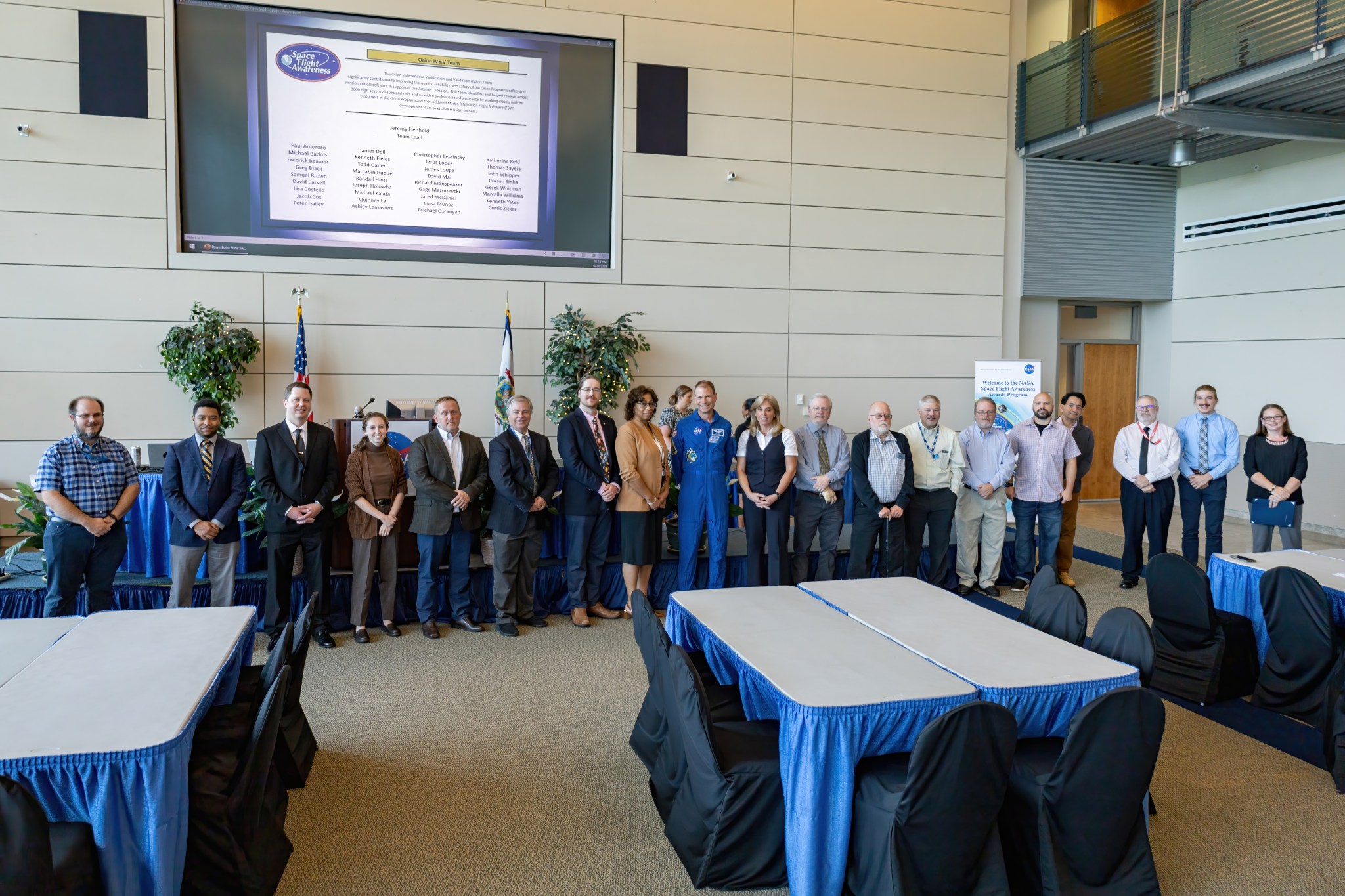
Members of the IV&V Orion Team pose for a celebratory photo with Astronaut and Scientist Stanley Love at the Space Flight Awareness Awards Ceremony, in Fairmont.
Travis Wohlrab GSFC

Artemis I was an uncrewed lunar flight test and the first in a series of increasingly complex missions that will enable human exploration at the Moon and future missions to Mars.

The IV&V winners were among those honored at a recent ceremony in Fairmont, West Virginia, with IV&V Program Director Wes Deadrick and NASA Astronaut and Scientist Stanley Love among those speaking at the event.

“It’s a treat to be able to come out and shake hands with some of the folks who keep us safe and keep our missions going,” Love said.

According to the SFA Program, the IV&V Orion Team identified and helped resolve nearly 3,000 high-severity issues and risks, working closely with its customers in the Orion Program and others.

According to the agency, on Artemis missions, Orion will carry the crew to space, provide emergency abort capability, sustain the crew during the space travel, and provide safe re-entry from deep space return velocities.

“NASA’s human spaceflight missions greatly rely on evolving systems and software, and if the safety for these systems fail then the mission fails,” Deadrick said during the ceremony. “In this regard, both for human spaceflight missions and for science missions, the IV&V Program has become indispensable to Goddard and the agency.”

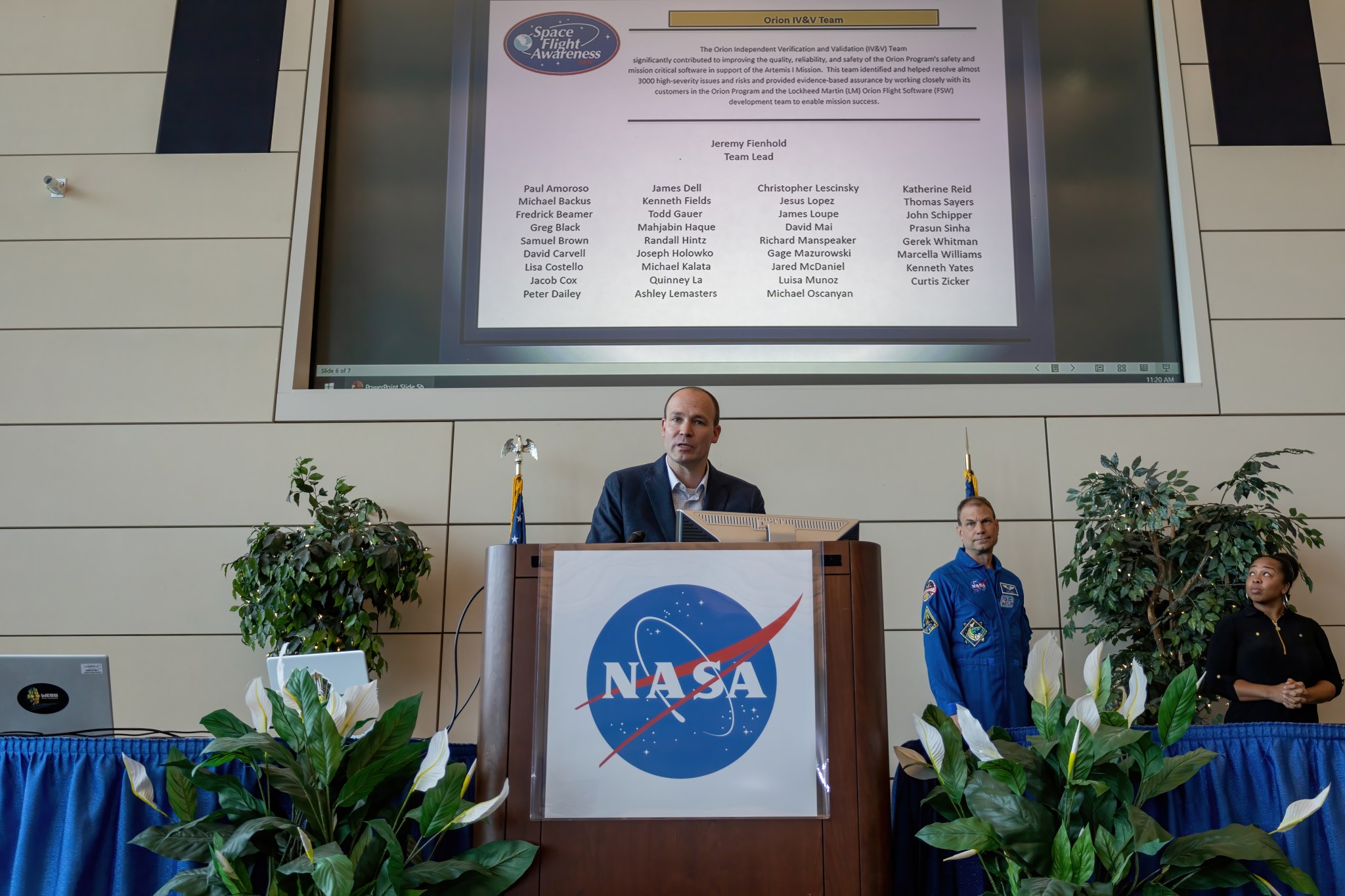
Man speaking behind a podium with a NASA logo on the front of the podium. A man in a blue jumpsuit is standing beside him. A large screen is behind them with award winners names.
IV&V Program Director Wes Deadrick makes a speech during the Space Flight Awareness Awards Ceremony, in Fairmont.
Travis Wohlrab GSFC

To learn more about the Artemis Program: Artemis – NASA

For more on the SFA Program and Awards, visit: Space Flight Awareness – NASA

Powered by WPeMatico

Get The Details…
Michael Asbury