NASA at the Ion: Orion Lessons from Artemis II Shape NASA’s Moon to Mars Path

NASA at the Ion: Orion Lessons from Artemis II Shape NASA’s Moon to Mars Path
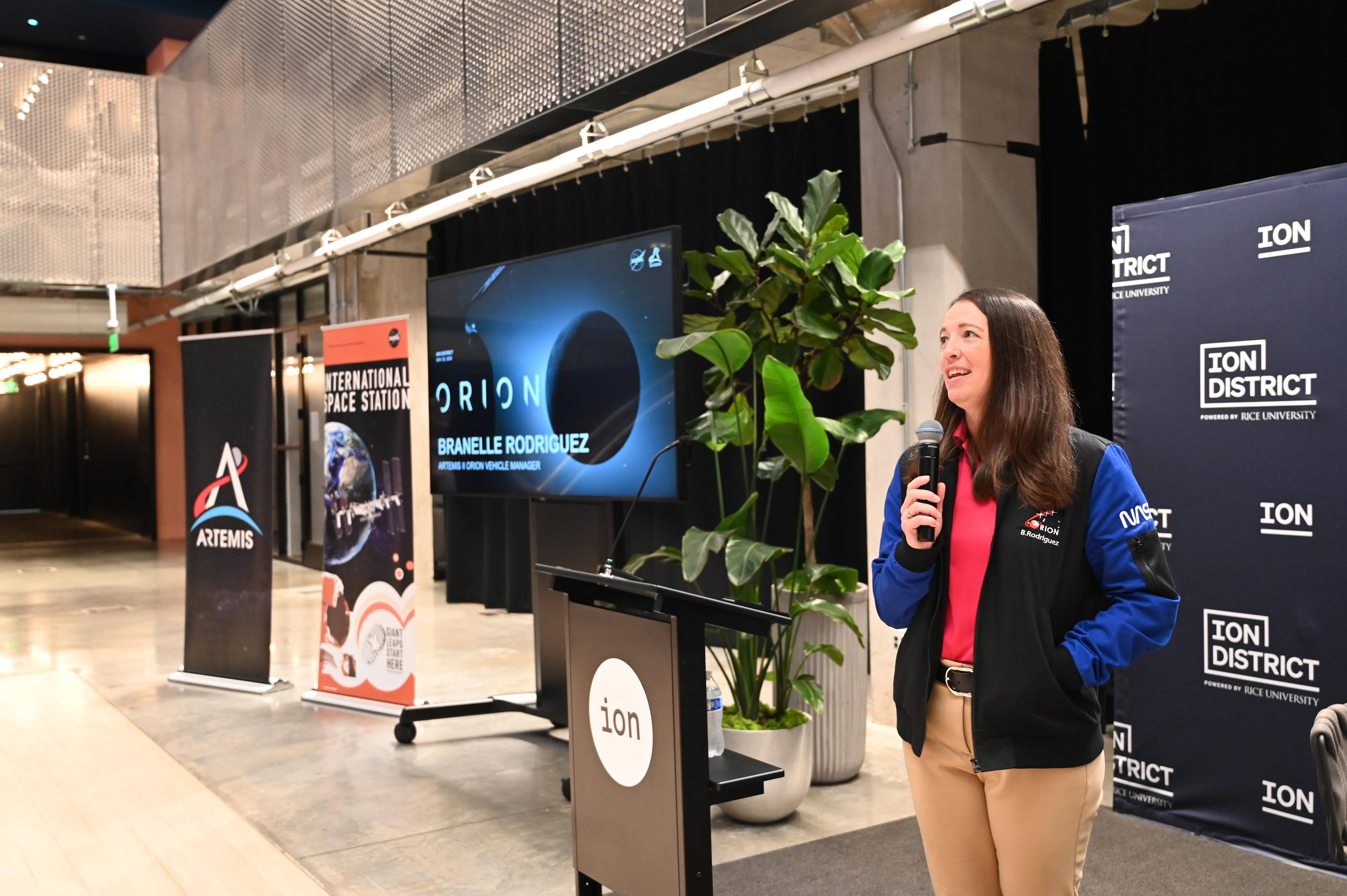
Artemis II Orion Vehicle Manager Branelle Rodriguez speaks at the Ion in Houston on May 28, 2026.

Seven weeks after the Orion spacecraft returned four astronauts from humanity’s first crewed journey around the Moon since Apollo, Artemis II Orion Vehicle Manager Branelle Rodriguez reflected on the mission’s achievements and how it is shaping NASA’s return to the lunar surface and future missions to Mars. 

Introduced by NASA’s Johnson Space Center Acting Director of Business Development and Technology Integration Monte Goforth, Rodriguez spoke at the Ion in Houston on May 28 as part of the NASA Stories at the Ion speaker series. Located in Houston’s Ion District, the innovation hub serves as a gathering place for entrepreneurs, researchers, and industry leaders working to advance technology and shape the future of industries ranging from aerospace to energy. 

She shared an inside look at the mission she helped guide — as the Orion vehicle manager for Artemis II, Rodriguez has overseen the life of the spacecraft from end-to-end, through its development, production, execution of the mission, and currently, the post-mission work underway now that Orion is back at NASA’s Kennedy Space Center in Florida. 

“This mission was very near and dear to my heart,” Rodriguez said. “It has not sunk in what this mission and what this accomplishment all means to us and humanity.” 

From left: NASA’s Johnson Space Center Acting Director of Business Development and Technology Integration Monte Goforth, Artemis II Orion Vehicle Manager Branelle Rodriguez, and Director of the Rice Space Institute David Alexander.

Launched April 1, Artemis II carried NASA astronauts Reid Wiseman, Victor Glover, and Christina Koch, along with CSA (Canadian Space Agency) astronaut Jeremy Hansen, on a 10-day voyage around the Moon inside the Orion spacecraft.  

Using mission imagery and video, Rodriguez walked attendees through key milestones, including launch aboard NASA’s SLS (Space Launch System) rocket, operations in high-Earth orbit, a lunar flyby, and Orion’s return to Earth. She also shared views from Orion captured by the crew, including Earthrise, detailed images of the lunar surface, and a solar eclipse observed from deep space. 

Artemis II successfully demonstrated Orion’s performance during its first crewed deep space mission. The mission tested Orion’s life support systems, crew interfaces, navigation, and reentry systems, providing data that will help teams prepare for upcoming Artemis missions. The crew also completed a manual piloting demonstration, evaluating Orion handling and proximity operations that will inform future rendezvous and docking activities.  

“I think it really hit me at T-minus 10 seconds,” Rodriguez said. “That’s when we go into ‘terminal count,’ meaning there’s just no turning back.” 

Rodriguez emphasized that Orion’s success on Artemis II was the result of global teamwork across NASA centers, industry partners, and international agencies. She highlighted the European Service Module, provided by ESA (European Space Agency), which supplies Orion with power, propulsion, oxygen, water, and other resources needed during flight. In the Orion Mission Evaluation Room at Johnson, more than 300 people supported the mission, monitoring spacecraft systems and standing ready to respond in real time. Among the mission’s more personal touches was Rise, Orion’s zero-gravity indicator. The plushie, created by a student through an Artemis II design competition, carried a memory card containing over 5.6 million names of space fans who signed up through NASA’s “Send Your Name with Artemis” effort. 

“It is what the crew wanted – to bring all of us with them on this mission,” Rodriguez said.  

The crew also designed the mission patch with a hidden detail: viewed from a distance, the artwork reads “all” – a deliberate tribute to everyone who made the mission a success.  

“It is a village that makes this possible, absolutely,” she said. Looking ahead, Rodriguez discussed preparations underway for upcoming Artemis missions. Artemis III will test critical rendezvous and docking capabilities between Orion and commercial human landing systems in low Earth orbit and advance plans to return astronauts to the lunar surface. On June 9, NASA announced the Artemis III crew at Johnson Space Center in Houston, while hardware for future missions is already in production at Kennedy Space Center in Florida. 

For Rodriguez, Artemis II demonstrated what is possible when thousands of people work toward a common goal, supporting NASA’s vision of a sustained presence at the Moon and, ultimately, human missions to Mars. 

“It’s going to take time to build this all up,” Rodriguez said. “But we are off and running.” 

Powered by WPeMatico

Get The Details…
Sumer Loggins
La NASA compartirá los últimos avances del programa Base Lunar

La NASA compartirá los últimos avances del programa Base Lunar

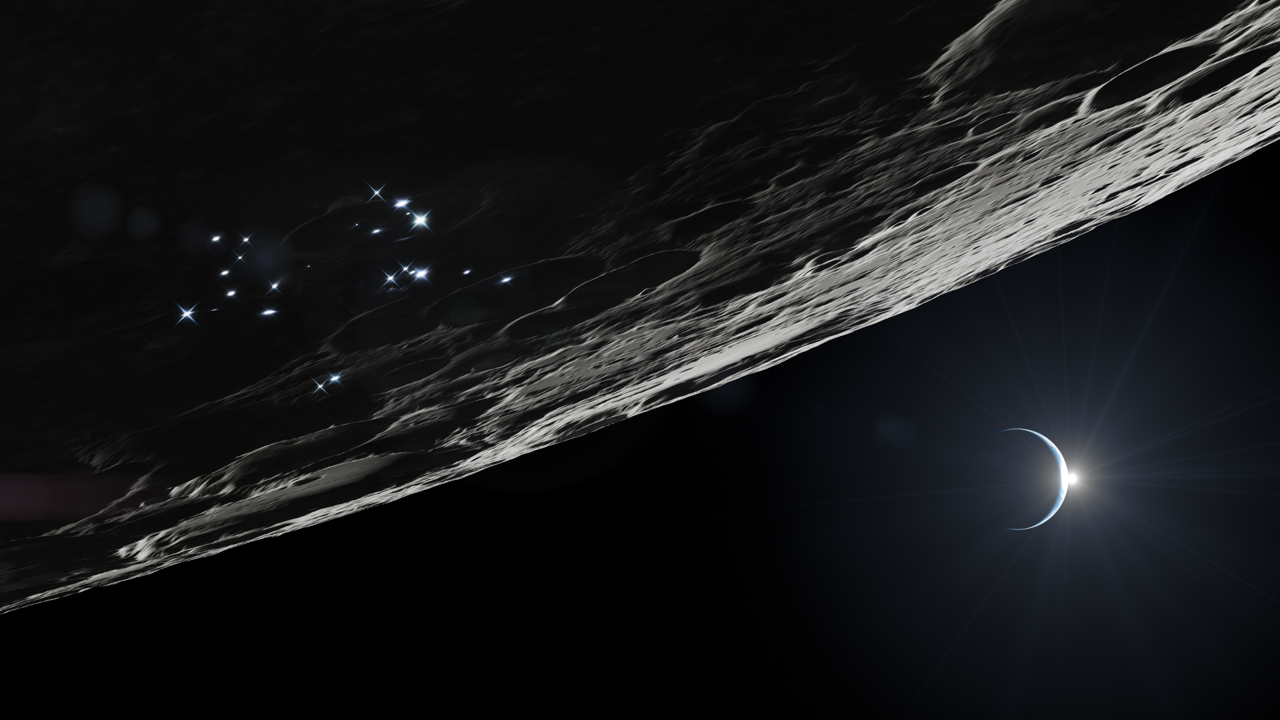
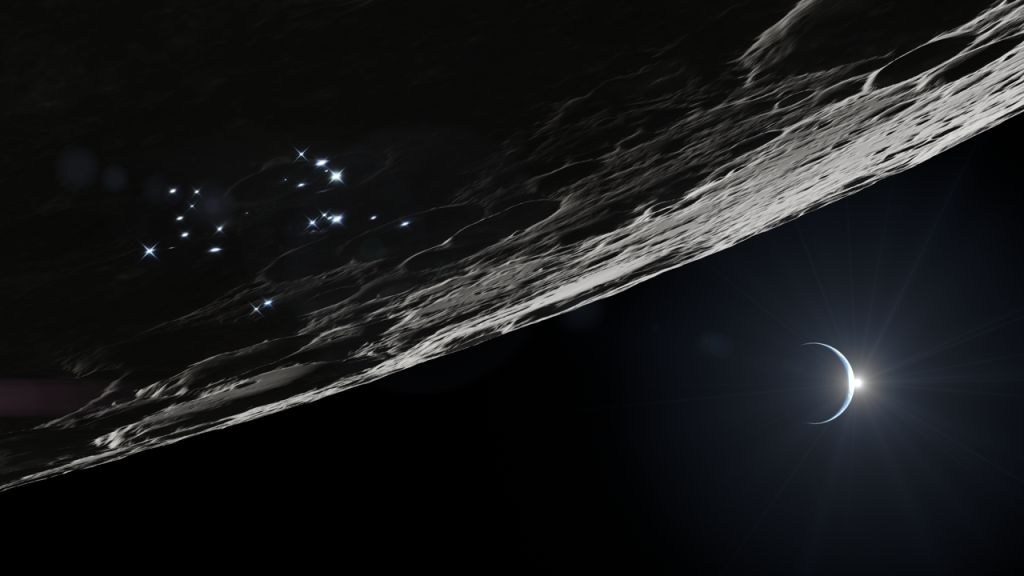
Current image: Representación digital de la región del Polo Sur lunar. Los puntos de luz brillantes esparcidos por la superficie lunar representan los componentes en superficie que apoyan las operaciones sostenidas con seres humanos y robots cerca del Polo Sur.
Representación digital de la región del Polo Sur lunar. Los puntos de luz brillantes esparcidos por la superficie lunar representan los componentes en superficie que apoyan las operaciones sostenidas con seres humanos y robots cerca del Polo Sur.
Crédito: NASA

Lea esta nota de prensa en inglés aquí.

El administrador de la NASA, Jared Isaacman, ofrecerá una conversación virtual el martes 30 de junio a las 2:30 p.m. EDT (hora del este) para compartir las novedades más recientes sobre los planes de la agencia para construir una base en la superficie de la Luna.

El administrador Isaacman y Carlos García-Galán, director del programa Base Lunar, hablarán sobre la próxima ronda de adjudicaciones para nuevas misiones de módulos de alunizaje y ofrecerán un avance de las próximas oportunidades a medida que la agencia avanza en la construcción de una presencia sostenida en la Luna.

La rueda de prensa se transmitirá por el canal de YouTube de la NASA (en inglés). Una repetición instantánea estará disponible en línea. Infórmese sobre cómo ver el contenido de la NASA en distintas plataformas, incluidas las redes sociales (información en inglés).

Para hacer preguntas de forma virtual durante el evento, los periodistas deberán confirmar su asistencia a más tardar a las 12:30 p.m. EDT (hora del este) del 30 de junio escribiendo a: lhq-media@mail.nasa.gov. La política de acreditación de medios de la NASA está disponible en línea (en inglés).

La NASA avanza en el desarrollo de la Base Lunar, una iniciativa de exploración e infraestructura lunar a largo plazo diseñada para permitir una presencia humana sostenida y ampliar la actividad científica y comercial en la superficie de la Luna.

Como parte de una edad de oro de innovación y exploración, la NASA enviará astronautas en misiones cada vez más difíciles para explorar más de la Luna con fines de descubrimiento científico y beneficios económicos, y para continuar sentando las bases para las primeras misiones tripuladas a Marte.

Para obtener más información (en inglés) sobre los planes de la NASA para la Base Lunar, visite:

https://www.nasa.gov/moonbase

-fin-

Bethany Stevens / Rachel Kraft / María José Viñas
Sede central, Washington
+1 202-358-1600
bethany.c.stevens@nasa.gov / rachel.h.kraft@nasa.gov / maria-jose.vinasgarcia@nasa.gov

Share

Details

Last Updated

Jun 24, 2026

Powered by WPeMatico

Get The Details…
María José Viñas

NASA to Share Latest Moon Base Mission Progress

NASA to Share Latest Moon Base Mission Progress

Artist’s rendering of the Moon’s South Pole region. Glowing points of light scattered across the lunar surface represent surface assets supporting sustained human and robotic operations near the South Pole.
Credit: NASA

NASA Administrator Jared Isaacman will host a virtual conversation at 2:30 p.m. EDT, Tuesday, June 30, to share updates to NASA’s plans to build a Moon Base on the lunar surface.

Administrator Isaacman and Carlos García-Galán, Moon Base program manager, will discuss the next set of awards for new lunar lander missions and preview upcoming opportunities as the agency works toward building a sustained presence on the Moon.

The discussion will stream on NASA’s YouTube channel. An instant replay will be available online. Learn how to watch NASA content on a variety of platforms, including social media.

To ask a question virtually during the event, media must RSVP no later than 12:30 p.m., June 30 to: hq-media@mail.nasa.gov. NASA’s media accreditation policy is available online.

NASA is advancing development of the Moon Base, a long-term lunar exploration and infrastructure initiative designed to enable sustained human presence and expanded scientific and commercial activity on the lunar surface.

As part of the Golden Age of innovation and exploration, NASA will send astronauts on increasingly difficult missions to explore more of the Moon for scientific discovery, economic benefits, and to build on our foundation for the first crewed missions to Mars.

For more information about NASA’s Moon Base plans, visit:

https://www.nasa.gov/moonbase

-end-

Bethany Stevens / Rachel Kraft
Headquarters, Washington
202-358-1600
bethany.c.stevens@nasa.gov / rachel.h.kraft@nasa.gov

Share

Details

Last Updated

Jun 24, 2026

Powered by WPeMatico

Get The Details…
Lauren E. Low

Roman Telescope Comes to Kennedy

Roman Telescope Comes to Kennedy

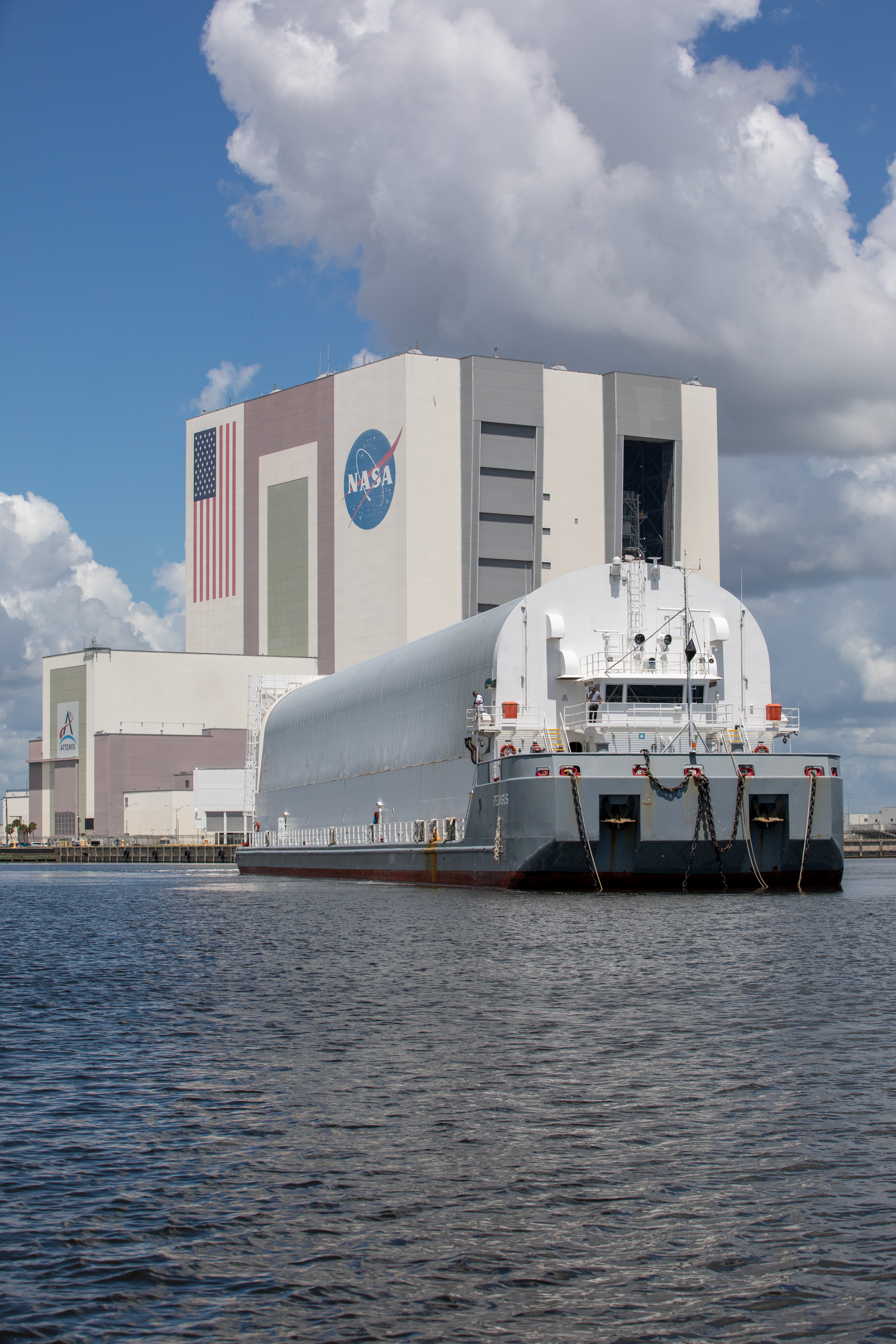
A large flat ship with a rounded structure on it approaches Kennedy Space Center's Vehicle Assembly Building. Dark blue water is in the foreground, while the ship moves toward the building in the background. The sky is blue, but huge, white fluffy clouds covering a good portion of it.
NASA/Amber Jean Notvest

In this June 21, 2026, photo, NASA’s Nancy Grace Roman Space Telescope arrives at the agency’s Kennedy Space Center in Florida aboard NASA’s Pegasus barge. After offloading and transportation to the spaceport’s Payload Hazardous Servicing Facility, Roman will undergo processing ahead of launch, targeted no earlier than Sunday, Aug. 30, 2026.

Named for NASA’s first chief astronomer and “mother of the Hubble Space Telescope,” Roman will offer a field of view over 100 times larger than Hubble’s to study up to a billion galaxies, directly image exoplanets and planet‑forming disks, and address fundamental questions about dark energy, exoplanets, and infrared astrophysics.

Image credit: NASA/Amber Jean Notvest

Powered by WPeMatico

Get The Details…
HQ Web Team

NASA’s HiRISE Captures Perseverance Marking a Milestone on Mars

NASA’s HiRISE Captures Perseverance Marking a Milestone on Mars

2 Min Read

NASA’s HiRISE Captures Perseverance Marking a Milestone on Mars

An aerial view of a reddish surface shows the tops of ridges. A very faint green speck can be seen just left of center of the image. Rover tracks can be seen tracing the surface.
PIA26726
Credits:
NASA/JPL-Caltech/University of Arizona

Description

NASA’s Perseverance rover appears as a green speck on the Martian surface on June 13, 2026, a day before the robotic explorer marked a distance milestone, having traveled a full marathon (26.2 miles, or 42.195 kilometers) on the Red Planet. Perseverance reached that distance after five years and four months of driving — on the 1,890th Martian day, or sol, of its mission; the previous record holder, NASA’s Opportunity rover, took 11 years and two months to reach the same milestone.

This image was taken by NASA’s Mars Reconnaissance Orbiter (MRO) using its High-Resolution Imaging Science Experiment (HiRISE) camera. The rover’s tracks can be seen tracing the surface. The rover is in an area west of Jezero Crater that the science team is calling “Arbot.”

An aerial view of a reddish surface shows the tops of ridges. A very faint green speck can be seen just left of center of the image. Rover tracks can be seen tracing the surface.
Figure A

Figure A is the same image with a yellow circle indicating Perseverance.

Managed for NASA by Caltech, NASA’s Jet Propulsion Laboratory in Southern California manages operations of the Perseverance rover and MRO on behalf of the agency’s Science Mission Directorate as part of NASA’s Mars Exploration Program portfolio. Lockheed Martin Space in Denver built MRO and supports its operations. The University of Arizona, in Tucson, operates HiRISE, which was built by BAE Systems in Boulder, Colorado.

To learn more about these missions, visit:

https://science.nasa.gov/mars/

Powered by WPeMatico

Get The Details…