Science on Station: November 2023

Science on Station: November 2023

7 min read

Science on Station: November 2023

Inspiring Students with Ham Radio, Other Educational Programs

As an orbiting microgravity laboratory, the International Space Station hosts experiments from almost every scientific field. It also is home to educational programs to encourage young people worldwide to study science, technology, engineering, and mathematics (STEM). These programs aim to inspire the next generation of space scientists and explorers and experts who can solve problems facing people on Earth.

The first and longest running educational outreach program on the space station is ISS Ham Radio. An organization known as Amateur Radio on the International Space Station, or ARISS, helps run the program. ARISS is a partnership between NASA, the American Radio Relay League, the Radio Amateur Satellite Corporation, amateur radio organizations, and multiple international space agencies. Students use amateur or ham radio to talk with astronauts, asking them questions about life in space, career opportunities, and other space-related topics. Three contacts with schools in Australia and Canada were scheduled during the month of November 2023.
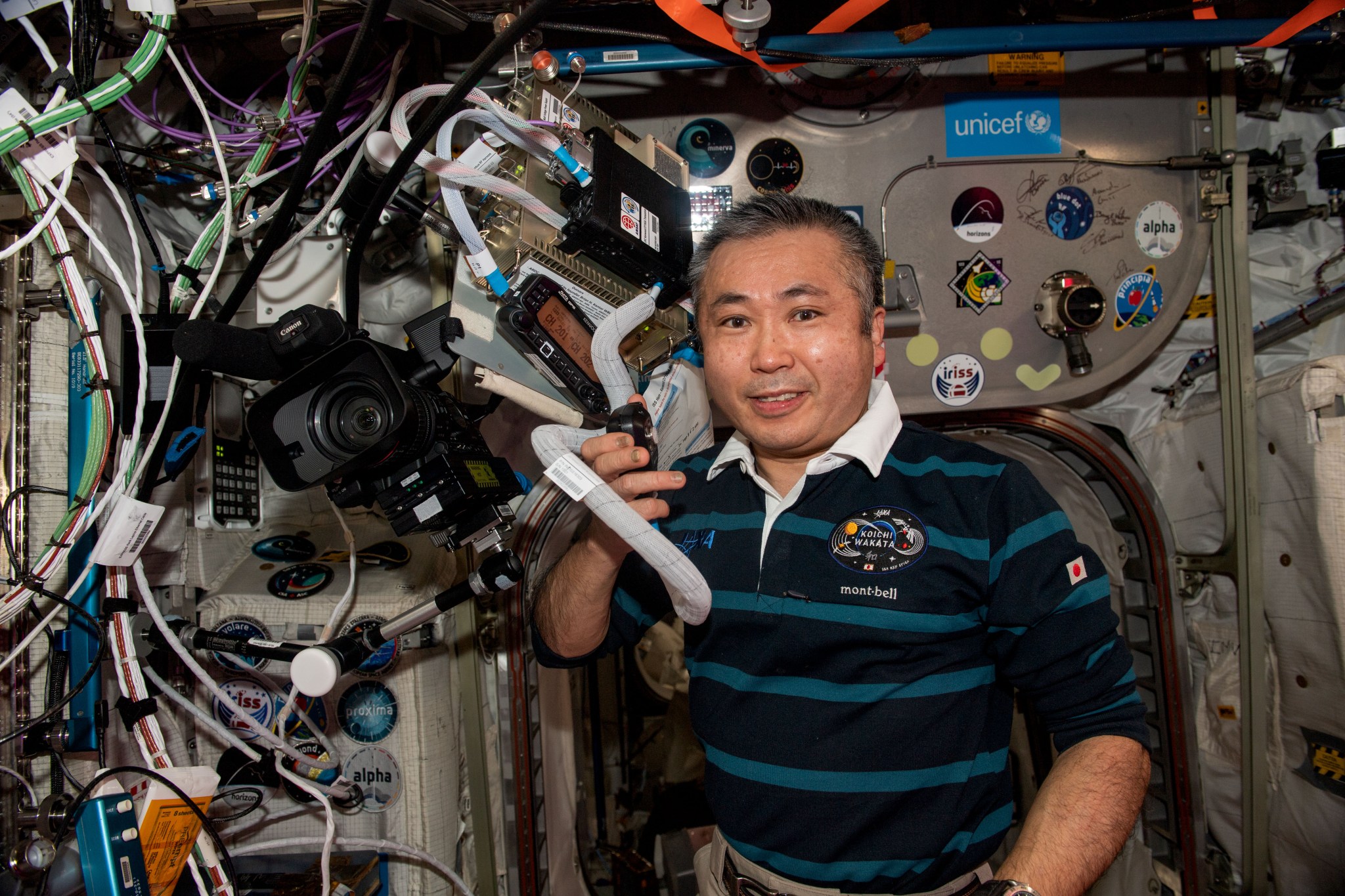
Koichi Wakata, wearing a striped shirt, faces the camera, holding the ham radio mic in his right hand. It is attached by a large grey cable to the radio set above his head. A large camera and tangles of wires are next to him.
JAXA astronaut Koichi Wakata during a ham radio session.
NASA

Before a contact, students help set up a ground radio station and study radio waves, space technology, the space station, geography, and the space environment. Contact events have been held with schools from kindergarten through 12th grade, universities, scout groups, museums, libraries, and after school programs, and at national and international events. Approximately 15,000 to 100,000 students are involved directly each year and thousands more people in their communities witness these contacts directly or through the news media.

Rita Wright, a teacher at Burbank School in Burbank, IL, one of the first to have a contact with the space station, reported on the extensive study and preparation by the students there.1 She noted that their contact was “an interdisciplinary learning experience for all grades across a variety of academic concentrations that included math, science, reading, writing and art…. The transformation that took place was quite revolutionary. We came closer together as a school.” Students talked extensively about the experiment and parents pitched in and helped because they sensed how special the event was and wanted to be a part of it.

Wright adds that ripple effects continued long after the December 2000 contact with astronaut William Shepherd. Staff members were inspired to look for other interdisciplinary projects and many students talked about pursuing careers associated with the space industry.

After a contact at Sonoran Sky Elementary School in Scottsdale, AZ, teacher Carrie Cunningham reported that the students started an after-school Amateur Radio Club and that, “sparked by the excitement of the ARISS contact, many students have shown an interested in pursuing their own Amateur Radio experience.”2

“There is a sense of accomplishment that results from the school and the students setting up and conducting the ISS ham contact themselves,” Cunningham reported. “The students better understand how NASA and the other international space agencies conduct science in space. The unique, hands-on nature of the amateur radio contact provides the incentive to learn about orbital mechanics, space flight, and radio operations.”

In a 2018 conference presentation, members of the ARISS staff noted that the program and its predecessors have jump-started countless careers, touched millions of people from all walks of life, and even become local and international phenomena. Participants have ranged from disadvantaged students to heads of states, and the program has been mentioned in IMAX films, numerous television shows, and commercials.3

A group of educators from Australia recently looked at how ham radio affected student interest in STEM subjects. They found that the program has a significant and positive impact on students and that interest in all STEM areas increases as a direct result of contacts.4

That research also reported a strong belief among teachers that astronauts provide outstanding examples of role models for their students. While the greatest changes in student interests occurs with primary school age students, the program also creates strong change in the interests of high school students.
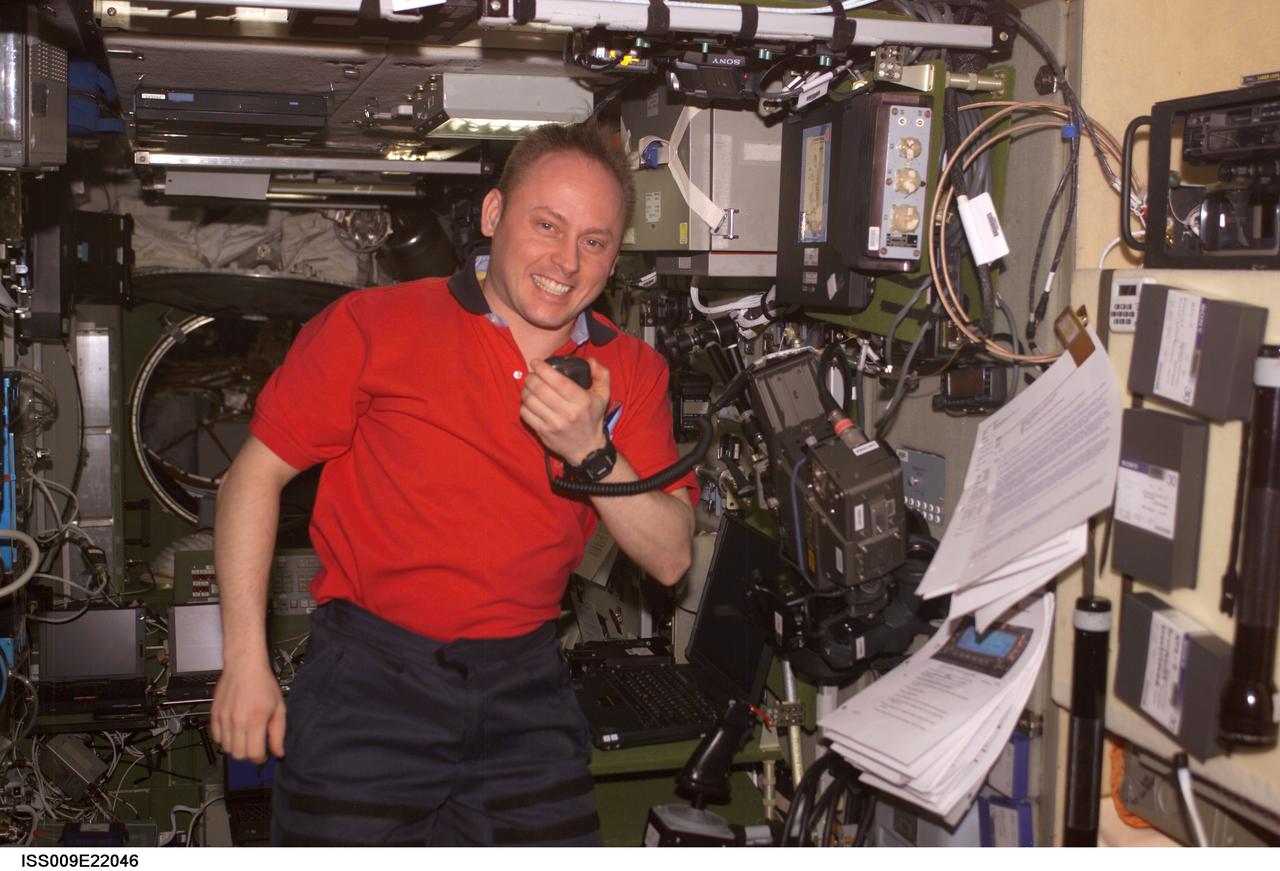
Mike Fincke wears a red shirt and smiles at the camera as he holds the ham radio mic in his left hand next to the radio set. Sheafs of paper are clipped to the wall in front of him and equipment covers the wall behind him.
NASA astronaut Edward M. (Mike) Fincke uses the station’s ham radio set during Expedition 9.
NASA

Patricia Palazzolo was the coordinator for gifted education in the Upper St. Clair School District in Pennsylvania during a 2004 contact with NASA astronaut Mike Fincke. She wrote a report about the event, noting that the positive impact of the program goes far beyond the numbers. “All of my students who have participated … have gone on to phenomenal accomplishments and careers that contribute much to society. Almost all have opted for careers in science, technology, or science-related fields.”

Ham radio experiences help students make real-world connections among disciplines, teach problem-solving under the pressure of deadlines, hone communication skills, and illustrate the importance of technology.5 For the adults involved, contacts highlight the significance of sharing skills with others and provide an opportunity to model the power of passion, partnership, and persistence.

AstroPi is an educational program from ESA (European Space Agency) where primary and secondary school students design experiments and write computer code for one of two Raspberry Pi computers on the space station. The computers are equipped with sensors to measure the environment inside the spacecraft, detect how the station moves through space, and pick up the Earth’s magnetic field. One of them has an infrared camera and the other a standard visible-spectrum camera. 

One student project used the visible camera to observe small-scale gravity waves in different regions in the northern hemisphere.6 Atmospheric gravity waves transport energy and momentum to the upper layers of the atmosphere. These phenomena can be detected by visual patterns such as meteor trails, airglow, and clouds.
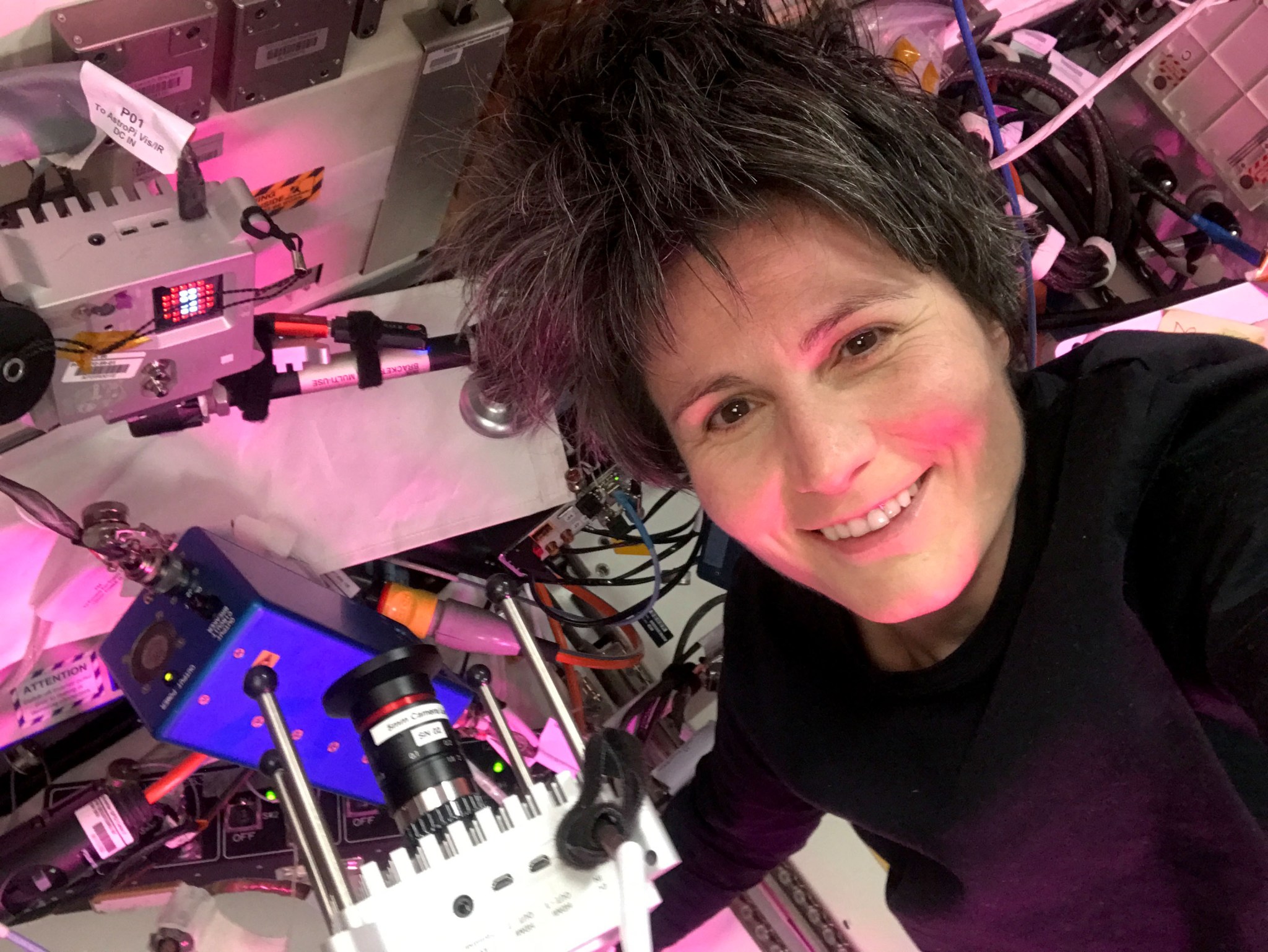
Samantha Cristoforetti, wearing a long-sleeved purple shirt, smiles at the camera. Hardware floating next to her includes a partly visible AstroPi with a black camera attached and a silver AstroPi with red and white lights.
ESA astronaut Samantha Cristoforetti poses with the AstroPi equipped with a visual camera.
NASA

YouTube Space Lab was a world-wide contest for students ages 14 to 18 to design an experiment about physics or biology using video. Two proposals were selected from 2,000 entries received from around the world. One of those documented the ability of the Phidippus jumping spider to walk on surfaces and make short, direct jumps to capture small flies in microgravity.7

Other space station facilities that host student-designed projects include CubeSat small satellites, TangoLab, the Nanoracks platform, and Space Studio Kibo, a JAXA (Japan Aerospace Exploration Agency) broadcasting studio.

NASA is committed to engaging, inspiring, and attracting future explorers and building a diverse future STEM workforce through a broad set of programs and opportunities. The space station is an important part of that commitment.

John Love, ISS Research Planning Integration Scientist
Expedition 70

Search this database of scientific experiments to learn more about those mentioned above. Space Station Research Explorer.

Citations:

  1. Wright RL. Remember, We’re Pioneers! The First School Contact with the International Space Station. AMSAT-NA Space Symposium. Arlington, VA. 2004 9pp.
  2. Cunningham C. NA1SS, NA1SS, This is KA7SKY Calling…… AMSAT-NA Space Symposium, Arlington, VA. 2004
  3. Bauer F, Taylor D, White R. Educational Outreach and International Collaboration Through ARISS: Amateur Radio on the International Space Station. 2018 SpaceOps Conference, Marseille, France. 2018 28 May – 1 June; 14 pp. DOI: 10.2514/6.2018-2437.
  4. Diggens, M., Williams, J., Benedix, G. (2023). No Roadblocks in Low Earth Orbit: The Motivational Role of the Amateur Radio on the International Space Station (ARISS) School Program in STEM Education. Space Education & Strategic Applications. https://doi.org/10.18278/001c.89715
  5. Palazzolo P. Launching Dreams: The Long-term Impact of SAREX and ARISS on Student Achievement. AMSAT-NA Space Symposium, Pittsburgh, PA. 2007 18pp.
  6. Magalhaes TE, Silva DE, Silva CE, Dinis AA, Magalhaes JP, Ribeiro TM. Observation of atmospheric gravity waves using a Raspberry Pi camera module on board the International Space Station. Acta Astronautica. 2021 May 1; 182416-423. DOI: 10.1016/j.actaastro.2021.02.022
  7. Hill DE. Jumping spiders in outer space (Araneae: Salticidae). PECKHAMIA. 2016 September 17; 146(1): 7 pp.
Powered by WPeMatico

Get The Details…
aclloyd
What Is the Artemis Program? (Grades 5-8)

What Is the Artemis Program? (Grades 5-8)

This article is for students grades 5-8.

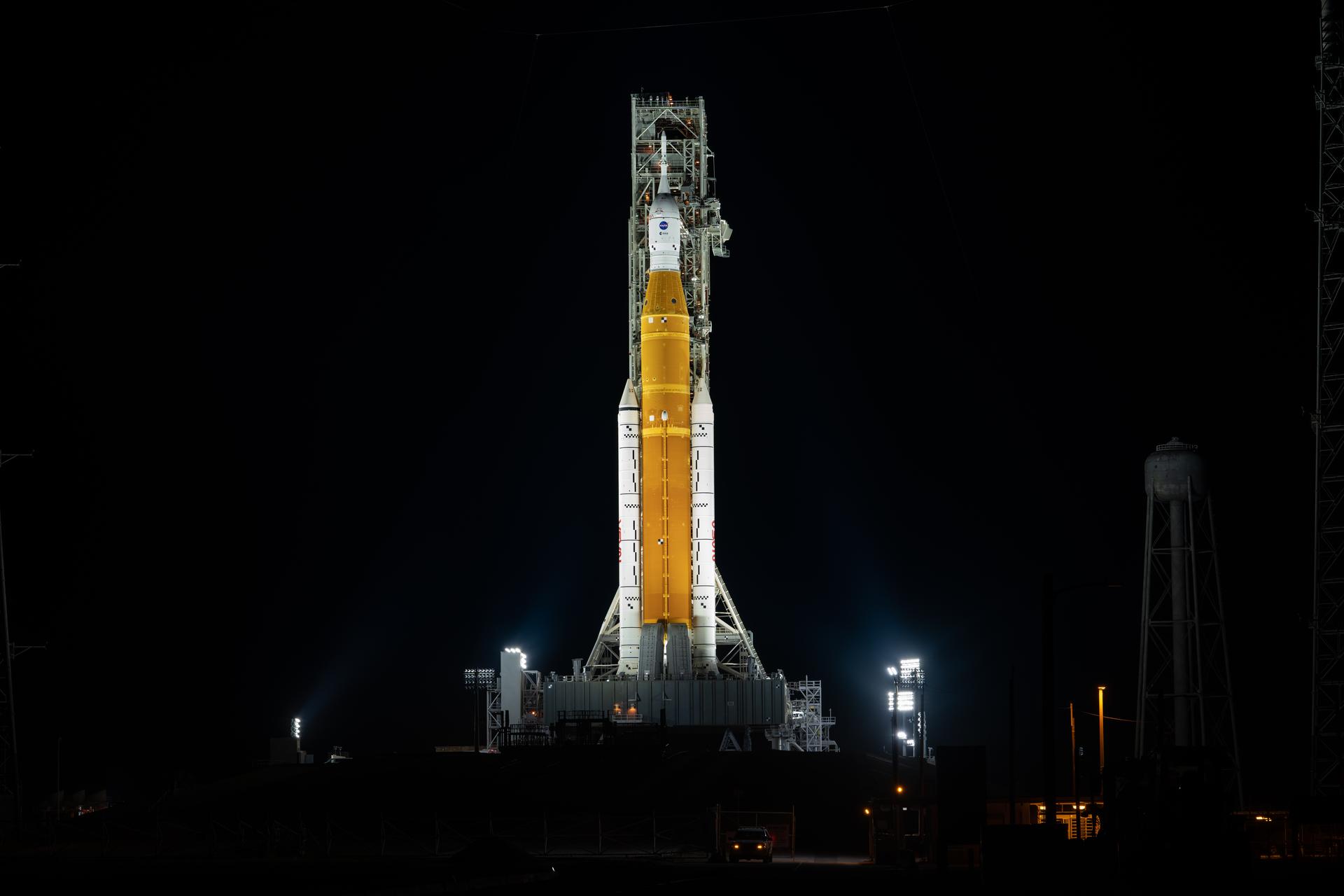
sls orion em-1 block 1 night launch pad

Artemis is NASA’s new lunar exploration program, which includes sending the first woman and first person of color on the Moon. Through the Artemis missions, NASA will use new technology to study the Moon in new and better ways, and prepare for human missions to Mars.

Why Is This Program Called Artemis?

The first missions to take astronauts to the Moon were called the Apollo Program. In 1961, President John F. Kennedy challenged the nation to land astronauts on the Moon by the end of the decade. NASA met that challenge with the Apollo program, landing the first man on the Moon on July 20, 1969. That program was named after a god of Greek mythology, Apollo.
Artemis was Apollo’s twin sister and the goddess of the Moon in Greek mythology. When they land, Artemis astronauts will stand where no human has ever stood: the Moon’s South Pole.

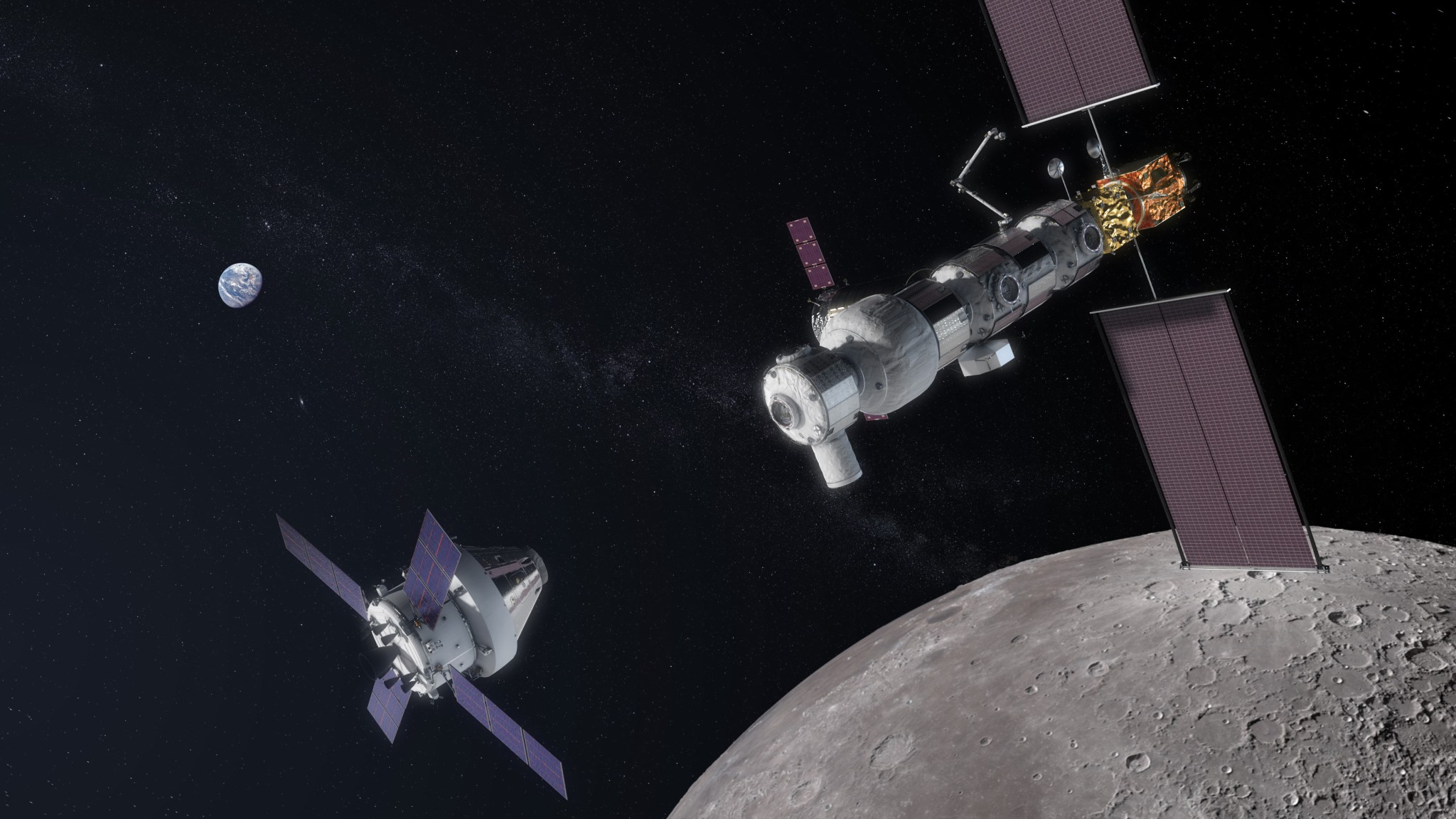
Illustration of Orion preparing to dock at Gateway

What Spacecraft Will Be Used for the Artemis Program?

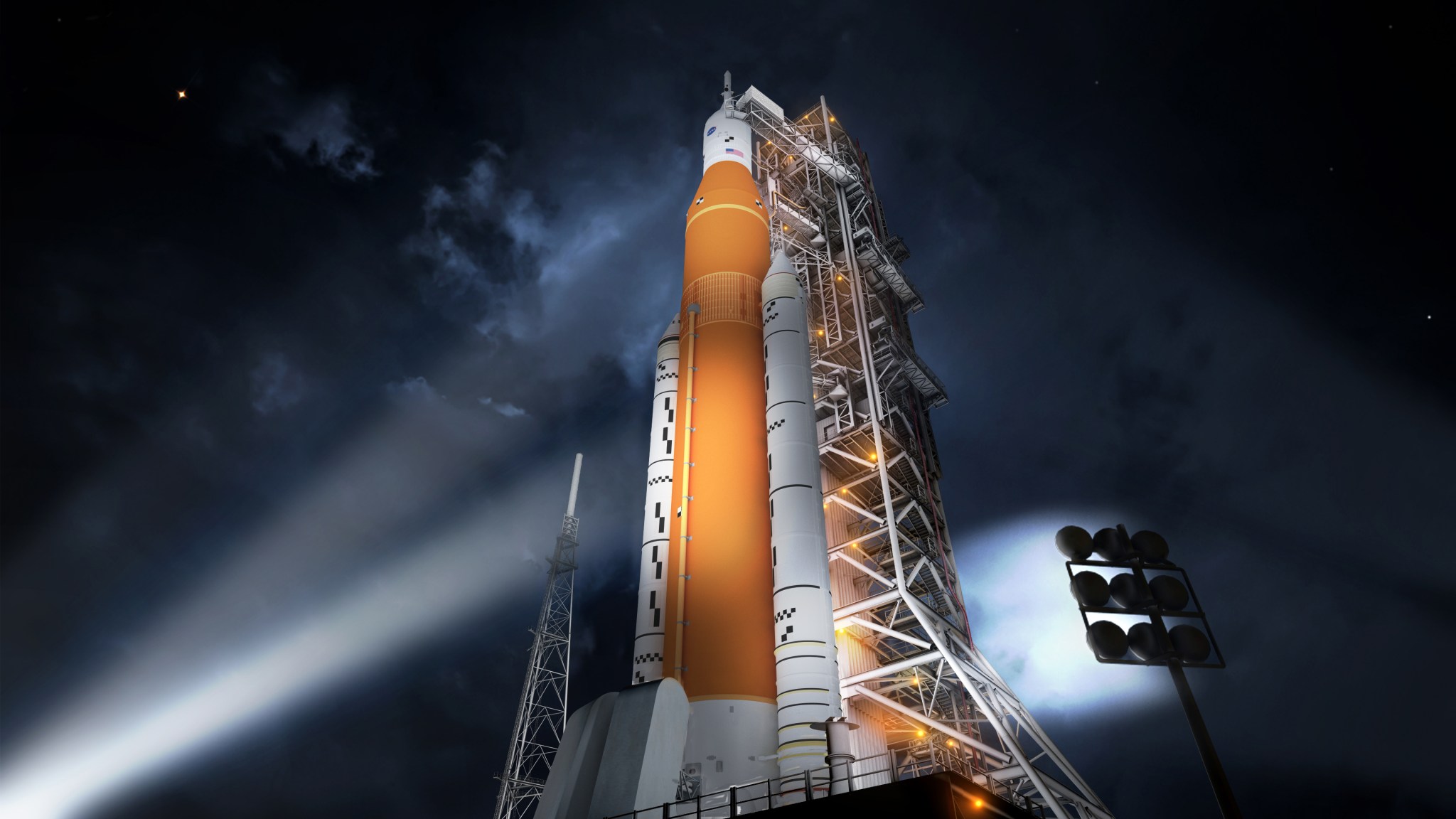
NASA’s new rocket is the Space Launch System (SLS). It is the most powerful rocket ever in the world. SLS will carry the Orion spacecraft with up to four astronauts riding aboard to lunar orbit. Then, astronauts will dock Orion at a small spaceship called the Gateway. This is where astronauts will prepare for missions to the Moon and beyond. The crew will take trips from the Gateway to the lunar surface in a new human landing system, and then return to the Gateway. When their work is finished, the crew will return to Earth aboard Orion.

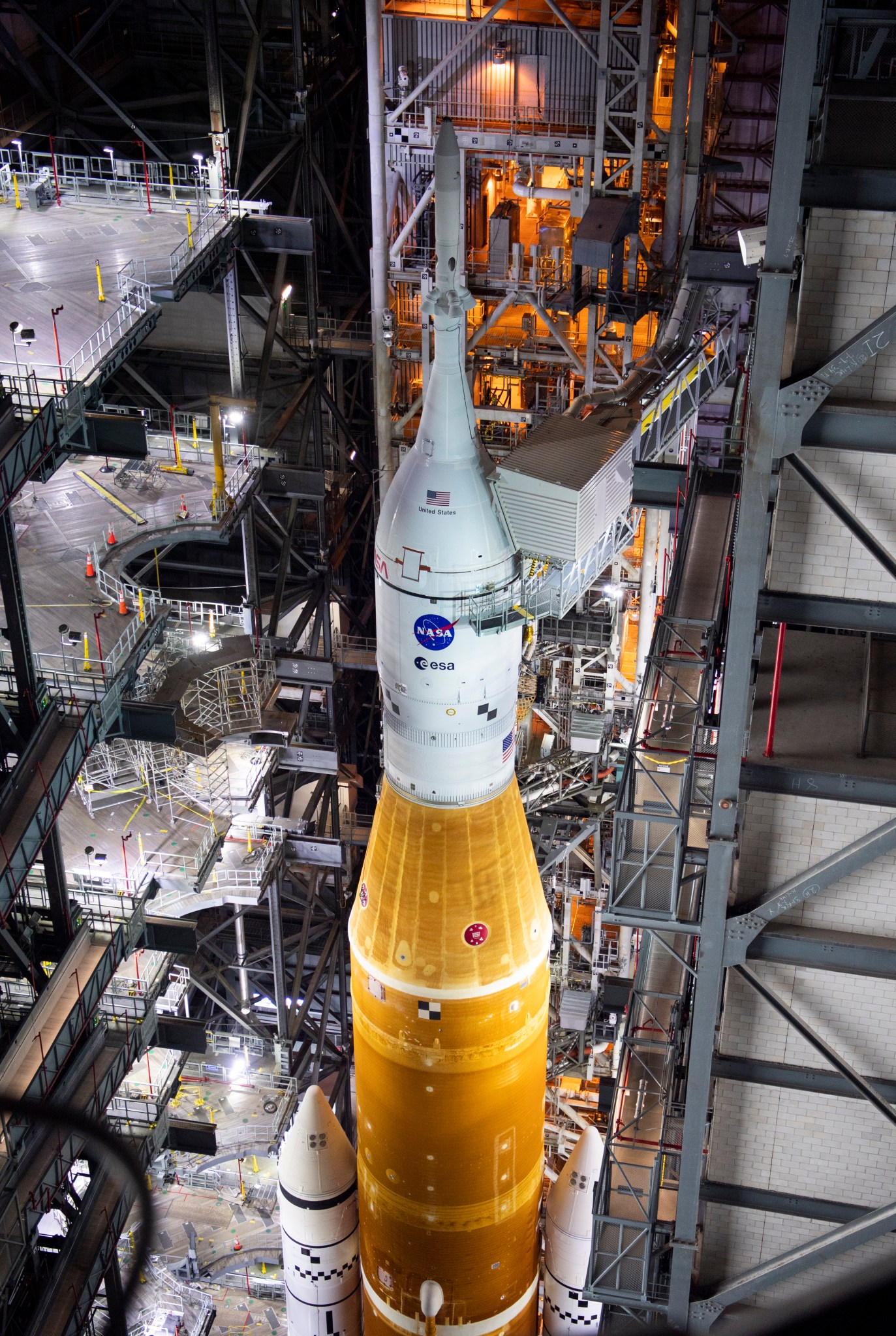
NASA’s Space Launch System (SLS) rocket with the Orion spacecraft aboard is seen atop a mobile launcher in High Bay 3 of the Vehicle Assembly Building before rolling out to Launch Complex 39B for the first time, Wednesday, March 16, 2022

When Will Artemis Go to the Moon?

Before Apollo put the first human on the Moon, the first Apollo missions launched to test the rocket and equipment. Before Artemis carries a crew to the Moon, NASA will test the rocket and spacecraft in flight then send a crew for a test flight:

  • Artemis 1 will be a test flight of the SLS rocket with the Orion spacecraft with no crew.
  • Artemis 2 will fly SLS and Orion with a crew past the Moon, then circle it and return to Earth. This trip will be the farthest any human has gone into space.
  • Artemis 3 will send a crew with the first woman and the next man to land on the Moon.

What Will Artemis Astronauts Do on the Moon?

The Artemis 3 crew will visit the Moon’s South Pole. No one has ever been there. At the Moon, astronauts will:

  • Search for the Moon’s water and use it.
  • Study the Moon to discover its mysteries.
  • Learn how to live and work on the surface of another celestial body where astronauts are just three days from home.
  • Test the technologies we need before sending astronauts on missions to Mars, which can take up to three years roundtrip.
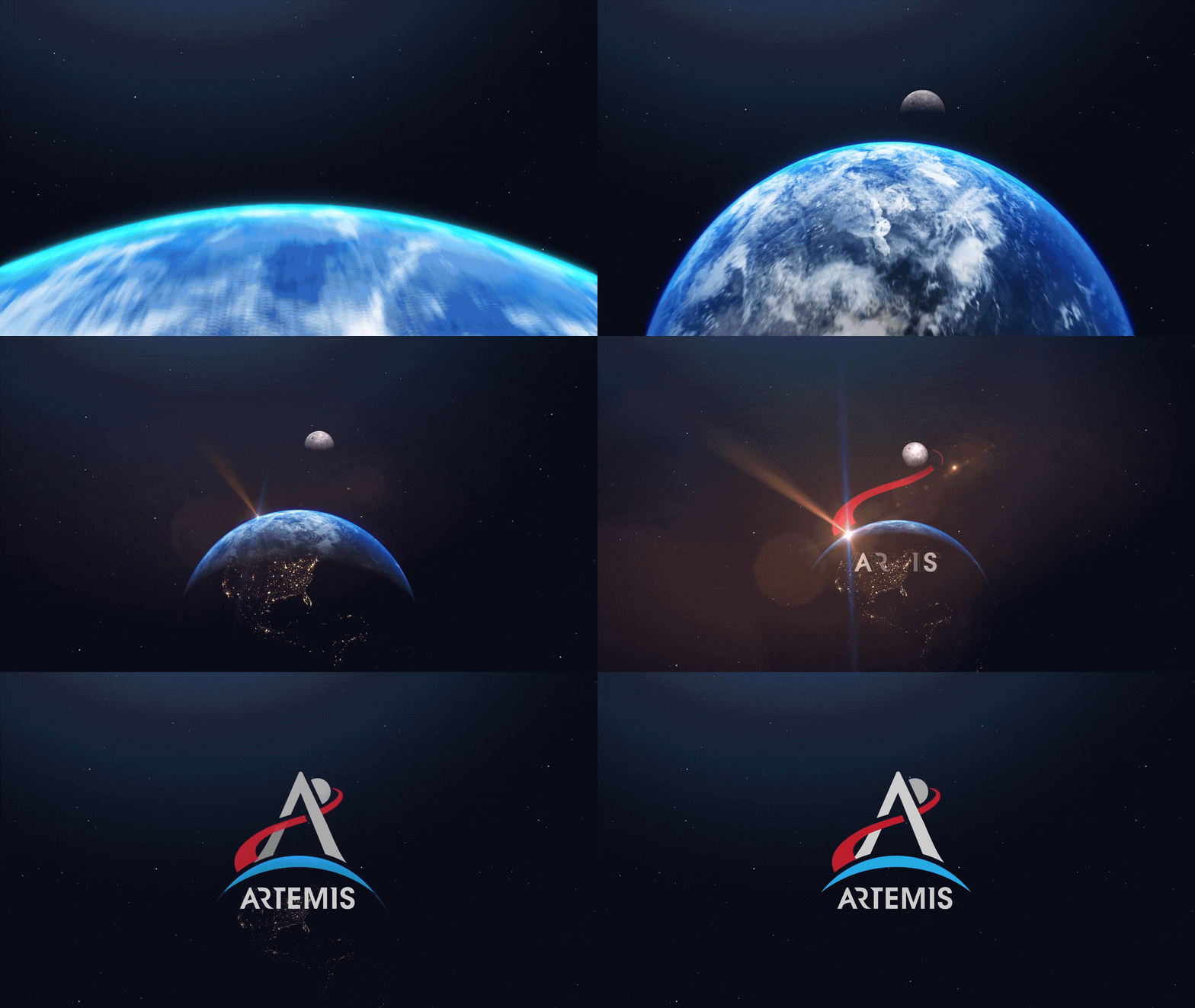
Animated Artemis identity with the Earth and Moon
Artemis will light our way to Mars. The new Artemis identity draws bold inspiration from the Apollo program and forges its own path, showing how it will pursue lunar exploration like never before and pave the way to Mars.

Why Is the Artemis Program Important?

The Moon is a good place to learn new science. When astronauts study new places on the lunar surface, NASA will learn more about the Moon, Earth and even the Sun. The Moon is a “test bed” for Mars. A test bed is a place to prove that a technology or idea will work. The Moon is a place to demonstrate that astronauts will one day be able to work away from Earth on Mars for long periods of time.
The first missions to the Moon required NASA to develop new technology. Many of those technologies have been made into items people use on Earth in their everyday lives. NASA is working with businesses and companies to create new technology for Artemis missions. Making new technology helps businesses grow and create more jobs on Earth. Other nations will work with NASA as partners. Just as partners work together on the International Space Station, they will work on Artemis to bring the world together for a mission to Earth’s nearest neighbor in space.

 
More About Artemis
Puzzle Book
Poster: SLS: Meet the Rocket
Pencil and Paper Puzzles: Orion Activities and Coloring Sheets For Kids
Video: Rocket Science in 60 Seconds: What Is the Space Launch System?
Video: We Are Going
Article: What Is the Space Launch System?
Article: What Is Orion?
Article: What Was the Apollo Program?
Article: What Is the International Space Station?
 

Read What Is the Artemis Program? (Grades K-4)

Powered by WPeMatico

Get The Details…
Jennifer B. Adams

What Is the Artemis Program? (Grades K-4)

What Is the Artemis Program? (Grades K-4)

This article is for students grades K-4.

sls orion em-1 block 1 night launch pad

Artemis is a new NASA program to explore the Moon. These missions will land the first woman and first person of color on the Moon. With the Artemis program, NASA will study the Moon in new and better ways.

Why Is This Program Called Artemis?

The first astronauts landed on the Moon in 1969. The missions were called Apollo. The name Apollo came from stories told by Greek people long ago. In the stories, Apollo was a god.
Apollo had a twin sister. Her name was Artemis. She was the goddess of the Moon in the Greek stories. The first crew will land on the Moon’s South Pole.

What Spacecraft Will Be Used for the Artemis Program?

NASA has a new rocket. It is the Space Launch System. It is called SLS for short. It is the most powerful rocket in the world. SLS will carry the Orion spacecraft on top. Orion can carry up to four astronauts. Orion will fly around, or orbit, the Moon. A spaceship will be orbiting the Moon like the Moon orbits Earth. The spaceship will be called the Gateway. Orion will connect to the Gateway. Astronauts will go from Orion to the Gateway. This is where astronauts will live as they orbit the Moon. The crew will take trips in spacecraft called landers to get to work on the surface of the Moon. Then they will return to Gateway. When all of their work is finished, the crew will return to Earth aboard Orion.

Illustration of Orion preparing to dock at Gateway

When Will Artemis Go to the Moon?

The first Apollo missions were tests. NASA launched the rocket to be sure it was safe for people and work as planned. Artemis will be tested first, too:

  • Artemis 1 will launch SLS and Orion with no astronauts.
  • Artemis 2 will have a crew. They will circle past the Moon and return to Earth.
  • Artemis 3 will send a crew with the first woman and the next man to land on the Moon.
NASA’s Space Launch System (SLS) rocket with the Orion spacecraft atop launches the agency’s Artemis I flight test, Wednesday, Nov. 16 from Launch Complex 39B at NASA’s Kennedy Space Center in Florida. The Moon rocket and spacecraft lifted off at 1:47 a.m. ET. The Artemis I mission is the first integrated test of the agency’s deep space exploration systems: the Space Launch System rocket, Orion spacecraft, and supporting ground systems. The mission is the first in a series of increasingly complex missions to the Moon. With Artemis missions, NASA will land the first woman and first person of color on the Moon, using innovative technologies to explore more of the lunar surface than ever before.

What Will Artemis Astronauts Do on the Moon?

The Artemis 3 crew will visit the Moon’s South Pole. No one has ever been there. At the Moon, astronauts will:

  • Search for the Moon’s water and use it.
  • Study the Moon to discover its mysteries.
  • Learn how to live and work on a different planet or moon from Earth.
  • Test the new tools NASA will need before sending astronauts on missions to Mars. A mission to Mars will take up to three years from Earth and back.
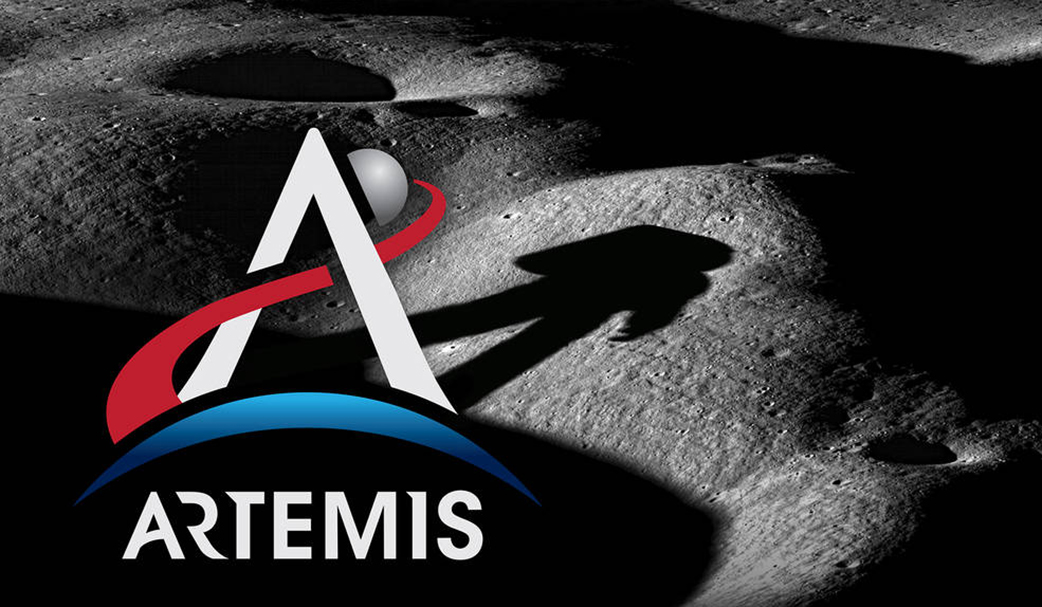
Artemis logo beams a shadow of an astronaut onto the lunar surface

Why Is the Artemis Program Important?

The Moon is a good place to learn new science. NASA will learn more about the Moon, Earth and even the Sun. The Moon is also a place to learn how astronauts can one day live and work on Mars.
The Artemis missions will need new tools. Many companies will make these new tools that NASA will use. This will mean new jobs and new businesses that are good for people and companies on Earth. Other countries will be NASA’s partners for the new Moon missions. They will work on Artemis to bring the world together for a mission to Earth’s nearest neighbor in space.

 
More About Artemis
Puzzle Book
Pencil and Paper Puzzles: Orion Activities and Coloring Sheets For Kids
Space Launch System Coloring Book (PDF)
Story: What Is the Space Launch System?
Story: What Is Orion?
Story: What Was the Apollo Program?
 

Read What Is the Artemis Program? (Grades 5-8)

Powered by WPeMatico

Get The Details…
Jennifer B. Adams

SaSa NASA Partners

SaSa NASA Partners

2 min read

SaSa NASA Partners

NASA Langley

  • NASA Langley Aerosol Research Group (LARGE)
    • LARGE specializes in making in situ aerosol and cloud measurements and conducting research to improve understanding of atmospheric aerosols and their interactions with water vapor. 
    • LARGE aims to contribute directly to NASA and the Langley Science Directorate goals of translating atmospheric discovery into better solutions to protect the Earth and its people. This is accomplished through investments in people and infrastructure, technology development, and stewardship/dissemination of high-quality data during scientific missions like DISCOVER-AQ and SEAC4RS. To learn more, check out the LARGE website.

Research Group

 The research group supporting the SaSa program includes:  

Instrumentation

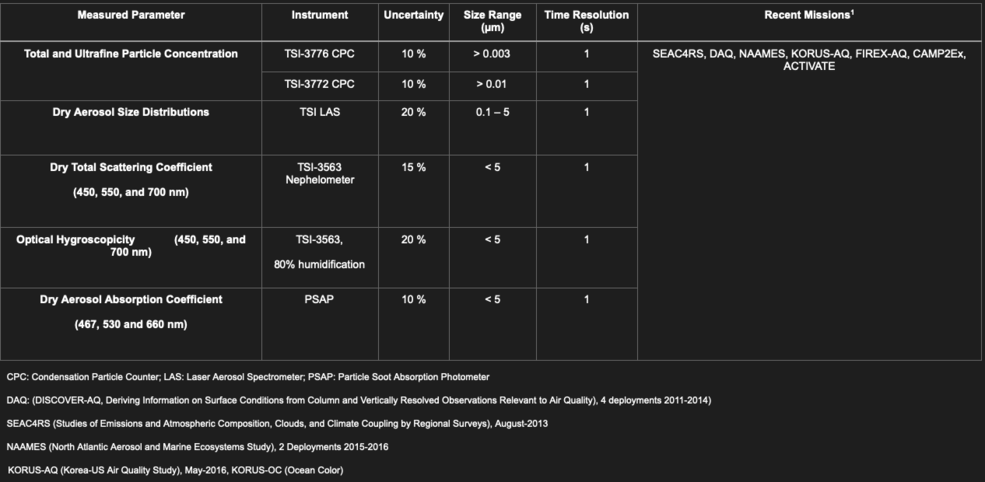
Below is a snapshot of instruments and tools Langley uses to support SaSa student projects and the summer airborne science campaigns. More information can be found on the NASA Langley Aerosol Research Group (LARGE) Instruments page.

NASA Goddard

NASA Goddard Space Flight Center (GSFC) has unique assets – aircraft, aircraft sensors and experts – to help create an effective learning environment for students.

Research group

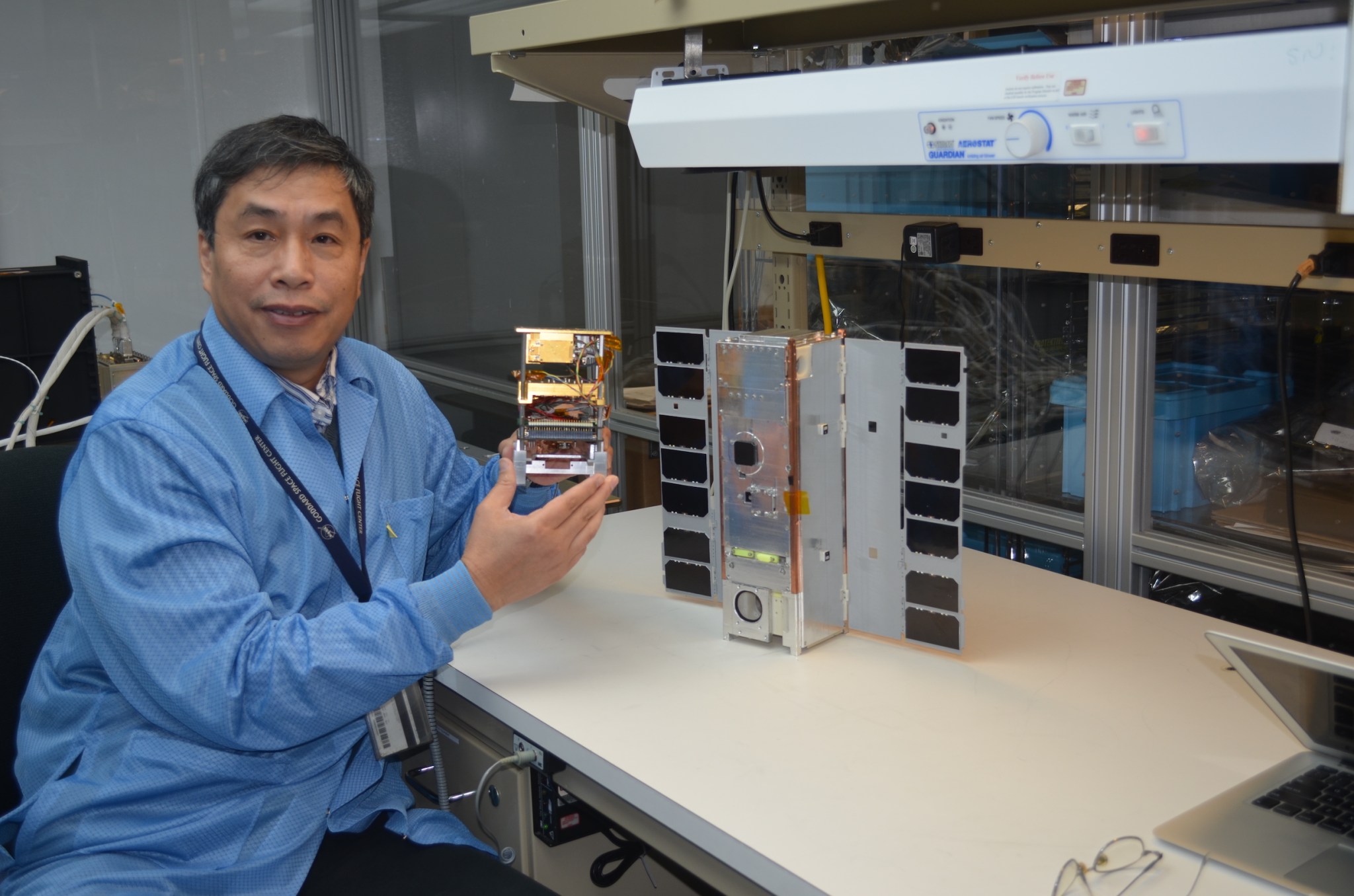
GSFC scientists and engineers support the SaSa program, especially in the maintenance of the CAR instrument. The CAR was designed and operated at NASA GSFC until August 2022, when it was transferred to NASA Ames Research Center. This team is lead by:

Share

Details

Last Updated

Nov 21, 2023

Related Terms

Powered by WPeMatico

Get The Details…
Milan Loiacono

What Is a Black Hole? (Grades 5-8)

What Is a Black Hole? (Grades 5-8)

This article is for students grades 5-8

Black hole with spinning material around it

A black hole is a region in space where the pulling force of gravity is so strong that light is not able to escape. The strong gravity occurs because matter has been pressed into a tiny space. This compression can take place at the end of a star’s life. Some black holes are a result of dying stars.

Because no light can escape, black holes are invisible. However, space telescopes with special instruments can help find black holes. They can observe the behavior of material and stars that are very close to black holes.

High energy light

How Big Are Black Holes?

Black holes can come in a range of sizes, but there are three main types of black holes. The black hole’s mass and size determine what kind it is.

The smallest ones are known as primordial black holes. Scientists believe this type of black hole is as small as a single atom but with the mass of a large mountain.

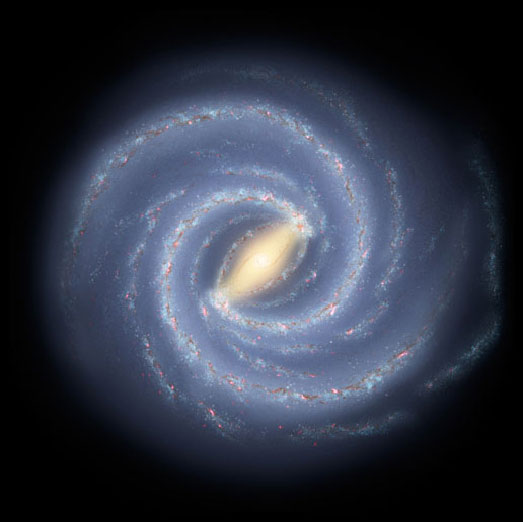
The most common type of medium-sized black holes is called “stellar.” The mass of a stellar black hole can be up to 20 times greater than the mass of the sun and can fit inside a ball with a diameter of about 10 miles. Dozens of stellar mass black holes may exist within the Milky Way galaxy.

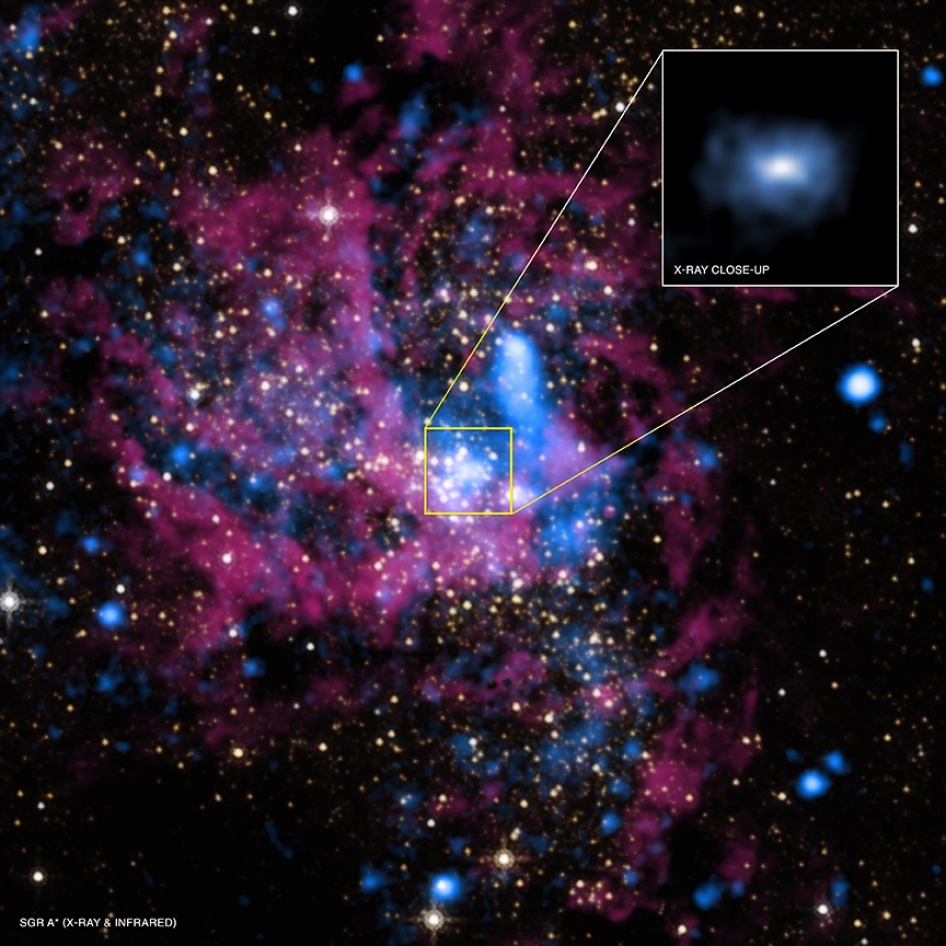
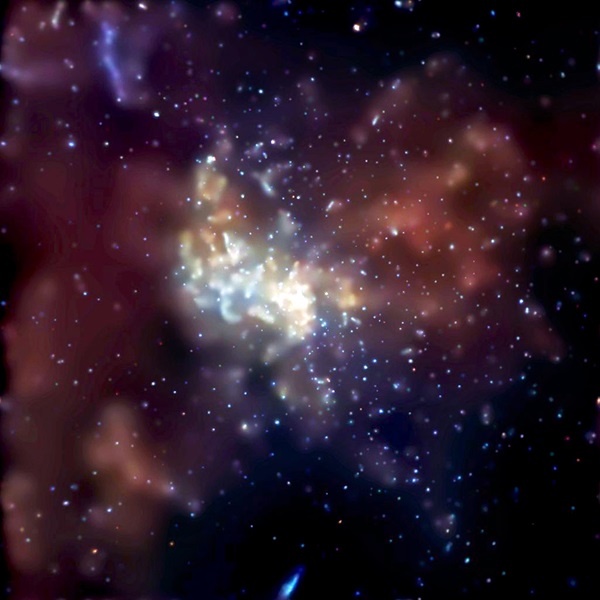
The largest black holes are called “supermassive.” These black holes have masses greater than 1 million suns combined and would fit inside a ball with a diameter about the size of the solar system. Scientific evidence suggests that every large galaxy contains a supermassive black hole at its center. The supermassive black hole at the center of the Milky Way galaxy is called Sagittarius A. It has a mass equal to about 4 million suns and would fit inside a ball with a diameter about the size of the sun.

Close-up of black hole

How Do Black Holes Form?

Primordial black holes are thought to have formed in the early universe, soon after the big bang.

Stellar black holes form when the center of a very massive star collapses in upon itself. This collapse also causes a supernova, or an exploding star, that blasts part of the star into space.

Scientists think supermassive black holes formed at the same time as the galaxy they are in. The size of the supermassive black hole is related to the size and mass of the galaxy it is in.

Black hole Sagittarius A

If Black Holes Are “Black,” How Do Scientists Know They Are There?

A black hole can not be seen because of the strong gravity that is pulling all of the light into the black hole’s center. However, scientists can see the effects of its strong gravity on the stars and gases around it. If a star is orbiting a certain point in space, scientists can study the star’s motion to find out if it is orbiting a black hole.

When a black hole and a star are orbiting close together, high-energy light is produced. Scientific instruments can see this high-energy light.

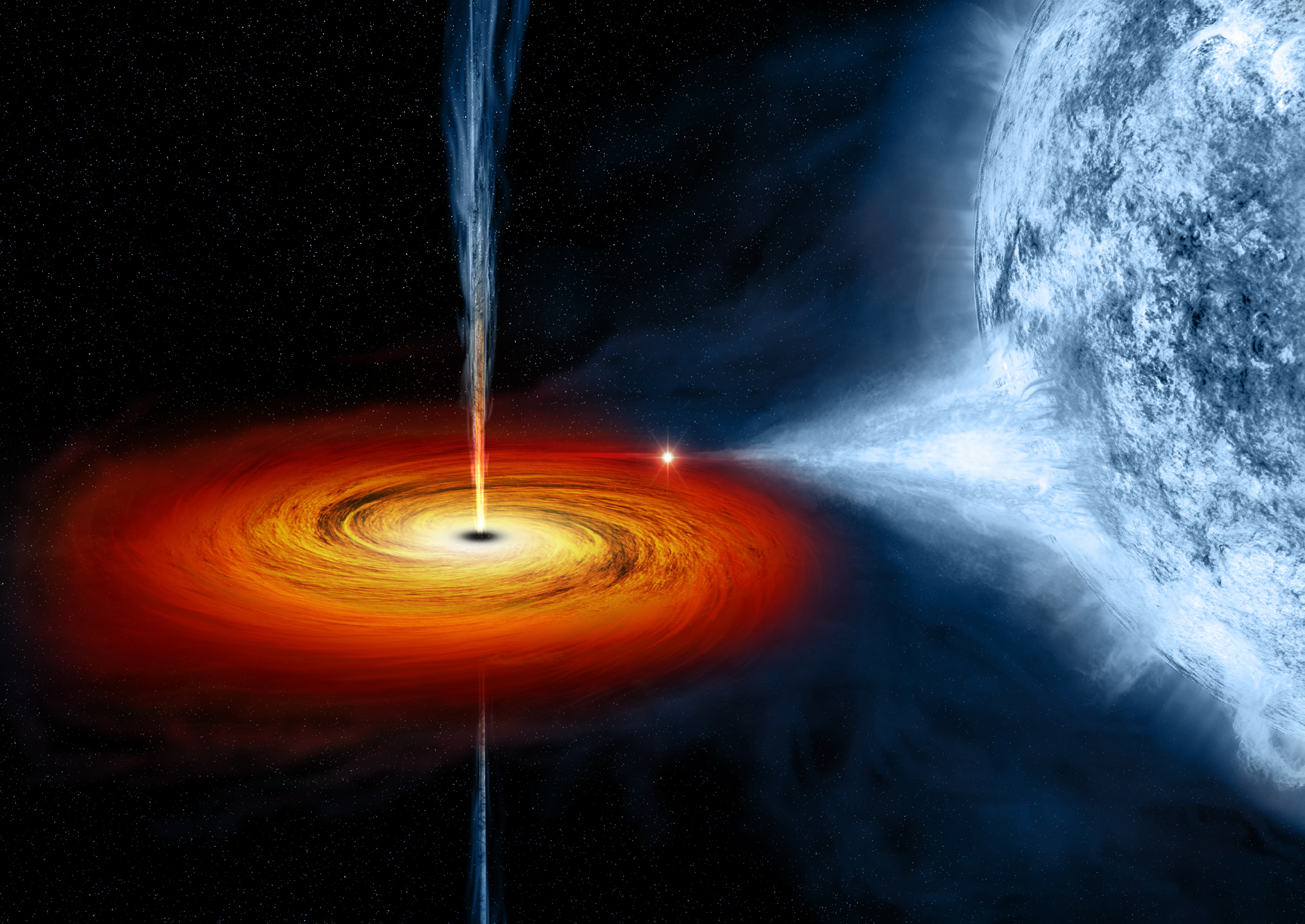
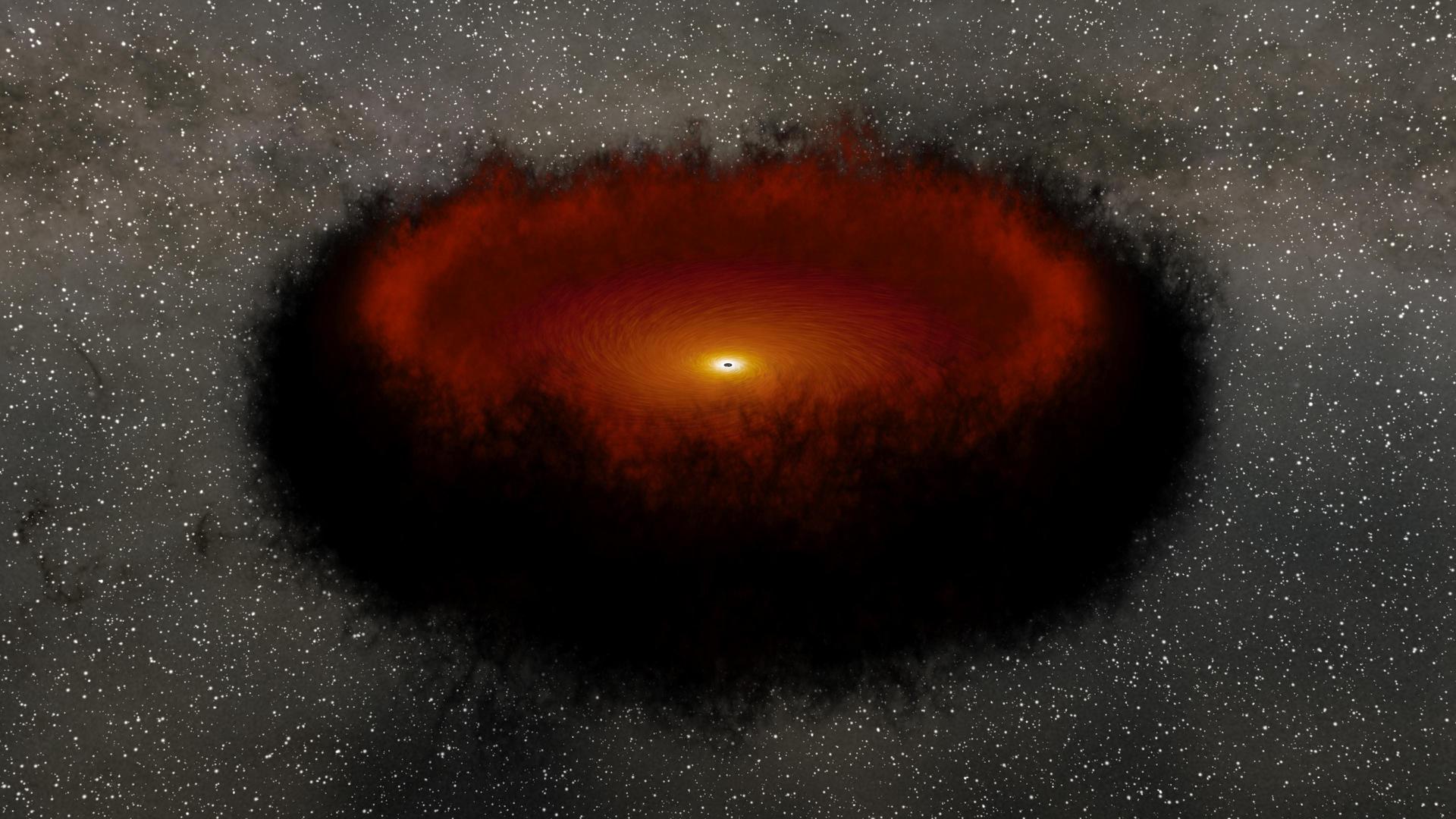
A black hole’s gravity can sometimes be strong enough to pull off the outer gases of the star and grow a disk around itself called the accretion disk. As gas from the accretion disk spirals into the black hole, the gas heats to very high temperatures and releases X-ray light in all directions. NASA telescopes measure the X-ray light. Astronomers use this information to learn more about the properties of a black hole.

A disk of hot material around a supermassive black hole emits a burst of visible light, which travels out to a ring of dust that subsequently emits infrared light.

Could a Black Hole Destroy Earth?

Black holes do not wander around the universe, randomly swallowing worlds. They follow the laws of gravity just like other objects in space. The orbit of a black hole would have to be very close to the solar system to affect Earth, which is not likely.

If a black hole with the same mass as the sun were to replace the sun, Earth would not fall in. The black hole with the same mass as the sun would keep the same gravity as the sun. The planets would still orbit the black hole as they orbit the sun now.

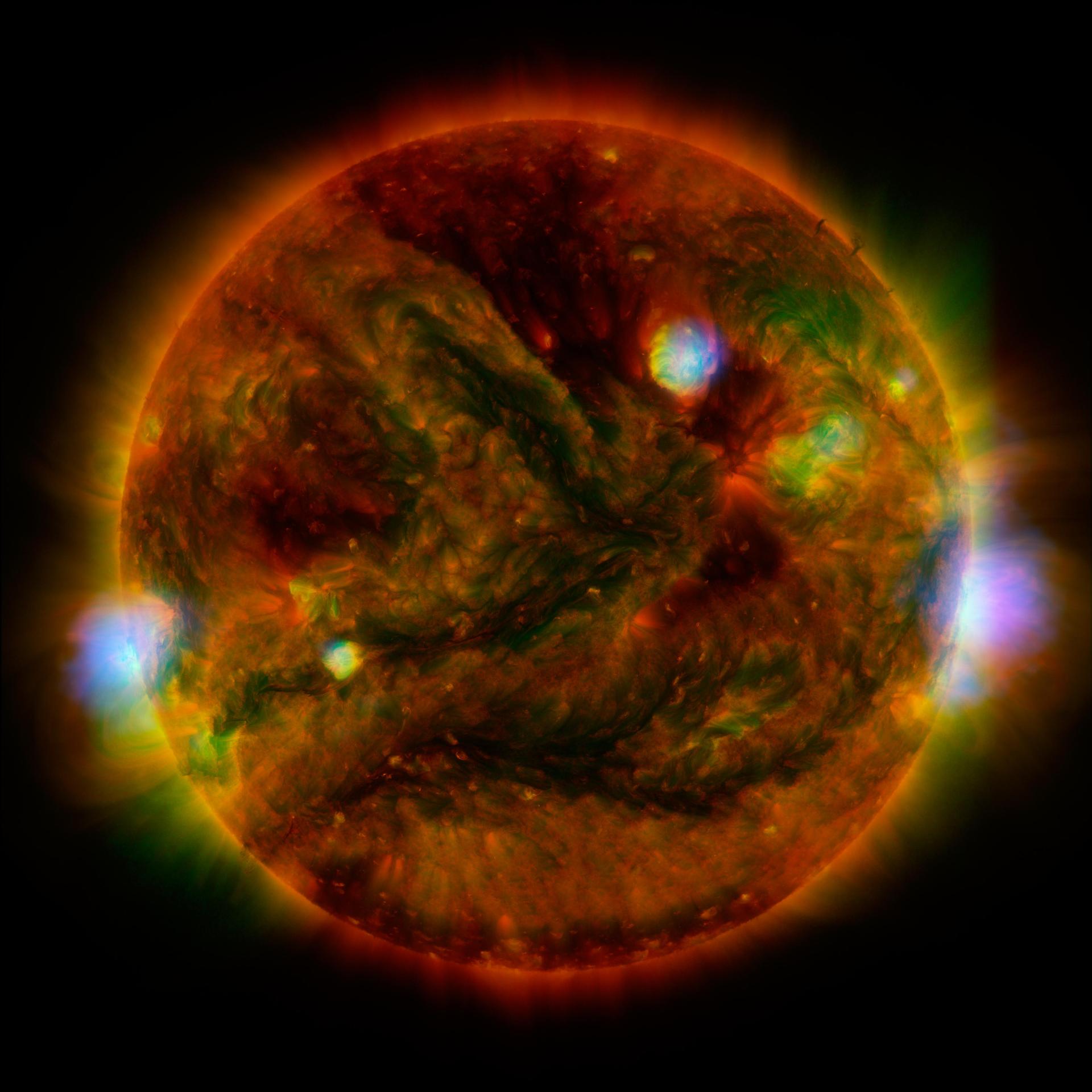
Flaring, active regions of our sun are highlighted in this image combining observations from NASA's NuSTAR. During the observations, microflares went off, which are smaller versions of the larger flares that also erupt from the sun surface.

Will the Sun Ever Turn Into a Black Hole?

The sun does not have enough mass to collapse into a black hole. In billions of years, when the sun is at the end of its life, it will become a red giant star. Then, when it has used the last of its fuel, it will throw off its outer layers and turn into a glowing ring of gas called a planetary nebula. Finally, all that will be left of the sun is a cooling white dwarf star.

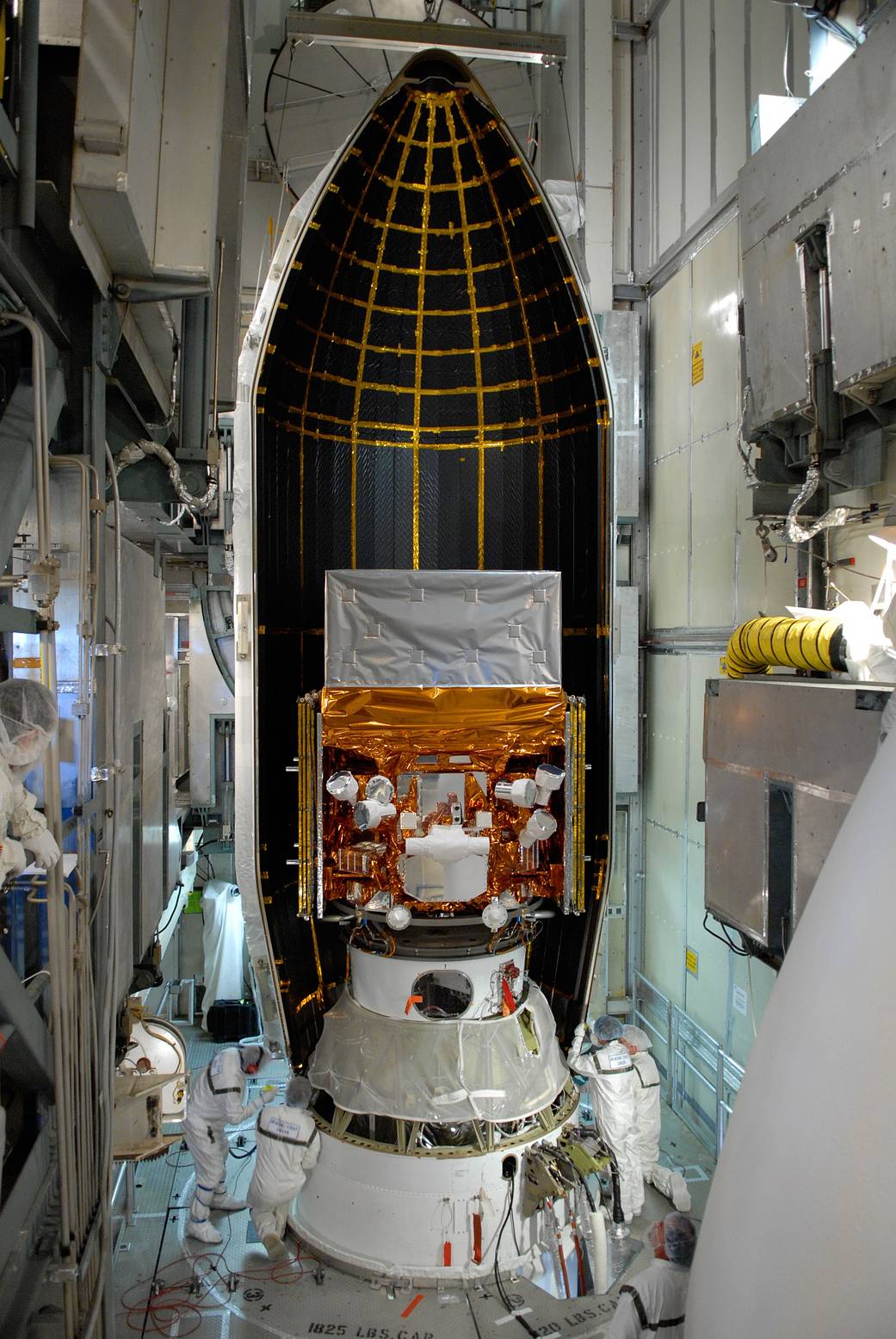
This week in 2008, the Fermi Gamma-ray Space Telescope was launched aboard a Delta II rocket.

How Is NASA Studying Black Holes?

NASA is learning about black holes using spacecraft like the Chandra X-ray Observatory, the Swift satellite and the Fermi Gamma-ray Space Telescope. Fermi launched in 2008 and is observing gamma rays – the most energetic form of light – in search of supermassive black holes and other astronomical phenomena. Spacecraft like these help scientists answer questions about the origin, evolution and destiny of the universe.

_________________________________________________________________________________________

Words to Know

mass: the measurement for the amount of matter in an object

red giant star: a star that is larger than the sun and red
because it has a lower temperature

white dwarf star: a small star, about the size of Earth;
one of the last stages of a star’s life
_________________________________________________________________________________________

More About Black Holes

Space Place in a Snap: What Is a Black Hole?
Black Hole Rescue
Fall Into a Black Hole
Black Holes: By the Numbers Slideshow
Black Hole Travel Postcards

Read What Is a Black Hole? (Grades K-4)

Powered by WPeMatico

Get The Details…
Sandra May