NASA’s Webb Stuns With New High-Definition Look at Exploded Star

NASA’s Webb Stuns With New High-Definition Look at Exploded Star
6 Min Read

NASA’s Webb Stuns With New High-Definition Look at Exploded Star

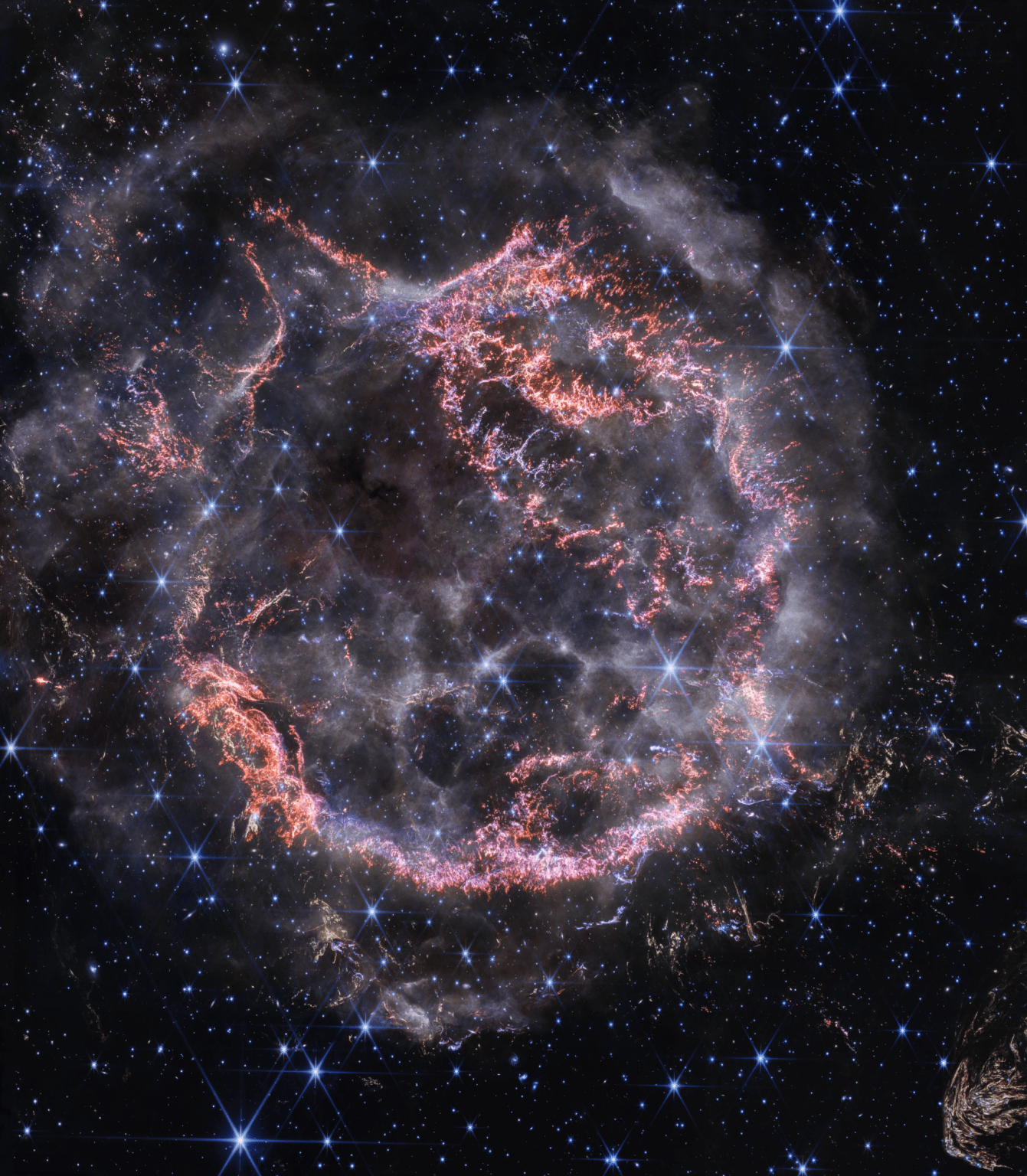
Cassiopeia A, a circular-shaped cloud of gas and dust with complex structure. The inner shell is made of bright pink and orange filaments studded with clumps and knots that look like tiny pieces of shattered glass. Around the exterior of the inner shell, particularly at the upper right, there are curtains of wispy gas that look like campfire smoke. The white smoke-like material also appears to fill the cavity of the inner shell, featuring structures shaped like large bubbles. Around and within the nebula, there are various stars seen as points of blue and white light. Outside the nebula, there are also clumps of yellow dust, with a particularly large clump at the bottom right corner that appears to have very detailed striations.

NASA’s James Webb Space Telescope’s new view of Cassiopeia A (Cas A)

Credits:
NASA, ESA, CSA, STScI, D. Milisavljevic (Purdue University), T. Temim (Princeton University), I. De Looze (University of Gent)

Mysterious features hide in near-infrared light

Like a shiny, round ornament ready to be placed in the perfect spot on a holiday tree, supernova remnant Cassiopeia A (Cas A) gleams in a new image from NASA’s James Webb Space Telescope. As part of the 2023 Holidays at the White House, First Lady of the United States Dr. Jill Biden debuted the first-ever White House Advent Calendar. To showcase the “Magic, Wonder, and Joy” of the holiday season, Dr. Biden and NASA are celebrating with this new image from Webb.

While all is bright, this scene is no proverbial silent night. Webb’s NIRCam (Near-Infrared Camera) view of Cas A displays this stellar explosion at a resolution previously unreachable at these wavelengths. This high-resolution look unveils intricate details of the expanding shell of material slamming into the gas shed by the star before it exploded.

Cas A is one of the most well-studied supernova remnants in all of the cosmos. Over the years, ground-based and space-based observatories, including NASA’s Chandra X-Ray Observatory, Hubble Space Telescope, and retired Spitzer Space Telescope have assembled a multiwavelength picture of the object’s remnant.

However, astronomers have now entered a new era in the study of Cas A. In April 2023, Webb’s MIRI (Mid-Infrared Instrument) started this chapter, revealing new and unexpected features within the inner shell of the supernova remnant. Many of those features are invisible in the new NIRCam image, and astronomers are investigating why.

Image: Cassiopeia A (NIRCam)
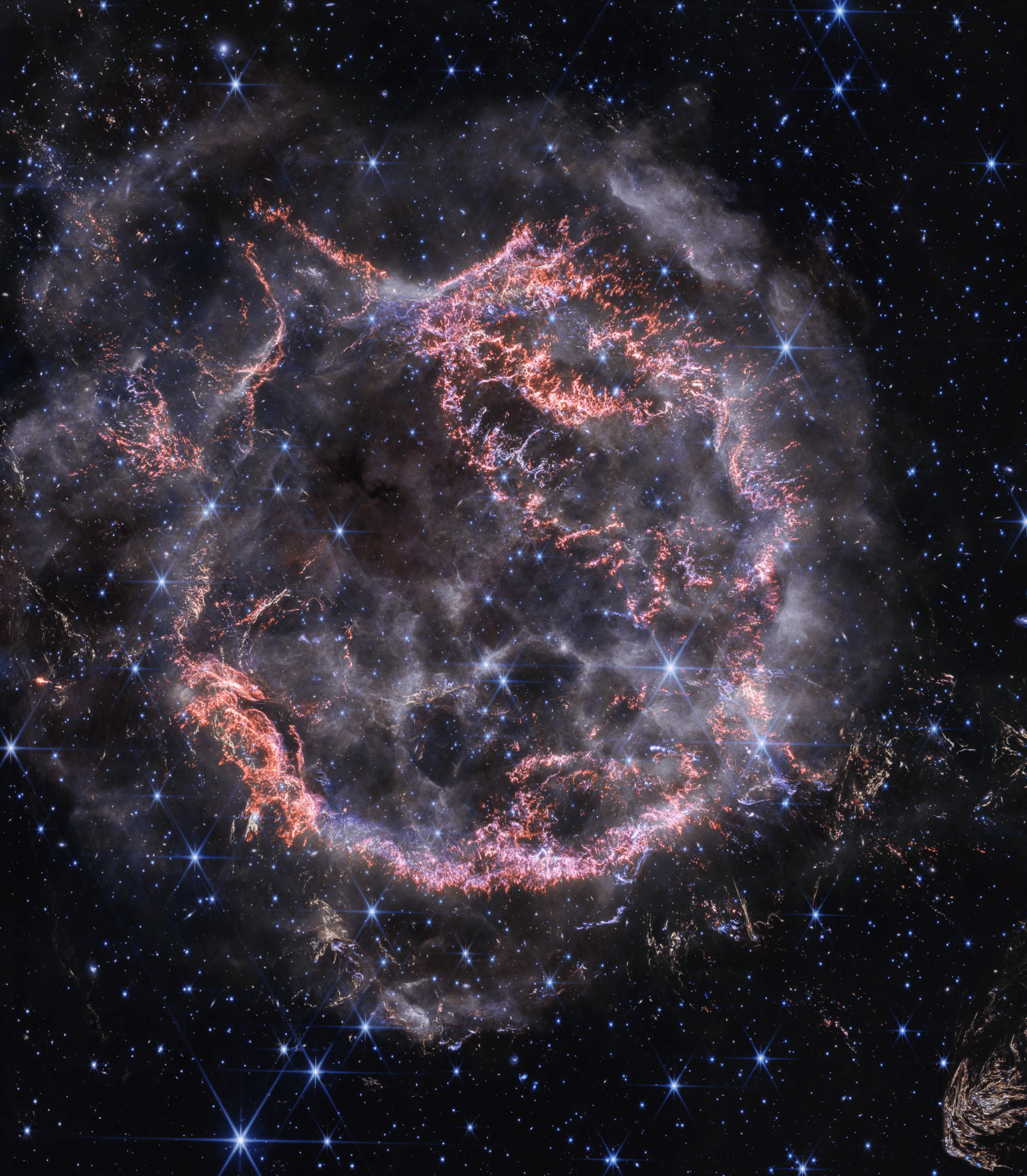
Cassiopeia A, a circular-shaped cloud of gas and dust with complex structure. The inner shell is made of bright pink and orange filaments studded with clumps and knots that look like tiny pieces of shattered glass. Around the exterior of the inner shell, particularly at the upper right, there are curtains of wispy gas that look like campfire smoke. The white smoke-like material also appears to fill the cavity of the inner shell, featuring structures shaped like large bubbles. Around and within the nebula, there are various stars seen as points of blue and white light. Outside the nebula, there are also clumps of yellow dust, with a particularly large clump at the bottom right corner that appears to have very detailed striations.
NASA’s James Webb Space Telescope’s new view of Cassiopeia A (Cas A) in near-infrared light is giving astronomers hints at the dynamical processes occurring within the supernova remnant. Tiny clumps represented in bright pink and orange make up the supernova’s inner shell, and are comprised of sulfur, oxygen, argon, and neon from the star itself. A large, striated blob at the bottom right corner of the image, nicknamed Baby Cas A, is one of the few light echoes visible NIRCam’s field of view. In this image, red, green, and blue were assigned to Webb’s NIRCam data at 4.4, 3.56, and 1.62 microns (F444W, F356W, and F162M, respectively).
NASA, ESA, CSA, STScI, D. Milisavljevic (Purdue University), T. Temim (Princeton University), I. De Looze (University of Gent)

‘Like Shards of Glass’

Infrared light is invisible to our eyes, so image processors and scientists translate these wavelengths of light to visible colors. In this newest image of Cas A, colors were assigned to different filters from NIRCam, and each of those colors hints at different activity occurring within the object.

At first glance, the NIRCam image may appear less colorful than the MIRI image. However, this simply comes down to the wavelengths in which the material from the object is emitting its light.

The most noticeable colors in Webb’s newest image are clumps represented in bright orange and light pink that make up the inner shell of the supernova remnant. Webb’s razor-sharp view can detect the tiniest knots of gas, comprised of sulfur, oxygen, argon, and neon from the star itself. Embedded in this gas is a mixture of dust and molecules, which will eventually become components of new stars and planetary systems. Some filaments of debris are too tiny to be resolved by even Webb, meaning they are comparable to or less than 10 billion miles across (around 100 astronomical units). In comparison, the entirety of Cas A spans 10 light-years across, or 60 trillion miles.

“With NIRCam’s resolution, we can now see how the dying star absolutely shattered when it exploded, leaving filaments akin to tiny shards of glass behind,” said Danny Milisavljevic of Purdue University, who leads the research team. “It’s really unbelievable after all these years studying Cas A to now resolve those details, which are providing us with transformational insight into how this star exploded.”

Image: Cassiopeia A NIRCam/MIRI
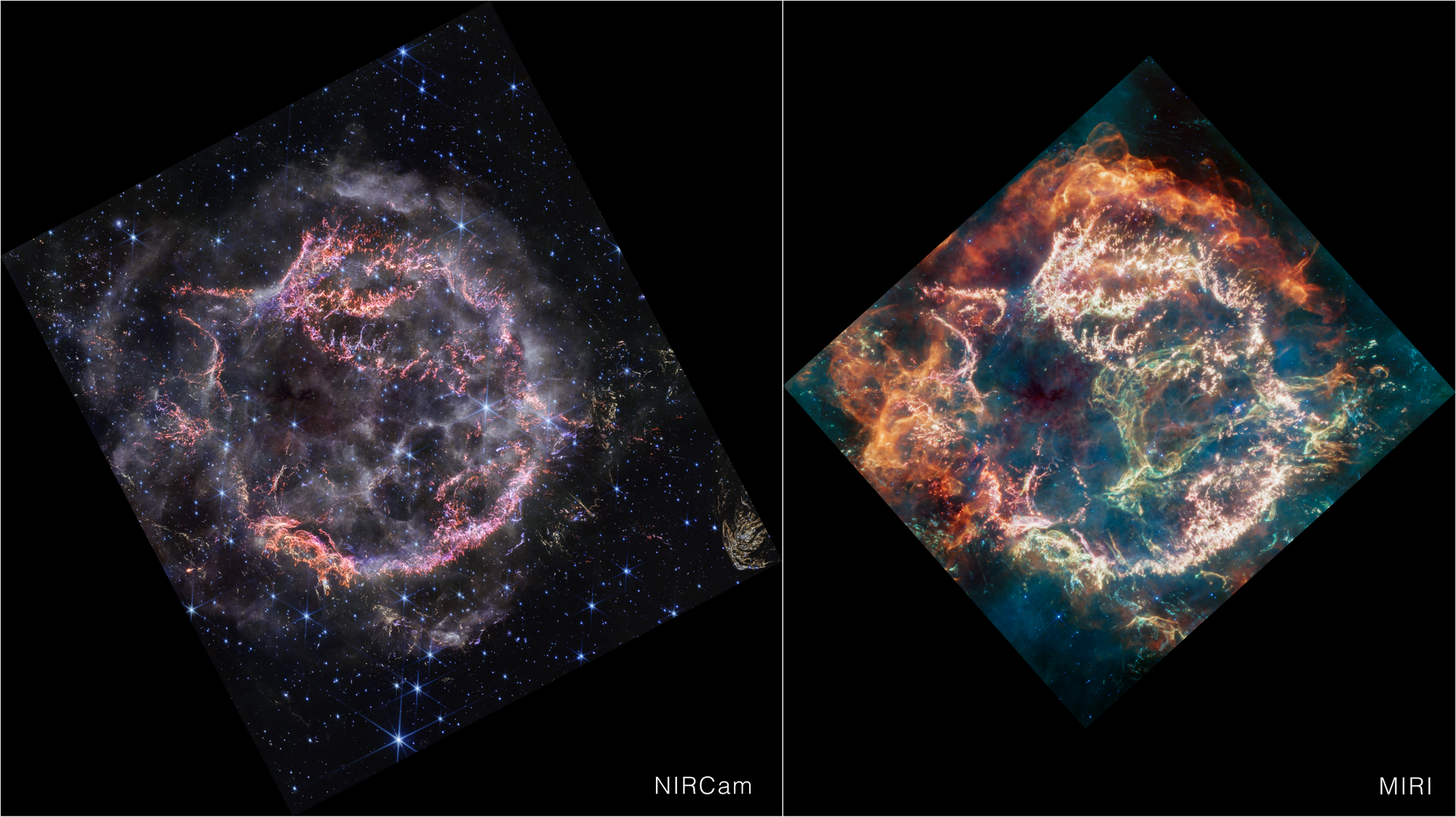
A comparison between two images, one on the left (labeled NIRCam), and on the right (labeled MIRI), separated by a white line. Both are a square image rotated clockwise about 45 degrees, with solid black in the top left, top right, bottom left, and bottom right corners. On the left, the image is a circular-shaped cloud of gas and dust with complex structure. The inner shell is made of bright pink and orange filaments that look like tiny pieces of shattered glass. Around the exterior of the inner shell are curtains of wispy gas that look like campfire smoke. The white smoke-like material also fills the cavity of the inner shell, with structures shaped like large bubbles. Outside the nebula, there are also clumps of yellow dust. On the right, is the same nebula in different light. The curtains of material outside the inner shell glow orange instead of white. The inner shell looks more mottled, and is a muted pink. At center right, a greenish loop extends from the right side of the ring into the central cavity.
This image provides a side-by-side comparison of supernova remnant Cassiopeia A (Cas A) as captured by NASA’s James Webb Space Telescope’s NIRCam (Near-Infrared Camera) and MIRI (Mid-Infrared Instrument). Objects in space reveal different aspects of their composition and behavior at different wavelengths. The outskirts of Cas A’s main inner shell, which appeared as a deep orange and red in the MIRI image, look like smoke from a campfire in the NIRCam image. The dust in the circumstellar material being slammed into by the shockwave is too cool to be detected directly at near-infrared wavelengths, but lights up in the mid-infrared. Also not seen in the near-infrared view is the loop of green light in the central cavity of Cas A that glows in mid-infrared, nicknamed the Green Monster by the research team.
NASA, ESA, CSA, STScI, D. Milisavljevic (Purdue University), T. Temim (Princeton University), I. De Looze (University of Gent)

Hidden Green Monster

When comparing Webb’s new near-infrared view of Cas A with the mid-infrared view, its inner cavity and outermost shell are curiously devoid of color.

The outskirts of the main inner shell, which appeared as a deep orange and red in the MIRI image, now look like smoke from a campfire. This marks where the supernova blast wave is ramming into surrounding circumstellar material. The dust in the circumstellar material is too cool to be detected directly at near-infrared wavelengths, but lights up in the mid-infrared.

Researchers say the white color is light from synchrotron radiation, which is emitted across the electromagnetic spectrum, including the near-infrared. It’s generated by charged particles traveling at extremely high speeds spiraling around magnetic field lines. Synchrotron radiation is also visible in the bubble-like shells in the lower half of the inner cavity.

Also not seen in the near-infrared view is the loop of green light in the central cavity of Cas A that glowed in mid-infrared, nicknamed the Green Monster by the research team. This feature was described as “challenging to understand” by researchers at the time of their first look.

While the ‘green’ of the Green Monster is not visible in NIRCam, what’s left over in the near-infrared in that region can provide insight into the mysterious feature. The circular holes visible in the MIRI image are faintly outlined in white and purple emission in the NIRCam image – this represents ionized gas. Researchers believe this is due to the supernova debris pushing through and sculpting gas left behind by the star before it exploded.

Image: Cassiopeia A Features
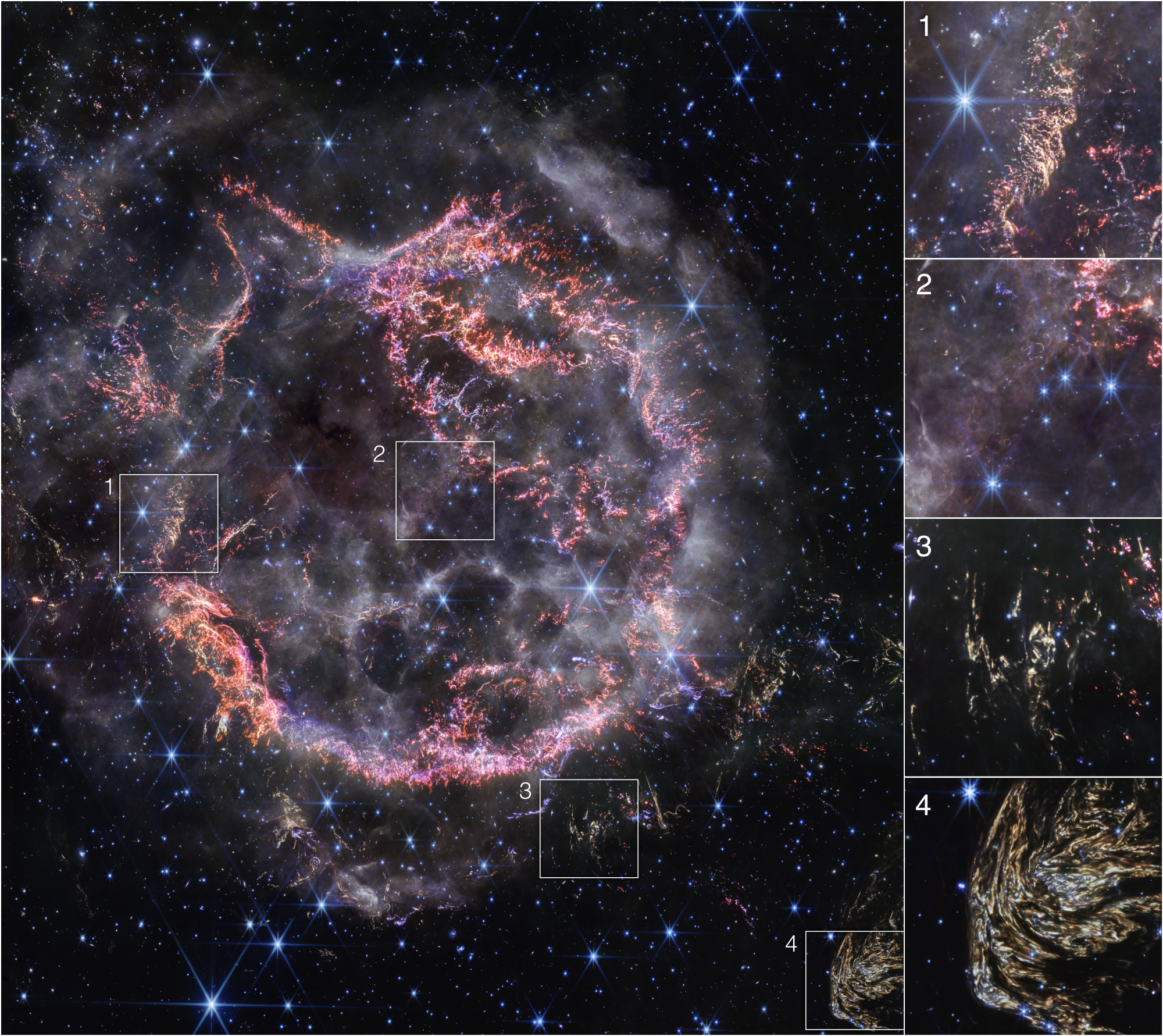
The image is split into 5 boxes. A large image at the left-hand side takes up most of the image. There are four images along the right-hand side in a column, labeled 1, 2, 3, and 4. The 4 images in the column are zoomed-in areas of the larger square image on the left. The image on the left has a circular-shaped cloud of gas and dust with complex structure, with an inner shell of bright pink and orange filaments that look like tiny pieces of shattered glass. A zoom-in of this material appears in the box labeled 1. Around the exterior of the inner shell in the main image there are wispy curtains of gas that look like campfire smoke. Within the cavity of the inner shell, there are small circular bubbles outlined in white. Box 2 is a zoom-in on these circles. Scattered outside the nebula in the main image, there are also clumps of yellow dust. Boxes 3 and 4 are zoomed-in areas of these clumps. Box 4 highlights a particularly large clump at the bottom right of the main image that is detailed and striated.
This image highlights several interesting features of supernova remnant Cassiopeia A as seen with Webb’s NIRCam (Near-Infrared Camera): NIRCam’s exquisite resolution is able to detect tiny knots of gas, comprised of sulfur, oxygen, argon, and neon from the star itself; Circular holes visible in the MIRI image within the Green Monster are faintly outlined in white and purple emission in the NIRCam image; An example of a light echo – when light from the star’s long-ago explosion has reached, and is warming, distant dust, which is glowing as it cools down; A particularly intricate and large light echo, nicknamed Baby Cas A by researchers.
NASA, ESA, CSA, STScI, D. Milisavljevic (Purdue University), T. Temim (Princeton University), I. De Looze (University of Gent).

Baby Cas A

Researchers were also absolutely stunned by one fascinating feature at the bottom right corner of NIRCam’s field of view. They’re calling that large, striated blob Baby Cas A – because it appears like an offspring of the main supernova.

This is a light echo, where light from the star’s long-ago explosion has reached and is warming distant dust, which is glowing as it cools down. The intricacy of the dust pattern, and Baby Cas A’s apparent proximity to Cas A itself, are particularly intriguing to researchers. In actuality, Baby Cas A is located about 170 light-years behind the supernova remnant.

There are also several other, smaller light echoes scattered throughout Webb’s new portrait.

The Cas A supernova remnant is located 11,000 light-years away in the constellation Cassiopeia. It’s estimated to have exploded about 340 years ago from our point of view.

The James Webb Space Telescope is the world’s premier space science observatory. Webb is solving mysteries in our solar system, looking beyond to distant worlds around other stars, and probing the mysterious structures and origins of our universe and our place in it. Webb is an international program led by NASA with its partners, ESA (European Space Agency) and the Canadian Space Agency.

Media Contacts

Laura Betz – laura.e.betz@nasa.gov, Rob Gutro– rob.gutro@nasa.gov
NASA’s  Goddard Space Flight Center, , Greenbelt, Md.

Hannah Braun – hbraun@stsci.edu , Christine Pulliam – cpulliam@stsci.edu
Space Telescope Science Institute, Baltimore, Md.

Downloads

Download full resolution images for this article from the Space Telescope Science Institute.

View/download a video tour of Cassiopeia A from the Space Telescope Science Institute.

Right click the images in this article to open a larger version in a new tab/window.

Related Information

Lifecycle of Stars

More Webb News – https://science.nasa.gov/mission/webb/latestnews/

More Webb Images – https://science.nasa.gov/mission/webb/multimedia/images/

Webb Mission Page – https://science.nasa.gov/mission/webb/

Related For Kids

What is a supernova?

What is a nebula?

What is the Webb Telescope?

SpacePlace for Kids

En Español

Ciencia de la NASA

NASA en español 

Space Place para niños

Share

Details

Last Updated

Dec 10, 2023

Editor
Steve Sabia
Contact
Laura Betz

Powered by WPeMatico

Get The Details…
Steve Sabia
Students Create Elaborate Homemade Machines for JPL Competition

Students Create Elaborate Homemade Machines for JPL Competition

To compete in a race against the clock and each other, 18 student teams built complicated contraptions for the annual Invention Challenge at NASA’s Jet Propulsion Laboratory.

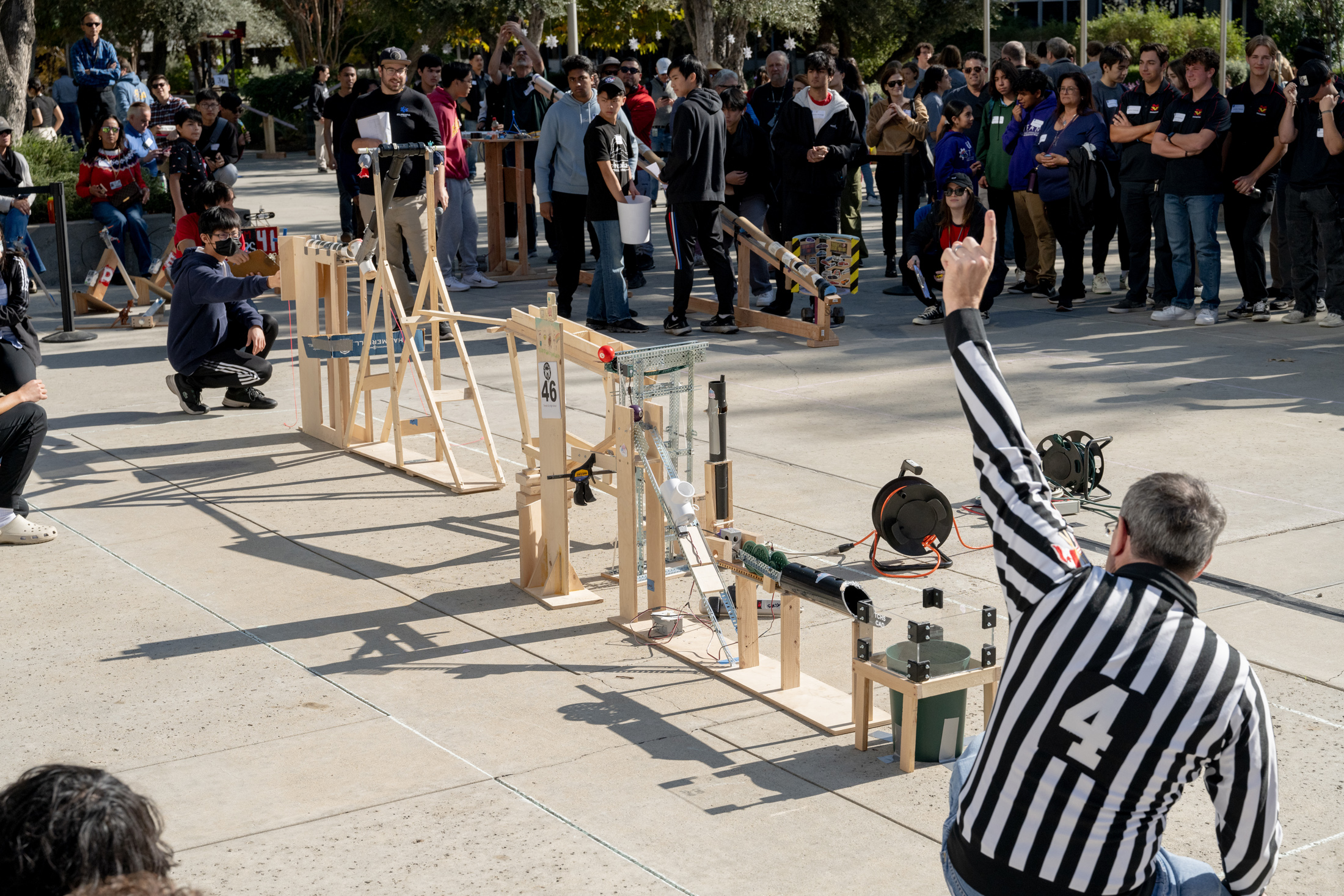
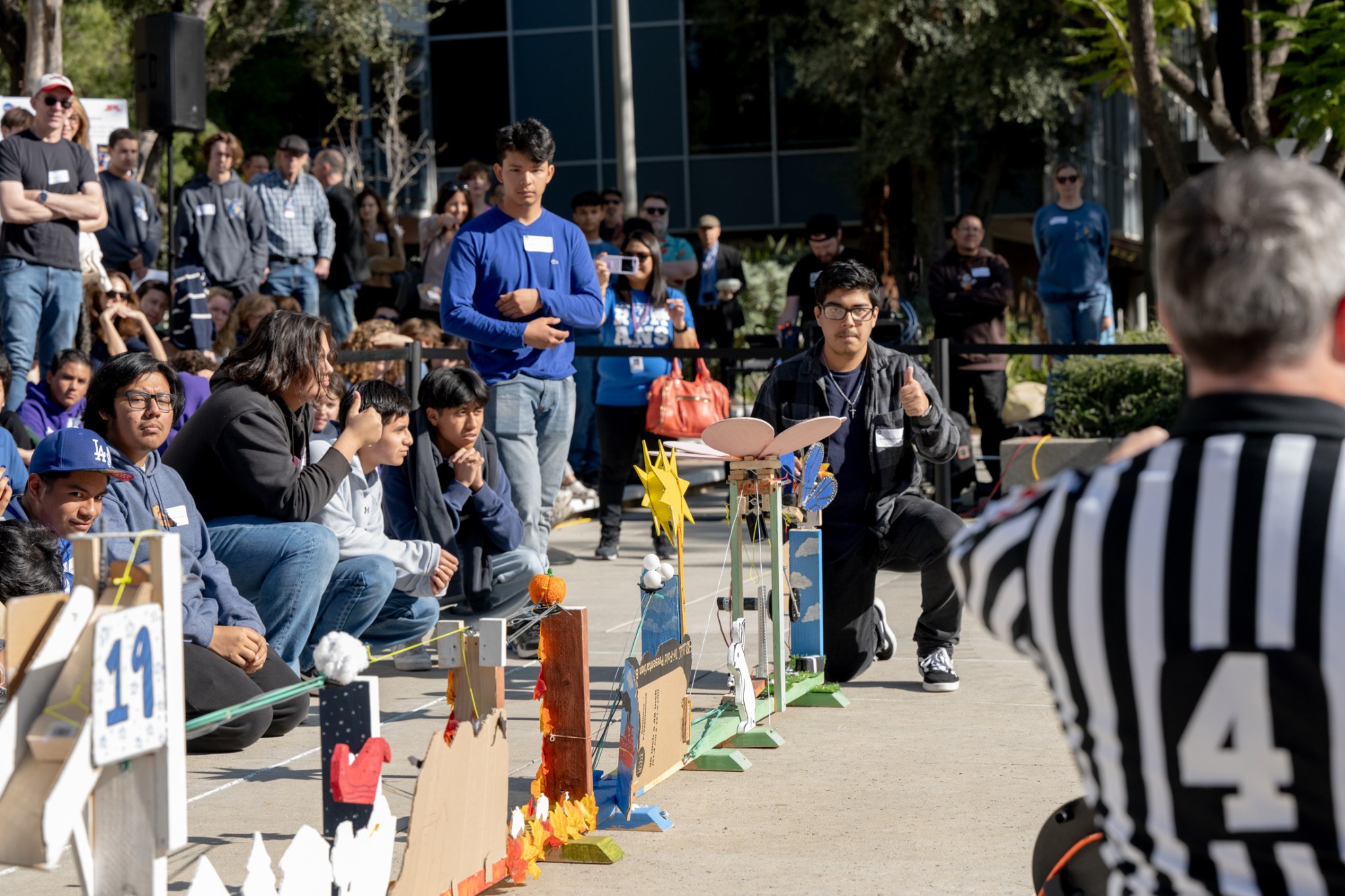
Some 250 students hauled homemade machines they’d spent weeks honing to NASA’s Jet Propulsion Laboratory in Southern California on Friday, Dec. 8, for the 24th annual JPL Invention Challenge.

The rules for the creative engineering competition change every year, but the overall goal is the same: Build a device capable of accomplishing a specified task within 60 seconds. This year, teams needed to come up with machines that could accomplish seven consecutive steps, ultimately dropping a crumpled piece of paper in a wastebasket. Students employed trebuchet catapults, crossbows, small motors, and “things with a bit of oomph,” said mechanical systems engineer Paul MacNeal, who has been organizing the competition since it began in 1998.

“The Mouse Trap game from when I was a little kid is what it’s patterned after,” MacNeal said, referring to the board game in which players would construct elaborate traps for each other’s plastic rodents. “It was such a tough competition this year. It’s almost like unfolding the James Webb Space Telescope: Every action has to go right.”

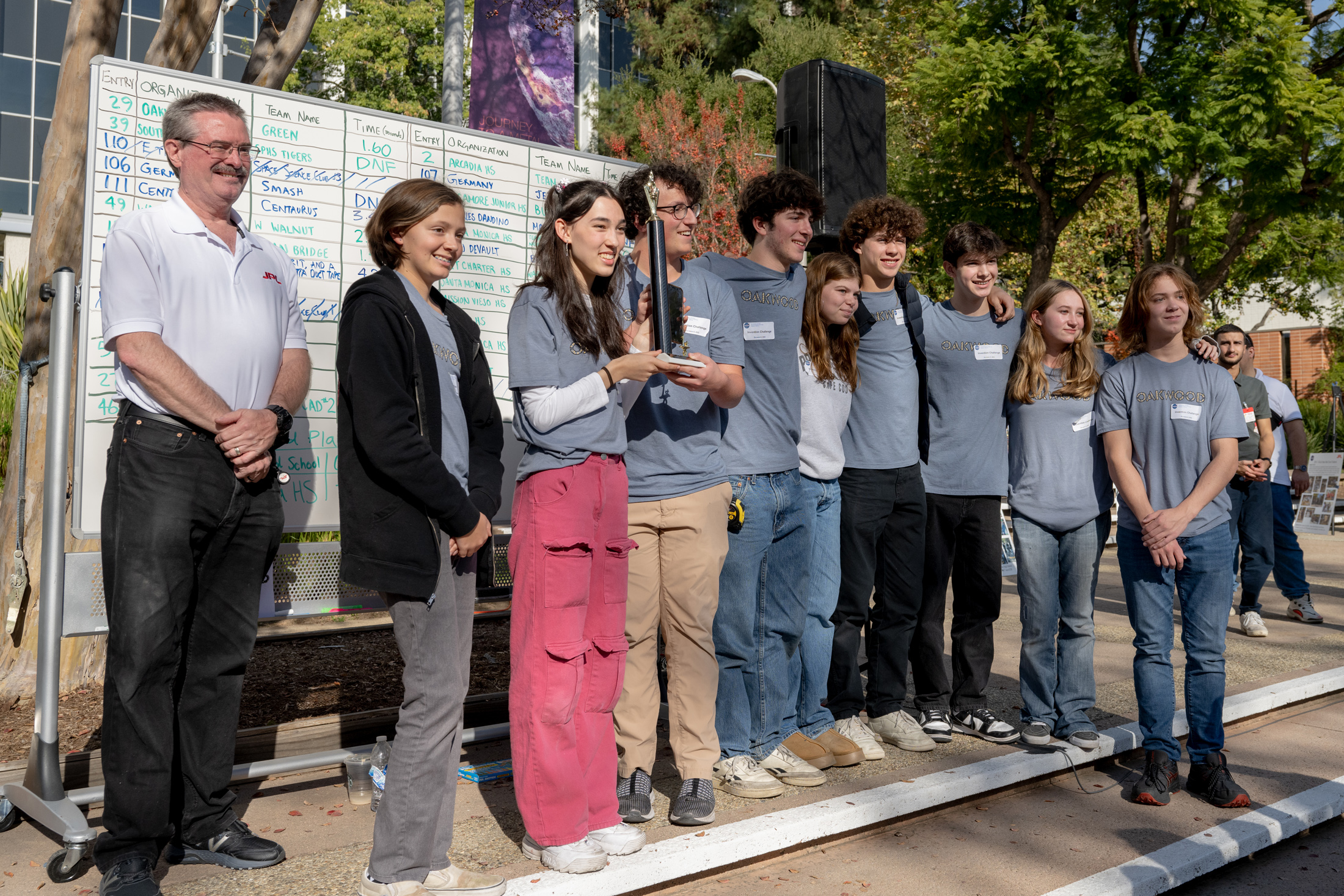
JPL’s Paul MacNeal started the Invention Challenge so that students could experience the fun of hands-on engineering and of STEM learning while developing team-building skills.
NASA/JPL-Caltech

And in this competition, fast. Every team that completed the task did so in under five seconds.

Team Pink, the winning student team from Oakwood High School in North Hollywood, California, sank its paper ball in the basket in just 1.25 seconds, using a launcher at the start to knock over a series of five dominoes. The last domino hit a switch that turned on a conveyor belt to push the paper ball into the basket.

“I was a little nervous at the beginning,” said Team Pink member and Oakwood High senior Midori Bonner. “There are a lot of good teams that were going really fast, but we’ve been training so hard for almost four months, I had faith in our team and the work we had put in.”

Team Roman Bridge from Los Angeles Senior High School and Team Green from Oakwood High School took second and third place, respectively.

Eighteen of the student teams competing in Friday’s finals had survived two regional events in November involving 40 school teams from Los Angeles and Orange counties. Four JPL-sponsored teams of professional engineers separately battled it out.

Having professional engineers compete is part of MacNeal’s larger goal of inspiring students: He started the free competition so that they could experience the fun of hands-on engineering and of STEM learning while developing team-building skills along the way. He provides participants with nothing but the rules; teams have to figure out the rest themselves.

“Even if they don’t do well, they worked hard to get where they were,” MacNeal said. “It’s just satisfying to see all the inventions they come up with.”

News Media Contact

Melissa Pamer
Jet Propulsion Laboratory, Pasadena, Calif.
626-314-4928
melissa.pamer@jpl.nasa.gov

2023-179

Powered by WPeMatico

Get The Details…
Naomi Hartono

Annual Science Conference to Feature NASA Leadership, Research

Annual Science Conference to Feature NASA Leadership, Research

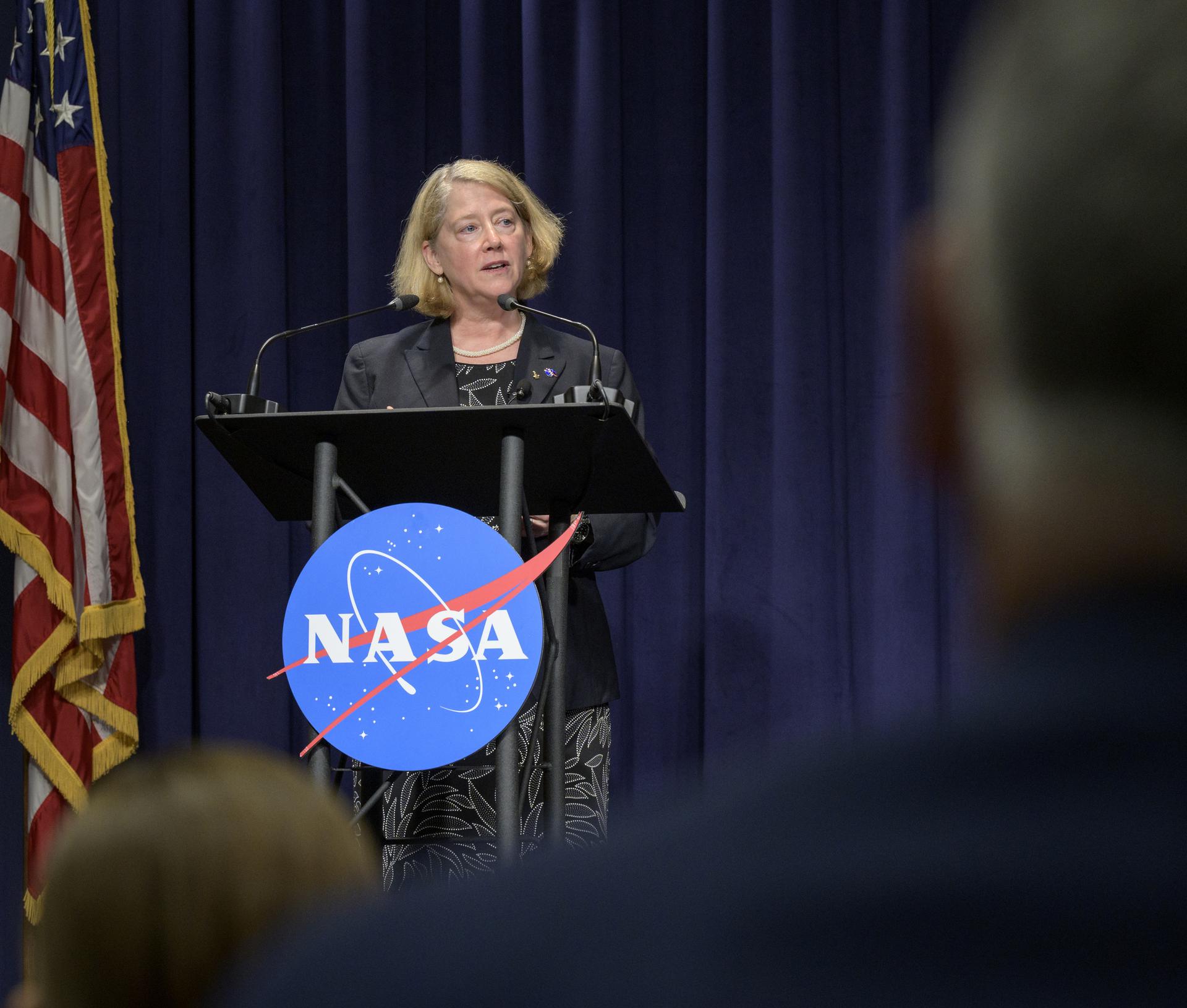
NASA Deputy Administrator Pam Melroy will discuss the agency’s Artemis program during her keynote remarks at the upcoming American Geophysical Union (AGU) 2023 annual meeting.
Credits: NASA

Annual Science Conference to Feature NASA Leadership, Research

NASA Deputy Administrator Pam Melroy will discuss the agency’s Artemis program during her keynote remarks in mid-December at the upcoming American Geophysical Union (AGU) 2023 annual meeting in San Francisco. Through Artemis, NASA will establish a long-term presence at the Moon for exploration and scientific discovery to understand more about the universe and our place in it as well as to prepare for a human mission to Mars.

Researchers from across the agency also will present findings throughout the week on Earth sciences, planetary science, and heliophysics beginning on Monday, Dec. 11. Melroy will help close out the conference with her remarks on Friday, Dec. 15.

New NASA science results from Mars, ice dynamics in Antarctica, and how to determine habitable zones for exoplanets, are among other topics. Throughout the conference, in-depth roundtable chats with NASA scientists discussing air pollution monitoring, NASA’s upcoming PACE (Plankton, Aerosol, Cloud, ocean Ecosystem) mission, and the 2024 total eclipse in North America, also are set to take place.

Several AGU media events will feature NASA scientists.

News Briefings, Events with NASA Participation (All Times EST)

Monday, Dec. 11  

  • 4:30 p.m.: Media roundtable: The Heliophysics Big Year: Solar Eclipses, Exciting Missions, Collaborative Science, and More  
  • 6:30 p.m.: Media roundtable: Disappearing Solar Wind: New Results from NASA’s MAVEN (Mars Atmosphere and Volatile Evolution) Mission

Tuesday, Dec. 12  

  • 1 p.m.: Media availability: Mapping the World’s Water: New Satellite Provides Game-Changing Data 
  • 4:30 p.m.: Media briefing: 1000 Sols and Counting: Perseverance Rover’s Latest Science and Future Plans
  • 5:30 p.m.: Media availability: Monitoring the Air We Breathe from Space: How NASA’s TEMPO (Tropospheric Emissions: Monitoring of Pollution) Instrument Will Revolutionize Air Quality Forecasts

Wednesday, Dec. 13

  • 1 p.m.: Media availability: Earth Science at a Rapid PACE: A preview of NASA’s new ocean and atmospheres mission
  • 5:30 p.m.: Media availability: Understanding Open Science: NASA’s Role and Real-world Insights

Friday, Dec. 15

  • 4 p.m.: Melroy plenary speech discussing the Artemis program
  • 5 p.m.: Media availability with Melroy

Media can register on AGU’s website to participate in live briefings online. All briefings will be posted afterward on AGU’s YouTube channel.

For those attending the meeting, 50 hyperwall talks at the NASA Exhibit will highlight the current state of NASA Earth, planetary, and heliophysics science. In addition, 40 data demonstrations will highlight how to use NASA’s free and openly available data, NASA’s sea level rise portal, and HelioViewer’s imagery of our Sun.

For more information on NASA Earth and climate science, visit:

https://www.nasa.gov/earth

-end-

Karen Fox / Amber Jacobson
Headquarters, Washington
202-358-1600
karen.fox@nasa.gov / amber.c.jacobson@nasa.gov

Share

Details

Last Updated

Dec 08, 2023

Powered by WPeMatico

Get The Details…
Roxana Bardan

Artemis II Booster Surges Ahead at NASA’s Kennedy Space Center 

Artemis II Booster Surges Ahead at NASA’s Kennedy Space Center 

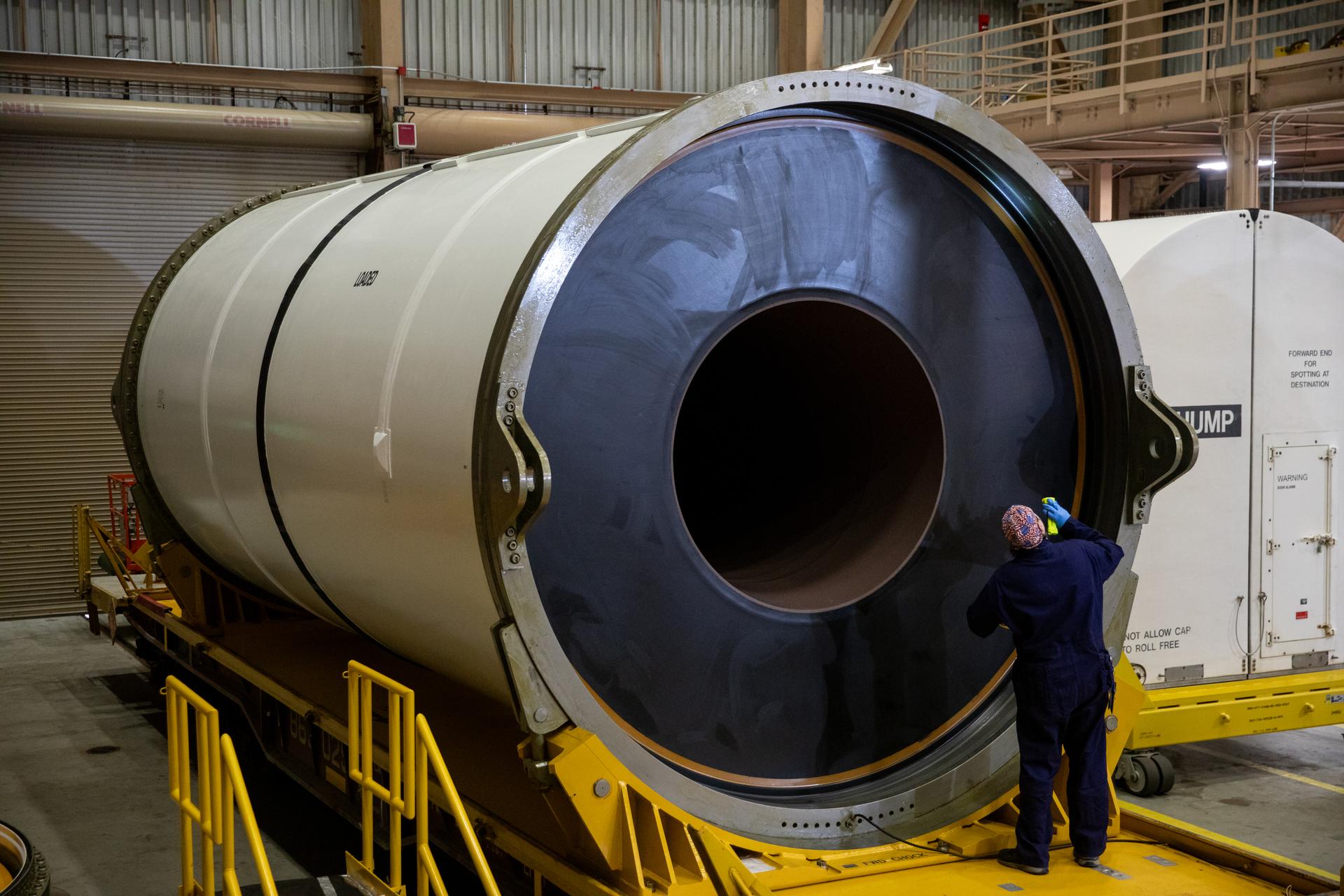
The right forward center segment of the Space Launch System solid rocket boosters is processed.
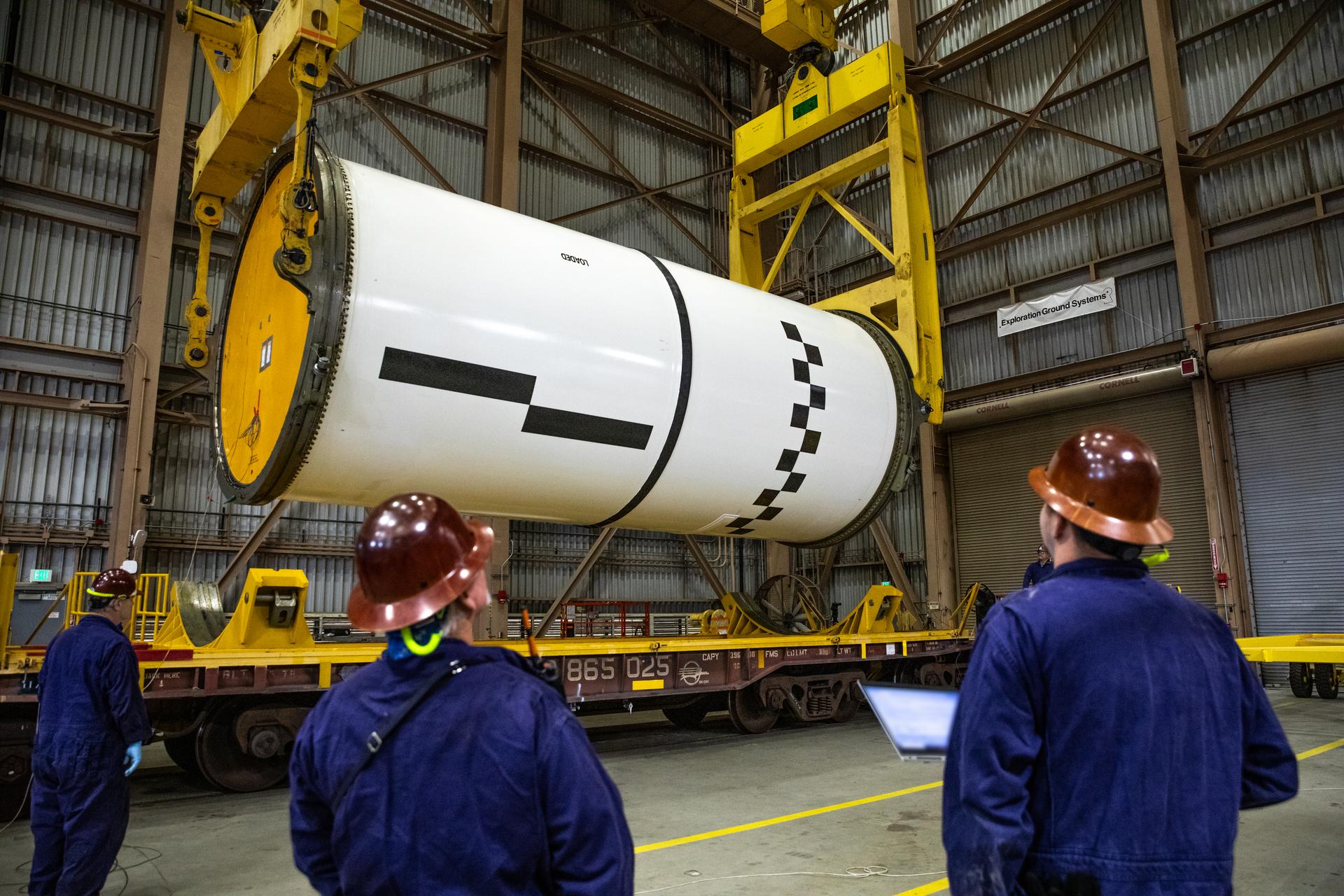
Engineers and technicians process the right forward center segment of the Space Launch System solid rocket boosters for the Artemis II mission inside the Rotation, Processing and Surge Facility (RPSF) at NASA’s Kennedy Space Center in Florida on Tuesday, Nov. 27, 2023.

Inside the Rotation, Processing and Surge Facility at NASA’s Kennedy Space Center in Florida, engineers and technicians process the right forward center segment of the SLS (Space Launch System) rocket on Nov. 28, 2023. The ongoing processing of the segments is the first step before stacking operations begin and the segments will form the twin solid rocket boosters for the SLS rocket that will power NASA’s Artemis II mission. After arriving via rail in September, the team has been inspecting each segment one-by-one and lifting them to a vertical position to ensure the solid propellant and segment are ready for integration and launch. 

The right forward center segment of the Space Launch System solid rocket boosters is processed.
Engineers and technicians process and inspect the propellant of the right forward center segment of the Space Launch System solid rocket boosters for the Artemis II mission inside the Rotation, Processing and Surge Facility (RPSF) at NASA’s Kennedy Space Center in Florida on Monday, Nov. 27, 2023.

Once processing is complete for all 10 segments, they will be moved one at a time to the Vehicle Assembly Building for stacking atop the mobile launcher. Standing 17 stories tall and burning approximately six tons of propellant every second, each booster generates more thrust than 14 four-engine jumbo commercial airliners. Together, the twin boosters provide more than 75 percent of the total SLS thrust at launch. 

The Artemis II mission will send four astronauts around the Moon as part of the agency’s effort to establish a long-term science and exploration presence at the Moon, and eventually Mars. 

Photo credit: NASA/Kim Shiflett

Powered by WPeMatico

Get The Details…
Jamie Groh

NASA Helps Study One of the World’s Most Diverse Ecosystems

NASA Helps Study One of the World’s Most Diverse Ecosystems

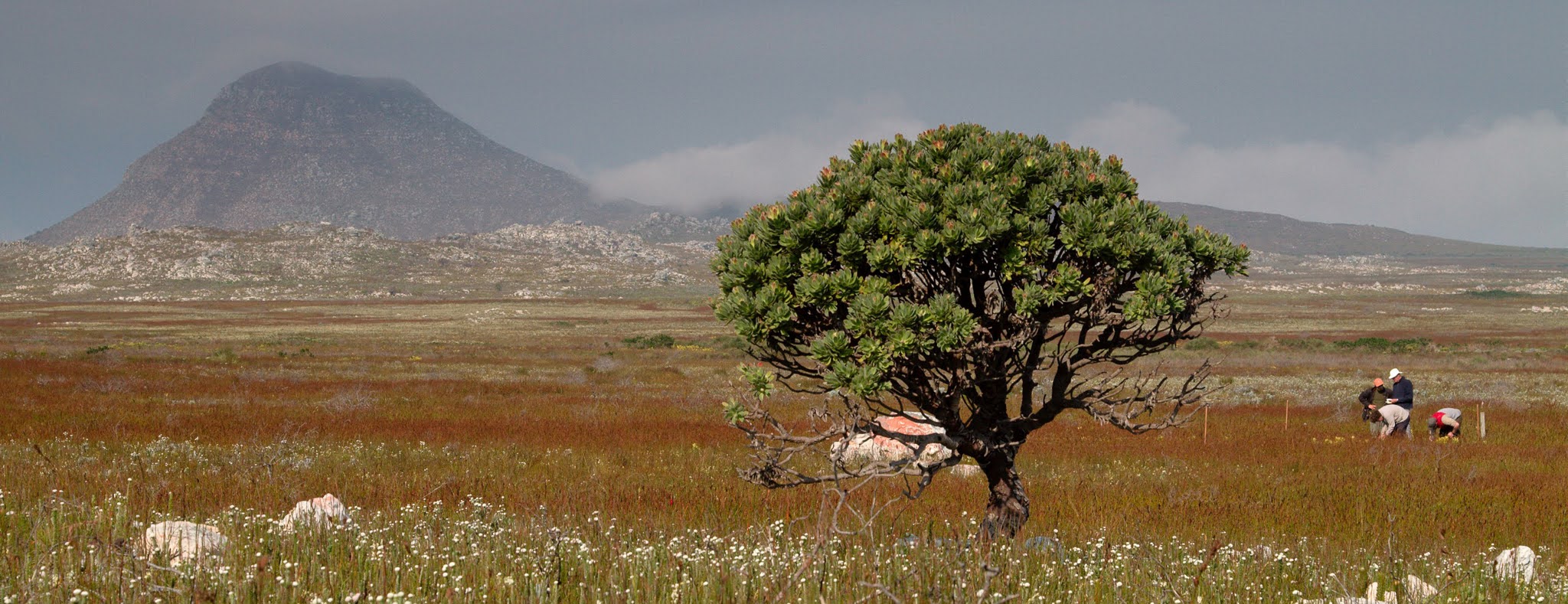
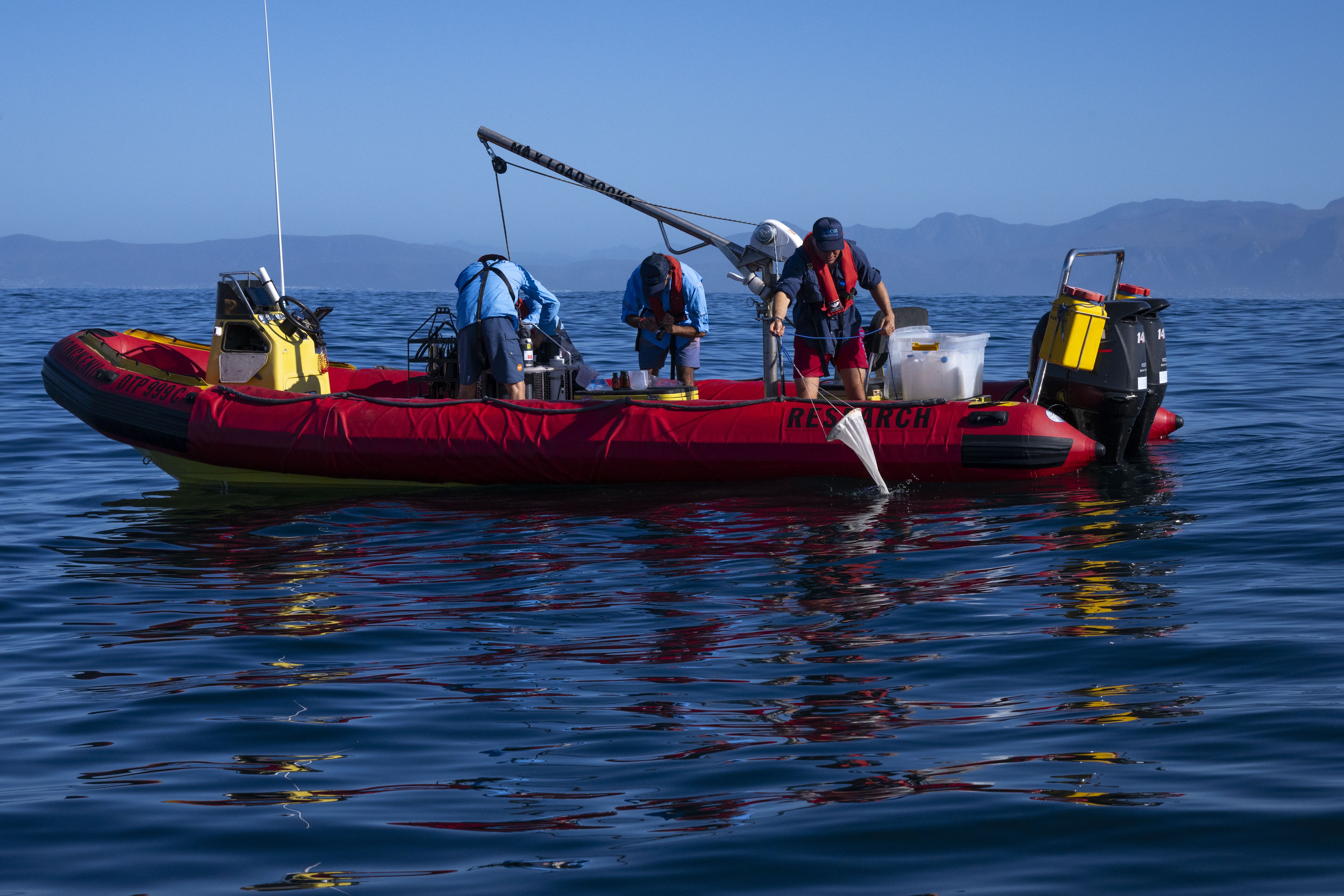
Researchers with the BioSCape campaign collect vegetation data from the Cape of Good Hope in South Africa. The field work, which took place in October and November, was part of an international collaboration that could help inform the capabilities of future satellite missions aimed at studying plants and animals.
Adam Wilson

NASA satellite and airborne tools aid an international team studying biodiversity on land and in the water around South Africa.

An international team of researchers spent October and November 2023 in the field studying one of the world’s most biologically diverse areas – South Africa’s Greater Cape Floristic Region. As part of the effort, researchers used NASA airborne and space-based instruments to gather complementary data to better understand the unique aquatic and terrestrial ecosystems in this region. Their findings will inform the capabilities of future satellite missions aimed at studying plants and animals.

“The food we eat, the clean water that we drink, and the air we breathe comes from the diversity of life on planet Earth,” said Erin Hestir of the University of California, Merced, and the campaign’s lead aquatic researcher. “As we lose species, we’re potentially losing Earth’s ability to sustain healthy human societies and provide healthy food and clean water for all.” Known as the Biodiversity Survey of the Cape (BioSCape), the effort is a large collaboration led in the U.S. by NASA, the University at Buffalo in New York, and the University of California, Merced. It is led in South Africa by the University of Cape Town and the South African Environmental Observation Network.

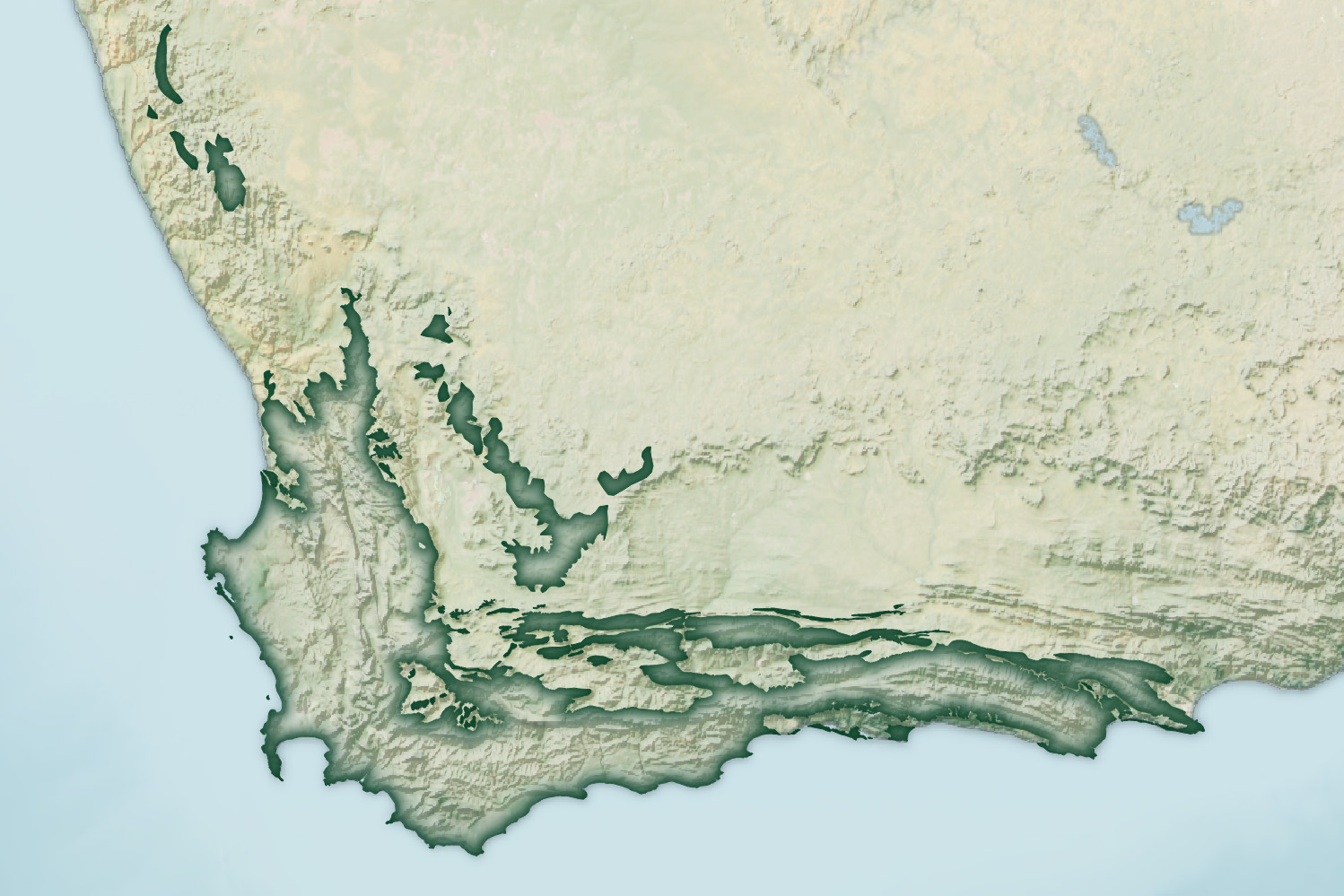
The Greater Cape Floristic Region, where the BioSCape field work took place, is outlined in dark green in this map of the southwestern tip of South Africa. The region is a biodiversity hotspot that includes environments dominated by a shrubland called fynbos.
NASA Earth Observatory

The Greater Cape Floristic Region covers about 2.5 million acres (1 million hectares) on South Africa’s southwestern tip. Home to many plant and animal species found nowhere else on Earth, the biodiversity hotspot is recognized as a World Heritage Site by the United Nations Educational, Scientific, and Cultural Organization (UNESCO). The area also includes several UNESCO Biosphere reserves to protect unique terrestrial and aquatic environments.

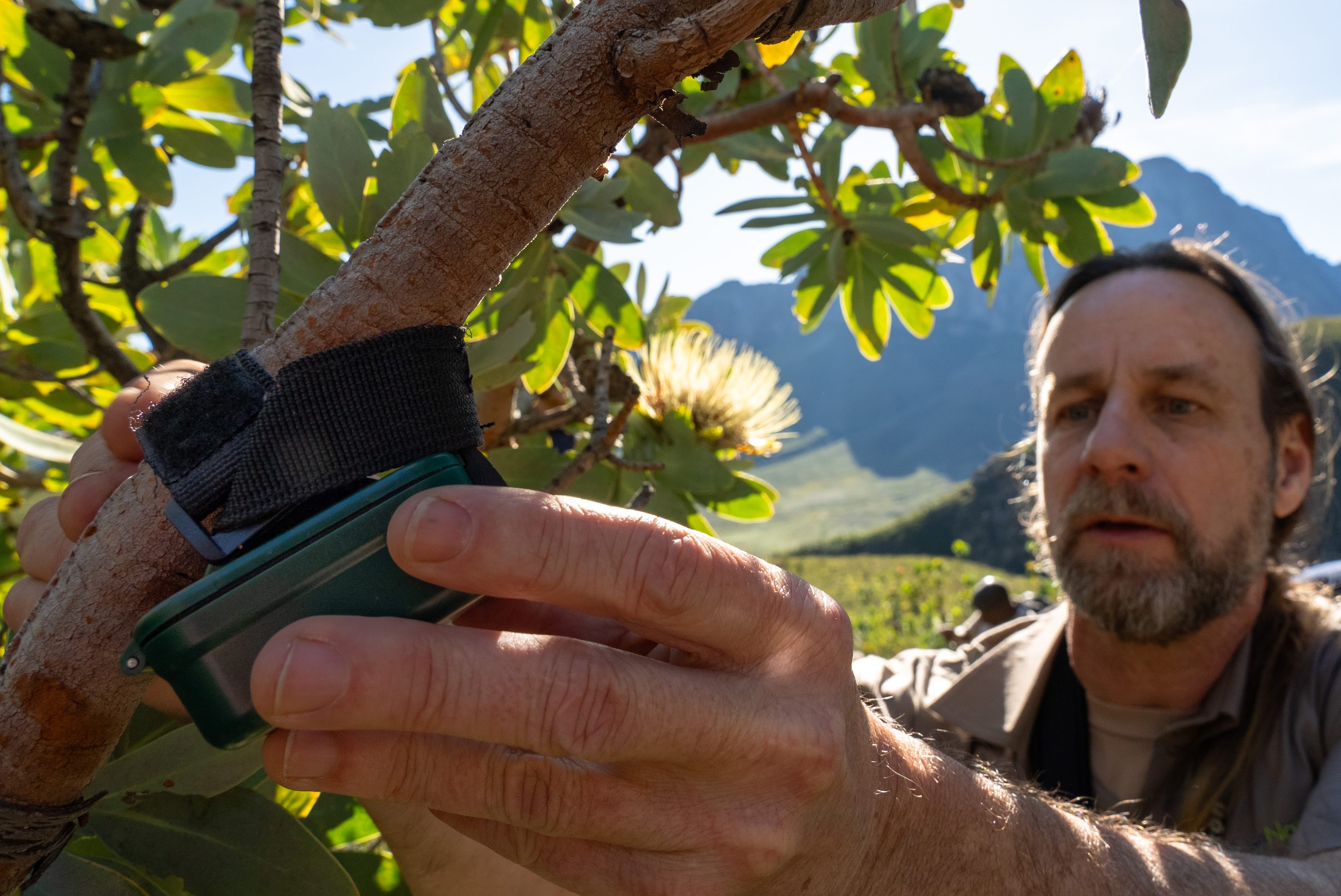
The BioSCape team is testing how well airborne and satellite remote sensing can characterize the region’s terrestrial, freshwater, and marine biodiversity. Space- and airplane-based instruments can cover more ground – and do so faster as well as more frequently – than crews in the field. This has a wide range of practical applications, from mapping the presence of invasive plants to better understanding the drivers of harmful algal blooms.

A Challenging Area

“South Africa is a hugely biodiverse place, but it’s a very challenging environment in which to do remote sensing research,” said Anabelle Cardoso, BioSCape science team manager at the University at Buffalo and the University of Cape Town. “With so many plant and animal species packed into a relatively small area, using remote sensing instruments to differentiate between species living in close proximity can be difficult.”

Three of the BioSCape aircraft sensors are imaging spectrometers, which observe different wavelengths of visible and infrared light reflected or emitted by various materials on Earth’s surface and in the atmosphere. Each material has its own spectral fingerprint, enabling researchers to tell what they are observing.

For example, the dominant vegetation in the Greater Cape Floristic Region is a type of shrubland known as fynbos, which contains thousands of plant species. “We want to know whether the spectral signatures from these closely related fynbos variations are different enough that we can tell them apart in the data,” said Kerry Cawse-Nicholson, a research scientist at NASA’s Jet Propulsion Laboratory in Southern California.

“The discrimination of the biodiversity of phytoplankton in coastal and inland waters with imaging spectrometer data would advance science on aquatic ecosystem dynamics,” said Liane Guild, a research scientist at NASA’s Ames Research Center in California’s Silicon Valley. It would do this by offering new insights on land-water interactions, including riverine plumes, runoff, sedimentation, and algae blooms in coastal and inland waters that could have impacts on food security.

Remote sensing capabilities like these will be vital for future satellites, such as the Surface Biology and Geology mission being planned for NASA’s Earth System Observatory.

A More Complete Picture

BioSCape crews collected data on land and in the water, efforts that include conducting plant and animal surveys and taking environmental DNA samples. Their findings will both augment and help confirm species information gathered by four NASA airborne instruments and two of the agency’s space-based instruments.

Mounted on airplanes, the Airborne Visible/Infrared Imaging Spectrometer – Next Generation, the Hyperspectral Thermal Emission Spectrometer, and the Portable Remote Imaging Spectrometer are managed by JPL. Their detection of spectral fingerprints ranges from the ultraviolet part of the spectrum through the visible and into the infrared. Combined, their data provides information to help differentiate species and study water quality in reservoirs, among other things.

Managed by NASA’s Goddard Space Flight Center in Maryland, the fourth airborne instrument is the Land, Vegetation, and Ice Sensor, which uses laser technology, known as lidar, to construct a 3D representation of the land surface and vegetation. That data can provide information on the structure of vegetation – including tree and plant height and the internal layers of forests – as well as the ground topography beneath tree cover. This data will also help calibrate and inform current and future space-based lidars, such as the Global Ecosystem Dynamics Investigation currently operating on the International Space Station and a potential mission to study surface topography and vegetation.

In addition, the BioSCape team is using observations from two JPL-managed instruments on the space station. NASA’s ECOsystem Spaceborne Thermal Radiometer Experiment on Space Station measures land surface temperature and can be used to assess plant stress due to temperature or water availability. The imaging spectrometer EMIT, short for Earth Surface Mineral Dust Source Investigation, gathers data on surface minerals, among other things, lending insight into the geology of the Greater Cape Floristic Region.

“One of the really exciting things is that when we combine the spectroscopy and the 3D structure, we can get a detailed biochemical and structural picture of the ecosystem,” said Adam Wilson of the University at Buffalo and one of the campaign’s lead researchers. This could help identify which plant species live in various environments, the presence of invasive plants, and how vegetation recovers after a wildfire.

The data collected by BioSCape has the potential for wide-ranging research and applications, particularly for the people of South Africa. The project was designed in collaboration with several South African institutions, as well as national and provincial park systems, which plan to incorporate data and analyses from BioSCape into management of natural resources.

To learn more about BioSCape, visit:

https://www.bioscape.io/home

News Media Contacts

Jane J. Lee / Andrew Wang
Jet Propulsion Laboratory, Pasadena, Calif.
818-354-0307 / 626-379-6874
jane.j.lee@jpl.nasa.gov / andrew.wang@jpl.nasa.gov

2023-178

Powered by WPeMatico

Get The Details…
Naomi Hartono