NASA Stennis Engineers Share the Stage on Test Day

NASA Stennis Engineers Share the Stage on Test Day

3 min read

Preparations for Next Moonwalk Simulations Underway (and Underwater)
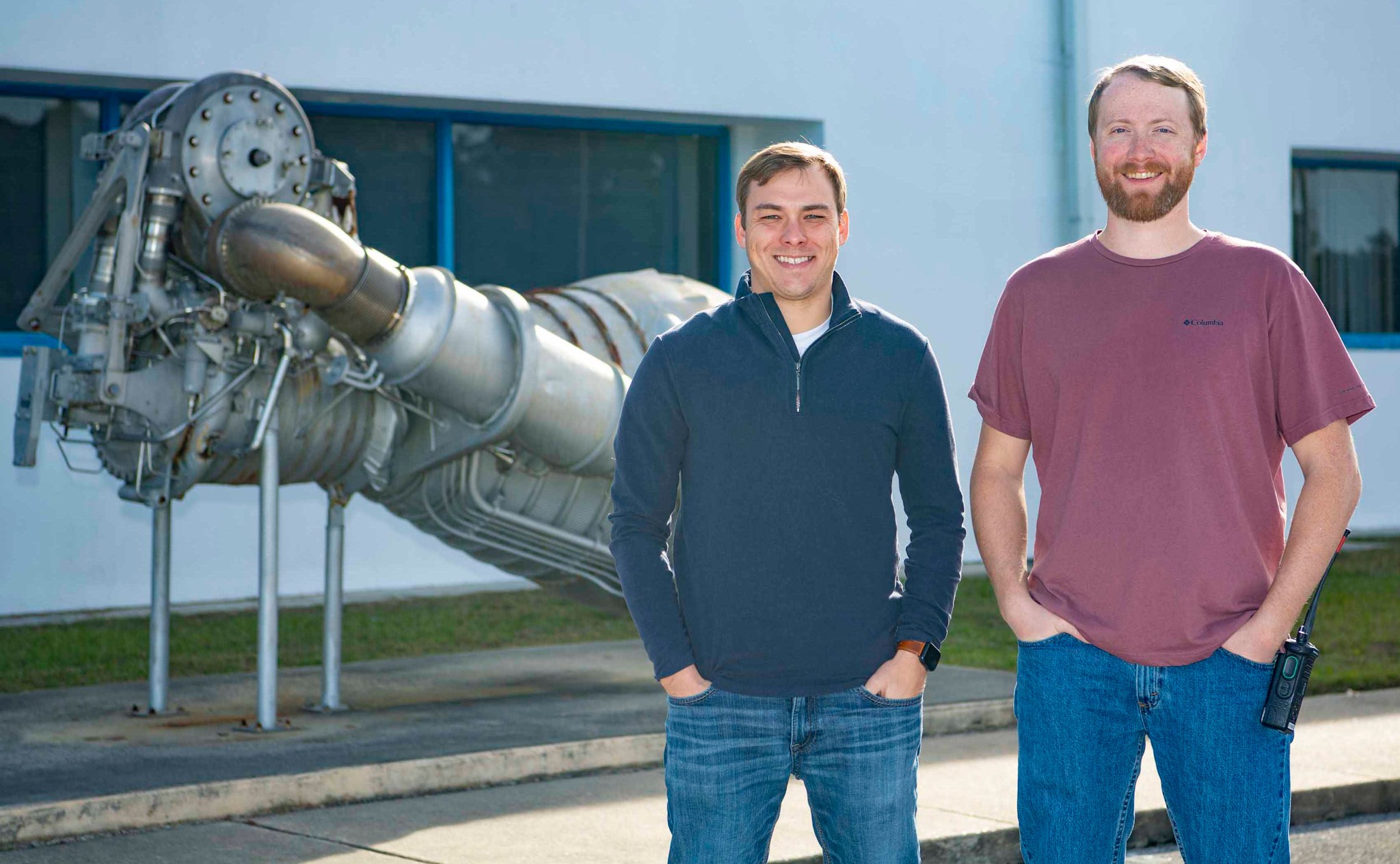
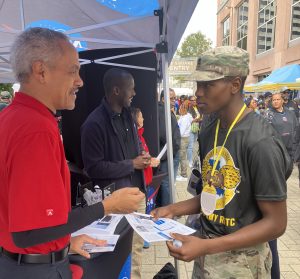
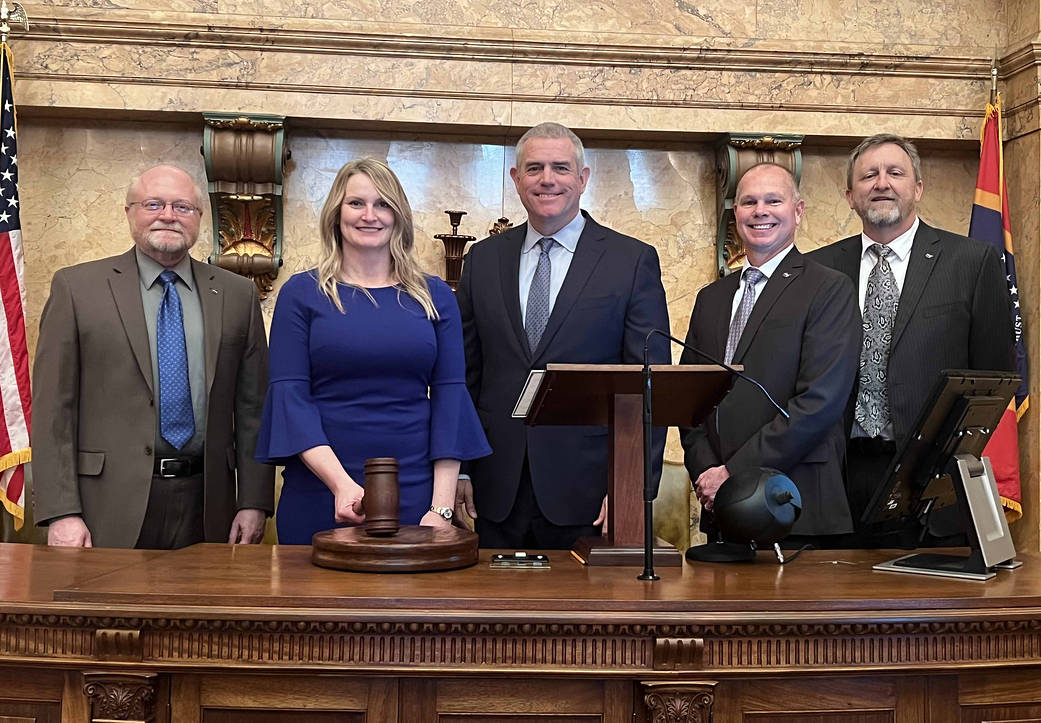
NASA engineers Josh Greiner, a native of Dothan, Alabama (left) and Peyton Pinson, a Madison, Mississippi native, stand at NASA’s Stennis Space Center
NASA engineers Josh Greiner, a native of Dothan, Alabama (left) and Peyton Pinson, a Madison, Mississippi native, stand at NASA’s Stennis Space Center, outside the building where they began as interns in 2016. Almost eight years later, the two are part of a team that leads engine tests for NASA and commercial companies at the nation’s premier rocket engine test site.
NASA/Danny Nowlin

The last Wednesday in November proved to be a full-circle moment for two engineers at NASA’s Stennis Space Center near Bay St. Louis, Mississippi.

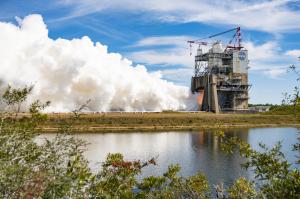
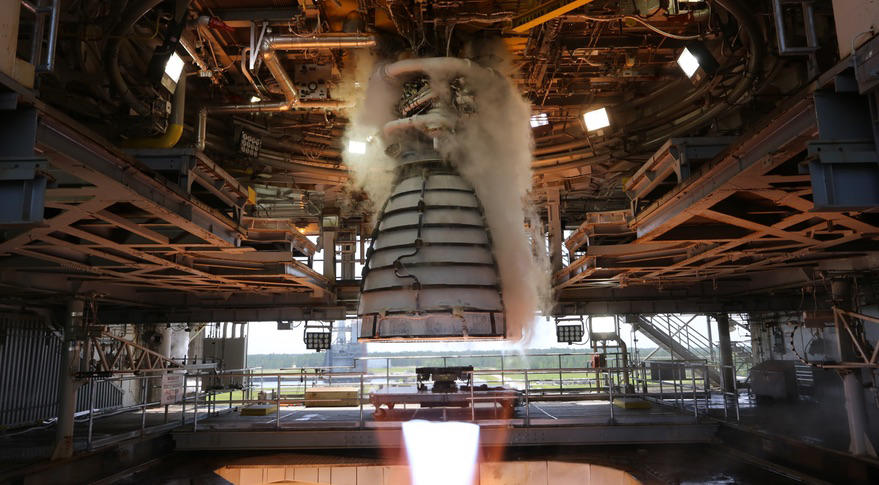
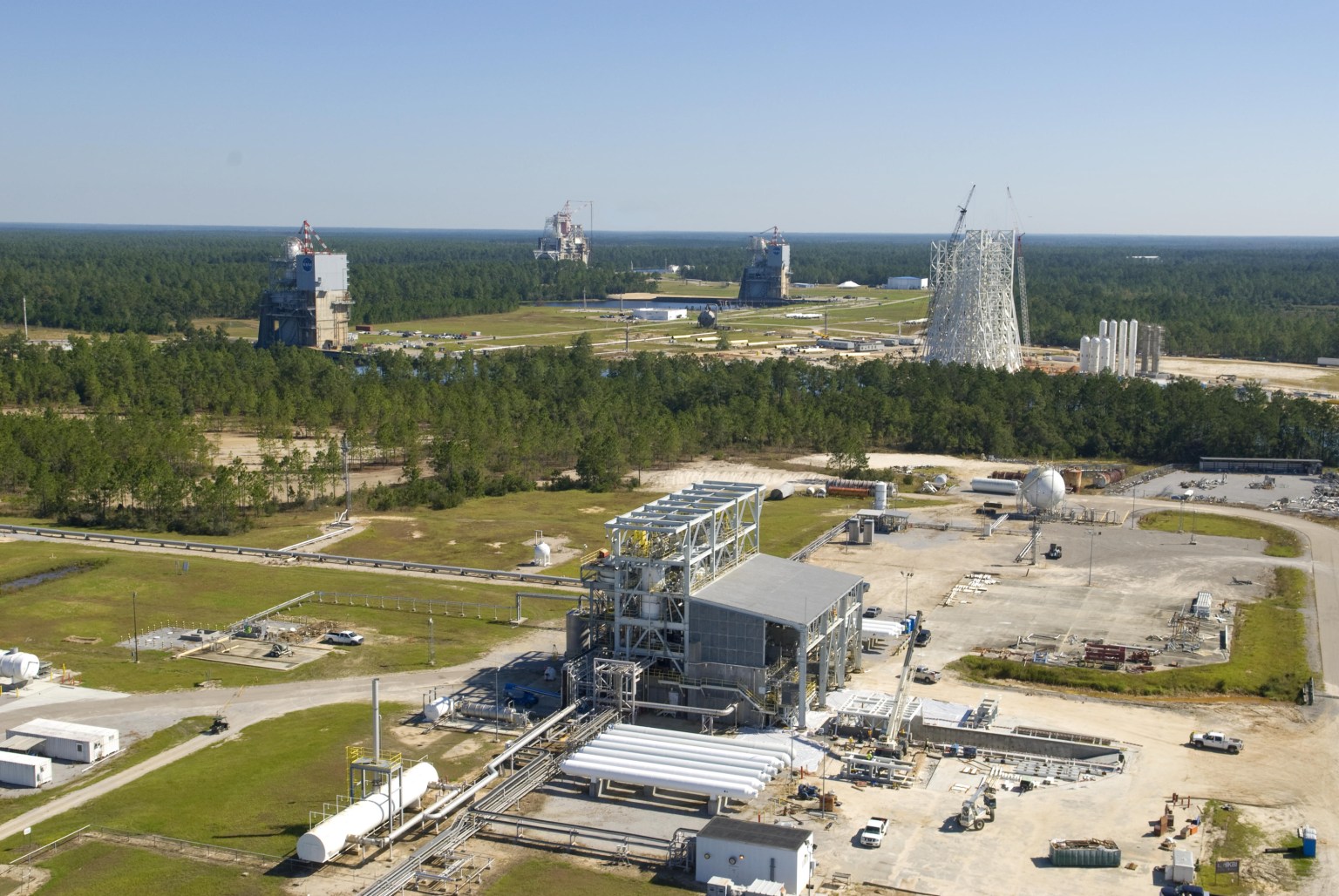
Josh Greiner heard a familiar voice on the headset as he prepared to conduct an RS-25 engine test on the Fred Haise Test Stand on Nov. 29. It was Peyton Pinson, speaking from the same nearby test complex building where he and Greiner once shared a cubicle as interns seven years earlier.

As Greiner listened in, Pinson announced he would conduct a hot fire on the E-1 Test Stand for commercial company Launcher Space in 30 minutes. 

“It was a pretty cool moment,” Greiner said. “We used to sit there and look at the test conductor kind of in awe and were amazed they could keep up with all these different console operators at the same time. Now, we both are part of the test team and both part of the rotation that gets to conduct tests.”

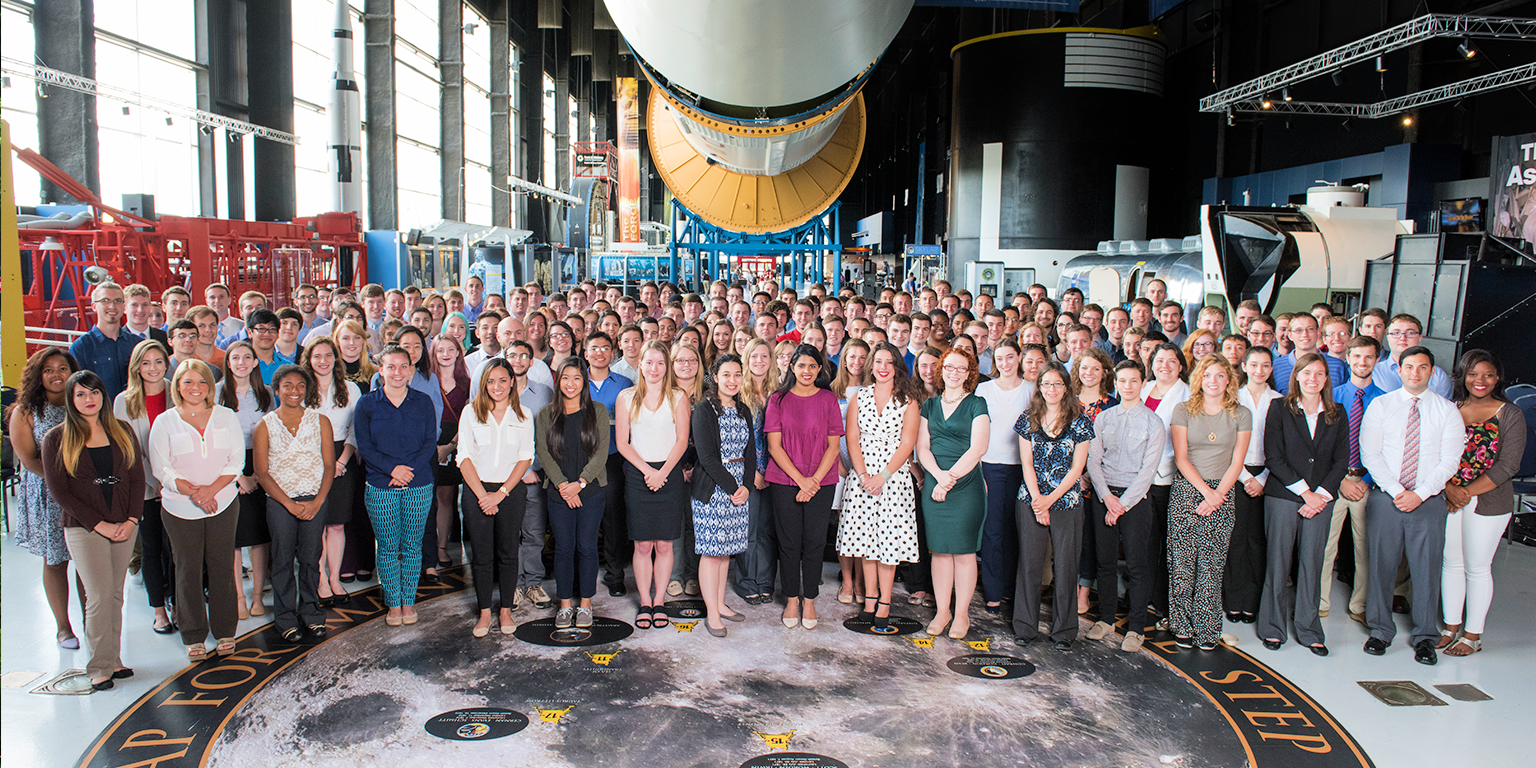
Pinson and Greiner arrived at NASA Stennis in May 2016 to participate in the NASA Pathways work study (co-op) program. Pinson was a mechanical engineering major at Mississippi State University in Starkville. Greiner, still unsure of what direction he wanted to go in the field, was majoring in aerospace engineering at the University of Alabama in Tuscaloosa. He ultimately finished with a mechanical engineering degree and credits his work study experience for providing clarity for his future.

“If you can get a co-op, I’m 100 percent in favor of that,” Greiner said. “You get exposure to a breadth of disciplines that make it a lot easier to start narrowing in what you really want to do. In college, we all come out with a pretty standardized foundation of engineering that’s an incredible knowledge base, but you really learn a lot with on-the-job training. Getting to the right place with the right people is going to help your growth more so than getting the perfect engineering degree.”

The right place proved to be NASA Stennis. Pinson and Greiner spent multiple semesters soaking up knowledge from the experienced, diverse workforce at the south Mississippi NASA center. They rotated throughout the center complex where teams fulfill NASA and commercial space company test needs.

“When we started as co-ops, Josh and I were given a good bit of responsibility and trusted with a lot,” Pinson said. “We had so many people who were a part of the team that really wanted to help us learn and develop and get to where we are now.”

After completing the work-study program and earning their degrees, Pinson and Greiner were hired by NASA in 2018.

“Our management put us in a position to be successful,” Greiner said. “We started running consoles as co-ops, and they helped move us onto the test stands with projects that had a lot going on and gave us a huge share of responsibility in leading projects early in our career.”

Both now have years of experience that includes conducting various engine tests, such as the successful Nov. 29 hot fires at the nation’s premier rocket engine test site.

“We all work together in the mechanical operations group to get to that point,” Pinson said. “There’s a lot of opportunity for a new mechanical operations engineer to learn along the way and to sit in the test conductor seat with an experienced test conductor to back you up and guide you through it. Eventually, you have enough on-the-job training to run it yourself.”

For information about the NASA Pathways program, visit:

NASA Careers: Pathways – NASA

Share

Details

Last Updated

Dec 12, 2023

Editor
NASA Stennis Communications
Contact
C. Lacy Thompson
Location
Stennis Space Center

Related Terms

Powered by WPeMatico

Get The Details…
LaToya Dean
Media Invited to NASA’s SpaceX Crew-6, Expedition 69 Visit to Marshall

Media Invited to NASA’s SpaceX Crew-6, Expedition 69 Visit to Marshall

2 min read

Preparations for Next Moonwalk Simulations Underway (and Underwater)

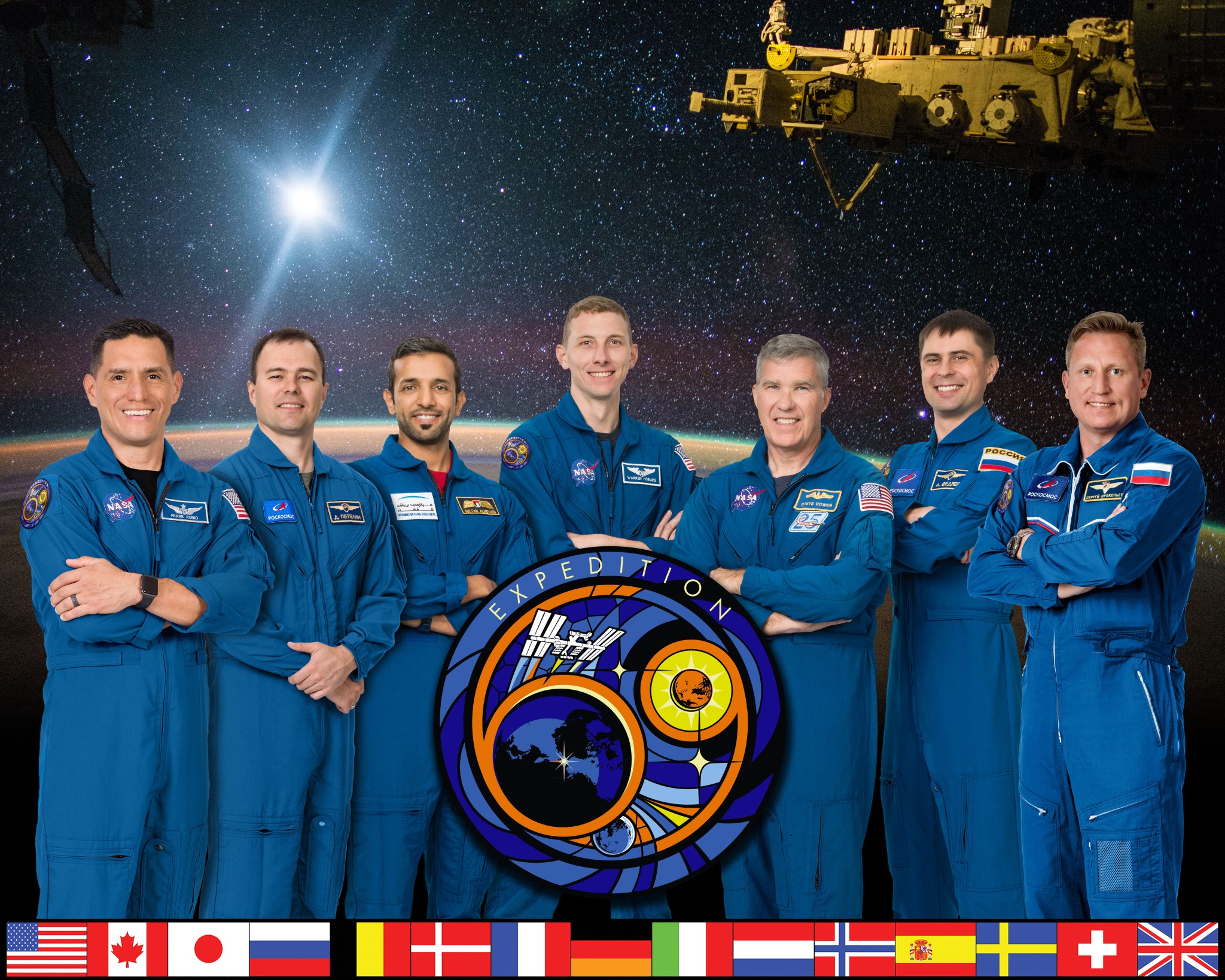
The Crew stand in a line in blue flight suits with the mission patch over their photo.
The official Expedition 69 crew portrait with (from left) flight engineers Frank Rubio from NASA, Dmitri Petelin from Roscosmos, Sultan Alneyadi from UAE (United Arab Emirates), Woody Hoburg from NASA, Stephen Bowen from NASA, Andrey Fedyaev from Roscosmos, and Commander Sergey Prokopyev from Roscosmos.
NASA

NASA astronauts Frank Rubio, Stephen Bowen, and Woody Hoburg, as well as UAE (United Arab Emirates) astronaut Sultan Alneyadi will visit the agency’s Marshall Space Flight Center in Huntsville, Alabama at 1 p.m. CST Thursday, Dec. 14, to discuss their recent missions to the International Space Station.

Media are invited to speak with the astronauts at 2 p.m. about their science missions aboard the microgravity laboratory.

Members of the media interested in covering the visit should contact Lance D. Davis in the Marshall Office of Communications no later than 1 p.m. on Wednesday, Dec. 13. at 256-640-9065 or lance.d.davis@nasa.gov.

Media must report by 12 p.m. to the Redstone Arsenal Joint Visitor Control Center Gate 9 parking lot, located at the Interstate 565 interchange at Research Park Boulevard. The event will take place in the Activities Building 4316. Vehicles are subject to a security search at the gate, so please allow extra time. All members of media and drivers will need photo identification. Drivers will need proof of insurance if requested.

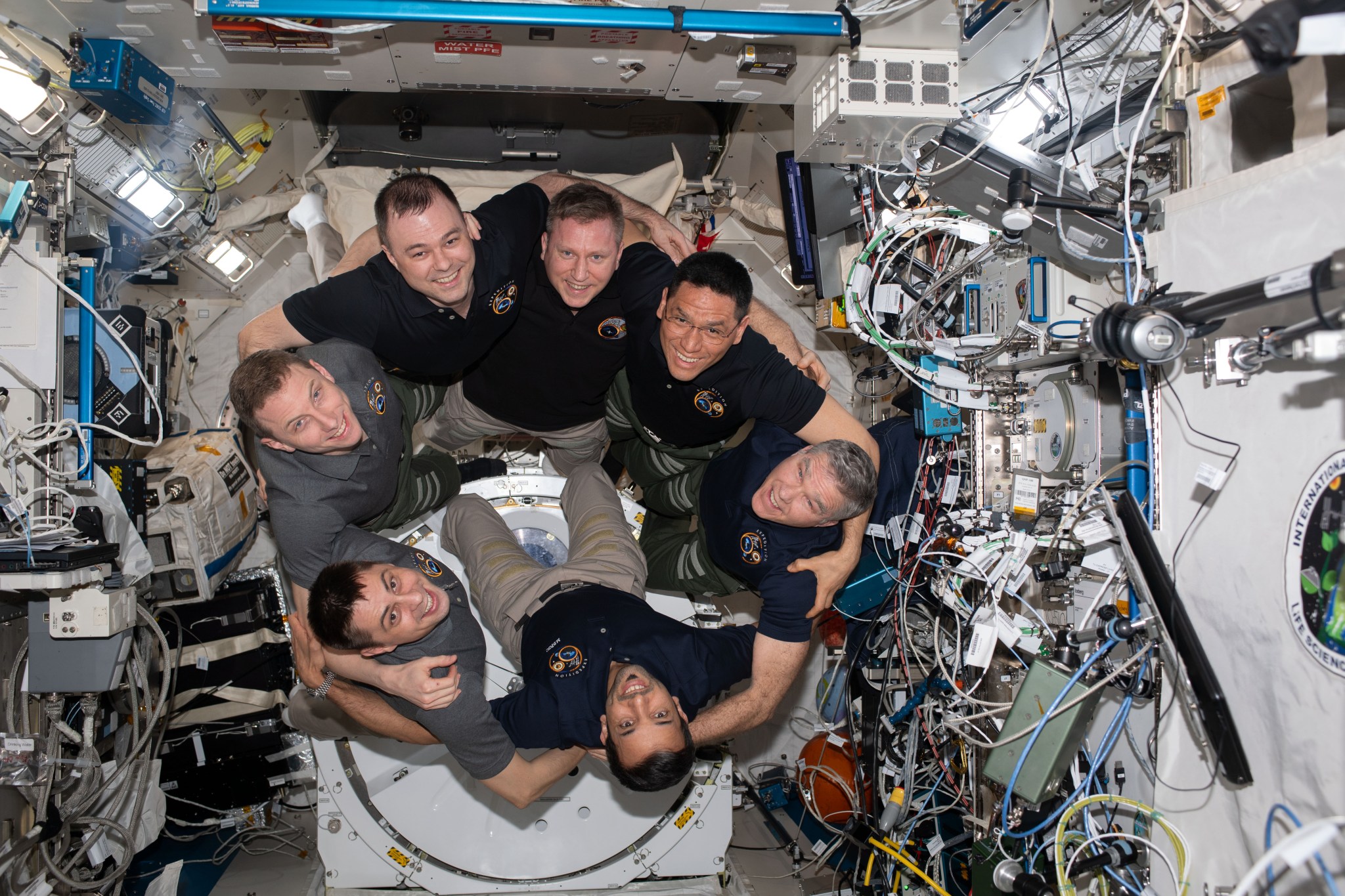
The crew of Expedition circle around for a group photo.
The seven-member Expedition 69 crew gathers for a portrait inside the International Space Station’s Kibo laboratory module. Clockwise from left are, Flight Engineers Woody Hoburg of NASA and Dmitri Petelin of Roscosmos; Commander Sergey Prokopyev from Roscosmos; Flight Engineers Frank Rubio and Stephen Bowen, both from NASA; and Flight Engineers Sultan Alneyadi from UAE (United Arab Emirates) and Andrey Fedyaev from Roscosmos.
NASA

NASA’s SpaceX Crew-6 mission with Bowen, Hoburg, and Alneyadi launched March 2 on a SpaceX Falcon 9 rocket from NASA’s Kennedy Space Center in Florida, and docked to the space station the next day. Marshall’s commercial crew support team provided oversight to safety standards for the Crew-6 mission’s spacecraft, along with monitoring launch conditions.

Rubio launched Sept. 21, 2022, on a Soyuz spacecraft from the Baikonur Cosmodrome in Kazakhstan to the International Space Station. During his mission, he broke the record for longest single spaceflight by a U.S. astronaut having spent 371 days in space.

Marshall’s Payload Operations Integration Center, which operates, plans, and coordinates science experiments onboard the space station 365 days a year, 24 hours a day, also supported Crew-6 and Expedition 69, managing communications between the International Space Station crew and researchers worldwide.

NASA’s Commercial Crew Program has worked with several American aerospace industry companies to facilitate the development of U.S. human spaceflight systems since 2010. The goal is to have safe, reliable, and cost-effective access to and from the International Space Station and foster commercial access to other potential low Earth orbit destinations.

Learn more about NASA’s SpaceX Crew-6 and Expedition 69.

Lance D. Davis
Marshall Space Flight Center, Huntsville, Alabama
256-640-9065
lance.d.davis@nasa.gov

Share

Details

Last Updated

Dec 12, 2023

Powered by WPeMatico

Get The Details…
Beth Ridgeway

NASA MSI Incubator: Wildfire Climate Tech Challenge

NASA MSI Incubator: Wildfire Climate Tech Challenge

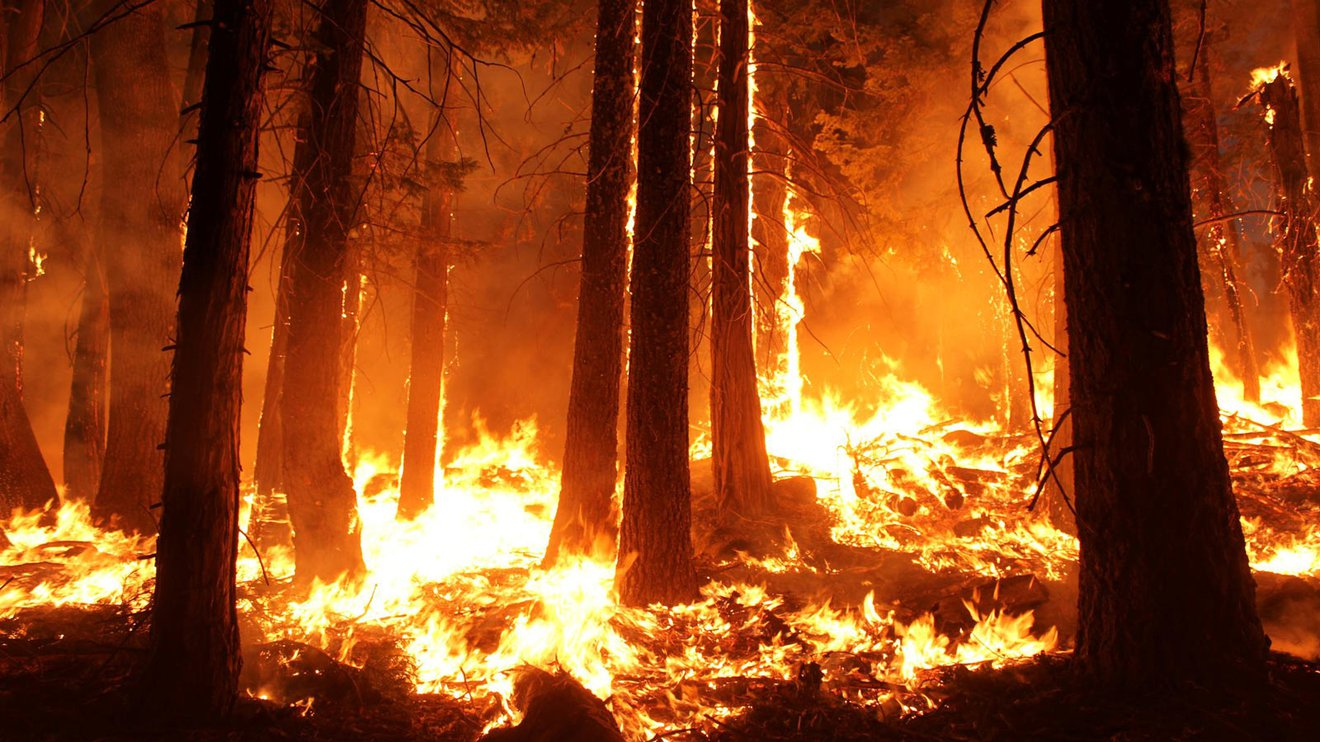
NASA’s Wildfire Climate Tech Challenge, part of the MSI Incubator initiative, seeks innovative solutions for wildfire prevention and climate technology. NASA invites students and employees of Minority Serving Institutions (MSIs) to address the escalating issues caused by wildfires exacerbated by climate change. Successful participants will have the opportunity to join a startup incubator program and compete for a prize of $100,000. Additionally, this initiative offers a platform for participants to present their ideas to venture capitalists and NASA experts, furthering the development of technology in the fields of wildfire prevention and climate change, while promoting inclusivity and diversity.

Award: $300,000 in total prizes

Open Date: December 11, 2023

Close Date: February 2, 2024

For more information, visit: https://www.nasa-climate-tech.org/wildfires/home

Powered by WPeMatico

Get The Details…
Sarah Douglas

Four-time Space Veteran Jeff Williams to Retire from NASA

Four-time Space Veteran Jeff Williams to Retire from NASA

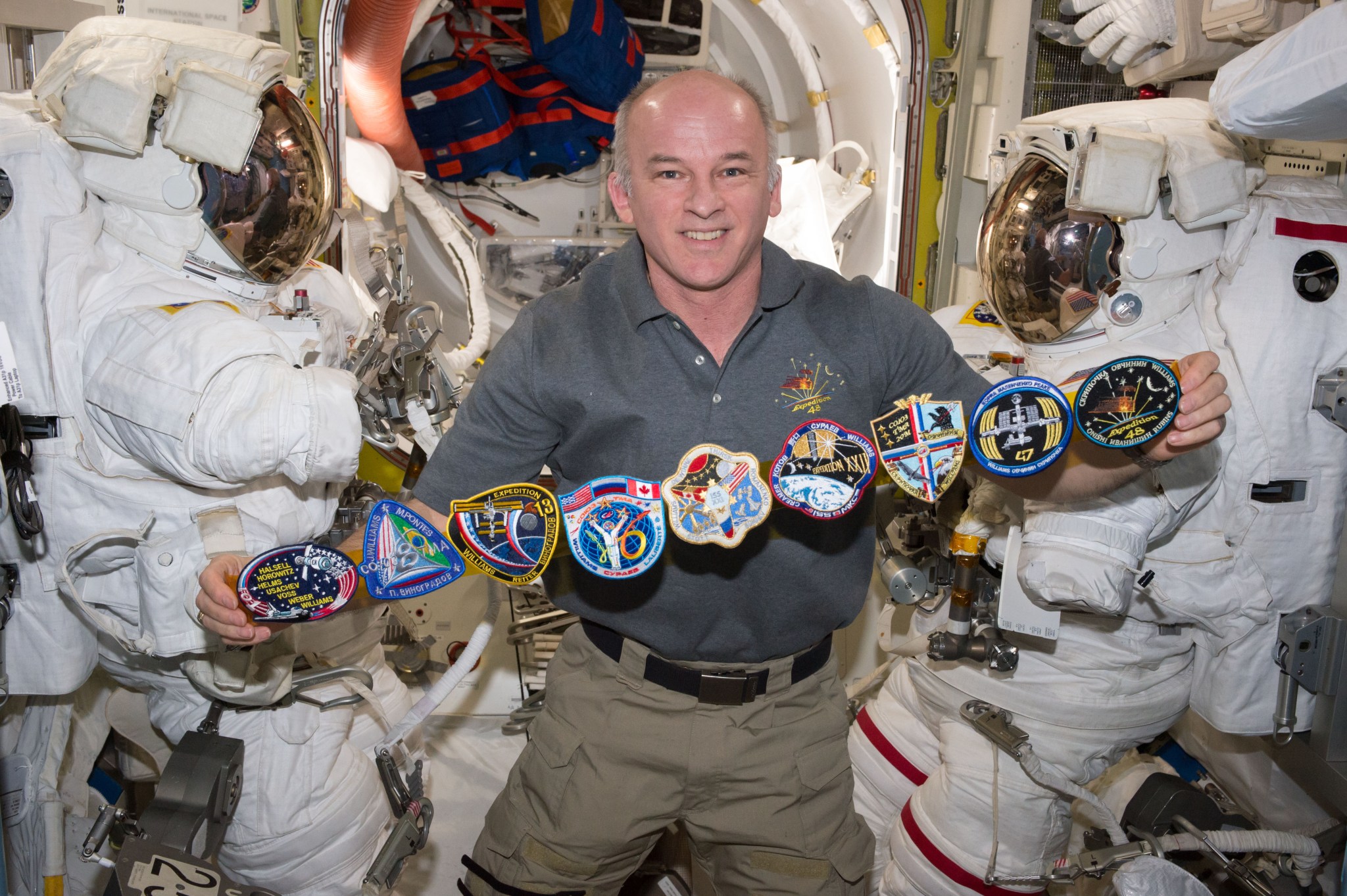
Commander Jeff Williams poses for a photo in the Quest Airlock (A/L) with all of his mission patches. The patches are, from left, STS-101, Soyuz TMA-8, Expedition 13, Soyuz TMA-16, Expedition 21, Expedition 22, Soyuz TMA-20M, Expedition 47, and Expedition 48.
Credit NASA

Dec. 11, 2023

RELEASE: J23-007

NASA astronaut and retired U.S. Army Col. Jeffrey Williams, who played a key role in the design, construction, and operation of the International Space Station, is retiring on Sunday, Jan. 14, 2024, after more than 27 years of service at the agency.

The two-time station commander spent 534 cumulative days in space spanning four trips to the space station. He spent nearly 32 hours outside of the orbital laboratory on five spacewalks.

“Jeff’s dedication and commitment to advancing NASA’s mission for the benefit of all humanity is truly admirable,” said NASA Johnson Space Center Director Vanessa Wyche. “His willingness to go above and beyond has impacted several generations and will continue to inspire future generations to come.”

In addition to his time in space, he tested and evaluated the space station’s U.S. laboratory module Destiny during its final assembly at NASA’s Marshall Space Flight Center in Huntsville, Alabama, led the development of a space shuttle cockpit upgrade, worked in legislative affairs at NASA Headquarters in Washington, commanded a nine-day NEEMO (NASA Extreme Environment Mission Operations) mission in the Aquarius undersea habitat off the coast of Florida, and worked extensively in spacewalk development.

Since 2017, he has been assistant director of Flight Operations at NASA’s Johnson Space Center in Houston. Among his many accomplishments, he served as chair of the Multinational Crew Operations Panel, responsible for International Space Station crew assignments, qualifications, and training. Most recently, he served on a review board overseeing development of lunar surface projects for the Moon to Mars architecture.

“I had the pleasure of working with Jeff from the very beginning of our careers – first in the earliest days of the space station, and now working together to put the next humans on the Moon,” said Norm Knight, director of flight operations, NASA Johnson. “Over the course of his 27 years with us, I’ve always admired his leadership, mentorship, and passion for all things spaceflight. He will be so missed, and I’m excited to see what comes next for him.”

The Wisconsin native joined NASA Johnson on a four-year Army assignment supporting the Space Shuttle Program in 1987. He was selected to join the NASA astronaut class of 1996. His first mission was on the crew of STS-101, launching on space shuttle Atlantis for the third mission devoted to station construction. His first long duration mission was Expedition 13, launching in March 2006 on Soyuz TMA-8 and lasting six months as station construction resumed with the shuttle return-to-flight after the Columbia accident. For his third flight, Expeditions 21/22, Williams launched in October 2009 aboard Soyuz TMA-16 for another six-month stay – this time to integrate the station’s Tranquility module and its cupola to complete station construction. Williams’ final spaceflight launched in March 2016 on Soyuz TMA-20M for Expeditions 47/48 which saw the arrival of the station’s Bigelow Expandable Activity Module, the integration of an international docking adaptor for commercial crew spacecraft, and the continuation of science and technology demonstrations.

“It has been a tremendous honor and privilege to work with the best team in the world here at NASA,” Williams said, “and to share in what has to be the greatest technological and operational achievement in human history – the International Space Station – designed and built in many different places and countries on the planet, assembled and integrated off the planet, and continually operated for now more than 25 years, all in the context of international partnership. I am incredibly grateful to the many friends, mentors, and coworkers I’ve been privileged to labor with, who span three generations and range from those who worked in the Apollo Program all the way to the newest team members now dedicated to returning to the Moon.”

Overall, Williams lived and worked with 56 different individuals from eight different countries aboard the orbital outpost. His flights spanned 16 years of the space station’s assembly, construction, and emerging operational capability. He contributed to hundreds of scientific experiments and a broad spectrum of technology development projects.

Prior to becoming an astronaut, Williams attended the U.S. Military Academy at West Point, New York, where he earned a bachelor’s degree in Applied Science and Engineering, the U.S. Naval Postgraduate School in Monterey, California, where he earned a master’s degree in Aeronautical Engineering, and the U.S. Naval War College, Newport, Rhode Island, where he earned a master’s degree in National Security and Strategic Studies. He served in the 3rd Armored Division’s 503rd Aviation Battalion as an Army aviator in West Germany. He attended Naval Test Pilot School, graduating first in his class in 1992 and then served as an experimental test pilot before becoming an astronaut. He retired from Army active duty in 2007 with more than 27 years of military service and 3,100 hours in more than 50 different aircraft. His experience has spanned more than 47 years.

Learn more about how NASA explores the unknown and innovates for the benefit of humanity at: https://www.nasa.gov/

-end-

Chelsey Ballarte
Johnson Space Center, Houston
281-483-5111
Chelsey.n.ballarte@nasa.gov

Powered by WPeMatico

Get The Details…
Wendy K. Avedisian

Branch Chief Margarita Sampson

Branch Chief Margarita Sampson

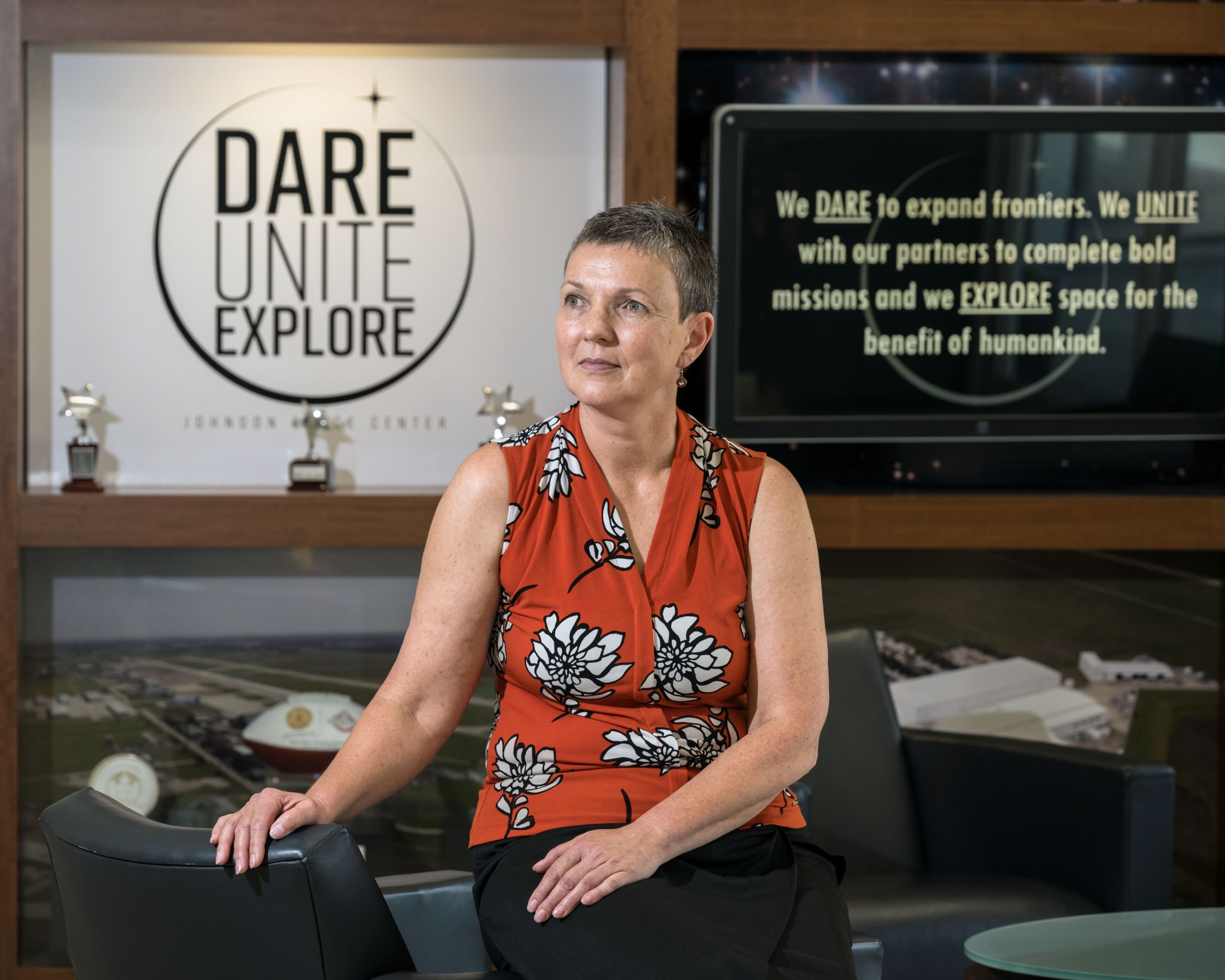
Margarita Sampson thoughtfully gazes off into the distance as she sits in the lobby of Building 1 at NASA's Johnson Space Center. Behind her are two pieces of text. The first says,

“There’s this thing called the overview effect: Space has this effect on people that you could probably call almost spiritual. Everyone returns from spaceflight changed in one way or another. … They see the Earth from space, and that’s how they continue to see it after flight.

“… The more people travel to space and have the experience of seeing the Earth, the less chance of wars and conflict and separation we have. Life becomes more hopeful.

“I read [‘The Last Man on the Moon’] by Gene Cernan, and he was describing how he felt looking at the Earth from the surface of the Moon. I was like, ‘Yeah, there’s something there.’… I feel like we go to space not to learn more about space but to learn more about ourselves.”

— Margarita Sampson, Branch Chief, NASA’s Johnson Space Center

Image Credit: NASA / William Stafford
Interviewer: NASA / Michelle Zajac

Check out some of our other Faces of NASA.

Powered by WPeMatico

Get The Details…
Michelle Zajac