Trailblazing New Earth Satellite Put to Test in Preparation for Launch

Trailblazing New Earth Satellite Put to Test in Preparation for Launch

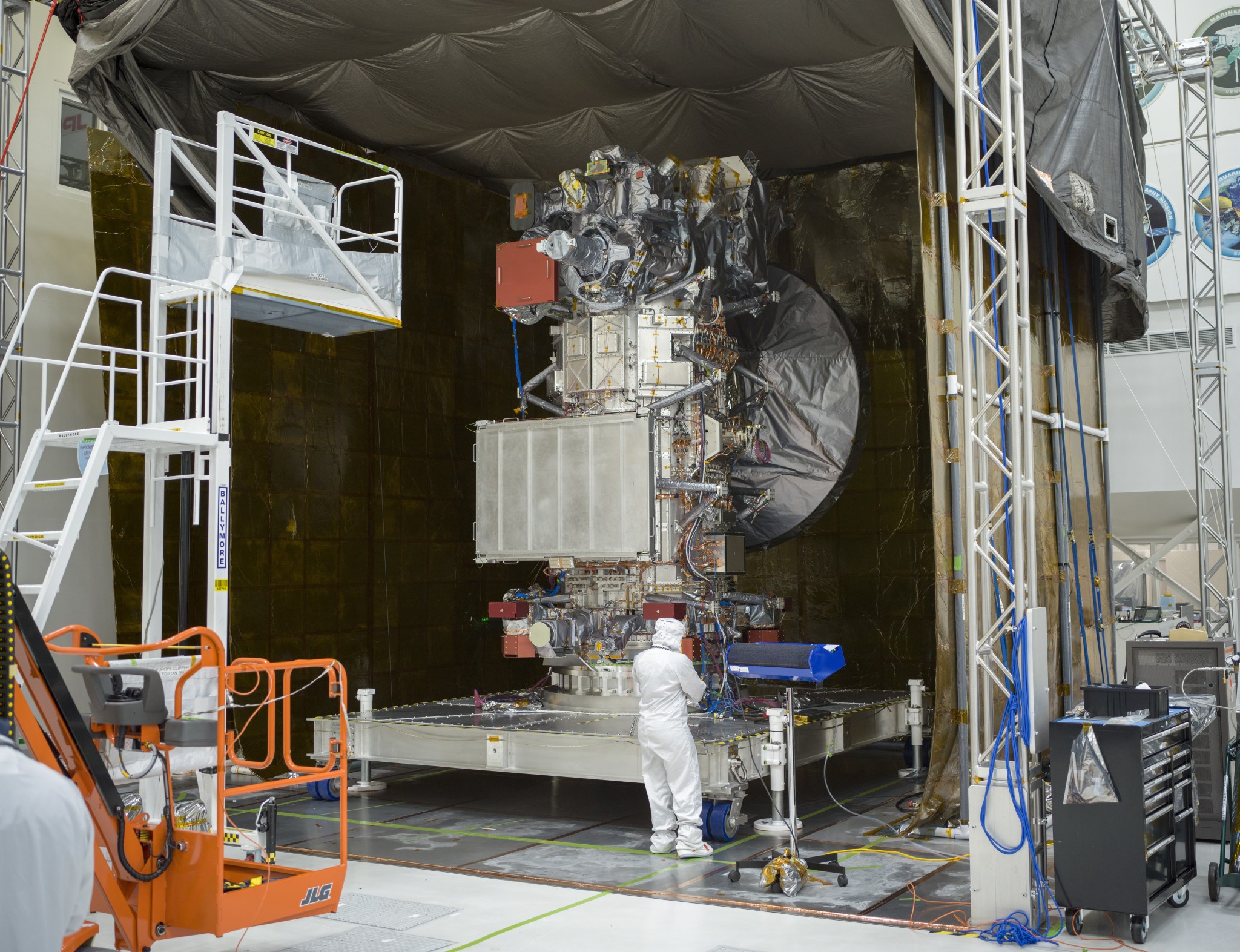
The NISAR satellite enters the thermal vacuum chamber at an ISRO facility in Bengaluru on Oct. 19. It emerged three weeks later having met all requirements of its performance under extreme temperatures and space-like vacuum.
ISRO

During three weeks in a thermal vacuum chamber in Bengaluru, India, the joint NASA-ISRO satellite demonstrated its hardiness in a harsh, space-like environment.

NISAR, the trailblazing Earth-observing radar satellite being developed by the United States and Indian space agencies, passed a major milestone on Nov. 13, emerging from a 21-day test aimed at evaluating its ability to function in the extreme temperatures and the vacuum of space.

Short for NASA-ISRO Synthetic Aperture Radar, NISAR is the first space hardware collaboration between NASA and the Indian Space Research Organisation, or ISRO, on an Earth-observing mission. Scheduled to launch in early 2024, the satellite will scan nearly all the planet’s land and ice twice every 12 days, monitoring the motion of those surfaces down to fractions of an inch. It will be able to observe movements from earthquakes, landslides, and volcanic activity and track dynamic changes in forests, wetlands, and agricultural lands.

The thermal vacuum test occurred at ISRO’s Satellite Integration and Test Establishment in the southern Indian city of Bengaluru. It’s one of a battery of tests the satellite will face leading to launch. Other tests will ensure it can withstand the shaking, vibration, and jostling that it will encounter during launch.

The NISAR satellite stayed in this ISRO antenna testing facility for 20 days in September as engineers evaluated the performance of its L- and S-band radar antennas. The foam spikes lining the walls, floor, and ceiling prevent radio waves from bouncing around the room and interfering with measurement.
ISRO

NISAR, partially covered in gold-hued thermal blanketing, entered the vacuum chamber on Oct. 19. Over the following week, engineers and technicians lowered the pressure to an infinitesimal fraction of the normal pressure at sea level. They also subjected the satellite to an 80-hour “cold soak” at 14 degrees Fahrenheit (minus 10 degrees Celsius), followed by an equally lengthy “hot soak” at up to 122 F (50 C). This simulates the temperature swings the spacecraft will experience as it is exposed to sunlight and darkness in orbit.

ISRO and JPL teams worked around the clock during the three-week period, testing the performance of the satellite’s thermal systems and its two primary science instrument systems – the L-band and S-band radars – under the most extreme temperature conditions they will experience in space.

This latest round of testing followed 20 days of testing in September in which engineers used ISRO’s compact antenna test facility to evaluate whether the radio signals from the two radar systems’ antennas passed requirements. Blue foam spikes lining the facility’s walls, floor, and ceiling prevent radio waves from bouncing around the room and interfering with measurement.

With thermal vacuum and compact antenna tests successfully done, NISAR will soon be fitted with its solar panels and its nearly 40-foot (12-meter) radar antenna reflector, which resembles a snare drum and will unfold in space at the end of a 30-foot (9-meter) boom extending from the spacecraft.

After it launches in early 2024, NISAR will scan nearly all of the planet’s land and ice twice every 12 days. In orbit, the satellite will extend its solar panels and nearly 40-foot (12-meter) radar antenna reflector, which resembles a snare drum and will unfold at the end of a 30-foot (9-meter) boom extending from the spacecraft.
NASA-JPL/Caltech

The satellite will undergo additional tests before being packed up and transported about 220 miles (350 kilometers) eastward to Satish Dhawan Space Centre, where it will be mounted atop ISRO’s Geosynchronous Satellite Launch Vehicle Mark II rocket and sent into low Earth orbit.

More About the Mission

NISAR is an equal collaboration between NASA and ISRO and marks the first time the two agencies have cooperated on hardware development for an Earth-observing mission. NASA’s Jet Propulsion Laboratory, which is managed for the agency by Caltech in Pasadena, California, leads the U.S. component of the project and is providing the mission’s L-band SAR. NASA is also providing the radar reflector antenna, the deployable boom, a high-rate communication subsystem for science data, GPS receivers, a solid-state recorder, and payload data subsystem. U R Rao Satellite Centre (URSC) in Bengaluru, which leads the ISRO component of the mission, is providing the spacecraft bus, the launch vehicle, and associated launch services and satellite mission operations. ISRO’s Space Applications Centre in Ahmedabad is providing the S-band SAR electronics.

To learn more about NISAR, visit:

https://nisar.jpl.nasa.gov/

News Media Contacts

Andrew Wang / Jane J. Lee
Jet Propulsion Laboratory, Pasadena, Calif.
626-379-6874 / 818-354-0307
andrew.wang@jpl.nasa.gov / jane.j.lee@jpl.nasa.gov

2023-167

Powered by WPeMatico

Get The Details…
Naomi Hartono

Joshua Abel: Delivering Roman’s Optical Telescope Assembly On Time, On Target

Joshua Abel: Delivering Roman’s Optical Telescope Assembly On Time, On Target

5 min read

Joshua Abel: Delivering Roman’s Optical Telescope Assembly On Time, On Target

Joshua Abel, a man wearing white coveralls, a light blue hair net, and a light blue face mask, stands and poses with arms crossed in front of the Nancy Grace Roman Space Telescope's primary mirror. The mirror is shaped like a large silver disk, reflecting part of an American flag in its upper surface. Both Joshua and the mirror are inside a clean room, with pipes, shelves, stairs, and storage lining the walls, most in shades of light turquoise. Black and yellow caution tape forms a barrier around the telescope mirror.
Joshua Abel’s job as lead systems engineer for the Nancy Grace Roman Space Telescope’s Optical Telescope Assembly is “to deliver the assembly to the Roman observatory on time, within budget, and meeting all the technical requirements.”
Credit: NASA / Chris Gunn

Name: Joshua Abel

Title: Lead systems engineer for the Roman Space Optical Telescope Assembly

Formal Job Classification: Flight Systems Design Engineer

Organization: Instrument/Payload Systems Engineering Branch (Code 592), Mission Engineering and Systems Analysis Division, Engineering and Technology Directorate

Editor’s note: The Nancy Grace Roman Space Telescope’s Optical Telescope Assembly (OTA) includes the telescope’s primary and secondary mirrors, as well as supporting optics. The OTA enables the telescope to collect light that is then delivered to the observatory instruments.

What do you do and what is most interesting about your role here at Goddard? How do you help support Goddard’s mission?

As the lead systems engineer for the Roman Space Telescope Optical Telescope Assembly, I am the government technical authority for procurement of the assembly, currently being manufactured by L3Harris Corporation in Rochester, New York. I am responsible for technical oversight of the vendor and verifying requirements.

What was your path to becoming an aerospace engineer at Goddard?

In 1999, I received a B.S. in interdisciplinary engineering focused on biomedical engineering from Purdue University. I began a master’s in biomedical engineering in bioheat transfer from Purdue University, but left in 2001 to work at Space Systems/Loral as a thermal systems engineer for satellites.

In 2005, I came to Goddard to work on Hubble Servicing Mission 4 and other NASA satellite servicing projects as a thermal systems engineer. In 2018, I began supporting the New Opportunities Office as a systems engineer, later joining the Instrument/Payload Systems Engineering Branch in my current role.

What are your goals as the lead systems engineer for the Roman Space Telescope Optical Telescope Assembly?

My goal is to deliver the assembly to the Roman observatory on time, within budget, and meeting all the technical requirements. I lead a small team of subject matter experts to review the vendor’s plans and help resolve any technical issues.

What is your management style?

I have a broad engineering background which helps me ask the right questions. I like to build consensus within the team and consolidate everyone’s work into a cohesive and understandable package, communicating complex issues both within the team and to management.

What makes Goddard special?

Everyone here loves their work and is focused on mission success. Even when conversations are difficult and the stakes are high, the emotion comes from caring so deeply. As a systems engineer, my goal is to listen to all ideas and help find the best direction for the project.

Joshua Abel, a man with short gray hair and a short dark gray beard, smiles and poses with his daughter for a selfie. Joshua wears a bright blue soccer polo and his daughter, a young girl with long dark hair, wears a white soccer jersey. They pose in the shade of a large tree, with yards, driveways and more trees visible behind them.
Systems engineer Joshua Abel is a team player at work, where he and his team review vendor plans and resolve technical issues for the Roman Space Telescope’s Optical Telescope Assembly, and at home, where he plays and coaches soccer.
Courtesy of Joshua Abel

What drives you?

I try to do what is needed and contribute to the best of my ability. I am energized when someone says they need help, be it fixing things that are broken or putting new things together. I’m always excited to continue to learn from the our expert team members and vendors.

I prefer working in a team. I like the dynamic environment of systems engineering, which is full of difficult problems that need a larger group to get enough perspectives to solve.

My background and skill mix are a little bit of everything. I enjoy English, communication, math, and science. These interests help me see different sides of a problem.

I like to take things that are slow and repetitive and make them faster and more interesting for myself and others. For example, I like to write Microsoft Excel programs to analyze thermal model data and other large databases to improve productivity. 

What advice would you give young engineers?

Take whatever project you are working on and exceed expectations. Don’t be afraid to ask questions. Early tasks for young engineers are not always the most exciting, but work to the best of your ability and try to learn as much as you can. Understand the job and try to see if it can be accomplished better or faster. If you approach every task with this attitude, the next opportunity will always come.

Build your network of experts and use their lessons learned to help your project, always returning that help when you can. Oftentimes the most important piece of knowledge you’ll be able to provide your team is simply knowing who to call to for advice. All of NASA’s engineers are always willing to help.

What are your hobbies?

I play and coach soccer and I also play guitar with my three children around our fire pit. Like every engineer, I’m continually working on home improvement projects for my favorite manager, my wife, who is a thermal systems engineer at the Johns Hopkins Applied Physics Laboratory in Laurel, Maryland.

A banner graphic with a group of people smiling and the text "Conversations with Goddard" on the right. The people represent many genders, ethnicities, and ages, and all pose in front of a soft blue background image of space and stars.

Conversations With Goddard is a collection of Q&A profiles highlighting the breadth and depth of NASA’s Goddard Space Flight Center’s talented and diverse workforce. The Conversations have been published twice a month on average since May 2011. Read past editions on Goddard’s “Our People” webpage.

By Elizabeth M. Jarrell
NASA’s Goddard Space Flight Center, Greenbelt, Md.

Share

Details

Last Updated

Nov 14, 2023

Editor

Jessica Evans

Contact

Rob Garner
rob.garner@nasa.gov

Location

Goddard Space Flight Center

Powered by WPeMatico

Get The Details…
Jessica Evans

Atención, oyentes de pódcasts: La NASA ya está disponible en Spotify

Atención, oyentes de pódcasts: La NASA ya está disponible en Spotify

Desde entrevistas con astronautas e ingenieros hasta historias que te transportan a través de la galaxia, los podcasts de la NASA te permiten experimentar la emoción de la exploración espacial sin tener que salir de la Tierra.
NASA

Read this release in English here.

La NASA publicó este martes su colección de pódcasts originales en Spotify, brindando a más gente acceso a conversaciones en profundidad e historias, así como contenidos en español, mientras la agencia trabaja para explorar lo desconocido en el aire y el espacio.

Los pódcasts de la agencia están ahora disponibles sin publicidad y sin coste alguno para los 574 millones de usuarios de Spotify.

“Contar la historia de los objetivos y misiones de la NASA inspira al mundo a soñar a lo grande y alcanzar las estrellas, especialmente a los miembros de la Generación Artemis. Estamos encantados de ampliar nuestro alcance mediante la presencia de pódcasts de la NASA en Spotify por primera vez”, dijo Marc Etkind, administrador asociado de la Oficina de Comunicaciones de la sede de la agencia en Washington.

La NASA ahora ofrece cinco pódcasts en Spotify, incluyendo:

  • Universo curioso de la NASA, el primer podcast en español de la agencia:
    • Bienvenidos a Universo curioso de la NASA, en donde te invitamos a explorar el cosmos en tu idioma. En este pódcast, ¡la NASA es tu guía turística a las estrellas!
  • NASA’s Curious Universe (en inglés):
    • Nuestro universo es un lugar salvaje y maravilloso. Únete a los astronautas, científicos e ingenieros de la NASA en una nueva aventura en cada episodio. ¡Todo lo que necesitas es tu curiosidad! Exploradores novatos del espacio son bienvenidos.
  • Houston We Have a Podcast (en inglés):
    • Desde la órbita terrestre hasta la Luna y Marte, explora cada semana el mundo de los vuelos espaciales tripulados con la NASA en el pódcast oficial del Centro Espacial Johnson de Houston.
  • On a Mission (en inglés):
    • Un viaje a las estrellas no empieza en la plataforma de lanzamiento. Descubre nuevos mundos a través de historias épicas contadas por científicos en misiones al espacio exterior.
  • Small Steps Giant Leaps (en inglés):
    • El personal técnico de la NASA puso botas en la Luna, huellas de neumáticos en Marte y la primera nave espacial reutilizable en órbita alrededor de la Tierra. Descubre lo que está por venir mientras construyen misiones que redefinen el futuro con asombrosos descubrimientos y notables innovaciones.

En los próximos meses, la NASA tiene previsto incluir más productos de audio en Spotify, como sonificaciones que transforman datos en sonido y grabaciones de nuestro sistema solar y más allá.

“Mediante nuestros pódcasts, compartimos la ciencia e historias espaciales de una manera que solo la NASA puede hacer, aprovechando el acceso único que tiene la agencia a entrevistas con expertos, lugares dinámicos y descubrimientos alucinantes”, dijo Katie Konans, líder del programa de audio del contrato SESDA de ADNET Systems con la NASA. “Estamos encantados de llevar la programación de la NASA a Spotify, y estamos deseando conectar con más oyentes que sienten curiosidad por el universo que les rodea”.

Además de en Spotify, los usuarios pueden encontrar pódcasts de la NASA en Apple Podcasts, Google Podcasts y Soundcloud.

Desde entrevistas de larga duración con astronautas e ingenieros de la NASA hasta historias que llevan al público de viaje por la galaxia, la oferta de audio de la NASA permite experimentar la emoción de la exploración espacial sin tener que salir de la Tierra.

Descubre todos los pódcasts de la NASA en:

https://www.nasa.gov/podcasts/

-fin-

Abbey Donaldson / María José Viñas
Sede, Washington
202-358-1600 / 240-458-0248
abbey.a.donaldson@nasa.gov  / maria-jose.vinasgarcia@nasa.gov

Katie Konans
Centro de Vuelo Espacial Goddard, Greenbelt, Md.
katie.konans@nasa.gov

Share

Details

Last Updated

Nov 14, 2023

Powered by WPeMatico

Get The Details…
Abbey A. Donaldson

NASA Wallops to Support Sounding Rocket Launches

NASA Wallops to Support Sounding Rocket Launches

Aerial view of the coastal launch range of Wallops Flight Facility, showing a blue Atlantic Ocean on the right; white buildings along a tan coastline back up to a green, marshy landscape
This June 2021 aerial photograph shows the coastal launch range at NASA’s Wallops Flight Facility on Virginia’s Eastern Shore. The Atlantic Ocean is at the right side of this image, and nearby Chincoteague and Assateague islands are at upper left and right, respectively. A subset of NASA’s Goddard Space Flight Center, Wallops is the agency’s only owned-and-operated launch range. Shore replenishment and elevated infrastructure at the range are incorporated into Goddard’s recently approved master plan.
courtesy Patrick J. Hendrickson; used with permission

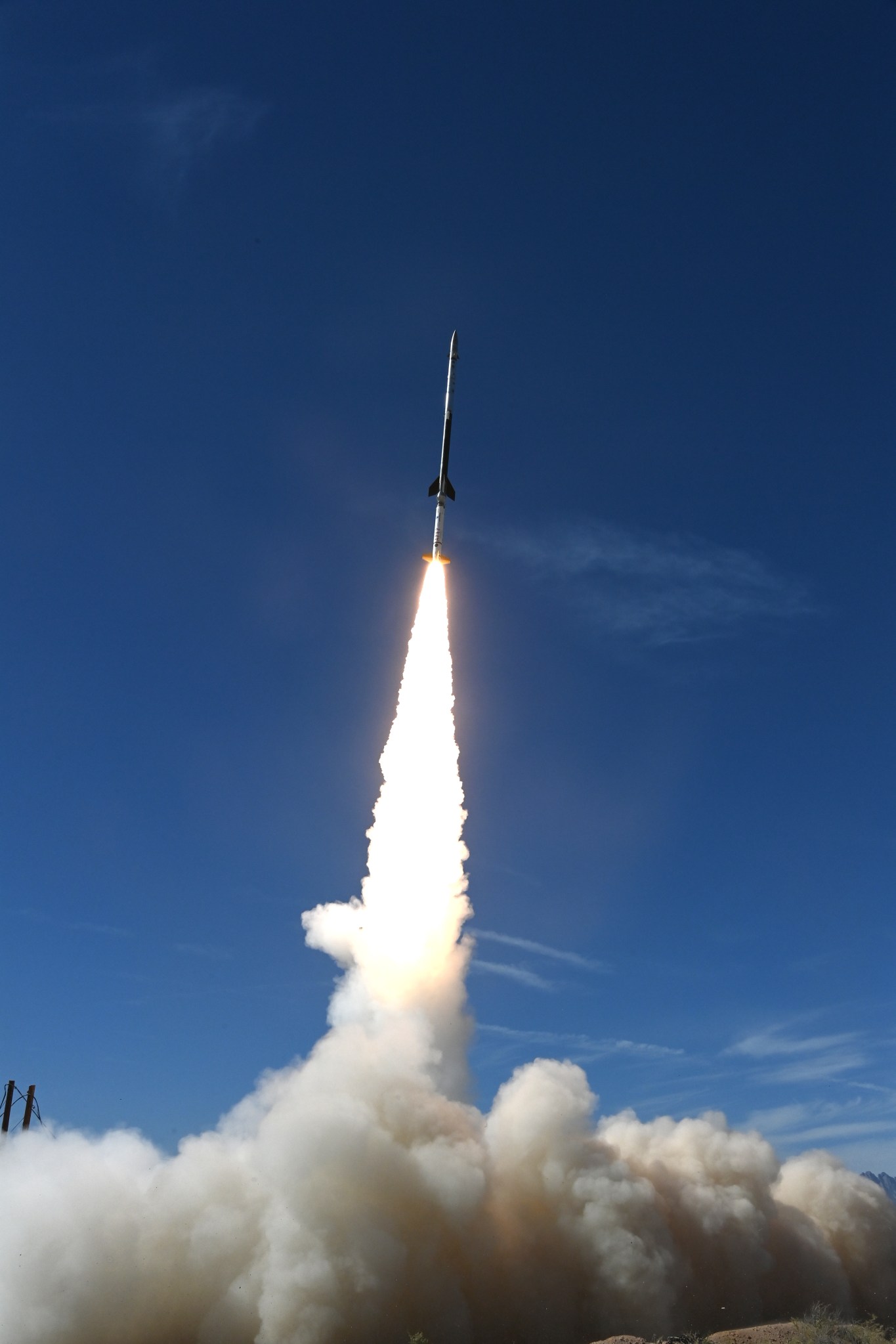
Two sounding rockets are scheduled to launch for the Department of Defense from NASA’s launch range at Wallops Flight Facility in Virginia. The launch window is Nov. 15-17, 2023. No launch times will be provided.

No real-time launch status updates will be available. The launches will not be livestreamed.

The rocket launches are expected to be visible from the Chesapeake Bay region.

Share

Details

Last Updated

Nov 13, 2023

Editor

Amy L. Barra

Contact

Amy L. Barra
amy.l.barra@nasa.gov

Location

Wallops Flight Facility

Powered by WPeMatico

Get The Details…
Amy Barra

Rocket Exhaust on the Moon: NASA Supercomputers Reveal Surface Effects

Rocket Exhaust on the Moon: NASA Supercomputers Reveal Surface Effects

4 min read

Rocket Exhaust on the Moon: NASA Supercomputers Reveal Surface Effects


Researchers at NASA’s Marshall Space Flight Center in Huntsville, Alabama produced a simulation of the Apollo 12 lander engine plumes interacting with the lunar surface. This animation depicts the last half-minute of descent before engine cut-off, showing the predicted forces exerted by plumes on a flat computational surface. Known as shear stress, this is the amount of lateral, or sideways, force applied over a set area, and it is the leading cause of erosion as fluids flow across a surface. Here, the fluctuating radial patterns show the intensity of predicted shear stress. Lower shear stress is dark purple, and higher shear stress is yellow.
Credits: Patrick Moran, NASA Ames Research Center/Andrew Weaver, NASA Marshall Space Flight Center

Through Artemis, NASA plans to explore more of the Moon than ever before with human and robotic missions on the lunar surface. Because future landers will be larger and equipped with more powerful engines than the Apollo landers, mission risks associated with their operation during landing and liftoff is significantly greater. With the agency’s goal to establish a sustained human presence on the Moon, mission planners must understand how future landers interact with the lunar surface as they touch down in unexplored moonscapes.

Landing on the Moon is tricky. When missions fly crew and payloads to the lunar surface, spacecraft control their descent by firing rocket engines to counteract the Moon’s gravitational pull. This happens in an extreme environment that’s hard to replicate and test on Earth, namely, a combination of low gravity, no atmosphere, and the unique properties of lunar regolith – the layer of fine, loose dust and rock on the Moon’s surface.

Each time a spacecraft lands or lifts off, its engines blast supersonic plumes of hot gas toward the surface and the intense forces kick up dust and eject rocks or other debris at high speeds. This can cause hazards like visual obstructions and dust clouds that can interfere with navigation and science instrumentation ­or cause damage to the lander and other nearby hardware and structures. Additionally, the plumes can erode the surface under the lander. Although craters were not formed for Apollo-scale landers, it is unknown how much the larger landers being planned for upcoming Artemis missions will erode the surface and whether they will rapidly cause cratering in the landing zone, posing a risk to the lander’s stability and astronauts aboard. 

To improve its understanding of plume-surface interactions (PSI), researchers at NASA’s Marshall Space Flight Center in Huntsville, Alabama, have developed new software tools to predict PSI environments for NASA projects and missions, including the Human Landing SystemCommercial Lunar Payload Services initiative, and future Mars landers. These tools are already being used to predict cratering and visual obscuration on upcoming lunar missions and are helping NASA minimize risks to spacecraft and crew during future landed missions.

The team at NASA Marshall recently produced a simulation of the Apollo 12 lander engine plumes interacting with the surface and the predicted erosion that closely matched what happened during landing. This animation depicts the last half-minute of descent before engine cut-off, showing the predicted forces exerted by plumes on a flat computational surface. Known as shear stress, this is the amount of lateral, or sideways, force applied over a set area, and it is the leading cause of erosion as fluids flow across a surface. Here, the fluctuating radial patterns show the intensity of predicted shear stress. Lower shear stress is dark purple, and higher shear stress is yellow. 

These simulations were run on the Pleaides supercomputer at the NASA Advanced Supercomputing facility at NASA’s Ames Research Center in California’s Silicon Valley over several weeks of runtime, generating terabytes of data. 

NASA is showcasing 42 of the agency’s computational achievements at SC23, the international supercomputing conference, Nov. 12-17, 2023, in Denver, Colorado. For more technical information, visit: 

https://www.nas.nasa.gov/sc23.

Used for this research, the framework for the Descent Interpolated Gas Granular Erosion Model (DIGGEM) was funded through NASA’s Small Business Innovation Research program within NASA’s Space Technology Mission Directorate (STMD) in Washington, and by the Stereo Cameras for Lunar Plume Surface Studiesproject that is managed by NASA’s Langley Research Center Hampton, Virginia also funded by STMD. The Loci/CHEM+DIGGEM code was further refined through direct support for flight projects within the Human Landing System program funded by NASA’s Exploration Systems Development Mission Directorate (ESDMD) in Washington as well as the Strategy and Architecture Office in ESDMD.

For news media:

Members of the news media interested in covering this topic should reach out to the NASA Ames newsroom.

Share

Details

Last Updated

Nov 14, 2023

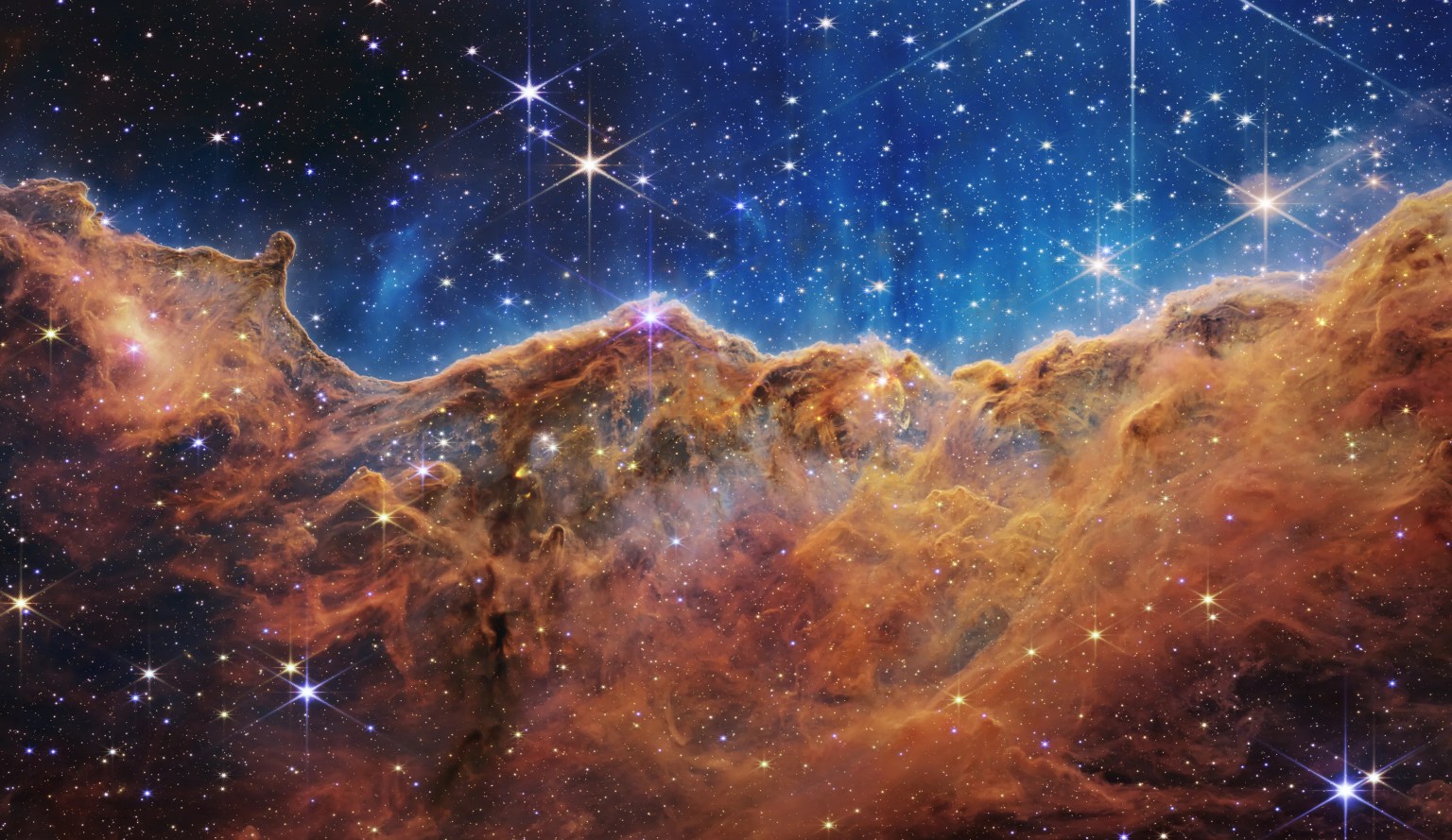
This landscape of “mountains” and “valleys” speckled with glittering stars is actually the edge of a nearby, young, star-forming region called NGC 3324 in the Carina Nebula. Captured in infrared light by NASA’s new James Webb Space Telescope, this image reveals for the first time previously invisible areas of star birth.
NASA, ESA, CSA, and STScI

Powered by WPeMatico

Get The Details…
Gianine Figliozzi