NASA Awards Environmental Restoration, Compliance Contract

NASA Awards Environmental Restoration, Compliance Contract

NASA meatball logo

NASA has selected five companies to provide environmental restoration and compliance services at NASA centers, facilities, and other agency assets. The awardees are:

  • AECOM Technical Services, Inc., Orlando, Florida
  • HydroGeoLogic, Inc., Reston, Virginia
  • ISMS-Navarro LLC, Richland, Washington
  • Jacobs Geosyntec A Joint Venture, Cape Canaveral, Florida
  • Tetra Tech Inc., Pittsburgh

The NASA Environmental Restoration and Compliance Contract is an indefinite- delivery/indefinite-quantity fixed price contract not to exceed $375 million. The performance period begins Wednesday and runs through Jan. 30, 2029. 

The array of work includes support for environmental compliance activities including technical consultation, environmental sampling and investigations of contaminants that may have been released to the environment, as well as human health and ecological risk assessments. The contract also supports sustainability, pollution prevention, recycling, remediation, and long-term management of affected air, soil, groundwater and surface water, audits and inspections, hazardous materials management, spill clean-up, and more.

For more information about NASA and its programs, visit:

https://www.nasa.gov/

-end-

Roxana Bardan
Headquarters, Washington
202-358-1600
roxana.bardan@nasa.gov

Patti Bielling
Kennedy Space Center, Florida
321-501-7575
patricia.a.bielling@nasa.gov

Powered by WPeMatico

Get The Details…
Abbey A. Donaldson

NASA Shares Assignments for its SpaceX Crew-9 Space Station Mission

NASA Shares Assignments for its SpaceX Crew-9 Space Station Mission

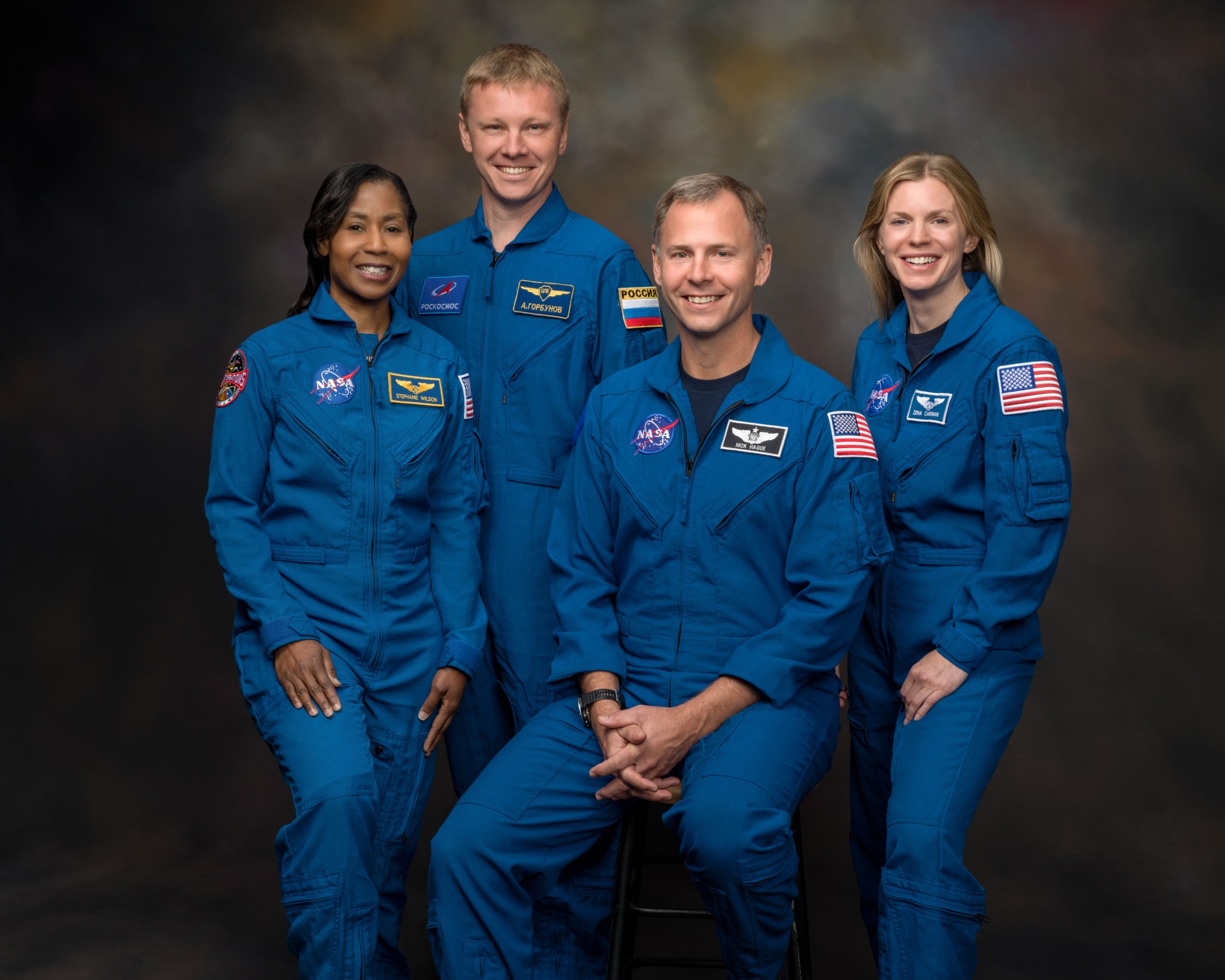
Official NASA’s SpaceX Crew-9 portraits with Zena Cardman, Nick Hague, Stephanie Wilson and Aleksandr Gorbunov
NASA

As part of NASA’s SpaceX Crew-9 mission, four crew members are preparing to launch to the International Space Station and conduct a wide-ranging set of operational and research activities for the benefit of all.

Launching aboard the Dragon spacecraft, NASA astronauts Commander Zena Cardman, Pilot Nick Hague, and Mission Specialist Stephanie Wilson, and Roscosmos cosmonaut Mission Specialist Aleksandr Gorbunov, will join Expedition 71 and 72 crew members no earlier than August. They will arrive to the space station for a short duration handover with NASA’s SpaceX Crew-8 mission

This will be the first spaceflight for Cardman, who was selected as a NASA astronaut in 2017. The Williamsburg, Virginia, native holds a bachelor’s degree in Biology and a master’s in Marine Sciences from the University of North Carolina at Chapel Hill. At time of selection, she was a doctoral candidate in geosciences. Cardman’s research focused on geobiology and geochemical cycling in subsurface environments, from caves to deep sea sediments. Since completing initial training, Cardman has supported real-time station operations and development for lunar surface exploration.

With a total of 203 days in space, this will be Hague’s third launch and second mission to the orbiting laboratory. During his first launch in 2018, Hague and his crewmate, Roscosmos cosmonaut Alexey Ovchinin, experienced a rocket booster failure resulting in an in-flight launch abort. The Soyuz MS-10 spacecraft landed safely. Five months later, Hague launched aboard Soyuz MS-12 and served as a flight engineer aboard the space station during Expeditions 59 and 60. Hague and his crewmates participated in hundreds of experiments in biology, biotechnology, physical science, and Earth science. Hague conducted three spacewalks, to upgrade space station power systems and install a docking adapter for commercial spacecraft. As an active-duty colonel in the U.S. Space Force, Hague completed a developmental rotation at the Defense Department in Washington, where he served as the USSF director of test and evaluation from 2020 to 2022. In August 2022, Hague resumed duties at NASA working on the Boeing Starliner Program until this flight assignment.

A veteran of three spaceflights, STS-121, STS-120, and STS-131, Wilson has spent 42 days in space aboard three separate space shuttle Discovery missions. Before her selection as a NASA astronaut in 1996, she earned her bachelor’s degree in Engineering Science from Harvard University in Cambridge, Massachusetts, a master’s degree in Aerospace Engineering from the University of Texas in Austin, and worked at Martin Marietta and NASA’s Jet Propulsion Laboratory in Southern California. During her first mission, STS-121 in November 2004, she and her crewmates spent 13 days in orbit. Wilson served as the robotic arm operator for spacecraft inspection, for the installation of the “Leonardo” Multi-Purpose Logistics Module, and for spacewalk support. In November 2006, Wilson and her STS-120 crewmates aboard Discovery delivered the Harmony module to the station and relocated a solar array. In May 2009, Wilson and her STS-131 crewmates completed another mission to resupply the station, delivering a new ammonia tank for the station cooling system, new crew sleeping quarters, a window observation facility, and a freezer for experiments. During her nearly 30 years with NASA, Wilson served as the integration branch chief for NASA’s Astronaut Office focusing on International Space Station systems and payload operations, and on a nine-month detail, served as the acting chief of NASA’s Program and Project Integration Office at the agency’s Glenn Research Center in Cleveland.

This will be Gorbunov’s first trip to space and the station. Born in Zheleznogorsk, Kursk region, Russia, he studied engineering with qualifications in spacecraft and upper stages from the Moscow Aviation Institute. Gorbunov graduated from the military department with a specialty in operation and repair of aircraft, helicopters, and aircraft engines. Before being selected as a cosmonaut in 2018, he worked as an engineer for Rocket Space Corporation Energia and supported cargo spacecraft launches from the Baikonur cosmodrome.

This is the ninth rotational mission to the space station under NASA’s Commercial Crew Program, which works with the American aerospace industry to meet the goal of safe, reliable, and cost-effective transportation to and from the orbital outpost on American-made rockets and spacecraft launching from American soil.

For more than two decades, humans have lived and worked continuously aboard the International Space Station, advancing scientific knowledge and demonstrating new technologies, making research breakthroughs not possible on Earth. The station is a critical testbed for NASA to understand and overcome the challenges of long-duration spaceflight and to expand commercial opportunities in low Earth orbit. As commercial companies focus on providing human space transportation services and destinations as part of a robust low Earth orbit economy, NASA’s Artemis campaign is underway at the Moon where the agency is preparing for future human exploration of Mars.

Find more information on NASA’s Commercial Crew Program at:

https://www.nasa.gov/commercialcrew

-end-

Joshua Finch
Headquarters, Washington
202-358-1100
joshua.a.finch@nasa.gov

Courtney Beasley
Johnson Space Center, Houston
281-483-5111
courtney.m.beasley@nasa.gov

Powered by WPeMatico

Get The Details…
Roxana Bardan

Cygnus Flies to the International Space Station

Cygnus Flies to the International Space Station

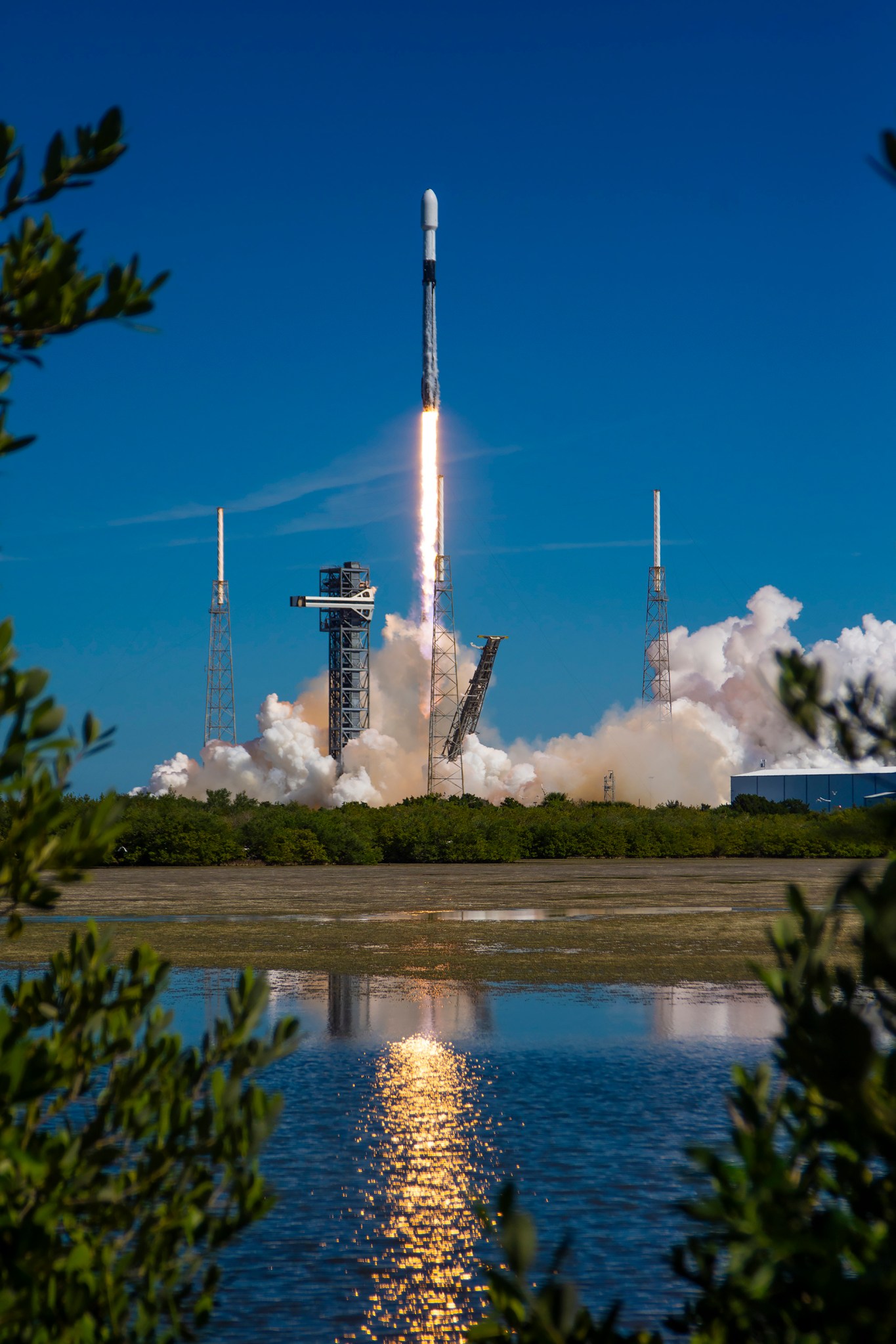
A black and white rocket takes off against the brilliant blue backdrop of the sky. It leaves a trail of fire and billowing clouds of white smoke behind it, which partially obscures some structures around the launchpad. The light reflects on the mirror-like surface of a nearby body of water. The image is delicately framed on the left, right, and bottom by green leaves.
SpaceX

In this image from Jan. 30, 2024, an uncrewed Cygnus cargo spacecraft launches atop a SpaceX Falcon 9 rocket, starting its journey to the International Space Station. Launching from NASA’s Kennedy Space Center in Florida, Cygnus carries 8,200 pounds of science investigations and cargo to support dozens of research experiments. This is Northrop Grumman’s 20th cargo flight to the orbiting laboratory.

Watch NASA+ for live coverage of Cygnus’s approach to the space station on Feb. 1, 2024, beginning at 2:45 a.m. EST.

Image Credit: SpaceX

Powered by WPeMatico

Get The Details…
Monika Luabeya

NASA Sets Coverage for Ocean, Atmosphere, Climate Mission

NASA Sets Coverage for Ocean, Atmosphere, Climate Mission

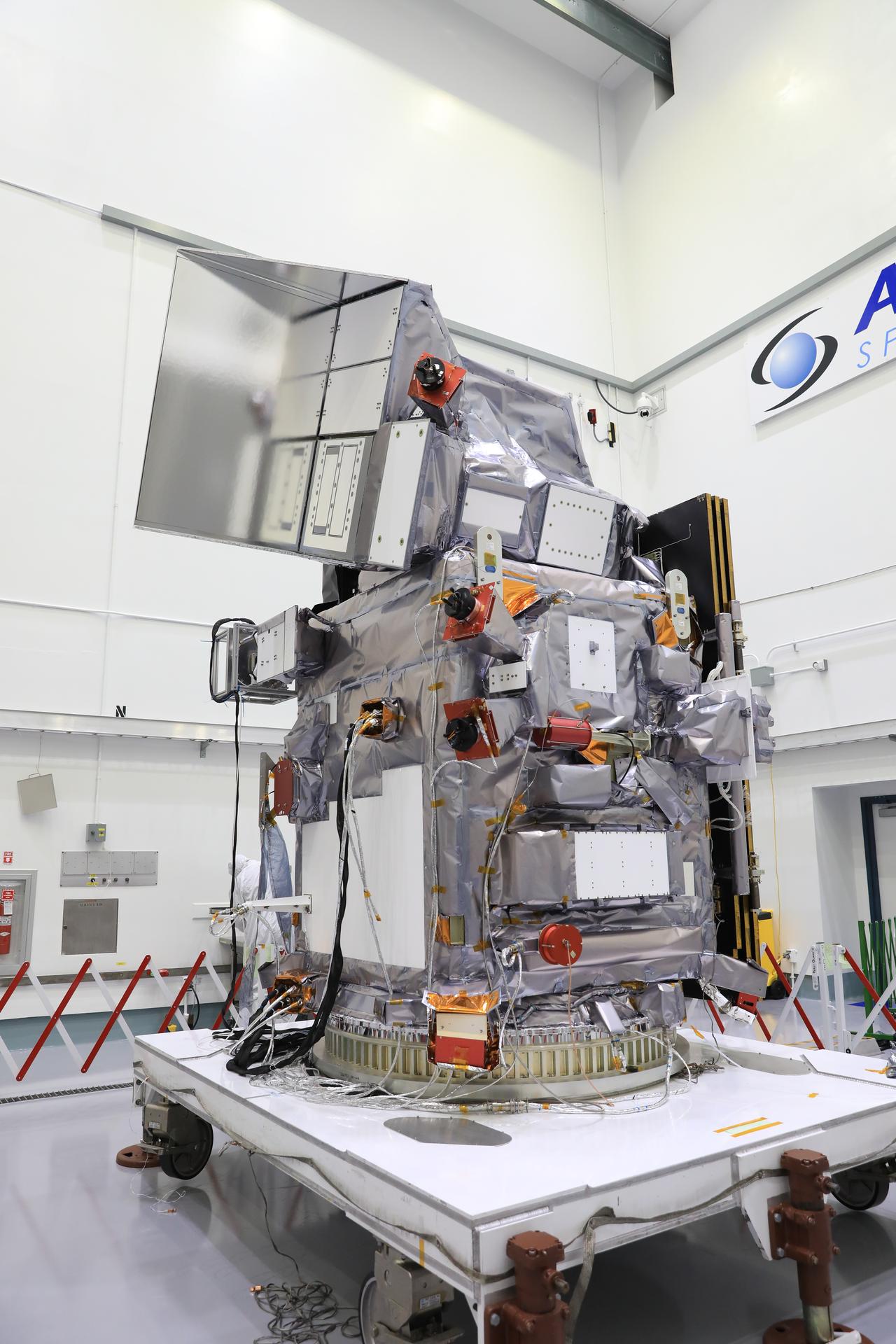
NASA’s Plankton, Aerosol, Cloud, ocean Ecosystem (PACE) observatory is inspected and processed on a spacecraft dolly in a high bay at the Astrotech Space Operations Facility near the agency’s Kennedy Space Center in Florida on Monday, Dec. 4, 2023.
NASA/Kim Shiflett

Editor’s note: This advisory was updated on Jan. 31, 2024, to update participant names in the science briefing.

NASA will provide coverage of the upcoming prelaunch and launch activities for its upcoming mission to study how our oceans and atmosphere interact in a changing climate.

Launch of the PACE (Plankton, Aerosol, Cloud, ocean Ecosystem) mission is targeted for 1:33 a.m. EST, Tuesday, Feb. 6, on a SpaceX Falcon 9 rocket from Space Launch Complex 40 at Cape Canaveral Space Force Station in Florida.

Once in orbit above Earth, PACE will shed light on the impact of tiny things – microscopic life in water and microscopic particles in the air.

Live launch coverage will begin at 12:45 a.m., Feb. 6, on NASA+, NASA Television, and the agency’s website. Full coverage of this mission including prelaunch activities is as follows (all times Eastern):

Sunday, Feb. 4

9:15 a.m. – NASA Social Panel livestream at NASA Kennedy. Watch live on YouTube, Facebook and X social media channels with the following NASA participants answering #AskNASA questions:

  • Karen St. Germain, director, Earth Science Division
  • Marjorie Haskell, PACE program executive
  • Laura Lorenzoni, PACE program scientist
  • Ivona Cetinic, PACE ocean scientist
  • Juli Lander, PACE deputy project manager

11 a.m. – PACE Science Briefing on NASA+ with the following agency participants:

  • Kate Calvin, chief scientist and senior climate advisor
  • Karen St. Germain, director, Earth Science Division
  • Jeremy Werdell, PACE project scientist
  • Andy Sayer, atmospheric scientist, Sciences and Exploration Directorate
  • Natasha Sadoff, Satellite Needs Program Manager

Media may request the news conference dial-in number and passcode by contacting the Kennedy newsroom no later than 4 p.m., Friday, Feb. 2, at ksc-newsroom@mail.nasa.gov. Members of the public also may ask questions, which may be answered in real time during the segment, by using #AskNASA on social media. On-site media may attend the briefing in person or via telephone.

12 p.m. – Immediately after the science briefing, the following NASA subject matter experts will be available for one-on-one media interviews at the Kennedy News Center on a first come, first-served basis.

  • Nicola Fox, associate administrator, Science Mission Directorate
  • Karen St. Germain, director, Earth Science Division
  • Kate Calvin, chief scientist and senior climate advisor
  • Jeremy Werdell, PACE project scientist
  • Andy Sayer, atmospheric scientist, Sciences and Exploration Directorate
  • Erin Urquhart, program manager, Water Resources Application Area
  • Mark Voyton, PACE project manager
  • Juli Lander, PACE deputy project manager
  • Gary Davis, PACE mission systems engineer

Monday, Feb. 5

8 a.m. – NASA EDGE will host the PACE rollout show. The rollout show will air live on NASA+, NASA TV, and YouTube.

9 a.m. – PACE Prelaunch News Conference on NASA+ and NASA TV with the following participants:

  • NASA Associate Administrator Jim Free
  • Karen St. Germain, director, Earth Science Division, NASA
  • Tim Dunn, senior launch director, Launch Services Program, NASA
  • Julianna Scheiman, director, Civil Satellite Missions, SpaceX
  • Brian Cizek, launch weather officer, 45th Weather Squadron, U.S. Space Force

Media may request the news conference dial-in number and passcode by contacting the Kennedy newsroom no later than 4 p.m., Friday, Feb. 2, at ksc-newsroom@mail.nasa.gov. Members of the public also may ask questions by using #AskNASA on social media. On-site media may attend the briefing in person or via telephone.

Tuesday, Feb. 6

12:45 a.m. – Technical feed begins on NASA TV media channel.

12:45 a.m. – Live launch coverage will begin on NASA+ and NASA TV public channel.

For NASA TV downlink information, schedules, and links to streaming video, visit:

https://nasa.gov/nasatv

The deadline has passed for media accreditation for in-person coverage of this launch. The agency’s media accreditation policy is available online. More information about media accreditation is available by emailing: ksc-media-accreditat@mail.nasa.gov. For all other questions, contact the newsroom at NASA’s Kennedy Space Center in Florida at 321-867-2468.

NASA Website Launch Coverage

Launch day coverage of NASA’s PACE mission will be available on the agency’s website. Coverage will include blog updates as well. Streaming video and photos of the launch will be available shortly after liftoff. Images of PACE’s processing and launch are available in this album.

Follow mission coverage on the PACE launch blog at:

https://blogs.nasa.gov/pace/

Audio Only Coverage

Audio only of the news conferences and launch coverage will be carried on the NASA “V” circuits, which may be accessed by dialing 321-867-1220, -1240, or -7135. On launch day, “mission audio,” countdown activities without NASA TV launch commentary, will be carried on 321-867-7135. A “tech feed” of the launch without NASA TV commentary will be carried on the NASA TV media channel.

Attend Launch Virtually

Members of the public can register to attend the PACE launch virtually. NASA’s virtual guest program for this mission includes curated launch resources, notifications about related opportunities or changes, and a stamp for the NASA virtual guest passport following a successful launch.

Watch, Engage Online

Let people know you’re following NASA’s PACE mission. On Facebook, Instagram, and X, use the hashtag #KeepingPACE and #AskNASA. You also can stay connected by following and tagging these accounts:

Facebook: NASA, NASAKennedy, NASAGoddard, NASAEarth, NASALSP

Instagram: @NASA, @NASAKennedy, @NASAEarth

X: @NASA, @NASAKennedy, @NASASocial, @NASAGoddard, @NASAEarth, @NASA_LSP

The PACE project is managed by NASA’s Goddard Space Flight Center in Greenbelt, Maryland. The agency’s Launch Services Program, based at NASA Kennedy, is responsible for managing the launch service for the PACE mission.

For more information about PACE, visit:

https://science.nasa.gov/mission/pace/

-end-

Karen Fox
NASA Headquarters, Washington
202-358-1600
karen.c.fox@nasa.gov

Jake Richmond
Goddard Space Flight Center, Greenbelt, Md.
240-713-1618
jacob.a.richmond@nasa.gov

Laura Aguiar
Kennedy Space Center, Florida
321-593-6245
laura.aguiar@nasa.gov

Share

Details

Last Updated

Jan 31, 2024

Related Terms

Powered by WPeMatico

Get The Details…
Abbey A. Donaldson