


NASA’s Water-Hunting Tool Will Help Scout Moon’s South Pole
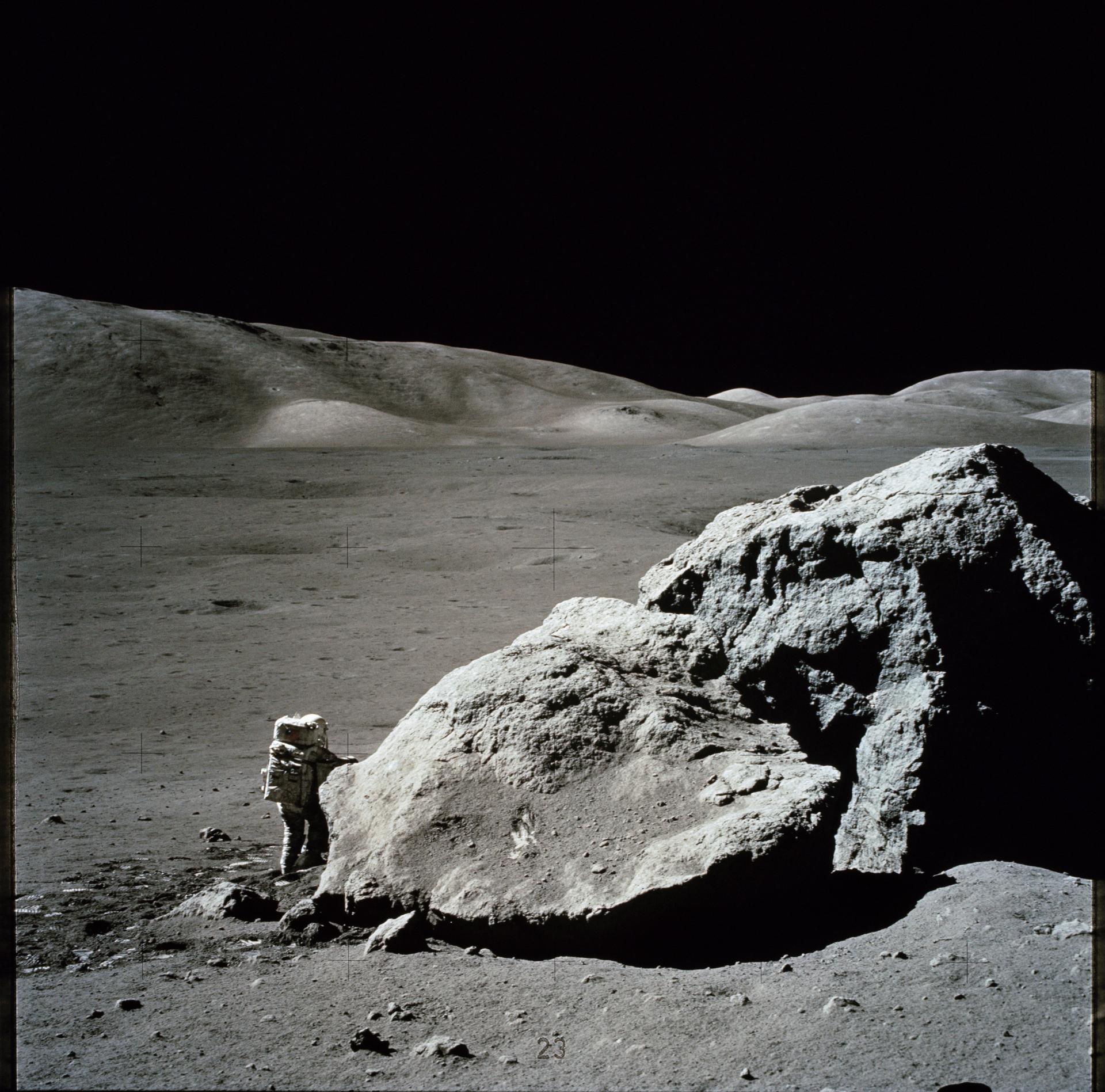
NASA is joining international partners to hunt for ice on the Moon in support of future human exploration. The agency is providing a water-detecting instrument, the Neutron Spectrometer System (NSS), to the Lunar Polar Exploration (LUPEX) mission led by JAXA (Japan Aerospace Exploration Agency) and ISRO (Indian Space Research Organisation).
The instrument, which detects ice under the lunar surface, will be installed on LUPEX’s lunar rover planned to arrive at the Moon no earlier than 2028. NASA’s support of LUPEX is part of an ongoing effort to identify and characterize lunar water and other materials that easily evaporate near the Moon’s South Pole.
Water is a critical material for NASA’s plans to develop an enduring presence on the Moon. Instead of relying solely on resources carried from Earth, astronauts could use the Moon’s water for breathable air, rocket fuel, and more. The first step is to find deposits of meaningful quantities of water close to the surface to mark potential landing areas for future astronauts. The water on the Moon is mostly found as molecules within lunar regolith, the dusty and rocky material that covers the Moon’s surface, but there may be ice deposits below the surface of the lunar South Pole. Once we better understand the quantity and quality of the available resources, we can learn how to harness it for exploration.
“There is currently a gap in our understanding of how lunar ice is distributed at small scales, from 10s of centimeters up to 10s of kilometers,” said Rick Elphic, NSS lead at NASA’s Ames Research Center in California’s Silicon Valley, where the instrument was developed in collaboration with Lockheed Martin Advanced Technology Center in Palo Alto, California. “The only way to understand the ‘where’ and ‘how much’ of lunar ice is by exploring on the surface at these scales.”
How neutrons signal water
Scientists can search for water on the Moon without drilling into the surface. Instead, they hunt for concentrations of hydrogen, the H in H₂O. Past missions in lunar orbit have found signs of water at the Moon’s poles, but ground missions are needed to build detailed maps of location and quantity.
Instruments like NSS can infer the presence of hydrogen by detecting interactions with particles called neutrons. Neutrons are constantly rattling around in the lunar soil, and they’re about the same size as hydrogen atoms. When these two particles interact, fewer medium-energy neutrons are ejected from the soil. The absence of medium-energy neutrons suggests more of the particles are interacting with hydrogen underground, a deficit that can be measured with the right tools.
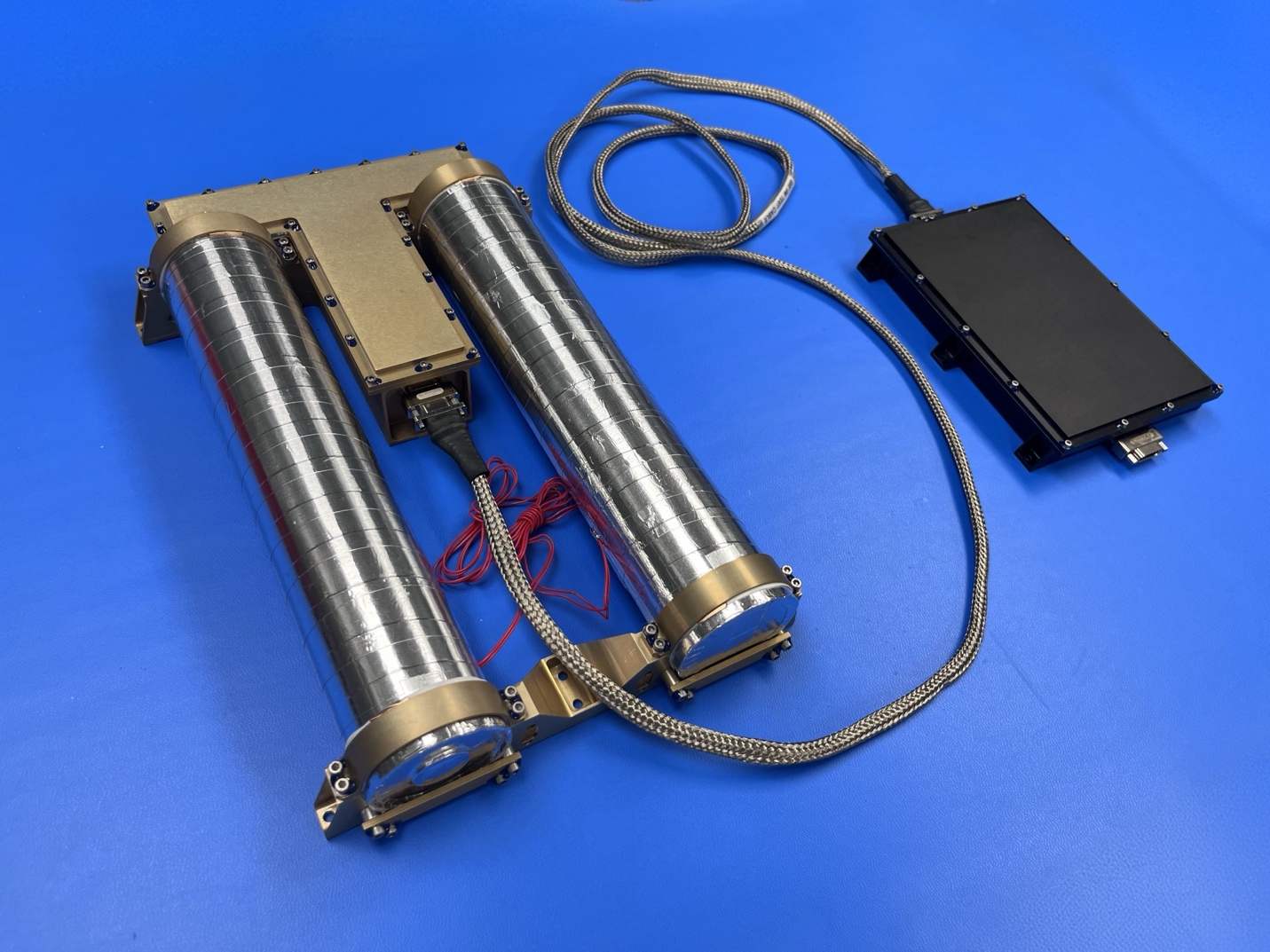
The NSS instrument uses a “gas proportional counter” to detect neutrons bouncing out of the lunar soil. It features two tubes that contain a rare gas called helium-3 that is very sensitive to neutrons. When neutrons strike the helium-3 gas atoms, the gas produces electrical pulses that can be counted to infer the presence and quantity of hydrogen up to three feet underground.
Series of water-hunters
Ongoing investigation of the Moon’s water will inform how astronauts might access it in the future. To that end, NASA researchers at Ames have developed a series of NSS instruments intended to ride aboard different missions to investigate sites at the Moon’s South Pole.
The first Moon-bound NSS instrument in the series was carried aboard Astrobotic’s Peregrine lander, Astrobotic Peregrine Mission One, which launched in January 2024. That mission came to an end without touching down on the lunar surface, but the NSS aboard powered on and operated on multiple days over the course of the 10-day mission. These operations successfully captured data about the particle background of deep space, which strongly supported NSS operations on future missions.
NASA’s VIPER (Volatiles Investigating Polar Exploration Rover) mission, part of the agency’s Artemis campaign, will carry another NSS. As part of NASA’s ongoing Commercial Lunar Payload Services effort, a fourth NSS instrument will ride aboard the MoonRanger “micro rover” developed by Carnegie Mellon University in Pittsburgh.
“The three upcoming NSS rover expeditions will tell us what kinds of places on the Moon are most likely to host ice,” Elphic said. “Missions to the lunar surface can then be planned to similar sites where ice can be found.”
The Neutron Spectrometer System was jointly developed by NASA’s Ames Research Center and Lockheed Martin Advanced Technology Center in Palo Alto, California.
For more information on the science of water on the Moon, visit:
https://science.nasa.gov/moon/moon-water-and-ices
Karen Fox / Molly Wasser
Headquarters, Washington
240-285-5155 / 240-419-1732
karen.c.fox@nasa.gov / molly.l.wasser@nasa.gov
Arezu Sarvestani
Ames Research Center, Silicon Valley
650-613-2334
arezu.sarvestani@nasa.gov
Powered by WPeMatico
Get The Details…
Arezu Sarvestani
