NASA Glenn to Test Air Quality Monitors Aboard Space Station

NASA Glenn to Test Air Quality Monitors Aboard Space Station

Three small air quality monitor machines sit in line on a wooden table. They are small – about the size of a shoe box and smaller – and gray and while in color. The monitors show numbers that indicate how much particulate matter is in the air.
NASA researchers are sending three air quality monitors to the International Space Station to test them for potential future use on the Moon.
Credit: NASA/Sara Lowthian-Hanna

As NASA prepares to return to the Moon, studying astronaut health and safety is a top priority. Scientists monitor and analyze every part of the International Space Station crew’s daily life—down to the air they breathe. These studies are helping NASA prepare for long-term human exploration of the Moon and, eventually, Mars.

As part of this effort, NASA’s Glenn Research Center in Cleveland is sending three air quality monitors to the space station to test them for potential future use on the Moon. The monitors are slated to launch on Monday, April 21, aboard the 32nd SpaceX commercial resupply services mission for NASA.

Like our homes here on Earth, the space station gets dusty from skin flakes, clothing fibers, and personal care products like deodorant. Because the station operates in microgravity, particles do not have an opportunity to settle and instead remain floating in the air. Filters aboard the orbiting laboratory collect these particles to ensure the air remains safe and breathable.

Astronauts will face another air quality risk when they work and live on the Moon—lunar dust.

“From Apollo, we know lunar dust can cause irritation when breathed into the lungs,” said Claire Fortenberry, principal investigator, Exploration Aerosol Monitors project, NASA Glenn. “Earth has weather to naturally smooth dust particles down, but there is no atmosphere on the Moon, so lunar dust particles are sharper and craggier than Earth dust. Lunar dust could potentially impact crew health and damage hardware.”

Future space stations and lunar habitats will need monitors capable of measuring lunar dust to ensure air filtration systems are functioning properly. Fortenberry and her team selected commercially available monitors for flight and ground demonstration to evaluate their performance in a spacecraft environment, with the goal of providing a dust monitor for future exploration systems.

A woman scientist with auburn hair and emerald green button-down shirt stands inside a lab. She holds a jar with blue gloves and looks down at the dust inside. The jar contains an air filter sample from the International Space Station.
NASA Glenn Research Center’s Claire Fortenberry holds a dust sample collected from International Space Station air filters.
Credit: NASA/Sara Lowthian-Hanna

Glenn is sending three commercial monitors to the space station to test onboard air quality for seven months. All three monitors are small: no bigger than a shoe box. Each one measures a specific property that provides a snapshot of the air quality aboard the station. Researchers will analyze the monitors based on weight, functionality, and ability to accurately measure and identify small concentrations of particles in the air.

The research team will receive data from the space station every two weeks. While those monitors are orbiting Earth, Fortenberry will have three matching monitors at Glenn. Engineers will compare functionality and results from the monitors used in space to those on the ground to verify they are working as expected in microgravity. Additional ground testing will involve dust simulants and smoke.

Air quality monitors like the ones NASA is testing also have Earth-based applications. The monitors are used to investigate smoke plumes from wildfires, haze from urban pollution, indoor pollution from activities like cooking and cleaning, and how virus-containing droplets spread within an enclosed space.

Results from the investigation will help NASA evaluate which monitors could accompany astronauts to the Moon and eventually Mars. NASA will allow the manufacturers to review results and ensure the monitors work as efficiently and effectively as possible. Testing aboard the space station could help companies investigate pollution problems here on Earth and pave the way for future missions to the Red Planet.

A woman scientist with auburn hair and emerald green button-down shirt holds stands next to a blue air quality monitor and holds burning incense near it. She wears blue gloves, and the monitor rests on a wooden table.
NASA Glenn Research Center’s Claire Fortenberry demonstrates how space aerosol monitors analyze the quality of the air.
Credit: NASA/Sara Lowthian-Hanna

“Going to the Moon gives us a chance to monitor for planetary dust and the lunar environment,” Fortenberry said. “We can then apply what we learn from lunar exploration to predict how humans can safely explore Mars.”

NASA commercial resupply missions to the International Space Station deliver scientific investigations in the areas of biology and biotechnology, Earth and space science, physical sciences, and technology development and demonstrations. Cargo resupply from U.S. companies ensures a national capability to deliver scientific research to the space station, significantly increasing NASA’s ability to conduct new investigations aboard humanity’s laboratory in space.

Learn more about NASA and SpaceX’s 32nd commercial resupply mission to the space station:

https://www.nasa.gov/nasas-spacex-crs-32/

Powered by WPeMatico

Get The Details…
Kelly M. Matter

Hubble Spots a Squid in the Whale

Hubble Spots a Squid in the Whale

2 min read

Hubble Spots a Squid in the Whale

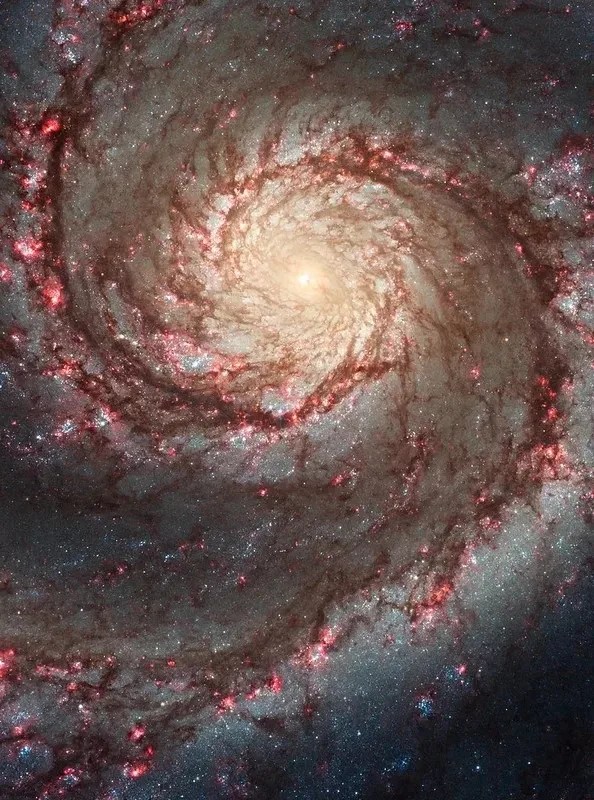
A close-up, face-on view of a spiral galaxy. Its center glows brightly. Spiral arms emerge from the galaxy’s core and wind through the round disk of the galaxy. You can spot these arms by their dark-red dust lanes and dots of brightly-shining, pink spots where stars are forming. Some faint stars are visible around the galaxy, as well as a particularly bright foreground star near the lower-left corner of the image.
This NASA/ESA Hubble Space Telescope image features the spiral galaxy Messier 77, also known as the Squid Galaxy.
ESA/Hubble & NASA, L. C. Ho, D. Thilker

Today’s rather aquatic-themed NASA/ESA Hubble Space Telescope image features the spiral galaxy Messier 77, also known as the Squid Galaxy, which sits 45 million light-years away in the constellation Cetus (The Whale).

The designation Messier 77 comes from the galaxy’s place in the famous catalog compiled by the French astronomer Charles Messier. Another French astronomer, Pierre Méchain, discovered the galaxy in 1780. Both Messier and Méchain were comet hunters who cataloged nebulous objects that could be mistaken for comets.

Messier, Méchain, and other astronomers of their time mistook the Squid Galaxy for either a spiral nebula or a star cluster. This mischaracterization isn’t surprising. More than a century would pass between the discovery of the Squid Galaxy and the realization that the ‘spiral nebulae’ scattered across the sky were not part of our galaxy but were in fact separate galaxies millions of light-years away. The Squid Galaxy’s appearance through a small telescope — an intensely bright center surrounded by a fuzzy cloud — closely resembles one or more stars wreathed in a nebula.

The name ‘Squid Galaxy’ is recent, and stems from the extended, filamentary structure that curls around the galaxy’s disk like the tentacles of a squid. The Squid Galaxy is a great example of how advances in technology and scientific understanding can completely change our perception of an astronomical object — and even what we call it!

Hubble previously released an image of M77 in 2013. This new image incorporates recent observations made with different filters and updated image processing techniques which allow astronomers to see the galaxy in more detail.

Media Contact:

Claire Andreoli (claire.andreoli@nasa.gov)
NASA’s Goddard Space Flight CenterGreenbelt, MD

Powered by WPeMatico

Get The Details…

Origins Uncertain: ‘Skull Hill’ Rock

Origins Uncertain: ‘Skull Hill’ Rock

2 min read

Origins Uncertain: ‘Skull Hill’ Rock

Written by Margaret Deahn, Ph.D. Student at Purdue University

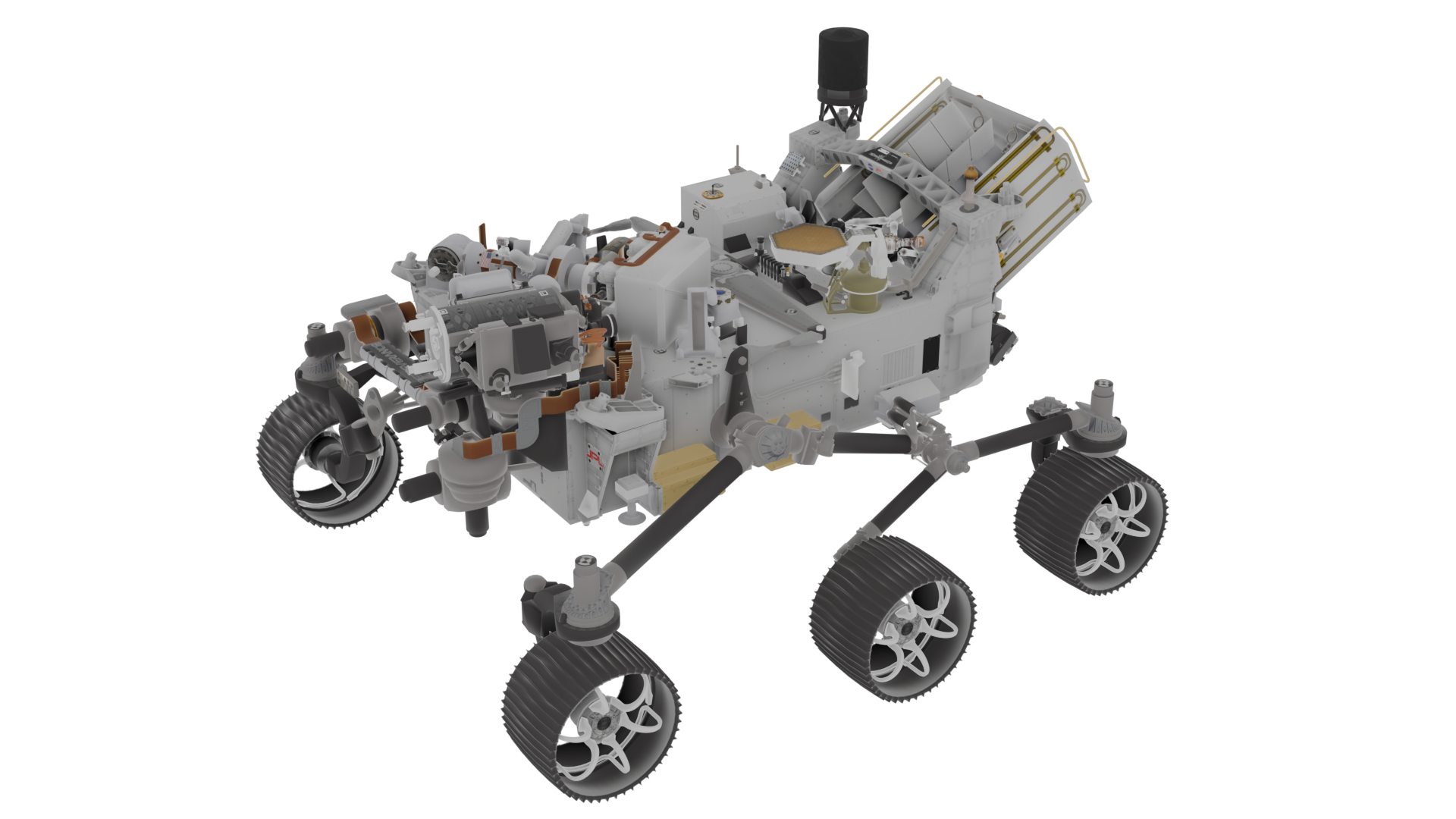
Last week, NASA’s Mars 2020 rover continued its journey down lower ‘Witch Hazel Hill’ on the Jezero crater rim. The rover stopped along a boundary visible from orbit dividing light and dark rock outcrop (also known as a contact) at a site the team has called ‘Port Anson’. In addition to this contact, the rover has encountered a variety of neat rocks that may have originated from elsewhere and transported to their current location, also known as float.

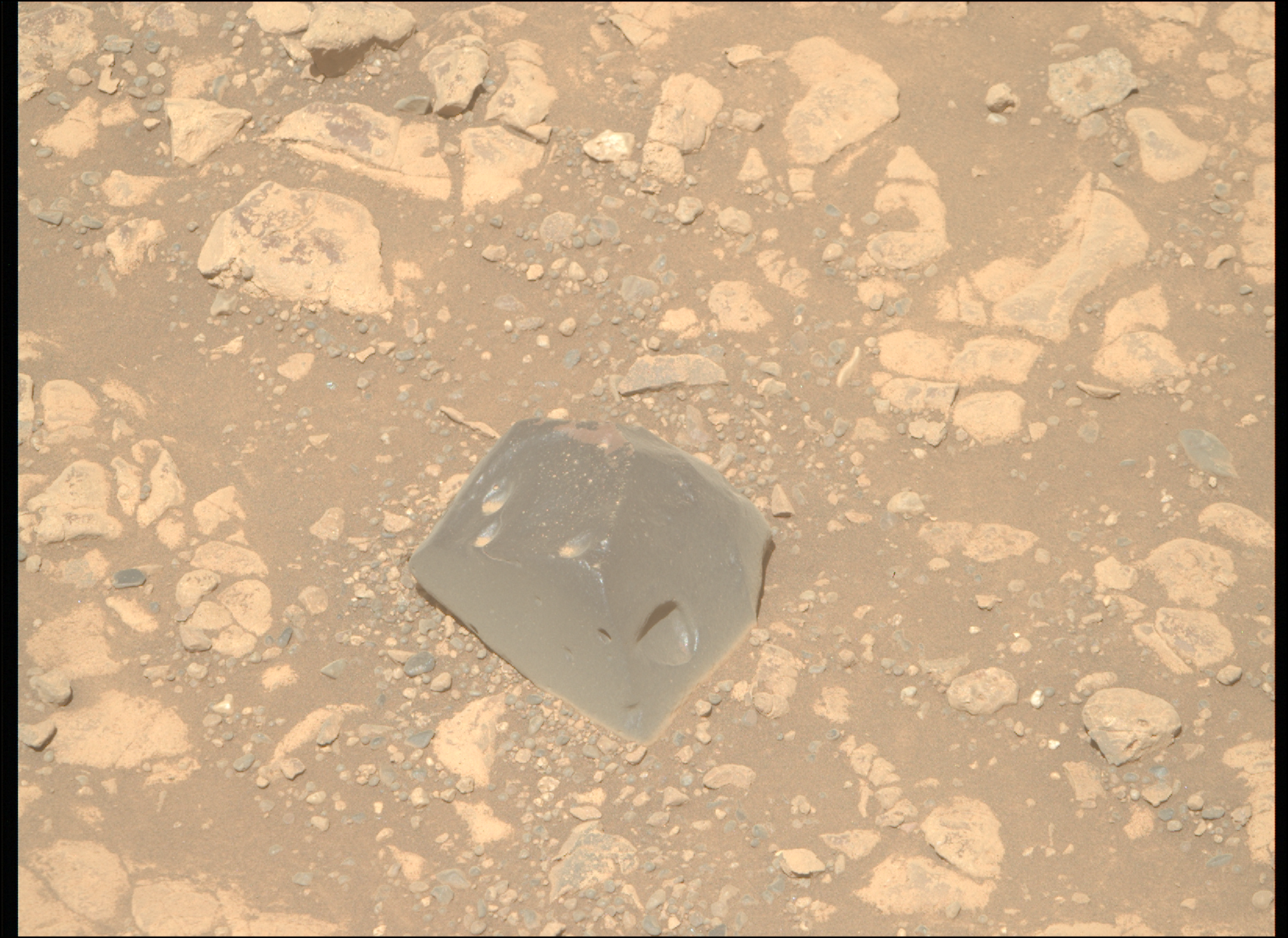
This image from NASA’s Mars Perseverance rover, taken by the Mastcam-Z instrument’s right eye, shows the ‘Skull Hill’ target, a dark-toned float rock.
This image from NASA’s Mars Perseverance rover, taken by the Mastcam-Z instrument’s right eye, shows the ‘Skull Hill’ target, a dark-toned float rock. The rover acquired this image while driving west downslope towards lower ‘Witch Hazel Hill’. Perseverance acquired this image on April 11, 2025, or sol 1472 of the Mars 2020 mission
NASA/JPL-Caltech/ASU

Pictured above is an observation named ‘Skull Hill’ taken by the rover’s Mastcam-Z instrument. This float rock uniquely contrasts the surrounding light-toned outcrop with its dark tone and angular surface, and it features a few pits in the rock. If you look closely, you might even spot spherules within the surrounding regolith! See Alex Jones’ recent blog post for more information on these neat features: https://science.nasa.gov/blog/shocking-spherules/. The pits on Skull Hill may have formed via the erosion of clasts from the rock or scouring by wind. We’ve found a few of these dark-toned floats in the Port Anson region, and the team is working to better understand where these rocks came from and how they got here.

Skull Hill’s dark color is reminiscent of meteorites found in Gale crater by the Curiosity rover: https://www.jpl.nasa.gov/news/curiosity-mars-rover-checks-odd-looking-iron-meteorite/. Chemical composition is an important factor in identifying a meteorite, and Gale’s meteorites contain significant amounts of iron and nickel. However, recent analysis of SuperCam data from nearby similar rocks suggests a composition inconsistent with a meteorite origin. 

Alternatively, ‘Skull Hill’ could be an igneous rock eroded from a nearby outcrop or ejected from an impact crater. On Earth and Mars, iron and magnesium are some of the main contributors to igneous rocks, which form from the cooling of magma or lava. These rocks can include dark-colored minerals such as olivine, pyroxene, amphibole, and biotite. Luckily for us, the rover has instruments that can measure the chemical composition of rocks on Mars. Understanding the composition of these darker-toned floats will help the team to interpret the origin of this unique rock!

Powered by WPeMatico

Get The Details…

NASA Studies Wind Effects and Aircraft Tracking with Joby Aircraft

NASA Studies Wind Effects and Aircraft Tracking with Joby Aircraft

3 min read

Preparations for Next Moonwalk Simulations Underway (and Underwater)

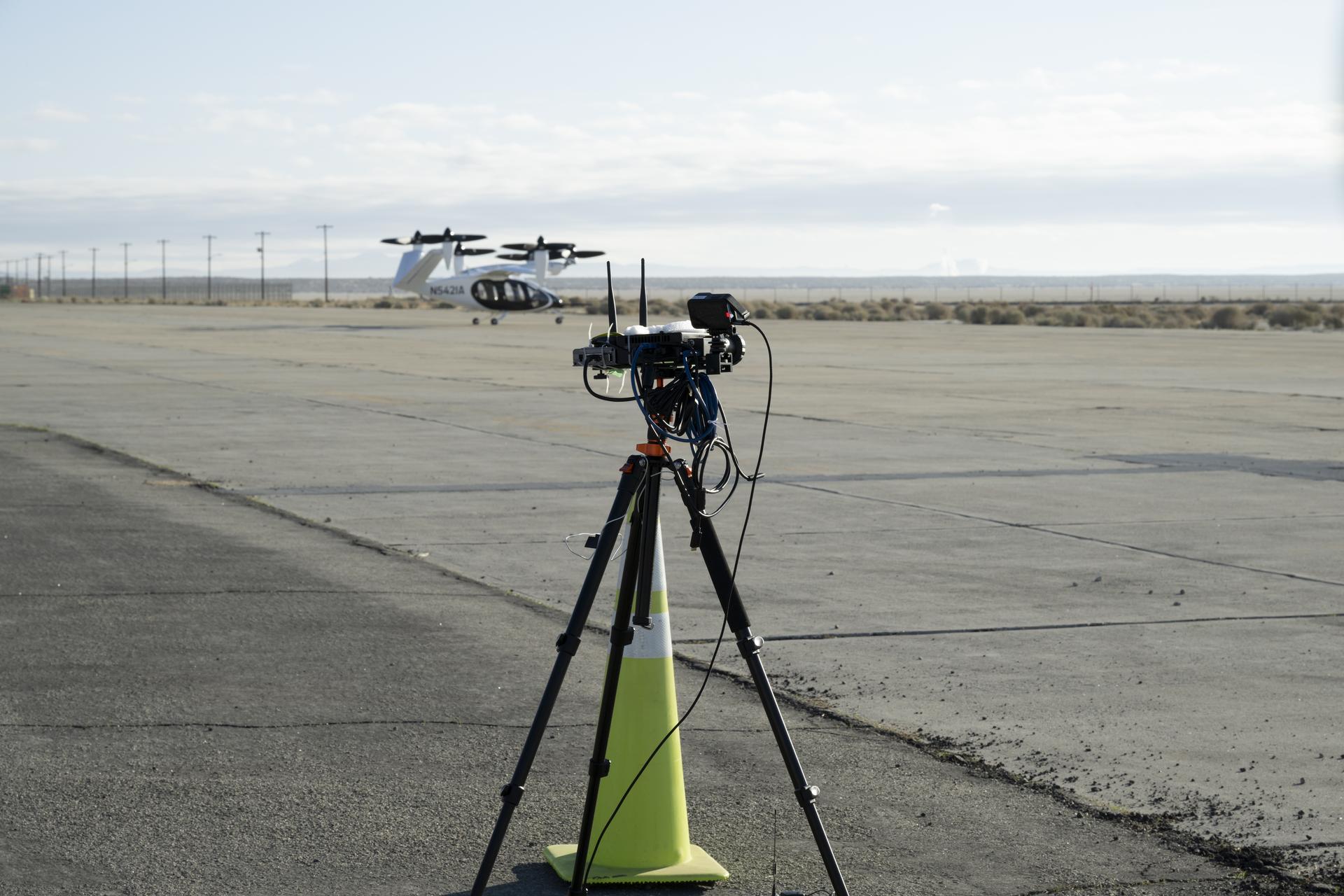
A yellow traffic cone and a black tripod with black testing instruments stands in the foreground on a concrete pad with a desert landscape, power lines, and a black and white aircraft in the background. The aircraft has six black propellors that sit on white arms and connect to the aircraft body, which has black doors and is pod-shaped. The aircraft sits on three small wheels.
One of several NASA distributed sensing ground nodes is set up in the foreground while an experimental air taxi aircraft owned by Joby Aviation sits in the background near NASA’s Armstrong Flight Research Center in Edwards, California, on March 12, 2025. NASA is collecting information during this study to help advance future air taxi flights, especially those occurring in cities, to track aircraft moving through traffic corridors and around landing zones.
NASA/Genaro Vavuris

NASA engineers began using a network of ground sensors in March to collect data from an experimental air taxi to evaluate how to safely integrate such vehicles into airspace above cities – in all kinds of weather.

Researchers will use the campaign to help improve tools to assist with collision avoidance and landing operations and ensure safe and efficient air taxi operations in various weather conditions.

For years, NASA has looked at how wind shaped by terrain, including buildings in urban areas, can affect new types of aircraft. The latest test, which is gathering data from a Joby Aviation demonstrator aircraft, looks at another kind of wind – that which is generated by the aircraft themselves.

Joby flew its air taxi demonstrator over NASA’s ground sensor array near the agency’s Armstrong Flight Research Center in Edwards, California producing air flow data. The Joby aircraft has six rotors that allow for vertical takeoffs and landings, and tilt to provide lift in flight. Researchers focused on the air pushed by the propellers, which rolls into turbulent, circular patterns of wind.

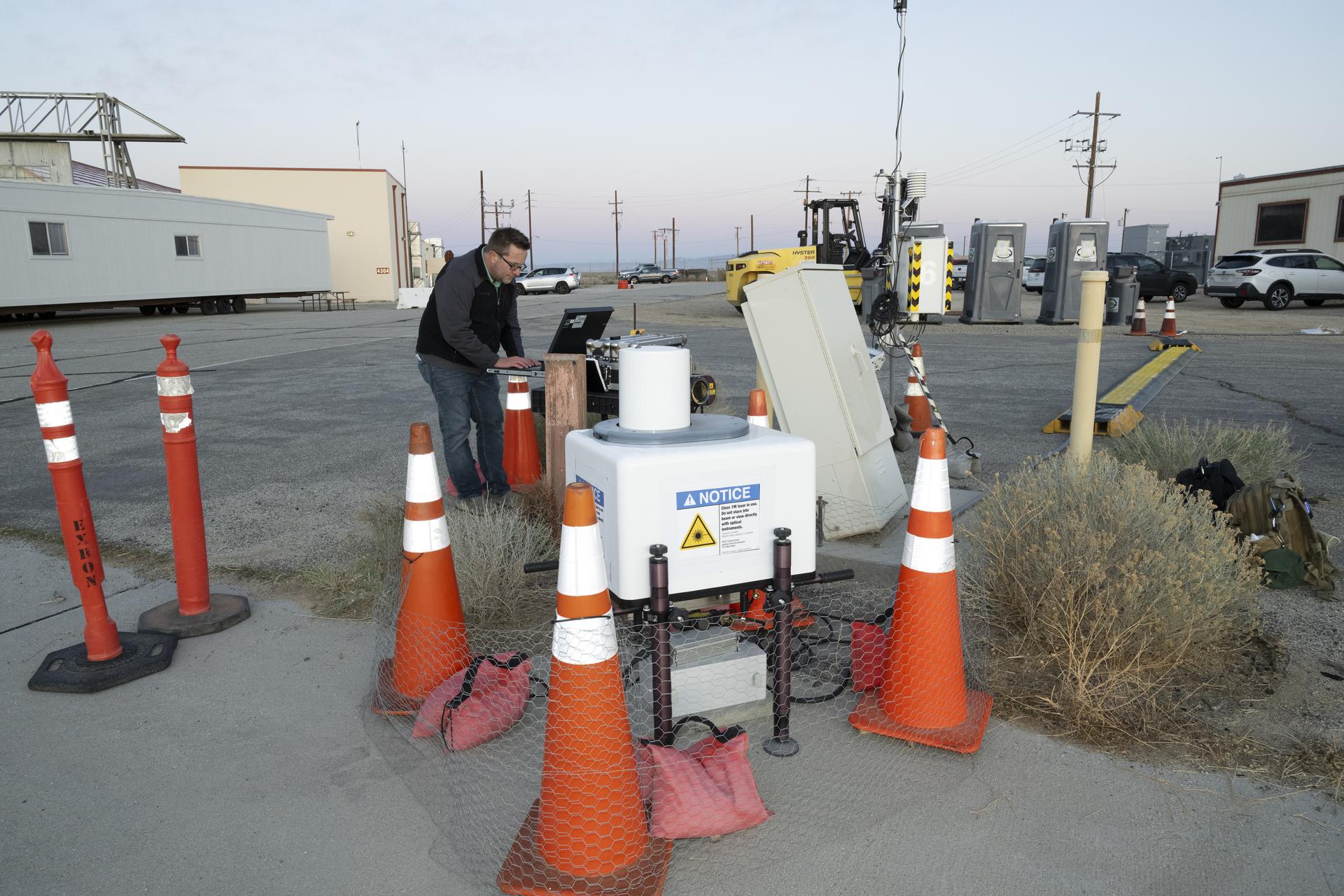
Five orange traffic cones and barriers sit in front of a large white box in the foreground. In the background, a man wearing jeans and a black sweatshirt stands in front of a black laptop. Behind him, there are several cream-colored trailers, other construction equipment, and a few cars.
NASA aeronautical meteorologist Luke Bard adjusts one of several wind lidar (light detection and ranging) sensors near NASA’s Armstrong Flight Research Center in Edwards, California, on March 12, 2025, in preparation to collect data from Joby Aviation’s experimental air taxi aircraft. NASA is collecting information during this study to help advance weather-tolerant air taxi operations for the entire industry
NASA/Genaro Vavuris

This rolling wind can affect the aircraft’s performance, especially when it’s close to the ground, as well as others flying in the vicinity and people on the ground. Such wind turbulence is difficult to measure, so NASA enhanced its sensors with a new type of lidar – a system that uses lasers to measure precise distances – and that can map out the shapes of wind features.

“The design of this new type of aircraft, paired with the NASA lidar technology during this study, warrants a better understanding of possible wind and turbulence effects that can influence safe and efficient flights,” said Grady Koch, lead for this research effort, from NASA’s Langley Research Center in Hampton, Virginia.

Data to Improve Aircraft Tracking

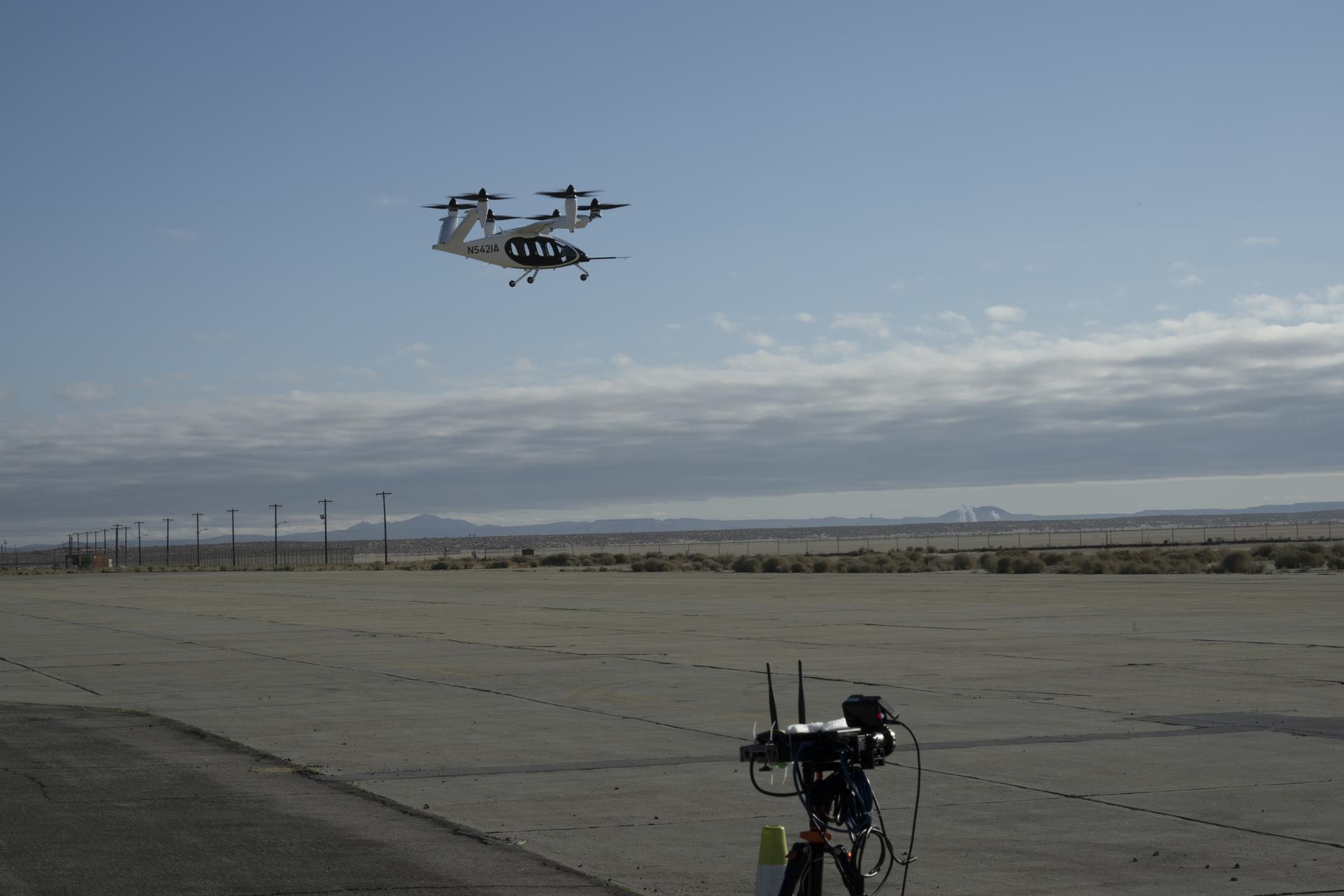
NASA also set up a second array of ground nodes including radar, cameras, and microphones in the same location as the sensors to provide additional data on the aircraft. These nodes will collect tracking data during routine flights for several months.

The agency will use the data gathered from these ground nodes to demonstrate the tracking capabilities and functions of its “distributed sensing” technology, which involves embedding multiple sensors in an area where aircraft are operating.

The top of a black tripod with black testing instruments stands in the foreground on a concrete pad with a desert landscape and power lines in the background. A black and white aircraft is in the sky above in the background with blue sky and clouds behind as the aircraft hovers. The aircraft has six black propellors that sit on white arms and connect to the aircraft body, which has black doors and is pod-shaped. The aircraft sits on three small wheels.
One of multiple NASA distributed sensing ground nodes is set up in the foreground while an experimental air taxi aircraft owned by Joby Aviation hovers in the background near NASA’s Armstrong Flight Research Center in Edwards, California, on March 12, 2025. NASA is collecting information during this study to help advance future air taxi flights, especially those occurring in cities, to track aircraft moving through traffic corridors and around landing zones.
NASA/Genaro Vavuris

This technology will be important for future air taxi flights, especially those occurring in cities by tracking aircraft moving through traffic corridors and around landing zones. Distributed sensing has the potential to enhance collision avoidance systems, air traffic management, ground-based landing sensors, and more.

“Our early work on a distributed network of sensors, and through this study, gives us the opportunity to test new technologies that can someday assist in airspace monitoring and collision avoidance above cities,” said George Gorospe, lead for this effort from NASA’s Ames Research Center in California’s Silicon Valley.

Using this data from an experimental air taxi aircraft, NASA will further develop the technology needed to help create safer air taxi flights in high-traffic areas. Both of these efforts will benefit the companies working to bring air taxis and drones safely into the airspace.

The work is led by NASA’s Transformational Tools and Technologies and Convergent Aeronautics Solutions projects under the Transformative Aeronautics Concepts program in support of NASA’s Advanced Air Mobility mission. NASA’s Advanced Air Mobility mission seeks to deliver data to guide the industry’s development of electric air taxis and drones.

Powered by WPeMatico

Get The Details…
Dede Dinius

NASA Astronaut to Answer Questions from Colorado Students

NASA Astronaut to Answer Questions from Colorado Students

NASA astronaut Nichole Ayers is seen in the International Space Station's Destiny Laboratory as she works at the controls of the robotics workstation.
NASA astronaut Nichole Ayers works at the controls of the robotics workstation in the International Space Station’s Destiny Laboratory.
Credit: NASA

Students from Woodland Park, Colorado, will connect with NASA astronaut Nichole Ayers as she answers prerecorded science, technology, engineering, and mathematics-related questions from aboard the International Space Station.

Watch the 20-minute space-to-Earth call at 11:55 a.m. EDT on Monday, April 21, on the NASA STEM YouTube Channel.

The event, hosted by Woodland Park High School, also is open to students from Woodland Park Middle School. The Colorado high school wants to show students that even though they reside in a small town, they can achieve big dreams. Ayers, who considers Colorado Springs and Divide, Colorado, home, is a graduate of Woodland Park.

Media interested in covering the event must RSVP by 5 p.m., Friday, April 18 to Lindsey Prahl at lprah@wpsdk12.org or 719-922-1019.

For more than 24 years, astronauts have continuously lived and worked aboard the space station, testing technologies, performing science, and developing skills needed to explore farther from Earth. Astronauts aboard the orbiting laboratory communicate with NASA’s Mission Control Center in Houston 24 hours a day through SCaN’s (Space Communications and Navigation) Near Space Network.

Important research and technology investigations taking place aboard the space station benefit people on Earth and lays the groundwork for other agency missions. As part of NASA’s Artemis campaign, the agency will send astronauts to the Moon to prepare for future human exploration of Mars; inspiring Artemis Generation explorers and ensuring the United States continues to lead in space exploration and discovery.

See videos and lesson plans highlighting space station research at:

https://www.nasa.gov/stemonstation

-end-

Tiernan Doyle
Headquarters, Washington
202-358-1600
tiernan.doyle@nasa.gov  

Sandra Jones
Johnson Space Center, Houston
281-483-5111
sandra.p.jones@nasa.gov

Powered by WPeMatico

Get The Details…
Tiernan P. Doyle