Dragon Splashes Down in Pacific Ocean Packed With Science and Cargo

Dragon Splashes Down in Pacific Ocean Packed With Science and Cargo

The SpaceX Dragon resupply ship is pictured above the Canadian Rocky Mountains
The SpaceX Dragon resupply ship is pictured above the Canadian Rocky Mountains after it departed the International Space Station today. Credit: @Astro_Christina

SpaceX’s Dragon cargo spacecraft splashed down in the Pacific Ocean at 4:21 p.m. EDT (1:21 p.m PDT), approximately 300 miles southwest of Long Beach, California, marking the end of the company’s 18th contracted cargo resupply mission to the International Space Station for NASA. The spacecraft returned more than 2,700 pounds of valuable scientific experiments and other cargo.

Some of the scientific investigations Dragon will return to Earth include:

Bio-Mining in Microgravity

The Biorock investigation provides insight into the physical interactions of liquid, rocks and microorganisms in microgravity and improving the efficiency and understanding of mining materials in space. Bio-mining eventually could help explorers on the Moon or Mars get needed materials on site, lessening the need for precious resources from Earth and reducing the amount of supplies explorers must take with them.

Mechanisms of Moss in Microgravity

Space Moss compares mosses grown aboard the space station with those grown on Earth to determine how microgravity affects its growth, development, and other characteristics. Tiny plants without roots, mosses need only a small area for growth, an advantage for their potential use in space and future bases on the Moon or Mars. This investigation also could yield information that aids in engineering other plants to grow better on the Moon and Mars, as well as on Earth.

 Improving Tire Manufacturing from Orbit

The Goodyear Tire investigation uses microgravity to push the limits of silica fillers for tire applications. A better understanding of silica morphology and the relationship between silica structure and its properties could provide improvements for increased fuel efficiency, which would reduce transportation costs and help to protect Earth’s environment.

These are just a few of the hundreds of investigations aimed at keeping astronauts healthy during space travel and demonstrating technologies for future human and robotic exploration beyond low-Earth orbit, including missions to the Moon by 2024 and on to Mars. Space station research also provides opportunities for other U.S. government agencies, private industry, and academic and research institutions to conduct microgravity research that leads to new technologies, medical treatments, and products that improve life on Earth.

For more than 18 years, humans have lived and worked continuously aboard the International Space Station, advancing scientific knowledge and demonstrating new technologies, making research breakthroughs not possible on Earth that will enable long-duration human and robotic exploration into deep space. A global endeavor, more than 230 people from 18 countries have visited the unique microgravity laboratory that has hosted more than 2,500 research investigations from researchers in 106 countries.

Learn more about station activities by following the space station blog, @space_station and @ISS_Research on Twitter as well as the ISS Facebook and ISS Instagram accounts.

Get The Details…

Mark Garcia

Powered by WPeMatico

SpaceX Dragon Released from Station for Earth Return

SpaceX Dragon Released from Station for Earth Return

The SpaceX Dragon above the Nile River Delta
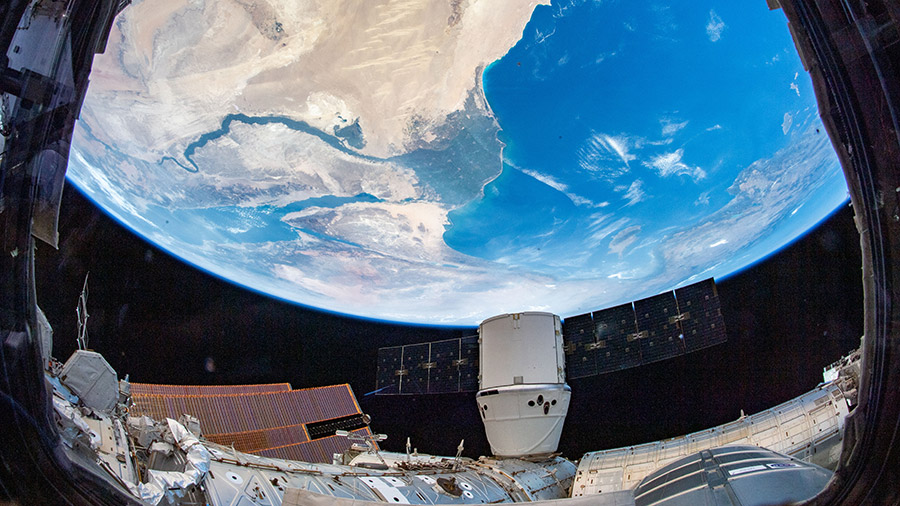
The SpaceX Dragon resupply ship is pictured attached to the International Space Station’s Harmony module on Aug. 13, 2019, as the orbital complex flew 260 miles above the Nile River Delta in Egypt.

The SpaceX Dragon cargo spacecraft released from the International Space Station at 10:59 a.m. EDT after flight controllers in Houston delivered remote commands to the station’s Canadarm2 robotic arm. Expedition 60 Flight Engineer Flight Engineer Christina Koch of NASA monitored Dragon’s systems as it departed the microgravity laboratory.

Next up, Dragon will fire its thrusters to move a safe distance from the station and execute a deorbit burn around 3:22 p.m. to leave orbit. Splashdown down is targeted for 4:21 p.m. EDT (1:21 p.m. PDT).

Learn more about station activities by following the space station blog, @space_station and @ISS_Research on Twitter as well as the ISS Facebook and ISS Instagram accounts.

Get The Details…

Mark Garcia

Powered by WPeMatico

Russian Spacecraft Second Docking Attempt Successful

Russian Spacecraft Second Docking Attempt Successful

The Soyuz MS-14 and Soyuz MS-13 Spacecrafts
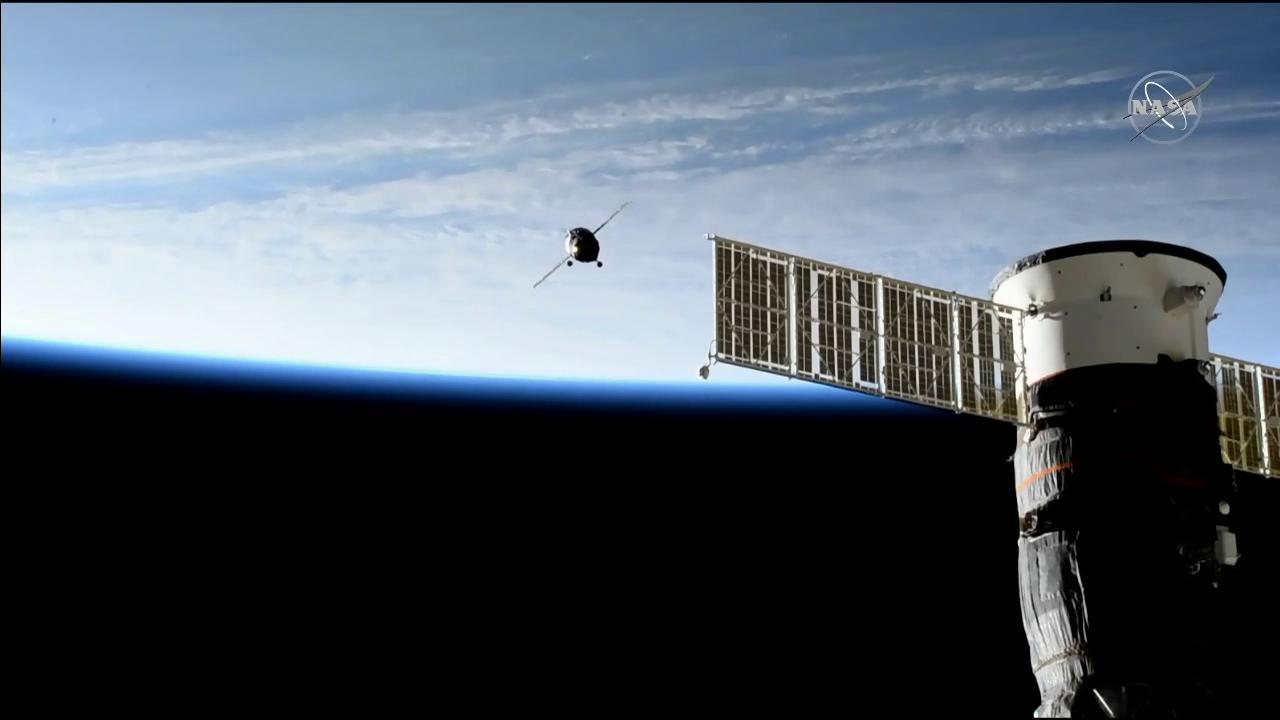
The Soyuz MS-14 spacecraft is pictured during it’s approach. The Soyuz MS-13 is seen in the forground.

While the spacecraft were flying about 250 miles above Eastern Mongolia, an uncrewed Russian Soyuz spacecraft arrived and docked to the International Space Station at 11:08 p.m. EDT.

The Soyuz MS-14 spacecraft attached to the station’s aft-facing Zvezda module for a two-week stay as part of its test flight. The Soyuz delivers 1,450 pounds of cargo, including a Skybot F-850 humanoid robot, to the Expedition 60 crew currently residing on the orbital outpost.

The docking of the unpiloted Soyuz sets the stage for the robotic release of the SpaceX Dragon cargo craft Tuesday morning after a four-week stay at the station. The Dragon is filled with almost 2,700 pounds of valuable scientific experiments and other cargo. NASA Television and the agency’s website will broadcast its departure live beginning at 10:15 a.m. EDT.

Learn more about station activities by following the space station blog, @space_station and @ISS_Research on Twitter as well as the ISS Facebook and ISS Instagram accounts.

To subscribe or unsubscribe to this list, please email heo-pao@lists.nasa.gov

Get The Details…

Mark Garcia

Powered by WPeMatico

Russian and U.S. Spaceship Activities Keep Crew Busy

Russian and U.S. Spaceship Activities Keep Crew Busy

Aug. 25, 2019: International Space Station Configuration
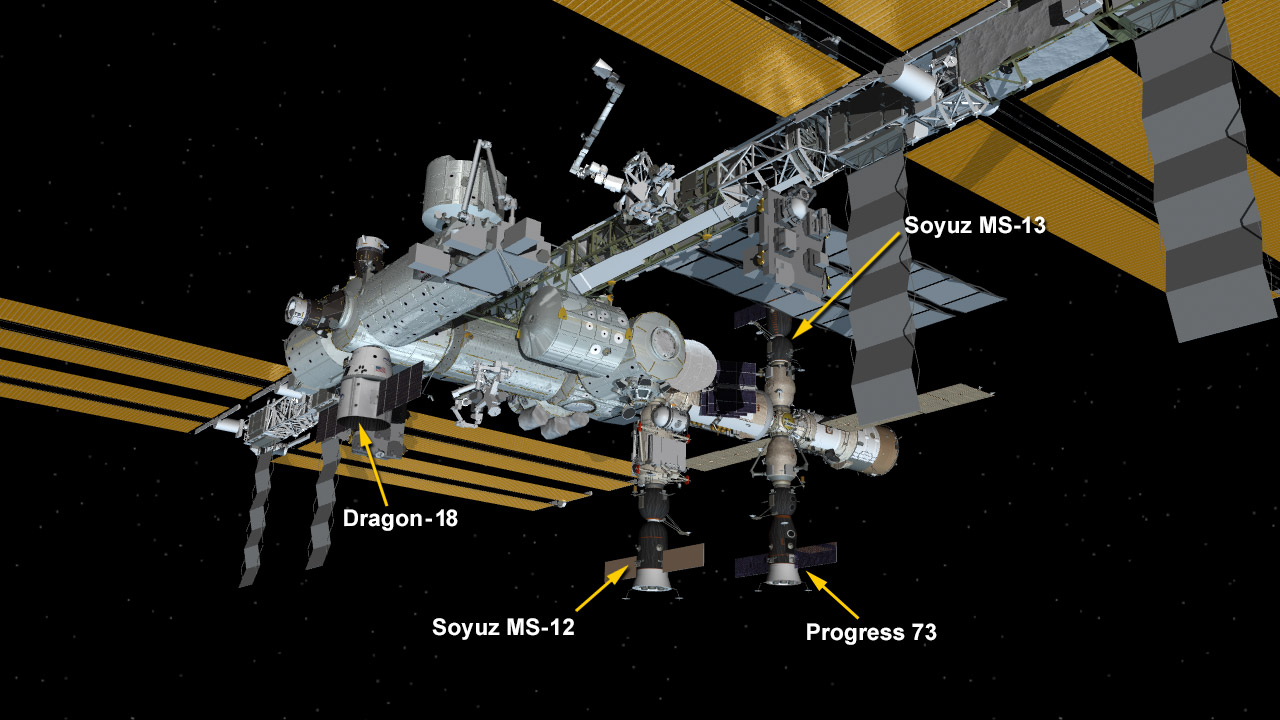
International Space Station Configuration: Four spaceships are parked at the space station including the SpaceX Dragon cargo craft and Russia’s Progress 73 resupply ship and Soyuz MS-12 and MS-13 crew ships.

An unpiloted Russian spacecraft is ready to make a second docking attempt tonight as a U.S. resupply ship is preparing for its departure Tuesday. This follows Sunday night’s relocation of a Soyuz crew ship at the International Space Station.

Three Expedition 60 crewmembers swapped docking ports in their Soyuz MS-13 crew ship late Sunday. Soyuz Commander Alexander Skvortsov, with Flight Engineers Andrew Morgan and Luca Parmitano seated next to him, backed the Soyuz away from the Zvezda service module at 11:35 p.m. EDT on Sunday and pulled their vehicle into the Poisk module just before midnight.

The relocation opens up Zvezda’s docking port, with its fully operable Kurs automated rendezvous system, to receive the uncrewed Soyuz MS-14 spacecraft today at 11:12 p.m. The MS-14 has been safely trailing the station by over 160 miles after its aborted docking attempt Saturday due to a faulty automated rendezvous component on Poisk.

Morgan and fellow NASA astronauts Christina Koch and Nick Hague are getting the SpaceX Dragon space freighter ready for its release from the Harmony module on Tuesday morning. Ground controllers in Houston will remotely command the Canadarm2 robotic arm to release Dragon from its grips Tuesday at 10:42 a.m. It will splashdown in the Pacific Ocean off the coast of southern California a few hours later for retrieval by SpaceX personnel.

NASA TV is covering all of the spaceship docking and departure activities live. Soyuz MS-14 docking coverage begins tonight at 10:30 p.m. Dragon release coverage begins Tuesday at 10:15 a.m. Dragon splashdown will not be broadcast.

Get The Details…

Mark Garcia

Powered by WPeMatico