Space Science Ahead of Russian and Japanese Station Missions

Space Science Ahead of Russian and Japanese Station Missions

NASA astronaut Christina Koch conducts science operations
NASA astronaut Christina Koch conducts science operations inside Japan’s Kibo laboratory module with a science freezer that preserves biological research samples for later analysis.

Human research kept the Expedition 60 crew busy today helping NASA and its partners understand how to keep astronauts healthy on long-term space missions. More spaceship activity is also coming up in September to ensure a well-stocked and fully staffed International Space Station.

NASA astronauts Nick Hague and Andrew Morgan continued researching how fluid shifts caused by microgravity induce vascular changes as well as head and eye pressure. The duo processed more blood and urine samples today for the ongoing study observing the potentially risky condition.

Doctors on the ground are exploring telemedicine as a way to examine astronauts orbiting Earth and farther in space. Flight Engineer Luca Parmitano of ESA (European Space Agency) set up and held a remotely controlled ultrasound scanner to his femoral artery for the Vascular Echo study today. A doctor on Earth then guided the device’s motorized probes during the cardiovascular exam.

NASA Flight Engineer Christina Koch set up protein crystal samples for stowage inside an automated incubator. The research takes advantage of microgravity’s weightlessness to support the development of advanced pharmaceutical therapies.

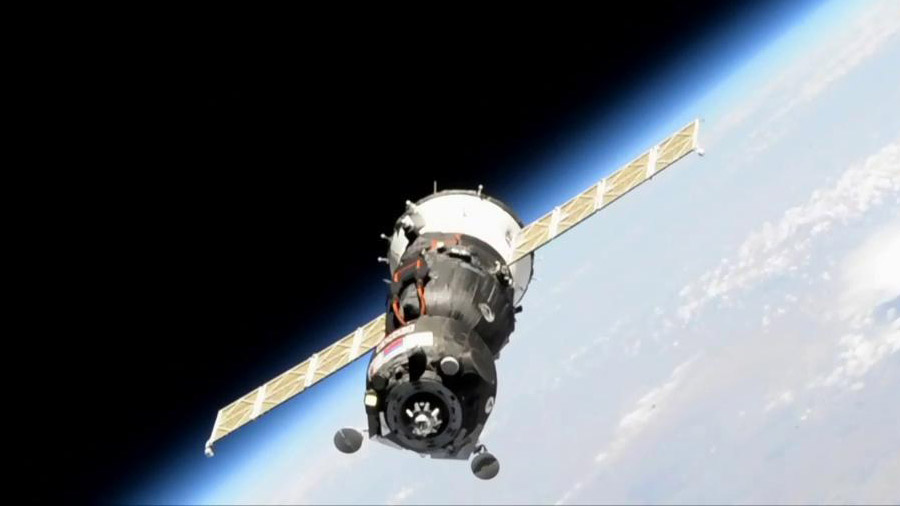
The Soyuz MS-14 spacecraft continues to be unpacked by cosmonauts Alexey Ovchinin and Alexander Skvortsov. They will soon load the crew ship back up with more cargo for return to Earth next week.

Another crew ship, the Soyuz MS-15, is being processed for its launch to the station on Sept. 25. Commander Oleg Skripochka will lead Flight Engineer Jessica Meir and Spaceflight Participant Hazzaa Ali Almansoori on a six-hour ride to their new home in space. The new trio along with their backups began two days of qualification exams today

In between the Soyuz missions, the H-II Transfer Vehicle-8 (HTV-8) is due to blast off Sept. 10 from the Tanegashima Space Center in Japan. It will take a four-day trip to the orbiting lab and deliver new batteries for the Port-6 truss power channels. It will be robotically captured and installed to the Harmony module for a month-long stay.

Get The Details…

Mark Garcia

Powered by WPeMatico

NASA to Provide Coverage of Hurricane Dorian

NASA to Provide Coverage of Hurricane Dorian


NASA will be tracking Hurricane Dorian throughout this Labor Day weekend. The agency will provide status updates on the storm as it nears Florida and NASA’s Kennedy Space Center on the state’s central east coast, as well as updated video and imagery.

Get The Details…

NASA Breaking News

Powered by WPeMatico

CEPT CPG decides position on 144, 50 and 1240-1300 MHz

CEPT CPG decides position on 144, 50 and 1240-1300 MHz

CEPT Logo“At the insistence of the European Commission, a WRC-23 agenda item was considered necessary to address the world-wide protection of Regional Navigational Satellite Systems from amateur emissions in the band 1240-1300 MHz.”

The CEPT ECC CPG met in Ankara during August 26-30 to finalise their position ahead of the ITU World Radiocommunication Conference 2019 (WRC-19) to be held in Sharm el-Sheikh, Egypt, October 28 to November 22. This conference will define the Agenda Items for WRC-23.

RSGB volunteers along with other radio amateurs in IARU Region 1 countries put in a considerable amount of work to defend the amateur radio allocations. Their hard work ensured the removal of 144-146 MHz from a study of additional spectrum for aeronautical applications and an agreement on a European Common Proposal for 50-52 MHz.

IARU Region 1 have released this report on the meeting:

The CEPT Conference Preparatory Group met this week in Ankara, Turkey. Items of interest to the amateur service which were finalised were:

– Agreement to a European Common Proposal (ECP) on allocating 50-52 MHz to the amateur service in Region 1 on a secondary basis with a footnote listing those countries where the amateur service will have a primary allocation in the band 50-50.5 MHz (WRC Agenda Item 1.1)

– Agreement to an ECP on spectrum to be considered for International Mobile Telecommunications, which does not now include the primary amateur band at 47-47.2 GHz (WRC Agenda Item 1.13)

– Agreement to an ECP that retains the current regulatory position in the 5725-5850 MHz frequency band which includes secondary allocations to the amateur service and the amateur-satellite service (WRC Agenda Item 1.16)

– Removal of 144-146 MHz from a French proposal for study of additional spectrum for aeronautical applications. (WRC Agenda Item 10)

– At the insistence of the European Commission, a WRC-23 agenda item was considered necessary to address the world-wide protection of Regional Navigational Satellite Systems from amateur emissions in the band 1240-1300 MHz. A draft WRC Resolution was agreed which underlines the importance of this frequency band to the amateur service and explicitly excludes the removal of existing allocations as part of the proposed agenda item. (WRC Agenda Item 10)

– There was no change to the already agreed CEPT position on Wireless Power Transmission (WRC Agenda item 9.1.6). This states that no change is needed in the Radio Regulations to address the question of operating frequency for WPT-EV, but leaves open the question of spurious emissions from WPT-EV.

Commenting on the outcome of CPG, IARU Region 1 President Don Beattie, G3BJ, said that the IARU team at Ankara (the only representatives of the amateur service at the meeting) had presented clear and convincing arguments for the amateur service position and he was pleased that regulators had recognised the strength of the amateur case. He expressed his thanks to everyone who had contributed to the outcome at CPG.

The issues now move to WRC in Egypt in November for final resolution. IARU will be there.

IARU Region 1 https://iaru-r1.org/

Note: Although the CEPT position includes a Primary allocation at 50.0 to 50.5 MHz it is for the Amateur Service only – the Amateur Satellite Service is excluded.

CEPT ECC CPG19-9 Ankara Meeting Minutes and Annexes are available for download at
https://cept.org/ecc/groups/ecc/cpg/client/meeting-documents/?flid=10064

Background to 1240-1300 MHz https://amsat-uk.org/2019/08/19/threat-to-amateur-radio-23cm-band/

Get The Details…

m5aka

AMSAT-UK

Powered by WPeMatico