


Live Amateur Radio Satellite Demo for Physics Students

Group photo at campus
Rajesh Vagadia VU2EXP reports a Special Hands on Workshop of Applied Physics was organised at well-known School of Science – RK University, Rajkot (Gujarat), India
It was 5 day event from 2nd Dec to 6th Dec 2019.
50 final year B.Sc Physics Students from various Colleges across state of Gujarat were registered for this special program.

Rajesh Vagadia VU2EXP gives an introduction to Amateur Radio
On 4th December 2019, Rajesh Vagadia VU2EXP (Regional Coordinator of AMSAT-INDIA) conducted detailed presentation on Ham Radio & its Application along with Live Satellite Demo amongst 50 students & faculties.
In beginning I gave complete overview of Ham radio hobby ranging from CW to Satellites!
My presentation Included operating procedure & protocols, various ham events, different modes incl CW, SSB, FM, Digital, SSTV, APRS. Licensing procedure & ASOC exam syllabus was covered. For practical observing collection of radio stuff were displayed incl antennas, accessories, CubeSat model, SDR Dongle, VHF Base, HTs, PSU, Morse Keyer, Paddle, QSL Cards, ARISS Awards etc. And of course my homebrewed IOio Sat Antenna.
AMSAT functioning & its motto was explained in detailed. Few amateur satellites were bring into notice made or supported by various AMSAT organisations.
ARISS student outreach program highlights were also given & played original audio conversation happened between 13 year Student (Sakshi Vagadia) and female Astronaut Sunita Williams aboard ISS, particular ARISS event was carried out on 14th Nov 2012 at Science City Ahmedabad Gujarat by we few hams. Below is the link to enjoy conversation
https://tinyurl.com/sakshi-talks-sunita
Students surprised to see scientific capabilities of ham radio reaches up to ISS Astronauts & even further to moon with EME experiments!
Lots of queries were raised on different topics throughout the session, and students as well as faculties were satisfied with the given answers. I always encourage students to raise query at any point of time and get immediate reply 

VHF voice demonstration
Thereafter Students also enjoyed practical Demos as below:
• Students find it funny to learn Sound act as a language during Morse code demo with my keyer & paddle.
• VHF Voice demo was given by making 3 groups and students introduce each other with Radio, simple HT created more excitement amongst students who used to carry expensive iphones, hi..
• For APRS Demo a prior information were shared to University administration & students to track my QTH to Venue journey on https://aprs.fi with Callsign (SSID) VU2EXP-10. To my own surprise group of Faculties stepped out to welcome me exactly on arrival of my car at Campus! Infact everybody were live tracking my journey on APRS!
• Star attraction was for Live Satellite Demo amongst group of students. Tiny cubsat AO91 was preferred for demo considering elevation of 44° & AOS Time 1247 (IST). Demo was previously announced to get support of Ham community. All students, faculties and admins get assembled 15 minutes prior to AOS at terrace of the building. There were no obstacles or tall buildings in any side.
I made students familiar with important Satellite terms such as AOS, TCA, LOS, Uplink Freq, Downlink Freq, Doppler shift, Tracking with apps etc. I used IOio dual band antenna with two separate HTs. Necessary frequency & tx ctcss tone was set & tested before pass. For Tx Speaker Mic was used for convenience, and for Rx small PA was connected to HT so whole group can listen to our possible two way QSO. I was prepared aiming IOio antenna at 180° (South), on AOS time at 1247 (IST) I gave few Sat calls… De VU2EXP on AO91 Satellite… repeat… soon heard a station replying me!!! Cheers!!!
Initially his signal was fading, but finally we establish 1st Satellite QSO, it was VU3PEN from Hyderabad (MK97em) 955 Kms from us. Students can’t stop their excitement and started cheering up!!!
Soon we worked 2nd station with VU3BXS from Haryana (MM80pd) 1083 Kms away.
To our surprise 3rd contact was made with DX station A65BP from UAE (LL75qj) 1602 Kms away.
4th contact was with VU2DGR from Kerala (MJ89gg) 1576 Kms away from us.
Now we were near to LOS at NNW direction and at low elevation we heard 5th station, mostly it was R9LR (MO27qf) 3907 Kms away, I gave repeated call but two way contact was not established. Students were very excited to learn such things & just thrilled to witness live SatDemo. Many new queries were answered on SatCom and we had memorable group photo in terrace too.
My session was extended to 4 hours for presentation & various demos.
I am thankful to VU3PEN, VU3BXS, A65BP, VU2DGR & R9LR for extending valuable support for my demo activities. This was my first Live Satellite Demo (AO91) amongst group of students & faculties who all keenly enjoyed whole session.
I also thanks Prof. Harshal Desai, Dr. Savan Katba (Coordinator), Dr. Ashish Tanna (HOD Physics) & School of Science RK University Rajkot to give me wonderful platform to conduct this memorable Ham Session with Live Demos.
Best 73’s
Rajesh Vagadia VU2EXP
Rajkot – Gujarat
Regional Coordinator
West India Zone
AMSAT-INDIA
M: 9898283916
E: vu2exp@gmail.com
http://www.qrz.com/db/vu2exp

Whole group witness live satellite demonstration
Get The Details…
m5aka AMSAT-UK
Powered by WPeMatico


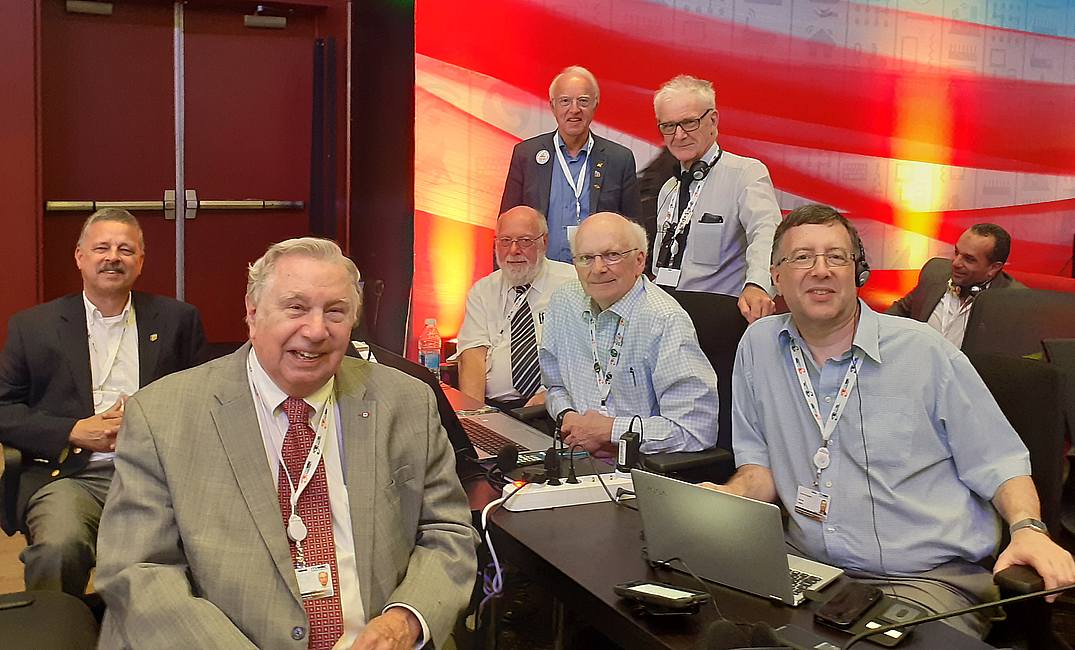
 Telemetry received from FUNcube-1 at National Radio Centre Bletchley Park, Nov 21, 2013
 ISL03 Mission Patch
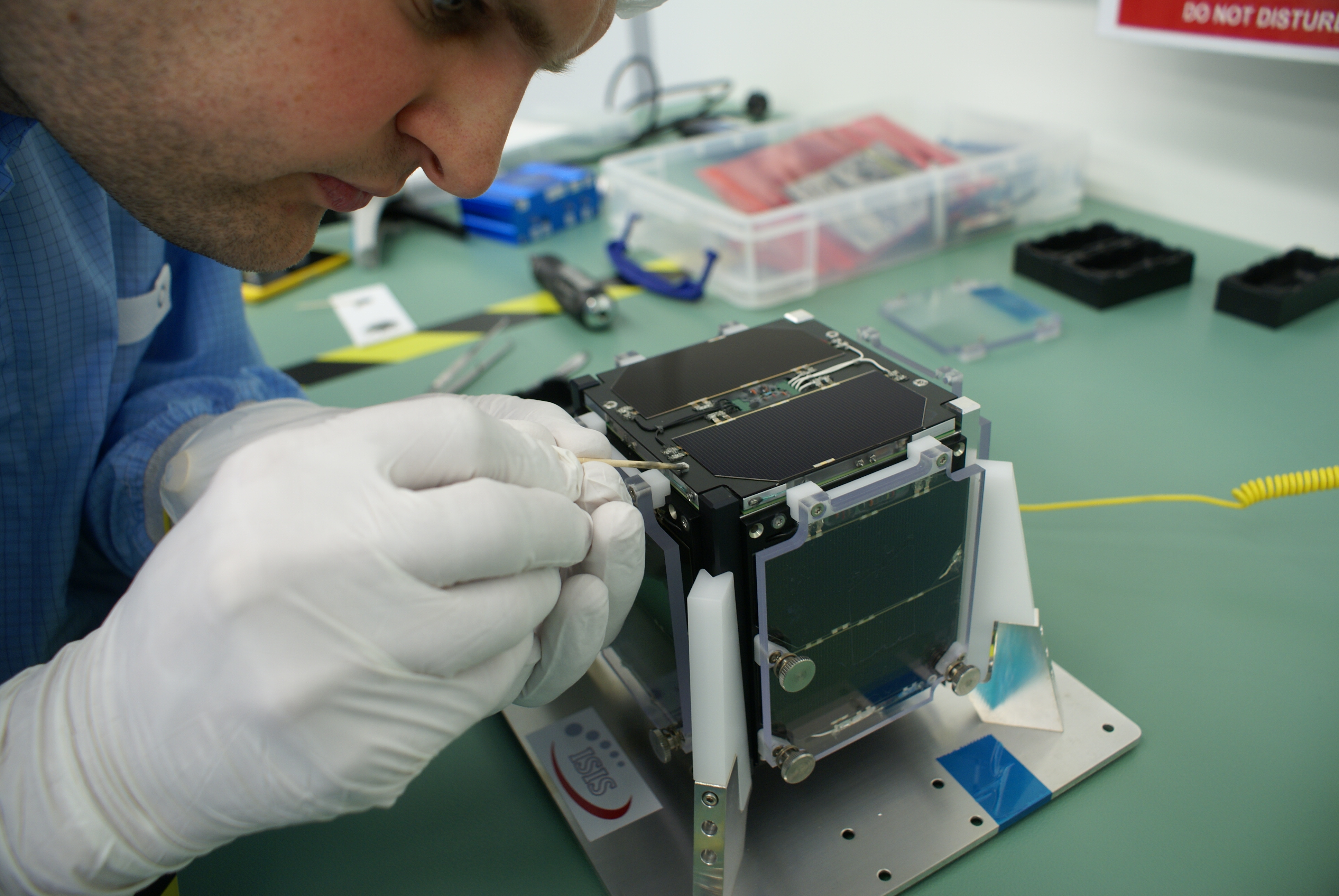 Final gluing of FUNcube-1 bolt by Wouter Weggelaar PA3WEG – Image credit Gerard Aalbers
