JAISAT-1 Telemetry Data Sought

JAISAT-1 Telemetry Data Sought

Tanan Rangseeprom HS1JAN with CubeSat modelTanan Rangseeprom HS1JAN with CubeSat model

Tanan Rangseeprom HS1JAN, Project Manager of the new 3U CubeSat JAISAT-1 has requested telemetry data from the 435.700 MHz beacon. JAISAT-1 launched on July 5 and carries an amateur radio 145 to 435 MHz linear transponder for SSB/CW communications.

On the AMSAT Bulletin Board Tanan posted:

RAST President Dr.Jakkree Hantongkom HS1FVL who had contacted German Orbital Systems (GOS) which had informed of object 2019-038F confirm JAISAT-1 satellite.

2019-038F
1 44419U 19038F 19190.66730395 .00001667 00000-0 10000-3 0 9996
2 44419 97.4914 152.5407 0020014 233.1737 126.7422 15.12176922 634

The JAISAT-1 Beacon signal on 435.700 MHz in GMSK Mobitex 4800 bps mode code for JAISAT-1 frames 1 in row 11
41 (0x29) – JAISAT UHF1
42 (0x2A) – JAISAT UHF2

Example of signals in this format can be found with the reception of signals from the satellite

The Radio Amateur Society of Thailand (RAST) and the JAISAT-1 Project Team are urgently seeking raw data that can be received from all packets worldwide. Please send raw data and KSS files to RAST by email at jaisatonetelegmail.com

Sincerely and with respect.

Tanan Rangseeprom, HS1JAN
Project Manager of JAISAT-1

RAST – The JAISAT-1 satellite is launched https://www.qsl.net/rast/

Get The Details…

m5aka

AMSAT-UK

Powered by WPeMatico

Crew Configures Hardware to Monitor Brain and Radiation Exposure in Space

Crew Configures Hardware to Monitor Brain and Radiation Exposure in Space

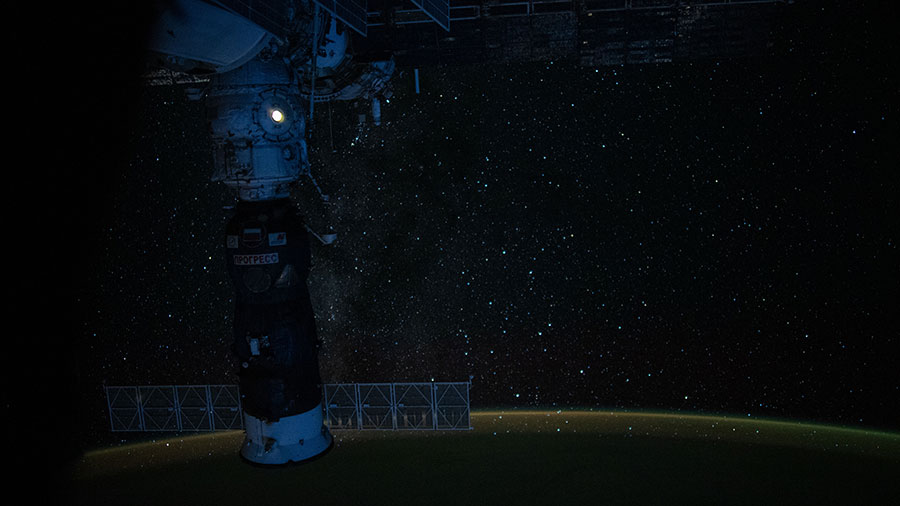
Earth's luminous atmospheric glow back-dropped by the tranquil Milky Way
The International Space Station was orbiting 258 miles above the Bay of Bengal during an orbital nighttime when this photograph was taken of Earth’s luminous atmospheric glow back-dropped by the tranquil Milky Way.

The Expedition 60 crew configured a variety of science hardware today monitoring the brain and radiation exposure. The orbital residents also had a steady day of safety gear checks and lab maintenance on the International Space Station.

Astronauts experience blood flow changes caused by living in microgravity that may cause lightheadedness or fainting upon return to Earth. The Cerebral Autoregulation investigation is measuring the waveforms of these blood flows to understand blood pressure regulation in space. Flight Engineer Nick Hague set up the experiment hardware this morning that may help doctors treat and prevent these symptoms.

Hague next assembled hardware for a high definition camera that will be installed outside the station on an upcoming spacewalk. He and NASA astronaut Christina Koch also installed communication cables and conducted voice checks to support the arrival of future commercial crew vehicles.

Radiation exposure is another concern for crewmembers working in space for months or years at a time. Koch handed a set of dosimeters, or radiation detectors, to Commander Alexey Ovchinin during the afternoon for installation on the Russian side of the orbiting lab. Several studies are monitoring neutron radiation and the variation in the radiation environment as the station orbits Earth.

Koch started her morning inspecting breathing masks and fire extinguishers. She checked the emergency equipment for correct pressure measurements and any signs of physical damage on hoses and bottles. Ovchinin continued the replacement of more Russian life support system components during his morning.


Get The Details…

Mark Garcia

Powered by WPeMatico

Space Health and Station Gardening Fill Today’s Research Schedule

Space Health and Station Gardening Fill Today’s Research Schedule

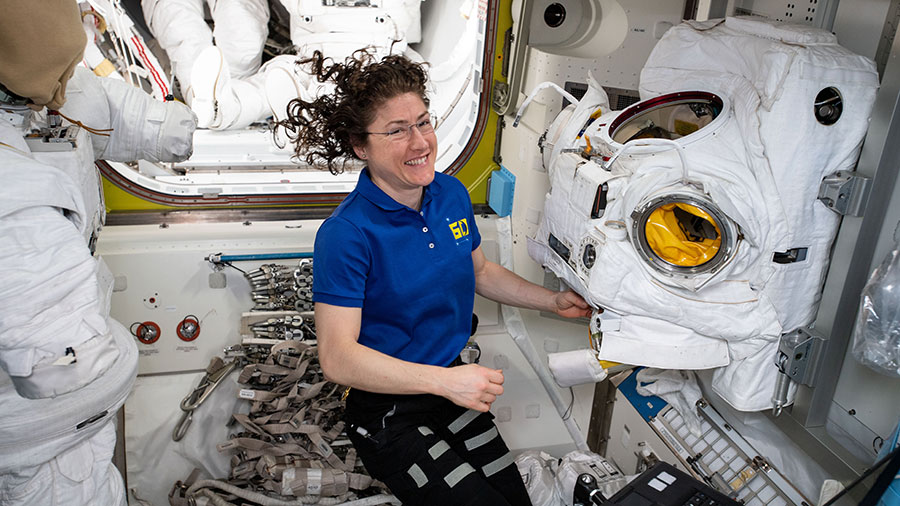
Expedition 60 Flight Engineer Christina Koch of NASA
Expedition 60 Flight Engineer Christina Koch of NASA works on a U.S. spacesuit in the Quest airlock where U.S. spacewalks are staged aboard the International Space Station.

Biomedical research and space agriculture dominated the Expedition 60 crew’s schedule today. The investigations aboard the International Space Station are helping scientists, doctors and engineers plan human missions to the Moon, Mars and beyond.

Nick Hague of NASA started Tuesday morning collecting and stowing his blood and urine samples for a pair of life science studies. His blood samples are being compared with samples from space mice, other astronauts and ground patients for changes in protein expression. Another study is comparing the biological samples taken before, during and after a spaceflight.

NASA Flight Engineer Christina Koch set up a 360-degree camera to record station gardening activities. The crew has been recording immersive, cinematic experiences throughout the year to share with audiences on Earth.

It was harvest time during the afternoon in the orbiting lab’s Harmony module today. Hague and Koch were picking salad-type plants after 28 days of growth, stowing samples for analysis and taste testing the rest. The VEG-04 botany study is exploring the viability of growing fresh food in space to support astronauts on long-term missions.

Exercising in microgravity is critical to maintain a crewmember’s health and ensure successful space missions. Commander Alexey Ovchinin spent Tuesday morning supporting a Russian study investigating the effectiveness of space workouts. In the afternoon, he moved on to lab maintenance changing out life support system components.

Get The Details…

Mark Garcia

Powered by WPeMatico