Dragon Installed to Station’s Harmony Module for Cargo Operations
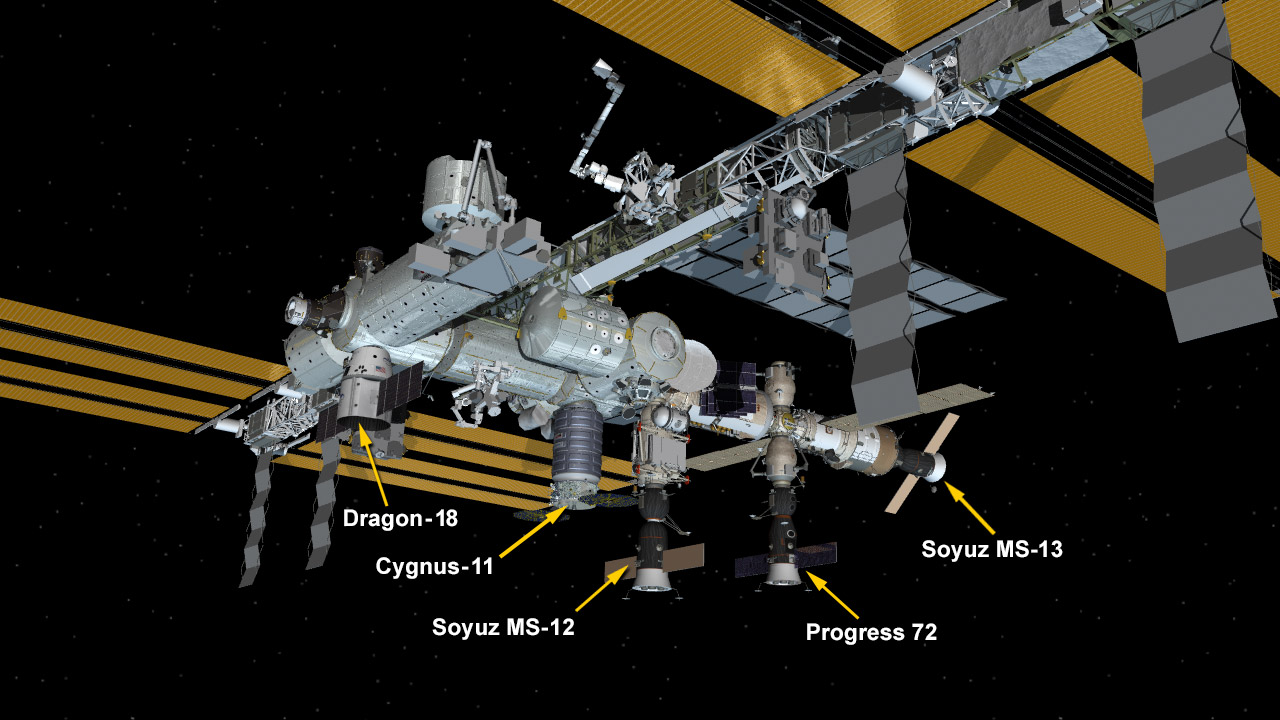
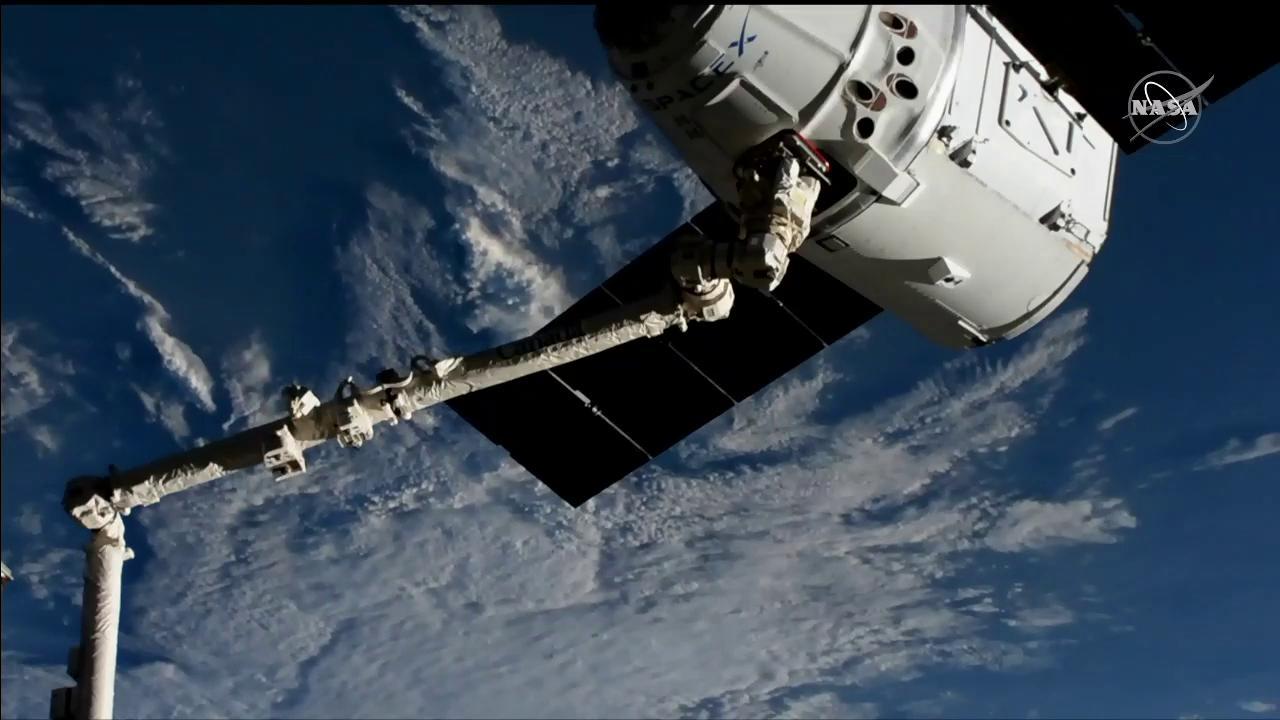
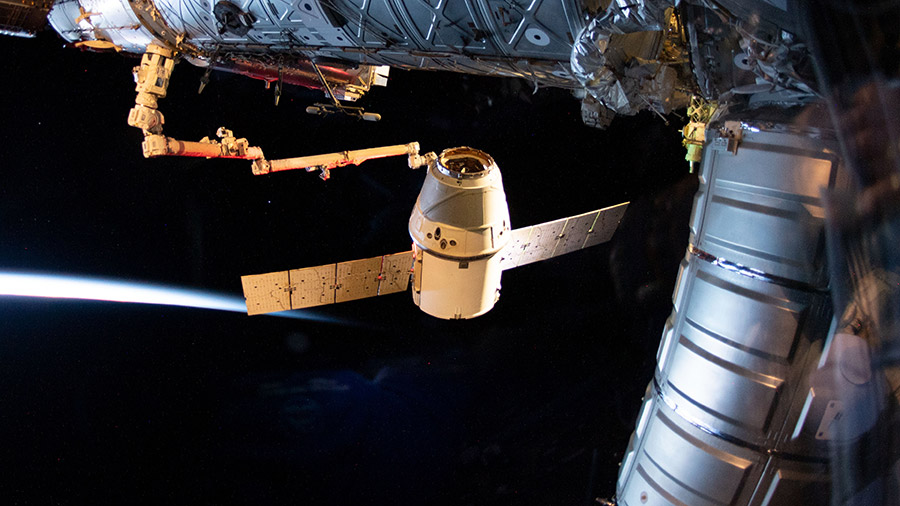
Two days after its launch from Florida, the SpaceX Dragon cargo spacecraft was installed on the Earth-facing side of the International Space Station’s Harmony module at 12:01 p.m. EDT.
The 18th contracted commercial resupply mission from SpaceX (CRS-18) delivers more than 5,000 pounds of research, crew supplies and hardware to the orbiting laboratory.
A key item in Dragon’s unpressurized cargo section is International Docking Adapter-3 (IDA-3). Flight controllers at mission control in Houston will use the robotic arm to extract IDA-3 from Dragon and position it over Pressurized Mating Adapter-3, on the space-facing side of the Harmony module. NASA astronauts Nick Hague and Andrew Morgan, who arrived at the station Saturday, July 20, will conduct a spacewalk in mid-August to install the docking port, connect power and data cables, and set up a high-definition camera on a boom arm.
Robotics flight control teams from NASA and the Canadian Space Agency will move the docking port into position remotely before the astronauts perform the final installation steps. IDA-3 and IDA-2, which was installed in the summer of 2016, provide a new standardized and automated docking system for future spacecraft, including upcoming commercial spacecraft that will transport astronauts through contracts with NASA.
Here’s some of the science arriving at station:
Effects of Microgravity on Microglia 3D Models
Induced pluripotent stem cells (iPSC) – adult cells genetically programmed to return to an embryonic stem cell-like state – have the ability to develop into any cell type in the human body, potentially providing an unlimited source of human cells for therapeutic purposes. Space Tango-Induced Pluripotent Stem Cells examines how specialized white blood cells derived from iPSCs of patients with Parkinson’s disease and multiple sclerosis grow and move in 3D cultures, and any changes in gene expression that occur as a result of exposure to a microgravity environment. Results could lead to the development of potential therapies.
Mechanisms of Moss in Microgravity
Space Moss compares mosses grown aboard the space station with those grown on Earth to determine how microgravity affects its growth, development, and other characteristics. Tiny plants without roots, mosses need only a small area for growth, an advantage for their potential use in space and future bases on the Moon or Mars. This investigation also could yield information that aids in engineering other plants to grow better on the Moon and Mars, as well as on Earth.
After Dragon spends approximately one month attached to the space station, the spacecraft will return to Earth with cargo and research.
Keep up to date with the latest news from the crew living in space by following https://blogs.nasa.gov/spacestation/, @space_station and @ISS_Research on Twitter, and the ISS Facebook and ISS Instagram accounts.
Mark Garcia
Powered by WPeMatico